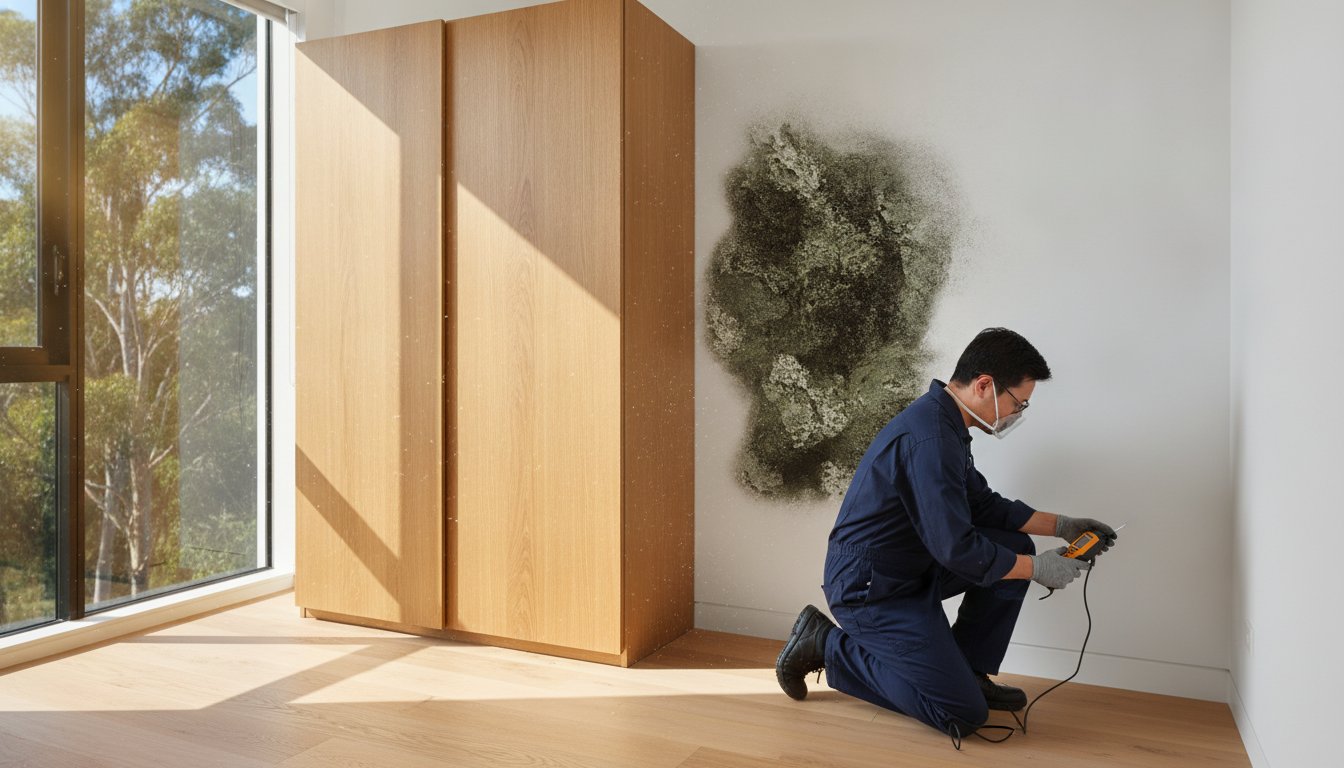

Did you know that Sydney was recently ranked as one of the most mould-prone cities in Australia with a staggering mould score of 92.48 out of 100? For many residents, the damp coastal air and high humidity levels make persistent fungal growth feel like an inevitable part of life. You’ve likely spent weekends scrubbing bathroom tiles or worrying about the musty scent rising from your floorboards. It’s exhausting to fight a battle that never seems to end. That’s why we’ve developed the ultimate mould prevention checklist for homeowners to help you reclaim your living space and protect your family’s health.
We understand the anxiety that comes with hidden subfloor damage and the fear of triggering asthma or allergies. You need a professional, systematic approach that goes beyond temporary DIY fixes. This comprehensive guide provides a room-by-room strategy tailored specifically for the unique Sydney climate. We’ll show you how to lower indoor humidity, optimize ventilation, and establish a clear maintenance schedule. By following these evidence-based steps, you can transform your property into a healthy, mould-free environment once and for all.
Key Takeaways
- Understand why Sydney’s coastal humidity and seasonal rain cycles require a proactive approach to moisture management.
- Implement our comprehensive mould prevention checklist for homeowners to systematically audit high-risk zones like bathrooms, kitchens, and subfloors.
- Learn the critical threshold for indoor humidity and why maintaining levels below 60% is your primary defense against fungal growth.
- Identify the structural maintenance tasks, including gutter clearing and foundation drainage, that stop water from entering your wall cavities.
- Recognize the warning signs of hidden infestations that require professional detection tools like thermal imaging and moisture meters.
Why Mould Prevention is Urgent for Sydney Homeowners
Mould prevention isn’t just about keeping your walls looking clean; it’s a proactive strategy to eliminate the three pillars of fungal growth: moisture, organic food sources, and poor airflow. Gaining a deep understanding of indoor mould is the first step in protecting your property from structural damage. When you remove even one of these pillars, you stop the biological process before it can take root in your home.
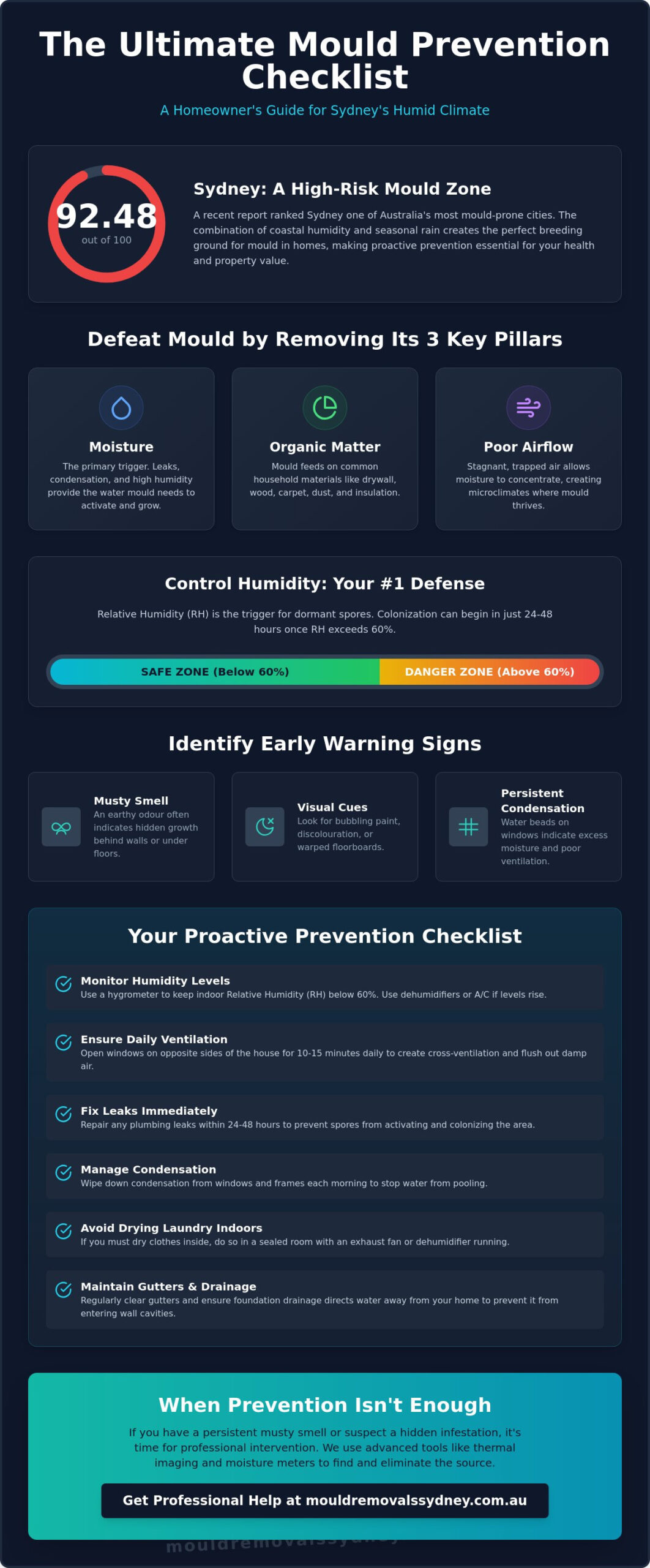
Sydney presents a unique challenge for residents. A 2025 report identified our city as one of the mouldiest in Australia, earning a “mould score” of 92.48 out of 100. Our coastal location, combined with high humidity and seasonal rain cycles like La Niña, creates a literal mould incubator within local homes. Without a consistent mould prevention checklist for homeowners, the damp air becomes a permanent resident in your living spaces.
The urgency isn’t just about aesthetics. NSW Health warns that indoor mould is a significant respiratory hazard that can trigger asthma and severe allergies. Beyond health, unaddressed growth devalues your investment. It creates a “property stigma” that can drop your home’s market value and cause permanent structural damage to timber frames and flooring. Acting early is the only way to safeguard both your family and your finances.
The Science of Spores: Why Cleaning Surfaces Isn’t Enough
Spore colonies are incredibly resilient. They travel through air ducts and settle deep within porous materials like drywall, insulation, and carpets. Simply wiping a surface with bleach doesn’t solve the problem because the roots remain embedded. The Goldmorr System is a professional methodology designed for eliminating airborne spores, not just visible surface stains. Relative humidity (RH) is the primary trigger for these spores. Once the RH in your room exceeds 60%, dormant spores activate and begin to colonize your walls within 24 to 48 hours.
Identifying Early Warning Signs in Your Property
Don’t wait for black spots to appear on your ceiling. Your nose often detects a problem long before your eyes do. That distinct, earthy “musty smell” indicates active growth hidden behind wardrobes or under floorboards. Look for visual cues like bubbling paint, discolouration on window sills, or warped floorboards. Persistent condensation on glass is another major indicator of poor ventilation. If you see water beads on your windows every morning, your home is trapped in a high-moisture cycle. Using a mould prevention checklist for homeowners allows you to catch these signs early and prevent a small leak from becoming a total house infestation.
The Indoor Moisture Control Checklist: Daily and Weekly Habits
Managing a property in Sydney’s humid climate requires more than just occasional cleaning. You need a consistent mould prevention checklist for homeowners to address moisture before it accumulates. Effective control starts with daily habits that target the invisible water vapour in your air. If you ignore these small tasks, you allow humidity to build up until it reaches a critical saturation point.
Keep your indoor relative humidity (RH) below 60% at all times. Use a digital hygrometer to monitor these levels accurately. If the RH rises, turn on your air conditioner or a dedicated dehumidifier to strip the moisture from the air. Similarly, never ignore a plumbing leak. Even a minor drip under a kitchen sink can trigger a colony. You must repair all leaks within 24 to 48 hours to prevent spores from establishing a permanent foothold. This timeframe is the biological window where most species begin to germinate.
Wipe down condensation from window panes and aluminium frames every morning. This simple task prevents water from pooling in tracks where mould often begins. Ensure 10 to 15 minutes of cross-ventilation daily. Open windows on opposite sides of the house to flush out stagnant, humid air. This rapid exchange is far more effective than leaving a single window cracked open all day. According to the NSW Health guide to mould, proper airflow is a primary defense against indoor moisture buildup.
Avoid drying wet laundry inside your living areas. This practice releases litres of water into your carpets and wall cavities. If you must dry clothes indoors during rainy periods, use a sealed room with an exhaust fan or a dehumidifier running. If you’ve already noticed a persistent musty smell despite these efforts, it’s time to consult Sydney’s #1 Mould Removal Service for a professional assessment.
Mastering Ventilation in High-Moisture Rooms
Apply the 15-minute rule in your bathroom. Don’t turn the exhaust fan off as soon as you step out of the shower. Let it run for at least 15 minutes to extract the heavy steam that clings to ceilings and grout. In the kitchen, your range hood is your best defense. Use it every time you cook to capture steam and grease before they settle on surfaces. For complex issues, our team at ABC Mould Cleaning Solutions can help restore your indoor air quality.
Managing Porous Materials and Soft Furnishings
Porous materials like carpets and rugs act as spore traps. Use a vacuum with a HEPA filter weekly to remove settled particles before they can grow. Proper airflow is also essential for furniture placement. Space your couches and beds at least 5 to 10cm away from external walls. This gap allows air to circulate and prevents “cold spots” where condensation forms. Finally, avoid over-stuffing your wardrobes. Crammed closets prevent air movement, creating the perfect dark, damp environment for mould to ruin your clothing.
High-Risk Zone Analysis: Bathrooms, Kitchens, and Subfloors
Protecting your property requires you to look beyond obvious surfaces. A robust mould prevention checklist for homeowners focuses on “wet zones” where moisture is a constant presence. While most people clean their kitchen benches, the areas behind appliances and under floorboards often remain ignored until a serious problem develops. You must audit these high-risk zones systematically to prevent colonies from taking root in the dark, damp corners of your home.
- Bathroom: Scrub grout weekly to remove soap scum, which acts as an organic food source. Check silicone seals for cracks and wash bath mats frequently to prevent them from trapping moisture against the floor.
- Kitchen: Inspect the area under the sink for slow drips. Empty fridge drip trays monthly and check for moisture pooling behind the dishwasher.
- Laundry: Wipe down rubber door seals on front-loading washing machines after every cycle. Ensure your dryer vents directly to the exterior of the building to avoid pumping humid air into your wall cavities.
The Hidden Danger: Subfloor Ventilation and Rising Damp
Sydney’s architectural landscape, filled with classic bungalows and terraces, hides a major vulnerability beneath the floorboards. The subfloor often acts as the engine room for fungal growth. If you notice cupping floorboards or a persistent ground-level odour, your subfloor likely suffers from stagnant air and damp soil. Blocked vents or poor drainage can turn this space into a swamp. Professional subfloor ventilation systems actively pump out damp air to keep the foundation dry and stable. Addressing these issues early prevents rising damp from migrating into your living areas and damaging your internal walls.
Kitchen and Laundry Deep Dives
Appliances are frequent culprits in moisture accumulation. High-pressure hoses behind dishwashers and washing machines can develop pinhole leaks that go unnoticed for months. Similarly, your cooling system can become a source of contamination if neglected. Dust and moisture trapped in split systems provide a perfect environment for spores to multiply. We recommend booking a Professional Air Conditioner Cleaning to ensure your unit isn’t circulating contaminated air. By including appliance maintenance in your mould prevention checklist for homeowners, you eliminate the hidden moisture sources that DIY cleaning often misses.
Exterior Maintenance and Seasonal Prevention Tasks
Mould doesn’t just start inside; it often migrates from external structural failures. A proper mould prevention checklist for homeowners must prioritize the building envelope to keep the interior dry. If water pools against your slab or overflows from gutters, it will eventually find a path into your wall cavities. You can’t ignore the exterior and expect a dry interior. Prevention requires a vigilant approach to how water moves around your property during Sydney’s heavy rain events.
- Clean gutters and downpipes every 6 months: Overflowing water is a leading cause of internal dampness in local homes. Blocked gutters force water under the eaves and into your ceiling space.
- Grade the soil properly: Ensure the ground slopes away from your foundation. This prevents water from pooling near the footings and soaking into the subfloor area.
- Trim back vegetation: Trees and shrubs that touch your house block sunlight and restrict airflow. This keeps external walls damp for longer periods after rain.
- Inspect roof tiles and flashing: Check for damage after every major storm. Small cracks allow water to seep into your roof space, saturating insulation and creating a massive, hidden moisture reservoir.
Seasonal Checklist: Preparing for Sydney’s Wet Months
Your maintenance routine should shift with the seasons to address changing environmental threats. In Autumn, clear all organic debris from drainage points to prevent blockages before the heavier winter rains arrive. During the humid Summer months, manage your cooling systems carefully. Rapid cooling of a room can cause “sweating” on walls if the temperature differential is too high, leading to surface mould on paintwork. If a storm causes sudden flooding or roof failure, refer to our Water Damage Repair Guide for immediate action steps to stabilize your property.
Maintaining External Airflow and Drainage
Your brickwork needs to breathe to stay dry. Clear weeds and dirt from weep holes to ensure moisture trapped in the cavity can escape. Landscaping requires caution; garden beds should never be built up against the damp-proof course (DPC). When you build up soil against the DPC, you create a bridge for moisture to travel directly into your home’s structure. Keep garden levels at least 75mm below the DPC to maintain its effectiveness. Maintain all external vents to ensure the wall cavities stay dry. If your exterior maintenance has been neglected and you suspect water ingress, contact ABC Mould Cleaning Solutions for a professional inspection today.
Beyond the Checklist: When DIY Prevention Isn’t Enough
Even the most diligent mould prevention checklist for homeowners has its limits. If you’ve followed every step and still detect a persistent, musty odour, you’re likely dealing with a hidden infestation. DIY methods are effective for surface maintenance, but they can’t reach the spores embedded deep within your building’s structure. When the smell remains, it’s a clear signal that the problem has moved beyond the reach of retail cleaners and household habits.
Professional intervention offers a level of precision that manual cleaning simply cannot match. We utilize advanced technology like thermal imaging and high-precision moisture meters for non-invasive detection. These tools allow us to “see” through walls and identify moisture pockets trapped in insulation or wall cavities. By pinpointing the exact source of the dampness, we eliminate the guesswork and stop the growth at its origin. This systematic approach ensures that we aren’t just treating the symptoms, but solving the underlying structural issue.
Restoring your home’s safety also requires addressing the air you breathe. Our air purification and scrubbing services utilize industrial-grade HEPA filtration to capture microscopic airborne spores. This process restores your indoor air quality to hospital-grade standards, providing immediate relief for occupants with asthma or respiratory sensitivities. We don’t just remove the visible stains; we sanitize the entire environment to ensure your home is truly healthy.
The Goldmorr Difference: Safe, Fast, and Effective
The Goldmorr System is the cornerstone of our remediation methodology and is widely considered the gold standard for Sydney homes. This process uses a biodegradable fogging agent that permeates every corner of a room, including wall cavities and ceiling voids. Unlike traditional methods, our system is completely safe for families, pets, and the environment. The “No Scrub” advantage is particularly vital for delicate or porous surfaces that would be damaged by abrasive cleaning. It’s a fast, efficient solution that delivers total remediation without the need for destructive demolition.
Next Steps: Booking Your Sydney Mould Inspection
A professional mould inspection is the first step toward permanent resolution. During our assessment, we conduct a thorough audit of your property to identify moisture ingress points and active colonies. You won’t receive a generic cleaning quote. Instead, we provide a tailored remediation plan designed specifically for your home’s unique layout and the Sydney climate. This ensures long-term protection rather than a temporary fix. Take control of your property’s health and Get a free quote for professional mould removal in Sydney today. Our specialists are ready to restore your peace of mind with a systematic, evidence-based solution.
Secure Your Home Against Sydney’s Humidity
You now have the technical knowledge to defend your property from fungal growth. By managing daily indoor moisture and maintaining your home’s exterior structure, you’ve taken the most important steps toward a healthier living environment. This mould prevention checklist for homeowners serves as your roadmap to long-term protection. However, Sydney’s unique coastal climate often presents challenges that require specialized equipment and professional expertise.
If you suspect hidden moisture or a persistent odour, don’t wait for the damage to escalate. We provide localized expertise across all Sydney suburbs and offer a 24/7 Emergency Water Damage Response for urgent situations. Our specialists utilize the proprietary Goldmorr System to eliminate spores at the source, ensuring your home meets the highest safety standards. Trust a systematic, professional approach to restore your property’s value and your family’s well-being.
Take the final step toward a permanently dry home. Request a Professional Mould Inspection and Quote today. You deserve a safe, breathable space, and we’re here to help you achieve it. Let’s make your mould concerns a thing of the past.
Frequently Asked Questions
How do I stop mould from coming back after I clean it?
You must eliminate the underlying moisture source to prevent regrowth. Cleaning visible spots only removes the surface manifestation while the roots remain embedded in porous materials. Ensure your mould prevention checklist for homeowners includes fixing plumbing leaks and improving ventilation. Without addressing high humidity or structural water ingress, the fungal colonies will return within days of cleaning.
Does vinegar actually kill mould or just hide it?
White vinegar is an effective mild acid that can kill approximately 82% of mould species. Unlike bleach, which only removes the colour of the stain, vinegar penetrates porous surfaces to attack the membrane of the organism. It’s a useful tool for minor surface maintenance. However, it cannot reach spores hidden deep within wall cavities or subfloors, which require professional-grade remediation.
How often should I check my subfloor for moisture?
Inspect your subfloor at least every six months. It’s best to conduct these checks before the peak of Sydney’s wet seasons in Autumn and Spring. Look for damp soil, blocked vents, or a white, powdery substance on timber joists. Regular inspections ensure that minor drainage issues don’t escalate into significant structural damage or rising damp throughout your property.
Can air purifiers help prevent mould growth in Sydney?
Air purifiers with HEPA filters help prevent the spread of mould by capturing airborne spores before they settle. While they significantly improve indoor air quality, they don’t remove the moisture that causes growth. Use them as a secondary defense alongside dehumidifiers. An air purifier won’t stop a colony from forming if your walls are damp from high humidity or leaks.
Is it safe to sleep in a room with a small amount of mould?
Sleeping in a room with active growth is not recommended. Even small colonies release microscopic spores and mycotoxins into the air you breathe for eight hours each night. This exposure can trigger asthma, allergic rhinitis, and other respiratory complications. Address even minor patches immediately to protect your health and prevent the infestation from spreading to your bedding and furniture.
What is the ideal humidity level for a Sydney home?
Maintain your indoor relative humidity between 45% and 60%. This range is comfortable for occupants but too dry for most mould species to thrive. In Sydney’s humid coastal environment, you’ll likely need to use air conditioning or dehumidifiers to stay within this window. Monitoring these levels with a digital hygrometer is a critical part of any mould prevention checklist for homeowners.
Do I need to throw away clothes that have mould on them?
You don’t always need to discard affected clothing. Many washable fabrics can be salvaged by laundering them at high temperatures with specialized additives. However, items like leather jackets or shoes are highly porous and difficult to sanitize once infested. If the mould has caused permanent staining or a deep musty odour that persists after washing, disposal is often the safest option for your wardrobe.
How much does a professional mould inspection cost in Sydney?
Professional inspection costs vary based on the size of your property and the complexity of the testing required. A standard assessment typically includes a visual inspection, moisture mapping, and a detailed report of findings. While industry rates are competitive, the value lies in receiving a tailored remediation plan. Investing in an expert inspection can save you thousands by preventing major structural damage and health-related expenses.