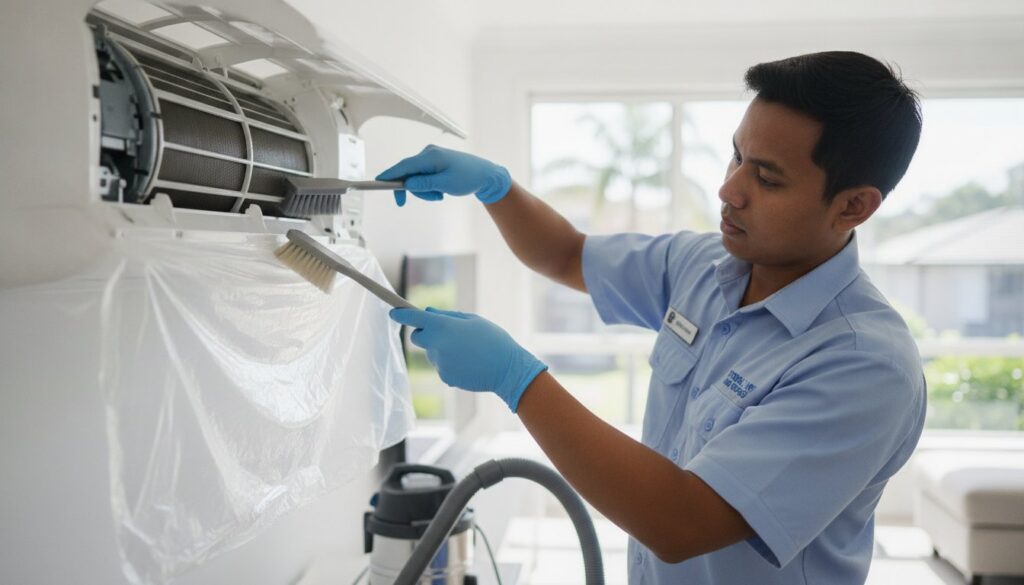
Is that musty “old sock” smell in your living room just a minor annoyance, or is it a sign that your family is breathing in millions of invisible spores every hour? Sydney’s high humidity creates the perfect breeding ground for fungi inside your HVAC unit, leading to unexplained sneezing and respiratory irritation. You shouldn’t have to guess if your air is safe. Our professional air conditioner mould removal service provides a systematic, evidence-based solution to reclaim your indoor environment. We focus on total elimination rather than temporary fixes, ensuring your home returns to a state of safety and comfort.
We understand the anxiety of seeing black spots on your vents and the fear of damaging a costly system with improper cleaning. It’s a valid concern because standard retail sprays often fail to reach the deep internal components where mould thrives. This article explores how professional remediation follows the AS-IICRC S520:2025 standard to deliver deep-cleansing results. You’ll discover how specialized techniques not only remove existing growth but also improve energy efficiency by up to 22 percent. We’ll show you exactly how to restore healthy air and prevent those stubborn odours from ever coming back.
Key Takeaways
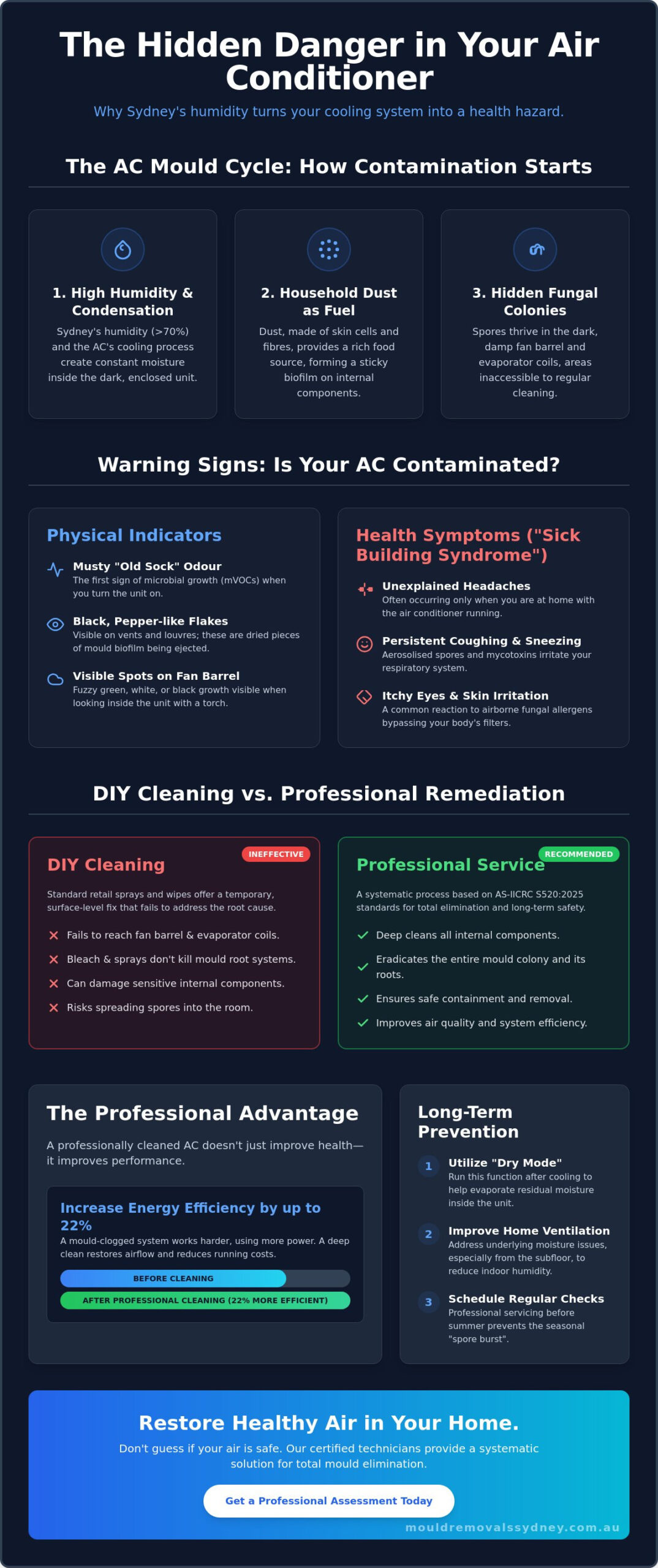
- Learn why Sydney’s unique combination of high humidity and household dust creates an ideal incubation period for toxic spores inside your HVAC system.
- Identify early warning signs of contamination, including the signature “musty sock” odour and the appearance of black, pepper-like flakes on your unit’s vents.
- Discover why standard household bleach fails to kill root systems and why a professional air conditioner mould removal service is necessary to reach the fan barrel and internal coils.
- Understand the importance of the AS-IICRC S520:2025 standard in ensuring your remediation process is systematic, safe, and effective for long-term air quality.
- Master practical prevention strategies, such as utilizing your unit’s “Dry Mode” and addressing subfloor ventilation to eliminate the moisture that feeds recurring mould growth.
Why Sydney Air Conditioners are Breeding Grounds for Mould
Sydney homes face a unique environmental challenge that turns standard cooling systems into biological hazards. Your air conditioner functions by stripping moisture from the air to lower the temperature. This process creates a constant flow of condensation inside the dark, enclosed chassis of the unit. When this moisture meets the organic matter found in common household dust, it initiates a rapid “AC mould cycle.” Understanding What is indoor mould? helps clarify why your unit is so vulnerable. It isn’t just a surface stain. It’s a living colony feeding on the biofilm accumulating on your internal components.
Most property owners only check the plastic mesh filters. This is a mistake. The real danger hides on the evaporator coils, the fan barrel, and the deep recesses of the drain pan. These areas remain damp for hours or even days after you turn the unit off. A professional air conditioner mould removal service is required because these components are inaccessible to the average user. Even if your filters look spotless, the internal chassis may be heavily infested with fungal growth that thrives in total darkness.
The Role of Condensation and Dust
The cooling process naturally generates water as a byproduct. In modern, airtight Sydney apartments, this moisture often becomes trapped within the unit’s housing. Dust, which primarily consists of skin cells and fabric fibres, provides a rich nutrient source for fungi. Together, moisture and dust form a sticky biofilm on the fan blades. This layer protects the mould from basic retail cleaning sprays and allows colonies to expand rapidly without being seen from the outside.
Sydney’s Humidity Factor
Sydney frequently experiences summer days where humidity levels exceed 70 percent. This represents the critical threshold for rapid mould germination. Coastal salt air also plays a role by accelerating the degradation of protective coatings on internal parts, creating microscopic pits where spores can anchor easily. The most dangerous moment is usually the seasonal “switch-on” after a period of inactivity. When you finally use the system after winter, the fan barrel acts like a centrifuge. It launches a concentrated burst of spores directly into your living space. Engaging a professional air conditioner mould removal service before the peak of summer is the only way to break this cycle of contamination.
Identifying the Signs: Is Your AC Making You Sick?
Your body often detects a problem before you see it. The most common indicator of contamination is the “musty sock” smell that greets you when the unit starts. This isn’t just “old air.” It is the scent of microbial volatile organic compounds (mVOCs) released as fungi digest dust and moisture trapped inside the chassis. If you notice this odour when you first click the remote, your system likely needs an air conditioner mould removal service to neutralise the source. Ignoring these early warnings allows the colony to strengthen its hold on your internal components.
The Musty Odour and Visual Indicators
Look closely at the horizontal louvres where the air exits the unit. Do you see tiny, black, pepper-like flakes? These are often dried pieces of mould biofilm being ejected by the fan. If you shine a torch into the air outlet, you might see fuzzy green, white, or black growth on the fan barrel itself. Don’t dismiss minor spotting on the external plastic casing. By the time mould is visible on the outside, the internal evaporator coils are usually heavily congested. This blockage forces the motor to work harder, leading to a spike in power usage. In fact, a professionally cleaned unit can be up to 22 percent more energy-efficient than one clogged with biological growth. Engaging a professional air conditioner mould removal service ensures every hidden corner of the chassis is sanitised.
Health Symptoms and Air Quality
Do you experience unexplained headaches, coughing, or itchy eyes specifically when you’re at home with the air on? This is a hallmark of “Sick Building Syndrome.” When the fan spins, it aerosolises spores and mycotoxins throughout your room. Mycotoxins are toxic secondary metabolites produced by fungi. These microscopic particles bypass your body’s natural filters and enter your respiratory system. For those with pre-existing conditions like asthma, the impact is even more severe. The National Institute of Environmental Health Sciences highlights that professional mold remediation is essential for protecting vulnerable occupants from chronic exposure to these airborne irritants.
Ignoring these signs doesn’t just lead to higher power bills; it compromises your home’s safety. If your nose or your health is sounding the alarm, it’s time to act. You can start by checking our guide on professional mould cleaners in Sydney to see how we address these hidden threats. Taking action now prevents a minor cleaning job from turning into a full-scale health crisis for your family.
Professional Air Conditioner Mould Removal vs. DIY Cleaning
Many Sydney residents attempt to tackle HVAC contamination with a supermarket spray and a microfiber cloth. This approach is not only ineffective; it’s often dangerous for your expensive equipment. A professional air conditioner mould removal service is essential because modern split systems are complex machines with tight internal tolerances. They aren’t designed for amateur disassembly. Attempting to scrub the internal components yourself often leads to broken plastic clips, bent aluminium fins, or electrical shorts that can void your manufacturer’s warranty.
The Failure of Surface Cleaning
Standard maintenance usually involves washing the mesh filters. While this helps airflow, it does nothing to address the microscopic spores embedded deep within the chassis. Mould colonies hide behind the evaporator coils and in the dark recesses of the drain pan where you cannot see them. DIY attempts usually only reach the visible surfaces, leaving the “root” of the infestation intact. Our technicians use specialised HVAC pressure wands and containment bags. This equipment allows us to flush the entire internal system with a high-volume, low-pressure stream that removes every trace of biofilm without damaging the delicate heat exchanger.
Dangers of Improper Chemicals
Using household bleach is one of the most common and costly mistakes. Bleach is highly corrosive to the aluminium and copper found in your AC unit. It causes permanent pitting on the coils, which eventually leads to refrigerant leaks and total system failure. Even “natural” remedies like vinegar often fail in high-infestation cases because they lack the surfactant power to penetrate thick fungal layers. We utilise the Goldmorr System, a biodegradable and non-corrosive methodology that neutralises spores on contact while remaining safe for your family and the environment.
The risk of cross-contamination is another critical factor. When you spray or scrub a contaminated unit without professional containment, you inadvertently aerosolise millions of spores. These particles drift onto your carpets, curtains, and bedding, significantly increasing the health risks of mold exposure for everyone in the home. Professional remediation ensures that all waste is captured in a sealed system. This prevents the spread of toxins and guarantees that your indoor air quality is restored rather than compromised further. Don’t risk your health or your hardware on a temporary fix; choose a systematic, evidence-based air conditioner mould removal service to ensure the job is done correctly the first time.
The ABC Remediation Process: What to Expect from a Certified Service
Effective remediation is a systematic discipline; it is not a simple cleaning task. When you engage a professional air conditioner mould removal service, you are investing in a multi-stage technical intervention designed to eliminate biological threats at the source. Our technicians follow a rigorous, evidence-based protocol to ensure your system is returned to a laboratory-clean standard. We don’t rely on guesswork. We use data and specialized tools to verify every stage of the process.
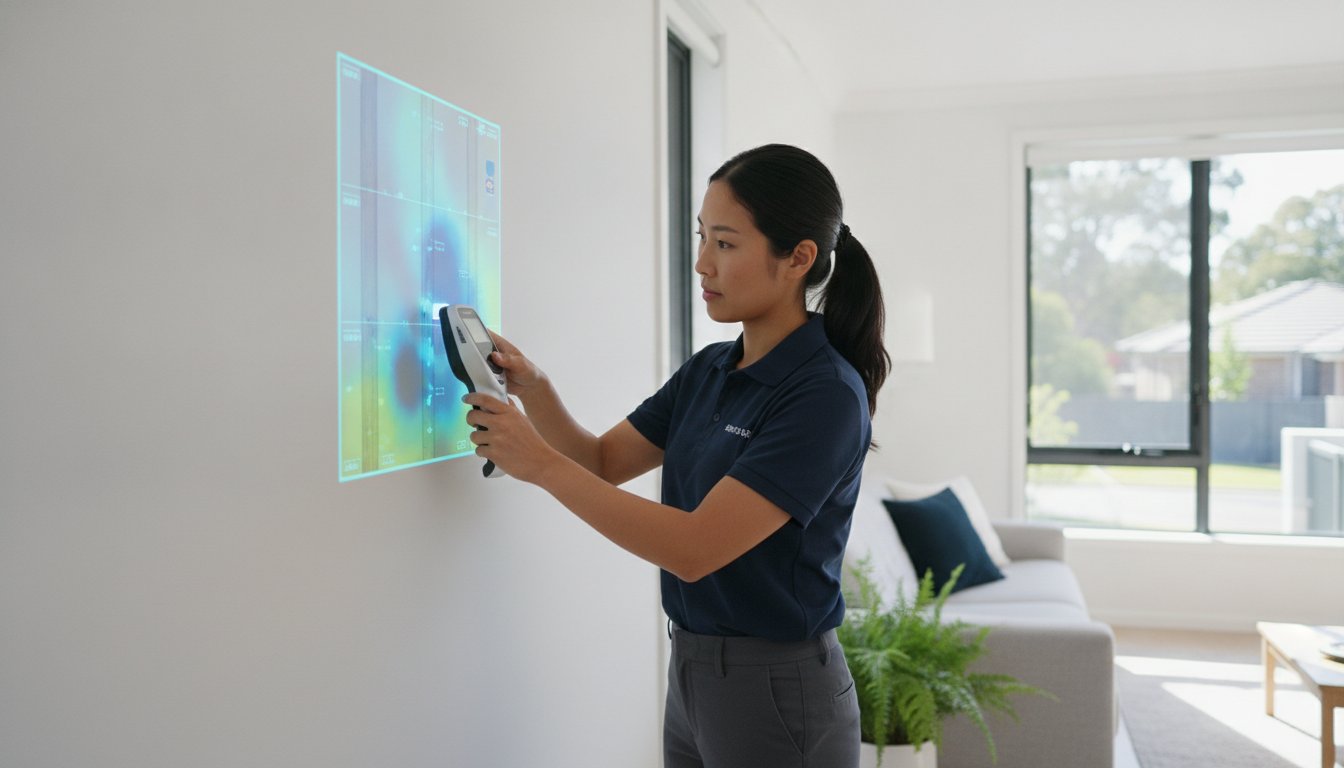
- Step 1: Comprehensive Inspection. We begin with airflow testing and moisture mapping to identify the extent of the contamination.
- Step 2: Disassembly and Containment. The unit chassis is opened, and we establish a localized containment field to prevent spore drift.
- Step 3: Deep Pressure Cleaning. We use high-volume, low-pressure wands to flush the internal coils and fan barrel.
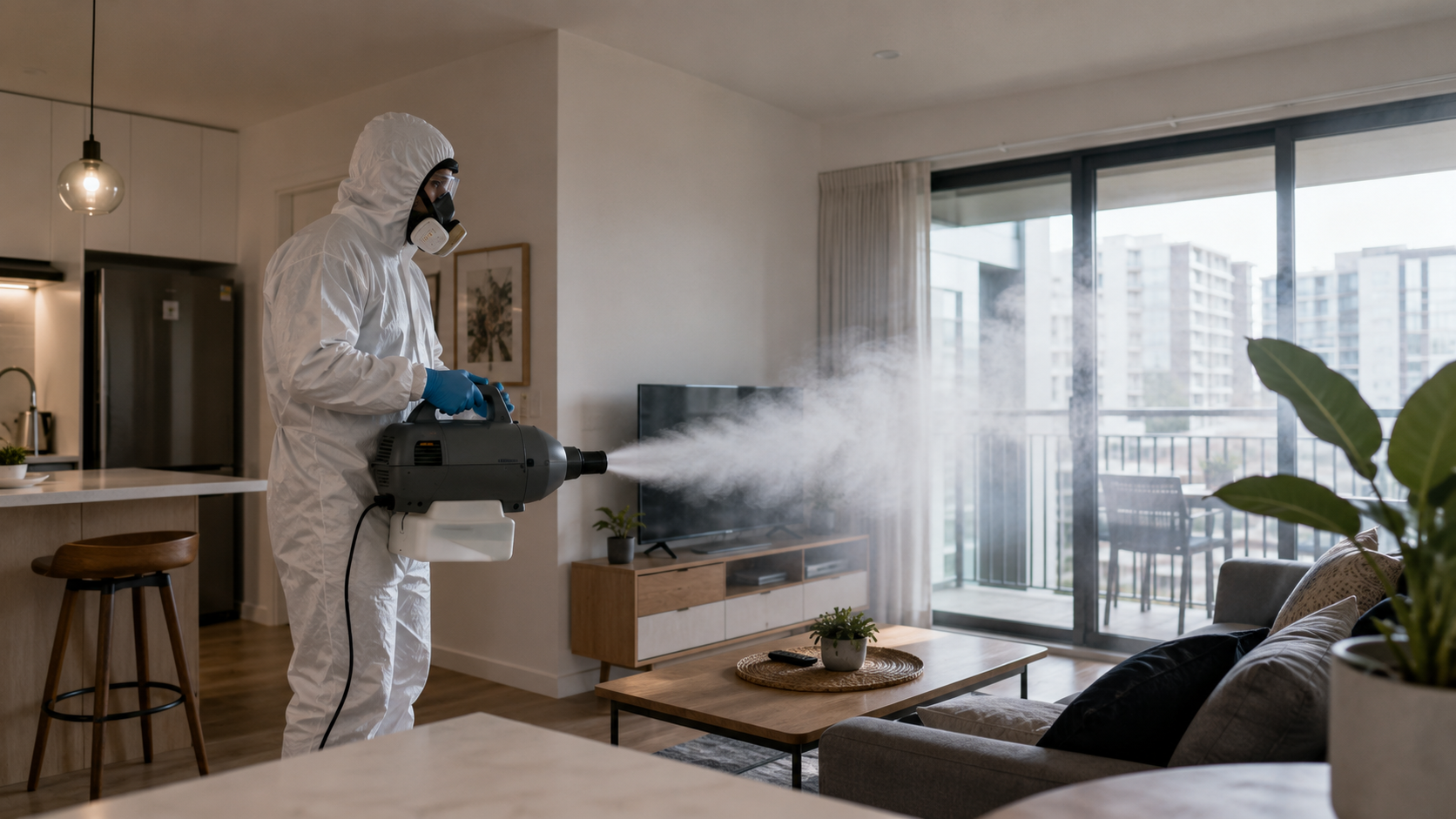
- Step 4: Goldmorr Fogging. This proprietary stage neutralizes airborne spores throughout the room, not just inside the unit.
- Step 5: Post-Clean Verification. We perform final airflow testing and apply a preventative antimicrobial shield to the components.
Deep Cleaning the Internal Components
Protecting your property is our first priority during the cleaning phase. We utilize specialized catchment bags that fit securely around the split system, funneling all waste and contaminated water into a sealed container. This ensures your walls, carpets, and furniture remain completely dry and untouched. Our technicians pay specific attention to the condensate drain line. We flush this line to remove the thick “jelly” biofilm that often causes water leaks and future mould growth. By sanitizing the internal chassis and louvres with hospital-grade solutions, we remove the sticky residue that allows new dust to anchor and start the mould cycle again.
Air Purification & The Goldmorr Advantage
A major weakness in standard cleaning is the failure to address spores that have already migrated into your room’s soft furnishings. Our Goldmorr fogging process solves this by creating a fine mist that stays suspended in the air, reaching every corner of the space. This system is biodegradable and completely safe for families, including infants and pets. Our fogging technology targets the cell wall of the spore. This mechanical action ensures the mould cannot develop resistance, providing a level of security that retail sprays cannot match. This dual-action approach; cleaning the machine and purifying the air; is what defines a truly professional air conditioner mould removal service.
Don’t settle for a surface-level wipe down when your family’s health is at stake. You can book a professional mould inspection today to see the difference a certified remediation process makes for your indoor air quality.
Preventing Recurrence: Long-Term Solutions for Sydney Homes
Securing a professional air conditioner mould removal service is the critical first step in reclaiming your home’s air quality. However, remediation is only half the battle. To ensure your system remains a source of fresh air rather than a biological hazard, you must address the environmental factors that allowed the infestation to take hold. Sydney’s coastal climate is relentless. Without proactive management, the high ambient humidity will inevitably trigger a new germination cycle within months of your last deep clean.
Optimising Your AC Settings
Most property owners rely exclusively on “Cool” mode, but this is often the least effective setting for moisture control. Your remote likely features a “Dry” mode, indicated by a water drop icon. This setting focuses specifically on dehumidification without over-cooling the room. By removing excess water vapour from the air, you deprive fungal colonies of the primary resource they need to survive. We also recommend running the “Fan” mode for at least 20 minutes after you finish cooling. This simple habit evaporates the standing water on your internal coils and fan barrel, preventing the damp conditions that lead to biofilm accumulation. Aim for a temperature setting of 22 to 24 degrees; excessive cooling creates temperature differentials that result in heavy condensation on the unit’s plastic chassis.
Addressing the Root Cause: Structural Dampness
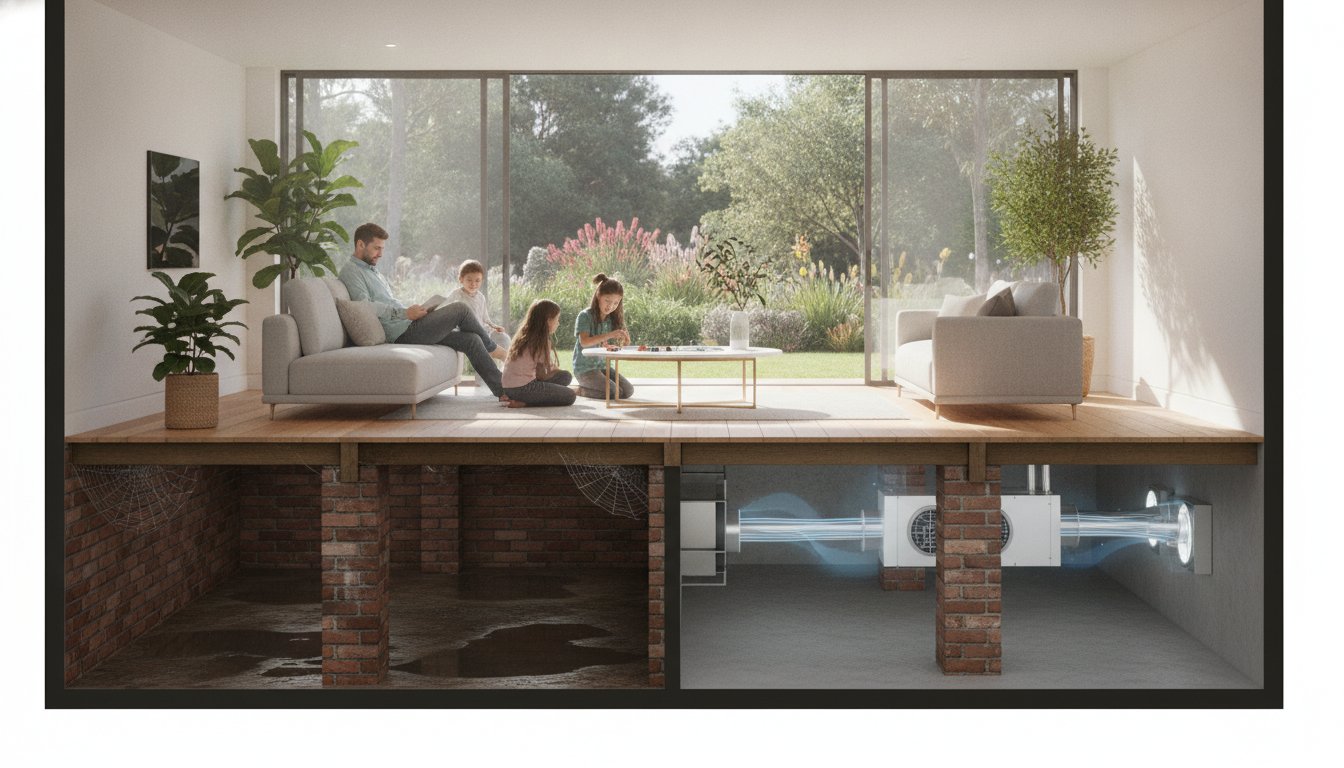
Your air conditioner does not exist in a vacuum. If your home suffers from rising damp or poor airflow, your HVAC unit will act as a concentrated collection point for all that moisture. High humidity levels originating from bathrooms or unventilated subfloors place immense stress on your AC system. This is why subfloor ventilation is critical; it removes the source of moisture before it can enter your living spaces. If you have recently experienced a leak or flooding, immediate water damage repair is essential to prevent secondary mould growth from colonising your ductwork. For comprehensive protection, consider a full-home assessment for mould removal sydney to ensure the entire property is dry and secure.
Maintaining a safe environment requires a combination of professional oversight and daily diligence. Establish a maintenance schedule that includes a professional air conditioner mould removal service every 12 months. Between these visits, commit to these simple DIY habits:
- Clean your filters every 4 weeks. Dust is the food source for mould; removing it regularly starves potential colonies.
- Inspect the external drainage. Ensure the PVC drain pipe outside your home is clear of debris and flowing freely.
- Monitor indoor humidity. Use a hygrometer to keep indoor levels below 60 percent whenever possible.
Taking these steps transforms your air conditioner from a liability into a reliable asset for your family’s health. Don’t wait for the musty odours to return before taking action. Stay ahead of the cycle and enjoy the peace of mind that comes with a professionally maintained home.
Take Control of Your Indoor Environment
Living with a contaminated HVAC system is more than a minor inconvenience; it is a persistent risk to your family’s respiratory health. You’ve seen how Sydney’s humidity accelerates the mould cycle and why standard DIY efforts often lead to costly hardware damage. Engaging a professional air conditioner mould removal service ensures your system is remediated to the highest industry standards. This isn’t just a surface wipe. It’s a technical restoration of your home’s air quality.
Our Certified Goldmorr Technicians use proprietary fogging technology to neutralise spores that are invisible to the naked eye. We offer an aggressive price-matching guarantee to ensure you receive the best value in Sydney. If you are dealing with a sudden leak, our 24/7 emergency response for water damage is ready to protect your property from escalating fungal growth. It’s time to stop breathing in toxins and start enjoying the comfort of a truly clean home.
Breathe clean air again; Book your Sydney AC Mould Inspection now!
Frequently Asked Questions
Is mould in an air conditioner dangerous?
Yes, mould in your AC is dangerous because the fan barrel acts as a distribution system for airborne spores. When the unit is running, it spreads microscopic mycotoxins throughout your living space. This can trigger chronic respiratory issues, asthma attacks, and unexplained headaches for occupants. It’s a serious health risk that requires immediate professional attention to ensure your indoor air quality is restored.
Can I clean mould out of my AC myself?
You shouldn’t attempt deep mould removal yourself. While you can wash the filters, reaching the internal fan barrel and evaporator coils requires specialized equipment and disassembly. DIY attempts often spread spores further into the room or cause permanent corrosive damage to the delicate aluminium fins. Professional technicians use contained systems to ensure the contamination is removed rather than redistributed.
How much does a professional air conditioner mould removal service cost?
The cost of an air conditioner mould removal service depends on the type of system and the severity of the infestation. Factors like the number of split systems or whether you have a ducted unit will influence the final quote. We recommend a professional inspection to provide an accurate, transparent price tailored to your home’s specific requirements and the condition of your units.
How long does the cleaning process take?
A standard deep clean and remediation for a single split system typically takes between 60 and 90 minutes. This timeframe includes the full disassembly, pressure cleaning of the internal coils, and the Goldmorr fogging process. More complex ducted systems or units with extreme biological growth may require additional time to ensure every component is laboratory-clean and safe for use.
Will the mould come back after a professional clean?
Mould won’t return if you manage humidity levels and follow a consistent maintenance schedule. We apply a preventative antimicrobial shield during the service to inhibit regrowth on the internal components. However, Sydney’s high humidity means you must also use “Dry Mode” and keep your filters clean to ensure the environment remains inhospitable for new fungal colonies.
Does the Goldmorr fogging process smell or leave a residue?
No, the Goldmorr fogging process is designed to be non-intrusive and leaves no sticky residue on your furniture or electronics. The solution is biodegradable and safe for children and pets. Any faint, clean scent from the treatment dissipates quickly after the service is complete, leaving only purified, healthy air behind for your family to breathe.
What are the signs that my AC has a mould problem?
The most common signs include a persistent “musty sock” odour and visible black or green spotting on the horizontal louvres. You might also notice tiny, pepper-like flakes being blown out of the unit when it’s first turned on. If your energy bills have increased or you experience sneezing and itchy eyes only when the AC is running, your system likely has a hidden infestation.
Does a standard AC service include mould removal?
No, a standard mechanical service usually only covers refrigerant gas levels and basic filter rinsing. It does not involve the deep pressure cleaning or chemical fogging required to eliminate established fungal colonies. A dedicated air conditioner mould removal service is a specialized remediation process that goes far beyond routine maintenance to address the root cause of biological contamination.