If your walls feel dry to the touch after a leak, you might think the danger has passed. But what if the real threat is currently colonizing the timber studs and insulation where you can’t see it? Surface dryness is often a dangerous illusion that hides brewing structural rot and secondary mould infestations. You’re likely feeling the weight of this situation right now. It’s the fear of hidden spores spreading behind the Gyprock and the looming threat of expensive, disruptive repairs that keep you up at night.
Professional wet wall drying services in Sydney are designed to eliminate these anxieties by using scientific methods to reach moisture that standard fans simply can’t touch. We know you need more than just a dry surface. You need a guarantee that your home is healthy and structurally sound. This article shows you how specialized structural drying, aligned with the AS-IICRC S500:2025 standards, saves your property from toxic growth and ensures your foundations remain solid. We’ll preview the systematic process of moisture detection and the evidence-based techniques used to restore your peace of mind quickly.
Key Takeaways
- Understand why “waiting for it to dry” is a dangerous strategy that leads to structural rot and why immediate action is required.
- Learn how professionals use non-penetrating moisture meters and moisture mapping to locate hidden water pockets behind your walls.
- Discover why professional wet wall drying services are essential to prevent “baking” mould into your home’s structure with ineffective DIY heating methods.
- Follow the proven 5-step process for effective wall and cavity drying, starting from emergency assessment to total decontamination.
- Explore how the specialized Goldmorr System eliminates toxic spores during the restoration process to ensure your home remains safe and healthy.
What are Wet Wall Drying Services and Why are They an Emergency?
Wet wall drying is far more than a simple cleanup. It is a highly technical remediation process focused on removing deep-seated moisture from structural materials like timber studs, insulation, and plasterboard. Understanding What are Wet Wall Drying Services allows you to see the difference between surface-level drying and true structural restoration. When water enters your property, it doesn’t just sit on the floor. It migrates into porous materials where it remains trapped long after the visible puddles are gone.
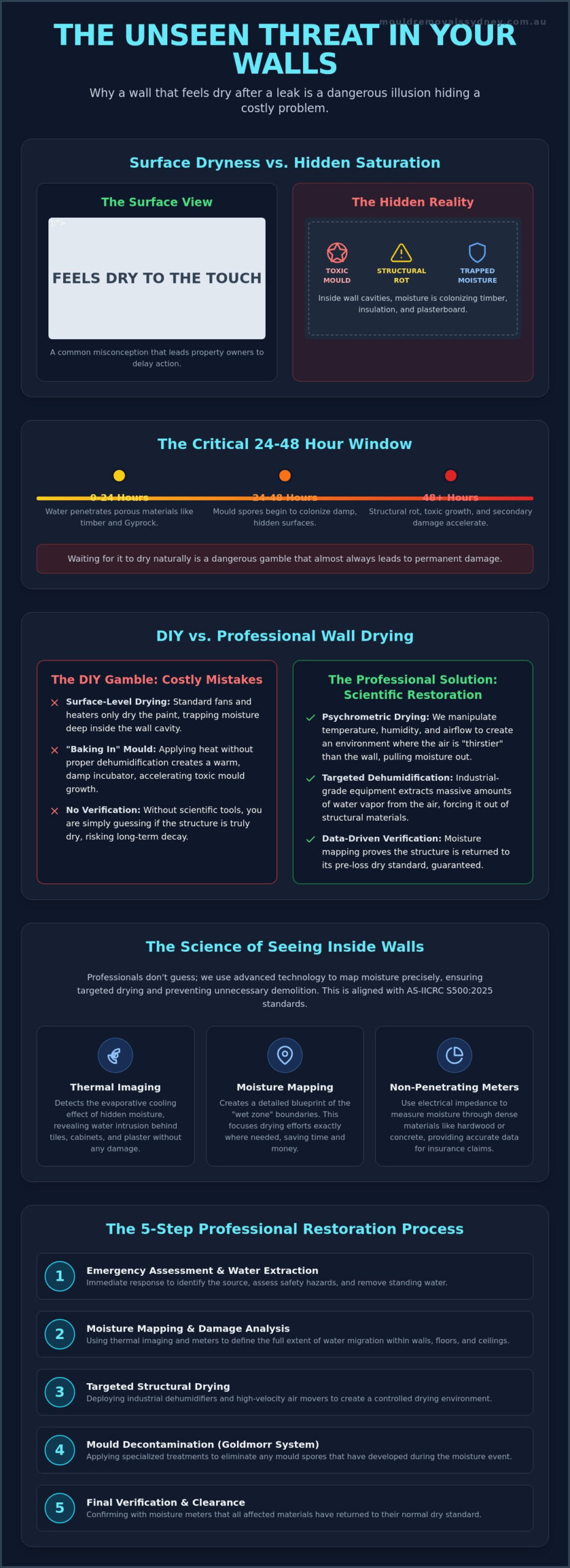
You have a critical 24 to 48 hour window before mould spores begin to colonize these wet surfaces. Waiting for a wall to dry out naturally is a dangerous gamble that usually results in permanent structural damage. Damp plasterboard loses its integrity and begins to crumble; meanwhile, timber studs can warp or rot from the inside out. Professional wet wall drying services use specialized equipment to extract this hidden moisture before the damage becomes irreversible. Mould won’t wait for your schedule. You must act immediately to protect your home’s foundation.
The Hidden Dangers of Trapped Moisture
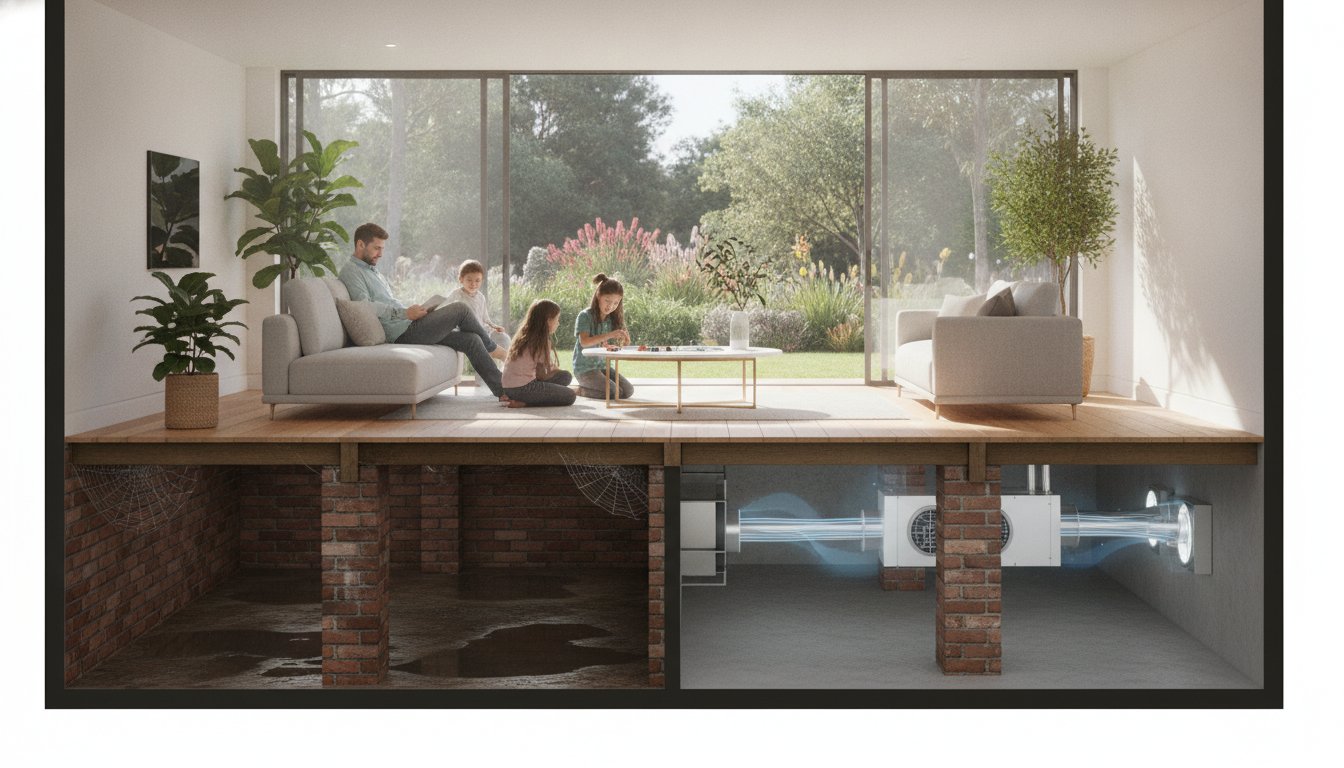
Water often moves in ways that defy logic to the untrained eye. Through a process known as the “chimney effect,” moisture wicks upward through wall cavities, reaching heights far above the initial flood line. This trapped water creates a perfect breeding ground for toxic mould behind your wallpaper or paint. Beyond structural decay, wet walls pose significant electrical hazards. Water contacting internal wiring can lead to short circuits or fire risks. Additionally, trapped moisture causes high indoor humidity. This leads to secondary damage, where mould begins growing on furniture and clothing in entirely different rooms of your house.
Sydney Climate Factors and Drying Times
Sydney’s unique coastal environment makes professional intervention essential. Our high local humidity levels frequently prevent natural evaporation from occurring. In many NSW suburbs, the air is already so saturated with moisture that damp walls simply cannot release their water content into the room. During peak humidity months, opening a window might actually make the problem worse by introducing more moist air. Professional dehumidification is mandatory in this climate to create the dry pressure needed to pull moisture out of dense building materials. Without high-grade industrial equipment, your walls may remain damp for weeks, making a toxic mould infestation almost certain.
The Science of Structural Drying: How Professionals Map Moisture
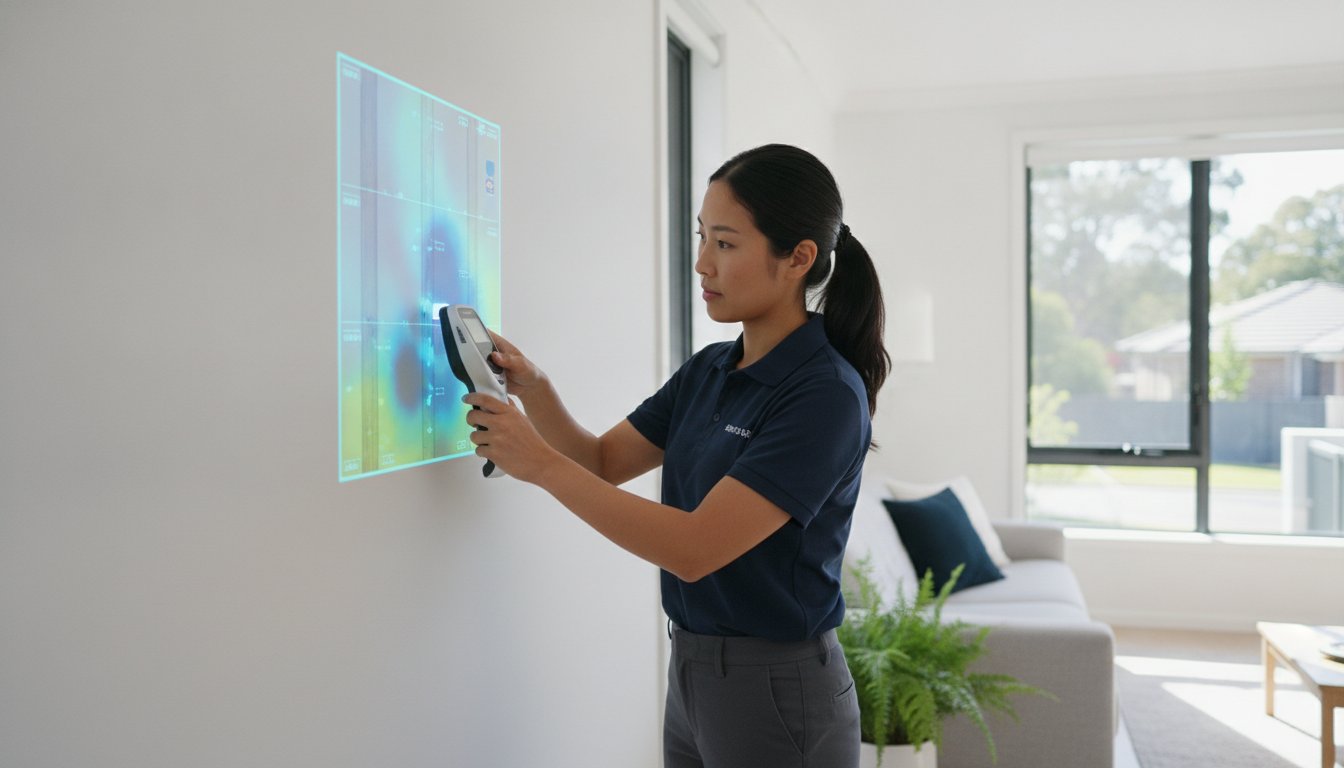
Scientific precision is what separates a professional restoration from a DIY disaster. Our technicians don’t guess where the water is. We use moisture mapping to create a technical blueprint of your property’s condition. This ensures that wet wall drying services are targeted exactly where they are needed, preventing unnecessary demolition. By identifying the exact boundaries of the “wet zone,” we can focus our equipment on the problem areas, saving you time and money. Identifying these hidden zones is the only way to truly Prevent Mould from colonizing your wall cavities and affecting your health.
Moisture Detection Technology
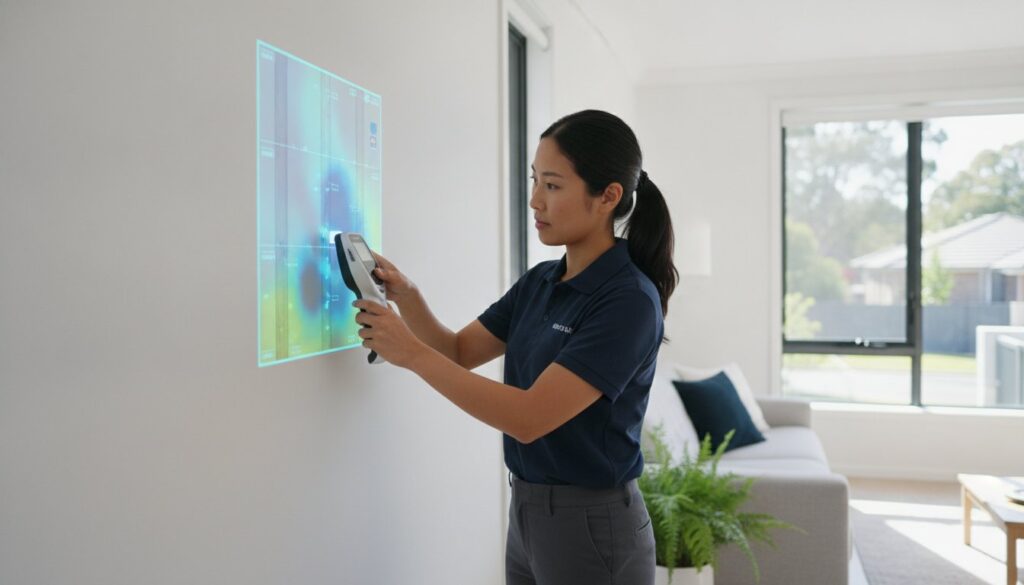
Thermal imaging cameras are our first line of defense. They don’t technically see water. Instead, they detect the evaporative cooling effect that occurs as moisture leaves a surface. These cold spots appear as dark plumes on the screen, revealing leaks behind tiles that look perfectly dry to the human eye. We verify these findings with non-penetrating moisture meters. These tools use electrical impedance to measure moisture through dense materials like hardwood or ceramic tile without causing damage. This non-invasive approach is essential for modern Sydney homes where high-end finishes must be preserved. For deep structural timber, we use penetrating probes to ensure the internal frame is safe. This data is vital for your insurance claim documentation.
Understanding Psychrometrics
Psychrometrics is the science of drying. It involves managing the relationship between temperature, airflow, and humidity to force water out of structural materials. We don’t just move air; we create an environment where the air is thirstier than the wall. This involves tracking specific humidity, which is the actual weight of water vapor in the air, rather than just relative humidity. By lowering the vapor pressure in the room, we pull moisture from the deep pores of timber studs and masonry. We only stop when the materials reach a documented Dry Standard. This is a specific moisture level that matches the unaffected areas of your building. If you suspect your walls are hiding moisture, booking professional mould inspection services can provide the evidence you need to act before damage spreads.
DIY vs. Professional Wet Wall Drying: The Cost of Mistakes
Attempting to dry a saturated wall with a household heater or hair dryer is one of the most common mistakes Sydney homeowners make. While it might feel like you’re helping, you’re often causing more harm than good. High heat without controlled dehumidification doesn’t remove moisture; it simply warms it up. This creates a literal incubator for fungal growth. You risk “baking” mould into the structural timber and insulation, making it nearly impossible to remove later without full demolition. Professional wet wall drying services are designed to avoid this by balancing temperature with aggressive moisture extraction.
The gap in performance between retail fans and industrial air movers is vast. A standard pedestal fan lacks the static pressure required to push air into wall cavities or through dense materials. We utilize high-velocity axial air movers that create a vortex of air across the surface, stripping away the boundary layer of moisture. Without this force, masonry walls often develop efflorescence. This is a white, powdery salt deposit that causes permanent staining and weakens the brickwork over time. Retail fans simply can’t generate the airflow needed to prevent these mineral deposits from forming.
The Risks of Inadequate Drying
Inadequate drying leads to more than just a musty smell. Gyprock that remains damp for more than 48 hours loses its structural bond and begins to sag. In severe cases, wall sections can collapse entirely, creating a safety hazard for your family. Beyond the physical structure, bacteria thrive in damp insulation, creating permanent odours that no air freshener can mask. Perhaps most importantly, DIY attempts often void insurance policies. Without professional documentation following The Science of Structural Drying, insurers may deny claims for secondary damage. Our reports align with the AS-IICRC S500:2025 standard, providing the evidence-based validation your insurer requires.
Why Professional Equipment Matters
We use LGR (Low Grain Refrigerant) dehumidifiers because they are engineered to remove water even in very dry conditions where standard units fail. These machines can pull over 50 litres of water from the air every 24 hours, ensuring the structural timber reaches its dry standard. To maintain a safe environment, we also deploy HEPA air scrubbers. These units capture 99.97% of airborne spores and contaminants disturbed during the process. Combining these tools with high-velocity axial movers ensures a fast restoration that retail equipment simply cannot achieve. It’s the only way to guarantee your home is truly dry and safe.
The 5-Step Process for Effective Wall and Cavity Drying
Professional restoration is a disciplined, systematic race against time. We don’t just set up fans and walk away. Our wet wall drying services follow a rigorous five-step protocol designed to ensure your property returns to a pre-loss condition as quickly as possible. This structured approach eliminates the guesswork and provides a clear, documented path from disaster to a safe, dry home.
- Step 1: Emergency Assessment and Safety Inspection. We immediately identify electrical hazards and structural risks. Our team uses the moisture mapping techniques discussed earlier to define the scope of work and ensure the site is safe for occupants.
- Step 2: Water Extraction and Surface Decontamination. We remove standing water using industrial extraction units. Removing liquid water is significantly faster than evaporating it. We then clean all surfaces with professional-grade solutions to prevent bacterial colonization.
- Step 3: Strategic Equipment Staging. We position LGR dehumidifiers and high-velocity air movers to create a controlled “drying chamber.” This ensures every square inch of the affected wall receives consistent, high-pressure airflow.
- Step 4: Continuous Monitoring and Moisture Tracking. Restoration is a dynamic process. We return daily to measure moisture levels in the air and materials, adjusting equipment positions based on the current atmospheric data.
- Step 5: Final Verification and Anti-Microbial Treatment. Once the Dry Standard is met, we apply a professional-grade anti-microbial solution. This provides a final layer of protection to inhibit any future mould spore development.
Cavity Drying Techniques
Standard drying often misses the air space behind the Gyprock. We use “injectidry” systems to target these hidden cavities directly. Instead of tearing down your walls, we often use existing openings like power outlets or remove the skirting boards to insert small drying tubes. This non-invasive method forces warm, dry air into the wall cavity, ensuring the timber studs and insulation are completely dry. If we find that insulation is saturated beyond repair, we’ll professionally remove it to prevent it from acting as a damp sponge that fuels structural rot.
Monitoring and Verification
You can’t manage what you don’t measure. Our technicians perform daily checks to ensure the drying plan is on track. We track the “grain shift”, which is the actual reduction of moisture weight in the air, to verify that our equipment is working at peak efficiency. If Sydney’s weather changes, we adjust the setup to maintain the ideal internal drying environment. At the end of the project, we provide a “Certificate of Dryness.” This document is your proof that the structure is sound and safe for occupancy. If you’ve suffered a leak, don’t wait for the damage to become permanent. Secure our professional water damage restoration services to start the recovery process today.
ABC Mould Cleaning Solutions: Sydneys Structural Drying Experts
ABC Mould Cleaning Solutions provides a specialized approach to water damage that goes beyond simple dehumidification. We recognize that moisture is only half the battle. The real threat lies in the microbial growth that follows. Our wet wall drying services are built around the proprietary Goldmorr System, a methodology specifically designed to eliminate spores while restoring structural integrity. We prioritize non-invasive techniques that save your plasterboard and timber, preventing the need for costly and disruptive demolition. Our team is ready to respond to emergencies across all Sydney suburbs, providing the rapid intervention needed to stop mould before it starts.
We don’t just dry your property; we restore its safety. By combining high-grade structural drying with advanced air purification, we ensure your home remains a healthy environment. Our technicians are not just equipment operators. They are highly trained specialists who understand the complex relationship between Sydney’s humidity and building science. We focus on results that last, backed by a commitment to transparency and efficiency.
The Goldmorr Advantage
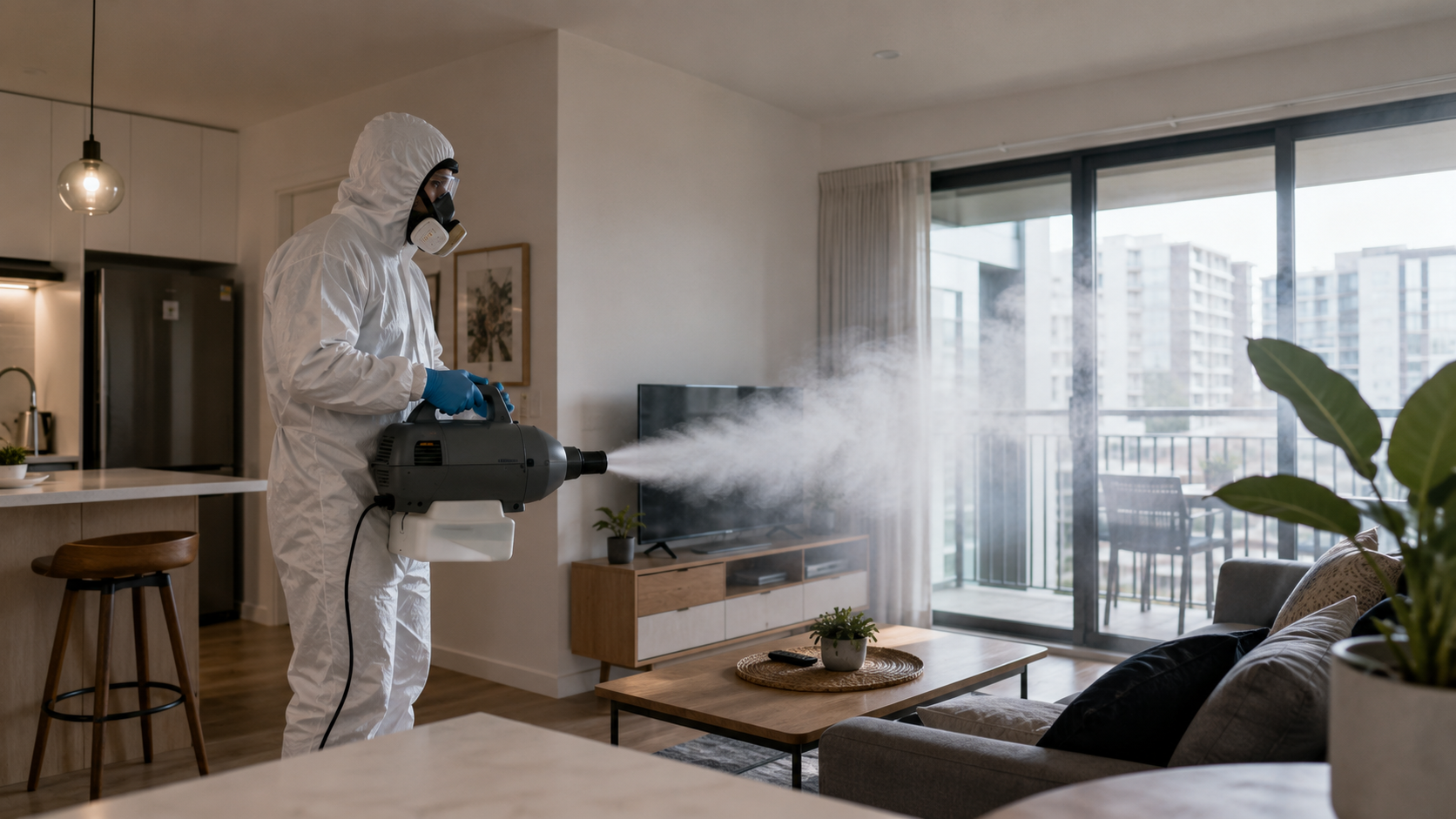
What sets our service apart is the integration of the Goldmorr System into our drying protocol. While traditional restoration might leave dormant spores behind, our process includes a biodegradable fogging phase. This fog permeates hidden wall cavities and porous materials, neutralizing mould spores that are invisible to the naked eye. We also deploy air purification and scrubbing units to capture airborne contaminants disturbed during the drying process. This dual-action approach ensures your indoor air quality is restored alongside your walls. You aren’t just getting a dry room; you’re getting a decontaminated space safe for immediate re-occupancy.
Why Sydney Trusts ABC Mould Cleaning
Sydney’s coastal climate presents unique challenges for water damage restoration. Our team has a deep understanding of water damage repair in local conditions, where high humidity can often stall natural drying. We employ IICRC-trained technicians who adhere to the latest Australian standards, ensuring every project is documented and executed with scientific precision. To make the process even easier, we offer a streamlined digital inquiry process where you can submit photos of the damage for a faster assessment. We also maintain an assertive market position with our aggressive price-matching guarantee, ensuring you receive the best value for expert-led restoration. Don’t wait for hidden moisture to compromise your foundations. Contact us for an urgent moisture inspection and let our experts restore your peace of mind. We’ll handle the technical details so you can get back to your normal routine without the stress of hidden mould.
Secure Your Property’s Health and Structural Integrity
Leaving moisture trapped behind your walls is a risk you can’t afford to take. We’ve established that surface dryness is often an illusion that hides brewing structural rot and toxic mould. Professional wet wall drying services provide the only reliable path to a safe, healthy home by using scientific moisture mapping and industrial extraction. Our IICRC accredited water damage specialists don’t just move air; we use the Goldmorr System to neutralize spores and verify that your foundations are truly sound.
We offer a 24/7 emergency response across all Sydney suburbs because we understand the urgency of water damage. You deserve the security of knowing your restoration is handled by Goldmorr System certified technicians who prioritize your family’s safety. Don’t let hidden dampness lead to expensive, disruptive repairs in the future. Take action now to protect your investment and your well-being. We’re ready to help you return your home to its best condition with speed and professional care.
Get a Professional Wet Wall Inspection in Sydney Today
Frequently Asked Questions
How long does it take to dry out a wet wall professionally?
Professional wet wall drying services typically take between three and five days depending on the severity of the water intrusion and the specific building materials. While surface moisture might disappear quickly, reaching the “Dry Standard” in deep structural timber or masonry requires consistent equipment operation. We monitor the progress daily to ensure the timeline remains as efficient as possible for your restoration.
Can I stay in my house while the drying equipment is running?
You can generally stay in your home, but you should expect some disruption due to the noise and heat generated by the industrial machinery. The equipment must run 24/7 to be effective. If the water damage is extensive or involves Category 3 “black water” contaminants, we may recommend temporary relocation for your safety and comfort during the initial remediation phase.
Will my insurance cover the cost of wet wall drying services?
Most comprehensive home insurance policies cover wet wall drying services if the damage resulted from a sudden and accidental event, such as a burst pipe. We provide the detailed moisture mapping and “Certificate of Dryness” required by insurers to validate your claim. It’s always best to check your specific Product Disclosure Statement (PDS) to confirm your coverage for water damage restoration.
Do I need to replace my Gyprock if it gets wet?
You don’t always need to replace Gyprock if the drying process begins within the first 24 to 48 hours. If the plasterboard remains structurally sound and hasn’t started to sag or crumble, professional structural drying can often save it. However, if the water was contaminated or if mould has already colonized the paper backing, removal is usually the safest option to prevent health risks.
How do I know if there is mould growing inside my walls?
A persistent musty odour is often the first sign of hidden mould growth behind your walls. You might also notice bubbling paint, discoloured patches, or a sudden increase in respiratory issues among occupants. Since mould often grows where you can’t see it, we use thermal imaging and moisture meters to detect the damp conditions that fuel these infestations before they become visible.
Can a wet wall cause structural damage to my home?
Yes, prolonged moisture can lead to significant structural issues including timber rot, warped studs, and weakened masonry. Water compromises the load-bearing capacity of certain materials over time. By engaging professional services early, you stop the degradation of your home’s internal frame. This prevents the high cost of major structural repairs that inevitably follow long-term dampness and neglect.
What is the difference between a dehumidifier and an air mover?
An air mover creates high-velocity airflow to evaporate moisture from the surface of the wall, while a dehumidifier removes that evaporated water from the air. Think of them as a team. The air mover pulls the water out of the material and the dehumidifier captures it so it doesn’t just settle elsewhere. Using one without the other is far less effective and often leads to secondary damage.
Is the drying process noisy?
Industrial drying equipment is quite noisy as it’s designed for maximum power rather than quiet operation. The sound is similar to a large industrial fan or a loud vacuum cleaner running constantly. While it can be inconvenient, it’s a necessary part of the process to ensure the high-velocity evaporation needed to save your structural materials from permanent rot and damage.