Did you know that 90% of DIY mould removal attempts result in the fungus returning within just three weeks? You’ve likely spent hours scrubbing surfaces with supermarket sprays, only to see those stubborn black spots reappear. It’s exhausting to deal with recurring growth, especially when you’re worried about the health risks of invisible, airborne spores. You need a solution that actually works the first time. You’re likely asking: Mould Fogging – Is It An Effective Treatment For Mould?
We understand the stress of living in a home that feels contaminated. This guide will reveal the truth about fogging technology and how it targets the microscopic spores that traditional cleaning misses. You’ll learn why a professional remediation strategy must address both surfaces and the air you breathe to be truly successful. We’ll preview the benefits of the Goldmorr System, explain the importance of the new AS-IICRC S520:2025 standards, and help you decide if fogging is the right investment for a permanent, non-toxic result for your property.
Key Takeaways
- Learn how Ultra-Low Volume (ULV) foggers create micron-sized droplets to reach hidden areas and neutralize airborne contaminants throughout your home.
- Discover the definitive answer to the question: Mould Fogging – Is It An Effective Treatment For Mould? when used as part of a comprehensive professional strategy.
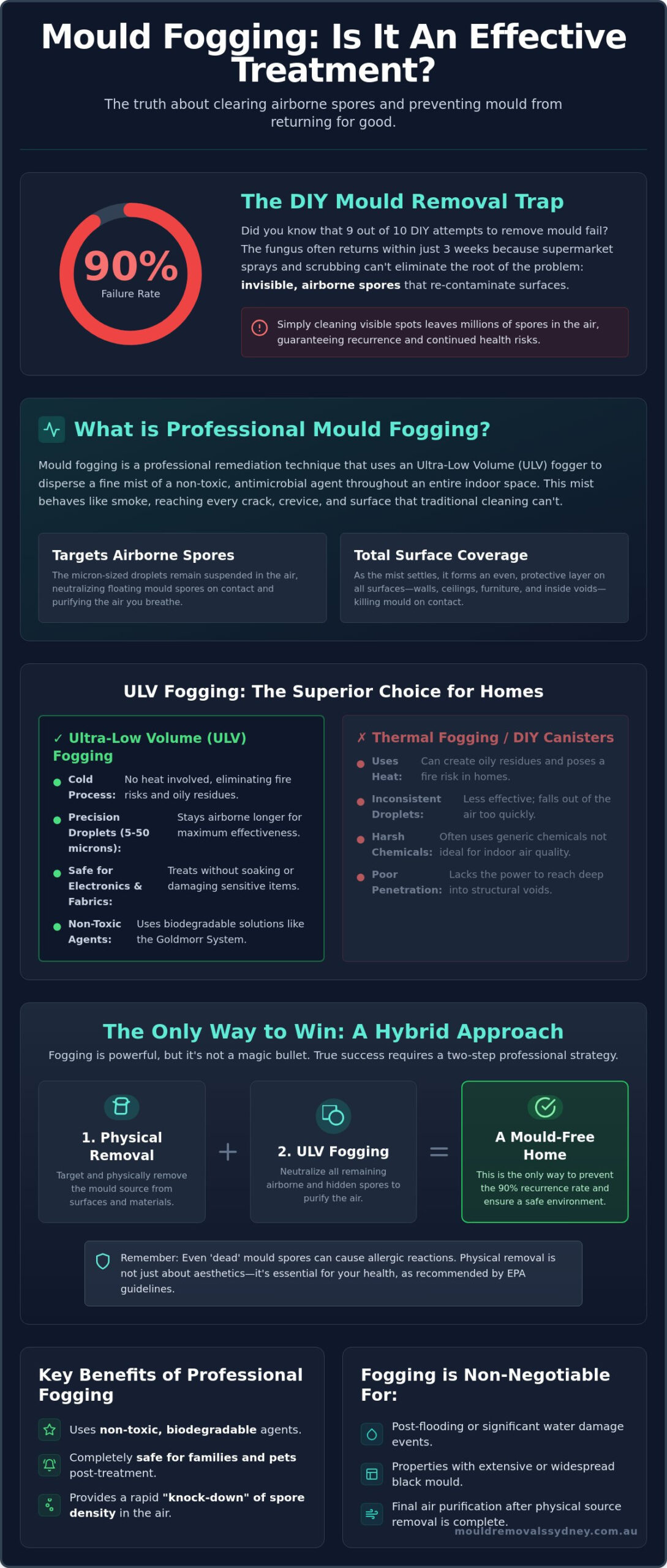
- Understand why a hybrid approach combining physical source removal with fogging is the only way to prevent the 90% recurrence rate common with DIY cleaning.
- Explore the benefits of the Goldmorr System, which uses non-toxic, biodegradable agents to ensure your property is safe for families and pets immediately after treatment.
- Identify the specific scenarios, such as post-flooding or extensive black mould, where professional fogging is a non-negotiable step for air purification.
What is Mould Fogging and How Does the Technology Work?
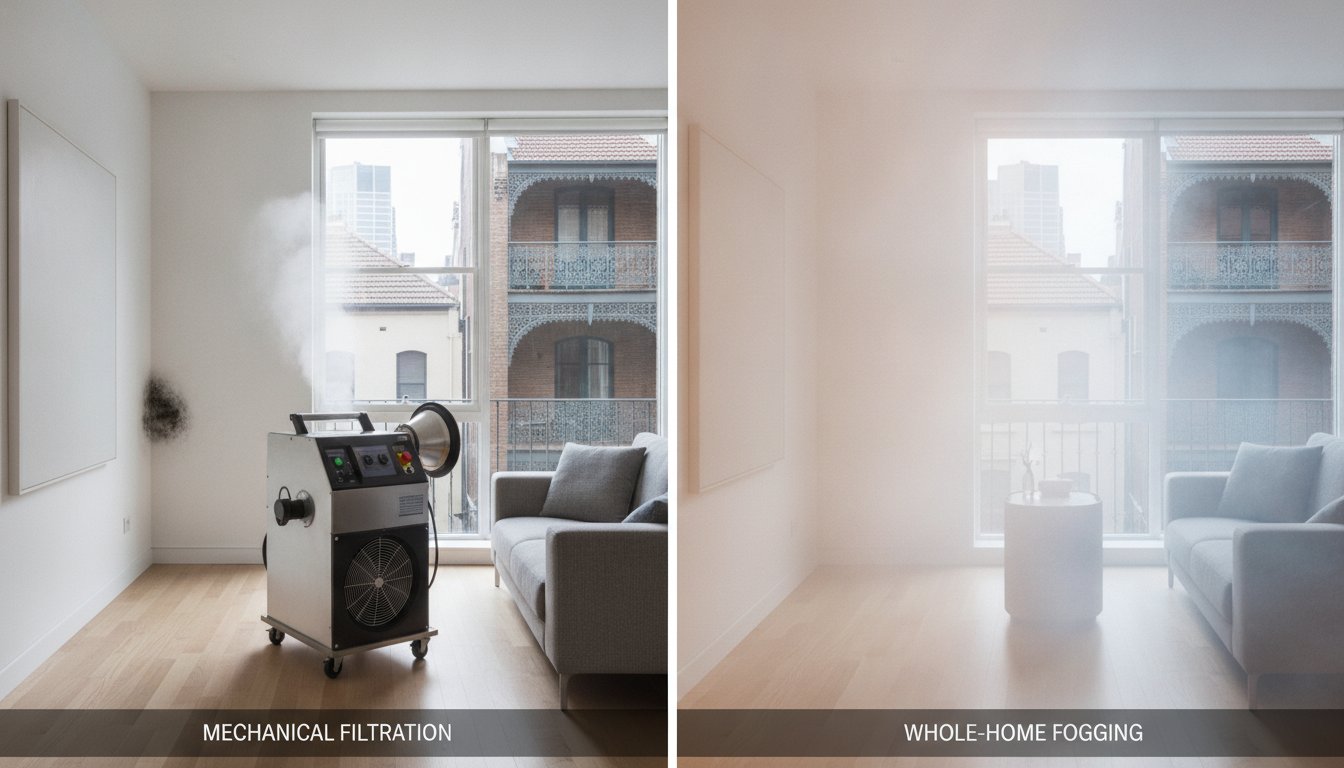
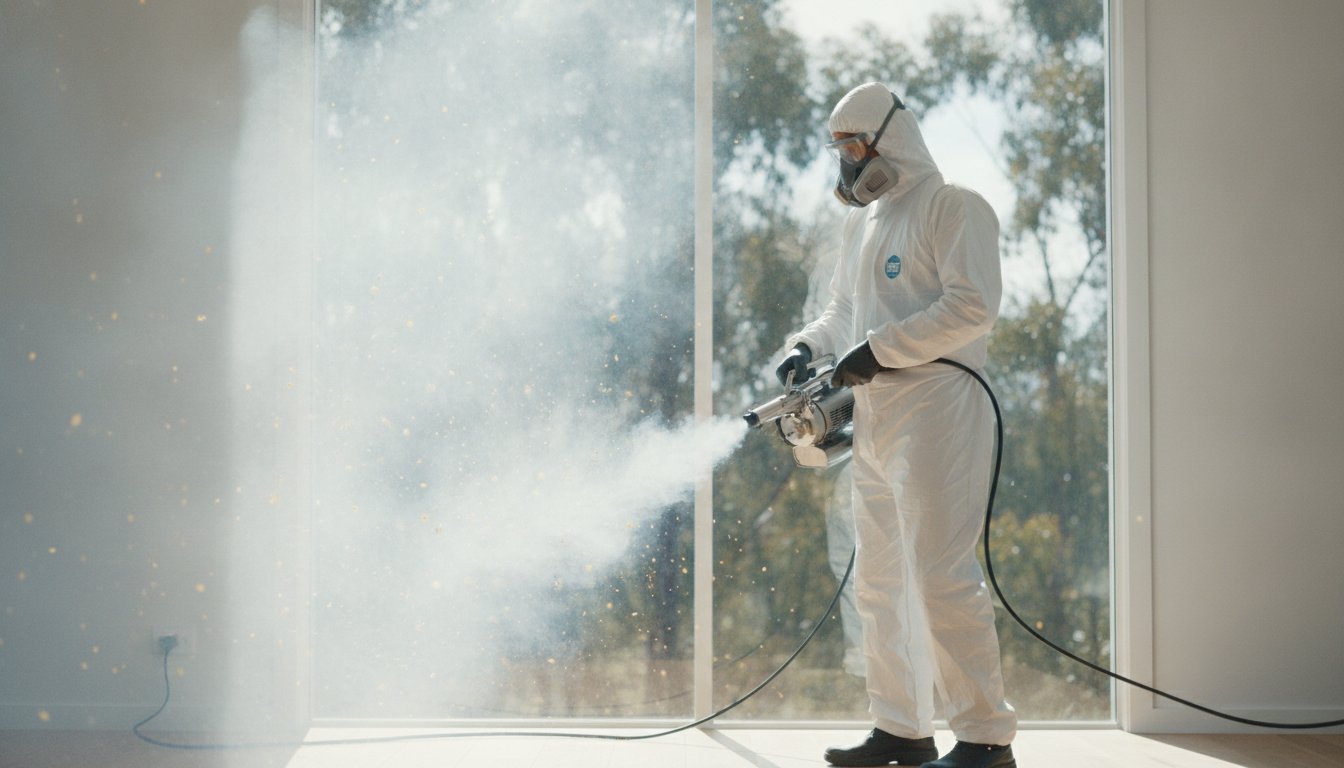
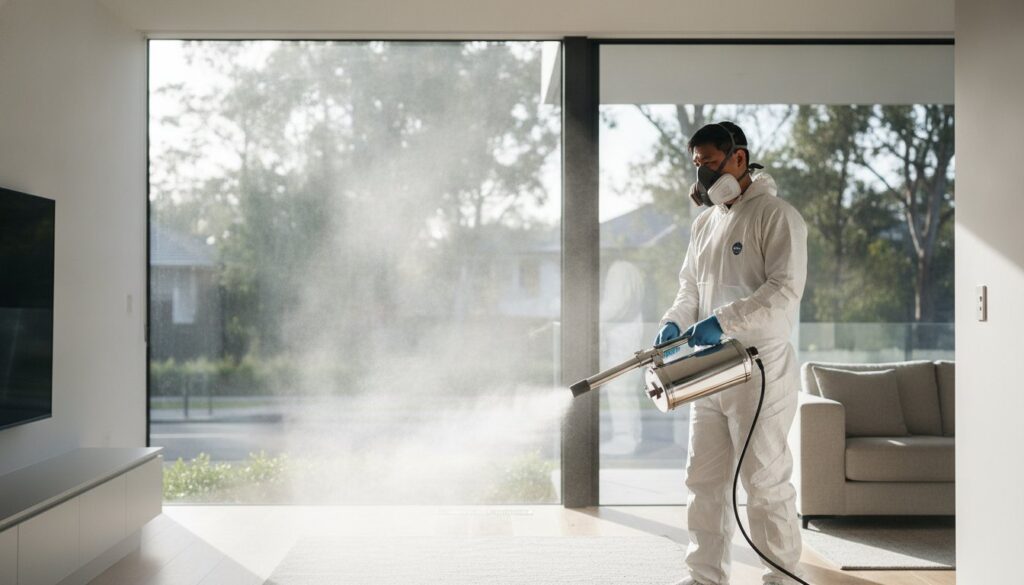
Mould fogging is a specialized remediation technique that involves the aerosolization of antimicrobial agents to treat contaminated indoor environments. Unlike simple surface scrubbing, this process creates a fine mist that permeates the entire volume of a room. Property owners often ask: Mould Fogging – Is It An Effective Treatment For Mould? The answer lies in the technology’s ability to address the invisible threat: airborne spores. By turning liquid antimicrobials into a cloud of microscopic droplets, we can neutralize contaminants that are physically impossible to reach with a cloth or sponge.
Many people mistake professional fogging for the “bug bombs” or DIY canisters found in hardware stores. These retail products often use generic chemicals and lack the pressure required to penetrate deep into structural voids. Professional foggers are precision tools. They are designed to flood wall cavities, ceiling voids, and even the internal fibers of soft furnishings with neutralizing agents. This ensures that the remediation process isn’t just a cosmetic fix but a deep-cleansing treatment for the building’s envelope.
The Science of Aerosolized Antimicrobials
To understand What is Indoor Mould? and how to eliminate it, you must understand spore behavior. Spores are incredibly light. They remain suspended in the air for long periods, drifting on the slightest current. Professional fogging mimics this behavior. The antimicrobial droplets remain suspended in the atmosphere, making direct contact with floating spores to neutralize them mid-air. As the mist eventually settles, it creates an even, protective coating on every surface, including those behind heavy furniture or inside cupboards. We use biodegradable, non-toxic agents like those found in the Goldmorr System to ensure your home remains a safe environment for your family and pets.
ULV Fogging vs. Thermal Fogging
We utilize Ultra-Low Volume (ULV) fogging, which is a cold aerosolization process. It’s the superior choice for sensitive residential environments. It doesn’t involve the high heat associated with thermal fogging, which can sometimes create oily residues or pose fire risks in confined spaces. The effectiveness of ULV fogging is measured in microns. By producing droplets between 5 and 50 microns in size, the technology ensures the antimicrobial agent stays airborne long enough to be effective. This precision allows us to treat the air and surfaces without soaking your belongings or damaging delicate electronics. It’s a pragmatic, results-driven approach to air purification.
Is Mould Fogging Effective? The Truth About Airborne Spore Neutralization
Is it a magic bullet? Not exactly. While many property owners ask, Mould Fogging – Is It An Effective Treatment For Mould?, the truth depends entirely on how it’s applied. If you expect a mist to dissolve a rotted subfloor or penetrate deep into saturated insulation, you’ll be disappointed. Fogging is a powerful supplemental tool designed to neutralize the invisible half of an infestation: the airborne spores. It provides a rapid ‘knock-down’ of spore density, making the environment significantly safer for occupants almost immediately. However, it cannot reach the roots of mould embedded in thick, porous materials. For those issues, physical remediation remains the gold standard.
Professional fogging is most effective when it’s used to treat the air and hard-to-reach surfaces that hand-cleaning misses. It’s about total volume treatment. By filling a room with antimicrobial mist, we ensure that every cubic centimeter of air is addressed. This prevents the common cycle where you clean a wall only to have spores from the ceiling or air settle back down and restart the colony. It’s a pragmatic, evidence-based step in a professional remediation strategy.
Why Killing Mould Isn’t Enough
Simply killing the fungus is only half the battle. Even neutralized or ‘dead’ spores remain highly allergenic and can trigger severe respiratory distress in vulnerable people. According to EPA guidelines on mould, physical removal of the mould is essential because dead mould may still cause health effects. Source removal must always accompany fogging to ensure the allergenic biomass is completely gone from the building. Without addressing the underlying moisture problem that caused the growth, re-colonisation is inevitable. You’ll find yourself back at square one within weeks if a hidden leak or high humidity issue isn’t resolved first.
The Role of Fogging in Air Purification
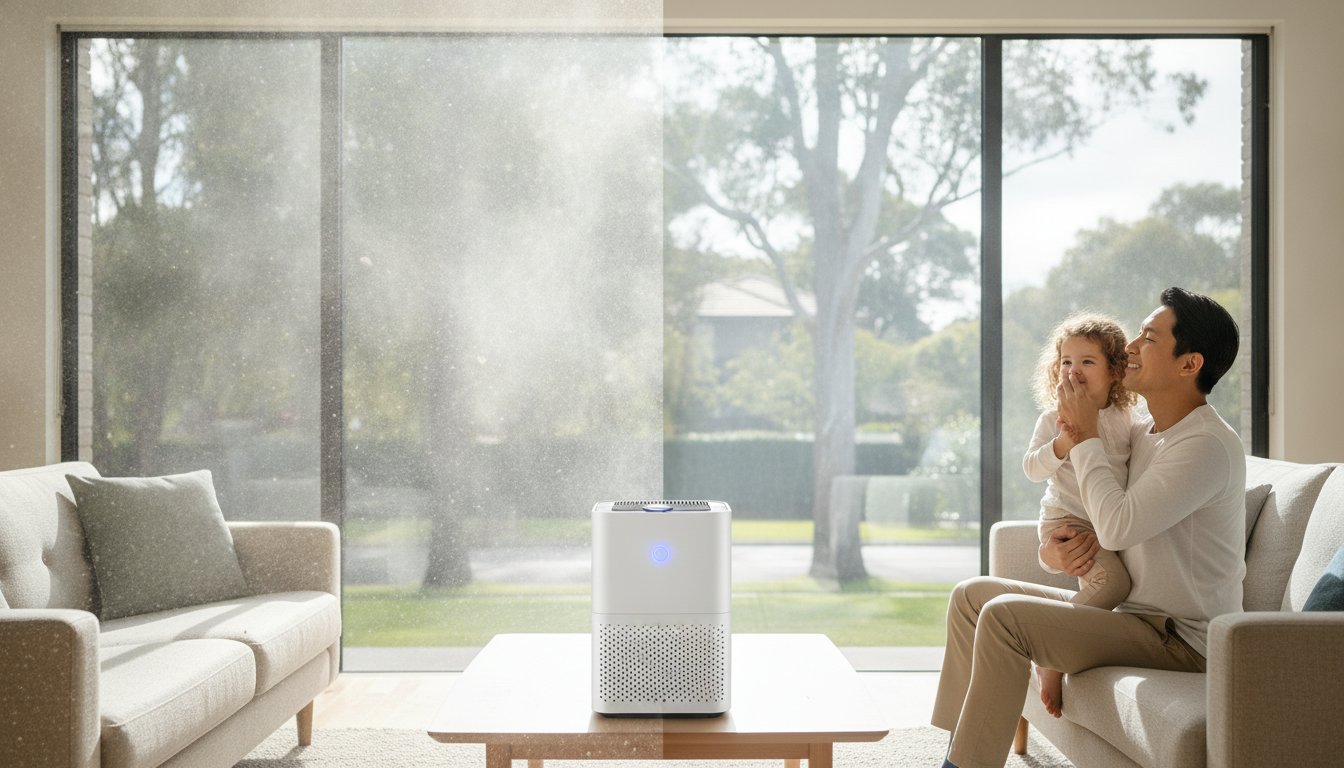
Fogging plays a critical role when paired with professional air purification & scrubbing. The antimicrobial mist encapsulates floating particles, essentially weighting them down and making them easier for high-efficiency filters to trap. This is particularly vital when dealing with black mould, where spore counts can reach dangerous levels quickly. The ‘knock-down’ effect ensures that when we begin physical cleaning, we aren’t just kicking more toxins into the air you breathe. It’s a systematic way to restore your home’s air quality to a healthy baseline. If you’re worried about the safety of your indoor air, a professional mould remediation assessment can help identify the best path forward.
Fogging vs. Physical Removal: Why a Hybrid Approach Wins
Property owners often find themselves choosing between manual scrubbing and high-tech air treatments. However, if you’re asking, Mould Fogging – Is It An Effective Treatment For Mould?, you have to understand that it’s most powerful when used as part of a dual-action strategy. In the high-humidity coastal environment of Sydney, where moisture levels often exceed 70% between March and August, airborne spores are incredibly active. Relying on a sponge alone to fix the problem is a losing battle. You might clean the surface, but you’re leaving the surrounding air thick with invisible contaminants ready to land and regrow.
We follow a systematic, evidence-based methodology to ensure your home stays healthy. This hybrid approach ensures that we don’t just hide the problem; we eliminate it from every corner of the room. Our professional process follows four critical steps:
- Inspect: We identify the moisture source and the full extent of the infestation.
- Remove: We physically scrub and sand the biomass from hard surfaces.
- Fog: We aerosolize antimicrobial agents to neutralize the airborne spores released during cleaning.
- Purify: We use industrial air scrubbers to capture the neutralized particles.
The Limits of Manual Cleaning
Manual scrubbing is technically known as “Source Removal,” and it’s a vital part of the process. But it has a dangerous side effect. When you scrub a mould colony, you agitate it. This physical friction sends millions of microscopic spores into the air. If you don’t have a plan to treat that air, you’re effectively cross-contaminating every other room in your house. This is particularly problematic with ceiling mould. Spores hide in the porous texture of plaster and ceiling roses where a cloth simply cannot reach. Without fogging, those hidden spores will germinate the moment the humidity spikes again.
How Fogging Completes the Remediation Cycle
Following The IICRC S520 Standard, professional remediation requires more than just “killing” the fungus. Fogging provides a necessary sterilization of the entire air column. It’s the only way to treat soft contents like carpets, curtains, and upholstery that can’t be aggressively scrubbed without causing damage. The fine mist permeates fabric fibers, neutralizing spores that have burrowed deep inside. By treating the entire property’s air volume at once, we provide a level of security that manual cleaning alone can’t match. It transitions your home from a state of contamination to a state of total resolution.
The Goldmorr System: Why Methodology Matters for Sydney Homes
At ABC Mould Cleaning Solutions, we don’t rely on guesswork. We utilize the Goldmorr System, a world-class proprietary methodology designed to eliminate infestations at their source. When homeowners ask, Mould Fogging – Is It An Effective Treatment For Mould?, the answer depends entirely on the products and precision involved. Many low-cost operators use harsh, bleach-based fogging agents that merely mask the problem or leave behind toxic chemical residues. In contrast, our system focuses on total environmental safety while delivering a lethal blow to both surface and airborne spores. It is the gold standard for property owners who prioritize health alongside results.
The Goldmorr approach is a systematic process that combines high-tech aerosolization with physical removal. By using specialized products like GM2000, we can address the “invisible” half of the mould problem without compromising the safety of your indoor environment. This methodology is specifically designed to be less invasive than traditional methods, often reducing the need for expensive structural demolition. It’s a pragmatic, results-driven solution for serious infestations.
Biodegradable Fogging: Safety First
Indoor air quality is non-negotiable. Because fogging involves aerosolizing particles into the very air you breathe, using biodegradable agents is a critical requirement for residential safety. The Goldmorr System utilizes non-toxic products that break down naturally, leaving no hazardous chemical footprint in your living spaces. This is especially vital for homes with children, pets, or family members with respiratory sensitivities. Unlike traditional industrial chemicals that require days of airing out, our process allows for a significantly faster re-entry time. Once the mist has completely settled and the surfaces are dry, your home is safe to inhabit again. You get the peace of mind that comes with a sterile environment without the worry of lingering poisons.
Targeting the Root Cause in NSW
Managing mould removal in Sydney requires an understanding of our unique coastal climate. During the peak mould season from March to August, humidity levels in New South Wales frequently exceed 70%, creating a breeding ground for spores. The Goldmorr methodology doesn’t just stop at fogging; it integrates with broader moisture control strategies. This might include recommendations for subfloor ventilation to address rising damp or structural air-flow issues. By combining air treatment with physical remediation and moisture management, we provide a long-term solution rather than a temporary fix. It’s an evidence-based approach that addresses why the mould grew in the first place.
Don’t settle for “mould cowboys” who use outdated, toxic methods. Ensure your property is treated with the most advanced, safe remediation technology available. Contact us today for a professional mould removal Sydney assessment to protect your home and your health.
Professional Remediation: When to Choose Fogging for Your Property
Deciding when to transition from simple cleaning to professional remediation is a critical step for any property owner. While localized surface spots might seem manageable, certain high-risk scenarios make specialized intervention mandatory. You may still be asking: Mould Fogging – Is It An Effective Treatment For Mould? For large-scale infestations or hidden contamination, it’s often the only way to ensure total property safety. Attempting a DIY approach with retail foggers often backfires. Without professional containment and industrial-grade HEPA filtration, you risk simply circulating spores into unaffected areas of your home. A professional appointment involves a systematic walkthrough, structural sealing, and a controlled application of the Goldmorr System to ensure every cubic centimeter of air is purified.
We recommend professional fogging as a non-negotiable step in the following situations:
- Extensive Growth: Visible mould covering areas larger than one square meter.
- Structural Voids: Suspected growth behind plasterboard, under floorboards, or inside ceiling cavities.
- HVAC Contamination: When mould has entered your air conditioning ductwork, potentially spreading toxins with every breath.
- Post-Flooding: Any property that has experienced significant water ingress or internal pipe bursts.
Signs Your Home Needs Professional Fogging
Sydney’s coastal humidity is a primary driver of indoor air quality issues. If your home has suffered recent water damage, the clock is ticking. You should look for persistent musty odours that remain even after you’ve scrubbed visible spots. These smells are often caused by Microbial Volatile Organic Compounds (MVOCs), which indicate an active colony hidden from view. Perhaps most importantly, if occupants are experiencing unexplained respiratory symptoms, skin irritations, or heightened allergies, it’s a clear sign that the airborne spore count has reached an unsafe level. In these cases, Mould Fogging – Is It An Effective Treatment For Mould? Absolutely, as it’s the most efficient way to achieve a rapid ‘knock-down’ of those invisible triggers.
The ABC Mould Cleaning Solutions Difference
We provide a pragmatic, results-driven service that prioritizes your family’s health. Our team is available for a 24/7 response to handle emergencies like flash flooding, ensuring that moisture doesn’t have time to turn into a toxic infestation. We’ve streamlined our digital inquiry process to make it easy for you to get expert advice quickly. Simply send us photos or videos of your concern, and we’ll provide a clear path to resolution. We are so confident in our value that we offer an aggressive price-matching guarantee against any comparable professional quote. Our goal is to restore your home to a safe, healthy living environment with minimal stress and maximum efficiency. If you are also looking for general home maintenance or a thorough refresh to keep your property in top condition, Pink Lady Cleaning Services provides reliable professional support. Trust the experts to clear the air and protect your property for the long term.
Restore Your Home’s Air Quality Today
Living with persistent mould is a health risk you shouldn’t have to tolerate. We’ve established that while surface scrubbing is a vital first step, it’s only half the battle. Mould Fogging – Is It An Effective Treatment For Mould? When used as part of a professional hybrid strategy, it’s the only way to neutralize the invisible airborne spores that cause recurrence and respiratory distress.
Our Goldmorr System Certified specialists use biodegradable and non-toxic agents to ensure your environment is safe immediately after treatment. We don’t just mask the problem; we provide a total solution through inspection, physical removal, and advanced air purification. If you’ve experienced a recent leak or flood, our 24/7 emergency water damage response team is ready to act before the damage escalates and the air becomes unsafe.
Take control of your indoor environment and breathe easy again. Get a Free Quote for Professional Mould Fogging in Sydney and let our experts restore your home’s safety. You’re just one step away from a healthy, mould-free living space.
Frequently Asked Questions
Is mould fogging safe for my pets and children?
Yes, professional fogging is safe for your entire family when performed using the right methodology. We utilize the Goldmorr System, which relies on biodegradable and non-toxic agents specifically designed for residential use. These products break down naturally and leave no hazardous chemical residues behind. Once the mist has completely settled and surfaces are dry, your children and pets can safely return to the treated areas without risk.
Do I need to leave my house during a mould fogging treatment?
Yes, we require all occupants and pets to vacate the property during the active aerosolization process. While the products are non-toxic, the high concentration of mist in the air during the application can be a respiratory irritant if inhaled directly. This protocol ensures your safety while our specialists work to purify your environment. You can typically return to your home within a few hours once the treatment is complete and the air has cleared.
Does fogging kill mould behind walls and inside cavities?
Yes, the primary advantage of this technology is its ability to reach hidden areas. Because the ULV fogger creates micron-sized droplets, the antimicrobial mist can drift through small gaps, electrical outlets, and structural voids. This allows the treatment to contact and neutralize spores hiding inside wall cavities and ceiling spaces that are physically inaccessible during a standard manual cleaning.
How long does it take for the fog to settle and the air to be safe?
The settling process generally takes between one and three hours depending on the size of the room and the level of ventilation. Our technicians use industrial air scrubbers to accelerate this process and ensure the air is scrubbed of neutralized particles. We’ll provide you with a specific re-entry time based on your property’s layout. Once the surfaces are dry to the touch, the environment is completely safe for normal activity.
Is fogging enough to stop mould from coming back?
No, fogging is not a standalone solution for permanent prevention. While you might ask, Mould Fogging – Is It An Effective Treatment For Mould?, it’s important to remember that it only treats the current infestation. If you don’t address the underlying moisture source, such as a leaking pipe or poor subfloor ventilation, the mould will eventually return. We always combine fogging with a comprehensive moisture management plan to ensure long-term results.
What is the difference between professional fogging and a DIY mould bomb?
The difference lies in the precision of the equipment and the safety of the chemicals. DIY “bombs” found in retail stores often use harsh aerosols that don’t penetrate surfaces and can leave sticky, toxic residues. Professional ULV fogging produces a much finer mist that stays airborne longer to neutralize spores mid-air. Our proprietary Goldmorr System products are also significantly safer and more effective than generic supermarket alternatives.
Can fogging damage my electronics or furniture?
No, professional ULV fogging is a “cold” process that creates a very fine, dry mist. It doesn’t soak your belongings or create high levels of humidity that could warp wood or short-circuit electronics. It’s perfectly safe for use around computers, televisions, and delicate soft furnishings. We take care to ensure the application is balanced so your valuables remain protected throughout the remediation process.
How much does professional mould fogging cost in Sydney?
The cost of professional remediation varies significantly based on the size of your property and the severity of the spore count. Factors that influence the final price include the number of rooms requiring treatment, the accessibility of ceiling or wall cavities, and whether physical source removal is also required. We provide transparent, competitive quotes and offer an aggressive price-matching guarantee to ensure you receive the best value for a safe, healthy home.