Wiping down kitchen cupboards with bleach doesn’t kill mould; it actually feeds the root system while scattering hazardous spores across your food preparation surfaces. When dealing with kitchen mould removal Sydney homeowners frequently discover that domestic cleaners merely mask visible staining. Meanwhile, deep fungal roots continue colonising porous cabinetry, releasing invisible mycotoxins that settle onto clean dishware, prep benches, and pantry staples.
It’s deeply frustrating to scrub kickboards only for dark patches to reappear weeks later, and no one wants to face costly joinery demolition to locate a hidden moisture source. You deserve a hygienic cooking space free from toxic spores and harsh chemical fumes. In this guide, you’ll discover how to pinpoint the exact moisture triggers behind kitchen joinery, eliminate airborne fungal spores safely, and permanently stop recurrent growth. We break down the professional diagnostic methods and food-safe remediation techniques required to protect your home and restore a healthy kitchen.
Key Takeaways
- Understand why chlorine bleach fails on porous kitchen joinery and how professional kitchen mould removal Sydney services target hidden hyphae roots safely.
- Discover the critical moisture hotspots behind kickboards, sink bases, and appliances before unaddressed fungal spread damages expensive joinery.
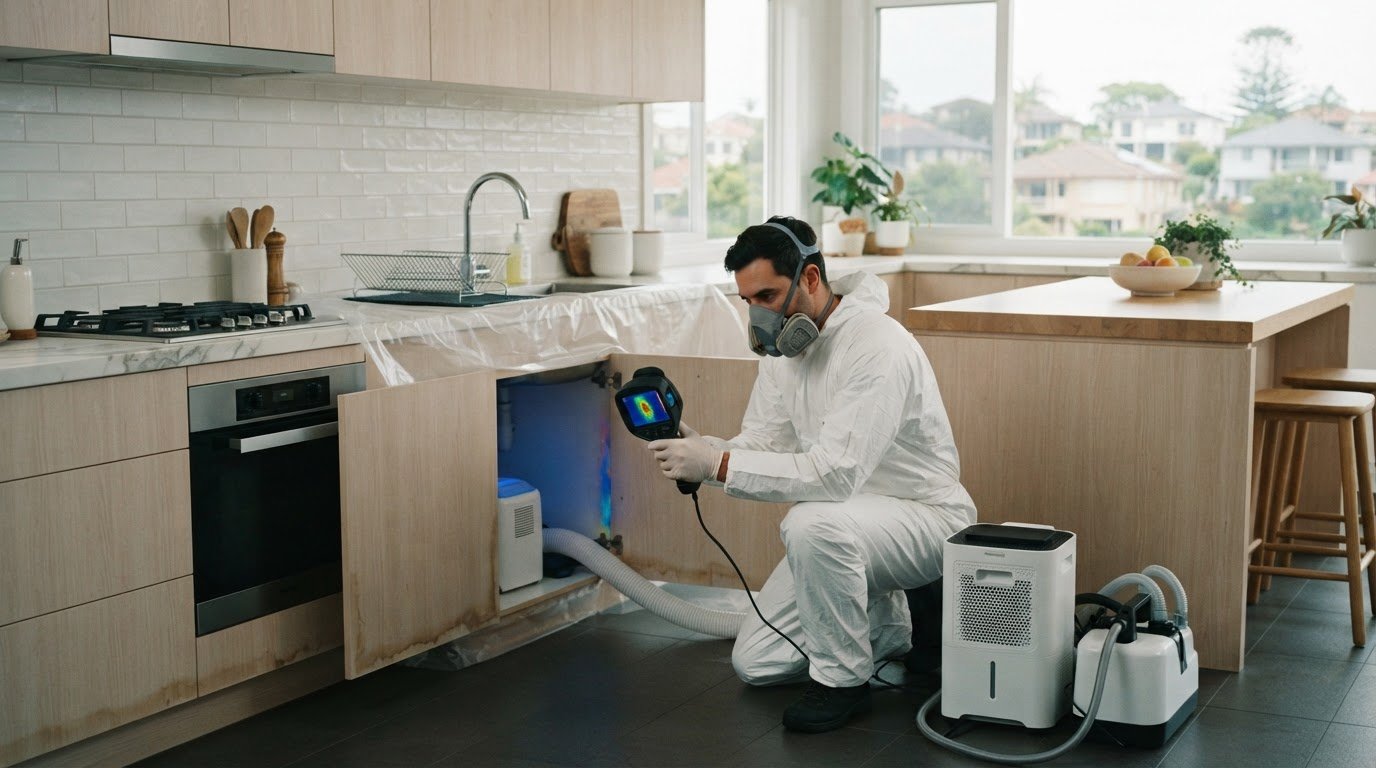
- Learn how advanced diagnostic tools, including thermal imaging and moisture mapping, locate culinary dampness traps without invasive demolition.
- Explore how non-destructive misting and HEPA air scrubbing neutralise airborne spores to restore a hygienic, food-safe cooking environment.
- Implement compliant kitchen exhaust protocols and subfloor airflow strategies to maintain indoor humidity below active fungal thresholds permanently.
Why Kitchen Mould in Sydney Requires Urgent Professional Attention
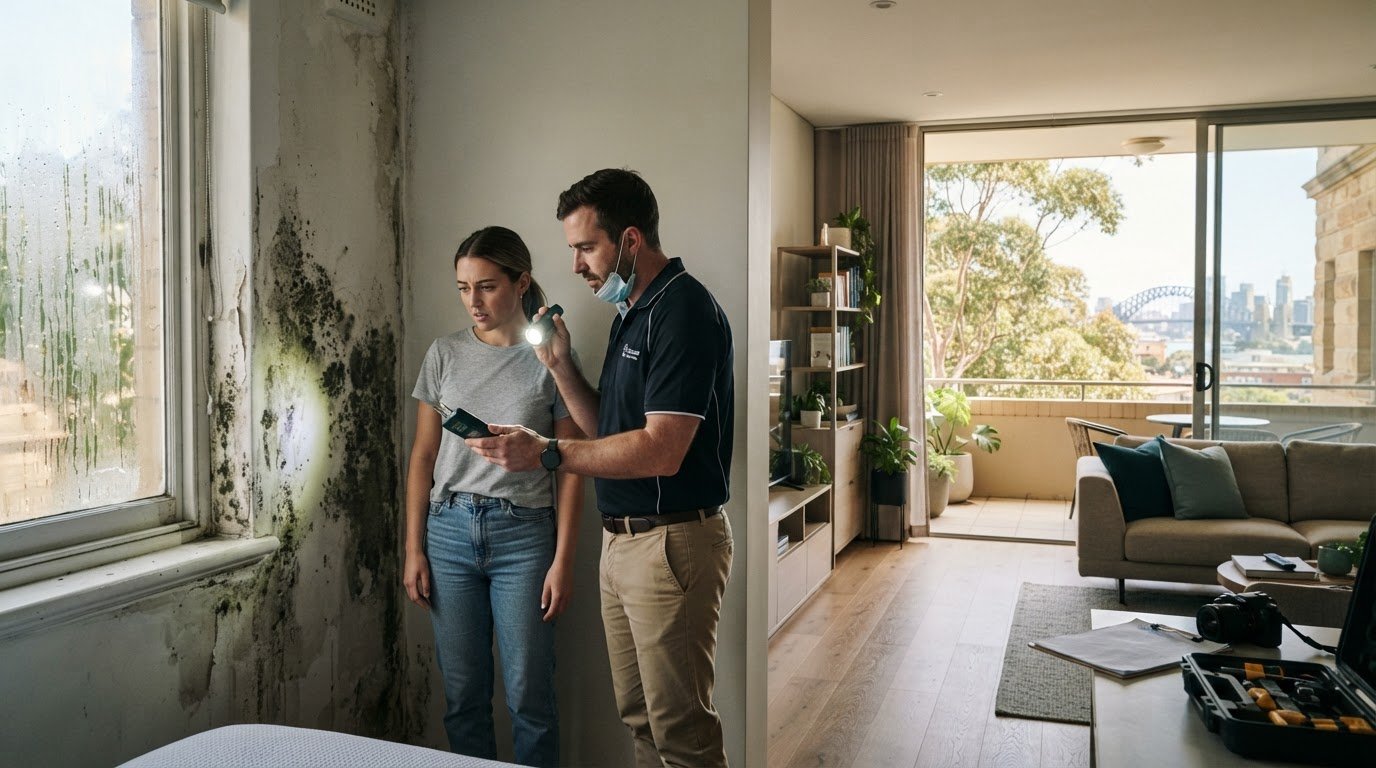
Kitchen mould isn’t just an unsightly blemish across a splashback; it represents an active biological colony feeding on cooking fats, airborne food particles, and trapped steam. Because kitchens combine sustained thermal warmth with abundant organic matter, fungal species colonise rapidly. Leaving these colonies unchecked compromises the structural joinery of your cabinetry and turns your primary food preparation area into an active health hazard. Securing professional kitchen mould removal Sydney property owners rely on is the only guaranteed way to halt this cycle before structural and biological damage spreads.
The Unique Microclimate of Sydney Kitchens
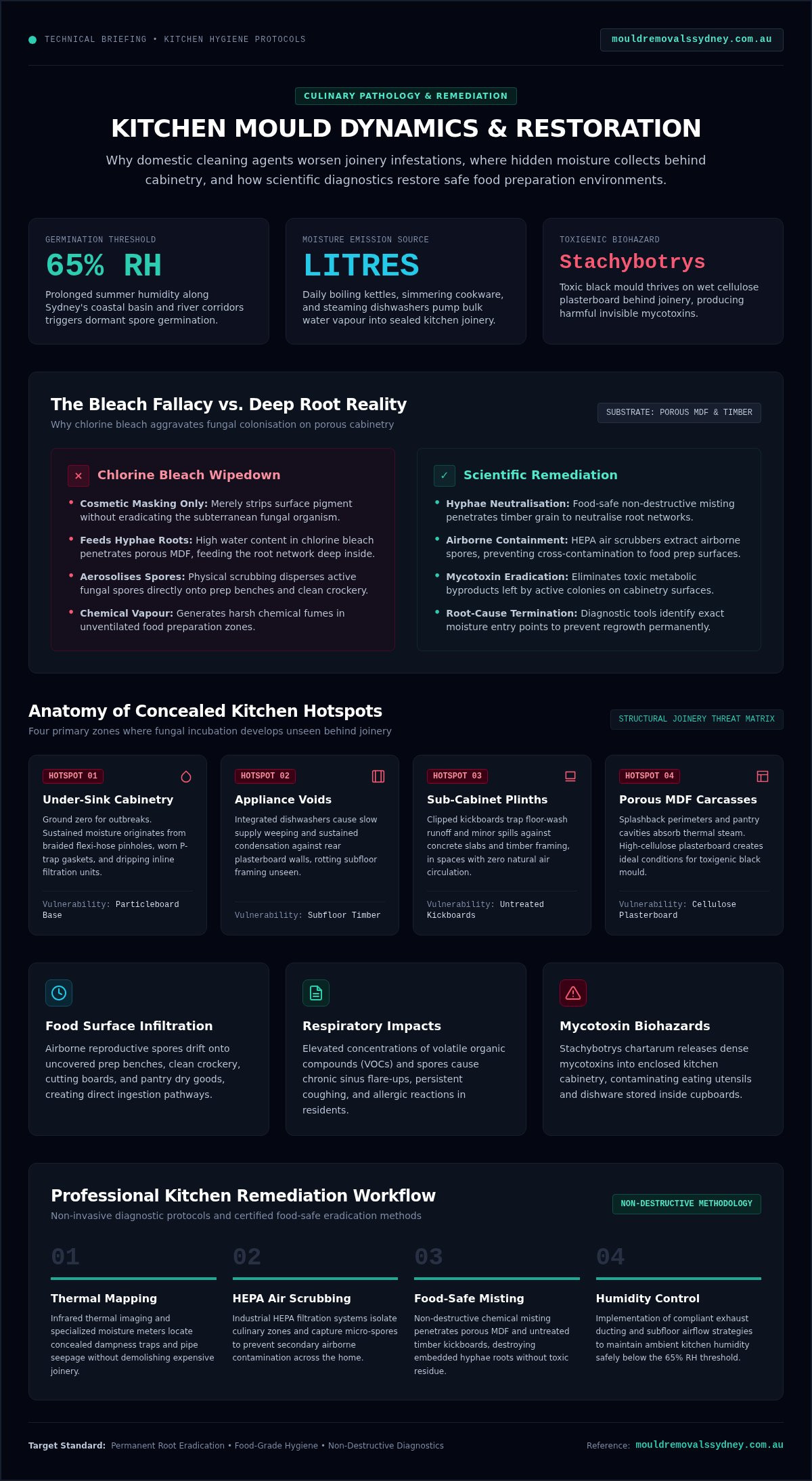
Daily meal preparation generates substantial moisture vapour. Boiling kettles, simmering pots, and steaming dishwashers dump litres of water into the surrounding air every single day. Along Sydney’s coastal basin and river corridors, prolonged summer humidity frequently pushes indoor relative humidity above 65%, which is the exact threshold required for dormant fungal spores to germinate. Modern energy-efficient apartments exacerbate this issue. Tight thermal sealing traps warm, moisture-laden air indoors without sufficient natural exchange. This enclosed atmosphere accelerates indoor mold contamination, leaving cupboards, kickboards, and pantry walls saturated in silent condensation.
Health Risks and Food Contamination Hazards
Unlike bathroom fungal outbreaks, culinary infestations create severe cross-contamination risks across everyday eating and cooking zones. Active colonies release millions of microscopic reproductive spores and volatile organic compounds directly into the cooking environment:
- Food Surface Infiltration: Airborne spores settle across clean crockery, food-prep chopping boards, and uncovered pantry dry goods.
- Respiratory Distress: Inhaling elevated fungal concentrations triggers chronic sinus flare-ups, persistent coughing, and allergic responses in sensitive household members.
- Toxic Exposure: Understanding what is black mould highlights the serious danger of toxigenic species such as Stachybotrys chartarum, which thrives on cellulose-rich plasterboard behind wet kitchen joinery and produces dangerous mycotoxins.
Wiping these patches with a rag merely aerosolises the spores, spreading them deeper into living spaces. Safe, permanent remediation demands specialised kitchen mould removal Sydney services to neutralise airborne pathogens and restore certified, food-grade hygiene.
Hidden Kitchen Mould Hotspots: Where Infestations Thrive Undetected
Kitchen joinery is designed to conceal plumbing and structural junctions, but this also creates dark, stagnant cavities ideal for fungal incubation. Porous substrates like MDF carcasses and untreated timber kickboards readily soak up moisture from minor pipe seepage. Over time, these materials sustain extensive fungal networks while external cupboard surfaces look pristine. If you notice a persistent, earthy smell near your prep benches, active colonies are almost certainly thriving out of sight. Detecting these hazards requires specialised moisture meters and thermal imaging tools that evaluate moisture profiles inside wall cavities without ripping apart expensive joinery.
Under-Sink Cabinetry and Appliance Voids
Under-sink cupboards remain the prime ground zero for undetected culinary outbreaks. Microscopic pinhole leaks from braided flexi-hoses, worn rubber gaskets on P-traps, and dripping inline filtration cartridges release continuous moisture directly onto particleboard flooring. Similarly, integrated dishwashers frequently suffer from slow supply line weeping or condensation overflow against rear walls. When unattended leaks saturate subfloor timbers, homeowners require structured water damage repair protocols to halt structural decay before wood rot destroys the surrounding cabinets.
Concealed Joinery, Kickboards, and Pantry Cavities
Fungal colonies also spread silently through three neglected culinary zones across Sydney properties:
- Sub-Cabinet Plinths: Moisture pools beneath clipped kickboards, trapping floor-wash run-off over concrete slabs and timber framing where ventilation is non-existent.
- Splashback Perimeters: Failed silicone caulk around stone benchtops lets everyday dishwashing water trickle directly into drywall cavities, soaking interior plasterboard.
- Deep Pantry Recesses: Tight storage corners combine poor convective airflow with exterior wall chill, creating microclimates where surface spores bloom across shelving and wall linings.
As emphasised in the NSW Health mould guidelines, controlling indoor moisture reservoirs is essential for safeguarding household respiratory health. If you suspect hidden colonies are compromising your cooking environment, arranging a professional moisture assessment through kitchen mould removal Sydney specialists ensures exact problem areas are located and neutralised before you face irreversible structural repairs.
DIY Cleaning vs Professional Remediation: Why Bleach Fails in Kitchens
Reaching for off-the-shelf supermarket sprays is the instinctive response for most homeowners facing mouldy cabinetry. Unfortunately, slathering chlorine bleach across kitchen surfaces creates an illusion of cleanliness while quietly worsening the biological contamination underneath. Bleach simply strips surface pigmentation without neutralising the underlying organism. Even worse, applying pungent chlorine chemicals across food-contact areas leaves volatile chemical residues right where you prepare meals. Lasting eradication requires targeted, food-safe kitchen mould removal Sydney specialists use to neutralise the fungus at a cellular level.
The Science of Bleach on Porous Kitchen Materials
Standard household bleach consists of sodium hypochlorite diluted in roughly 90% to 95% water. When applied to porous substrates like raw timber, particleboard, or kickboard backing, the chlorine molecules remain on the exterior because their chemical structure prevents deep penetration. Only the water component soaks into the timber fibers. In line with official EPA mold cleanup recommendations, chlorine bleach is strongly discouraged on porous building materials. The fungal root structure, known as the mycelium or hyphae, drinks this residual moisture. It feeds on the dampness and triggers an aggressive rebound within days. Aggressive scrubbing also dislodges millions of dry spores, scattering them across ambient room air.
Surface Cleanliness Versus True Biological Eradication
Differentiating between cosmetic stain removal and certified biological remediation is vital when protecting household hygiene. Routine surface wiping leaves behind substantial risks:
- Cross-Contamination: Sponges and microfibre cloths drag fungal fragments from backsplashes straight onto chopping boards, cutlery drawers, and dry food storage zones.
- Airborne Dispersal: Brushing dry or semi-damp mould without negative-air containment launches plumes of spores directly into the home’s breathing zone.
- Cellular Survival: Decolourising the visible melanin masks active microbial activity, allowing hyphae to consume the interior cellulose matrix of your joinery unchecked.
True biological clearance requires containment barriers, HEPA filtration, and non-destructive antimicrobials that destroy cell walls completely. Professional kitchen mould removal Sydney services neutralise both embedded root networks and floating spores, restoring sanitary, food-safe conditions without drenching your cooking spaces in noxious toxic fumes.
The Step-by-Step Professional Kitchen Mould Remediation Process
Eliminating kitchen contamination demands a systematic, clinical protocol. Amateur wiping only scatters microscopic pathogens into the surrounding living areas, but standard-compliant kitchen mould removal Sydney technicians rely on multi-stage containment to ensure complete biological clearance. By combining non-invasive diagnostic tools with targeted antimicrobials, technicians eliminate infestations without ripping out functional cabinetry.
Every effective kitchen remediation project follows four critical operational phases:
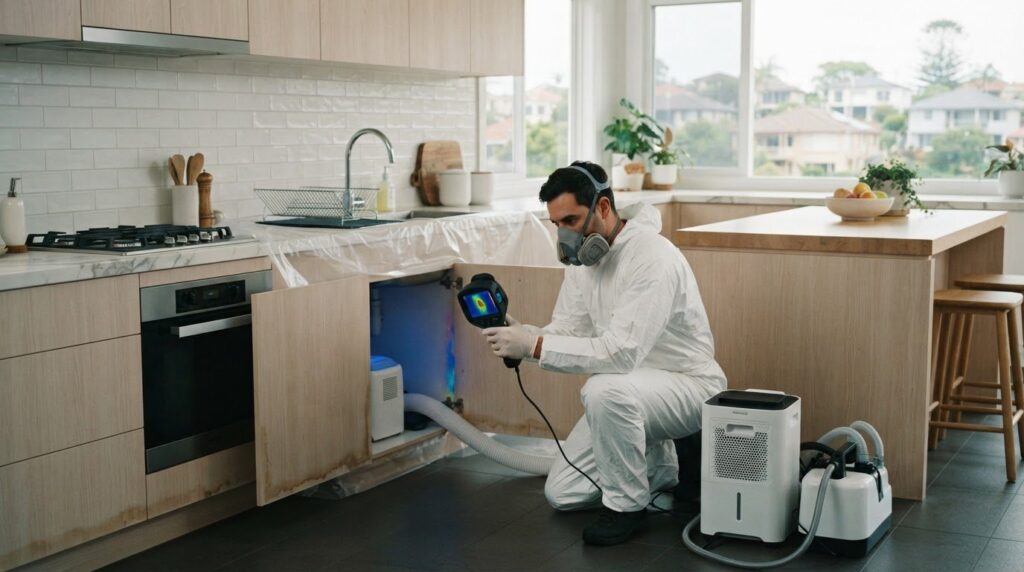
- Phase 1: Thermal Imaging and Moisture Mapping: High-resolution infrared cameras detect subtle temperature differentials behind splashbacks, stone benchtops, and plinths, pinpointing concealed plumbing leaks and thermal bridging without wall penetrations.
- Phase 2: Negative Pressure Isolation: Heavy-duty polythene containment barriers seal off culinary doorways and HVAC return vents, preventing dislodged spores from drifting into adjoining dining or living spaces.
- Phase 3: Direct Biological Surface Treatment: Target-specific antimicrobials neutralise active fungal colonies across structural joinery, breaking down cellular walls rather than merely bleaching visible pigments.
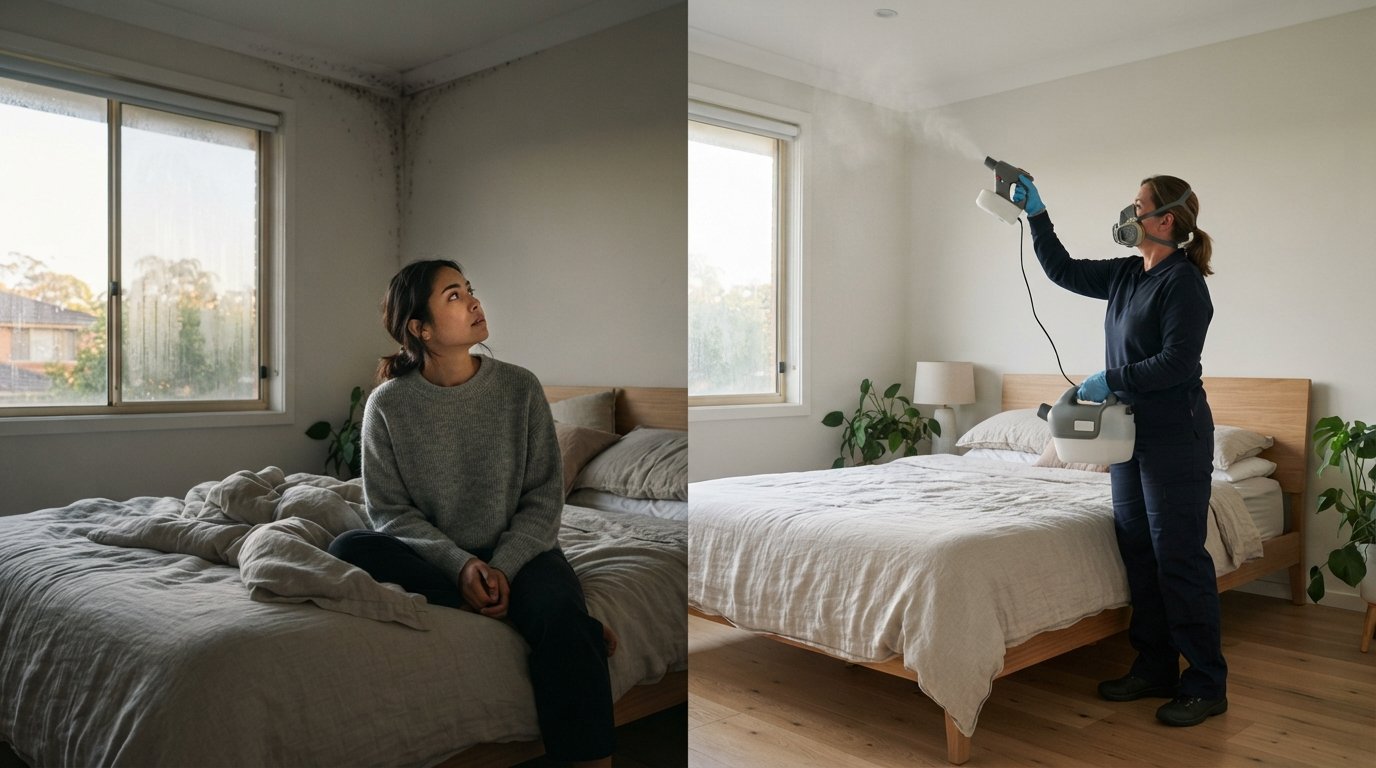
- Phase 4: Bio-Misting and Air Purification: Micro-droplet dispersal penetrates microscopic fissures, kickboard recesses, and cabinet carcasses, destroying hidden reservoirs without leaving corrosive chemical residues.
Containment, Surface Treatment, and Bio-Fogging
Culinary preparation spaces demand specialised products that leave zero toxic chemical residues. Rather than applying harsh, off-gassing commercial biocides near food surfaces, technicians utilise the proprietary Goldmorr System. This non-destructive methodology pairs targeted surface elimination with biodegradable misting agents. The ultra-fine mist penetrates structural crevices, appliance voids, and wall cavities, dismantling fungal colonies on contact without requiring joinery demolition.
Air Scrubbing and Spore Extraction
Neutralising visible colonies solves only half the problem. Active infestations generate massive airborne spore loads that linger invisibly throughout enclosed rooms. Technicians deploy commercial-grade HEPA air scrubbers alongside high-volume air purification units under negative pressure. These industrial systems capture 99.97% of airborne particulates down to 0.3 microns, pulling volatile organic compounds, mycelial fragments, and floating spores directly out of the ambient breathing environment.
Restoring a certified food-safe prep zone requires proven scientific execution. Contact a trusted Sydney mould removal service to inspect your property, or book an expert inspection today to permanently clear hidden contamination behind your kitchen joinery.
Preventing Recurrence: Sydney Kitchen Ventilation, Care, and Expert Support
Eliminating an active infestation solves your immediate biological danger, but preventing reinfection requires addressing chronic indoor humidity. Sydney’s coastal climate regularly pushes ambient moisture beyond safe thresholds, making proactive airflow management essential. Without proper mechanical extraction and routine structural checks, cooking condensation quickly settles against cool cabinetry backing, reigniting dormant fungal spores. Safeguarding your culinary space requires engineered airflow controls alongside specialised support from local remediation professionals.
Optimising Kitchen Airflow and Moisture Control
Mechanical extraction must actively pull moisture out of the building envelope rather than simply moving greasy air around. Many older terraces and apartment renovations across Sydney feature recirculating rangehoods fitted with charcoal filters. These units trap minor odours but dump 100% of boiling and cooking steam straight back into the room. Under AS 1668.2 and National Construction Code standards, kitchen exhaust systems require a minimum extraction airflow of 40 L/s directly vented to the external atmosphere.
Adopt these strict moisture mitigation habits during daily meal preparation:
- Pre-Emptive Extraction: Switch your rangehood exhaust to maximum speed two minutes before turning on hobs or boiling kettles to establish directional airflow.
- Run-On Ventilation: Keep mechanical extraction running for at least fifteen minutes after cooking finishes to purge residual steam suspended in ambient air.
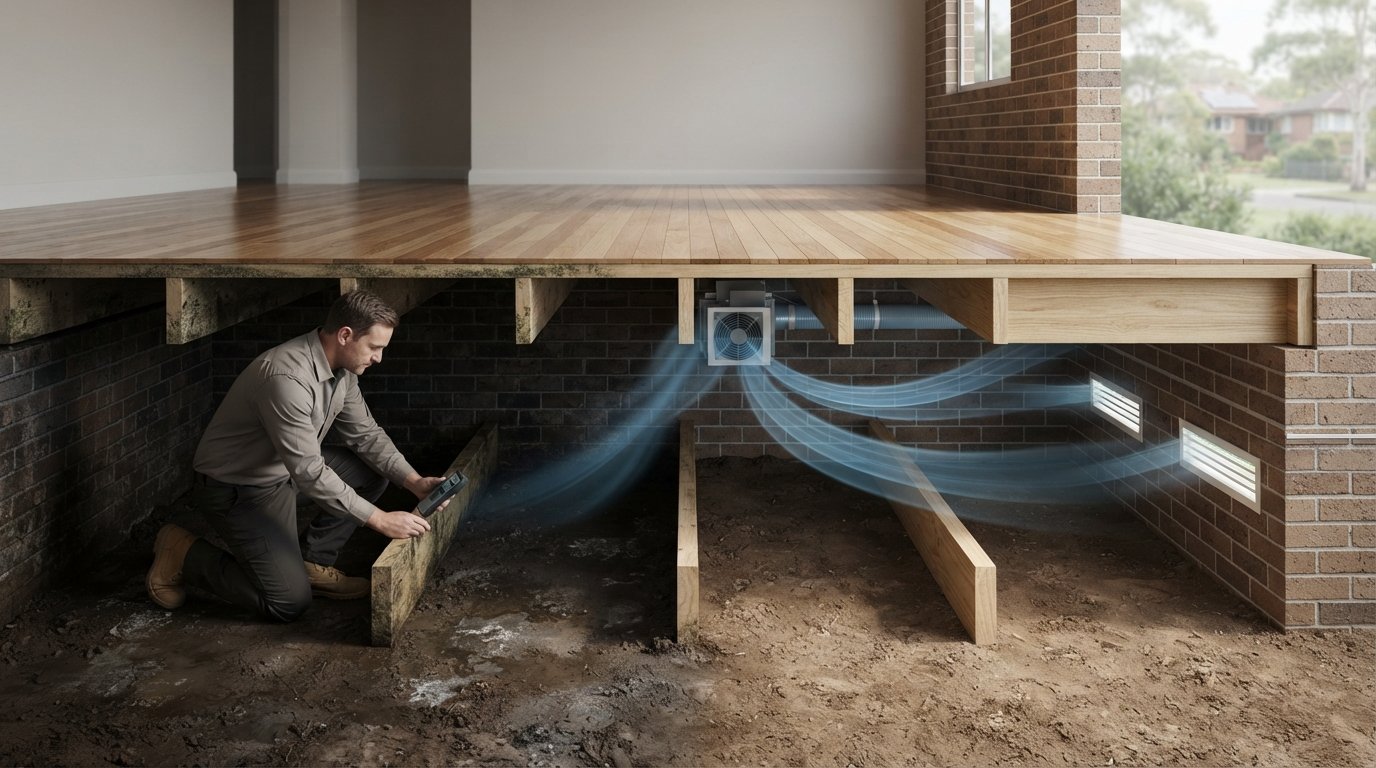
- Subfloor Airflow Auditing: Inspect ground-floor kitchen subfloors for damp soil or obstructed masonry vents. High subfloor humidity seeps upward through floorboards, rotting the undersides of cabinetry plinths.
- Humidity Monitoring: Track indoor conditions with a digital hygrometer, keeping ambient kitchen relative humidity consistently below 55% to stop fungal spores from germinating.
When to Call ABC Mould Cleaning Solutions
Certain structural warnings indicate deep fungal colonisation that everyday preventative care cannot fix. If you detect persistent musty odours upon opening cupboards, notice spongy or swollen kickboards, or observe dark shadowing along silicone perimeters, contact ABC Mould Cleaning Solutions immediately. Concealed moisture reservoirs require certified intervention before structural timbers delaminate completely.
You don’t need to guess the extent of the problem. Snap clear photos of affected joinery, under-sink cavities, or water-stained walls and submit them through our quick digital inquiry process for a rapid technical appraisal. Our fully certified technicians deploy the proprietary Goldmorr System across Greater Sydney, delivering comprehensive moisture detection, non-destructive misting, and subfloor ventilation assessments. We pinpoint the exact moisture cause, eradicate hidden hyphae colonies, and restore lasting, food-safe hygiene to your kitchen. Let our specialists handle the contamination so you can get back to cooking in a healthy home.
Restore Food-Safe Hygiene to Your Sydney Kitchen Today
Scrubbing recurring mould with supermarket bleach won’t protect your joinery or stop toxic spores from drifting across food prep benches. True biological safety requires tracing hidden moisture beneath cabinetry plinths and eliminating fungal mycelium at the root. Investing in certified kitchen mould removal Sydney homeowners trust safeguards your household health and eliminates the threat of costly structural demolition.
At ABC Mould Cleaning Solutions, we combine targeted surface elimination with the non-destructive, biodegradable Goldmorr System and commercial HEPA air scrubbing to clear airborne pathogens safely. Backed by our competitive price-matching commitment and rapid Sydney-wide response, we make decontamination straightforward and stress-free. Don’t let invisible spores compromise your cooking space. Request an urgent kitchen mould inspection with ABC Mould Cleaning Solutions by submitting your photos online today, and take the decisive step toward a permanently clean, healthy kitchen.
Frequently Asked Questions
Is mould in the kitchen dangerous to my family and food supply?
Yes, kitchen mould poses serious health hazards because fungal spores and mycotoxins readily contaminate exposed cooking surfaces, prep benches, and food items. Inhaling or ingesting these microscopic particles triggers respiratory inflammation, allergic reactions, and gastrointestinal complications. Because kitchens harbour heat, organic oils, and high humidity, toxigenic species proliferate rapidly, making prompt professional remediation essential to maintain certified food-safe domestic hygiene.
Can I use bleach to get rid of mould inside kitchen cupboards?
No, using chlorine bleach inside cupboards is ineffective and counterproductive. Domestic bleach contains over 90% water, which soaks straight into porous timber, MDF, and particleboard, hydrating deep hyphae roots while merely bleaching surface stains. Bleach also releases harsh chemical fumes across food storage areas. Lasting kitchen mould removal Sydney properties need relies on non-toxic, penetrating antimicrobials that destroy fungal cells without damaging joinery.
Why does kitchen mould keep returning behind my dishwasher and sink?
Recurrent mould behind dishwashers and sinks indicates an unaddressed, concealed moisture trigger. Pinhole leaks from flexible braided hoses, weeping drain seals, or unsealed benchtop joins constantly saturate surrounding cabinetry and subflooring. Because these enclosed recesses lack natural airflow, trapped moisture sustains fungal colonies indefinitely. Until certified technicians pinpoint the exact moisture intrusion and eliminate embedded root networks, surface wiping will never prevent recurrence.
How long does professional kitchen mould remediation take?
Most residential kitchen treatments take between two to six hours to complete, depending on contamination severity and room dimensions. Because our certified technicians utilise the non-destructive Goldmorr System, cabinetry disassembly is rarely necessary. Target-specific bio-misting and HEPA air scrubbing work rapidly to clear airborne spores, allowing homeowners to re-enter and resume normal meal preparation on the very same day without lingering chemical fumes.
Will professional mould treatment contaminate my plates, cutlery, and cookware?
No, professional treatment will not contaminate your kitchenware. Specialists use non-toxic, biodegradable misting solutions specifically engineered to be safe around sensitive residential culinary environments. Technicians advise putting open food items away prior to treatment, but the fine mist leaves zero toxic chemical residues on benchtops, crockery, or cooking equipment. Commercial HEPA air scrubbing purifies the room simultaneously, restoring pure, food-safe ambient air.
What causes mould on kitchen ceilings and splashback silicone in Sydney?
Mould on Sydney kitchen ceilings and splashback silicone stems from trapped cooking condensation colliding with ambient coastal humidity. Simmering pots, boiling kettles, and steaming dishwashers generate heavy steam that rises and settles on cooler ceiling plasterboard and caulking lines. Without externally ducted rangehood extraction delivering at least 40 L/s airflow, stagnant culinary moisture accumulates rapidly, creating the perfect damp film for fungal spores to colonise.
What happens if mould has spread into the wall behind the kitchen cabinets?
When mould spreads into drywall behind joinery, standard surface treatments cannot reach the active colonies. Professional kitchen mould removal Sydney specialists use non-invasive thermal imaging and moisture meters to map contamination without unnecessary cabinetry demolition. Technicians then deploy negative pressure containment and penetrating biodegradable bio-fogging that permeates wall cavities and structural voids, destroying deep mycelium roots while safeguarding your existing cabinetry.