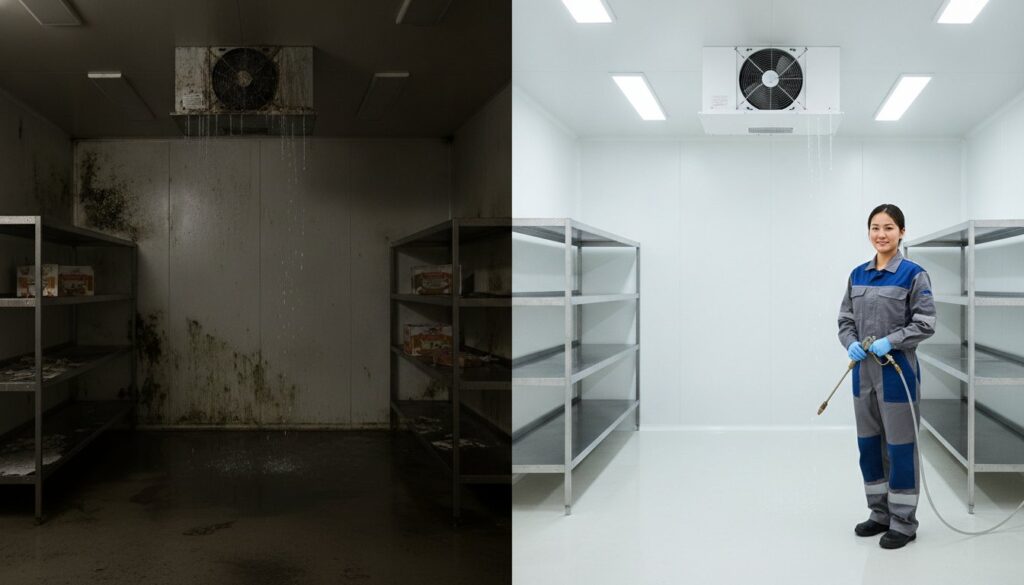
Is your commercial inventory truly safe, or are invisible pathogens quietly compromising your bottom line? You likely know that keeping a cold storage facility compliant in Sydney’s humid climate is a constant battle against moisture and microbial growth. It’s stressful to maintain strict temperature logs only to realize that dirty condenser coils are driving up your energy bills and risking a breach of the NSW Food Regulation 2025. We understand the anxiety of facing a surprise local council inspection when your stock’s safety is on the line. Specialist cool room cleaning Sydney is no longer just a recommendation. It’s a critical safeguard for your business’s reputation and financial health.
This article shows you how to eliminate persistent mould, optimize your equipment’s efficiency, and secure the documented proof you need for the NSW Food Authority. You’ll discover the benefits of specialized sub-zero remediation that goes beyond surface wiping to neutralize airborne spores at the micron level. We’ll explore how regular maintenance reduces energy costs and extends the lifespan of your cooling units. You will gain a clear roadmap to achieving a sterile, compliant environment that protects your commercial inventory and your peace of mind.
Key Takeaways
- Learn how to align your operations with the NSW Food Regulation 2025 to secure documented proof of compliance for health inspectors.
- Discover why professional cool room cleaning Sydney is necessary to neutralize sub-zero mould spores that survive standard surface wiping.
- Identify the critical differences between amateur cleaning and specialized remediation using HEPA filtration and biodegradable agents.
- Find out how maintaining clean condenser coils can significantly lower your energy costs and extend your refrigeration equipment’s lifespan.
- Access a 2026 maintenance checklist designed to help your staff identify early warning signs of contamination before stock loss occurs.
Why Cool Room Cleaning in Sydney is Critical for Business Compliance
Professional cool room cleaning Sydney is a technical remediation process, not a simple janitorial task. It involves the deep decontamination of commercial refrigeration units to eliminate microbial threats that thrive in cold, moist environments. Sydney’s coastal humidity creates a persistent challenge for facility managers. High moisture levels lead to excessive condensation on walls, ceilings, and cooling units. This moisture serves as the primary fuel for fungal growth and bacterial colonies. When mould takes hold, it doesn’t just stay on the walls. It enters the airflow, circulating spores directly onto your fresh produce and inventory.
The regulatory landscape for 2026 demands a higher standard of hygiene. Under the Food Regulation 2025 (NSW), businesses are legally obligated to follow strict food safety best practices to prevent contamination. Neglecting your cold storage leads to more than just a bad smell. It results in rapid stock spoilage, catastrophic equipment failure, and irreparable damage to your brand’s reputation. If a health inspector finds evidence of fungal growth during a routine visit, the financial penalties and potential closure orders can be devastating for any commercial operation.
NSW Health Standards and Your Cold Storage
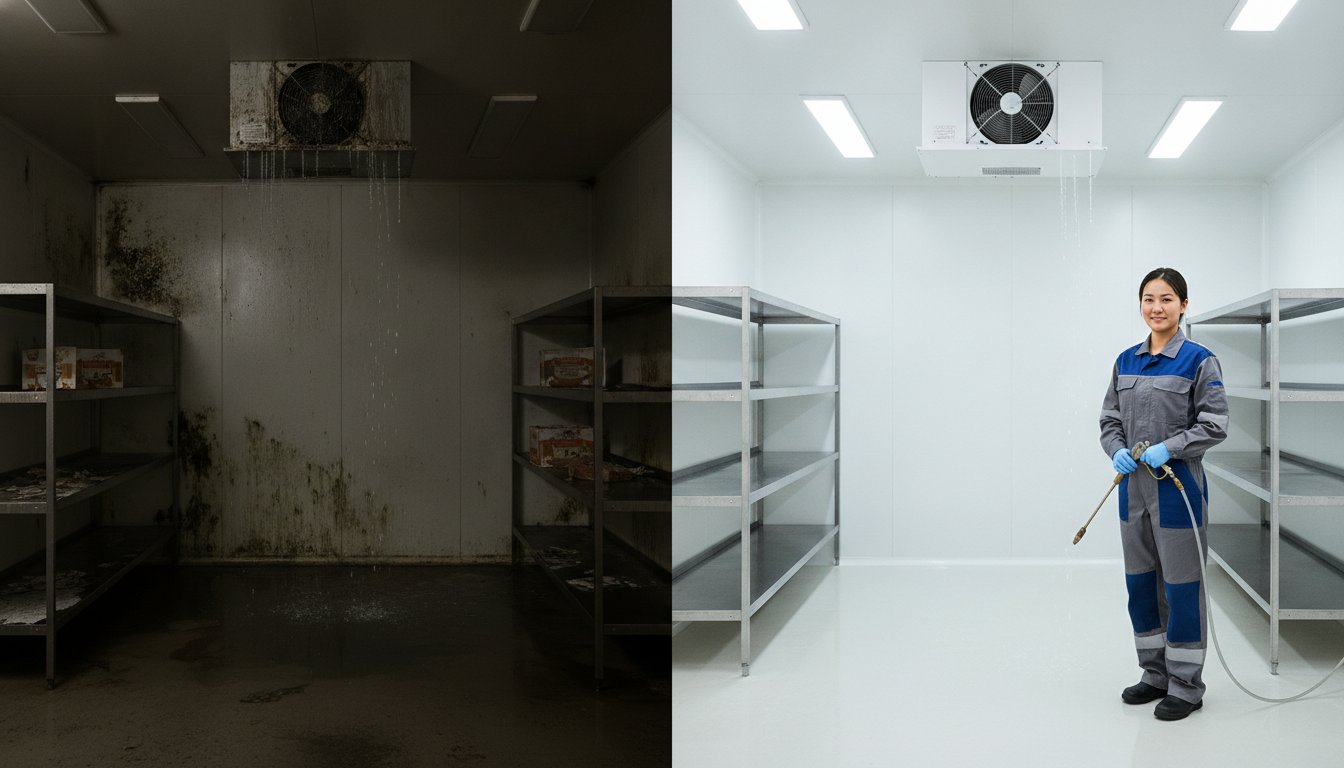
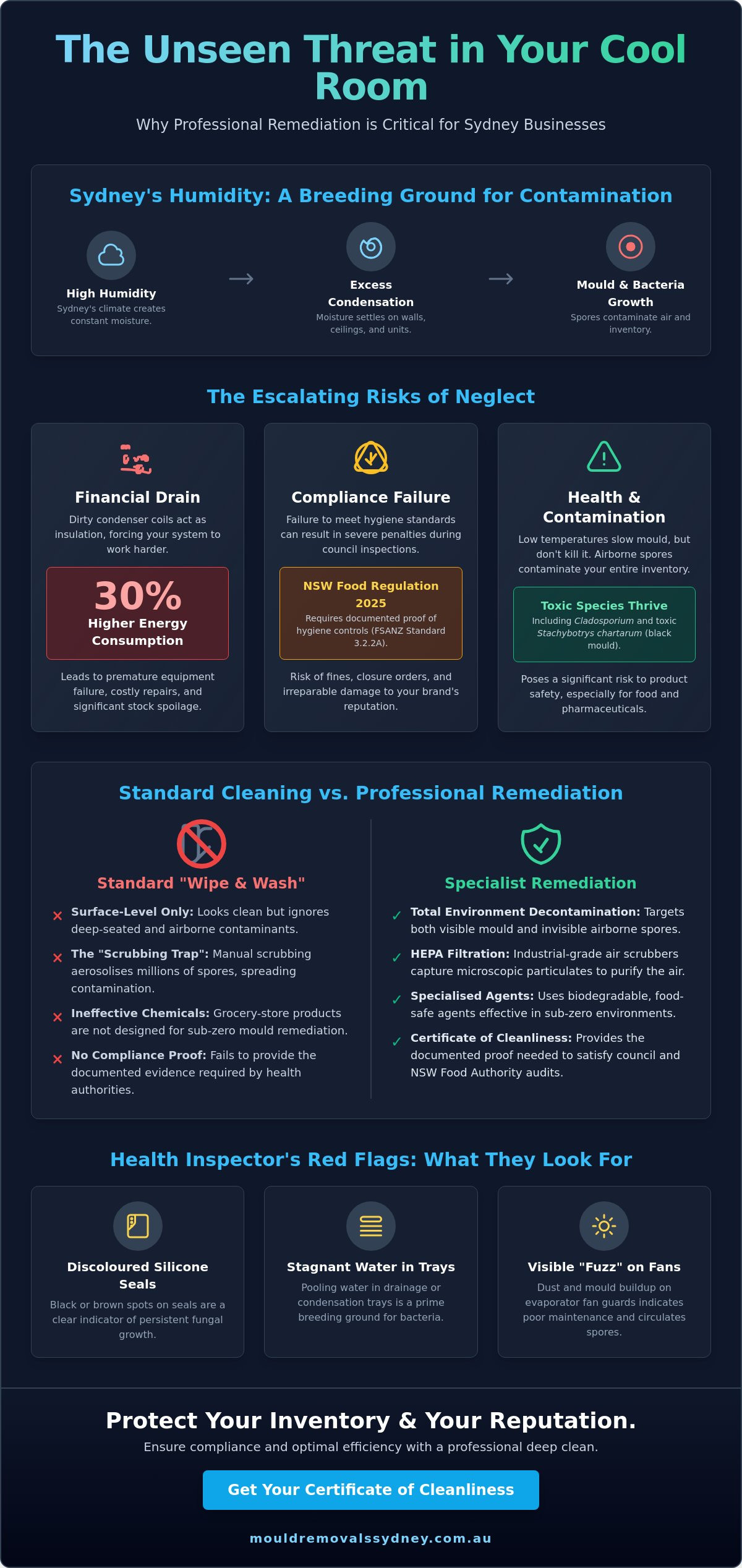
Compliance in 2026 is centered on active management. FSANZ Standard 3.2.2A requires food businesses to substantiate their safety controls with documented evidence. Health inspectors specifically target walk-in freezers and cool rooms for common red flags. They look for discoloured silicone seals, stagnant water in drainage trays, and visible “fuzz” on evaporator fan guards. These are clear indicators of a failing hygiene protocol. Securing a professional Certificate of Cleanliness provides the documented proof required to satisfy local council audits and demonstrate your commitment to public safety.
The Financial Impact of Dirty Condenser Coils
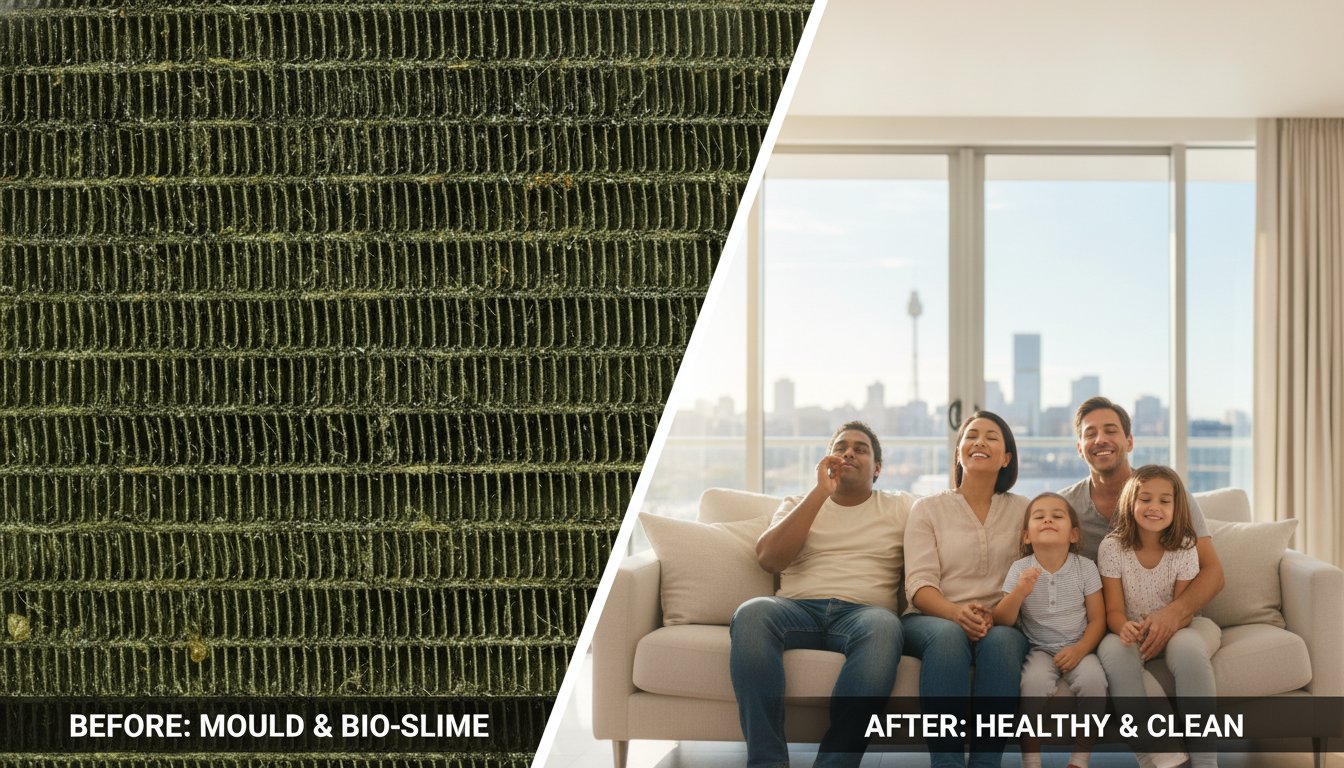
Dirty condenser coils are silent profit killers that drain your budget every month. When dust, grease, and mould build up on these coils, they act as an insulator. This prevents the system from shedding heat efficiently. To compensate, your compressor must run longer and harder to maintain the set temperature. This inefficiency can increase your energy consumption by up to 30%. The constant strain leads to premature mechanical wear and eventual system failure. Regular professional remediation ensures unrestricted airflow, which optimizes thermoregulation and extends the lifespan of your expensive refrigeration assets. The ROI of maintenance is clear when compared to the thousands of dollars lost during an emergency equipment breakdown.
Don’t let invisible spores dictate your business’s success. Technical cleaning is a pragmatic necessity that protects your stock, your staff, and your legal standing in the Sydney market. Address the issue before it becomes a crisis.
The Science of Sub-Zero Mould: Why Standard Cleaning Fails
Mould is an opportunistic organism that finds a perfect ecosystem in commercial refrigeration. Low temperatures don’t kill mould; they simply slow its metabolism. In Sydney, the combination of high ambient humidity and constant door openings creates a relentless cycle of condensation. This water, mixed with organic dust or food residue, provides a feast for species like Cladosporium and the toxic Stachybotrys chartarum. These resilient fungi tolerate sub-zero conditions and wait for the slightest temperature fluctuation or moisture spike to bloom. Without specialized intervention, your cool room becomes a breeding ground for contaminants that thrive in the dark.
Standard cleaning often relies on a “wash and wipe” approach using grocery-store chemicals. This is a dangerous mistake. Manual scrubbing without proper containment can aerosolise spores. Instead of removing the problem, you’re launching millions of microscopic particulates into the air. This “Scrubbing Trap” means that while your walls look clean, your inventory is now covered in invisible contaminants. Understanding the health risks of mould exposure is vital for anyone handling food or pharmaceuticals. Professional cool room cleaning Sydney requires a technical shift from cosmetic cleaning to total environmental remediation.
Surface Mould vs. Airborne Contaminants
Visible mould on door seals, wall panels, or fan guards is just the tip of the iceberg. The real threat lies within the evaporator unit. As the system draws in air to cool it, it also pulls in spores. These spores then circulate through the entire room, settling on every available surface in a closed-loop contamination cycle. Airborne remediation is the neutralization of microscopic fungal particulates through specialized fogging. This process ensures that the air itself is sterile, not just the visible panels that staff can reach.
Cross-Contamination Risks in Food Logistics
Fungal proliferation significantly accelerates the decay of fresh produce. Fruits and vegetables naturally release ethylene gas as they ripen. In a contaminated environment, this gas combines with high humidity to create a hothouse effect for mould, even at temperatures as low as 2°C. Spores can penetrate porous packaging, leading to rapid spoilage of meat and dairy products. This results in significant financial losses and potential health violations. To fully restore a compromised facility, specialized air duct cleaning is the critical second step in cool room recovery.
Ignoring these invisible threats puts your commercial inventory and your business reputation at risk. If you suspect your facility is compromised, a professional mould inspection can identify hidden colonies before they impact your bottom line. Address the source, not just the symptoms, to ensure long-term compliance.
Professional Remediation vs. Standard Cleaning: A Comparison
Standard cleaning is often a surface-level response to a deep-seated biological problem. While a general cleaner might use a pressure washer and industrial bleach, these methods are frequently counterproductive in a commercial cold storage environment. High-pressure water can force moisture deep into the porous insulation panels that line your cool room. This trapped water becomes a permanent reservoir for future fungal growth. Professional cool room cleaning Sydney utilizes a different kit entirely. We prioritize HEPA filtration and specialized fogging equipment to address the environment as a whole, rather than just the parts we can see.
Biodegradable remediation agents are the superior choice over industrial bleach. Bleach is a harsh respiratory irritant and is often prohibited in food-safe areas. More importantly, it fails to neutralize the root systems of mould on porous surfaces. Our specialists use non-toxic, food-safe agents that break down the cellular structure of contaminants without leaving hazardous residues behind. This ensures the entire internal atmosphere is sanitized, protecting your stock from airborne spores long after the physical scrubbing is finished. This technical approach provides a sterile environment that lasts for months, not just days.
The Limitations of DIY Cool Room Cleaning
Attempting to handle a contamination issue in-house often leads to unforeseen complications. Household cleaners don’t have the chemical profile to penetrate the dense insulation panels where mould “roots” itself. There is also a significant mechanical risk. Improper moisture application can easily damage sensitive thermoregulation sensors and delicate electrical components in the evaporator unit. Staff attempting to clean black mould without specialized PPE face serious health risks. Exposure to mycotoxins in a confined space is a liability no business should accept.
Why Specialized Remediation Wins
Precision is the hallmark of professional service. We use ultra-low volume (ULV) fogging to reach the hidden back sections of evaporator coils and internal ductwork that manual scrubbing cannot touch. These mould removal Sydney techniques create a protective barrier that prevents immediate regrowth, even in high-use environments. While a traditional deep clean might take a facility offline for days, our streamlined remediation systems often allow for a much faster return-to-service. This minimizes operational downtime and ensures your cold chain remains intact. You get a results-driven solution that prioritizes both equipment health and business continuity.
Your 2026 Cool Room Maintenance & Compliance Checklist
Maintaining a compliant facility in 2026 requires more than a casual glance. You need a structured approach to catch microbial threats before they escalate into a health crisis. Consistent internal audits are your first line of defense against stock loss and health authority fines. While professional cool room cleaning Sydney provides the deep remediation required for safety, your daily habits determine how long that sterile environment lasts. You must monitor humidity levels to maintain the “Goldilocks Zone.” This prevents the excessive condensation that fuels fungal growth without dehydrating your fresh inventory.
Proactive management is the only way to ensure 100% compliance with NSW health standards. It isn’t enough to react when you see a problem. You must anticipate it. Establish a strict schedule for your warehouse or kitchen staff that focuses on moisture control. High-traffic environments are prone to temperature fluctuations. Every time a door is left open too long, humidity spikes, and the risk of contamination increases. Integrating high-efficiency air purification into your standard operating procedures (SOPs) helps neutralize spores that enter during busy shifts.
Daily Inspection Points for Managers
- Door Gaskets: Wipe down seals daily. Look for persistent condensation, cracking, or tell-tale black spots that indicate active mould colonies.
- Drainage Trays: Inspect condensate lines for standing water or slime buildup. Blocked drains are a primary source of bacterial growth.
- Ceiling and Fan Units: Use a high-powered torch to check for “fuzz” or discoloration on ceiling panels and near the evaporator fans.
Long-Term Prevention Strategies
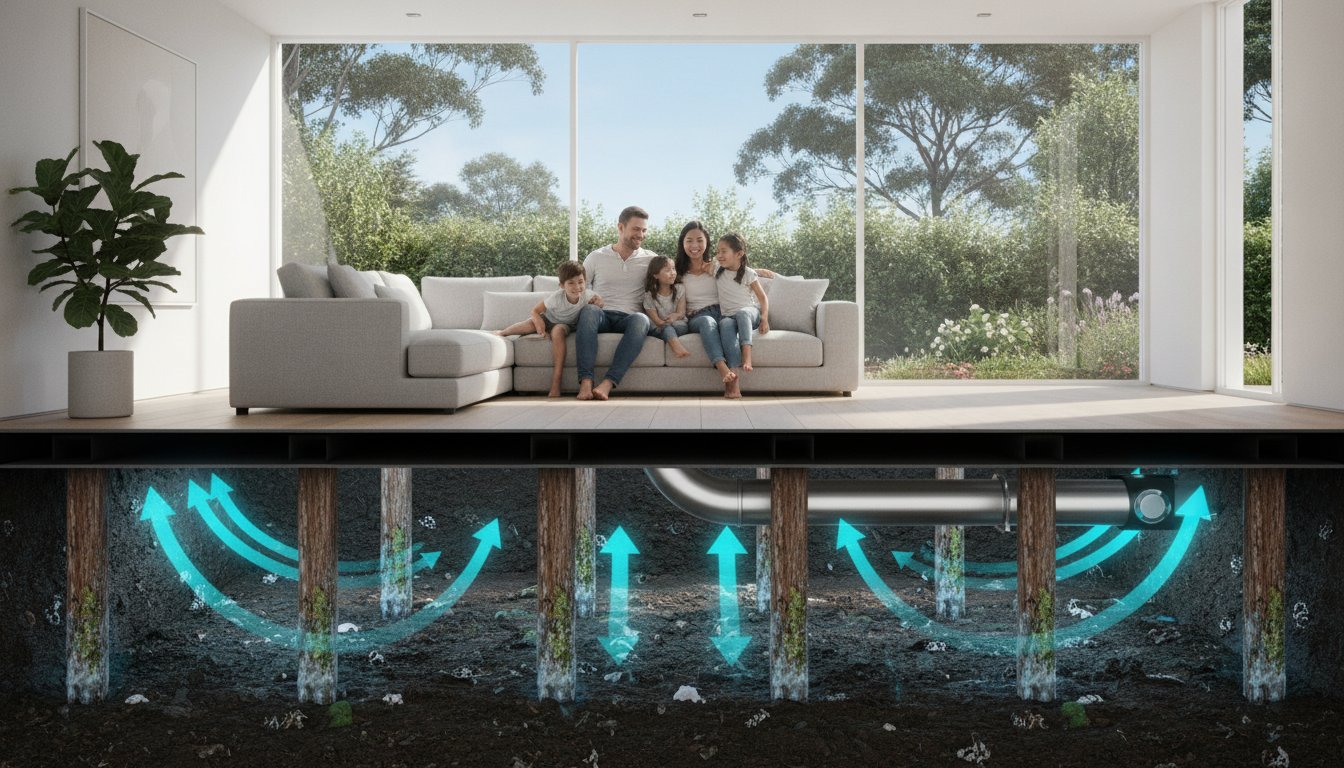
Rising damp around external cool room walls often originates from poor airflow beneath the building. Implementing subfloor ventilation is a critical structural preventative measure. It ensures that the foundation remains dry, removing the moisture source that can seep through insulation over time. Furthermore, you should schedule quarterly professional deep cleans to maintain ISO and NSW Health standards. This frequency ensures that technical components like condenser coils remain efficient and free of microbial film.
Staff training is equally vital. Ensure every team member understands moisture control and the importance of “door-open” time limits. If you are unsure about your current hygiene status, book a professional mould inspection to identify hidden risks before your next audit. Secure your reputation by staying ahead of the inspectors.
The ABC Mould Cleaning Advantage: Sydney’s Cold Storage Specialists
Choosing the right partner for your facility is a decision that impacts both your stock safety and your legal standing. We utilize the Goldmorr System, which is widely recognized as the gold standard in commercial cool room remediation. This isn’t a standard janitorial service. It’s a technical solution designed for high-stakes environments. Our biodegradable fogging process is specifically engineered for food-prep and storage areas. It’s non-toxic and safe for environments where chemical residues are a major concern. You don’t have to worry about harsh industrial smells lingering near your fresh produce.
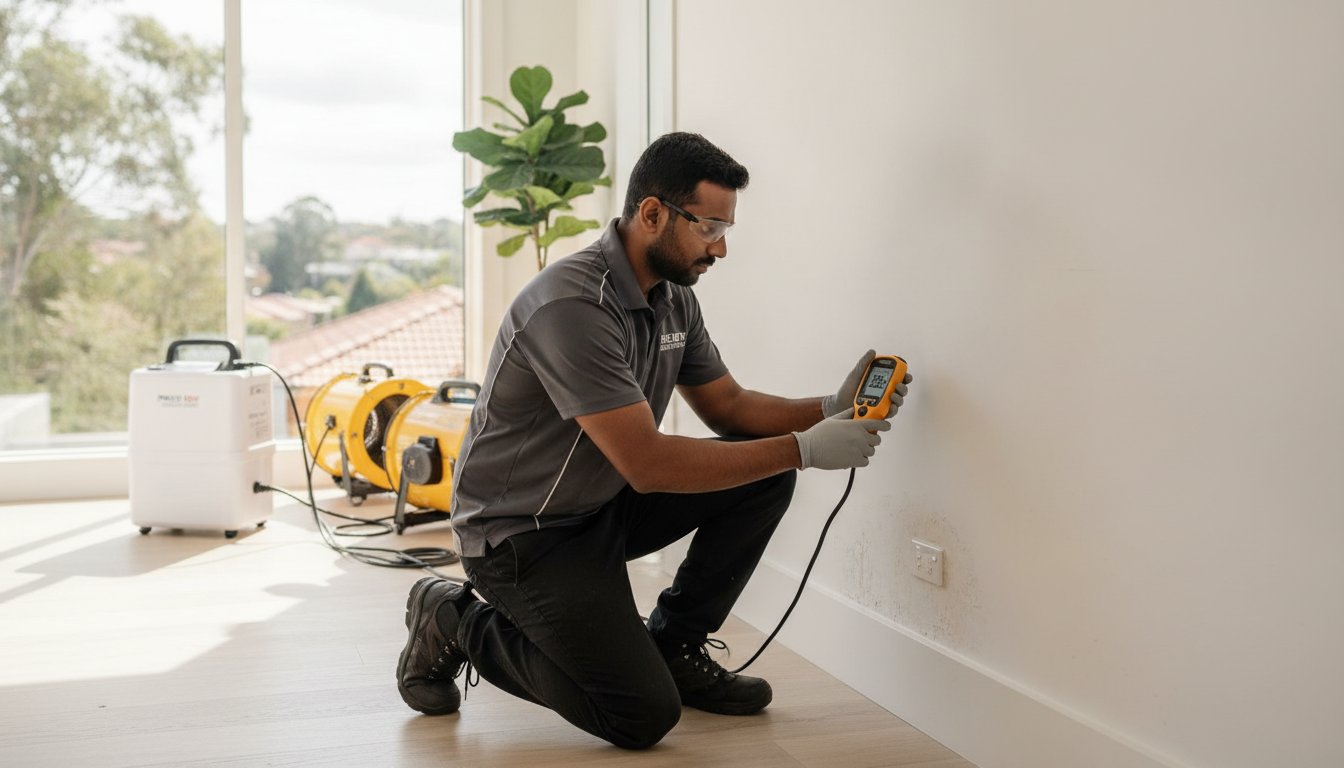
Our specialists follow a rigorous 4-step protocol to restore your cold storage to peak hygiene levels. It starts with a Professional Inspection to map out contamination zones and identify hidden moisture sources. We then move to the physical Removal of visible colonies using HEPA-filtered equipment to prevent spore drift. The third stage is Fogging, which treats the entire volume of the room, including the internal cooling components. Finally, we implement Prevention measures, such as surface treatments and moisture control advice. This systematic approach ensures that your cool room cleaning Sydney project delivers long-term results rather than a temporary fix.
Sydney’s unpredictable weather often leads to sudden water damage and humidity spikes. We provide a rapid emergency response for mould crises, ensuring your commercial inventory remains protected even after a flood or equipment failure. Our team acts quickly to mitigate risks before they compromise your bottom line or draw the attention of health inspectors. We understand the urgency of refrigeration issues and prioritize business continuity in every project.
The Goldmorr Difference for Commercial Clients
Our non-toxic approach eliminates the need for harsh rinsing or time-consuming chemical residue removal. This means your facility can return to service much faster than with traditional methods. We integrate advanced air scrubbing technology to capture and remove airborne spores throughout the remediation process. The Goldmorr fogging process targets airborne spores at a micron level to ensure total sanitisation. This level of precision is what separates a professional remediation from a basic wash-down. It’s the most effective way to ensure your air quality meets strict safety standards.
Book Your Professional Inspection Today
We believe in providing the best value in the Sydney market. That’s why we offer an aggressive price-matching guarantee for cool room remediation services. If you have a lower written quote for the same scope of work, we’ll match it to ensure you get specialist care at a competitive rate. You don’t have to wait days for a site visit to get started. Simply submit photos of your cool room via our digital inquiry process for a fast, accurate quote. Take the first step toward a compliant, healthy, and energy-efficient business environment today. Our team is ready to help you secure your facility.
Contact ABC Mould Cleaning Solutions for your Sydney Cool Room Quote
Secure Your Cold Storage Compliance Today
Your commercial inventory is the lifeblood of your business. Safeguarding it requires a results-driven approach that prioritizes long-term prevention over cosmetic fixes. We’ve established that technical remediation is essential for meeting the strict requirements of the Food Regulation 2025 (NSW). Professional cool room cleaning Sydney is the only way to ensure total environmental sanitisation. By utilizing the specialized Goldmorr System, we provide a technical solution that standard janitorial services simply cannot match. This methodology neutralizes threats at the micron level, protecting your stock from invisible contaminants that thrive in sub-zero temperatures.
Our biodegradable and food-safe fogging process ensures your facility remains compliant without leaving hazardous chemical residues behind. Whether you need a scheduled maintenance visit or a Sydney-wide emergency 24/7 water damage response, our team is ready to act immediately. Don’t wait for a failed health inspection or a catastrophic stock loss event to address your facility’s hygiene. Take command of your environment and ensure your refrigeration equipment operates at peak efficiency. It’s time to transition from a state of concern to a state of total resolution.
Get a Professional Cool Room Cleaning Quote for Your Sydney Business
We’re here to help you maintain a safe, sterile, and highly efficient cold storage facility. Let’s get your business back to its best.
Frequently Asked Questions
How often should a commercial cool room be professionally cleaned in Sydney?
Professional deep cleaning should occur every three to six months for most commercial facilities. Sydney’s high humidity levels often necessitate a quarterly schedule to prevent moisture from fueling fungal growth. If your facility handles high volumes of fresh produce or has frequent door openings, you may require more regular intervention. Consistent cool room cleaning Sydney ensures you stay ahead of microbial blooms and maintain strict hygiene standards year-round.
Is the Goldmorr cleaning process safe for food products already inside the room?
The Goldmorr system uses a biodegradable, non-toxic fogging agent specifically designed for food-prep and storage environments. It’s safe for use around commercial inventory because it leaves no hazardous chemical residues. While the process is non-toxic, we typically recommend covering or temporarily moving exposed, unpackaged food as a standard safety precaution. This ensures total peace of mind while we neutralize airborne spores throughout your facility.
Can professional cool room cleaning help reduce my business electricity bills?
Yes, professional cleaning directly impacts your energy efficiency and bottom line. When dust and mould accumulate on condenser coils and evaporator fans, the system must work significantly harder to maintain set temperatures. Removing this insulating layer of grime allows for unrestricted airflow and better heat exchange. This reduces the strain on your compressor, potentially lowering your monthly energy consumption and extending the lifespan of your expensive refrigeration equipment.
What are the signs that my cool room has a professional mould problem?
Early warning signs include a persistent musty odour or visible “fuzz” appearing on fan guards and ceiling panels. You should also look for slimy residue in drainage trays or black spotting along door gaskets. If your staff reports respiratory irritation or if you notice stock spoiling faster than usual, these are urgent red flags. Don’t wait for visible colonies to cover the walls; these symptoms indicate a systemic contamination issue.
Does ABC Mould Cleaning provide compliance certificates for NSW health inspectors?
Yes, we provide a formal Certificate of Cleanliness upon the successful completion of our remediation process. This document serves as vital proof for NSW Food Authority and local council inspectors that you’ve met professional hygiene requirements. Having this documented evidence in your safety folder demonstrates proactive management. It helps you avoid the heavy fines and improvement notices associated with the Food Regulation 2025 (NSW).
How long does a typical cool room remediation take to complete?
Most professional remediation projects are completed within two to six hours. The exact duration depends on the size of the room and the severity of the mould contamination. Our streamlined process is designed to minimize your operational downtime. Because our biodegradable agents don’t require heavy rinsing, your facility can often return to service much faster than it would with traditional, water-heavy cleaning methods.
What is the difference between a general clean and the Goldmorr remediation system?
A general clean is a cosmetic “wash and wipe” that only addresses visible surfaces. In contrast, the Goldmorr system is a technical remediation that targets the entire internal atmosphere. We use specialized ULV fogging to neutralize airborne spores at the micron level, reaching deep into cooling coils and ductwork. This ensures a sterile environment that lasts longer, whereas general cleaning often leaves invisible spores behind to regrow immediately.
Can you remove mould from cool room door seals and gaskets permanently?
We can effectively remove active mould from seals and gaskets using specialized antimicrobial agents. However, permanent prevention depends on maintaining proper moisture control and humidity levels. Mould thrives on the condensation that forms when seals are damaged or doors are left open. While our cool room cleaning Sydney service eliminates the current infestation, we’ll also provide guidance on maintenance to help you prevent regrowth in these high-risk areas.