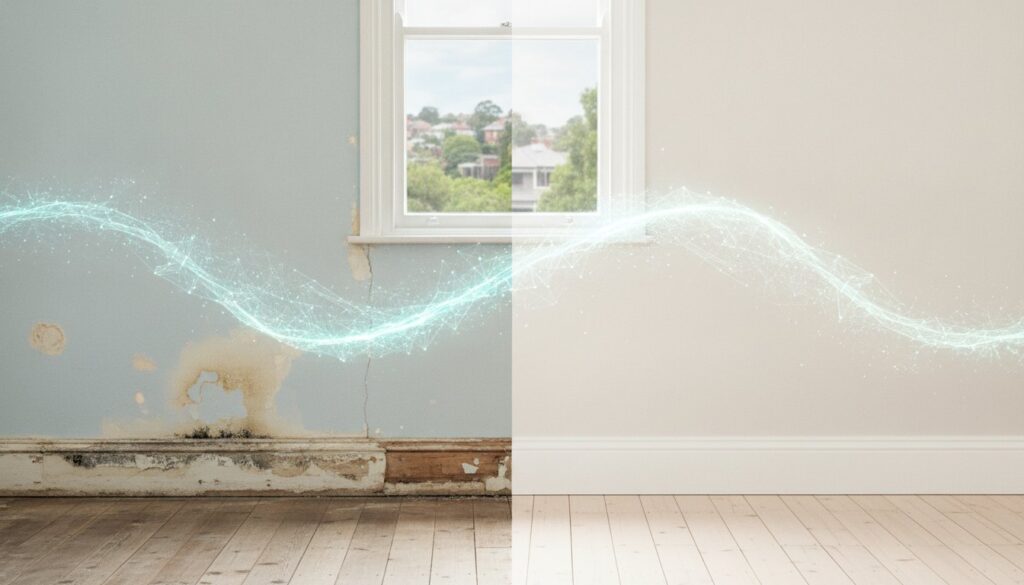
Did you know there is a 60% chance that a pre-1960s home in Sydney’s inner-west currently suffers from active rising damp? If you are tired of scrubbing walls and searching for how to treat mould from rising damp only for that suffocating, musty smell to return, you aren’t alone. It is incredibly frustrating to watch expensive skirting boards rot while worrying about the respiratory health of your children. You need a professional solution that actually works instead of another temporary cover-up.
This guide provides the specific strategies you need to identify, treat, and permanently stop moisture issues in 2026. We understand the urgency of protecting your property’s structural integrity and your family’s well-being. By following the latest AS-IICRC S520:2025 standards, we will show you how to diagnose the root cause, determine if you need a plumber or a specialist, and implement a permanent fix. Stop wasting money on surface cleaners and start the journey toward a dry, healthy home today.
Key Takeaways
- Identify the specific visual symptoms and the “Smell Test” that distinguish rising damp from standard condensation.
- Discover why bleach is ineffective on porous masonry and learn the multi-stage professional process for how to treat mould from rising damp.
- Understand why your subfloor acts as the “engine room” for moisture and how ventilation stops the capillary action of rising damp.
- Learn to differentiate between a simple plumbing leak and structural dampness to ensure you hire the right expert for a permanent fix.
- Recognize the importance of the 2026 AS-IICRC S520:2025 standards in ensuring your home remediation is safe and scientifically sound.
What is Rising Damp Mould and Why is it in Your Home?
Sydney’s heritage architecture and iconic terrace houses face a silent threat from beneath the soil. If you notice dark, damp patches creeping up from your floorboards, you aren’t just dealing with a cleaning headache; you’re witnessing a structural failure. What is rising damp? In simple terms, it’s groundwater traveling upward through your home’s porous masonry. This process, known as capillary action, works exactly like a sponge sitting in a puddle. The moisture defies gravity, climbing through bricks and mortar until it finds a way to evaporate into your living space.
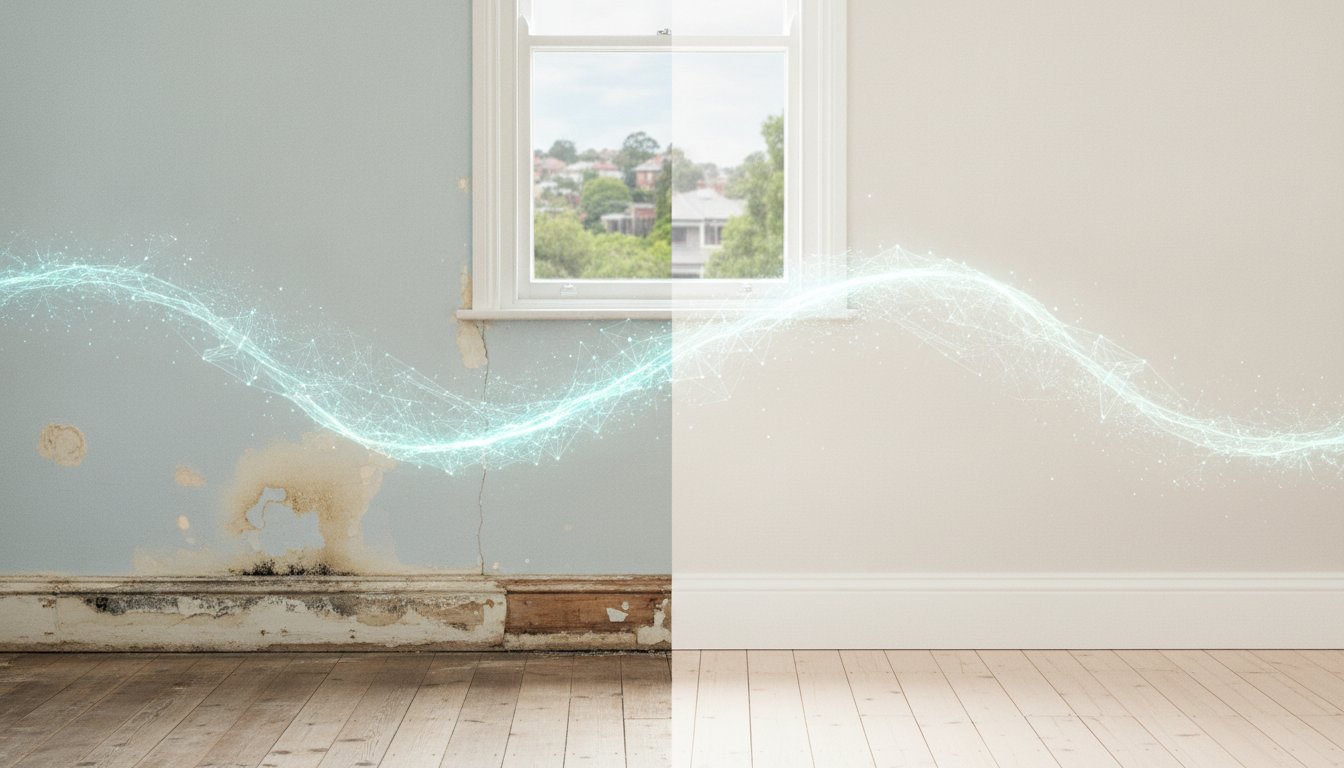
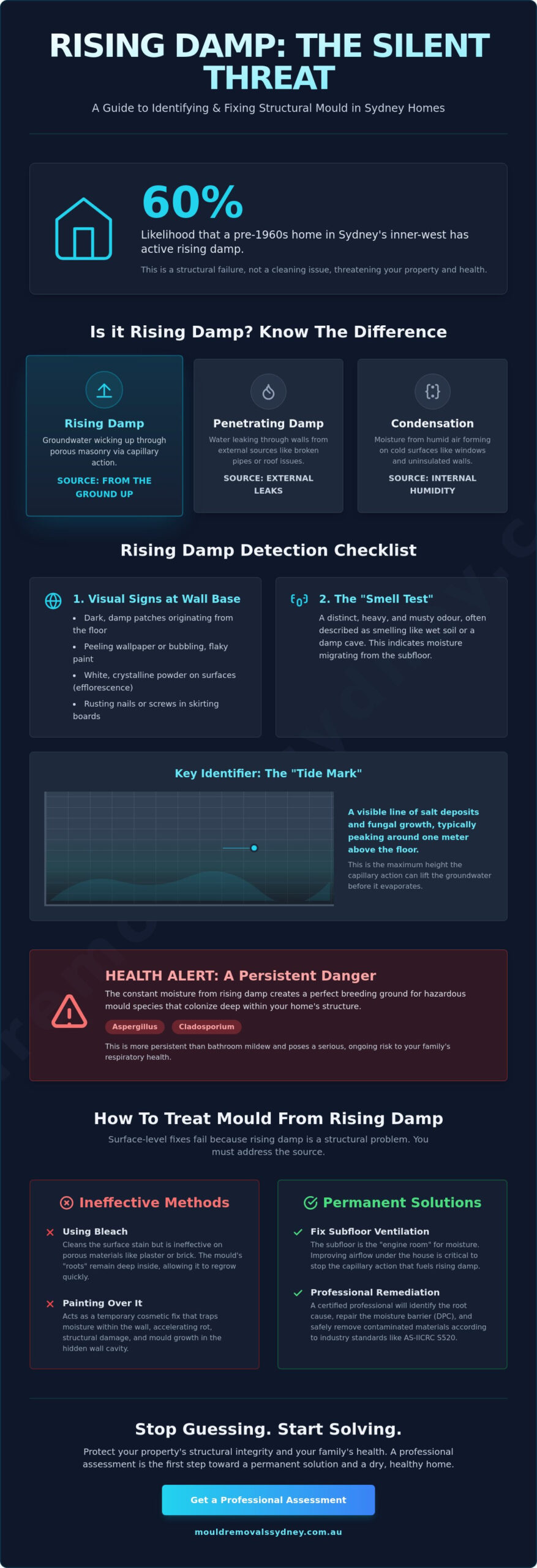
It’s vital to distinguish this from other moisture issues. Penetrating damp usually comes from roof leaks or broken pipes, while simple condensation forms on cold surfaces due to poor ventilation. Rising damp is unique because it starts at the ground. You can usually identify it by the “tide mark” it leaves behind. This is a distinct, visible line of salt deposits and fungal growth that typically peaks about one meter above the floor. If you want to know how to treat mould from rising damp, you must first accept that this is a structural battle against the elements, not a housekeeping error.
The Science of Capillary Action in Sydney Masonry
Sydney’s unique geography makes this problem particularly aggressive for local homeowners. Many of our older properties were built directly onto sandstone or reactive clay soils without a functional damp proof course (DPC). In these older NSW buildings, the original DPC—often just a thin layer of bitumen or slate—has likely cracked or disintegrated over the decades. Bricks act as thousands of tiny straws, sucking up mineral-rich moisture from the earth. Sydney’s high coastal humidity complicates this further by slowing down the rate of wall evaporation. This keeps your masonry perpetually saturated, creating a permanent breeding ground for mould.
Why Rising Damp Mould is a Health Priority
Ignoring these stains is a serious gamble with your family’s respiratory health. The constant moisture within the walls allows hazardous mould species like Aspergillus and Cladosporium to colonize your home. These aren’t just surface spots. Fungal colonies often thrive in the dark, unventilated voids behind your expensive skirting boards and under your floorboards. Rising damp mould is more persistent than bathroom mildew because it is fueled by a constant, structural water source rather than occasional steam. To protect your home and health, you need to understand how to treat mould from rising damp at the source rather than just painting over the symptoms.
Signs You Are Dealing with Rising Damp (Not Just Condensation)
Distinguishing rising damp from simple condensation is the first step in protecting your Sydney property. Condensation usually appears as black speckles on window frames or high corners where air stagnates. Rising damp, however, is a ground-up assault that targets the very foundation of your walls. Learning how to treat mould from rising damp effectively starts with an accurate diagnosis. Use this visual checklist to assess your home:
- Dark, damp patches starting at the skirting board.
- Peeling wallpaper or bubbling paint near the floor.
- A visible “tide mark” peaking about one meter high.
- Rusting of nails or screws in your floorboards.
Don’t ignore your senses. The ‘Smell Test’ is a powerful diagnostic tool for Sydney residents. Rising damp produces a distinct, heavy, earthy odour, similar to wet soil or a damp cave. This is the smell of subfloor moisture migrating into your living space. If you feel the wall, it’s often noticeably colder at the base than at eye level. Check your external walls for subfloor vents. If they’re blocked by garden beds, debris, or recent renovations, they’re trapping moisture under your home. This stagnant air is a primary driver of fungal growth. Understanding these signs is critical before you research how to clean up residential mold problems, as surface cleaning alone won’t solve a subfloor ventilation issue.
Efflorescence: The ‘White Powder’ Warning
If you see a white, crystalline powder forming on your bricks or plaster, you’re looking at efflorescence. These ground salts are carried into your walls by rising moisture. As the water evaporates, the salt remains. These crystals are destructive. They expand during crystallization, blowing the face off bricks and causing plaster to crumble. Wiping these salts away is only a temporary fix. They’ll return until you address the moisture source properly. A professional mould inspection can identify how deep this salt contamination goes.
Damage to Skirting Boards and Floorboards
Timber is incredibly vulnerable to rising damp. Check your skirting boards for rotting, soft spots, or flaking paint. Floorboards may exhibit ‘cupping,’ where the edges lift higher than the center. This indicates intense moisture pressure from the subfloor. This environment invites mould and secondary wood-decay fungi like dry rot. While you might be searching for what is black mould, structural timber damage requires specialist intervention. Learning how to treat mould from rising damp means assessing your home’s wooden skeleton.
How to Treat Mould from Rising Damp: Surface vs. Structural Solutions
Many homeowners reach for a spray bottle the moment they see a tide mark appearing on their walls. While cleaning the surface is a logical first step, it is never the final solution. If you want to know how to treat mould from rising damp, you must understand the difference between killing a visible colony and stopping the moisture engine that fuels it. Surface cleaning is just a cosmetic bandage. Without addressing the groundwater wicking up through your masonry, the mould will return within days, often more aggressively than before.
Avoid the common mistake of using household bleach. Bleach is a surface-level oxidiser that removes the black colour but leaves the mould’s root system, known as hyphae, alive deep inside your porous bricks and plaster. Because bleach is primarily water-based, you are actually feeding the dampness while thinking you’ve killed the fungus. Similarly, never use ‘anti-mould paint’ as a primary fix for rising damp. Some retail guides suggest painting over the problem, but this is disastrous advice for structural damp. The moisture pressure from within the wall will cause the new paint to bubble, crack, and peel within weeks. You are simply trapping the water, which accelerates timber rot and salt damage behind the scenes.
The DIY ‘First Aid’ for Surface Mould
If you need to manage the surface growth while waiting for a specialist, use a solution of 80% vinegar and 20% water. Vinegar’s acidity penetrates porous materials much better than bleach. Safety is paramount during this process. Always wear a P2 mask to avoid inhaling spores, as disturbing the mould releases millions of microscopic particles into the air. Open every window to create cross-ventilation while you work. This follows official NSW Health advice on mould, which emphasises the importance of personal protection and air movement to prevent respiratory irritation.
Why Professional Remediation is Non-Negotiable
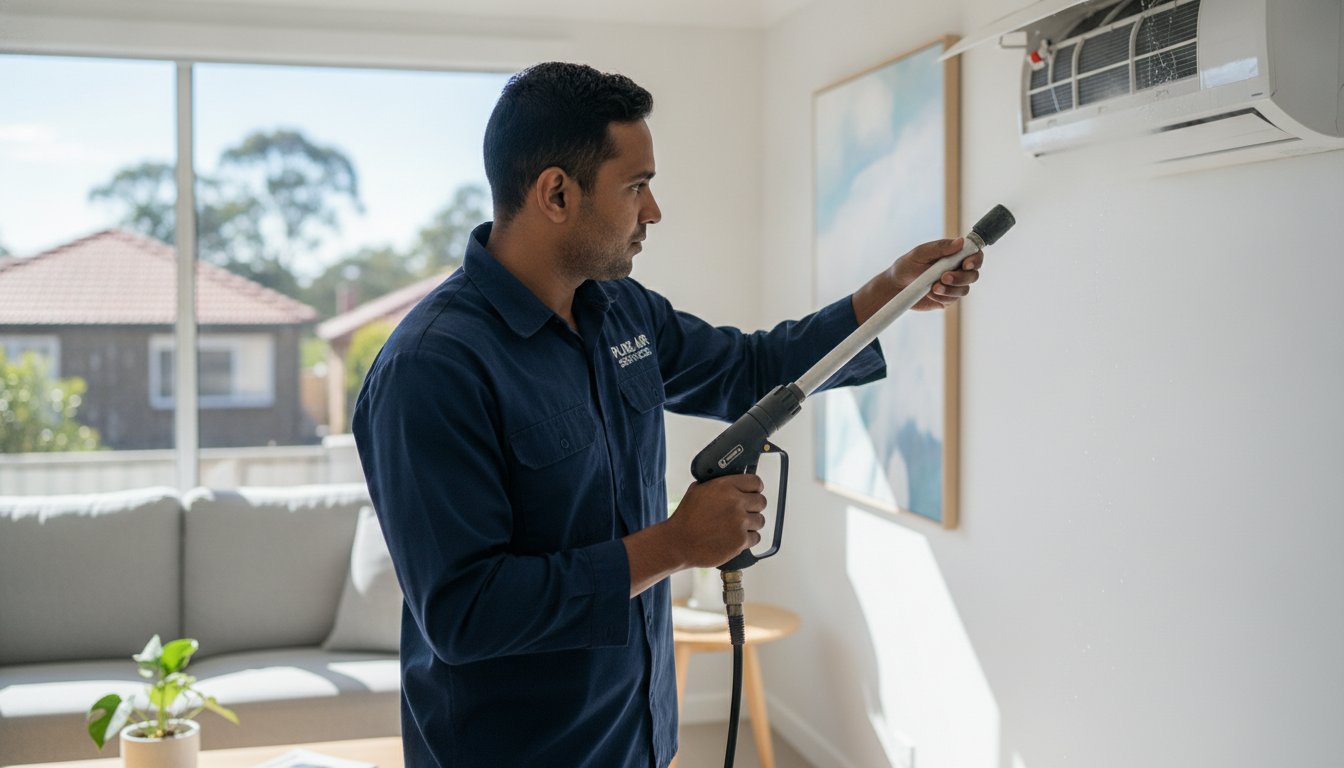
True success requires a two-pronged attack: removing the spores and drying the structure. Our specialists use the Goldmorr System, which involves a biodegradable fogging process. This mist reaches microscopic spores hiding inside wall cavities and subfloors that manual scrubbing cannot touch. High-efficiency air scrubbers and purifiers then filter the air, removing the contaminants that cause musty smells and health issues. For a permanent result that goes beyond the surface, trust Sydney’s #1 Mould Removal Service to restore your home safely and effectively. We focus on the science of the structure, not just the appearance of the wall.
Preventing Future Growth: Subfloor Ventilation and Drainage
If you truly want to master how to treat mould from rising damp, you must look beneath your feet. The subfloor is the engine room of your home’s moisture levels. When air becomes trapped in this dark, enclosed space, it creates a high-pressure humidity zone. This moisture has nowhere to go but up into your floorboards and masonry. Many Sydney homeowners try to solve the problem by running expensive dehumidifiers in their living rooms. While these units remove some air moisture, they don’t address the saturated soil under the house. They are a recurring expense that fails to fix the structural source.
Sydney’s climate presents specific challenges for older brick and sandstone properties. Our city experiences intense periods of heavy rainfall that can quickly overwhelm antiquated drainage systems. When stormwater isn’t directed away from the footings, the soil becomes waterlogged. This excessive groundwater pressure forces moisture into the bricks through capillary action. Passive ventilation, such as original terracotta vents, often isn’t enough in our high-humidity environment. These vents are frequently blocked by years of debris, paint, or garden mulch, leaving your subfloor stagnant and damp.
The Power of Subfloor Ventilation Systems
Mechanical subfloor ventilation is a game-changer for Sydney properties. These systems use high-performance fans to pull damp, stale air out of the subfloor while simultaneously pushing fresh, dry air in. This constant airflow is often a more cost-effective fix than an expensive chemical damp course injection. By constantly replacing the air, subfloor ventilation effectively lowers the dew point of your walls, preventing moisture from condensing within the masonry. This creates a dry buffer zone that stops mould spores from ever taking root in your skirting boards or plaster again. If you’re ready for a permanent solution, book a subfloor ventilation assessment with our specialist team today.
External Drainage and Landscaping
Your home’s exterior often holds the key to how to treat mould from rising damp permanently. Walk around your property and look for garden beds built up against the wall. If the soil level is higher than your damp proof course (DPC), you are ‘bridging’ the barrier and inviting moisture to bypass it entirely. Ensure all downpipes are securely connected to the stormwater system rather than simply emptying at the footings. For homes that have already suffered from extreme weather events, our Water Damage Repair Guide offers urgent steps to protect your structure. Proper drainage ensures that groundwater never has the chance to begin its upward climb into your living space.
Professional Assessment: When to Call ABC Mould Cleaning Solutions
Misdiagnosing the source of moisture is the most common reason DIY attempts fail. You might spend weeks researching how to treat mould from rising damp only to discover the issue was actually a slow-leaking pipe behind the wall. Professional intervention is the only way to definitively distinguish between structural capillary action and localized plumbing failures. We provide the technical certainty you need to stop wasting money on incorrect treatments and start restoring your property’s value.
Our team operates with a controlled sense of urgency because we understand that dampness doesn’t just damage bricks; it threatens your family’s health. We provide expert services across New South Wales, ensuring that homeowners from the Inner West to the Greater Sydney region have access to world-class remediation. By following the AS-IICRC S520:2025 standards, we ensure every project is handled with scientific precision. We are committed to delivering professional, long-term results that are accessible and effective.
Our Specialized Inspection Process
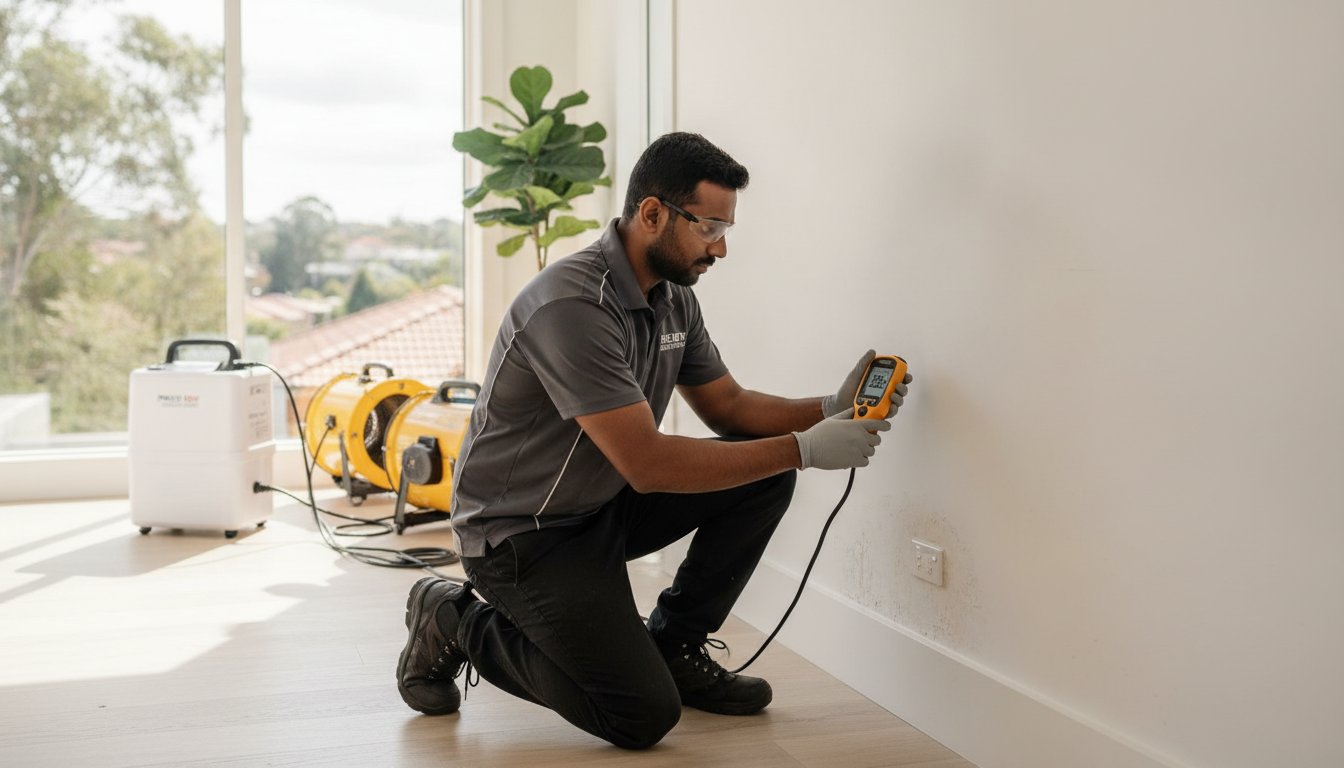
We don’t rely on guesswork. Our specialists utilize advanced moisture meters and thermal imaging technology to map hidden dampness within your wall cavities. This allow us to see exactly where the groundwater is climbing and identify the precise root cause of the infestation. Whether it is subfloor stagnation or a failed damp proof course, we find the source. You will receive a clear, action-oriented report that outlines the necessary steps for a permanent fix. This transparency empowers you to make informed decisions for your home or rental property.
The Goldmorr Advantage for Rising Damp
Our proprietary methodology relies on the Goldmorr System to provide comprehensive protection. This process involves a non-invasive, biodegradable fogging treatment that eliminates both surface colonies and airborne spores in a single application. It is completely safe for your children, your pets, and the environment. While surface scrubbing only addresses what you can see, our system purifies the entire indoor environment. Take the first step toward a dry, healthy home and contact us today for a Mould Removal Sydney quote. Let our experts handle the science so you can enjoy the peace of mind you deserve.
Secure Your Sydney Property Against Structural Dampness
You now possess the essential strategies to protect your property from the ground up. Remember that rising damp is a structural failure, not a simple cleaning issue. While surface treatments provide temporary cosmetic relief, they cannot stop the capillary action pulling groundwater into your masonry. A permanent solution requires a scientific approach that addresses subfloor humidity and eliminates deep-seated fungal colonies. Understanding how to treat mould from rising damp is the first step toward reclaiming your home’s air quality and structural integrity.
Our specialized Goldmorr System Technicians and expert subfloor ventilation installers provide the technical expertise needed for a lasting fix. With our Sydney-wide 24/7 emergency response, we ensure that your family’s health is never left to chance. Stop the cycle of musty smells and crumbling plaster by choosing a professional path to remediation. Get a Professional Mould Inspection & Quote from ABC Mould Cleaning Solutions to start your journey toward a dry, healthy home. You can achieve a permanent resolution that protects your investment and your well-being for years to come.
Frequently Asked Questions
Can rising damp be fixed permanently?
Yes, rising damp can be fixed permanently by installing effective subfloor ventilation and restoring your home’s damp proof course. A professional approach targets the groundwater source rather than just cleaning the surface. Once the masonry is dry and the airflow is restored, the capillary action that pulls moisture into your walls stops. This ensures a long-term solution rather than a temporary cosmetic fix.
Is mould from rising damp dangerous to my health?
Yes, the persistent dampness associated with rising damp creates a high-risk environment for hazardous mould growth. Fungi like Aspergillus and Cladosporium thrive in saturated masonry and release airborne spores that can cause respiratory irritation, especially in children. Because the moisture source is constant, the spore count remains high until you implement a structural solution. Protecting your family requires immediate action to remediate the air and the structure.
How much does it cost to treat rising damp in Sydney?
The total cost depends on the extent of the structural damage and the length of the affected walls. A specialist damp assessment in Sydney typically ranges from $500 to $1,500 to identify the root cause. Structural treatments, such as chemical damp-proof course injections, are often calculated per linear metre. You should always seek a professional quote to understand the specific requirements for your property’s masonry type and soil conditions.
Will a dehumidifier stop rising damp mould?
No, a dehumidifier will not stop mould caused by rising damp because it doesn’t address the groundwater wicking through your bricks. While these units can lower humidity in the air, they are powerless against the moisture engine under your floorboards. Relying on a dehumidifier is an expensive, temporary measure that ignores the structural failure. You need to focus on how to treat mould from rising damp at the source through subfloor ventilation.
Can I just paint over the damp patches on my wall?
No, painting over damp patches is a guaranteed way to waste money and trap moisture inside your walls. The hydro-static pressure from the groundwater will cause even specialized anti-mould paint to bubble and peel within a few weeks. Trapping this moisture also accelerates the decay of timber skirting boards and promotes salt damage. You must dry the wall completely and remove the salts before any redecoration can occur.
What is the difference between rising damp and condensation?
Rising damp is a structural issue where groundwater climbs up through porous bricks, whereas condensation is caused by warm, moist air hitting cold surfaces. Rising damp always starts at the floor level and creates a distinct tide mark. Condensation usually appears as black speckles on window frames or high corners of the room. Correct diagnosis is vital because the treatment for structural dampness is entirely different from improving room-to-room airflow.
How do I know if my damp proof course has failed?
You can identify a failed damp proof course by looking for white, salty crusts on your bricks and rotting timber skirting boards. If you see a dark, damp stain that peaks about one metre from the floor, your original DPC is likely cracked or bridged. These symptoms indicate that groundwater is bypassing your home’s moisture barriers. A specialized inspection using moisture meters can confirm the failure and map the extent of the hidden moisture.
Does the Goldmorr System work on rising damp mould?
Yes, the Goldmorr System is highly effective at eliminating the spores and musty smells associated with rising damp. Our specialists use this proprietary methodology to purify the air and treat the wall surfaces after the structural moisture source is addressed. It provides a non-invasive way to restore safety to your home without the need for harsh chemicals. When combined with subfloor ventilation, it is a key part of how to treat mould from rising damp for good.