That ozone generator you’ve been eyeing might actually make your mould problem worse, not better. It’s a hard pill to swallow, especially when you’ve spent weeks battling that musty smell creeping through your home and you’re desperate for a solution that actually works.
You’re not alone in feeling overwhelmed by it all. The debate around mould fogging vs ozone generator treatments is genuinely confusing, and the stakes are high when you’ve got kids, pets, and your own health to think about. Most homeowners assume that if a treatment is powerful enough to kill mould spores, it must be doing the job properly. But power and effectiveness aren’t the same thing.
In this article, we’ll cut through the noise and explain exactly how each method works, what the real risks are, and why treating the symptom without addressing the source is a costly mistake. You’ll walk away knowing which approach is genuinely safe for your household, why professional inspection matters before any treatment begins, and what separates a thorough remediation process from a temporary fix that leaves the toxic mould structure completely intact.
Key Takeaways
- Understanding the real differences in the mould fogging vs ozone generator debate could save your household from serious health risks and costly damage – ozone is far more dangerous than most homeowners realise.
- Ozone generators can neutralise musty odours and reach hidden crevices, but they often fail to eliminate the deep fungal structures (hyphae) growing inside your walls – meaning the mould comes back.
- High-concentration ozone is corrosive to rubber, plastics, and metals, and requires all occupants – including pets – to vacate the property entirely during treatment.
- No treatment, regardless of how powerful it is, will deliver lasting results without first identifying and fixing the moisture source driving the mould growth.
- Professional remediation using a biodegradable fogging system like the Goldmorr System targets both airborne spores and surface growth safely – without the toxic risks that come with ozone exposure.
What is an Ozone Generator for Mould Removal?
An ozone generator is a device that deliberately produces O3, a molecule made up of three oxygen atoms, and releases it into an enclosed space to oxidise organic matter. That includes mould spores, bacteria, pet odours, and smoke particles. The core idea is straightforward: expose the problem to a highly reactive gas and let chemistry do the work. No scrubbing, no direct contact, no visible effort required.
That “no-effort” appeal is exactly why ozone generators have gained traction among Sydney homeowners dealing with persistent mould problems. The promise is seductive. Plug it in, leave the house, come back to a fresh-smelling space. But understanding what’s actually happening at a molecular level reveals why that promise often falls short in the mould fogging vs ozone generator debate.
The Science of Oxidation
O3 is unstable by nature. That third oxygen atom is loosely bonded and actively seeks other molecules to react with. When ozone contacts the cellular walls of fungi, it disrupts the proteins and lipids that hold those cells together, effectively breaking them down. In theory, this kills mould spores on contact.
The critical distinction is between low-level ozone air cleaners and high-concentration “shock treatment” generators. Consumer-grade air purifiers that produce trace amounts of ozone won’t touch a mould problem. Killing mould requires shock-level concentrations, far beyond what’s safe for any living thing to breathe. That sharp, metallic smell you notice after a thunderstorm? That’s ozone at low atmospheric levels. At the concentrations needed to kill mould, it’s a serious respiratory hazard.
Common Uses in Remediation
Ozone treatment does have legitimate applications, particularly in commercial and industrial settings. Professionals use high-concentration generators in situations such as:
- Odour elimination following smoke, flood, or severe pet contamination in unoccupied properties
- Targeting airborne spores in hard-to-access areas like wall cavities, roof voids, and subfloor spaces
- Post-water-damage treatment in vacant commercial buildings before restoration work begins
Notice the common thread: unoccupied spaces. Every legitimate professional application requires complete evacuation of all people, pets, and plants. That’s not a minor inconvenience. It’s a fundamental limitation that shapes the entire risk profile of this treatment method, and it’s a factor that rarely features prominently in the marketing.
The gap between how ozone generators are sold and how they actually perform under real household conditions is where the problems begin.
The Pros: Potential Benefits of Ozone Treatment
To be fair to the technology, ozone treatment does offer genuine advantages in specific scenarios. Understanding those strengths is essential to the mould fogging vs ozone generator conversation, because dismissing ozone entirely would be as misleading as overselling it. The key is knowing exactly what it does well, and where that performance ends.
Here’s what ozone treatment genuinely delivers:
- Gas penetration: Unlike liquid sprays or manual scrubbing, ozone reaches inside porous materials, wall cavities, and tight crevices that physical cleaning simply can’t access.
- Airborne spore reduction: In a sealed environment, high-concentration ozone can significantly lower the count of floating spores circulating through the air.
- No chemical residue: Ozone reverts back to ordinary oxygen (O2) within a few hours after treatment, leaving no chemical film or synthetic compounds behind.
- Odour destruction: It breaks down Volatile Organic Compounds (VOCs) at a molecular level rather than simply masking them with fragrance.
Effective Odour Eradication
That persistent musty smell isn’t just unpleasant. It’s the result of microbial VOCs, gases released by actively growing mould colonies. Ozone is genuinely effective at destroying those compounds at the molecular level, which is why it’s widely used in the restoration industry for smoke, flood, and severe contamination odour removal in unoccupied properties. Unlike air fresheners or surface sprays that layer a new scent over the problem, ozone chemically dismantles the odour source itself. Fabrics, carpets, and soft furnishings that absorb mouldy smells respond particularly well to this treatment.
That said, a critical distinction needs to be made here: the smell disappearing doesn’t mean the health hazard has gone with it. Dead mould spores are still allergenic. Fragments of fungal matter that remain in your environment can still trigger respiratory symptoms, skin reactions, and immune responses, even after the odour is completely gone.
Accessing Hidden Mould Spores
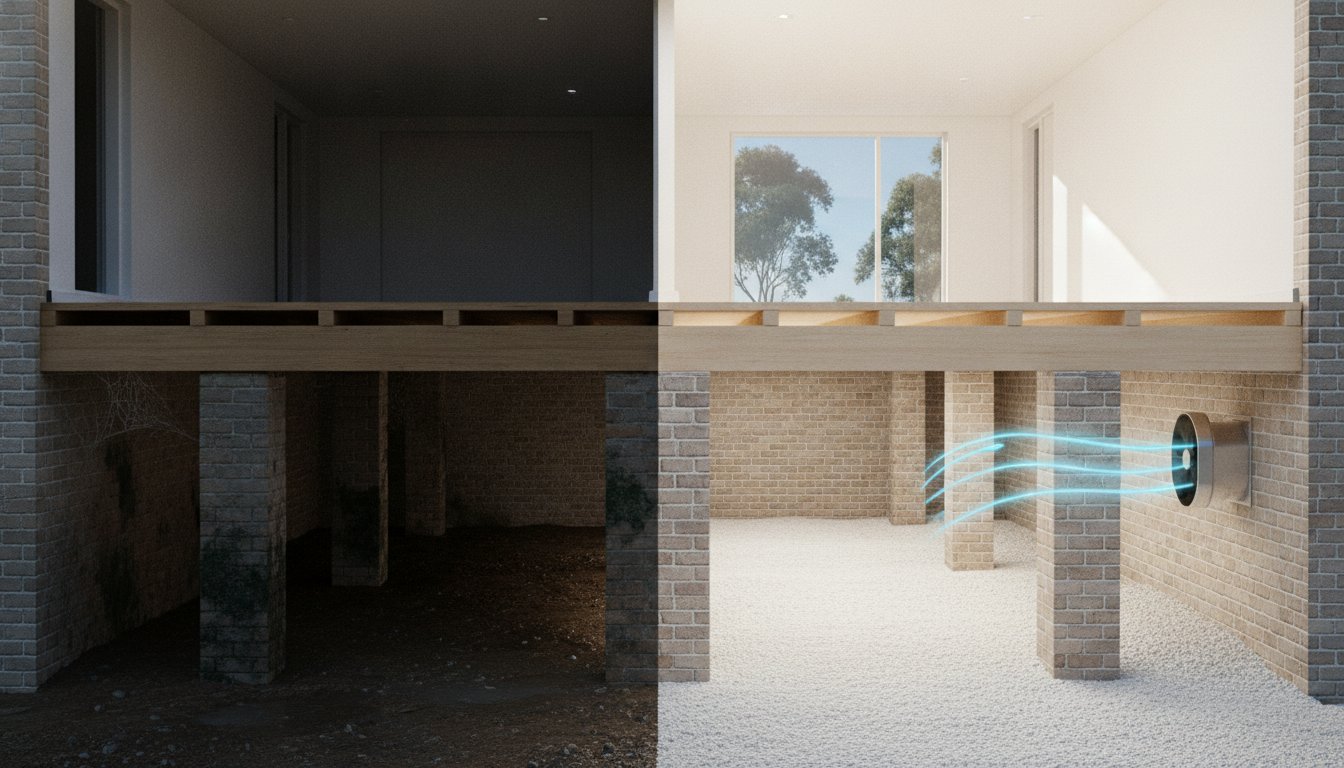
Subfloor areas, ceiling voids, and roof cavities present a real challenge for conventional mould treatments. Liquid-based products can’t always reach these spaces without significant structural disruption. As a gas, ozone can be directed into these zones and will naturally diffuse through available gaps and airways, making it a useful supplementary step after physical remediation work has already been completed.
The word “supplementary” matters here. Ozone works best as part of a broader process, not as a standalone fix. Before any gas treatment is applied to hidden spaces, a thorough mould inspection is essential to understand what you’re actually dealing with, where the growth is concentrated, and crucially, what moisture source is feeding it. Treating a hidden cavity without that knowledge is guesswork, and guesswork is expensive when mould grows back six weeks later.
If you’re unsure whether ozone is appropriate for your specific situation, speaking with a professional remediation specialist before committing to any treatment is always the smarter starting point.

The Cons: Why Ozone Can Be Dangerous for Your Home
The benefits of ozone treatment are real but narrow. The risks, on the other hand, are broad and significantly underreported in the marketing materials that accompany most consumer-grade generators. In the mould fogging vs ozone generator debate, this is where the conversation gets serious, because the downsides aren’t minor inconveniences. They’re genuine hazards to your health, your household, and the structural integrity of your belongings.
Respiratory and Health Risks
The U.S. Environmental Protection Agency explicitly warns that ozone concentrations produced by shock-treatment generators frequently exceed safe health thresholds, even when the space is supposedly “cleared” afterwards. Ozone doesn’t vanish the moment you open a door. It lingers, and residual exposure causes measurable harm.
Symptoms of ozone exposure include:
- Throat irritation and coughing within minutes of low-level re-entry
- Chest tightness and shortness of breath, particularly in those with pre-existing respiratory conditions
- Worsening of asthma, sometimes triggering acute episodes in sensitive individuals
- Eye and nasal irritation from brief exposure during the off-gassing period
Pets are especially vulnerable. Birds can suffer fatal respiratory distress from ozone concentrations that a human adult might only find mildly uncomfortable. Indoor plants die. Fish tanks require complete removal before treatment. These aren’t edge cases; they’re standard precautions that any reputable operator will insist on, which tells you something important about the risk level involved.
Damage to Property and Electronics
Ozone is a powerful oxidising agent, and it doesn’t discriminate. It reacts with organic and synthetic materials throughout your home, not just the mould you’re targeting. This is the gap that most online resources completely ignore, and it’s a costly one for Sydney homeowners who proceed without this knowledge.
Here’s what high-concentration ozone actually does to your property:
- Rubber gaskets and seals in washing machines, dishwashers, and refrigerators perish and crack, leading to leaks and appliance failure
- Elastic in clothing, bedding, and upholstery degrades, causing fabric to lose structure and stretch permanently
- Wiring insulation in modern homes, particularly older PVC-coated cables, becomes brittle with repeated ozone exposure
- High-end electronics, including circuit boards, connectors, and screens, are vulnerable to oxidative corrosion
- Antique furniture, oil paintings, and leather goods can suffer irreversible surface damage from a single prolonged treatment
There’s also a chemical byproduct risk that rarely gets discussed. When ozone reacts with certain volatile compounds already present in your home, including those found in cleaning products, air fresheners, and some furniture finishes, it can generate formaldehyde and other secondary pollutants. You came in with a mould problem. You could leave with a different toxic exposure entirely.
And don’t forget the dead spore problem. Even if ozone kills every active spore it contacts, those spore fragments remain in your environment. Dead mould is still allergenic. Immune responses, skin reactions, and respiratory symptoms don’t require living mould to occur. Without physical removal and a professional-grade fogging process that addresses both surface and airborne contamination, you’re managing the appearance of a clean space, not the reality of one.
Why Ozone Generators Often Fail as a Standalone Solution
Here’s the part that most ozone generator reviews completely skip over: killing spores and eliminating mould are two entirely different things. In the mould fogging vs ozone generator debate, this distinction is where the real argument is won or lost. Ozone can oxidise what it contacts in the air. What it cannot do is reach inside the wall cavity where the actual fungal structure is growing, fix the leaking pipe feeding it moisture, or remove the physical mould mass that industry standards require to be physically extracted.
That’s not a minor gap. It’s the reason mould comes back weeks after treatment, and why homeowners who’ve already spent money on a generator end up calling a professional anyway.
The Myth of the ‘No-Scrub’ Solution
Black mould doesn’t sit politely on a surface waiting to be gassed. It sends hyphae, the root-like filaments of the fungal structure, deep into drywall, timber framing, and insulation batts. Ozone, as a gas, reacts with what it touches on the surface. The hyphae underneath? Untouched. This is precisely why the IICRC S520 standard, the industry benchmark for mould remediation, mandates physical removal of contaminated material combined with HEPA vacuuming. A machine that pumps reactive gas into a room satisfies none of those requirements.
There’s also the dead spore problem to consider. Even where ozone does kill surface spores, those fragments remain in the environment. Dead mould proteins are still allergenic. For anyone with asthma, sensitivities, or a compromised immune system, the inflammatory response doesn’t care whether the spore is alive or not. Professional-grade air scrubbing, which physically captures and filters particulates out of the air rather than chemically altering them, is what actually reduces the allergen load in your home.
The Moisture Factor
Mould doesn’t appear randomly. It grows because conditions are right: a moisture source, an organic substrate, and enough warmth. Ozone addresses none of those conditions. If a slow leak behind your bathroom tiles or inadequate subfloor ventilation is driving the humidity, mould will re-establish within 48 hours of any treatment, regardless of how powerful that treatment was.
This is why genuine remediation is a holistic process, not a single machine switched on for a few hours. It begins with identifying and resolving the moisture source, which often requires water damage repair before any surface or air treatment begins. Skip that step and you’re not remediating anything; you’re just resetting the clock on the same problem.
If you’ve already tried an ozone generator and watched the mould return, that’s not bad luck. It’s the predictable outcome of treating a symptom without addressing its cause. Speak with a professional remediation specialist to get a proper inspection and identify the moisture source before spending another dollar on treatment.
A Safer Alternative: The Goldmorr System and Professional Remediation
Everything covered so far in the mould fogging vs ozone generator debate points to the same conclusion: power without precision creates new problems. The Goldmorr System, used by ABC Mould Cleaning Solutions, is built on a fundamentally different philosophy. Rather than flooding your home with a corrosive gas that requires full evacuation and damages rubber seals, electronics, and fabrics, it deploys a biodegradable fogging solution specifically formulated to target both airborne spores and surface contamination without the toxic risk profile that makes ozone so problematic in occupied residential settings.
The practical difference is immediate. Goldmorr products are biodegradable, meaning they break down without leaving behind harmful residues or triggering the secondary chemical reactions that ozone can cause when it interacts with household compounds. Your family, your pets, and your belongings aren’t collateral damage in the treatment process.
Why Biodegradable Fogging Wins
The safety comparison here isn’t subtle. High-concentration ozone requires complete evacuation of all occupants, pets, and plants, and the space must remain sealed during treatment and ventilated thoroughly before re-entry. The Goldmorr System’s biodegradable formulation operates without those evacuation constraints, which means less disruption to your household and a faster return to normal. For Sydney families managing work schedules, school runs, and daily life, that difference is significant.
Critically, the system targets what ozone misses: both the spores circulating in the air and the contamination present on surfaces. That dual-action approach aligns directly with professional mould removal Sydney standards, which require treating the full contamination picture rather than just the airborne fraction. Ozone addresses one part of that equation at best. The Goldmorr System addresses both.
Professional Air Scrubbing vs. DIY Ozone
There’s a fundamental difference between killing spores and removing them. Ozone attempts to destroy what it contacts in the air. Industrial HEPA air scrubbers physically capture particulates, pulling spores, fungal fragments, and allergens out of the air entirely and trapping them in a filter. That’s not a semantic distinction; it’s the difference between reducing your allergen load and simply changing the state of what’s still floating in your breathing space.
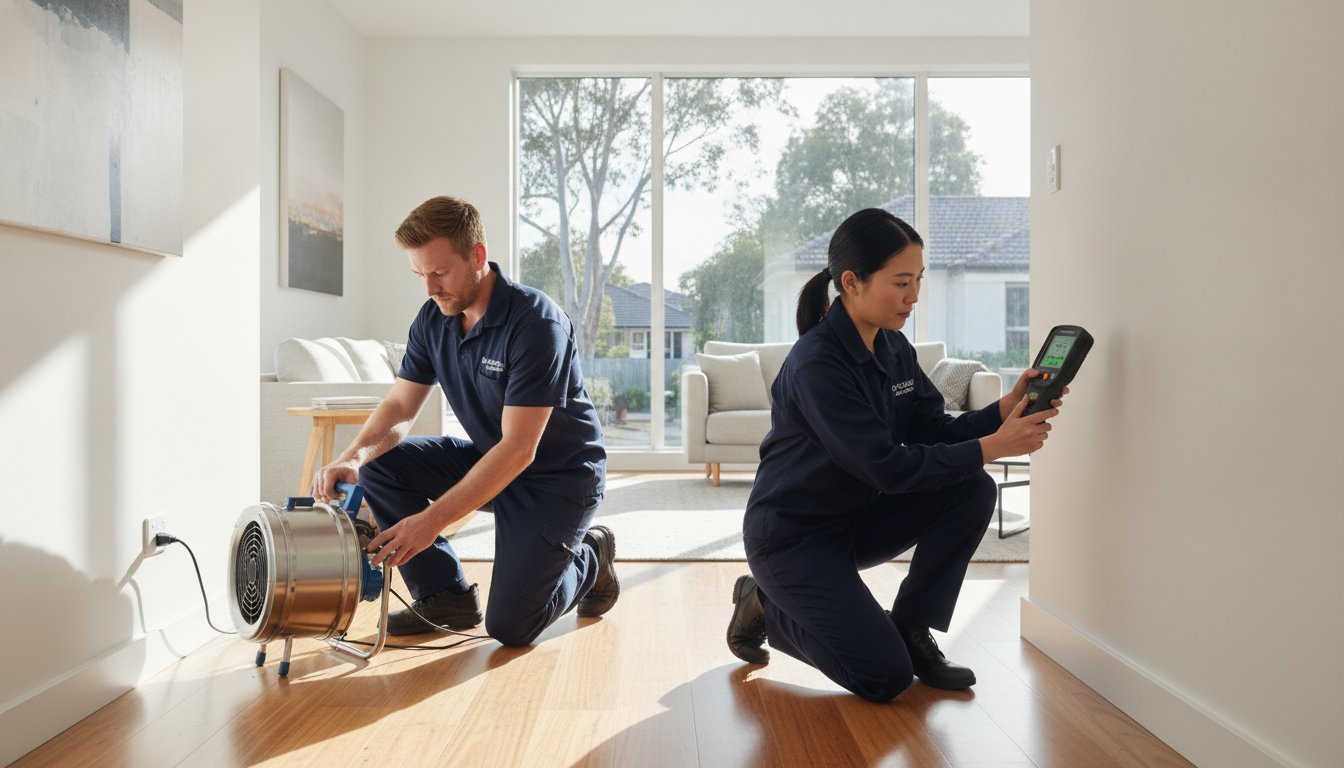
ABC Mould Cleaning Solutions combines the Goldmorr fogging process with air purification and scrubbing as part of a comprehensive remediation approach. Where subfloor ventilation is inadequate, addressing that directly prevents the humidity conditions that allow mould to re-establish after any treatment. Fix the moisture. Remove the contamination. Scrub the air clean. That’s a complete process, not a shortcut.
Don’t spend another dollar on a machine that treats the symptom. Get a professional mould inspection today and find the safest, most effective solution for your family.
Make the Right Call for Your Home and Your Family
The mould fogging vs ozone generator debate comes down to one simple reality: ozone is a powerful tool with serious limitations, and those limitations matter enormously in a family home. It can neutralise odours and reduce airborne spores, but it leaves fungal root structures untouched, damages rubber and electronics, and requires complete evacuation of everyone you care about. That’s not a trade-off worth making when safer, more effective alternatives exist.
Lasting remediation means fixing the moisture source first, physically removing contamination, and treating both surfaces and air with products that are safe for your household. That’s exactly what a professional process delivers, and it’s what a machine from a hardware store simply can’t replicate.
ABC Mould Cleaning Solutions uses the specialised Goldmorr System with biodegradable, family-safe products, backed by expert inspections across all Sydney suburbs. You don’t have to guess at the right solution.
Your home should feel safe again. Let’s make that happen.
Frequently Asked Questions
Is it safe to be in a house with an ozone generator running?
No. It’s not safe to be inside any space where a shock-treatment ozone generator is actively running. The concentrations required to kill mould are far above the threshold that causes respiratory harm in humans and animals. The U.S. EPA classifies ozone as a lung irritant at levels well below those used in mould treatment, and Australian workplace safety guidelines reflect similar concerns about prolonged exposure.
This isn’t a precaution that applies only to people with asthma or sensitivities. Everyone, including healthy adults, children, and pets, must vacate completely. Birds are particularly vulnerable and can suffer fatal respiratory distress from concentrations that a human adult might find only mildly uncomfortable.
How long should I wait to enter a room after ozone treatment?
The standard guidance from professional operators is a minimum wait of 30 minutes to four hours after the generator has been switched off, depending on the concentration used and the size of the space. Even then, thorough ventilation with windows and doors open is essential before full re-entry. Residual ozone doesn’t disappear the moment the machine stops.
If you can still detect that sharp, metallic smell upon re-entry, the ozone level hasn’t dropped to a safe threshold. That odour is your warning signal. Don’t ignore it, and don’t assume the space is safe simply because the treatment period has ended.
Does ozone actually kill black mould permanently?
In the mould fogging vs ozone generator debate, this is one of the most misunderstood questions. Ozone can kill surface spores it directly contacts, but it doesn’t penetrate the hyphae, the root-like filaments that black mould sends deep into drywall, timber, and insulation. Those structures remain intact and continue growing. Without physically removing contaminated material and fixing the moisture source driving growth, mould will re-establish.
Permanent results require a complete process: moisture source identification, physical remediation, and professional-grade treatment. An ozone generator addresses none of those steps on its own, which is why mould so reliably returns after DIY ozone treatment.
Can an ozone generator damage my TV or computer?
Yes, high-concentration ozone can cause oxidative corrosion to circuit boards, connectors, and electronic components. Screens, particularly older LCD panels, are also vulnerable to surface degradation with prolonged exposure. This isn’t a theoretical risk; it’s the reason reputable operators instruct homeowners to remove or cover sensitive electronics before treatment begins.
The damage often isn’t immediately visible, which makes it easy to dismiss. But repeated ozone treatments in the same space can progressively degrade electronics, wiring insulation, and rubber components in appliances, leading to failures that appear unrelated to the original treatment.
What is the difference between an air purifier and an ozone generator?
An air purifier physically captures airborne particles, including mould spores, dust, and allergens, by drawing air through a filter, typically a HEPA filter rated to trap particles as small as 0.3 microns. Nothing is chemically altered; contaminants are physically removed from your breathing environment. An ozone generator, by contrast, releases a reactive gas that chemically attacks organic matter but doesn’t remove anything from the air.
That distinction matters enormously. Professional air scrubbing actually reduces the allergen load in your home by extracting spore fragments and fungal matter. Ozone changes the state of what’s present without removing it, meaning dead spore fragments, which are still allergenic, remain in circulation.
Will ozone remove the stains left by mould on walls?
No. Ozone is a gas, and it has no ability to bleach or lift the physical staining that mould leaves on painted surfaces, grout, or plasterboard. Those dark marks are caused by pigments produced by the fungal colony, and removing them requires physical cleaning, appropriate surface treatments, and in many cases, replacement of the affected material.
If staining is visible on your walls, it’s a strong indicator that the mould growth is established enough to require professional assessment rather than a gas-based treatment. Surface stains that persist after any treatment are a clear sign the underlying contamination hasn’t been properly addressed.
Are there natural alternatives to using ozone for mould smells?
Several approaches can reduce musty odours without the risks associated with ozone. Activated charcoal absorbs airborne VOCs passively and is safe for occupied spaces. Improving ventilation and reducing indoor humidity through dehumidifiers directly targets the conditions that produce those smells in the first place. Bicarbonate of soda applied to soft furnishings can absorb mild odour without chemical exposure.
That said, persistent musty smells in a home almost always indicate active mould growth somewhere. Masking or reducing the odour without addressing the source is a temporary measure. If the smell keeps returning, a professional mould inspection to locate and resolve the moisture source is the only reliable long-term solution.
Why do professional mould removers often advise against DIY ozone use?
Professional remediation specialists advise against DIY ozone use for several practical reasons. Consumer-grade generators are difficult to calibrate accurately, making it hard to achieve the concentration needed to affect mould without significantly overshooting safe thresholds. There’s also no way to verify that the treatment reached the actual contamination site rather than just the surrounding air.
Beyond the technical limitations, DIY ozone use bypasses the essential steps that determine whether any treatment delivers lasting results: identifying the moisture source, physically removing fungal matter, and treating both surface and airborne contamination. Professional approaches like the Goldmorr System are specifically designed to address that full picture safely, without requiring full household evacuation or risking damage to your belongings.