Within 48 hours of a leak or flood, invisible mould spores begin colonizing your home’s structure, turning a manageable cleanup into a serious health hazard. If you’re currently standing in water or staring at a damp ceiling, you know that speed is your only defense. Securing expert water damage restoration sydney services is not just about drying carpets. It’s a scientific race against microbial growth and structural decay that requires immediate, professional intervention.
We understand the intense stress of watching your property sustain damage while worrying about insurance validity and your family’s health. You deserve a solution that’s both fast and final. This guide explains how to protect your investment from permanent structural failure and toxic mould using advanced drying techniques and the Goldmorr System. You’ll learn the critical phases of immediate extraction, scientific drying protocols, and the documentation needed to simplify your insurance claim.
Key Takeaways
- Secure your property’s structural integrity by taking decisive action within the critical 24 to 48-hour window following a leak or flood.
- Discover why professional water damage restoration sydney must address hidden moisture in subfloors to prevent long-term timber rot and “iceberg” damage.
- Learn how industry-standard IICRC S500 protocols provide the technical framework necessary for successful insurance claims and safe restoration.
- Stop secondary mould infestations by understanding how airborne spores can contaminate dry areas of your home shortly after water exposure.
- Follow a proven 5-step restoration methodology that moves from immediate extraction to comprehensive prevention for total peace of mind.
Emergency Water Damage Restoration Sydney: Immediate Steps to Take
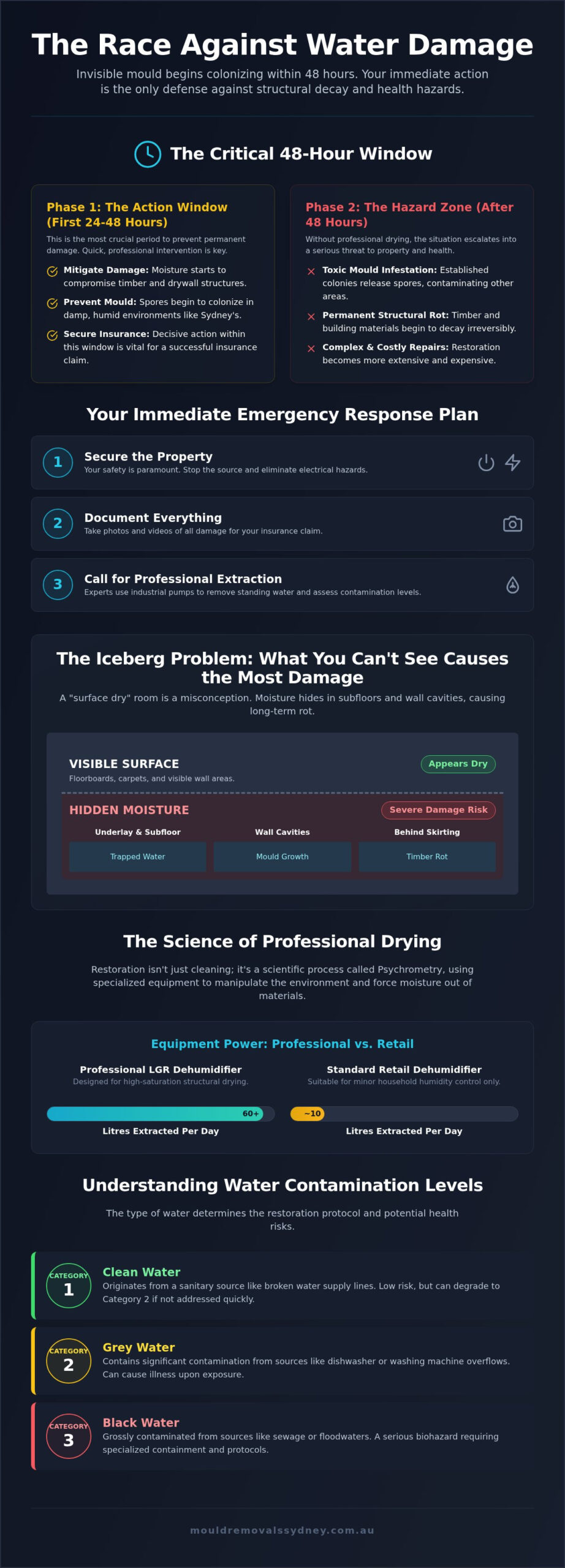
When water enters your property, you’re in a race against time. The first 24 to 48 hours are the most critical. During this window, moisture begins to compromise the structural integrity of timber and drywall. In Sydney’s humid coastal climate, this process accelerates. Mould spores can begin to colonize damp surfaces in as little as one day if the environment isn’t stabilized. Professional water damage restoration sydney isn’t just a cleaning service; it’s an emergency engineering response designed to stop decay before it becomes permanent.
Many homeowners make the mistake of assuming a room is safe once the visible puddles are gone. This “surface dry” misconception is dangerous. Moisture often remains trapped behind skirting boards, under floorboards, and within wall cavities. Without specialized sensors, you can’t see the pockets of water that cause long-term structural rot. Understanding the science of water damage helps you realize that what you can’t see is often more damaging than what you can.
Before any work begins, document everything. Sydney insurance providers require clear evidence to process claims efficiently. Take high-resolution photos and videos of all affected areas, including the source of the water. Don’t throw away damaged items yet. Keep a detailed log of the time the event occurred and the steps you took. This documentation is your best tool for ensuring your claim is valid and fully covered.
Phase 1: Securing the Property
Your safety is the absolute priority. Immediately shut off the main water valve to stop the flow. If the breach is caused by a burst pipe or appliance failure, identifying the source helps specialists plan the extraction. Next, turn off the electricity in the affected zones at the mains. Water and live circuits are a fatal combination. Move high-value assets like electronics, rugs, and important documents to a dry, well-ventilated area. Avoid walking on wet carpets more than necessary, as this can push water deeper into the underlay and subfloor.
Phase 2: Initial Water Extraction
Standard household wet-vacs are insufficient for large-scale flooding. Professional teams use industrial-grade submersible pumps and high-volume extraction units to remove standing water from basements and crawlspaces. This stage is vital for identifying the water category. Category 3 water, often called “black water,” involves sewage or rising floodwaters. This is a significant biohazard. It requires immediate, specialized protocols to prevent the spread of pathogens. Our experts assess the contamination level and implement high-level containment to protect your family’s health during the water damage restoration sydney process.
The Science of Professional Water Damage Restoration
Professional restoration is a technical discipline, not a simple cleaning task. The primary objective is to return a property to its exact “pre-loss” condition using evidence-based methods. This process is governed by the Professional Water Damage Restoration standard, known as the IICRC S500. These protocols ensure that every step, from initial assessment to final clearance, meets global safety and structural requirements. Without following these standards, a property remains at risk of long-term instability and recurring microbial growth.
At the heart of this process is psychrometry. This is the science of drying, focusing on the relationship between temperature, airflow, and atmospheric moisture. We don’t just blow air around a room. We manipulate the environment to force moisture out of dense materials like timber and concrete. Professional water damage restoration sydney specialists use industrial-grade LGR (Low Grain Refrigerant) dehumidifiers for this task. These units are significantly more powerful than retail household models. While a retail unit might remove 10 litres of water a day, a professional LGR unit can extract over 60 litres in high-saturation environments, even when the air feels relatively dry.
Psychrometry and Evaporation Rates
Drying efficiency is measured using Grains Per Pound (GPP), which tracks the specific weight of water vapor in the air. Sydney’s coastal humidity presents a unique challenge. When the outdoor relative humidity is high, indoor evaporation naturally slows down. We use high-velocity air movers to break the “boundary layer.” This is the thin, stagnant layer of saturated air that sits directly on wet surfaces. By stripping this layer away, we create a vapor pressure differential that pulls moisture out of the building materials at an accelerated rate. If you are dealing with a recent flood, booking a professional water damage assessment ensures these variables are managed correctly.
Moisture Mapping and Thermal Imaging
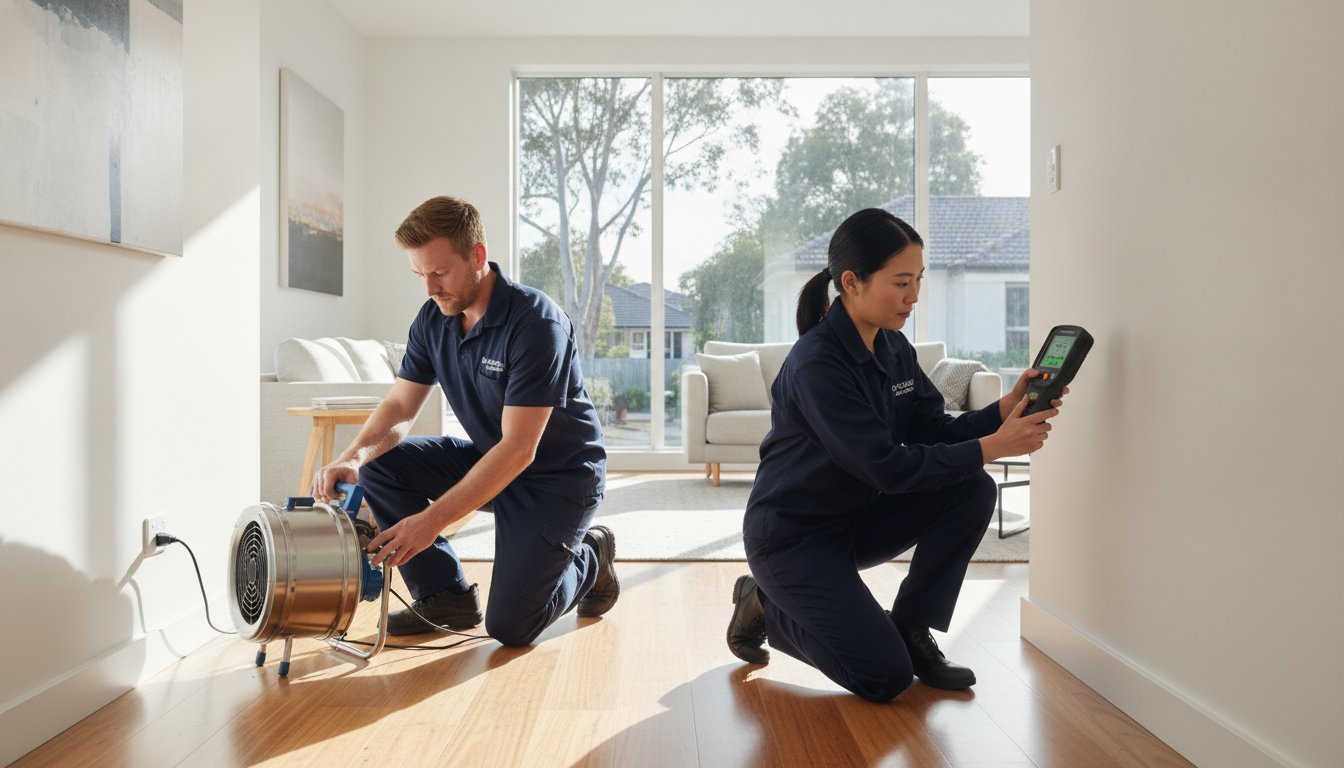
Water is opportunistic and follows the path of least resistance. It often travels through capillary action into Sydney sandstone foundations or settles behind gyprock wall cavities. We use thermal imaging cameras to detect “cold spots” that the human eye cannot see. Because wet materials are cooler than dry ones, these cameras reveal exactly where the water has migrated. We then use non-invasive moisture meters to create a comprehensive moisture map. This data allows us to design a targeted drying plan based on the specific porosity of your materials, ensuring that hidden subfloors are fully stabilized before the job is marked as complete.
Structural Drying vs. Surface Cleaning: Why Hidden Moisture Matters
Surface cleaning is merely a cosmetic response to a structural crisis. Many property owners stop once the carpet feels dry to the touch, but this ignores the “iceberg effect” of water intrusion. Visible dampness usually represents only a small fraction of the total water volume trapped within a building’s envelope. In multi-story Sydney apartments and townhouses, gravity pulls moisture through floorboards and into the structural voids between levels. This trapped water creates a breeding ground for rot that compromises the building’s skeletal integrity. If you’re looking for a comprehensive water damage repair strategy, you have to prioritize these hidden zones.
Trapped moisture is opportunistic. It doesn’t just sit; it migrates through porous materials until it reaches equilibrium. In high-density Sydney living, a leak on the third floor can manifest as structural instability on the first floor weeks later. Professional water damage restoration sydney focuses on stabilizing these concealed areas before the damage becomes permanent and requires expensive demolition.
The Danger of Saturated Subfloors
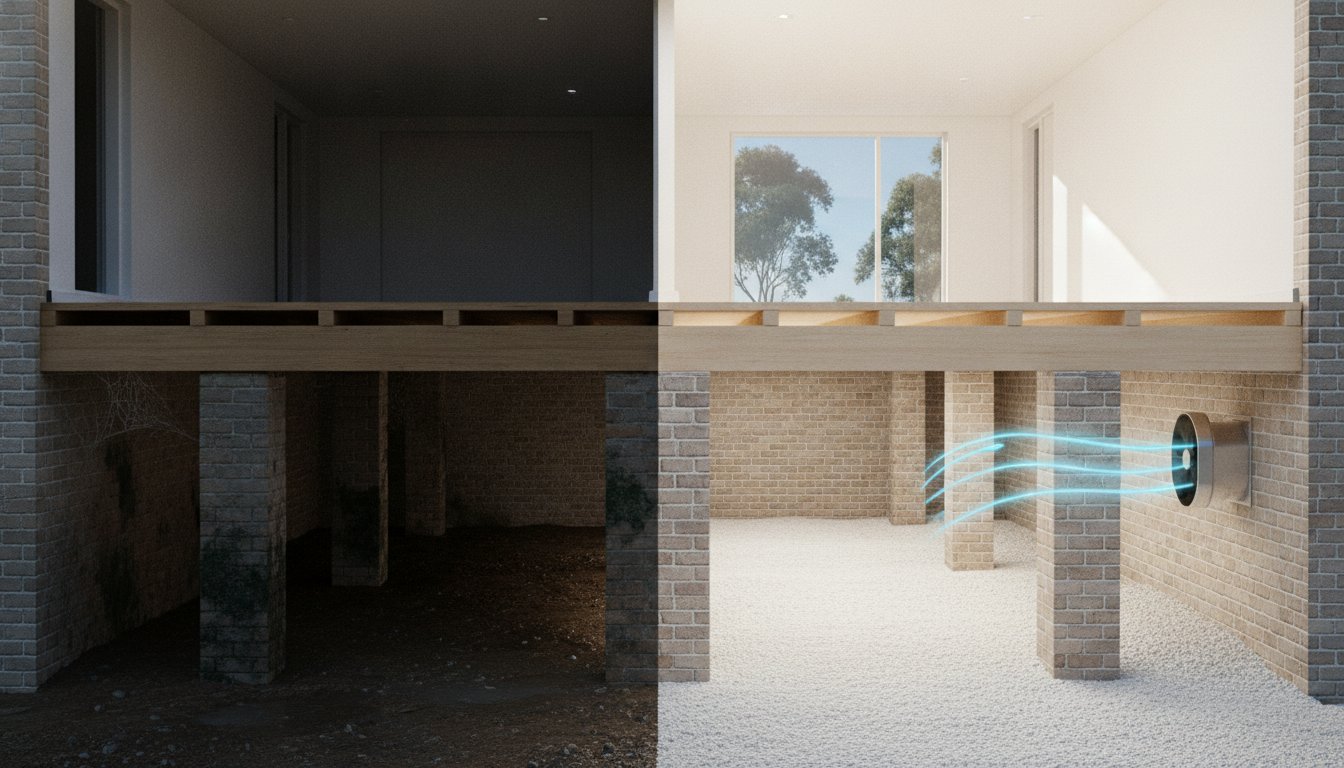
Water travels through flooring and settles into the subfloor, where it wicks into floor joists and load-bearing supports. This saturation leads to wood rot and fungal growth that can eventually cause structural failure. Installing professional subfloor ventilation is often the only way to effectively lower humidity levels in these enclosed spaces. Watch for these warning signs:
- Cupping or crowning of timber floorboards.
- Persistent musty odours that won’t go away with cleaning.
- Visible salt deposits or “efflorescence” on brickwork in lower levels.
Wall Cavity Drying Techniques
Gyprock is highly porous and draws water upwards through capillary action. While some contractors might suggest tearing down walls, modern water damage restoration sydney experts use Injectidry systems. These systems use small, non-invasive holes to pump dry, warm air directly into the wall cavity. We distinguish between “open” drying systems, which vent moisture outside, and “closed” systems that use LGR dehumidification to strip moisture from the air. Managing air quality is vital. As outlined in protocols for Preventing Secondary Mould Infestation, we use HEPA-filtered air scrubbers to prevent dust and spores from settling in unaffected rooms. This ensures the drying process doesn’t inadvertently compromise the rest of your home.
Preventing Secondary Mould Infestation After Water Damage
Within 48 to 72 hours of water exposure, your property enters a high-risk phase for microbial growth. Even if the standing water is gone, the elevated relative humidity common in Sydney allows mould to colonize porous surfaces rapidly. This is why professional water damage restoration sydney must include a proactive microbial control strategy. Waiting for visible patches to appear is a mistake that leads to much higher remediation costs and health complications for your family.
The greatest threat during this window is “Secondary Damage.” This occurs when airborne spores from the primary wet area travel through the home and settle on unaffected, dry surfaces like clothing, upholstery, and furniture. These spores only need a slight increase in ambient humidity to take root. Understanding what is black mould and its growth patterns is essential for any property owner dealing with water ingress. To stop this spread, we implement the Goldmorr System, which is specifically designed to eliminate spores before they can colonize your home’s structure.
Goldmorr Fogging: The Ultimate Prevention Tool
Traditional “bleach and scrub” methods are largely ineffective after major water ingress. Bleach is primarily water-based; it often fails to kill the roots of mould and can actually provide the moisture needed for it to return. Our biodegradable fogging process is the superior alternative. This technology creates a fine mist that reaches deep into HVAC ducts and settles behind heavy furniture where manual cleaning is impossible. It neutralizes spores on contact and ensures your air quality meets safety standards. This systematic approach provides a “clean bill of health” for your property, giving you total peace of mind post-restoration.
Monitoring for Long-Term Success
Restoration doesn’t end when the floors are dry. We continue to monitor indoor humidity levels to ensure the environment remains stable and below the 60% threshold where mould thrives. Sydney homes frequently suffer from “dead air” pockets in corners or behind built-in wardrobes. These stagnant zones invite mould to return even after the initial cleanup. We identify these specific high-risk areas and can recommend permanent ventilation solutions to keep your subfloors and wall cavities dry year-round. If you suspect spores have already begun to spread through your property, contact our Sydney specialists for an immediate assessment.
Expert Water Damage Restoration Services in Sydney
ABC Mould Cleaning Solutions stands as Sydney’s trusted authority for rapid, evidence-based property recovery. When you’re facing a flood or burst pipe, you need more than just a cleanup crew. You need a partner who understands the high stakes of structural integrity and environmental safety. Our water damage restoration sydney teams operate 24/7, ensuring that help arrives when the risk of mould and timber rot is at its peak. We combine global industry standards with local expertise to deliver results that retail or DIY alternatives simply cannot match.
Our proprietary 5-step methodology ensures no detail is overlooked during the recovery process. We follow a systematic path to restoration:
- Comprehensive Inspection: Using thermal technology to map hidden moisture pockets.
- Rapid Extraction: Removing standing water with industrial-grade submersible pumps.
- Scientific Drying: Stabilizing the environment with high-capacity LGR dehumidification.
- Advanced Remediation: Utilizing the Goldmorr System to neutralize airborne and surface spores.
- Long-Term Prevention: Implementing ventilation and moisture-control solutions to stop future growth.
We are committed to providing the highest quality restoration at a competitive rate. Our aggressive price-match guarantee ensures you receive world-class service without compromising your budget. Sydney residents trust the Goldmorr System because it offers a safe, non-toxic path to recovery. This methodology protects your family’s health while effectively restoring your property to its pre-loss state. We don’t just hide the problem; we solve it at the molecular level.
Comprehensive Sydney Coverage
Our rapid response teams service every corner of Greater Sydney. Whether you are in the Northern Beaches, the Eastern Suburbs, or the Western Suburbs, we have specialists ready to deploy. Each vehicle is fully equipped with industrial air scrubbers and high-velocity air movers to begin the stabilization process immediately. We also take the stress out of the financial process by coordinating directly with insurance adjusters. This ensures your documentation is accurate and your claim is processed with minimal friction, allowing you to focus on getting your life back to normal.
Start Your Recovery Today
Don’t let a temporary leak become a permanent structural failure. Use our streamlined digital inquiry process to get an immediate expert opinion. Take photos of the damage and send them to us for a rapid assessment. If you require on-site intervention, call our emergency line now for immediate water damage restoration sydney. Our specialists are standing by to provide the technical expertise and emotional relief you need during this stressful time. Book your emergency water damage restoration in Sydney now and let our experts restore your peace of mind.
Secure Your Property’s Future Today
Water damage doesn’t have to result in permanent structural loss or long-term health risks. By acting within the critical 48-hour window and prioritizing deep structural drying over simple surface cleaning, you protect your home from the inside out. Remember that invisible moisture trapped in subfloors and wall cavities is your property’s greatest enemy. Utilizing Goldmorr System certified technology ensures your recovery is safe, thorough, and entirely non-toxic.
Choosing the right partner for water damage restoration sydney is about more than just extraction. It’s about securing a results-driven solution that stops secondary mould growth before it starts. We provide a 24/7 Emergency Response and a Price Match Guarantee to ensure you receive elite service at a competitive rate. Our biodegradable process is designed to be safe for all occupants while delivering a systematic, evidence-based recovery. Don’t wait for musty odours or structural rot to compromise your investment.
Call Sydney’s Water Damage Experts 24/7 – Get Your Free Quote Now
You have the power to stop the damage and restore your peace of mind. Our team is ready to help you navigate the restoration process with confidence and speed. Your property’s safety is just one call away.
Frequently Asked Questions
How long does the water damage restoration process usually take in Sydney?
The standard water damage restoration sydney process typically takes between three and five days to complete. This timeline depends on the volume of water and the porosity of affected materials like timber or concrete. We use daily moisture readings to track progress and ensure the environment is stabilized. If the structural drying isn’t monitored correctly, moisture can remain trapped, leading to long-term issues. We don’t remove our equipment until the property reaches its pre-loss dry standard.
Will my home insurance cover the cost of water damage restoration?
Most home insurance policies cover restoration costs if the damage was sudden and accidental, such as a burst pipe. Gradual damage from poor maintenance is often excluded from standard coverage. We provide the comprehensive documentation and moisture maps required by Sydney adjusters to validate your claim. It’s vital to contact your provider immediately after the event. We help simplify this process by providing evidence-based reports that clearly outline the scope of necessary repairs.
Is it safe to stay in my house during the drying and restoration process?
Your safety depends entirely on the category of water contamination and the scale of the damage. If the breach involves “black water” or sewage, you must vacate the property immediately due to severe biohazard risks. For clean water incidents, you can often stay, though the noise from industrial air movers and dehumidifiers can be disruptive. We prioritize air quality by using HEPA-filtered air scrubbers to keep the environment safe for all occupants during the process.
What is the difference between water mitigation and water restoration?
Water mitigation focuses on preventing further damage through immediate water extraction and structural drying. It’s the urgent first phase of the recovery process designed to stop the spread of moisture. Water restoration is the secondary phase, involving the repair or replacement of damaged building materials like gyprock and flooring. While mitigation stops the “iceberg effect” of spreading moisture, restoration returns your property to its original condition. Both steps are essential for a complete recovery.
Can you save my carpets and furniture after a flood?
We can often save carpets and furniture if the water is from a clean source, such as a broken tap. However, if the water is contaminated with sewage or silt, porous materials usually require disposal for health reasons. Our specialists use industrial-grade extraction and antimicrobial treatments to restore salvageable items. We act quickly to prevent permanent staining and delamination of carpet backing, which often occurs if materials stay wet for over 48 hours.
What happens if I don’t treat water damage immediately?
Failing to treat water damage immediately leads to permanent structural rot and toxic mould colonization. Mould begins to grow within 24 to 48 hours of initial exposure, creating a secondary health crisis for residents. Over time, trapped moisture weakens load-bearing timber and causes drywall to lose its structural integrity. Delaying professional water damage restoration sydney significantly increases the total cost of repairs and may even lead to insurance claim denials from your provider.
How do I know if there is hidden water damage behind my walls?
You can identify hidden water damage by looking for bubbling paint, peeling wallpaper, or persistent musty odours. However, the only certain way to detect moisture behind walls is through professional thermal imaging and non-invasive moisture meters. These tools reveal “cold spots” and high saturation levels that aren’t visible to the human eye. Early detection is critical for preventing the “iceberg effect,” where the majority of the damage remains concealed within wall cavities and subfloors.
Why is professional drying better than using household fans?
Professional drying is superior because it controls both airflow and humidity, whereas household fans only move moist air around the room. We use LGR dehumidifiers to strip moisture from the air, creating the vapor pressure needed to pull water out of dense materials. Household fans can’t lower the specific humidity or “grains per pound” in the air. This often results in “surface drying” while the structural core of your home remains dangerously saturated and prone to rot.