
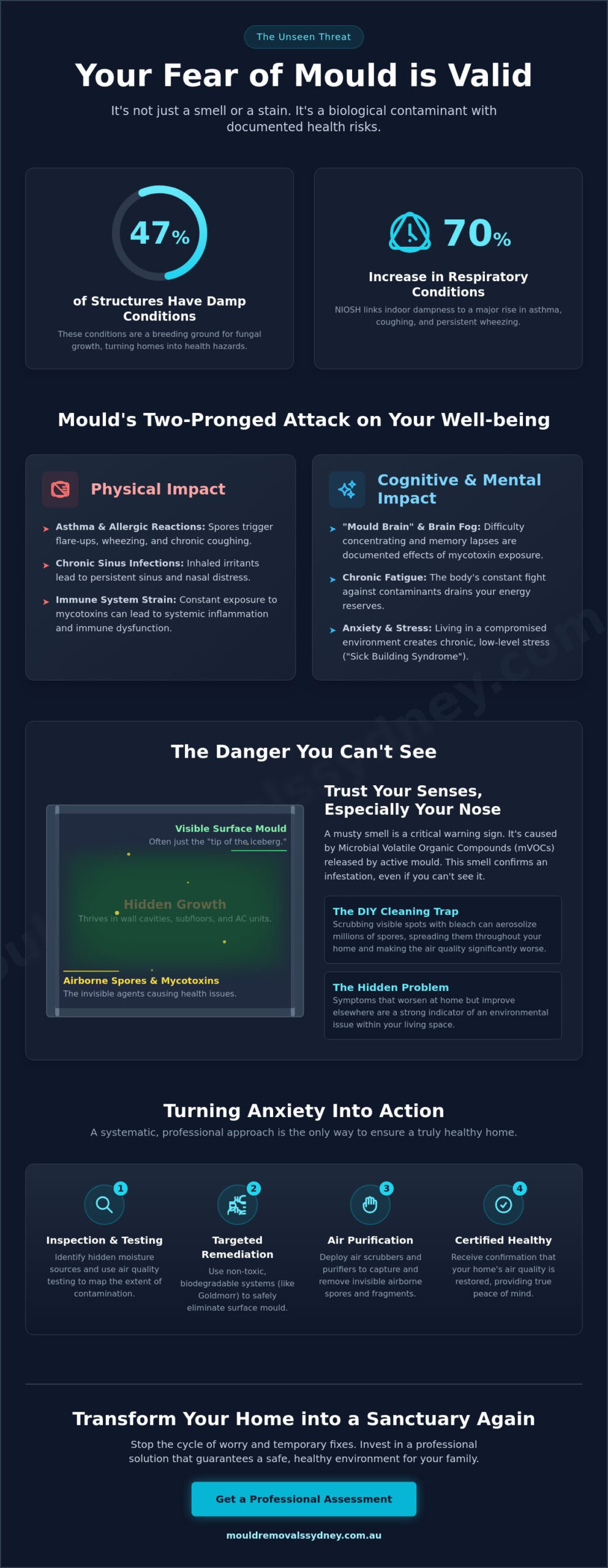
Did you know that 47% of all structures currently suffer from damp conditions that encourage fungal growth? If you’ve been struggling with unexplained brain fog or chronic respiratory issues, your fear of mould affecting my health is a rational response to a biological threat. You aren’t overreacting. NIOSH reports that indoor dampness is associated with up to a 70% increase in respiratory conditions like asthma and persistent coughing. It’s exhausting to feel unsafe in your own home, especially when conflicting DIY advice suggests ineffective solutions while that heavy, musty smell remains.
You deserve a living space that supports your well-being rather than draining it. This guide provides the facts you need to understand the real health risks of exposure as of 2026 and how to distinguish between simple surface spots and dangerous airborne spores. We’ll show you how to move past the anxiety of “black mould” by using a systematic, evidence-based approach to remediation. You’ll learn how to stop the cycle of temporary fixes and finally achieve a certified healthy environment where your family can breathe easy again.
Key Takeaways
- Validate your symptoms by understanding why the fear of mould affecting my health is a rational response to documented biological contaminants.
- Discover why visible growth is only the beginning and how DIY cleaning attempts can accidentally aerosolise millions of spores into your breathing zone.
- Identify the root cause of the issue through professional inspection and air quality testing to uncover hidden moisture sources behind your walls.
- Learn how the Goldmorr System uses a biodegradable, non-toxic approach to eliminate both surface mould and invisible airborne threats.
- Transform your living space from a source of anxiety into a certified healthy environment using professional air purification and scrubbing.
Understanding the Fear of Mould Affecting Your Health
Your home should be a sanctuary. When it smells like damp earth or old socks, that sanctuary feels compromised. Your fear of mould affecting my health isn’t an overreaction; it is a primal response to a biological invader. Mould is not just a cosmetic blemish or a sign of a messy house. It is a biological contaminant that releases spores, fragments, and volatile organic compounds into the air you breathe every day. While DIY forums often downplay the risks or suggest “quick fixes” like surface cleaning, these spaces frequently spread misinformation that ignores the invisible threat lingering in your wall cavities.
The musty odour that triggers your concern is actually a warning signal. These smells are microbial volatile organic compounds (mVOCs) produced during the mould’s growth cycle. Acknowledging this as a legitimate health threat is the first step toward resolution. According to NIOSH, 47% of all structures have damp conditions that encourage fungal growth. Understanding the health effects of molds helps you move from a state of vague anxiety to a position of informed action. You aren’t just “smelling a smell”; you’re detecting a living organism that requires professional intervention to ensure your safety.
The Psychology of Environmental Illness
Living with an invisible threat creates chronic low-level stress that drains your mental energy. This phenomenon is often linked to “sick building syndrome,” where occupants experience acute health and comfort effects that appear linked to time spent in a building. When you can’t see the source of the problem, your brain stays in a state of high alert. This constant worry about your family’s safety leads to significant fatigue and brain fog. Waiting to take action doesn’t just allow the mould to spread; it deepens the psychological burden. Professional remediation provides the emotional relief that comes from knowing the threat is gone.
When to Trust Your Senses
Your nose is often a more accurate diagnostic tool than your eyes. Mould frequently grows in hidden areas like subfloors, behind drywall, or inside air conditioning units where it remains invisible to the naked eye. If you find that your respiratory symptoms, headaches, or irritability vanish when you leave the house but return shortly after you walk through the front door, you’ve identified a clear environmental link. Mould-related hyper-vigilance is a common response for Sydney residents who deal with high humidity and frequent rainfall. Recognising these patterns allows you to stop doubting your intuition and start the process of restoring a healthy living environment.
How Mould Impacts Your Physical and Mental Well-being
Your body acts as a sensitive detection system. If you feel a persistent fear of mould affecting my health, it’s likely because your immune system is already reacting to invisible triggers. Fungi produce mycotoxins. These toxic chemical compounds trigger a systemic inflammatory response that goes far beyond a simple allergy. In high-humidity climates like Sydney, these toxins accumulate rapidly in enclosed spaces. This leads to a suite of physical and mental symptoms that amateur cleaning methods simply cannot fix.
Exposure to indoor dampness is associated with a 30% to 70% increase in various respiratory conditions. When you inhale these contaminants, your body enters a state of biological warfare. This isn’t just about a runny nose; it’s about the long-term risks of ignoring persistent infestations that can lead to chronic immune dysfunction. Following CDC information on mold is essential for understanding how these environmental factors compromise your daily wellness.
Respiratory and Allergic Reactions
Spores are microscopic irritants. They settle deep into the nasal lining and lungs immediately upon inhalation. This causes a classic triad of distress: asthma flare-ups, persistent wheezing, and chronic sinus infections. Children and the elderly face the highest risk because their immune systems are more sensitive to environmental changes. It is vital to identify which fungi are present in your home to assess the danger. You can learn more in our guide on what is black mould to understand the specific risks of toxic species like Stachybotrys chartarum.
The Cognitive Connection: Brain Fog and Fatigue
The impact isn’t limited to your respiratory system. “Mould brain” is a documented reality for many affected residents. Inhaling spores and fragments can trigger an innate immune response that affects neural pathways. This leads to:
- Persistent brain fog and difficulty concentrating.
- Extreme fatigue that doesn’t improve with rest.
- Unexplained irritability or anxiety.
You might lose focus at work or feel exhausted despite getting plenty of sleep. These cognitive symptoms often resolve completely once the environment is professionally remediated and the air is scrubbed. If you suspect your home is making you sick, a professional mould inspection service provides the empirical data needed to take control of your health.
Why Visible Mould is Only Half the Story
It’s tempting to think that once you’ve wiped away a dark patch on the wall, the danger has passed. This is a dangerous misconception. For every square inch of visible growth, millions of microscopic spores are actually circulating in your indoor air. This is exactly why your fear of mould affecting my health persists even after a weekend of scrubbing. You’re still breathing in the problem. Surface cleaning only addresses the tip of the iceberg, while the true biological threat remains suspended in the air or hidden deep within porous materials.
DIY cleaning often does more harm than good. When you scrub a mould colony without professional containment, you aerosolise the spores. This means you’re effectively launching millions of irritants directly into your breathing zone. Research into the health effects of mold exposure highlights that even dead or dormant spores can trigger significant respiratory and cognitive distress. True remediation requires advanced air purification and scrubbing to physically remove these particles from your environment, rather than just moving them around.
The Invisible Threat of Airborne Spores
Spores are designed to travel. They easily enter your HVAC system and settle into the deep fibres of your carpets. Once they’re in the ductwork, your air conditioner acts as a distribution hub, blowing contaminants into every room of the house. This is why air duct cleaning is a vital step after any significant breakout. Mycotoxins are incredibly persistent. They can remain in your soft furnishings long after the visible patches have been removed, continuing to trigger the immune responses discussed in previous sections. Without professional-grade HEPA filtration, these invisible particles stay trapped in your living space indefinitely.
The Failure of Bleach and DIY Methods
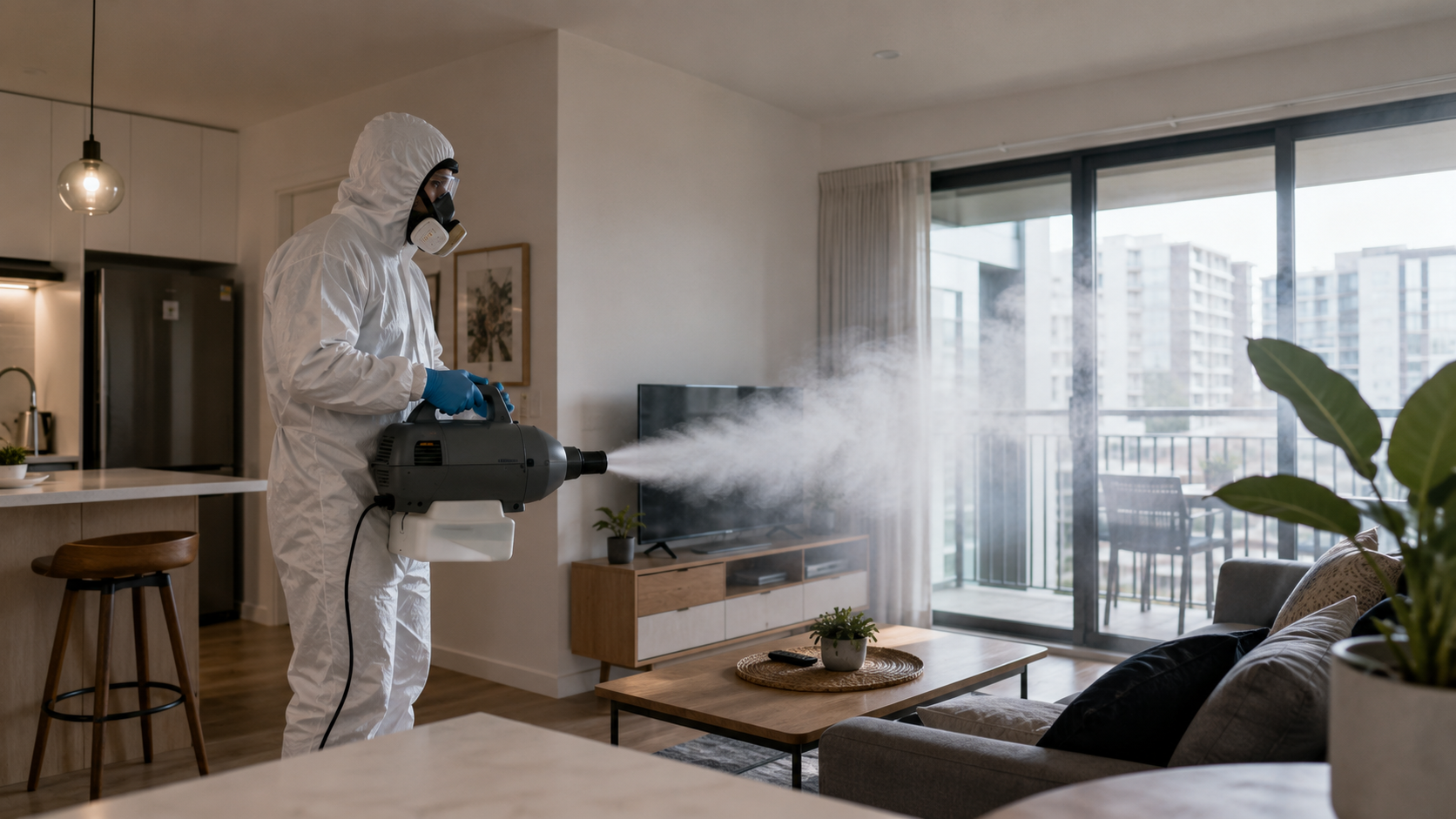
Most supermarket cleaners and bleach-based products are ineffective for long-term health safety. Bleach is primarily composed of water. While it “whitens” the mould by removing the pigment, the moisture actually feeds the hyphae, or the roots, of the fungus. This allows the colony to grow back faster and stronger. There’s also a significant risk when mixing various cleaning chemicals in poorly ventilated bathrooms; the resulting fumes can be just as toxic as the mould itself. Professional remediation uses specialised fogging technology. This process reaches the microscopic spores in cracks, crevices, and high ceilings that manual wiping simply cannot touch. It’s the only way to ensure the environment is truly safe for your family.
Turning Anxiety into Action: A Professional Path to Safety
The persistent fear of mould affecting my health often stems from the unknown. You can see a stain on the ceiling, but you can’t see the moisture levels inside the wall or the spore count in the air. Moving from anxiety to resolution requires a systematic, evidence-based approach. A professional assessment replaces guesswork with empirical data, identifying exactly what is growing and why. This clarity is the foundation of a healthy home. It allows us to build a tailored remediation plan that doesn’t just clean the surface but restores the biological safety of your entire property.
Professional air quality testing provides the necessary proof of safety. By comparing indoor samples with outdoor control samples, we determine if your home has an elevated fungal load. This data is vital for Sydney residents living in high-humidity coastal areas where environmental triggers are constant. Resolving the fear of mould affecting my health requires more than a visual check; it requires a scientific verification that your breathing zone is clear of toxic contaminants.
The Inspection: Finding the Hidden Source
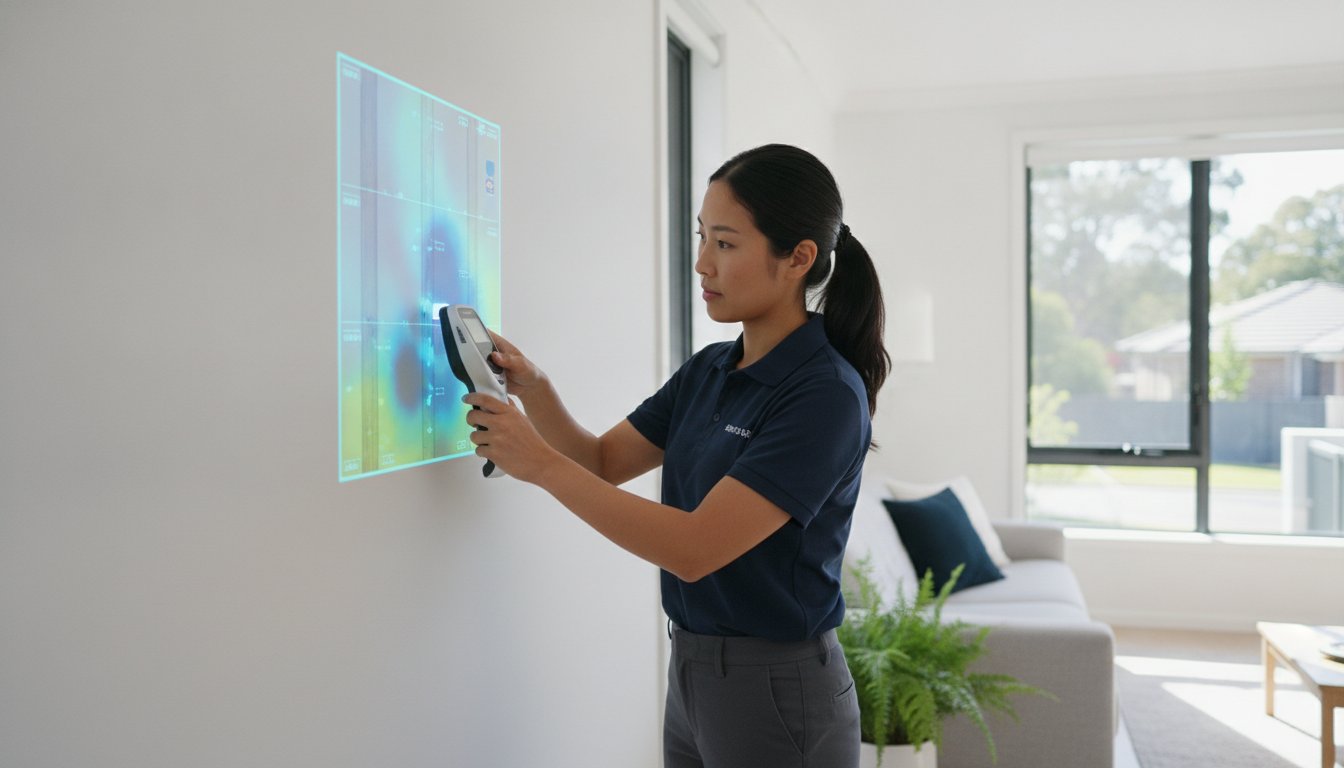
Mould is a symptom of a moisture problem. Our specialists use advanced thermal imaging cameras and moisture meters to “see” through building materials. This technology identifies slow leaks, condensation points, and rising damp that the naked eye misses. In many Sydney homes, subfloor issues are the primary culprit. Poor ventilation under the house allows moisture to accumulate, which then migrates upward into living spaces. Addressing these root causes through water damage repair is the only way to prevent the cycle of regrowth. If you don’t fix the water, the mould will return.
The Remediation Process: What to Expect
Professional remediation is a controlled technical process. We use strict containment strategies, such as physical barriers and negative air pressure, to ensure spores don’t migrate to “clean” areas of the house during the cleaning process. Industrial-grade air scrubbers equipped with HEPA filtration cycle the air multiple times per hour, capturing microscopic particles that manual cleaning leaves behind. Our specialists follow a rigorous protocol to ensure total decontamination:
- Site Setup: Establishing containment zones and negative air pressure.
- Source Removal: Physically removing contaminated materials and cleaning surfaces.
- Air Scrubbing: Continuous filtration to eliminate airborne spores and fragments.
- Strategic Fogging: Applying non-toxic antimicrobials to reach hidden crevices.
- Final Clearance: Post-remediation testing to verify the home is safe for occupancy.
Don’t let hidden toxins compromise your well-being any longer. You can restore your peace of mind by booking a comprehensive mould inspection service today to identify the invisible threats in your home.
Restoring Peace of Mind with ABC Mould Cleaning Solutions
Your fear of mould affecting my health ends when the biological threat is physically removed from your environment. We don’t just clean surfaces; we restore the air you breathe using a systematic, evidence-based approach. Our team understands the urgency of environmental contamination. We provide a 24/7 response for Sydney homes facing sudden water damage to ensure mould never gets the chance to colonise. By the time we finish, you’ll receive a formal certificate of clearance. This document provides the total reassurance that your property has returned to a healthy, safe state for every occupant.
Our commitment to your well-being is backed by specialized equipment and highly trained specialists. We use industrial-grade air purification and scrubbing technology to eliminate airborne threats that manual wiping cannot reach. This process physically captures spores, fragments, and mycotoxins, ensuring they are removed from the building rather than just redistributed. When you choose a professional path, you replace the stress of the unknown with the certainty of a scientifically clean environment.
The Goldmorr Advantage: Safe for Your Family
We utilise the Goldmorr System, a world-leading, proprietary methodology for total remediation. This process involves a biodegradable, non-toxic fogging technique that eliminates spores in every corner of your room, including high ceilings and tight crevices. Unlike retail chemicals or bleach, our solution doesn’t damage your furniture or leave behind harsh, irritating residues. It is specifically designed to be safe for homes with curious pets and small children. As Sydneys #1 mould removal service, we prioritise your family’s safety above all else. Our fogging reaches the invisible contaminants that trigger the cognitive and respiratory symptoms discussed earlier, providing a comprehensive shield for your household.
Local Expertise for Sydney Climates
Sydney’s unique environmental conditions require specialized local knowledge. The combination of high coastal humidity and salt air creates a perfect breeding ground for persistent fungal growth, especially in poorly ventilated areas. We don’t just treat the visible symptoms; we address the architectural causes of dampness. Our team often installs subfloor ventilation systems to provide a permanent solution to rising damp and stagnant air under your home. This proactive approach stops the fear of mould affecting my health from ever returning by making your property inhospitable to fungi. We believe in modern efficiency and results. Take the first step toward a safer home by submitting your photos via our digital inquiry process. We’ll provide a fast, professional assessment to help you transition from a state of concern to a state of resolution today.
Take Control of Your Home Environment Today
Your health is too important to leave to chance or ineffective DIY methods. We’ve established that invisible spores and mycotoxins create real physical and cognitive distress. Real safety requires more than just a surface wipe; it demands professional air purification and scrubbing to remove contaminants from your breathing zone. By addressing the root moisture source and utilizing the world-renowned Goldmorr System, you can finally eliminate the biological threats hiding in your walls and subfloors.
Don’t let the fear of mould affecting my health linger in the back of your mind. Our specialists provide a 24/7 emergency response across all of Sydney and NSW to ensure you’re never left dealing with contamination alone. We have the technical expertise and industrial-grade equipment to restore your property to a certified healthy state. It’s time to replace uncertainty with empirical data and professional results.
Get a Professional Mould Inspection and Restore Your Peace of Mind Today. You deserve to breathe clean air and feel completely secure in your own home. Let’s get your living environment back to its best starting now.
Frequently Asked Questions
Can mould in my house cause long-term health problems?
Yes, chronic exposure to indoor dampness is scientifically linked to persistent respiratory issues and immune system dysfunction. Research from NIOSH indicates that living in damp structures increases the prevalence of asthma, coughing, and wheezing by up to 70%. Addressing the fear of mould affecting my health is vital because long-term inhalation of mycotoxins can lead to chronic sinus infections and ongoing fatigue that persists until the environment is professionally remediated.
How do I know if the mould I see is dangerous black mould?
Visual identification is impossible because many different species of fungi can appear dark or black. While Stachybotrys chartarum is the most famous toxic variety, other common moulds like Aspergillus can also cause significant health issues. You should never rely on a visual guess. Only professional air quality testing and surface sampling can provide the empirical data needed to identify specific species and their associated risks.
Is it safe to stay in the house during professional mould removal?
You can typically stay in your home during the remediation process provided strict safety protocols are followed. Our specialists establish physical containment barriers and maintain negative air pressure to ensure spores don’t migrate into your clean living areas. We use industrial-grade air scrubbers to cycle the air multiple times per hour, which keeps the environment safe for occupants while we work on the affected zones.
Will an air purifier help with my fear of mould health effects?
A high-quality HEPA air purifier can reduce the concentration of airborne spores, which often provides temporary emotional and physical relief. However, an air purifier is not a permanent solution to the fear of mould affecting my health. It cannot stop a colony from growing behind your walls or under your floors. You must address the underlying moisture source through professional inspection to achieve a truly healthy living environment.
What are the first signs that mould is affecting my health?
Early symptoms often include a persistent musty odour and unexplained nasal congestion or throat irritation. Many residents also report “brain fog,” irritability, or a heavy feeling of fatigue that seems to lift when they spend time away from the property. If your respiratory or cognitive symptoms follow a pattern of worsening when you are at home, it is a clear indicator that your environment is compromised.
How much does a professional mould inspection cost in Sydney?
The cost of a professional inspection depends on the size of your property and the number of air or surface samples required for a definitive assessment. A basic visual check is different from a comprehensive forensic inspection that uses thermal imaging and moisture meters to find hidden leaks. Contact us directly to discuss your specific concerns so we can provide a tailored plan for your Sydney home.
Can I remove mould myself if it is only a small patch?
You can typically handle a small patch of mould if the total area is less than 10 square feet. You must use proper personal protective equipment, including an N-95 respirator, gloves, and goggles, to avoid inhaling spores during the process. If the mould returns quickly after cleaning, it indicates a deeper moisture problem in the building structure that requires professional remediation to solve permanently.
Does the Goldmorr System use toxic chemicals?
The Goldmorr System utilises biodegradable, non-toxic solutions that are specifically designed to be safe for families and pets. Our fogging process eliminates both surface and airborne spores without leaving behind the harsh, corrosive residues found in retail bleach products. This evidence-based methodology provides a fast and effective way to restore your home to a healthy state without introducing new chemical risks into your breathing zone.