For any Sydney-based food facility manager, maintaining a sterile environment isn’t just a goal—it’s a legal and commercial necessity. Yet, the persistent humidity of our climate creates a constant battle against an invisible enemy: mould. You clean the walls and ceilings, you pass an inspection, but weeks later, those tell-tale specks reappear. This recurring cycle isn’t just frustrating; it’s a direct threat to your HACCP (Hazard Analysis and Critical Control Points) compliance, your product safety, and your brand’s reputation.
Standard cleaning offers a temporary fix, but it fails to address the root cause. Porous surfaces like gyprock, render, and even grout lines act as magnets for moisture, allowing mould spores to embed deep within the material. To achieve true, long-term food safety, you need to move beyond cleaning and start sealing. This guide explains how a specialized, food-safe anti-microbial treatment transforms your walls and ceilings from a liability into a proactive barrier, stopping mould regrowth and ensuring you meet the strictest food safety standards.
Why Mould is a Critical Threat to Sydney Food Facilities
In a commercial food environment, mould is far more than an aesthetic issue. It is classified as a biological hazard, capable of compromising entire batches of product, endangering staff and customers, and triggering severe regulatory penalties. Sydney’s high humidity and the constant steam and moisture from cooking and cleaning create an ideal incubator for mould spores to thrive on walls, ceilings, and in hard-to-reach corners.
- A Biological Hazard: Mould is not dirt; it’s a living organism that releases microscopic spores into the air. These spores can settle on food, preparation surfaces, and packaging, leading to cross-contamination and potential health risks for consumers.
- The Perfect Breeding Ground: Commercial kitchens, bakeries, and food processing plants generate significant heat and moisture. This warm, damp environment, especially in areas with poor ventilation like cool rooms and storage areas, is the perfect breeding ground for mould colonies.
- Airborne Contamination: Spores from common moulds, including dangerous species like black mould, can easily become airborne. A colony on a ceiling can release millions of spores that travel through the air, contaminating products and violating food safety protocols.
- Audit Failures and Financial Loss: Failing a HACCP or NSW Health audit due to mould can result in forced closures, hefty fines, and irreparable damage to your brand’s reputation. The cost of a single failed audit far outweighs the investment in preventative treatment.
Understanding HACCP Standards for Walls and Ceilings
HACCP principles are designed to prevent food safety hazards, and the physical structure of your facility is a critical control point. The standards for surfaces are clear and uncompromising, designed to eliminate any environment where contaminants can hide and multiply.
- Non-Absorbent and Non-Toxic: Surfaces in food preparation areas must be smooth, non-porous, and made of non-toxic materials. This prevents the absorption of moisture and food particles, which would otherwise feed microbial growth.
- The Failure of Traditional Paint: Standard acrylic or latex paints are porous. While they may look clean on the surface, they can trap moisture underneath, allowing mould to grow within the wall itself. Over time, this hidden growth can compromise the paint film and release spores into the facility.
- The Role of Antimicrobial Barriers: A modern Food Safety Program requires surfaces that actively resist microbial growth. An anti-microbial barrier is not just a paint; it’s a sealed, non-leaching surface that makes it impossible for mould, fungi, and bacteria to establish a foothold, ensuring long-term compliance.
Understanding the difference between standard decorative painting and specialized protective coatings is vital for facility managers. To explore how professional painting services manage high-standard commercial projects, you can learn more about Deluxe FX Painting & Decorating.
The Hidden Risks of Biofilm in Food Processing
Even surfaces that appear clean can harbour a dangerous, invisible threat known as biofilm. This is a primary reason why recurring mould is such a persistent problem in the food industry and why standard cleaning methods often fall short.
- What is Biofilm? Biofilm is a slimy, protective matrix created by microorganisms, including mould and bacteria. This layer acts like a shield, protecting the colonies from sanitisers, disinfectants, and cleaning agents. It adheres strongly to surfaces and is notoriously difficult to remove.
- Microscopic vs. Visible Cleanliness: You can scrub a wall until it looks spotless, but if a microscopic layer of biofilm remains, the mould colony is still alive and protected. It will regrow as soon as conditions are favourable, often within days or weeks.
- Reputation Damage: For Sydney food brands, reputation is everything. A recurring mould problem, even if minor, signals a potential failure in safety protocols. This can erode consumer trust and lead to negative reviews, impacting the long-term viability of the business.
How Food-Safe Anti-Microbial Treatment Stops Regrowth
To defeat a persistent biological threat, you need a solution that works on a microscopic level. Our specialized Food-Safe Anti-Microbial Treatment is engineered not just to clean the surface, but to fundamentally change it, creating a durable, protective seal that prevents mould from ever coming back. This is the critical difference between temporary cleaning and permanent prevention.
- Beyond Cleaning to Sealing: Unlike conventional cleaning, which only removes existing growth, our treatment creates a permanent, non-porous barrier. This seal locks out the moisture and organic matter that mould needs to survive, effectively starving it at the source.
- Inhibiting Microbial Metabolism: The treatment works by inhibiting essential metabolic functions at a molecular level. The active ingredients in the seal disrupt the ability of microbial cells to respire and reproduce, making the surface itself hostile to life.
- Killing vs. Preventing: “Killing” mould with bleach is a reactive, short-term measure. “Preventing” its return with a sealed, anti-microbial surface is a proactive, long-term strategy that forms a core part of a robust HACCP plan.
- Essential for High-Moisture Zones: This treatment is indispensable for the most vulnerable areas of a food facility. High-moisture environments like cool rooms, dishwashing areas, prep zones, and bakeries receive the most significant and lasting benefit from a sealed, anti-microbial surface.
The Science of Anti-Microbial Sealing
The effectiveness of our treatment lies in advanced material science. It’s not a simple coating; it’s a bonded finish that integrates with the substrate to create an environment where microbial life cannot be sustained, all while being completely safe for food environments.
- Creating a Hostile Environment: The sealed surface is incredibly smooth and non-porous, offering no microscopic cracks or crevices for spores to attach or for biofilm to form. Without a place to anchor, spores cannot colonize the surface.
- Advanced Microbial Inhibition: The coating utilises technology, such as silver-ion additives, which works by disrupting the enzymes responsible for microbial respiration, effectively suffocating any microbe that comes into contact with the surface.
- Non-Leaching and Food-Safe: Crucially, the anti-microbial agents are locked within the coating’s matrix. This non-leaching formula ensures that no chemicals migrate from the wall or ceiling into the air or onto food products, making it completely safe for active food processing environments.
Addressing Porous Surfaces: Walls and Ceilings
The walls and ceilings in most commercial kitchens are made of materials that are highly susceptible to mould growth. Gyprock, plasterboard, and standard render act like sponges, absorbing ambient moisture and providing a perfect food source for mould.
- Gyprock and Render as “Mould Magnets”: These common building materials are fundamentally porous. In the humid, steamy environment of a Sydney kitchen, they absorb moisture, creating a permanently damp internal structure that is a magnet for mould.
- Penetrating and Sealing Out Moisture: Our treatment is applied after a thorough remediation process. It penetrates the top layer of the substrate to form an unbreakable bond, sealing the surface entirely and preventing any future moisture from being absorbed.
- Durability Against Rigorous Cleaning: The resulting sealed surface is incredibly durable and built to withstand the demands of a commercial kitchen. It can endure frequent, rigorous cleaning with HACCP-approved sanitisers without chipping, flaking, or degrading, providing protection for 6 to 12 months or more in many settings.
Anti-Microbial Sealing vs. Standard Mould Cleaning
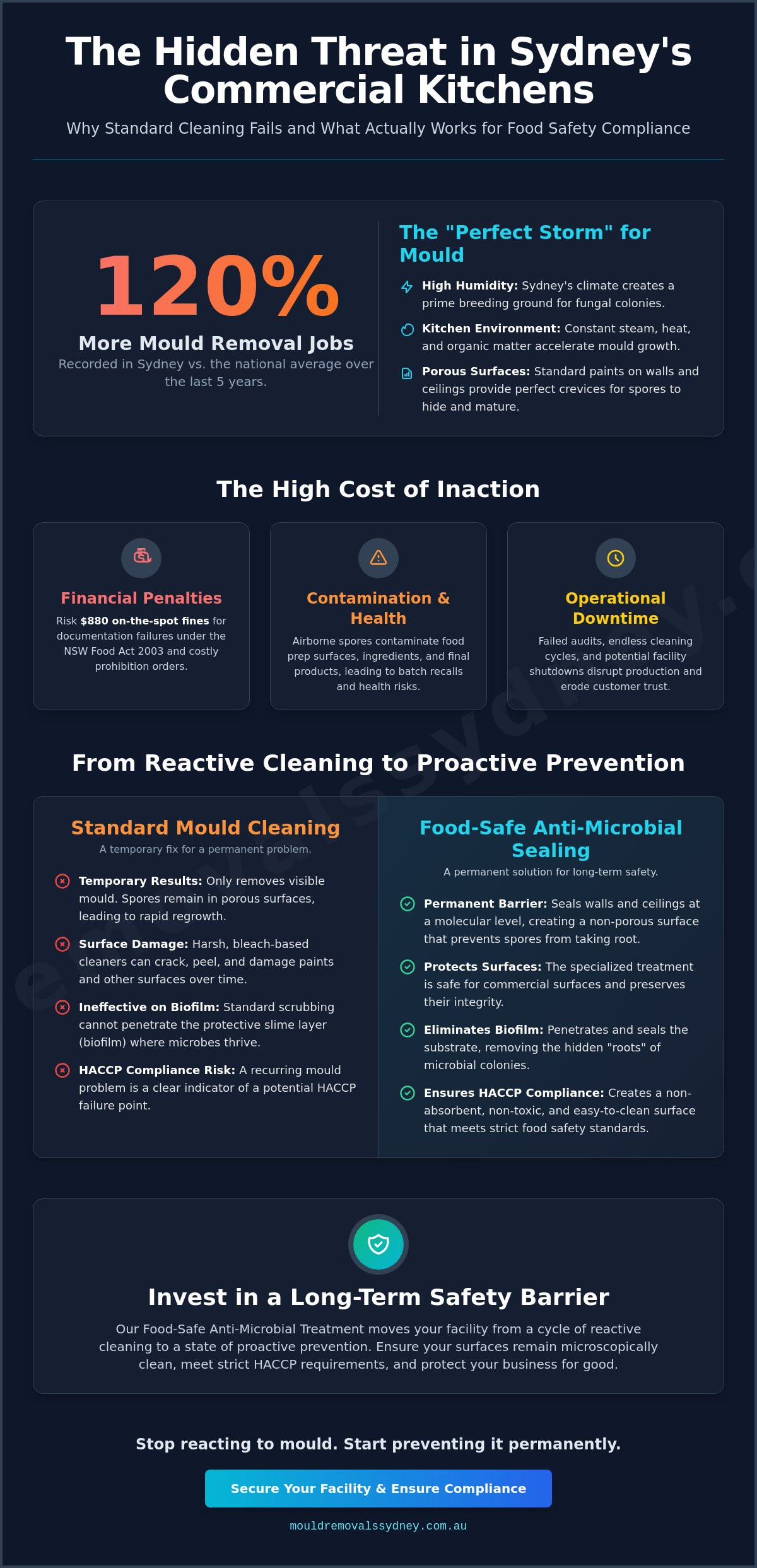
Many facility managers fall into the trap of believing that more frequent cleaning is the answer to a mould problem. In reality, standard cleaning methods are often ineffective and can even make the problem worse, while a one-time professional sealing treatment offers a far greater return on investment.
- Spreading Spores: Aggressive scrubbing or pressure washing of a mould colony can dislodge millions of spores, spreading them throughout your facility and increasing the risk of contamination in other areas.
- The Bleach Myth: Bleach-based cleaners only whiten the visible mould on non-porous surfaces. They do not penetrate porous materials like gyprock and can leave the mould’s “roots” intact. The mould often returns stronger within weeks. Furthermore, these harsh chemicals can damage surfaces over time.
- Calculating the ROI: Compare the cost of monthly deep cleaning, staff labour, and the constant risk of a failed audit against the cost of a one-time treatment that solves the problem for the long term. The financial and operational benefits of a permanent solution are clear.
- Preparation is Key: The surface must be properly prepared before sealing. A professional mould removal process ensures that 100% of existing mould and biofilm is eradicated, providing a clean, stable substrate for the anti-microbial seal to bond to.
The Limitations of Traditional Surface Bleaching
Using bleach is a common DIY response, but in a professional food setting, it’s a strategy doomed to fail. It creates a false sense of security while leaving the underlying problem untouched.
- Rapid Regrowth: Because bleach doesn’t kill the mould’s root system in porous materials, the visible growth you’ve just cleaned is likely to reappear in the exact same spot within weeks as it feeds on the moisture trapped behind the surface.
- Chemical Residue Dangers: Many commercial-grade cleaners are not certified as food-safe. Using them in a food preparation or storage area risks leaving behind harmful chemical residues that can contaminate products and violate safety standards.
- Trapped Moisture: Bleach is mostly water. When you apply it to a porous wall like gyprock, you are actually adding more moisture to the substrate, which can fuel the very mould growth you are trying to eliminate.
Long-Term Protection and HACCP ROI
Investing in a food-safe anti-microbial treatment is not an expense; it’s an investment in operational efficiency, compliance, and peace of mind. The long-term benefits extend far beyond just a clean-looking wall.
- Reduced Labour Costs: A sealed, non-porous surface is significantly easier and faster to clean. Your daily and weekly cleaning routines become more effective and less labour-intensive, freeing up staff time for other critical tasks.
- Extended Structural Lifespan: By preventing moisture from penetrating walls and ceilings, the treatment protects the building’s internal structure from rot, degradation, and the costly repairs associated with chronic water damage.
- Audit-Ready Confidence: The greatest benefit is the peace of mind that comes from knowing your facility is protected. You can face any unannounced health inspection with the confidence that your physical environment meets and exceeds HACCP standards.
Preparing Your Facility for Professional Treatment
We understand that downtime is a major concern for any food business. Our process is designed to be as efficient and non-disruptive as possible, working with your schedule to ensure a seamless transition back to full operation.
- Minimal Disruption: Our teams are experienced in working in active commercial environments. We can schedule treatments during off-hours, overnight, or on weekends to align with your production schedule and minimise operational downtime.
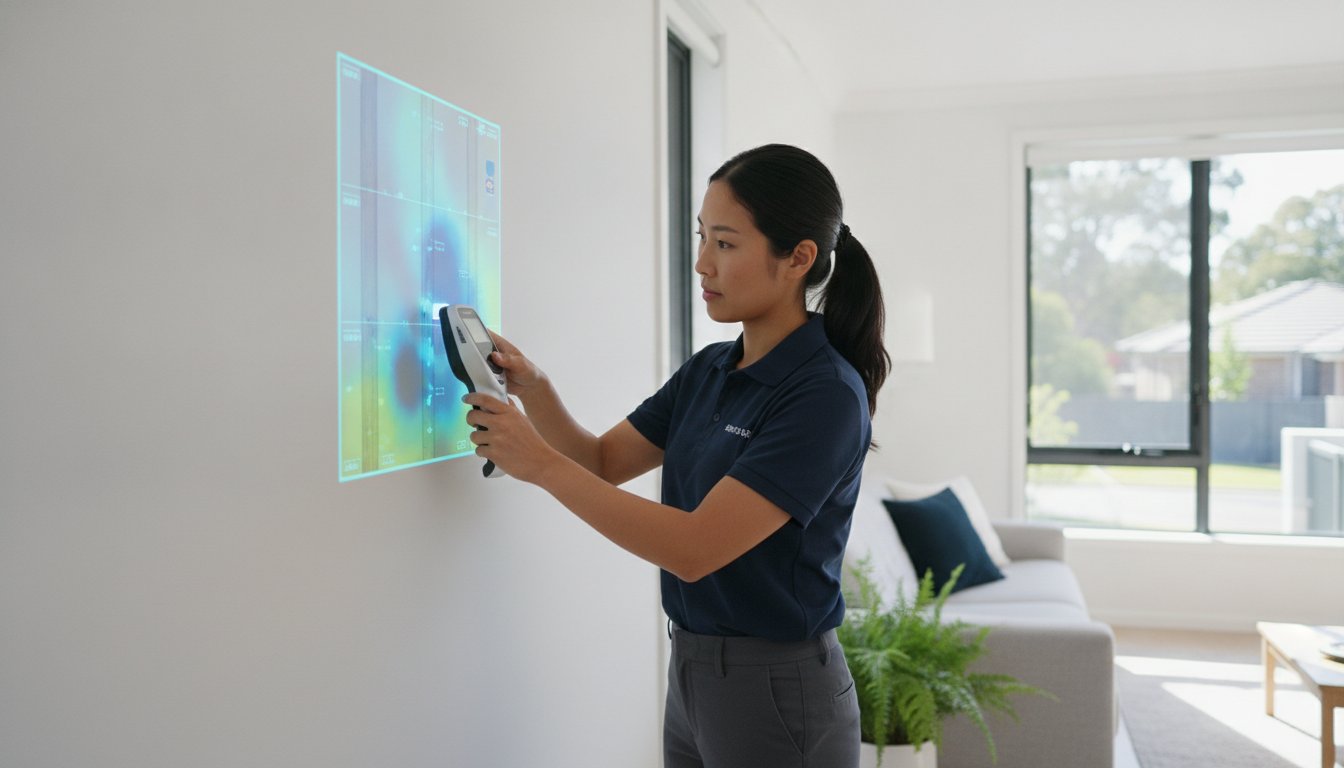
- The Critical Initial Inspection: The process begins with a thorough mould inspection. This allows us to identify the full extent of the problem and pinpoint any underlying moisture sources that must be addressed first.
- Staff and Equipment Safety: We provide a clear, step-by-step plan for preparing the area. This includes protocols for covering and protecting sensitive equipment and ensuring the complete safety of your staff and facility.
- Seamless Return to Operations: After the treatment is applied and cured, we provide clear post-treatment guidelines. This ensures a smooth handover and allows your team to resume operations quickly and safely.
Pre-Treatment Inspection and Sanitization
A successful outcome depends on meticulous preparation. Sealing over an existing problem is not a solution; the area must be professionally remediated before the protective barrier is applied.
- Identifying Root Causes: Before we treat, we identify and advise on fixing any hidden leaks, condensation issues, or water damage that is causing the mould. Sealing is the final step after the moisture source is controlled.
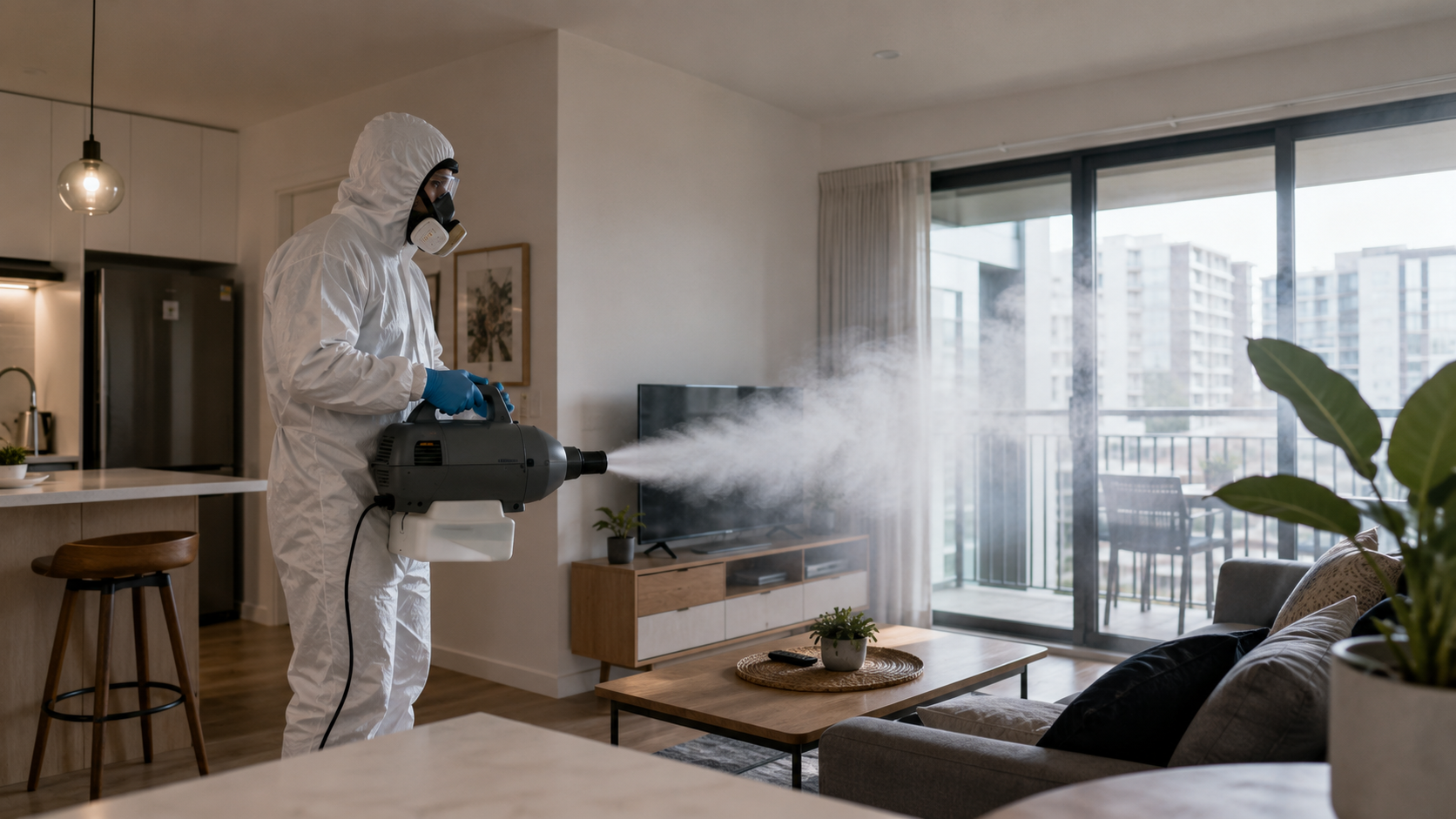
- Professional-Grade Remediation: Using advanced systems, we ensure 100% of the existing mould colonies and airborne spores are safely removed and the area is thoroughly sanitised. This eliminates the threat at its source.
- Ensuring a Perfect Bond: The substrate must be completely dry and structurally sound before the anti-microbial seal is applied. This ensures a permanent, powerful bond that won’t peel, bubble, or fail.
Post-Application Care for Maximum Longevity
The anti-microbial seal is incredibly robust, but following simple maintenance guidelines will ensure it provides maximum protection for its full lifespan.
- Recommended Cleaning Protocols: We provide a list of recommended pH-neutral, non-abrasive cleaning agents. Using the right products will maintain the integrity of the seal and ensure its anti-microbial properties remain effective.
- Humidity Monitoring: While the seal prevents moisture absorption, it’s still best practice to manage overall humidity levels in your facility through proper ventilation to support the coating’s performance and overall food safety.
- Routine Inspections: We recommend a schedule for routine visual inspections as part of your internal food safety program, allowing you to monitor the performance of the coating and ensure continued compliance.
ABC Mould Cleaning Solutions: Your Partner in Food Safety
Choosing the right partner to protect your facility is critical. ABC Mould Cleaning Solutions brings specialized expertise in Sydney’s unique climate and a deep understanding of the strict regulations governing the commercial food industry. We don’t just clean mould; we provide a guaranteed, compliant solution.
- Sydney-Specific Expertise: We have years of experience helping Sydney food businesses combat the challenges of high humidity and meet local health codes. We understand the specific pressures you face.
- Our Specialized Treatment Process: Our Food-Safe Anti-Microbial Treatment is a proven, multi-step process that combines professional remediation with advanced sealing technology to deliver a result that lasts.
- The Preferred Choice for Sydney’s Food Industry: We are the trusted provider for a wide range of facilities, from local restaurants and bakeries to large-scale food processing factories, because we deliver reliable, audit-proof results.
- A Guaranteed Compliant Environment: Our mission is to provide you with a mould-free environment that you can be confident will pass every HACCP and NSW Health audit, every time.
Our Specialized Sydney Remediation Process
We use a systematic, industry-leading approach to ensure the highest standards of safety and effectiveness, tailored specifically for sensitive food environments.
- The Goldmorr System: We utilise the globally recognised Goldmorr System for its safe, biodegradable, and non-toxic mould elimination process. This ensures all existing mould is eradicated without introducing harmful chemicals into your facility.
- Tailored Application Techniques: Our certified technicians are trained in specialized application methods for ceilings, walls, cool room panels, and other hard-to-reach zones, ensuring complete and uniform coverage.
- Certified and Insured Technicians: All our technicians are fully insured and possess extensive experience working within the food industry. They understand the importance of protocols, safety, and discretion.
Get Your Compliance Back on Track Today
Don’t let recurring mould compromise your business. A failed audit, a contaminated batch, or a negative customer review can have devastating consequences. Take proactive steps to protect your facility, your products, and your reputation.
- Don’t Wait for a Failed Audit: The best time to address a potential mould issue is before it becomes a violation. Be proactive and secure your facility’s compliance now.
- Rapid Response for Sydney Businesses: We offer a rapid response service for commercial clients across Sydney, understanding the urgency required to keep your operations running safely and without interruption.
- Take the First Step: Book your specialized food-safe treatment assessment today and let our experts provide a permanent solution to your mould problem.
Frequently Asked Questions (FAQs)
Here are answers to some of the most common questions we receive from food facility managers about our anti-microbial treatment.
-
Is the anti-microbial treatment truly food-safe for commercial kitchens?
Absolutely. The coating we use is specifically designed for environments where incidental food contact may occur. Once cured, it creates a hard, inert, non-leaching surface. The anti-microbial agents are locked into the polymer matrix and do not transfer to the air, surfaces, or food. It complies with the relevant food safety standards for surface coatings.
-
How long does the anti-microbial coating last on walls and ceilings?
The longevity of the treatment typically ranges from 6 to 12 months, but this can vary depending on the specific environment. In high-moisture, high-steam areas with rigorous daily cleaning schedules, the lifespan might be closer to the 6-month mark. In less demanding areas like dry storage, it can last significantly longer. We assess your specific conditions to provide a more accurate expectation.
-
Will this treatment help my facility pass a HACCP audit?
Yes. This is one of the primary benefits. The treatment directly addresses HACCP requirements for surfaces to be smooth, non-porous, easy to clean, and resistant to microbial growth. An auditor will see a well-maintained, sealed surface that actively prevents contamination, which is a critical component of any Food Safety Program.
-
Does the treatment have a strong chemical odour during application?
We use low-VOC (Volatile Organic Compound) or zero-VOC products to minimise odour. While there may be a mild, paint-like smell during the application and curing phase, it dissipates quickly with proper ventilation. We schedule work to ensure the area is fully cured and ventilated before your staff returns and production resumes.
-
Can I apply this treatment over existing paint or tiles?
Yes, provided the underlying surface is stable. For painted surfaces, we ensure there is no flaking or peeling before application. For tiles, the treatment can be applied to seal the surface and, most importantly, the porous grout lines, which are a major hotspot for mould and bacteria growth.
-
What happens if the mould is already behind the walls?
Our initial inspection is designed to identify this. If we suspect mould growth within a wall cavity (often due to a hidden leak), sealing the surface is not the first step. We would first address the internal mould and the moisture source. The anti-microbial treatment is the final, protective step after the underlying structural issue has been fully remediated.
-
How much downtime should I expect for my food business?
We work with you to create a plan that minimises downtime. For most projects, the work can be completed overnight or over a weekend. The curing time is relatively fast, allowing you to return to normal operations as quickly as possible, often within 24 hours.
-
Is this treatment effective against all types of bacteria and fungi?
The broad-spectrum anti-microbial agents used in our treatment are effective against a wide range of microorganisms, including common foodborne bacteria (like E. coli and Listeria) and various species of mould and fungi. By creating a sealed, inert surface, it prevents the formation of the biofilm that protects these dangerous colonies.