
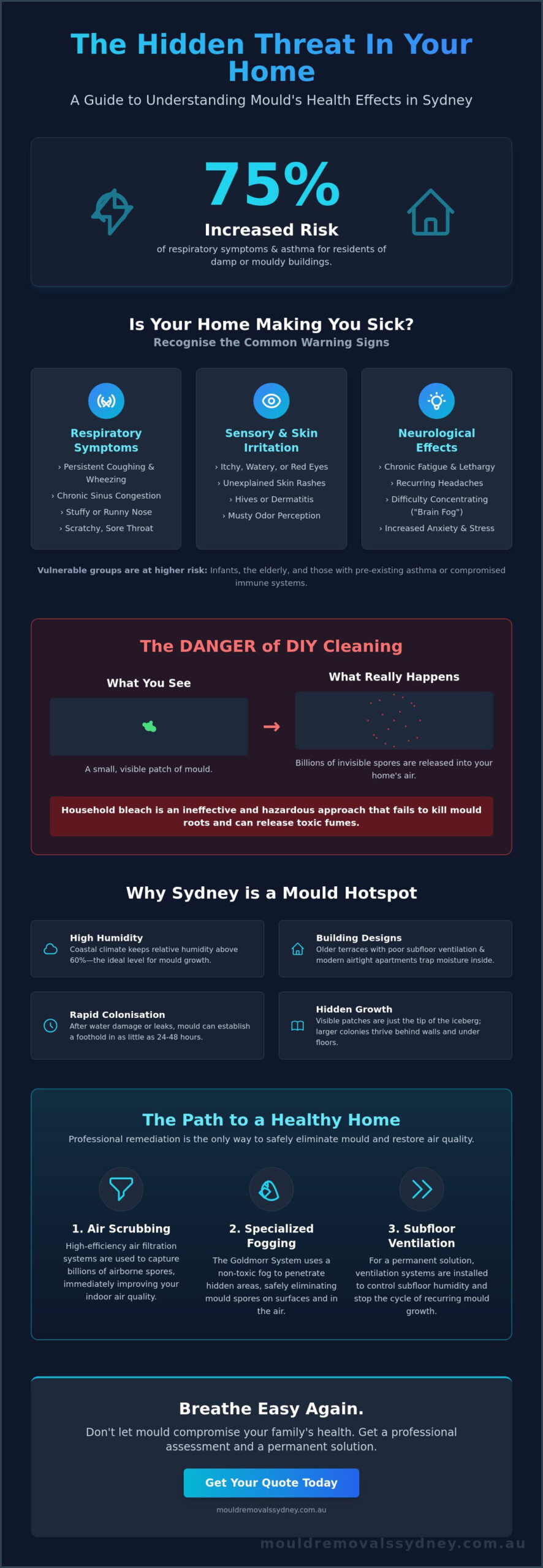
Did you know that residents of damp or mouldy buildings face up to a 75% increased risk of respiratory symptoms and asthma? In Sydney’s notoriously humid climate, mould isn’t just an unsightly stain on the bathroom ceiling; it’s a persistent airborne threat that impacts your lungs and your peace of mind. You’ve likely noticed a chronic cough or a sneeze that won’t go away, leading to valid concerns about the toxicity of “black mould” in your living spaces. It’s exhausting to feel like your own home is working against your health.
Understanding the health effects of mould in home Sydney properties is essential for every resident. This article will help you identify the specific symptoms triggered by common indoor moulds and provide a clear, professional plan to restore your air quality. We’ll preview the latest 2025 NSW residential tenancy regulations regarding urgent repairs and explain how specialized remediation techniques, like air scrubbing and subfloor ventilation, can finally break the cycle of regrowth. You’ll gain the clarity you need to move from a state of concern to a state of total resolution.
Key Takeaways
- Identify the respiratory and sensory warning signs that indicate the health effects of mould in home Sydney properties are impacting your family.
- Understand why DIY scrubbing and household bleach are ineffective solutions that can actually trigger a dangerous release of billions of airborne spores.
- Locate the hidden hotspots in Sydney homes, from humid bathrooms to poorly ventilated subfloors, where mould thrives undetected.
- Discover how the professional Goldmorr System uses specialized fogging to eliminate invisible spores and restore your home’s air quality safely.
- Learn how professional air scrubbing and subfloor ventilation systems provide a permanent solution to recurring humidity and dampness issues.
Understanding the Health Effects of Mould in Sydney Homes
Mould is a biological contaminant that thrives in the damp corners of New South Wales properties. It isn’t just a cosmetic issue or a sign of a dirty house. It’s a complex fungus that feeds on organic matter like drywall, timber, and carpet. In Sydney, our coastal humidity and recent heavy rainfall patterns, driven by La Niña cycles, have created a perfect storm for indoor infestations. While you might only notice a small dark patch on a wall, the reality is often much more serious. The visible growth is merely the “fruit” of a much larger organism hidden behind your walls or under your floors.
Ignoring these signs is a mistake that leads to escalating health risks and permanent structural damage. Understanding the health effects of mould in home Sydney environments is the first step toward reclaiming your safety. When mould is left to grow, it doesn’t just stay on the surface. It releases billions of microscopic particles into the air you breathe every day. If you can smell a musty odor, you’re already inhaling these contaminants.
The Science of Spores and Mycotoxins
Mould reproduces by releasing tiny, invisible spores into the air. These particles are so small that they easily bypass the body’s natural filtration systems in the nose and throat. Once inhaled, they can settle deep in the lungs. Certain species go a step further by producing mycotoxins. These are toxic chemical compounds that can cause a variety of health issues caused by mould, ranging from mild irritation to chronic respiratory conditions. Research indicates that indoor air quality in a mould-affected home can be 2 to 5 times more polluted than the air outside. This concentrated exposure makes the health effects of mould in home Sydney a primary concern for families and property owners alike.
Why Sydney Homes Are Particularly Vulnerable
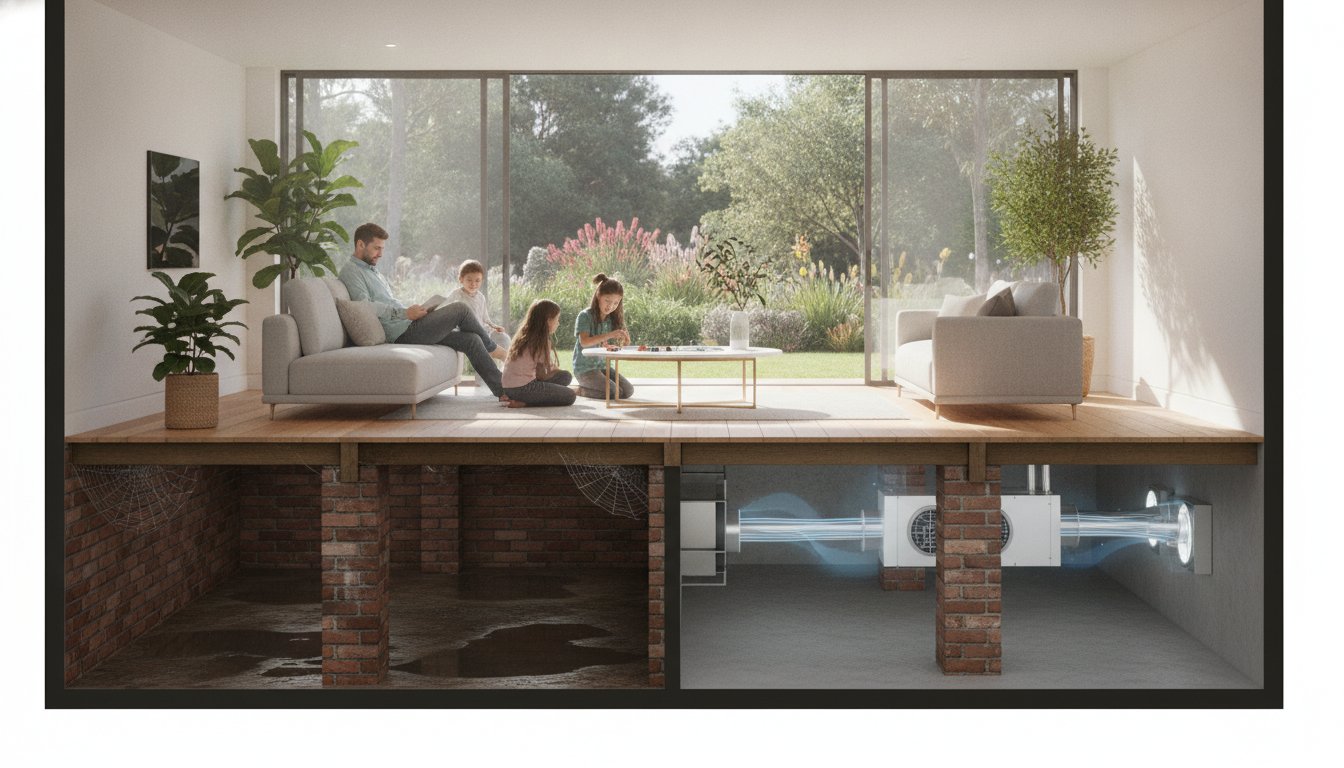
Sydney’s unique geography makes it a high-risk zone for fungal growth. Mould begins to colonize surfaces rapidly when relative humidity levels stay above 60%. In areas like the Eastern Suburbs and the Inner West, these levels are common year-round. Older Sydney terraces often suffer from poor subfloor ventilation, allowing moisture to rise through the floorboards. Conversely, modern apartments are often built so airtight that they trap steam from showers and cooking, creating a humid greenhouse effect. Local weather events, including flash flooding and prolonged rain, provide the moisture needed for toxic mould to establish a foothold in as little as 24 to 48 hours. Without professional intervention, this growth becomes a permanent resident in your home.
Recognizing the Symptoms: Is Your Home Making You Sick?
Identifying the health effects of mould in home Sydney properties often starts with a feeling that something just isn’t right. You might wake up every morning with a stuffy nose or a dry, scratchy throat that clears up once you leave the house. These aren’t just seasonal allergies. They are your body’s reaction to high concentrations of airborne spores. Common respiratory signals include persistent coughing, wheezing, and chronic sinus congestion that refuses to budge. When your living environment is saturated with moisture, your immune system stays in a state of high alert, leading to constant irritation.
The impact goes beyond your lungs. Many residents report dermatological issues like unexplained skin rashes or hives. Your eyes might feel perpetually itchy or watery, even when you aren’t outdoors. Following NSW Health advice on mould is critical because these sensory impacts are often the first warning signs of a larger contamination issue. It’s also vital to acknowledge the “hidden” neurological symptoms. Chronic fatigue, recurring headaches, and a sense of “brain fog” are frequently reported by those living in damp environments. This isn’t just in your head; it’s a physiological response to mycotoxins. The psychological toll is equally heavy. Living in a space where you feel unsafe or unwell causes significant anxiety and stress, making professional resolution a priority for your mental well-being.
Vulnerable Groups at Higher Risk
Not everyone reacts to mould in the same way. Infants and the elderly are particularly susceptible because their immune systems are either developing or less resilient. For these groups, even low levels of spore exposure can trigger significant distress. If someone in your household suffers from pre-existing conditions like asthma or COPD, the presence of mould is a serious threat. It can lead to frequent, severe attacks that are difficult to manage. In rare cases, immunocompromised residents face the risk of serious fungal lung infections, which require immediate medical and environmental intervention.
Long-Term Health Impacts of Chronic Exposure
Prolonged inhalation of mycotoxins doesn’t just cause temporary discomfort. It can lead to the development of entirely new allergies or permanent chemical sensitivities. One of the most serious conditions is Hypersensitivity Pneumonitis (HP). This is an immune system disorder where the lungs become inflamed as a reaction to inhaled organic dust or mould. It often presents with flu-like symptoms that recur every time you are in the affected room. To prevent these chronic illnesses from taking root, early detection is essential. Professional mould testing can confirm exactly what you are breathing in and help you build a plan for recovery. If you’re concerned about your indoor air quality, a professional mould inspection is the most reliable way to validate your health concerns and start the remediation process.
The Danger of Disturbance: Why DIY Cleaning Is a Health Hazard
Many Sydney homeowners see a patch of mould and reach for a scrub brush. This is a critical mistake that can lead to immediate respiratory distress. When you disturb a mould colony, you trigger what specialists call a “spore explosion.” Scrubbing releases millions of microscopic particles into the air you breathe. This sudden spike in concentration dramatically worsens the health effects of mould in home Sydney properties. Without professional containment, you aren’t just cleaning; you’re aerosolizing a biological contaminant throughout your living space.
Household bleach is another common but ineffective tool. It’s a surface-level oxidizer that removes the dark pigment, making the area look clean. However, it doesn’t kill the “roots” or hyphae embedded deep within porous materials like drywall or grout. Since bleach is mostly water, it actually provides a moisture source for the surviving fungus. Within weeks, the infestation returns with a vengeance. There’s also the high risk of cross-contamination. Using the same sponge, vacuum, or cloth on different surfaces moves spores from a damp bathroom into your bedroom carpets. Professional-grade PPE, including N95 respirators and sealed suits, is non-negotiable for safe remediation to avoid direct contact with these toxic particles.
The Myth of Vinegar and Clove Oil
Natural remedies like vinegar and clove oil are popular online, but they often fail to address the root cause. While they may have mild antifungal properties, they rarely penetrate structural materials effectively. Relying on these methods creates a dangerous sense of false security. You might think the problem is gone because the surface is clear, but the fungus continues to grow behind the wall or under the floorboards. This often leads to an aggressive “rebound” growth during the next humid Sydney weather cycle, making the eventual cleanup much more difficult and expensive.
When DIY Becomes Dangerous
Industry standards generally follow the “1-square-metre rule.” If the affected area is larger than a single square metre, professional intervention is the only safe path forward. Attempting to clean black mould without high-level containment barriers allows toxins to drift into every room of your house. This prolonged exposure is what triggers the chronic symptoms of mould exposure, including immune system strain and persistent headaches. Professional air scrubbing is the only way to ensure the air is actually safe once the visible growth is gone. If you’ve already tried to scrub it away and feel your symptoms worsening, it’s time to stop and call in the experts.
Identifying Mould Hotspots in Sydney Properties
Finding the source of your health concerns often requires looking beyond the obvious. While a green patch on a wall is easy to spot, the most dangerous infestations in Sydney homes are frequently tucked away in dark, unventilated corners. The health effects of mould in home Sydney residents experience are often linked to these hidden colonies. If you can smell a persistent musty odor but can’t see the culprit, it’s likely thriving in one of several common hotspots. Identifying these areas early is the only way to stop the spread of toxic spores before they compromise your respiratory health.
Bathrooms and laundries are the primary suspects. These high-humidity zones provide the constant moisture that fungi need to colonize grout, silicone, and ceiling paint. Addressing mould in bathrooms is a top priority for Sydney property owners because the steam from daily showers acts as a fuel source for rapid growth. Beyond the wet areas, many Sydney homes face a “Subfloor Crisis.” Poor ventilation under older sandstone foundations or terrace houses leads to rising damp. This moisture seeps into floorboards and lower walls, creating a massive, invisible breeding ground. If your home has recently suffered from a leaking pipe or heavy rain ingress, you must act quickly. Unresolved water damage can lead to full-scale mould colonization in as little as 48 hours.
Air Conditioners: The Hidden Spore Distributors
Your split system or ducted air conditioning unit could be making you sick. Mould thrives on the dark, damp internal coils and drainage trays of these units. When you turn the system on, it acts as a high-speed distributor, blowing billions of spores directly into your breathing zone. If you notice a sharp, musty smell or a sudden increase in sneezing when the AC is running, your unit is likely contaminated. Regular air conditioner cleaning near me is essential to ensure your cooling system isn’t undermining your indoor air quality.
Wall and Ceiling Infestations
Look for “ghosting” or faint dark patches on your walls and ceilings. These are often indicators of structural dampness rather than just surface dirt. Ceiling mould is frequently a sign of a slow roof leak or inadequate attic ventilation that traps heat and moisture. It’s important to distinguish between surface mildew, which sits on top of the paint, and deep-seated mould that has penetrated the drywall. If the wall feels soft or the paint is bubbling, the infestation is structural. Don’t wait for the problem to spread further through your home. Book a professional mould inspection today to uncover the hidden hotspots in your property.
Professional Remediation: Restoring Air Quality with the Goldmorr System
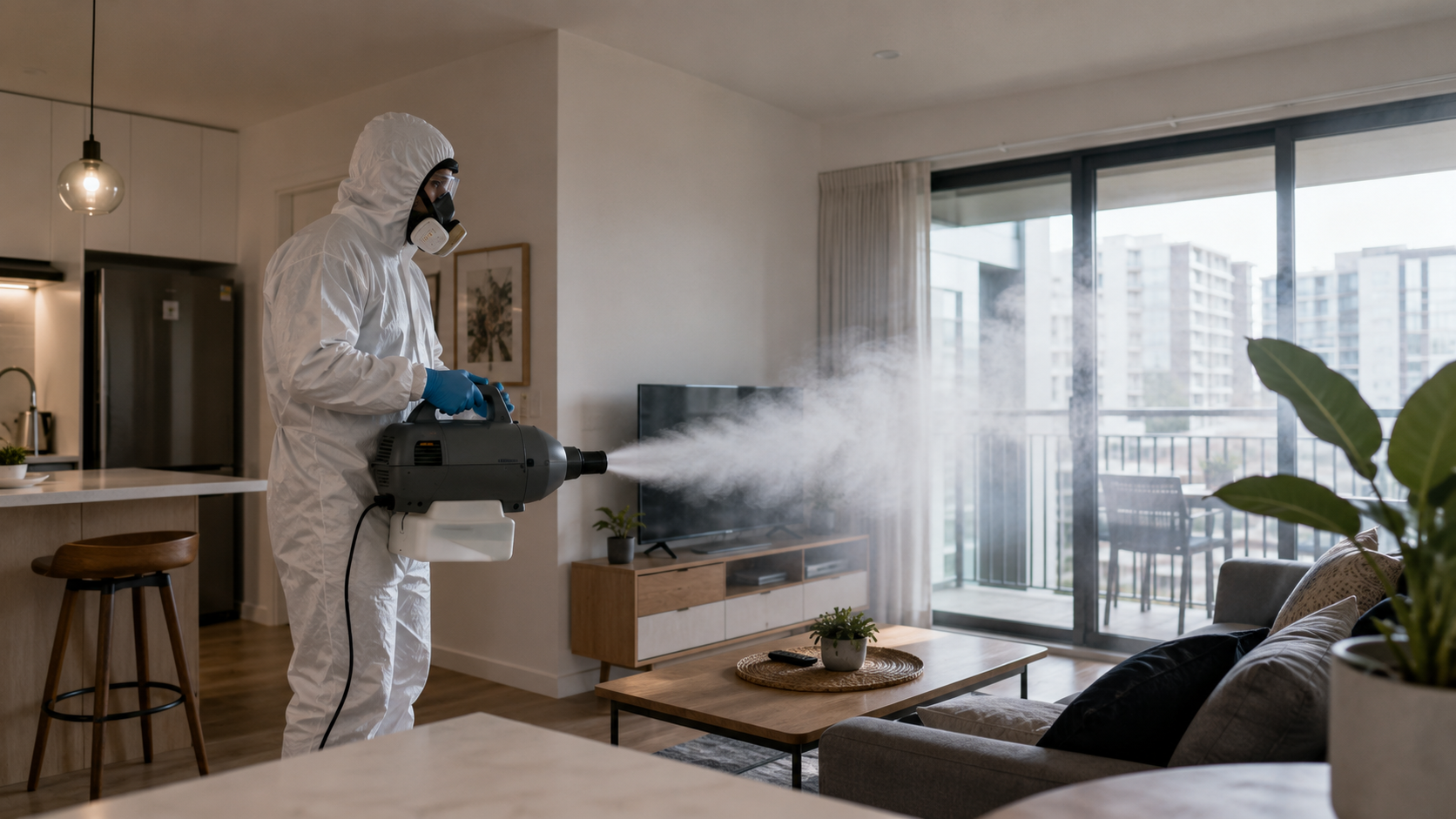
Surface cleaning is only half the battle when dealing with the health effects of mould in home Sydney properties. Most amateur attempts fail because they ignore the billions of invisible spores suspended in the air. At ABC Mould Cleaning Solutions, we utilize the Goldmorr System to provide a comprehensive, two-stage approach that targets both visible growth and the invisible toxins lingering in your air. This specialized methodology uses GM6000 to eliminate surface colonies and GM2000, a biodegradable, non-toxic fogging agent, to neutralize airborne spores. We don’t just wipe away the problem; we transform your indoor environment into a safe haven for your family.
The “Fogging Advantage” is what sets our professional service apart from retail alternatives. While traditional scrubbing often spreads contaminants, our fogging process seeks out microscopic spores in every corner of the room, including behind furniture and inside porous materials. This step is vital for residents who have already developed sensitivities or respiratory issues. By focusing on both surface eradication and high-level air purification, we ensure that the root cause of your health concerns is fully addressed. A post-remediation plan is the final piece of the puzzle. We provide clear guidance on moisture control and ventilation to ensure the mould won’t return during the next humid Sydney season.
Our Step-by-Step Health Restoration Process
We follow a systematic, evidence-based protocol to restore your home’s safety. Our process is designed for maximum efficiency and total transparency:
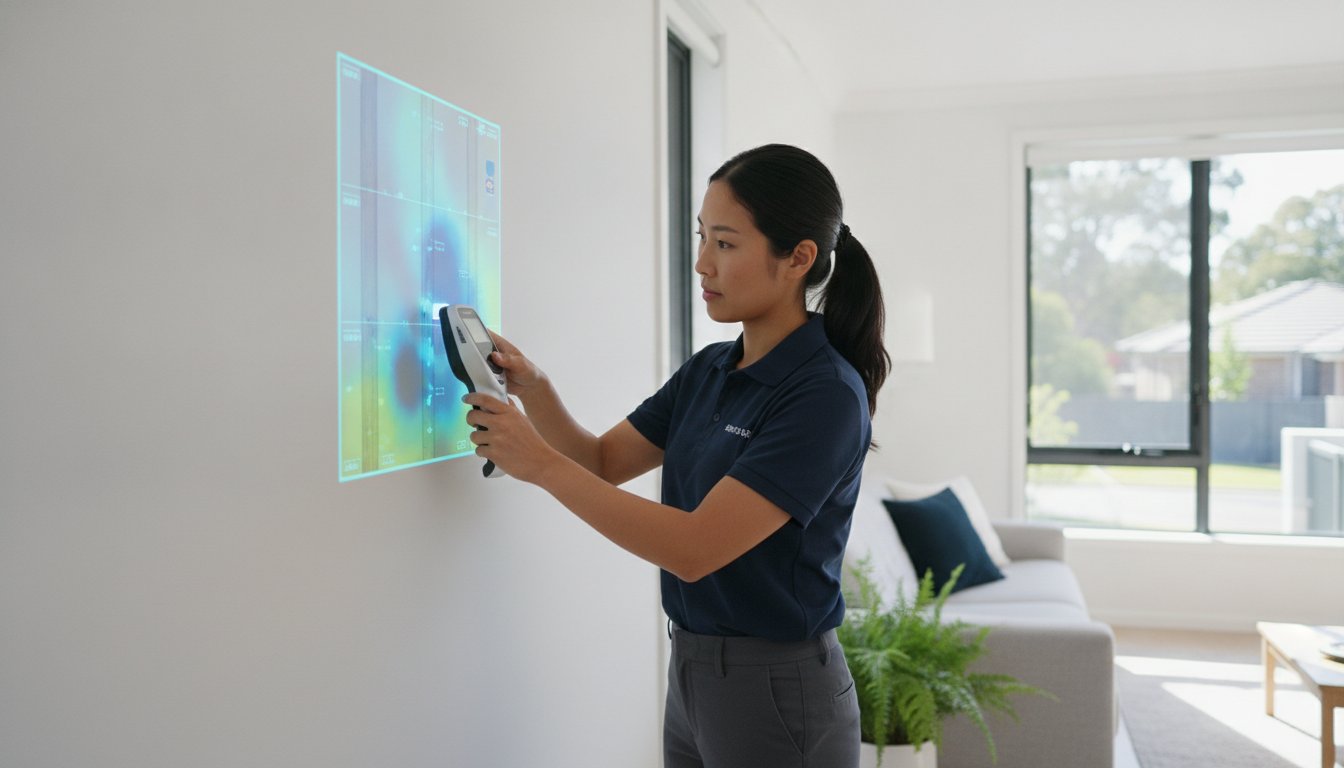
- Step 1: Comprehensive Inspection: Our specialists locate the moisture source and map the full extent of the contamination.
- Step 2: Containment and Surface Treatment: We use the Goldmorr System to treat visible mould, ensuring no spores escape to other rooms.
- Step 3: Advanced Air Scrubbing and Fogging: We deploy HEPA air scrubbers and GM2000 fogging to eliminate airborne toxins.
- Step 4: Final Verification: We conduct a thorough check to ensure your home meets our strict health and safety standards.
Why Choose ABC Mould Cleaning Solutions?
Our commitment to “Air Purification & Scrubbing” makes us the leading choice for health-conscious Sydney residents. We understand the stress that a contaminated home causes, and we’re here to provide immediate emotional and physical relief. Our technicians are among the most highly trained in the industry, utilizing proprietary methods that outperform amateur cleaning every time. We also offer a bold price-match guarantee to ensure you receive the best value for your investment in your family’s well-being. Don’t let dampness dictate your quality of life. Protect your family today and get a free mould removal quote now to breathe easy again.
Take Control of Your Home’s Air Quality Today
Living with the persistent health effects of mould in home Sydney residents face isn’t something you have to endure. You now understand that surface cleaning with bleach fails to kill fungal roots. Scrubbing visible patches only releases dangerous spores into your breathing zone. Real resolution requires a systematic approach that addresses both structural dampness and airborne contamination. By utilizing the specialized Goldmorr System, our team ensures your environment is stripped of toxins and restored to a healthy state. Our Sydney-wide expert technicians are ready to help you reclaim your living space from the cycle of humidity and dampness. If you’ve experienced sudden flooding or a major leak, our 24/7 emergency water damage response is available to prevent mould from establishing a foothold. Don’t wait for symptoms to worsen or property damage to escalate. Protect your health, Book your Sydney Mould Inspection today. You deserve to breathe clean, safe air in your own home.
Frequently Asked Questions
Can mould in my home cause permanent health damage?
Chronic exposure to fungal contaminants can lead to permanent respiratory issues or the development of lifelong allergies. While many symptoms resolve once the source is removed, conditions like Hypersensitivity Pneumonitis can cause long-term lung scarring if left untreated. You should address infestations early to prevent these irreversible health effects of mould in home Sydney properties. Taking immediate action protects your family’s long-term well-being.
How do I know if my symptoms are caused by mould or just a cold?
Observe if your symptoms improve when you spend significant time away from the property, such as at work or on holiday. Unlike a standard cold that typically resolves within 10 days, mould-related issues persist as long as you are in the contaminated environment. If you experience a chronic cough, itchy eyes, or sinus congestion that only flares up indoors, it’s a strong indicator of an environmental trigger.
Is black mould more dangerous than other types of mould in Sydney?
Stachybotrys chartarum, commonly known as black mould, is considered more dangerous because it produces toxic chemical compounds called mycotoxins. These specific toxins can cause more severe neurological and respiratory issues than standard green or white moulds. However, all fungal growth in a home is a biological contaminant. You should treat any infestation as a serious priority regardless of its colour or appearance.
What should I do if I find mould in a rental property in Sydney?
Notify your landlord or property manager in writing immediately, as mould can be classified as an “urgent repair” under the Residential Tenancies Act 2010 (NSW). Landlords are legally required to provide a home that is fit for habitation and in a reasonable state of repair. If the mould results from structural issues like rising damp or a leaking roof, the owner is responsible for professional remediation costs.
How long does it take for health symptoms to improve after mould removal?
Many residents report a noticeable improvement in their respiratory symptoms within 24 to 48 hours of a professional remediation. Total recovery time depends on the severity of your initial reaction and the duration of your exposure. Using professional air scrubbing during the cleanup ensures that invisible spores are completely removed, allowing your immune system to finally rest and recover in a clean environment.
Can air purifiers help with the health effects of mould?
High-quality air purifiers with HEPA filters can reduce the health effects of mould in home Sydney by capturing airborne spores and toxins. While these devices provide temporary relief for your lungs, they don’t fix the root cause of the problem. You must remove the physical colony and resolve the underlying moisture issue to achieve a permanent health solution and prevent the mould from returning.
Why does my mould keep coming back after I clean it with bleach?
Bleach is ineffective because it only removes surface pigment while its high water content actually feeds the hidden roots or hyphae. This moisture allows the fungus to regrow quickly, often more aggressively than before. Professional remediation utilizes specialized agents like the Goldmorr System to kill the entire organism and neutralize airborne spores, breaking the cycle of regrowth that DIY methods fail to stop.
Is it safe to stay in my home during the professional mould removal process?
It is generally safe to remain in the property during treatment because we use advanced containment barriers and negative air pressure systems. These professional measures prevent spores from spreading to unaffected rooms while our technicians work. We will inform you if a specific room needs to be vacated temporarily during the fogging or air scrubbing phase to ensure your absolute safety and comfort.