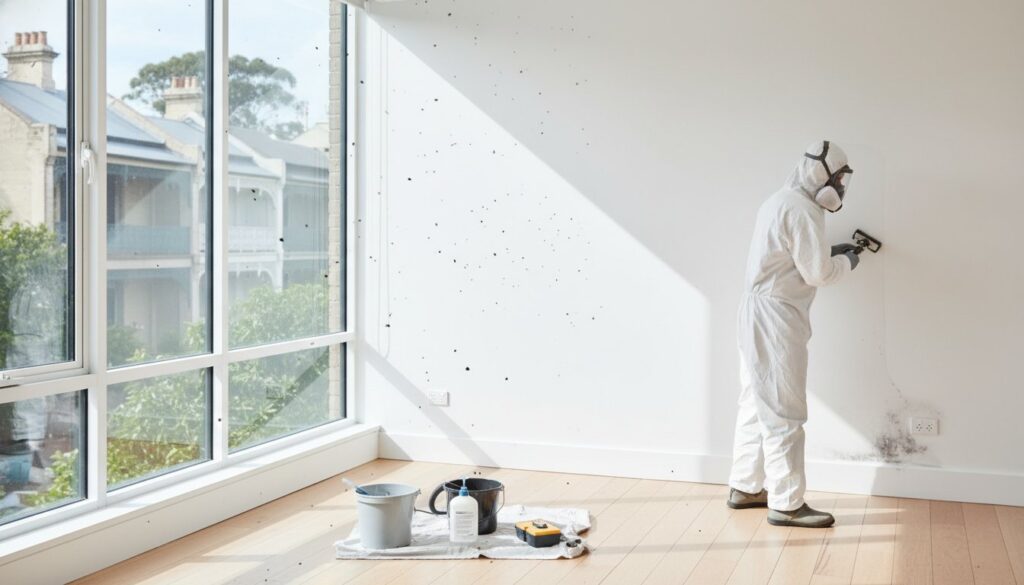
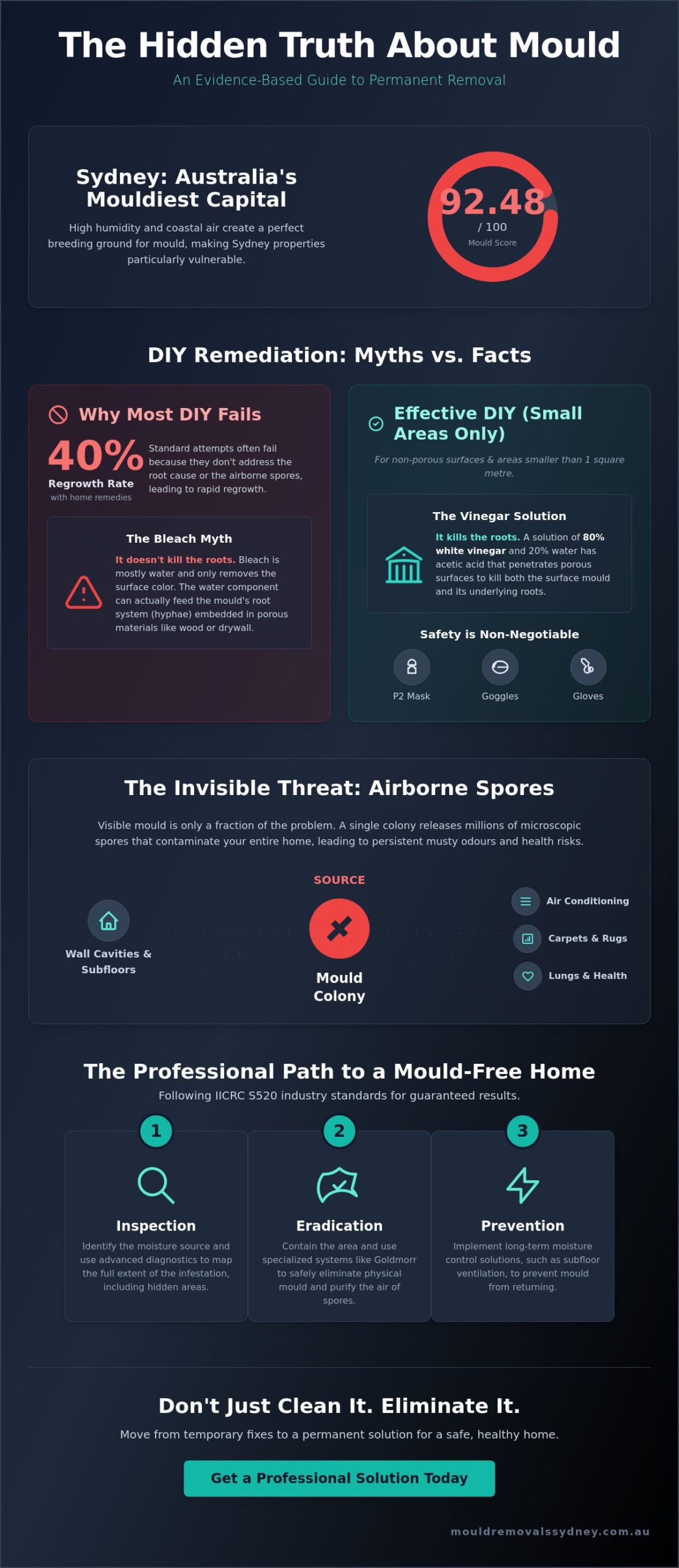
Did you know Sydney is Australia’s mouldiest capital city with a staggering score of 92.48 out of 100? If you are constantly scrubbing walls only to see black spots return, you are part of a common cycle. Research shows that home-remedy attempts have a 40% regrowth rate. Learning how to get rid of Mould effectively requires more than a quick wipe. It demands a professional strategy that targets invisible airborne spores and the underlying moisture sources that fuel them.
We know how stressful it is to deal with musty smells and the fear of structural damage or health issues for your children. You want a safe, clean home without the recurring headache of temporary fixes. This guide promises to show you how to move from surface cleaning to permanent remediation. We will explore the IICRC S520 industry standards, the importance of subfloor ventilation, and how specialized air purification can restore your property’s air quality for good. It’s time to stop managing the problem and start solving it with a systematic, evidence-based approach.
Key Takeaways
- Learn why mould is a living organism and why specific vinegar concentrations are the only effective DIY method for small, non-porous surfaces.
- Identify the dangers of invisible airborne spores that settle in carpets and air conditioning systems, causing persistent musty odors and health risks.
- Implement the 24-hour rule for drying wet materials to stop moisture from becoming a permanent structural threat to your property.
- Discover How to get rid of Mould permanently through a professional three-step process of inspection, eradication, and long-term prevention.
- Explore how specialized technologies like the Goldmorr system and subfloor ventilation create a healthy, secure environment for your family.
Understanding Mould: Why It Is More Than Just a Surface Stain
Mould isn’t just a smudge on the wall; it’s a resilient living organism. When searching for Understanding Mould, you must realize that visible patches represent only a fraction of the infestation. These colonies act as biological factories that launch millions of invisible spores into your living space. Sydney’s unique climate, characterized by high humidity and salty coastal air, creates a high-pressure environment for property owners. Modern buildings often lack the breathability needed to exhaust this moisture. If you ignore a small patch today, you’re allowing a microscopic network to colonize your subfloors and wall cavities. This isn’t just an aesthetic issue. It’s a race against time to protect your property’s structural integrity and your family’s respiratory health.
The urgency of the situation cannot be overstated. A “wait and see” approach gives mould the time it needs to digest organic materials like timber, paper, and carpet. Once these spores are airborne, they circulate through your home, settling in air conditioning units and soft furnishings. Knowing how to get rid of Mould starts with acknowledging that the stain on your ceiling is a symptom of a much larger, active ecosystem that requires immediate intervention.
Mould vs. Mildew: Identifying Your Infestation
Identifying the type of growth in your home is the first step toward a solution. Mildew is typically a surface-level fungus. It appears flat, powdery, and is usually grey or white. You will often find it on damp clothes or bathroom tiles, and it’s generally easier to treat with basic cleaning. Mould, however, is a deeper problem. It is often fuzzy or slimy in texture and comes in shades of black, green, or even bright orange. Unlike mildew, mould grows deep into the pores of your building materials. While mildew is a nuisance, mould is a sign of a systemic moisture failure. For a detailed breakdown of what you’re looking at, check out our What is mould guide for visual identification.
Why Bleach Is Not the Answer
Household bleach is the most common failed solution we encounter. It provides a false sense of security by whitening the surface while leaving the underlying organism intact. Bleach is an oxidizer that removes the pigment from the mould, but it doesn’t kill the roots, known as hyphae, that live inside porous materials. Because bleach is mostly water, the chemical component stays on the surface while the water seeps into the material. You are essentially feeding the infestation you’re trying to kill. This is a primary reason why DIY efforts often result in a 40% regrowth rate. Professional-grade antimicrobials are specifically engineered to penetrate surfaces and neutralize the biological threat without providing the hydration mould needs to survive. Knowing how to get rid of Mould effectively means putting down the spray bottle and using science-backed remediation methods.
DIY Mould Removal: What Actually Works for Small Areas
If you find a small patch of growth, you might wonder how to get rid of Mould without calling in a professional team immediately. For areas smaller than one square metre, DIY methods are often effective if you prioritize safety. Never start cleaning without a P2 respirator mask, waterproof gloves, and eye protection. Disturbed mould releases thousands of spores that can irritate your lungs and trigger allergic reactions. Understanding mould and its health risks is vital before you begin. If the infestation exceeds the one-metre mark or involves structural dampness, stop immediately. At that point, specialized mould cleaners in Sydney are necessary to ensure the safety of your home.
The gold standard for home treatment is a vinegar solution. Use a mix of 80% white vinegar and 20% water. Unlike bleach, vinegar’s acetic acid penetrates porous surfaces to kill the mould at its root. Clove oil is another effective tool, but use it sparingly. One quarter of a teaspoon in a litre of water is sufficient to kill spores. Be careful on light-coloured fabrics or untreated timber, as the oil can leave permanent stains. Always test a small, inconspicuous area first to check for discolouration.
Step-by-Step DIY Cleaning Process
Isolate the affected room before you start. Close doors and windows to prevent spores from drifting into other parts of the house. Use the “mist and wait” technique for the best results. Spray your vinegar solution onto the surface and let it sit for at least 20 minutes. This gives the antimicrobial agents time to neutralize the organism. Never dry-brush mould. Brushing dry spores sends them directly into your breathing zone and spreads the infestation. Instead, wipe the area with a damp microfibre cloth and discard the cloth in a sealed bag afterward.
Cleaning Different Surfaces: Timber, Leather, and Fabric
Porous materials like leather and timber require a delicate touch. For leather jackets or timber furniture, use a lightly dampened cloth with the vinegar solution. Don’t soak the material, as excess moisture will only fuel future growth. Once the surface is completely dry, use a vacuum with a HEPA filter to remove dead spores. Standard vacuums often exhaust microscopic spores back into the air, making the problem worse. Knowing how to get rid of Mould on fabric is more difficult. If items like curtains or carpets are heavily infested, they usually cannot be salvaged through DIY methods and should be professionally assessed.
The Danger of “Hidden” Mould: Dealing with Airborne Spores
Cleaning a visible stain is only half the battle. The most significant threat often remains invisible to the naked eye. Mould colonies release microscopic spores that travel through your home’s airflow, eventually settling in carpets, upholstery, and deep within wall cavities. These spores frequently migrate into your HVAC systems, turning your air conditioning into a distribution hub for contamination. If you only focus on surface wiping, you are ignoring the reservoir of growth potential floating in your air. This is why surface cleaning alone results in a 90% recurrence rate. Understanding how to get rid of Mould requires a strategy that addresses the air you breathe, not just the walls you see.
That distinct, musty smell in your property isn’t just an unpleasant odor. It is a biological signature. These scents are caused by Volatile Organic Compounds (VOCs) released as mould consumes organic material. Exposure to these compounds and airborne spores is directly linked to several health effects of mould, ranging from persistent coughing to severe respiratory distress. Ignoring these signals allows the infestation to entrench itself further into the building’s structure. Professional Air Purification and Scrubbing are the only ways to physically remove these microscopic triggers from your environment.
How Air Scrubbers Work
Air scrubbers are high-capacity filtration units designed to cycle the air in a room multiple times per hour. They utilize industrial-grade HEPA filters capable of capturing particles as small as 0.3 microns with a 99.97% efficiency rating. This process is critical after a major leak or flood, as it prevents disturbed spores from settling elsewhere. To ensure your entire ventilation network is protected, we recommend reviewing our guide on Air Duct Cleaning Sydney to address contamination within your cooling and heating systems.
The Role of Professional Fogging
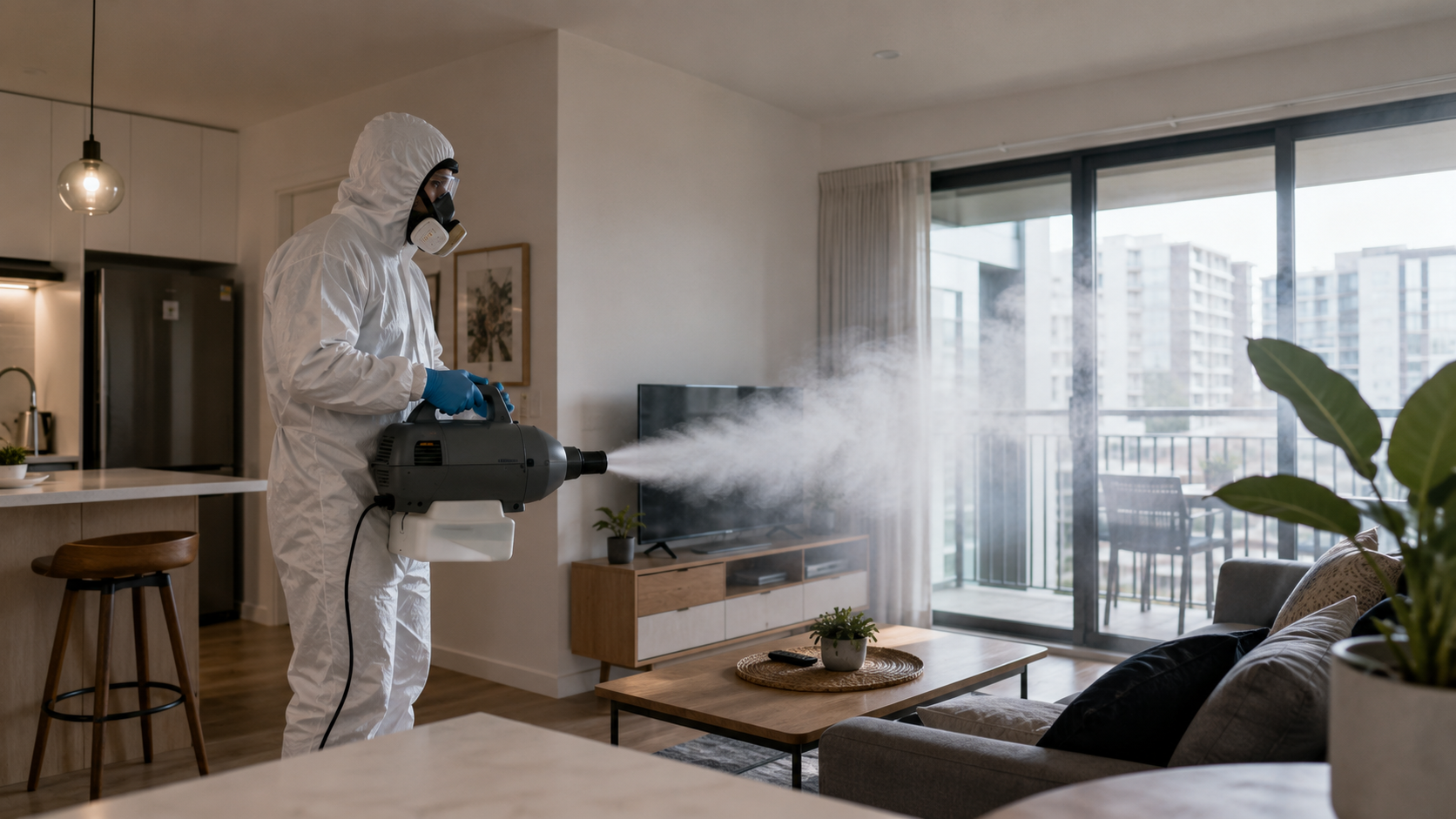
Professional fogging bridges the gap between manual cleaning and air filtration. We utilize the Goldmorr System, a proprietary methodology that deploys a fine mist of antimicrobial solution throughout the property. This mist reaches into crevices, ceiling voids, and behind furniture where traditional wipes cannot penetrate. The fogging process neutralizes spores across the entire building envelope, ensuring a comprehensive kill rate. Our solution is biodegradable and non-toxic, making it safe for families and pets while remaining lethal to fungal growth. When you are serious about how to get rid of Mould for good, fogging provides the final layer of security needed to prevent a rapid return of the infestation.
Preventing Recurrence: Controlling Moisture in Sydney Homes
Cleaning visible growth is just a temporary fix if you don’t address the underlying moisture source. To truly understand how to get rid of Mould for good, you must treat your home as an ecosystem. Moisture is the fuel for fungal growth. Whether it’s a pinhole leak in a pipe, rising damp from the ground, or simple condensation on a window, any water source will trigger a new infestation. The 24-hour rule is non-negotiable. If building materials or furnishings remain wet for more than 24 hours, mould colonisation is almost guaranteed. Act fast to dry spills, fix leaks, and wipe down condensation the moment you see it.
Effective ventilation is your most powerful tool in this fight. Stagnant air allows humidity to build up, especially in laundry rooms and bathrooms. Ensure your exhaust fans are powerful and vented directly to the outside, not just into the roof cavity. In areas with poor natural airflow, use a high-capacity dehumidifier to keep relative humidity below 50%. Cross-ventilation is also essential. Open windows on opposite sides of the house to create a breeze that flushes out humid air and airborne spores. If you aren’t sure where the moisture is coming from, booking Mould Inspection Services is the only way to identify hidden dampness before it causes structural damage.
Subfloor Ventilation: The Sydney Solution
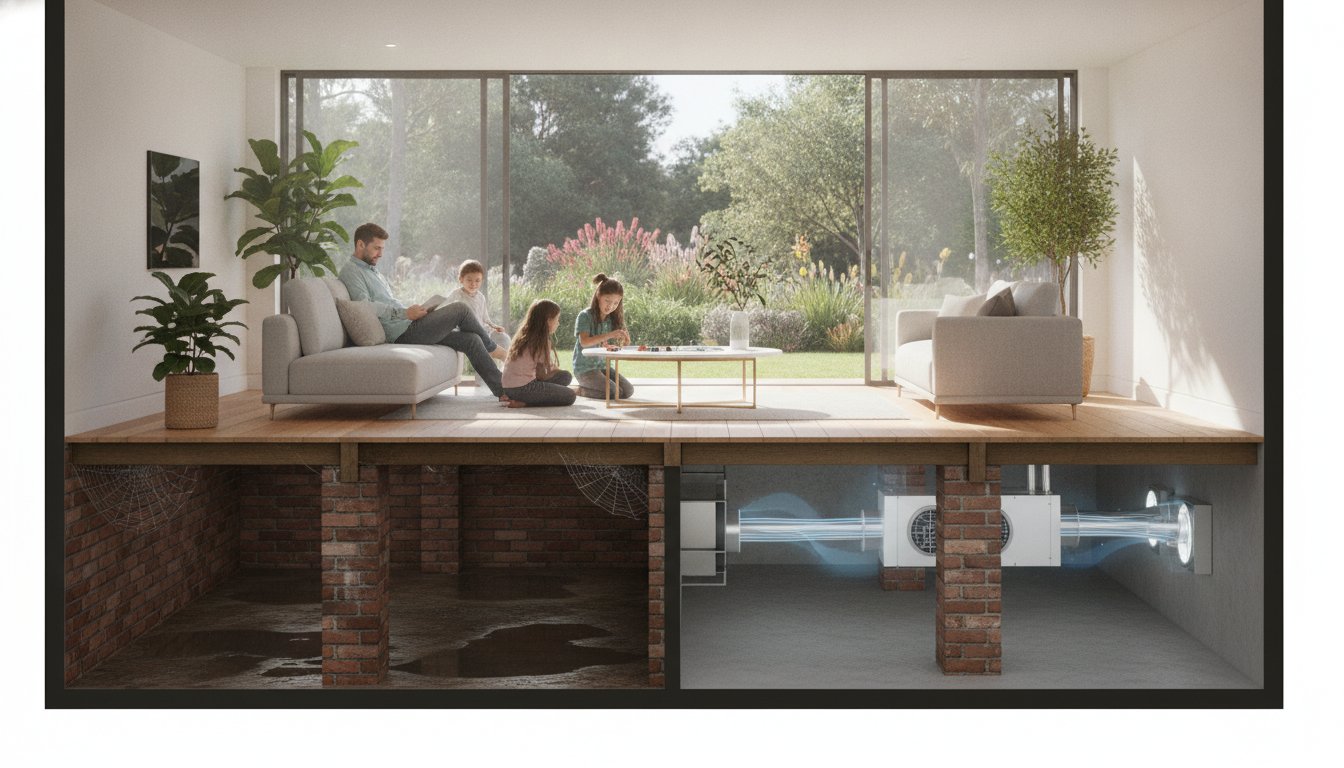
Sydney’s coastal geography and humid subtropical climate create a unique challenge for property owners. High water tables and dense soil often trap moisture beneath the home. During intense weather cycles like La Niña, this ground moisture increases significantly. Without proper airflow, this dampness rises through the floorboards, creating a persistent musty smell and rotting your timber foundations. Mechanical ventilation is the most effective remedy. By installing a dedicated Subfloor Ventilation System, you force a constant exchange of fresh air, keeping the area beneath your home dry and inhospitable to mould growth.
Daily Habits for a Mould-Free Home
Long-term prevention relies on small, daily actions that limit humidity. Adopt these habits to protect your living environment:
- Use a squeegee on bathroom tiles and glass after every shower to remove standing water.
- Keep lids on pots while cooking to prevent steam from saturating your kitchen walls and ceiling.
- Pull furniture at least 10cm away from external walls to allow air to circulate behind wardrobes and lounges.
- Conduct seasonal maintenance on gutters, downpipes, and window seals to prevent external water ingress.
These simple steps create a hostile environment for spores. Don’t wait for a musty smell to return before taking action. If you suspect your home has a structural moisture issue, we can help you identify the cause and install a permanent solution. Contact our team for a professional Mould Inspection today to secure your property’s future.
Professional Remediation: The ABC Mould Cleaning Solutions Approach
When DIY methods fail and the musty smell persists, you need a specialized solution that targets the root cause. ABC Mould Cleaning Solutions is Sydney’s trusted expert because we don’t just clean surfaces; we restore environments. We understand the anxiety that comes with recurring growth and health concerns for your family. That’s why we utilize a systematic, evidence-based approach to ensure your home is safe and mould-free. Our team provides the most effective answer to how to get rid of Mould by combining international industry standards with local expertise. We’re so confident in our value that we offer an aggressive price-matching guarantee across NSW, ensuring you receive world-class remediation at the best possible price.
Our methodology follows a rigorous three-step process designed for permanent results. First, we conduct comprehensive Mould Inspection Services to map the extent of the contamination and identify moisture triggers. Second, we move to eradication using the proprietary Goldmorr system to neutralize the organism. Finally, we implement long-term prevention strategies, such as Subfloor Ventilation System Installation, to ensure the dampness never returns. This professional pathway moves you from a state of concern to total resolution quickly and efficiently.
The Goldmorr System Difference
Traditional remediation often involves aggressive scrubbing or the destructive removal of building materials. The Goldmorr methodology is different. It’s a faster, more effective system that targets mould at a molecular level without the need for invasive “strip-outs.” This “no-strip” benefit is a game-changer for property owners. We can often save your drywall, ceilings, and soft furnishings that other cleaners would simply tell you to throw away. Our treatments are non-toxic and biodegradable, ensuring your home remains a safe haven for children and pets immediately after the process. For a safe and fast solution, book our Mould Removal Sydney service today.
Get Your Free Expert Assessment
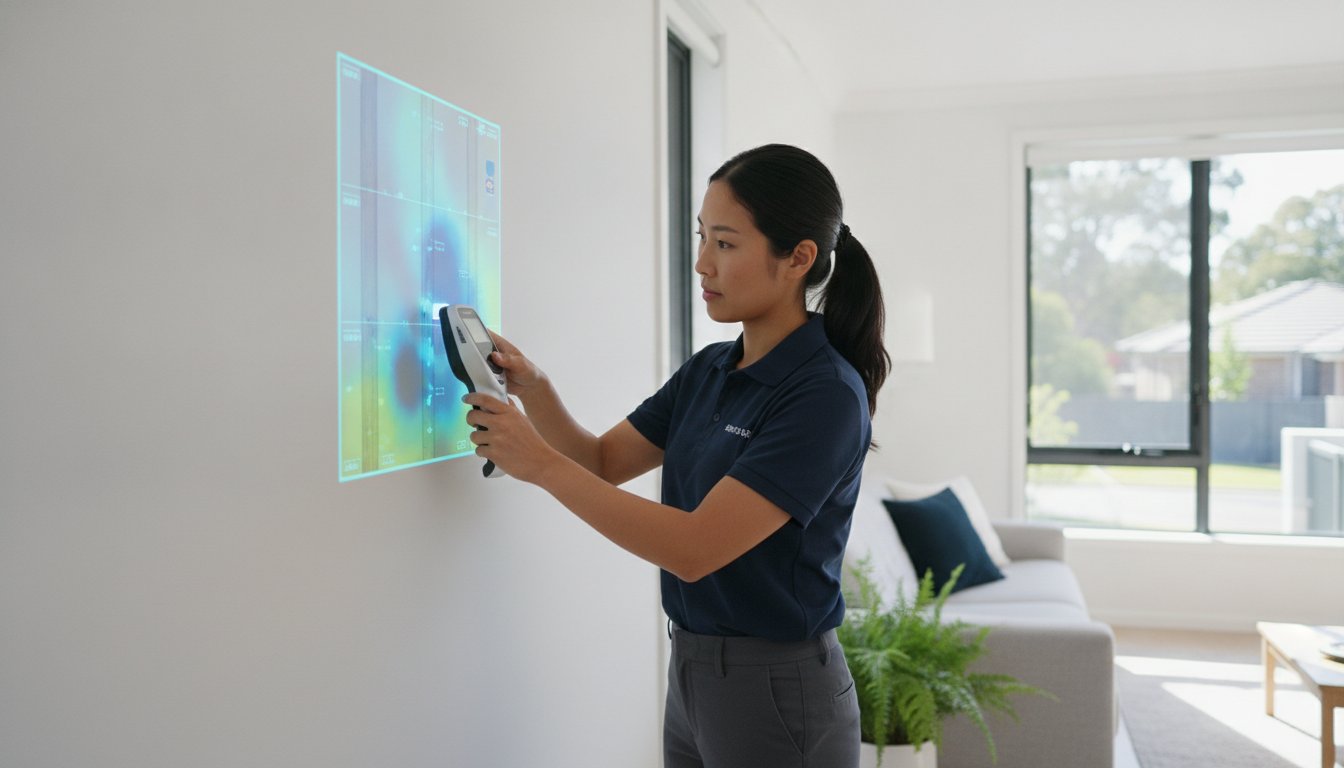
We’ve streamlined our digital inquiry process to make your journey as simple as possible. You don’t have to wait days for a technician to visit just to get an initial idea of the problem. Simply use your mobile device to take clear photos of the affected areas and send them to us. Our specialists will review the media and provide a fast, accurate quote. If a deeper investigation is required, our professional mould inspection includes thermal imaging and moisture mapping to find what the naked eye misses. Stop worrying about the escalating risks of structural damage. Contact ABC Mould Cleaning Solutions today to reclaim your home and breathe easy again. We make how to get rid of Mould a hassle-free experience with guaranteed results.
Take Control of Your Property’s Health Today
Effective mould management is a commitment to a safer, healthier living environment. You now understand that surface cleaning is only the first step. To truly address how to get rid of Mould, you must neutralize airborne spores and eliminate the moisture sources that fuel them. Whether you’re managing condensation in a coastal apartment or addressing subfloor dampness in a heritage home, the goal remains the same. Permanent removal requires a systematic, professional approach. Don’t let a musty smell become a structural crisis or a health risk for your family.
Our specialised Goldmorr System Technicians are ready to restore your home using non-toxic, evidence-based methods. We provide a competitive price-matching guarantee to ensure you get the best value in NSW. We also offer a 24/7 emergency water damage response for urgent situations. Stop the cycle of recurring growth and start your journey toward a clean, secure property. Get a Free Mould Removal Quote in Sydney and let our experts handle the technical details. You deserve a home that’s safe for everyone. We’re here to make that a reality.
Frequently Asked Questions
Is it safe to sleep in a room with mould?
Sleeping in a room with an active infestation is generally unsafe because you are inhaling concentrated spores for several hours. This exposure can lead to nasal congestion, wheezing, and skin irritation. Those with pre-existing conditions like asthma or allergies face even higher risks. You should isolate the area and address the growth before returning to the room. Ensuring your home has healthy air quality is the only way to guarantee a safe night’s sleep.
Can I use vinegar to get rid of black mould?
You can use a high-concentration vinegar solution for small, non-porous surfaces. The acetic acid in white vinegar penetrates the organism to kill it at the root. However, this method is only suitable for minor issues. If you are dealing with heavy infestations on plasterboard or timber, vinegar won’t be enough. Learning How to get rid of Mould on a larger scale requires professional-grade antimicrobials and specialized equipment to prevent rapid regrowth.
How much does professional mould removal cost in Sydney?
The cost of remediation in Sydney depends on several factors, including the size of the affected area and the underlying cause of the moisture. Minor surface treatments will differ significantly from full structural remediation or subfloor ventilation projects. You should request a detailed inspection to understand the specific requirements for your property. Professional services focus on long-term results rather than quick fixes, ensuring the problem doesn’t return and cause more expensive damage later.
Does clove oil actually kill mould spores?
Clove oil is a potent antifungal that can kill spores, but it must be diluted properly to avoid damaging surfaces. While it is effective at neutralizing the organism, it does not remove the stain or address the moisture source. Using it as a standalone solution often leads to disappointment because the root cause remains. For a comprehensive result, you need a process that combines eradication with humidity control and air purification.
How do I know if the mould is making me sick?
Symptoms of exposure often mimic chronic hay fever or a cold that won’t go away. You might experience persistent sneezing, red eyes, or a dry cough. If these symptoms worsen when you are at home and improve when you spend time outdoors or in a different environment, the air quality in your property is likely the cause. Professional air scrubbing is often necessary to remove the microscopic triggers causing these health concerns.
What is the fastest way to get rid of mould on a ceiling?
The quickest way to address ceiling growth is through a professional-grade treatment that kills the organism on contact without damaging the paint. Wiping with household cleaners is often slow and ineffective because the mould lives within the porous ceiling material. A professional approach ensures the entire building envelope is treated. Learning How to get rid of Mould on high surfaces safely requires the right equipment to avoid spreading spores throughout the room.
Will a dehumidifier stop mould from growing?
Using a dehumidifier is an excellent preventative measure because it maintains relative humidity below 50%. This makes your home inhospitable to new spores. However, it will not eradicate an existing colony or address structural issues like rising damp. You must first remove the current infestation and then use dehumidification or mechanical ventilation as part of a long-term moisture management strategy to prevent a recurrence.