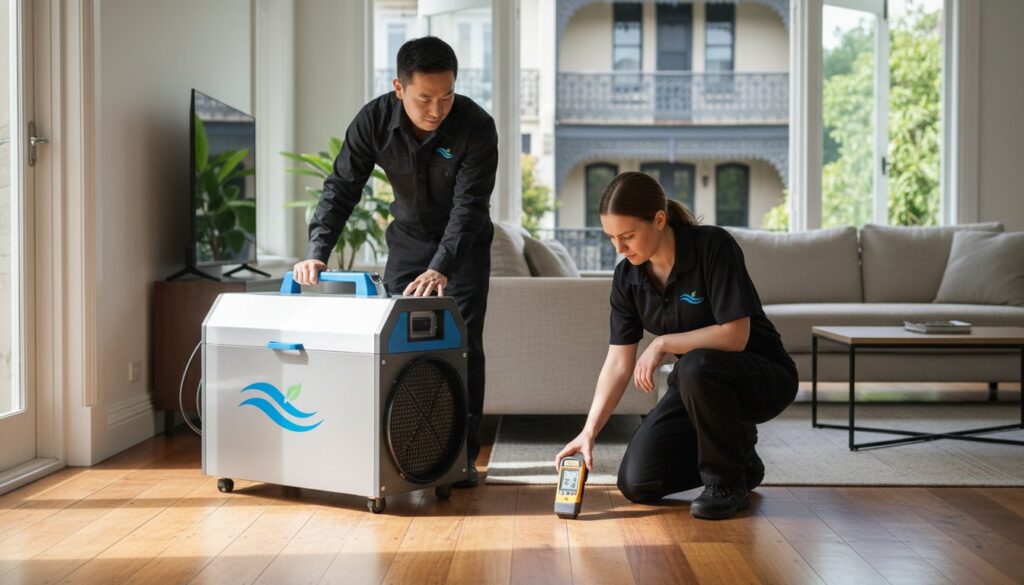
Did you know that 57% of all home insurance claims over the last five years were triggered by wild weather? In Sydney, a simple burst pipe or an overflowing fixture can quickly escalate into a $30,000 structural nightmare if you don’t act within the first 48 hours. It’s natural to feel anxious about structural safety and the looming threat of hidden mould growth while you’re waiting for contractors to return your calls.
You want a fair price and a dry home, not a list of hidden costs and confusing insurance jargon. This water damage restoration cost guide 2026 provides the transparency you need to make an informed decision today. We’ll break down the latest AS-IICRC S500:2025 industry standards, explain the critical difference between “water” and “flood” coverage, and show you how professional air scrubbing prevents expensive secondary damage. We’ll preview the specific factors that influence Sydney price estimates so you can hire a certified restorer with absolute confidence. Stop the damage now before it becomes a permanent health hazard for your family.
Key Takeaways
- Understand how Category 1 water degrades into a toxic biohazard within 48 to 72 hours, making immediate extraction vital for your safety.
- Use this water damage restoration cost guide 2026 to navigate Sydney price estimates for common scenarios like subfloor inundation and timber floorboard drying.
- Learn why professional air scrubbing is a non-negotiable step to stop airborne spores from turning a small leak into a $20,000 mould infestation.
- Discover the critical requirements of the AS-IICRC S500:2025 standard to ensure your insurance claim is supported by certified documentation.
- See how the Goldmorr System provides a faster, more effective way to eliminate contaminants while taking advantage of aggressive price-matching.
Understanding Water Damage Categories and Their Impact on Price
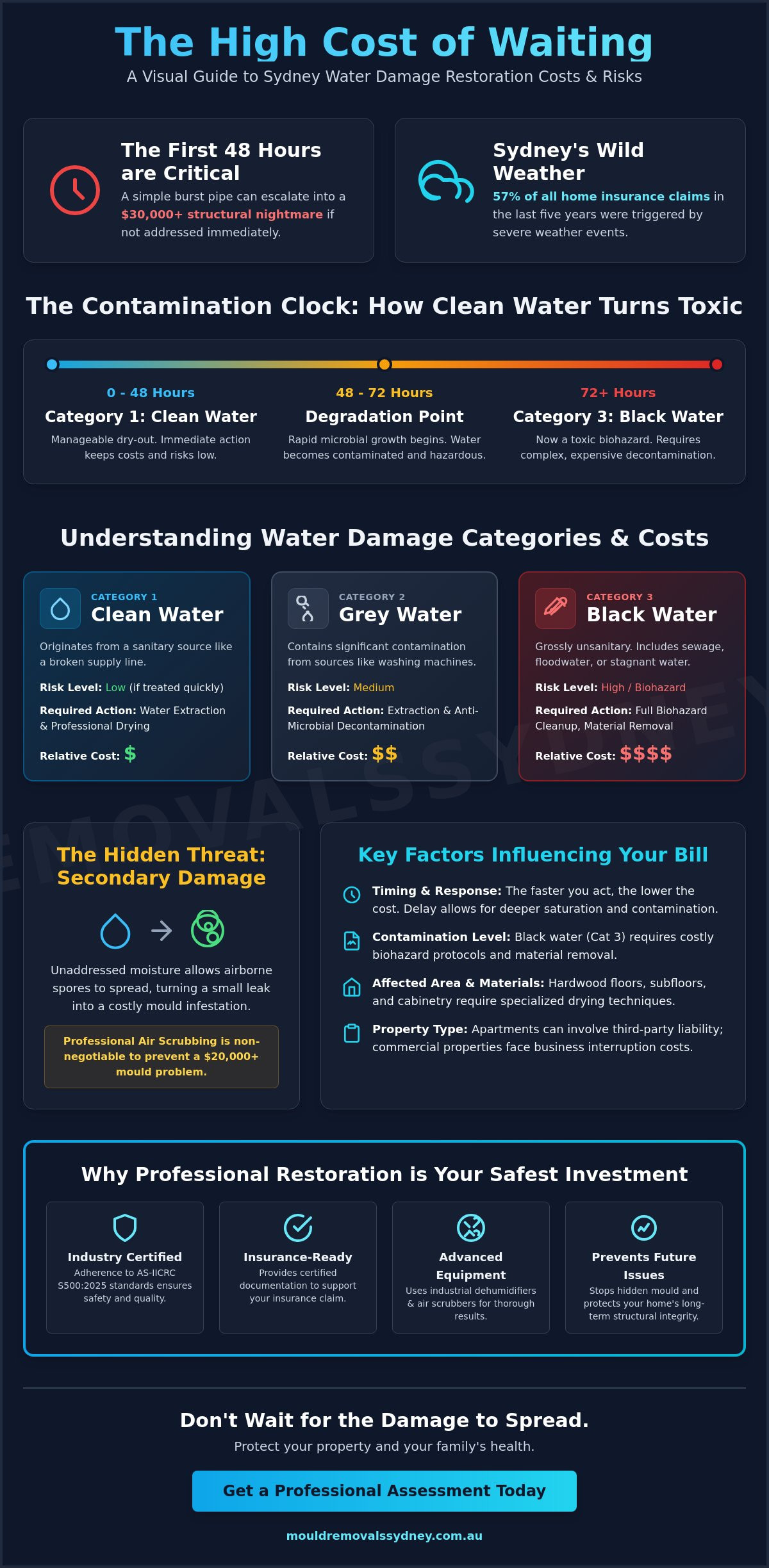
The price of your restoration isn’t just about the volume of water; it’s about what is in that water. According to the AS-IICRC S500:2025 standard, professionals classify jobs into three distinct Water Damage Categories. Category 1 involves clean water from a broken supply line. Category 2, often called grey water, contains significant contamination, such as washing machine discharge. Category 3, or black water, is highly unsanitary and includes sewage backflow or rising floodwater. In this water damage restoration cost guide 2026, we emphasize that contamination levels dictate every dollar spent on labour and specialized equipment.
Contamination levels have a direct correlation with labour hours. A Category 1 event might only require simple extraction and drying. However, 2026 health and safety regulations now dictate mandatory material removal for any biohazard event. This means porous materials like plasterboard and insulation must be stripped and disposed of if they contact Category 3 water. You aren’t just paying for drying; you’re paying for a controlled demolition and a rigorous decontamination process to ensure your property is safe for habitation.
Category 1 vs. Category 3: The Price Gap
The price gap between clean and black water is substantial. While clean water restoration focuses on moisture removal, black water requires full biohazard decontamination protocols. In New South Wales, Category 3 events often require an independent hygienist to provide a clearance certificate before the job is considered complete. This adds a layer of professional oversight that protects your health but increases the initial project scope. Furthermore, sewage backflow events can lead to a permanent increase in insurance premiums if the root cause isn’t addressed by a specialist. Professional restoration ensures the job is done to a standard that satisfies both health regulators and insurance adjusters.
The 48-Hour Window: Timing as a Cost Factor
Timing is the most significant variable in your final bill. When water sits, it doesn’t just stay on the surface. It begins “wicking” into structural timber, floorboards, and plasterboard through capillary action. This deep saturation requires more industrial dehumidifiers and longer run times to resolve. If you wait, you’re essentially paying for the water to travel deeper into your home’s skeleton. Category degradation occurs when stagnant Category 1 water transforms into hazardous Category 3 water within 48 to 72 hours due to rapid microbial growth. Don’t let a simple dry-out turn into a complex biohazard remediation. Acting within the first two days is the only way to keep your restoration costs manageable and your structural integrity intact.
2026 Cost Estimates for Water Damage Scenarios in Sydney
Sydney’s property market is diverse, ranging from heritage terraces to high-rise apartments. This means a one-size-fits-all estimate isn’t possible. This water damage restoration cost guide 2026 focuses on the variables that drive your final invoice. A subfloor-only event in a Marrickville cottage presents different logistical hurdles than a ground-floor inundation in a modern Cronulla home. While concrete slabs are generally more resilient, timber floorboards require specialized drying equipment to prevent permanent warping. Choosing the right approach early saves you from the massive expense of structural failure later.
Multi-storey apartment leaks carry a higher price tag due to third-party liability. If your washing machine floods, the water often migrates through the slab to the unit below. This requires double the equipment and increases the risk of structural damage to the building’s common areas. For commercial properties, the calculation shifts toward business interruption. Every day your office or shop is closed for drying represents a loss of revenue. Expert restorers prioritize rapid “Loss of Use” mitigation to get your doors open faster and minimize the total financial impact on your business.
Residential Price Guide by Affected Area
Restoring a single small room with carpet damage is the most straightforward scenario. However, full-house inundation requires a coordinated fleet of air movers and LGR dehumidifiers. Hardwood floors are a significant asset in many Sydney homes. Specialized drying mats can often save these floors from “cupping,” which is far more cost-effective than a total replacement. Kitchens and bathrooms present a different challenge. Water hides in the voids behind cabinetry and under kickboards. If these areas aren’t addressed with targeted airflow, they become primary breeding grounds for toxic mould.
Sydney-Specific Considerations: Terraces and Subfloors
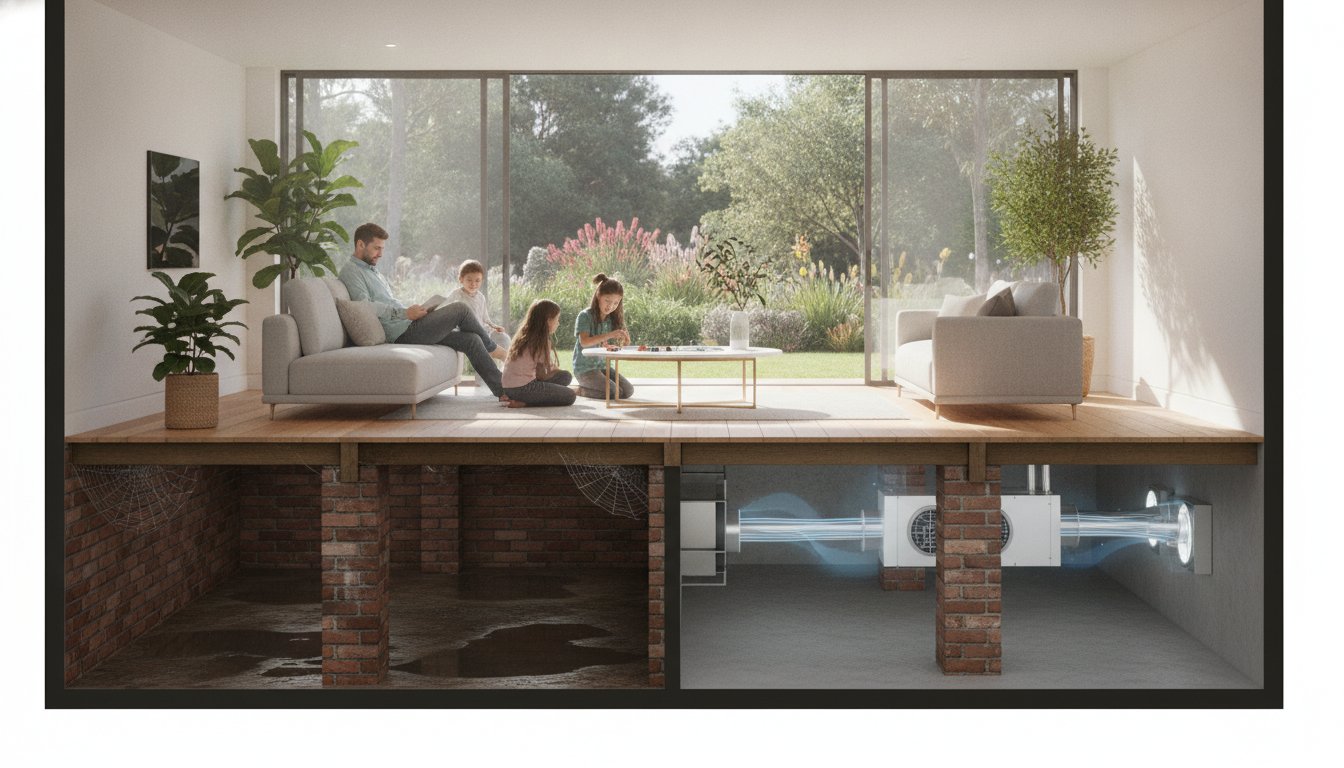
Sydney’s iconic terrace houses often suffer from poor subfloor airflow. These narrow, interconnected structures create moisture traps that traditional drying methods struggle to reach. Effective subfloor ventilation is essential to prevent rising damp and recurring fungal growth after a water event. Coastal NSW humidity also plays a role. High ambient moisture levels can extend the required dehumidification period by several days compared to inland regions. Understanding Flood Risk Management helps homeowners prepare for these environmental challenges. If you’re dealing with a complex moisture issue, a professional water damage assessment is the best way to determine your specific restoration needs.
The Hidden Costs: Air Purification and Secondary Mould Prevention
Focusing only on the visible water is a costly mistake many property owners make. While previous sections of this water damage restoration cost guide 2026 addressed liquid extraction and structural drying, the most insidious threat is often airborne. Air scrubbing is a non-negotiable requirement for Category 2 and 3 events. Without it, you’re allowing millions of microscopic spores to migrate throughout your property, contaminating unaffected rooms and your ventilation system. Professional air purification reduces the need for aggressive demolition by cleaning the environment before spores can settle on porous surfaces.
High-efficiency particulate air (HEPA) filtration serves as the backbone of a safe restoration project. These industrial-grade machines cycle the air in a room several times per hour, trapping 99.97% of particles down to 0.3 microns. This process maintains a habitable environment for your family and protects the building’s fabric from secondary contamination. Industry data suggests that failing to address air quality can cause a standard $2,000 dry-out to balloon into a $20,000 mould remediation project once spores colonize hidden structural cavities.
Air Scrubbing vs. Surface Cleaning
Wiping visible mould is a surface-level fix that ignores the root cause of the problem. When water evaporates, it carries contaminants into the air. Professional restorers use laser particle counters to measure airborne debris, ensuring the environment meets the safety benchmarks outlined in the IICRC S500:2025. Running industrial air scrubbers for 72 hours might seem like an added expense, but it’s a fraction of the cost of full-scale biohazard decontamination. Don’t settle for a “clean” surface when the air is still a health risk.
Preventing the “Mould After-Shock”
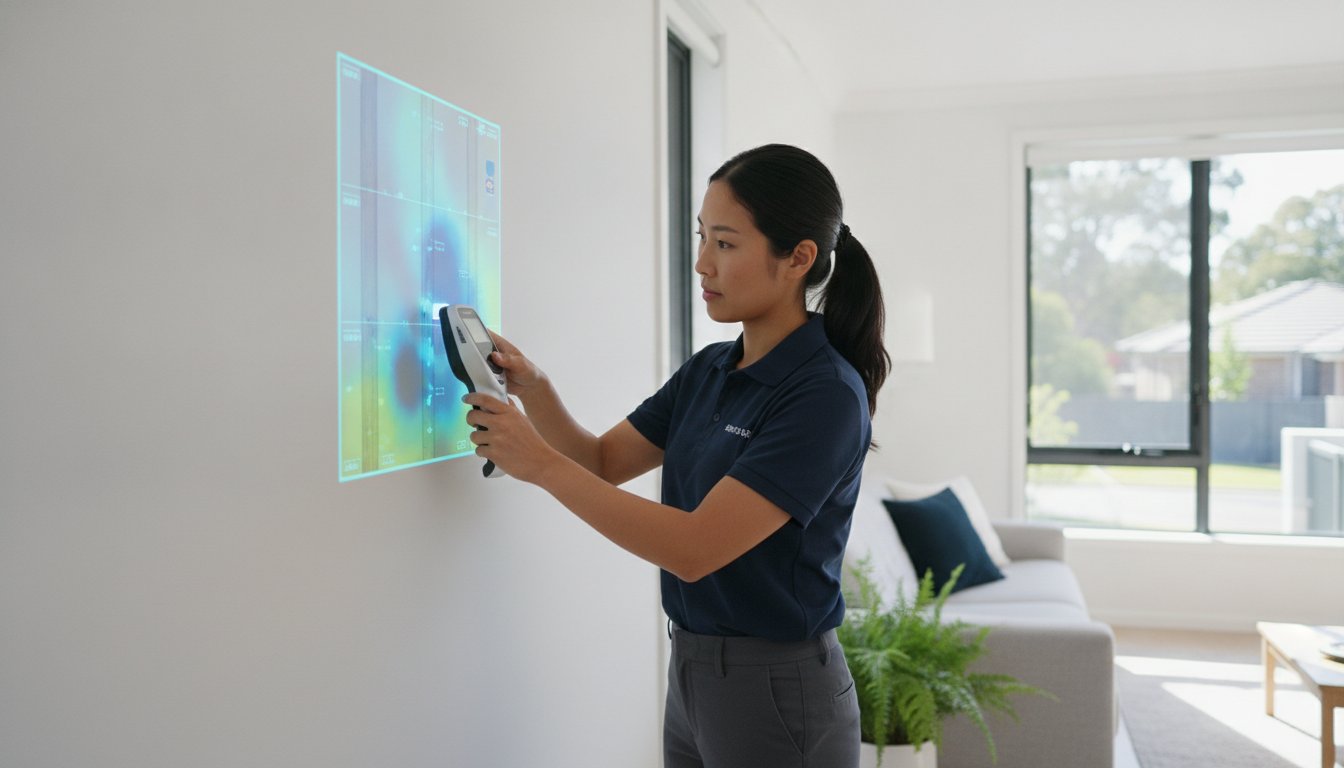
A “successful” dry-out that doesn’t include air purification often leads to a mould after-shock months later. Unresolved structural moisture and lingering spores are the primary drivers of black mould infestations. Our specialists use moisture mapping to identify hidden pockets of dampness behind walls and under floors. This data-driven approach ensures we only target affected zones, which saves you money while guaranteeing the problem won’t return when Sydney’s humidity rises. Consider these key factors to avoid long-term structural issues:
- Moisture Mapping: Using thermal imaging and moisture meters to find hidden water.
- Containment: Setting up physical barriers to prevent cross-contamination.
- Negative Air Pressure: Ensuring contaminated air is filtered before it leaves the work zone.
By investing in professional air scrubbing now, you’re securing your property against future infestations. It’s a pragmatic choice that prioritizes safety and protects your financial investment in the long run.
Navigating Insurance Claims and Australian Standards (IICRC S500:2025)
Understanding your policy is the first step toward financial recovery. In 2026, Australian insurers strictly define “Sudden and Accidental” as events that occur without warning, such as a burst flexi-hose or a failed appliance seal. If you’ve ignored a slow drip for months, your claim will likely be rejected under “gradual damage” exclusions. This water damage restoration cost guide 2026 highlights that the most thorough quote is often the safest for your wallet. “Cheap” quotes from non-certified contractors frequently skip the documentation required to validate building fabric safety, leading to rejected claims and out-of-pocket expenses.
Insurers require evidence-based reports to release funds. Professional restorers provide a comprehensive documentation package, including thermal imaging to reveal hidden moisture and psychrometric charts to prove the drying environment is controlled. Recent 2026 rulings from the Australian Financial Complaints Authority (AFCA) show that claims are more likely to be upheld when policyholders can provide professional moisture logs. Don’t gamble with your biggest asset by settling for a verbal estimate. Demand a scope of work that meets the rigorous demands of modern insurance adjusters.
IICRC S500:2025: The Gold Standard
The AS-IICRC S500:2025 is the official benchmark for professional water damage restoration in Australia. Your restorer must follow these protocols to ensure structural drying is scientifically verified. Following this standard protects your property’s future saleability by preventing structural rot and hidden biohazards. Many homeowners don’t realize that unauthorised DIY repairs or using uncertified “handymen” can actually void your insurance policy. Professional intervention ensures every step, from extraction to final clearance, is legally and technically defensible.
How to Get Your Claim Approved Faster
Speed is essential for both your home’s health and your insurance assessment. Use our streamlined digital inquiry process to accelerate your claim. By submitting high-quality photos and videos of the damage via your mobile device, you provide the immediate visual evidence adjusters need to fast-track your case. Working with Sydney-based experts who understand local insurer requirements ensures your documentation is formatted correctly the first time. For immediate steps to take while waiting for an assessor, refer to our water damage repair emergency guide. If you need a professional to document the damage and begin the drying process immediately, book a water damage restoration assessment today.
Why Professional Restoration with ABC Mould Cleaning Solutions is Your Safest Investment
Choosing the right restoration partner is the final and most critical step in managing your property’s recovery. This water damage restoration cost guide 2026 has detailed the risks of delay and the complexities of insurance. Now, you need a solution that prioritizes both your health and your budget. ABC Mould Cleaning Solutions offers a systematic, evidence-based approach that goes beyond simple water extraction. We don’t just dry your floors; we restore your environment to a laboratory-tested standard of safety. Our comprehensive methodology ensures every project follows a strict path to resolution:
- Detailed Inspection: Identifying the exact moisture boundaries using advanced thermal imaging.
- Rapid Extraction: Removing standing water immediately to stop category degradation.
- Environment Purification: Deploying our industrial air scrubbing fleet to capture airborne pathogens.
- Long-term Prevention: Implementing subfloor solutions to ensure the damage never returns.
We understand that cost is a major concern for Sydney property owners. To provide total financial peace of mind, we offer a bold, competitive promise. We will beat any written quote for a comparable professional scope by 10%. This ensures you receive the highest level of technical expertise without overpaying for essential services. Our focus remains entirely on solving your issue quickly and effectively, allowing you to return to your normal life with confidence.
The Goldmorr Advantage: Faster, Safer, Better
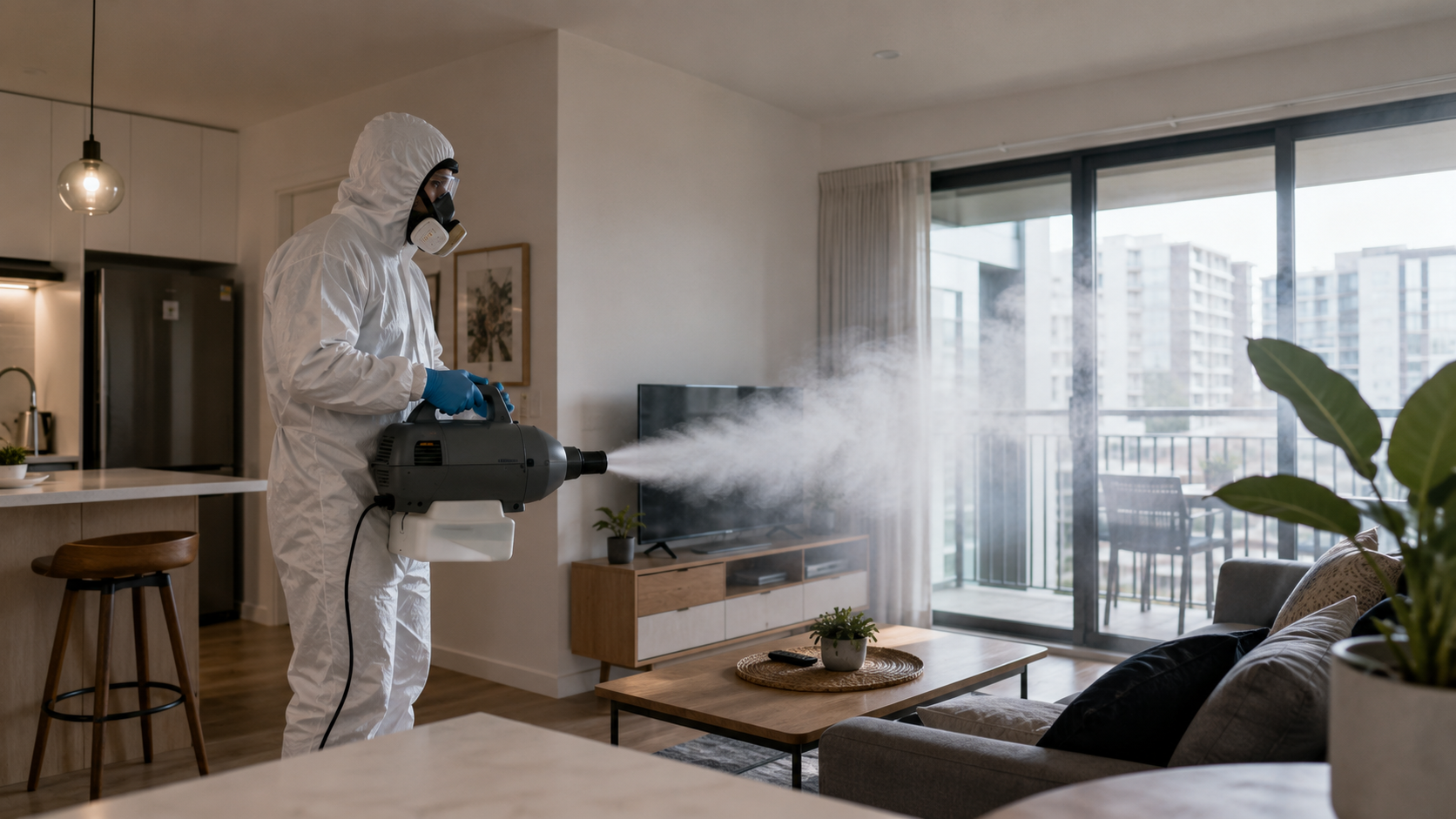
The cornerstone of our expert identity is the Goldmorr System. This proprietary methodology allows us to eliminate airborne spores and surface contaminants simultaneously without the need for invasive, expensive structural teardowns. Our specialized fogging process utilizes biodegradable products that are completely safe for your family, your pets, and the delicate Sydney environment. The Goldmorr System targets unseen contaminants by utilizing a specialized mist that penetrates porous materials and neutralizes spores on contact. By opting for this non-invasive technology, you significantly reduce the labour hours and material replacement costs associated with traditional restoration methods.
Sydney’s Local Experts in Water and Mould
Living in coastal NSW presents unique challenges for property maintenance. Our team consists of highly trained specialists who understand how local humidity levels and architectural styles, like heritage terraces, impact moisture retention. We maintain a 24/7 emergency response fleet for the Sydney and Greater NSW region because we know that every hour counts. Our specialized air purification equipment is ready to deploy at a moment’s notice to secure your building’s fabric. Don’t let a water event turn into a permanent health hazard for your occupants. Request your urgent, no-obligation mould removal sydney assessment today and let our experts restore your peace of mind. We’ll handle the technical details so you can focus on what matters most.
Secure Your Property and Budget Today
Water damage doesn’t wait for a convenient time to strike. You now understand that the first 48 hours are critical to prevent clean water from degrading into a toxic biohazard. By following the standards outlined in this water damage restoration cost guide 2026, you can navigate the insurance process with confidence and avoid the massive financial burden of unresolved structural moisture. Professional drying is a pragmatic investment in your home’s long-term safety and your family’s health.
Our team of IICRC Certified Technicians is ready to help you recover. We utilize the specialized Goldmorr System fogging to eliminate hidden contaminants without the need for invasive structural teardowns. Our bold Sydney price-match guarantee ensures you receive elite technical expertise at the most competitive rate in the market. Don’t let moisture compromise your property’s value any longer.
Get an Urgent Water Damage Assessment & Quote
Take the first step toward a dry, safe, and healthy environment today. We’re committed to making your restoration journey straightforward and successful.
Frequently Asked Questions
How much does water damage restoration cost in Sydney in 2026?
Costs vary significantly based on the volume of water and the contamination category involved. A minor leak in a single room is relatively manageable, but a full-house inundation requiring structural drying and air purification involves a much larger scope. This water damage restoration cost guide 2026 emphasizes that the final price is driven by the number of industrial dehumidifiers required and the total labour hours needed to meet AS-IICRC S500:2025 standards.
Does my home insurance cover the cost of water damage restoration?
Most standard Sydney home insurance policies cover restoration costs for sudden and accidental events like burst pipes or appliance failures. Insurers typically exclude damage caused by gradual leaks or a lack of maintenance. It is vital to review your Product Disclosure Statement (PDS) to confirm if you have specific flood cover, as this is often a separate add-on from standard water damage coverage.
How long does the water damage restoration process typically take?
A standard structural drying project usually takes between three to five days to reach the dry standard. This timeline depends on the building materials involved; for instance, timber floorboards and internal wall cavities often require more time than concrete slabs. We use moisture meters and thermal imaging to monitor progress daily, ensuring we don’t remove equipment until the building fabric is scientifically verified as dry.
Can I dry out water damage myself to save money?
Attempting a DIY dry-out often leads to much higher costs later due to hidden moisture and secondary mould growth. Household fans and retail dehumidifiers lack the power to extract moisture from deep within structural timber or plasterboard. Professional equipment is essential to create the specific vapor pressure needed to pull water out of building materials before it causes permanent structural rot.
What is the difference between water extraction and structural drying?
Water extraction is the physical removal of standing liquid, while structural drying is the scientific process of removing moisture trapped inside building materials. Extraction is just the first step. Structural drying involves controlling temperature, airflow, and humidity to ensure the wicked moisture in your walls and floors evaporates safely. Without professional structural drying, your home remains at extreme risk for fungal colonization.
Will water damage always lead to mould growth?
Mould growth is almost certain if damp materials are not professionally dried within 24 to 48 hours. Fungal spores are naturally present in the air and only need a moisture source and an organic food source, like plasterboard or timber, to thrive. Using this water damage restoration cost guide 2026 as a reference, you can see that early intervention with air scrubbing is the only reliable way to prevent a major infestation.
Is Category 3 water damage really a health biohazard?
Yes, Category 3 water, or black water, contains significant pathogens and is a serious health threat. This category includes sewage backflow and rising floodwaters that carry bacteria, viruses, and parasites. Professional restoration for Category 3 events requires rigorous biohazard decontamination protocols and the removal of all porous materials to ensure the property is safe for occupants to return.
How do I know if my subfloor needs professional drying?
If you notice musty odours, cupping floorboards, or visible dampness on your foundation walls, your subfloor likely requires urgent attention. Sydney’s terrace houses and older cottages often have poor subfloor ventilation, which traps moisture and encourages rot. We use specialized moisture probes to assess these confined spaces, as unresolved subfloor dampness can eventually compromise the entire structural integrity of your home.