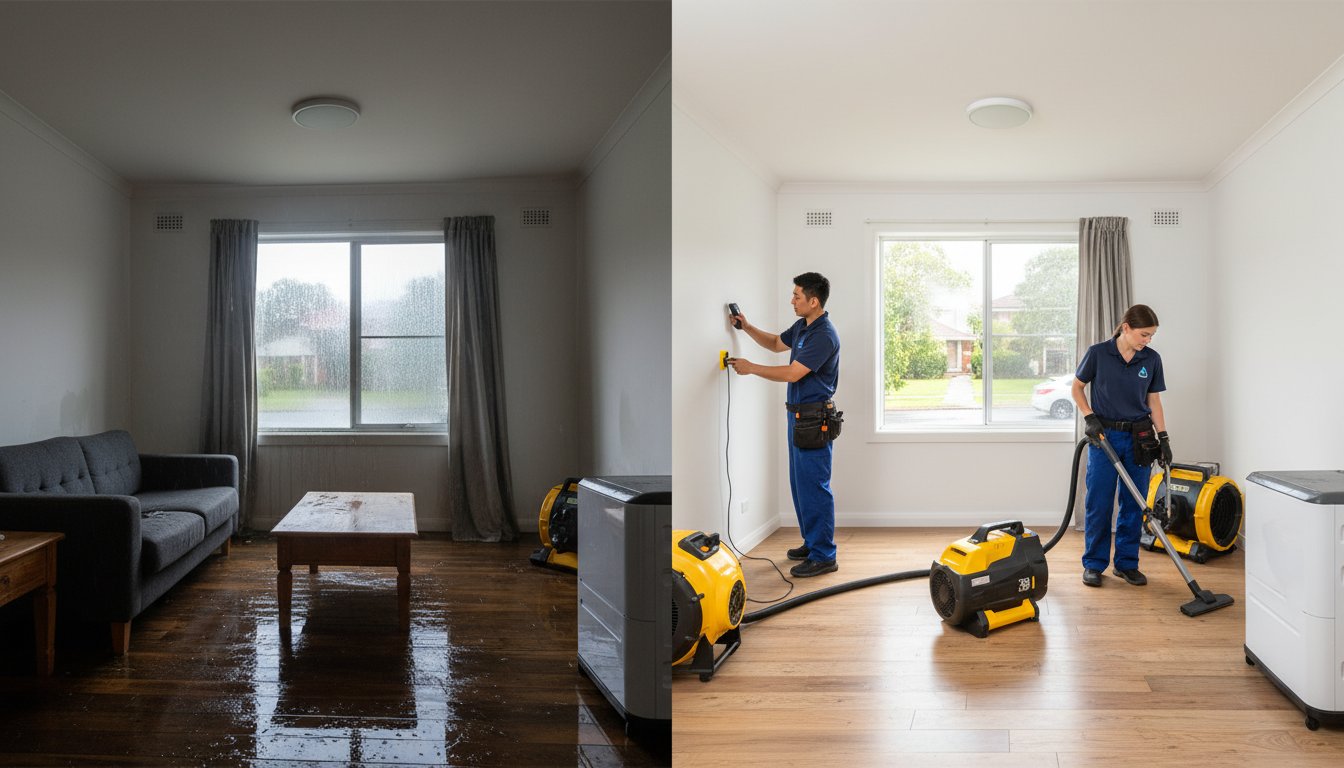
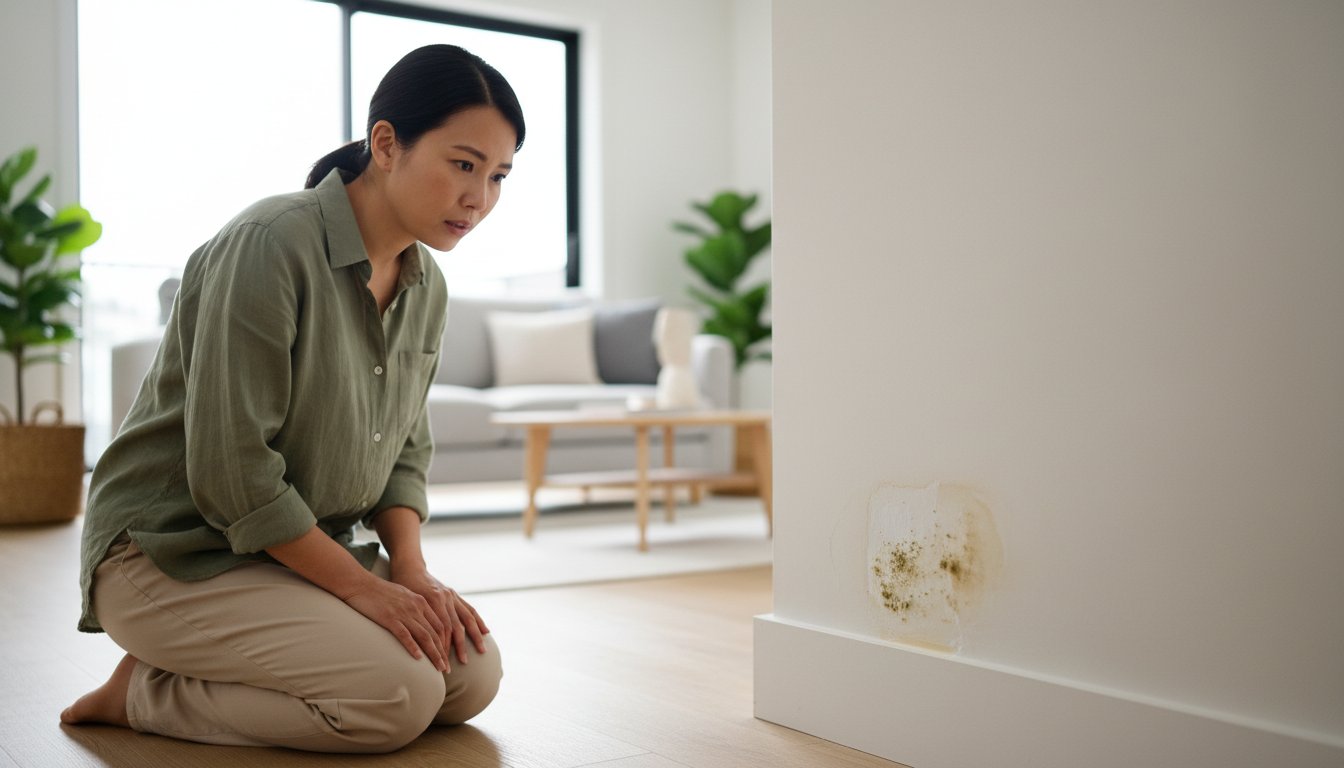
That persistent musty smell you can’t quite place. The nagging cough that seems to get worse when you’re at home. A discoloured patch of wall you hope is just a simple stain. These subtle clues are often the first, and most ignored, signs of mould in your house. Waiting until the problem worsens is not an option-because it will. Mould can quickly compromise not only your property’s structure but also your family’s health, turning a small concern into a significant, expensive problem.
You don’t have to live with the uncertainty. This essential guide is designed to give you peace of mind by empowering you with expert knowledge. We will walk you through the 10 key indicators of a mould infestation, covering everything from visual evidence and distinct odours to the surprising health symptoms you might be experiencing. You’ll learn to confidently identify a problem, understand the next steps, and know exactly when to call for professional mould remediation. It’s time to get clear answers and ensure your home is safe.
Key Takeaways
- Mould isn’t always black. Learn to spot the subtle visual cues like water stains, bubbling paint, and discolouration that often appear before visible growth.
- Trust your nose. A persistent musty or earthy smell is a clear warning that mould could be growing, even if it’s hidden from sight.
- Don’t dismiss persistent allergy symptoms. This guide explains how your health can reveal some of the most important signs of mould in your house.
- Found mould? Acting quickly is critical. Discover the first professional steps you must take to contain the problem and protect your property.
What You Can See: The Top Visual Signs of Mould
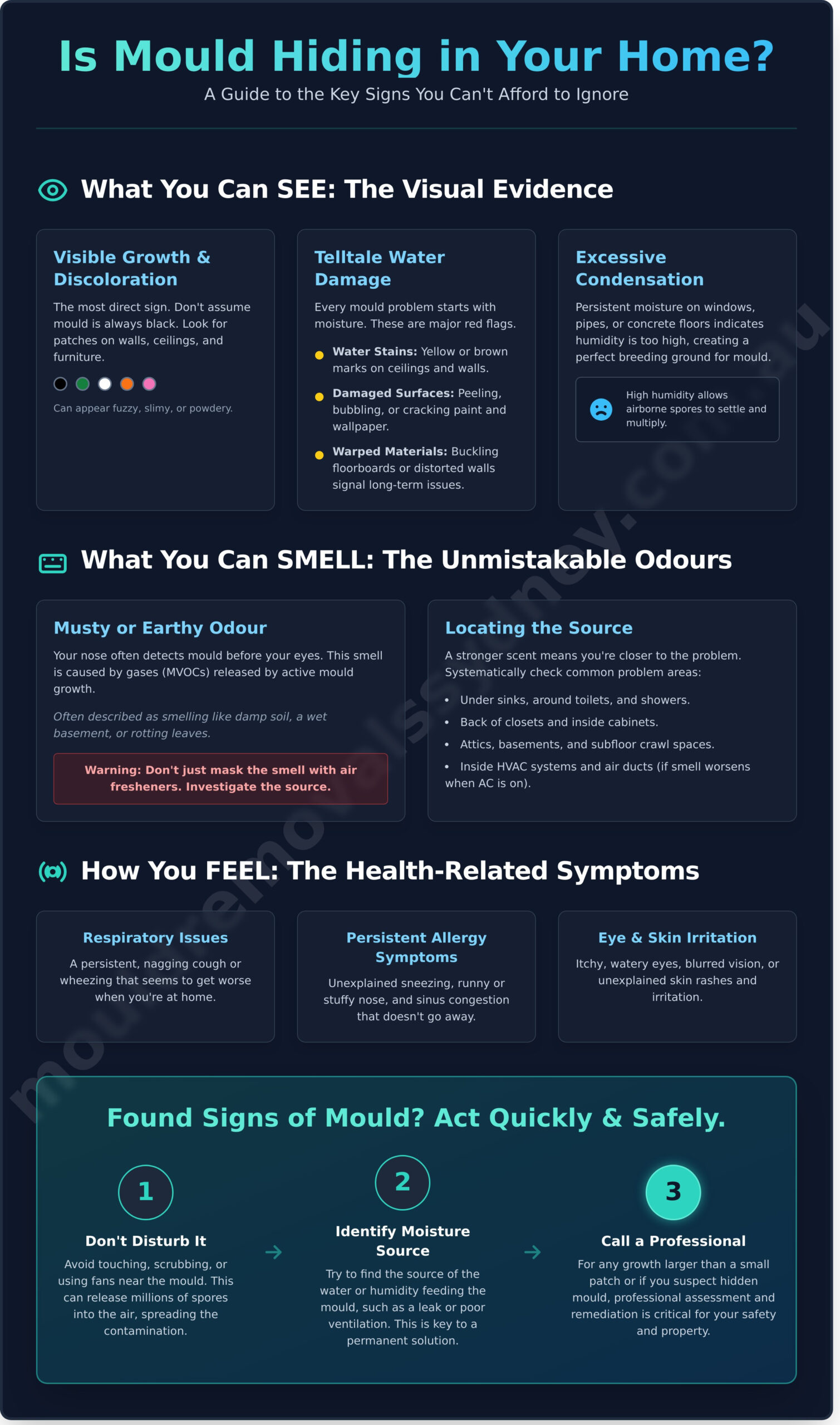
When searching for the first signs of mould in your house, it’s crucial to know that you aren’t just looking for black spots. Mould can appear in a wide range of colours and textures, but often, the first warning sign isn’t the mould itself. Instead, it’s the evidence of the water damage that allows it to grow. Every mould problem begins with a moisture problem, so pay close attention to high-risk areas like bathrooms, kitchens, laundries, and basements where water and humidity are common.
Visible Spots and Discolouration
The most direct sign of a mould infestation is seeing it. Keep an eye out for patches of discolouration on walls, ceilings, or furniture. These spots can be black, green, white, or even orange and pink. The texture can also vary, appearing fuzzy, slimy, or powdery. Be sure to check corners of rooms, behind large furniture, and on window sills where air circulation is poor. Never ignore small spots; they can be the tip of the iceberg, indicating a much larger, hidden problem behind the wall or under the floor.
Telltale Signs of Water Damage
Water damage is mould’s welcome mat. If you see signs of moisture, a mould problem is likely to follow if not addressed immediately. Key indicators include:
- Water Stains: Yellow or brown discolouration on walls or ceilings is a major red flag.
- Damaged Surfaces: Look for peeling, bubbling, or cracking paint or wallpaper. These often mean moisture is trapped behind the surface.
- Warped Materials: Buckling floorboards or warped walls signal a significant and potentially long-term moisture issue that needs expert attention.
Understanding the link between water damage and fungal growth is critical. For a comprehensive overview of indoor mould and its causes, it’s clear that controlling moisture is the first step in prevention.
Excessive Condensation
Persistent condensation on your windows, mirrors, metal pipes, or concrete floors is more than just an annoyance-it’s a warning. This moisture buildup indicates that the humidity levels inside your home are too high. This high-humidity environment creates the perfect breeding ground for airborne mould spores to land, settle, and multiply. Even if you can’t see any visible growth yet, constant condensation is a clear sign that conditions are ideal for a mould outbreak to begin.
What You Can Smell: Identifying Mould by Its Odour
Often, your sense of smell will detect a mould problem long before you see any visible growth. This is one of the most common and reliable signs of mould in your house. That persistent, unpleasant odour is not just a sign of dampness; it’s a direct result of the mould’s metabolic process. As mould grows and digests organic material, it releases gases known as Microbial Volatile Organic Compounds (MVOCs).
This distinct smell is a warning signal that mould is actively growing, feeding, and releasing spores into your air. Don’t make the mistake of masking the odour with air fresheners or candles. This only hides the problem and allows it to worsen. You must investigate the source to protect your property and your health.
The Unmistakable Musty or Earthy Smell
The odour produced by mould is often described as musty, stale, or earthy-similar to the smell of damp soil or rotting leaves in a forest. You might notice it smells like a wet basement or a pile of damp towels that have sat for too long. This smell will almost always be stronger in enclosed areas with poor ventilation, such as closets, bathrooms, or unventilated subfloor areas.
Pay close attention to your air conditioning. If the musty smell intensifies when you turn on your AC or heating system, it’s a major red flag that mould could be growing inside your air ducts. Trust your nose-if a room or area in your home consistently smells ‘off’ or damp, it warrants an immediate and thorough investigation.
Locating the Source of the Odour
Once you’ve detected a mouldy smell, the next step is to play detective and pinpoint its origin. A stronger scent is a clear clue that you are close to the hidden mould source. A systematic search is the most effective approach.
Start by checking the most common problem areas where moisture can accumulate unnoticed:
- Wet Areas: Look under sinks in the kitchen and bathroom, inside vanities, and around the base of toilets and showers.
- Storage Spaces: Inspect the back of closets, inside built-in wardrobes, and in storage cabinets, especially those against exterior walls.
- Major Structural Zones: If accessible, check your attic, basement, and any subfloor crawl spaces, as these are prime locations for widespread mould growth.
Once you’ve identified a potential source, it’s critical to proceed safely. For minor issues, following official mould cleanup guidance is a useful reference, but any significant contamination poses serious risks and requires a professional assessment from certified technicians.
How You Feel: Physical and Health-Related Mould Symptoms
Beyond the visible stains and musty odours, one of the most serious signs of mould in your house is how it affects your health. Mould releases microscopic spores into the air, which can be inhaled and trigger a wide range of physical symptoms, especially in sensitive individuals. These reactions are often mistaken for seasonal allergies or a persistent cold that just won’t go away. As outlined in the comprehensive New York State Department of Health guide on mold, exposure can lead to significant health effects.
A crucial clue is if you notice your symptoms improving when you leave the house and worsening when you return. This strongly suggests an environmental trigger inside your home. Don’t wait for the problem to get worse-because it will.
Disclaimer: This information is for educational purposes only and is not a substitute for professional medical advice. Please consult a doctor for any health concerns.
Persistent Allergy-Like Symptoms
Does it feel like you are battling hay fever all year round, but only indoors? Your body might be reacting to airborne mould spores. These symptoms often persist despite the season and may not respond to typical allergy medication. Look out for:
- Constant sneezing, coughing, or a runny/blocked nose
- Itchy, red, or watery eyes without another clear cause
- Unexplained skin irritation or rashes
Respiratory Issues and Worsening Asthma
Mould spores are known irritants that can directly impact the respiratory system. For those with asthma or other respiratory conditions, a mouldy environment is particularly dangerous and can lead to a significant decline in health. Key indicators include:
- Difficulty breathing or a feeling of tightness in your chest
- Wheezing or an increase in the frequency or severity of asthma attacks
- A nagging, persistent dry cough, which may be worse at night
Unexplained Headaches and Fatigue
Feeling constantly drained or foggy at home? While less common, some individuals are more sensitive to the mycotoxins produced by certain types of mould. This can lead to neurological symptoms that are difficult to diagnose without identifying the root cause in your environment.
- Frequent headaches or migraines with no other obvious trigger
- Feeling unusually tired, lethargic, or rundown at home
- Difficulty concentrating, often described as ‘brain fog’
Listening to your body is critical. If these health issues are a daily reality, it’s a strong signal that you need a professional assessment. Your well-being is paramount, and a professional mould inspection from ABC Mould Cleaning Solutions can provide the peace of mind you need. Contact our expert team today.
You’ve Found Signs of Mould. What Should You Do Next?
Discovering mould in your home can be alarming, but don’t panic. Acting quickly and correctly is the key to protecting your property and your family’s health. Your immediate priority is to contain the issue and prevent mould spores from spreading. While it might be tempting to start scrubbing, the wrong approach can make the situation much worse. Follow these critical steps to handle the problem safely and effectively.
Step 1: Don’t Disturb the Mould
Your first instinct might be to touch or wipe the mould, but this is the worst thing you can do. Disturbing a mould colony, even slightly, can release millions of microscopic spores into the air. These airborne spores can travel throughout your home, starting new colonies in other areas and compromising your air quality. Avoid scrubbing, running fans, or aiming your HVAC system at the affected area. If possible, close the door to the room to isolate it from the rest of the house.
Step 2: Find and Control the Moisture Source
Mould cannot survive without moisture. Simply cleaning the visible growth without addressing the underlying water problem is a temporary fix-the mould will always return. It is crucial to identify and stop the source of the moisture. Look for the most common culprits:
- Leaking pipes under sinks, behind walls, or in the ceiling.
- Roof or window leaks, especially after heavy rain.
- Poor ventilation in bathrooms and laundries, leading to high humidity.
- Condensation on walls or windows in under-ventilated rooms.
Fix any leaks immediately, use exhaust fans during and after showers, and consider a dehumidifier for damp basements or rooms. Once the moisture is controlled, you can address the mould itself.
Step 3: Know When to Call a Professional
DIY solutions are often ineffective and can be hazardous for significant infestations. It’s time to call a certified mould remediation expert if you encounter any of the following signs of mould in your house:
- The affected area is larger than one square metre.
- The mould returns after you have cleaned it yourself.
- You suspect mould is hidden within your walls, ceiling, or HVAC system due to a persistent musty odour.
- A household member is experiencing respiratory issues or allergic reactions.
A professional team has the specialised equipment and safety protocols to eliminate mould for good. For a fast and accurate assessment, send us a photo for a free, no-obligation quote. It’s that simple.
Your Next Step to a Mould-Free Home
Recognising the danger signs of mould goes beyond what you can see. A persistent musty odour or unexplained allergy symptoms are critical indicators that demand immediate attention. Ignoring these early signs of mould in your house allows the problem to spread, posing serious risks to your property and your family’s well-being.
You don’t have to face this problem alone. As Sydney’s trusted local experts in mould remediation, we provide a definitive, professional solution. Our technicians use the industry-leading, safe Goldmorr System to eliminate mould at its source and restore your peace of mind. We are so confident in our affordable service that we guarantee to beat any written quote by 10%.
Don’t wait for mould to worsen. Call our experts for a free quote today!
Take action now to protect your property and breathe easy in a safe, healthy home again.
Frequently Asked Questions About Mould
What are the very first signs of mould in a house?
The earliest signs of mould in a house are often sensory. You might notice a persistent musty or earthy smell, particularly in damp or poorly ventilated areas like bathrooms, laundries, and under sinks. Visually, look for small, discoloured spots on walls, ceilings, or grout. These can be black, green, or white. Other subtle clues include peeling wallpaper or bubbling paint, indicating a hidden moisture problem that is feeding mould growth.
Can you smell mould even if you can’t see it?
Yes, absolutely. That distinct musty odour is one of the most reliable indicators of mould, even when there is no visible growth. This smell is caused by microbial volatile organic compounds (MVOCs) released as the mould grows and spreads. If you can smell it, mould is present somewhere. It is often the first warning of a hidden problem behind walls, under floorboards, or in ceiling cavities that requires professional investigation.
What health problems are signs of mould exposure?
Mould exposure can trigger a range of health issues, especially for sensitive individuals. Common signs are allergy-like symptoms: persistent coughing, sneezing, a runny or blocked nose, itchy eyes, and skin rashes. For those with asthma, it can worsen attacks. More prolonged exposure can lead to serious problems like respiratory infections, shortness of breath, headaches, and chronic fatigue. Protecting your family’s health is a key reason to address mould immediately.
How can I tell the difference between mould and just dust or dirt?
Mould is a living organism that often appears in clusters or patches with a fuzzy or slimy texture. Dirt and dust are typically grey or brown, lie flat on a surface, and can be easily wiped away without leaving a stain. A simple test is to apply a dab of diluted bleach with a cotton bud. If the spot lightens or disappears after a few minutes, it’s likely mould. If it just smudges, it’s probably dirt.
Is it safe to live in a house with signs of mould?
No, it is not considered safe. Living with mould poses serious health risks, from allergic reactions to severe respiratory problems, and can be particularly harmful to children and the elderly. It also signals an underlying moisture issue that can cause significant structural damage to your property over time. For the safety of your family and the integrity of your home, any signs of mould in your house should be dealt with by a professional as an urgent priority.
How do professionals test for mould inside walls?
Certified technicians use advanced, non-invasive technology to detect hidden mould. We often start with moisture meters and thermal imaging cameras to identify damp areas inside walls where mould thrives without causing damage. If necessary, we can perform air quality testing to measure airborne spore counts. For definitive confirmation, a small, discreet opening may be made to use a borescope for visual inspection or to take a direct sample for lab analysis.
What’s the difference between mould and mildew?
Mildew is a specific type of surface mould. It typically appears as a flat, powdery patch that is white or grey and is common on bathroom grout or window sills. Mould, on the other hand, is often fuzzy or slimy and can be a range of colours, including black, green, or blue. Crucially, mould can penetrate deep into surfaces like drywall and wood, causing more significant structural damage. Both are fungi and require professional remediation to be eliminated safely.