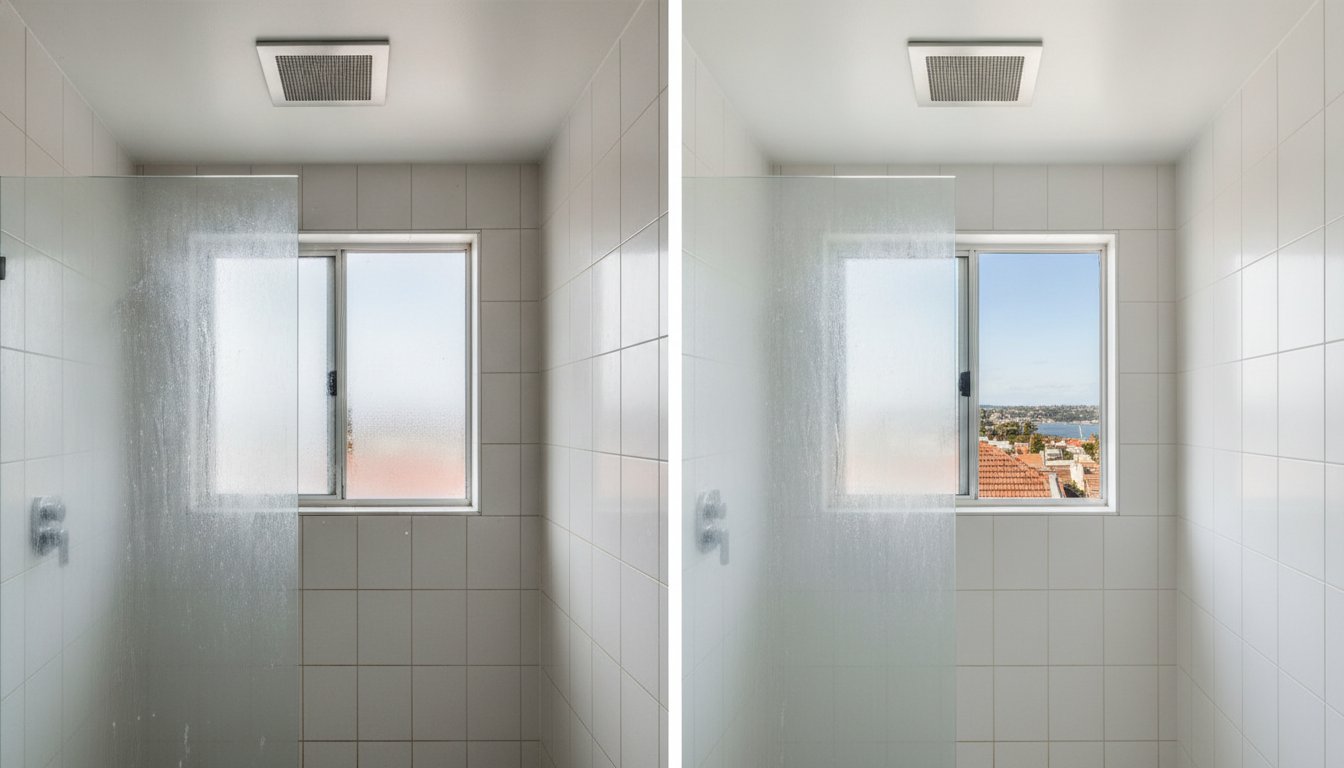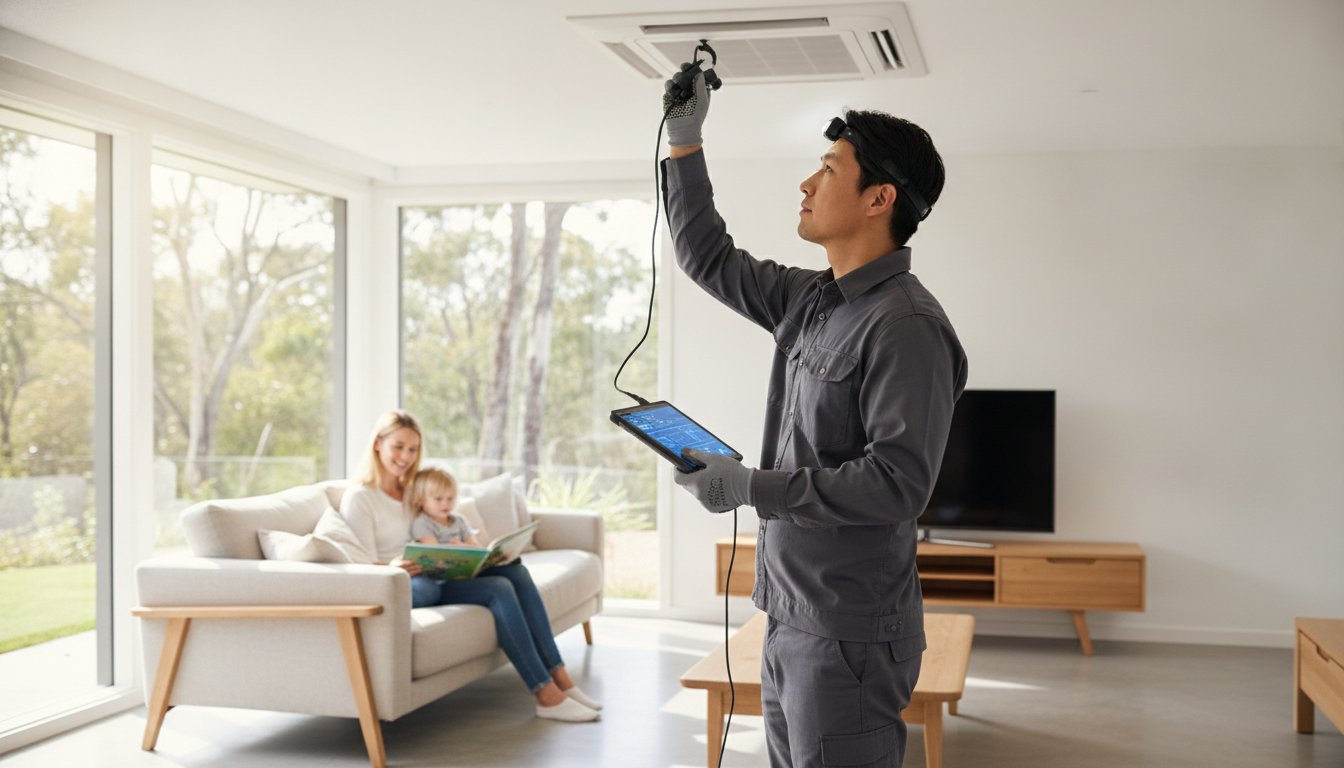
Mould returns because the source was never treated. Surface cleaning removes what’s visible, but spores embedded in plaster, grout, and the surrounding air stay active. When humidity rises again, and in Sydney’s coastal climate it does so reliably, the colony re-establishes exactly where it was before. The patch comes back. The cycle repeats.
Key Takeaways
• Mould recurrence is a spore load problem, not a cleaning problem. Treating visible surfaces leaves the airborne reservoir completely untouched.
• Sydney apartments are particularly prone to recurring mould because sealed floor plans and shared plumbing stacks trap moisture faster than it can escape.
• The Goldmorr System uses non-mechanical fogging to neutralise airborne spores that no cloth, brush, or surface spray can physically reach.
• Apartments are typically faster to treat than houses, meaning the job is often completed in a single visit with minimal disruption.
• Getting a quote is simple: call, send photos of the affected areas, get a price. No on-site inspection is needed to get started.
Why Does Mould Always Come Back After Cleaning?
The short answer is that most cleaning methods address the visible growth but leave the spore reservoir intact.
When you clean mould from a bathroom ceiling or bedroom wall, you’re removing the fruiting body, the visible colony. But the spores embedded in plaster, grout, and the surrounding air stay viable. The moment humidity climbs back to the level mould needs, which in Sydney’s warm coastal climate happens regularly through summer and into autumn, the colony re-establishes from the same source.
The surface is the symptom. The air is the source.
This is why the cycle is so predictable: clean, short dormant period, regrowth. Each cycle tends to be shorter than the last because the underlying spore density compounds with each generation. Mould recurrence isn’t a cleaning failure. It’s a method failure. The approach was never designed to address the actual cause.
If you’ve had a previous treatment done and mould has returned, getting a second opinion on mould remediation is more common than most residents expect, and it’s a clarifying step worth taking.
Is DIY Treatment Making the Problem Worse?
In many cases, yes, and the reason isn’t subtle.
Physically scrubbing a mould colony with a brush or cloth disturbs the growth and releases a concentrated burst of spores into the air. The ambient spore count in the room spikes at the moment of disturbance. Without a contained remediation process, those spores travel, settle on new surfaces, and begin establishing new colonies within hours. You’ve addressed one spot and seeded several others.
Consider a common scenario: a resident notices mould on a bathroom ceiling and treats it twice with a supermarket spray, then paints over it. Weeks later, the mould pushes back through the paint. The paint layer trapped moisture and organic material beneath it, creating near-ideal conditions for the colony to re-establish from the spore load still present in the plaster. That’s not bad luck. It’s the predictable outcome of treating the symptom without attending to the cause.
Off-the-shelf products are formulated for surface suppression. They don’t penetrate porous materials, they don’t address the moisture conditions that made the surface hospitable, and they don’t reduce the airborne spore load in the room. Stopping mould growth on walls permanently requires a fundamentally different approach, one that starts with the moisture source and works outward.
What Makes the Goldmorr System Different?
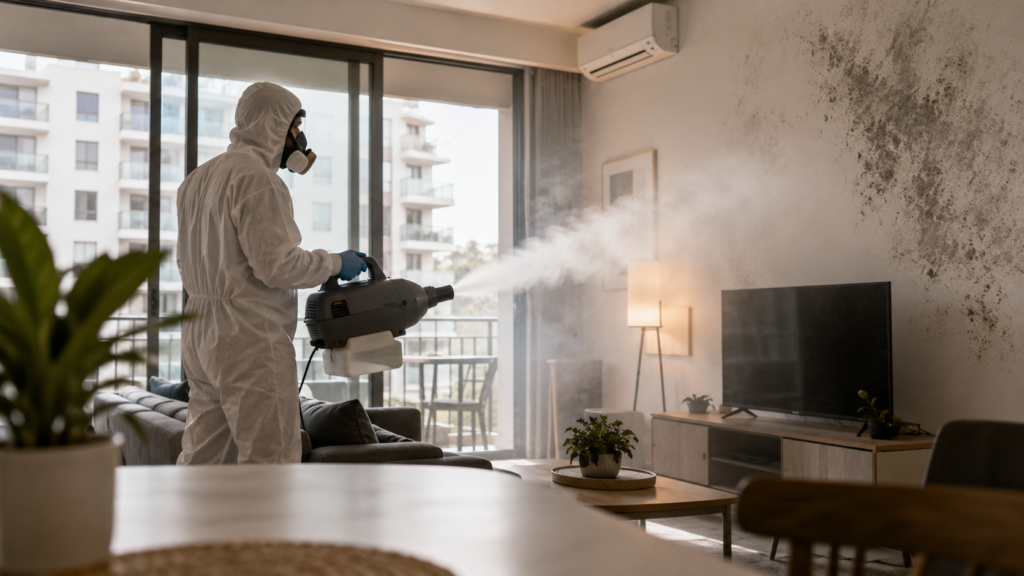
The Goldmorr System is a non-mechanical fogging methodology, and that distinction matters more than it sounds.
Standard mould treatment is contact-dependent. Product is applied to visible surfaces, and the treatment reaches only where the applicator does. The Goldmorr approach treats the room’s air volume as the primary target. Product is dispersed as a fine aerosol that stays suspended long enough to contact and neutralise airborne spores, including the ones no cloth or spray can reach because they’re not sitting on a surface at all.
Most of the active spore load in a space with established mould isn’t on the wall. It’s airborne, or embedded in soft materials like curtains, carpet, upholstered furniture, and mattresses. Standard surface treatments leave all of that untouched.
ABC Mould Cleaning Solutions are approved master technicians certified in the Goldmorr System. The Goldmorr methodology has been in documented professional use since 1998, and the products are biodegradable and formulated for residential and commercial environments. There’s no requirement to vacate for extended periods, which matters practically in apartments and occupied offices where disruption needs to be minimised.
One honest note: the Goldmorr System addresses mould and airborne spore load comprehensively. But if the moisture source driving the mould, whether that’s a structural damp issue, a failed damp-proof course, or inadequate subfloor ventilation, isn’t identified and resolved alongside the treatment, recurrence remains possible. That’s why diagnosing the moisture source is part of the process.
Why Are Apartments Particularly Affected?
Apartments present some of the most compressed mould cycles of any property type.
Sealed floor plans, shared plumbing stacks, and limited cross-ventilation mean moisture from cooking, showering, and everyday occupancy builds up faster than it can escape. Ground-floor units in older strata buildings also carry rising damp risk when original damp-proof courses have aged or failed. In Sydney’s coastal suburbs, these conditions are compounded by ambient humidity that rarely drops far enough to give the building a sustained dry-out period.
The practical advantage apartments have is footprint. A one or two-bedroom apartment is typically treated faster than a full house, which means the job is usually completed in a single visit with less disruption to daily life. For apartment residents across Sydney Metro, that’s a meaningful difference.
For those in strata buildings dealing with shared mould concerns, understanding the strata mould cleaning guidelines for NSW is a useful starting point for understanding responsibilities and next steps.
What Are the Health Risks of Leaving It Untreated?
Mould isn’t an aesthetic issue that becomes a health problem only once it gets severe enough.
Elevated airborne spore concentrations can trigger immune responses well before visible growth becomes obvious. Children, elderly residents, and anyone with existing respiratory conditions are most affected, but sustained exposure in a sealed living or working space affects healthy adults too. Symptoms are frequently misattributed. Persistent fatigue, recurring sinus infections, skin irritation, and worsening asthma are all consistent with chronic mould exposure, and residents often treat these symptoms medically for months without identifying the environmental cause.
Pets are vulnerable in ways their owners don’t always anticipate. If a dog or cat is showing unexplained respiratory symptoms or lethargy, mould exposure as a cause in pets is documented and worth ruling out before assuming other explanations.
Mould doesn’t wait for a convenient time to become serious. If you’re already noticing symptoms, the spore load in your space is already high enough to act on.
Acting Now vs. Waiting: The Real Cost Comparison
| Scenario | With ABC Mould Cleaning Solutions | Waiting, DIY, or Unqualified Help |
| Spore load | Treated at source, air volume and surfaces both addressed | Surface appearance cleared, spore reservoir left active |
| Recurrence | Significantly reduced when moisture source is identified | Predictable, typically within weeks to months |
| Health exposure | Neutralised as part of treatment | Ongoing and cumulative |
| Remediation scope | Diagnosed accurately on first contact | Often expands because early treatment was incomplete |
| Cost trajectory | Known upfront and contained | Grows with each failed treatment attempt |
| Disruption | Single scheduled visit, completed properly | Repeated partial treatments over months |
The most expensive decision in a mould situation is waiting. Spores travel through HVAC systems, settle into soft furnishings, and the remediation scope grows with every week of inaction. ABC Mould Cleaning Solutions will beat any written quote by 10%, which removes cost as a reason to delay. Professional mould removal done properly costs less than repeated failed treatments on the same problem.
What Happens When You Contact ABC Mould Cleaning Solutions?
The process is deliberately straightforward.
Call, send photos of the affected areas, and get a quote. Warren quotes over the phone and from photos wherever possible, because that’s the fastest way to get you a price without unnecessary delays. No on-site visit is required to understand the scope or get a number.
If you’d prefer Warren to attend on-site for a direct assessment of your property, that’s available for $275. It’s a paid service because covering Sydney properly takes real time, and this way you get focused, undivided attention on your property rather than a rushed look between other stops.
For urgent situations, including black mould over a significant area or mould appearing rapidly after water damage, call 0488 866 853 directly. Black mould removal carries a higher risk profile than common surface mould, and containment protocols matter. Don’t disturb a substantial colony before speaking to a technician.
ABC Mould Cleaning Solutions covers Sydney Metro, the Blue Mountains, and Wollongong for residential, apartment, and commercial premises.
Frequently Asked Questions
How quickly can mould return after professional treatment?
With surface-only treatment, regrowth in Sydney’s climate can happen within weeks, and faster in humid conditions. With a full Goldmorr System treatment that addresses the airborne spore load and identifies the moisture source, recurrence is significantly reduced. The critical variable is whether the underlying moisture cause was resolved alongside the remediation.
Do I need to leave my apartment during treatment?
For most Goldmorr System treatments, extended vacating isn’t required. The fogging products are formulated for residential environments. Your technician will advise on any ventilation period needed after treatment, typically measured in hours rather than days.
Can mould in one apartment affect neighbouring units?
Yes. Spores travel through shared ventilation systems, gaps around plumbing penetrations, and general air movement. In strata buildings, an active colony in one unit can seed neighbouring apartments through these pathways. If you’re a building manager or owner, addressing the affected unit is the right place to start, and your technician can advise on what’s been treated and what’s been resolved.
How do I know if my air conditioner is spreading mould?
Signs include mould appearing in multiple rooms simultaneously without obvious individual moisture sources, a musty smell when the unit runs, and visible growth around vents or on return-air filters. If mould is appearing in rooms with no bathroom, no external moisture source, and no history of water damage, the HVAC system is the most likely distribution pathway.
Is the Goldmorr System safe for children and pets?
The Goldmorr System uses biodegradable products without the harsh chemical residues associated with bleach-based treatments. It’s suited to residential environments where children and pets are present. Your technician will confirm the appropriate re-entry time for your specific treatment.
Does ABC Mould Cleaning Solutions service the Blue Mountains and Wollongong?
Yes. ABC Mould Cleaning Solutions covers Sydney Metro, the Blue Mountains, and Wollongong for residential, apartment, and commercial premises. Call 0488 866 853 to confirm timing and availability for your area.
Does the 10% price-match guarantee apply to all jobs?
ABC Mould Cleaning Solutions will beat any written quote by 10%. If you’ve received a written quote from another provider, bring it to the conversation. Cost shouldn’t be the reason a mould problem goes untreated or goes to a less qualified operator.
If the same patch has come back twice, that’s not coincidence. It’s your building telling you the source hasn’t been treated. ABC Mould Cleaning Solutions removes mould at the source, not just from the surface. Send photos of the affected areas and get a quote faster than you’d expect.
Call 0488 866 853 or visit mouldremovalssydney.com.au to get started.
ABC Mould Cleaning Solutions are approved master technicians certified in the Goldmorr System, a non-mechanical fogging methodology that eliminates mould at the source. They serve homeowners, apartment residents, property managers, and commercial clients across Sydney Metro, the Blue Mountains, and Wollongong.