Scrubbing black spots off your walls with supermarket bleach is like putting a band-aid on a structural wound. It hides the problem, but the fungus remains alive deep inside your plasterboard, making stopping mould growth on walls permanently feel almost impossible. You’ve likely spent hundreds of dollars on “miracle” sprays and hours of manual labor, only to have that musty smell and those unsightly patches return every time Sydney’s humidity spikes above 70 percent. It is frustrating to watch your paint bubble and your family’s allergies flare up despite your best efforts. You deserve a home that is safe and healthy, not a breeding ground for toxic spores.
We understand the stress of recurring damp and the urgency of protecting your property’s value. This guide reveals the professional strategies and structural fixes needed to eliminate the root cause of moisture in your property for good. You’ll discover how master technicians use a scientific approach to identify hidden dampness and eradicate airborne spores using industry leading systems. We’re going to walk you through the essential steps to reclaim your space and finally enjoy lasting peace of mind.
Key Takeaways
- Learn why surface scrubbing fails to remove deep-seated roots in porous plasterboard and how to address hidden biological spores effectively.
- Understand the impact of Sydney’s coastal humidity and dew point on your home’s “Mould Triangle” to stop recurring wall condensation.
- Discover why household bleach can actually worsen your problem and how professional antimicrobial treatments provide a safer, more effective solution.
- Identify the structural moisture sources, such as poor subfloor ventilation and rising damp, that are essential for stopping mould growth on walls permanently.
- Explore our master technicians’ 3-step eradication process, including thermal imaging and Goldmorr fogging, to restore a healthy living environment.
Why Mould on Walls Keeps Returning Despite Regular Cleaning
Many Sydney homeowners find themselves trapped in a frustrating cycle. You scrub the black spots away on a Saturday, only to see them reappear by the following month. This happens because most people treat mould as a cosmetic stain rather than a biological invasion. True success in stopping mould growth on walls permanently requires two simultaneous actions: eliminating the active spore colony and fixing the underlying moisture source. If you don’t do both, you’re just hitting the snooze button on a larger problem.
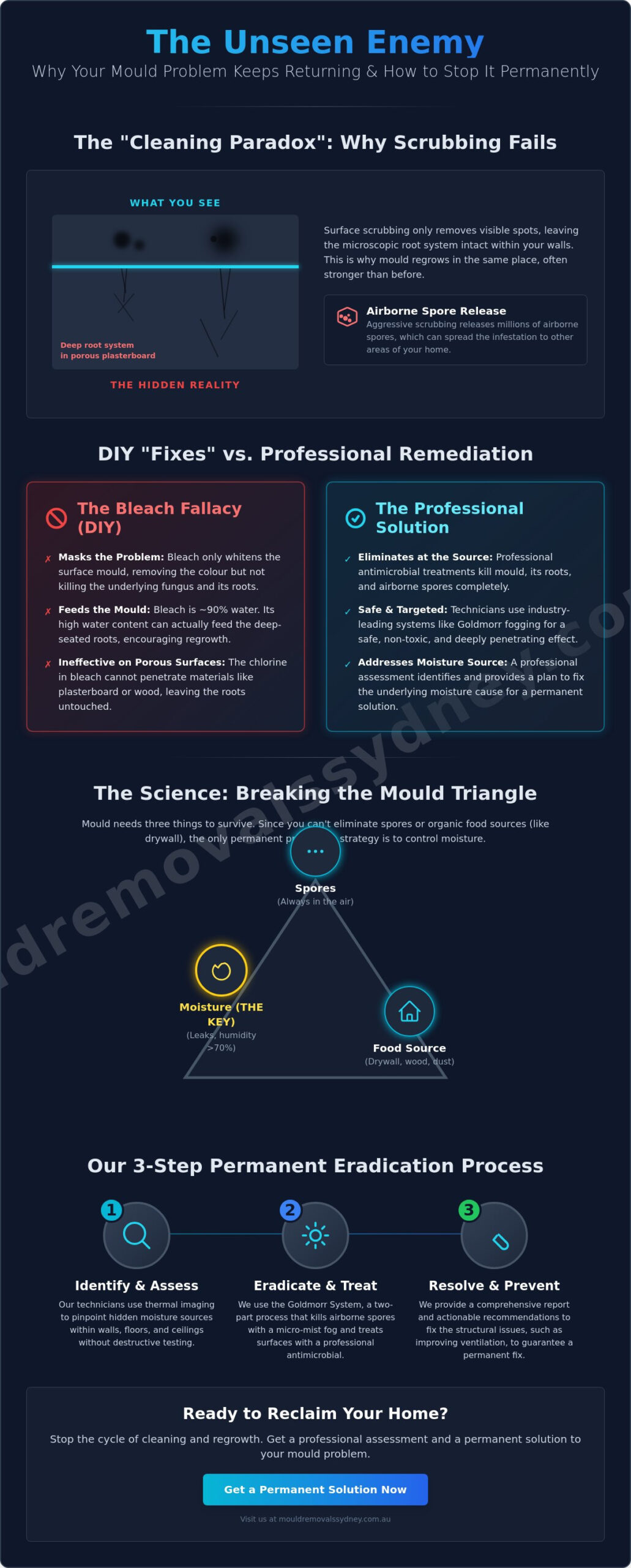
Understanding the science of mould growth reveals why surface cleaning fails. Mould isn’t just on the wall; it’s often inside it. When you use a cloth or brush, you might remove the visible hyphae, but the microscopic roots remain embedded deep within the pores of your plasterboard. Sydney’s coastal climate exacerbates this. With average indoor humidity levels frequently exceeding the critical 70% threshold, your walls provide the perfect incubator for these roots to regrow almost immediately.
We call this the Cleaning Paradox. Dry brushing or aggressive scrubbing can actually spread the infestation. These actions release millions of airborne spores into your living space. These spores settle on other surfaces and wait for the next humid day to bloom. Without professional grade containment and antimicrobial treatments, your cleaning efforts might be helping the mould colonise new areas of your home. It’s a risk that can lead to serious health issues and structural damage if left unaddressed.
The Difference Between Surface Mould and Deep Infestation
Mould acts like a weed with a complex root system. In porous materials like drywall and timber, the fungus penetrates the internal structure where standard supermarket sprays can’t reach. While the surface looks clean, the out of sight mould behind the wall or inside the insulation continues to thrive. Mould remediation is a scientific process, not a cleaning task.
Common Signs Your Wall Mould is a Structural Issue
Identifying the root cause is vital for a long-term fix. You should look for these three indicators that your problem goes deeper than the surface:
- Bubbling paint or peeling wallpaper: This suggests moisture is trapped behind the surface layer, pushing the finish away from the substrate.
- Persistent earthy smells: If a musty odour remains after you’ve scrubbed the visible spots, there’s a high probability of an active colony hidden in the wall cavity.
- Recurring patterns: When dark staining reappears in the exact same shape and spot after cleaning, it confirms the moisture source is localized and structural.
Don’t wait until the problem worsens, because it will. Addressing these signs early with the right system is the only way to ensure your home remains a safe environment for your family. Our master technicians use the Goldmorr System to handle these threats with precision, giving you the peace of mind you deserve.
The Science of Permanent Mould Prevention in Sydney Homes
Mould isn’t just a surface stain. It is a biological invader that thrives on a specific set of conditions known as the Mould Triangle. This triangle consists of moisture, organic food sources, and spores. Your home provides the food through drywall paper, timber, and even household dust. The air naturally carries the spores. Because you can’t remove the food or the spores entirely, moisture control is the only viable path for stopping mould growth on walls permanently. Without a water source, the biological process simply cannot start.
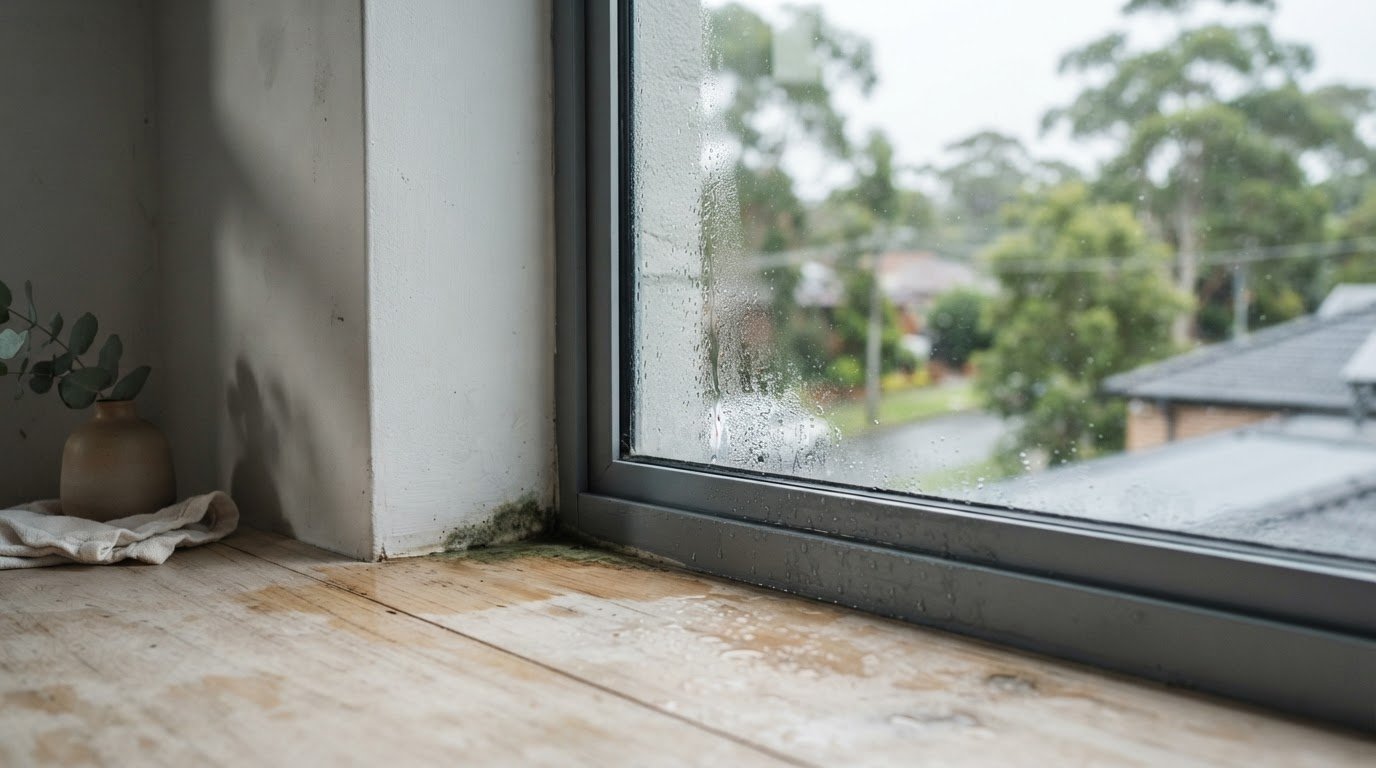
Sydney’s coastal climate presents unique challenges. High humidity levels often exceed 70 percent, raising the dew point inside local residences. When warm, moist air hits a cool wall surface, it transforms into liquid condensation. This is why thermal bridging is a major issue in older NSW homes. Double brick constructions without modern insulation allow cold temperatures to transfer from the exterior to the interior wall face. This temperature drop triggers immediate moisture fallout. You can review the NSW Health advice on mould to understand how these damp environments impact your family’s wellbeing.
Moisture Sources: Condensation vs. Ingress
Internal moisture often stems from daily habits. A single shower can release 1.5 litres of water vapour into your home. Unfluted gas heaters are another significant contributor, as they vent moisture directly into the room during combustion. External ingress is a different beast. This occurs when liquid water enters through leaking gutters, cracked roof tiles, or failing window seals. Our master technicians use professional moisture meters to detect “wet spots” hidden behind the paint. Identifying these invisible moisture pockets is the first step in stopping mould growth on walls permanently before structural damage occurs.
The Impact of Air Quality on Wall Growth
Stagnant air is a mould colony’s best friend. When air doesn’t move, spores have the opportunity to settle on surfaces and begin colonisation. Your HVAC system can either be a solution or a primary cause of the problem. If your vents are dusty, Air Duct Cleaning Sydney is essential to stop the system from blowing concentrated spores back onto your walls. We utilise advanced air scrubbing technology to remove the biological load from your indoor environment. This process filters out microscopic particles that a standard vacuum or cloth would simply move around. If you suspect your air quality is compromised, send us images of your affected walls for a professional assessment of the situation.
Professional Remediation vs. DIY: Why Bleach Isn’t a Permanent Solution
Many Sydney homeowners reach for a bottle of bleach at the first sign of a dark spot. It’s a mistake that often makes the problem worse. Bleach typically contains about 90% water. When you spray it on porous surfaces like gyprock or timber, the chlorine stays on the surface while the water soaks deep into the material. This moisture actually feeds the mould roots, known as hyphae, allowing them to grow back stronger within days. For stopping mould growth on walls permanently, you need a solution that penetrates the substrate rather than just bleaching the surface white.
Common DIY remedies like white vinegar or clove oil are safer than bleach, but they rarely reach the airborne spores hidden behind skirting boards or inside wall cavities. Professional remediation involves strict containment protocols. We use high-grade plastic bundling and negative air pressure to ensure spores don’t migrate to other rooms during the cleaning process. This is vital because controlling moisture to prevent mould is only half the battle; you must also physically remove the existing fungal load without cross-contaminating your home.
The Risks of DIY Mould Removal
Attempting to scrub black mould without professional PPE is dangerous. You risk inhaling millions of toxic spores. In cramped Sydney apartments with limited airflow, using high-toxicity retail chemicals creates a chemical soup that lingers for weeks. Most DIY efforts fail to address the root cause. This leads to a recurring infestation that typically costs significantly more to fix six months later when the structural damage has progressed and the mould has spread to soft furnishings.
The Goldmorr Advantage for Permanent Results
Our team uses the Goldmorr System, a world-leading approach to mould elimination. This non-invasive fogging process uses a biodegradable solution to reach spores tucked away in cracks, crevices, and ceiling voids. It’s safe for your children and pets, meaning you won’t have to vacate your property for days due to harsh fumes. Every one of our Goldmorr technicians are certified master technicians in mould science. We don’t just clean; we provide a scientific solution for stopping mould growth on walls permanently through advanced antimicrobial technology that targets the mould at a cellular level. It’s that simple. It’s that easy.
Structural Strategies for Stopping Mould Growth on Walls Permanently
Surface cleaning alone will never solve a deep-seated moisture problem. If you are serious about stopping mould growth on walls permanently, you must address the structural vulnerabilities of your Sydney home. Most persistent mould issues in suburbs like Marrickville, Mosman, or Paddington stem from how the building handles water vapour and ground moisture. Our master technicians often find that the root cause isn’t a lack of cleaning, but a failure in the home’s ability to breathe.
Subfloor Ventilation and Rising Damp
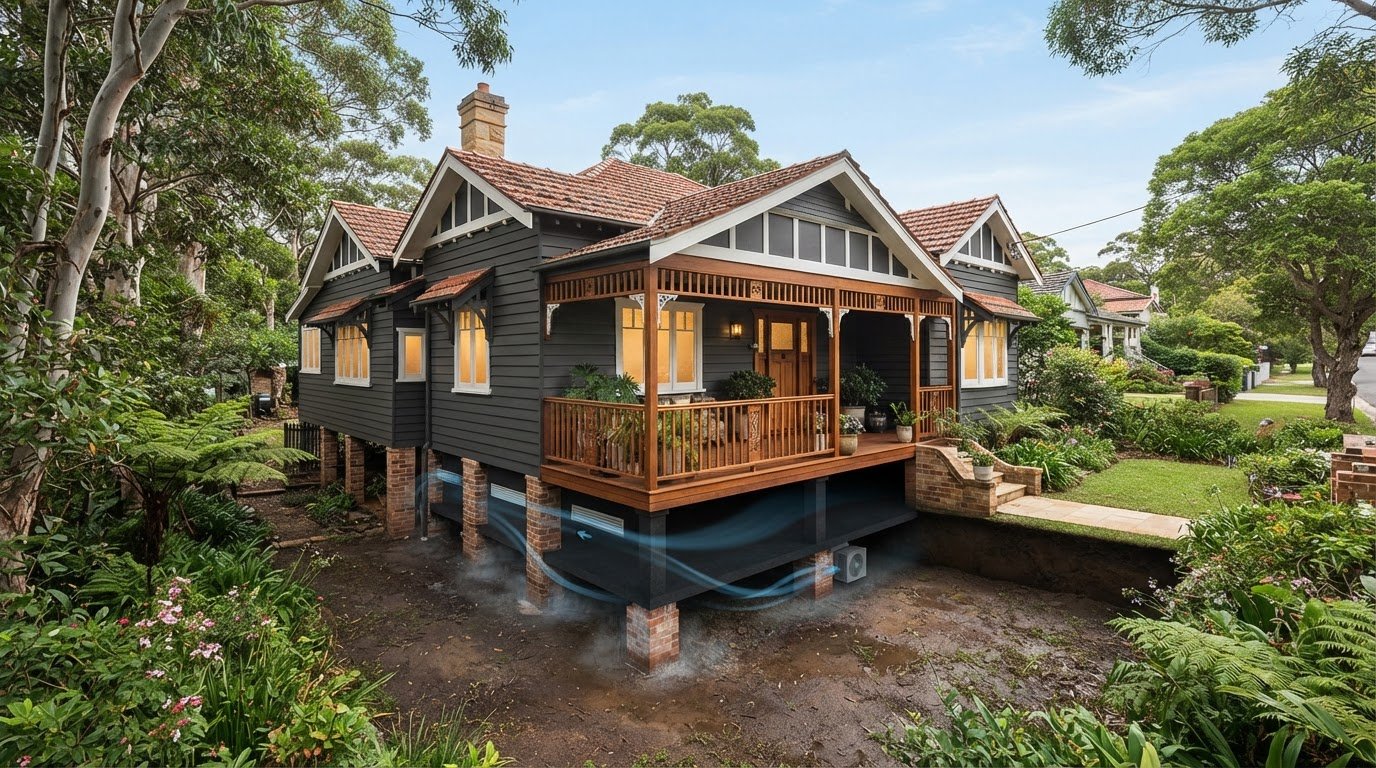
Poor subfloor ventilation is the leading cause of wall mould in Sydney’s older brick homes. When moisture becomes trapped in the crawl space under your house, it creates a “chimney effect.” This damp air is pulled upward into your living areas through floorboards and wall cavities. Over time, this moisture travels up through porous brickwork via capillary action, a process known as rising damp.
You can identify this structural failure by looking for specific red flags. These include:
- Efflorescence: White, powdery salt crusting on internal or external brickwork.
- Rotting skirting boards: Wood that feels soft, appears discoloured, or crumbles to the touch.
- Musty odours: A persistent earthy smell that doesn’t disappear with open windows.
Installing a custom subfloor ventilation system is a non-negotiable step for many properties. These systems use high-powered fans to extract damp air, ensuring your foundations stay dry and preventing moisture from ever reaching your internal plasterboard.
Mechanical Ventilation and Airflow Improvements
Modern Sydney homes built after 2010 are often designed to be “airtight” to improve energy efficiency. While this saves on cooling costs, it frequently traps high humidity indoors. Older, drafty houses naturally cycled air, but modern builds require active mechanical intervention. Without it, indoor humidity levels can easily exceed 65 percent, which is the “danger zone” for spore germination.
To fix this, ensure all exhaust fans in high-moisture areas like bathrooms and laundries are vented directly to the external atmosphere. Many builders incorrectly vent these fans into the roof cavity, which simply moves the mould problem from your walls to your ceiling joists. Additionally, your cooling system can become a breeding ground for spores if neglected. Scheduling Professional Air Conditioner Cleaning is vital to ensure your HVAC system is actually filtering the air rather than redistributing contaminants.
Finally, consider the role of insulation. Cold spots on external walls are magnets for condensation. When warm, moist indoor air hits a cold, uninsulated wall, it turns into liquid water. Adding high-quality wall insulation or using thermal break materials can eliminate these cold spots, effectively stopping mould growth on walls permanently by removing the dew point entirely.
Don’t let structural dampness ruin your property value. Book a comprehensive structural mould inspection with our certified technicians to identify the root cause of your dampness today.
ABC Mould Cleaning Solutions: Our 3-Step Permanent Eradication Process
Mould isn’t just an eyesore; it’s a persistent biological threat to your family’s health and your property’s structural integrity. At ABC Mould Cleaning Solutions, we don’t just wipe away the surface stains. We use a scientific, three-stage approach designed for stopping mould growth on walls permanently. Our master technicians utilize the world-leading Goldmorr System to ensure your home returns to a safe, breathable environment quickly.
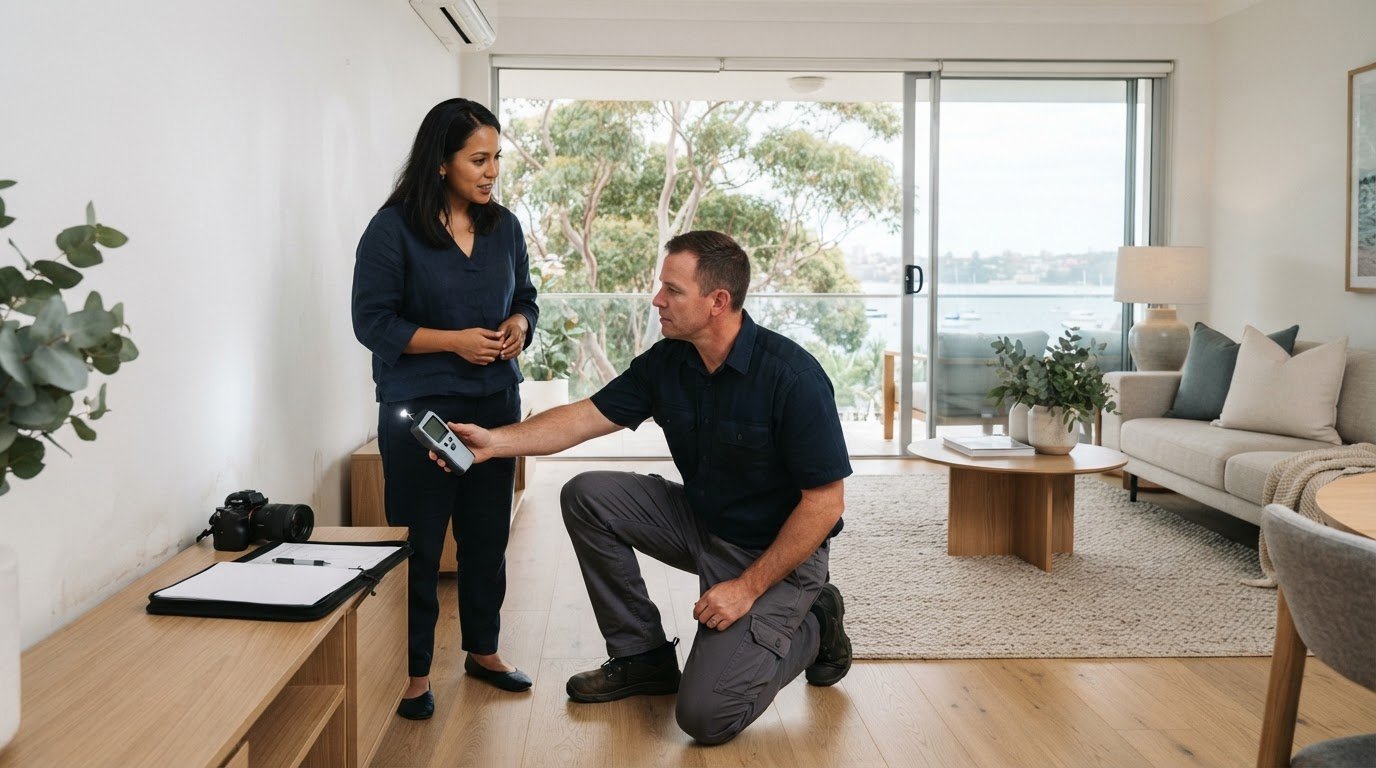
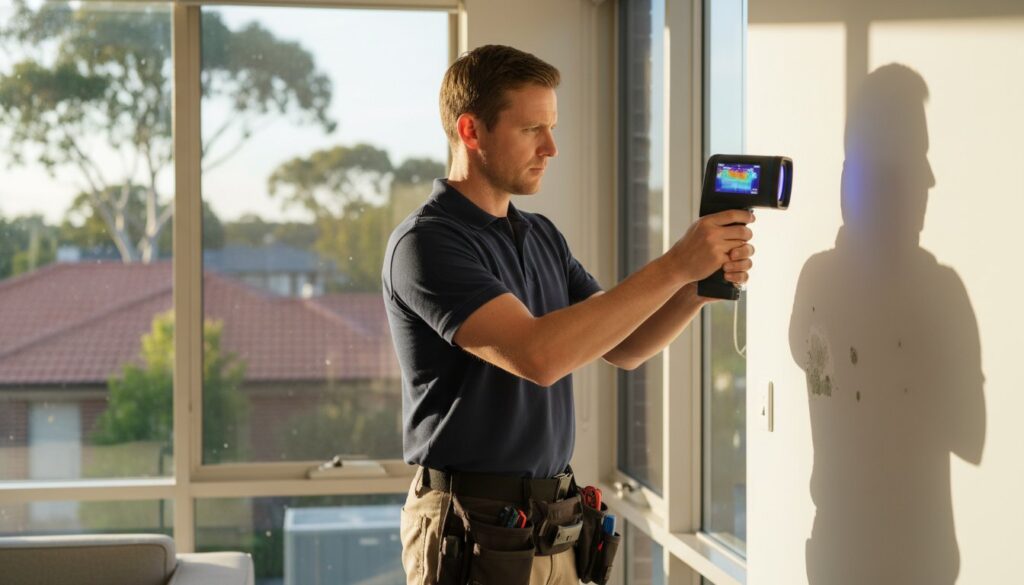
- Step 1: Comprehensive Inspection and Mapping: We start with advanced diagnostics. Our team uses thermal imaging cameras and moisture mapping sensors to detect hidden leaks and rising damp behind your gyprock. By identifying the exact moisture source, we eliminate the guesswork that leads to DIY failures.
- Step 2: Targeted Removal and Goldmorr Fogging: Once we’ve treated the visible clusters, we deploy a biodegradable fogging process. This non-toxic mist penetrates porous surfaces and neutralizes airborne spores throughout the entire room. It’s safe for children and pets, yet lethal to mould colonies.
- Step 3: Prevention and Structural Planning: We finish by addressing the root cause. This includes detailed subfloor checks and structural recommendations to improve ventilation. We provide a clear roadmap to ensure the dampness never returns, providing you with long-term peace of mind.
We’re confident in our results and our value. If you’ve received a lower price elsewhere, we’ll beat any written quote by 10%. Quality remediation shouldn’t be out of reach for Sydney families.
Why Sydney Trusts ABC Mould Cleaning Solutions
Our reputation as Sydney’s #1 Mould Removal Service comes from years of delivering consistent results. We exclusively use non-toxic, biodegradable products that are environmentally responsible and highly effective. Whether you’re managing a residential terrace in Surry Hills or a large commercial warehouse in Western Sydney, our team has the specialized expertise to handle the job. We don’t just clean; we restore safety.
Get Your Free Quote Today
Don’t wait for the musty smell to get worse. You can get a fast, affordable estimate right now by sending us images of your affected walls. Seeing the extent of the growth allows our technicians to provide an accurate price without delay. Every professional treatment we perform comes with a satisfaction guarantee, ensuring your home stays mould-free long after we leave. It’s that simple. It’s that easy.
Take the first step toward a healthier home. Contact ABC Mould Cleaning Solutions today to book your inspection and secure your 10% price match discount.
Take Control of Your Home’s Health Today
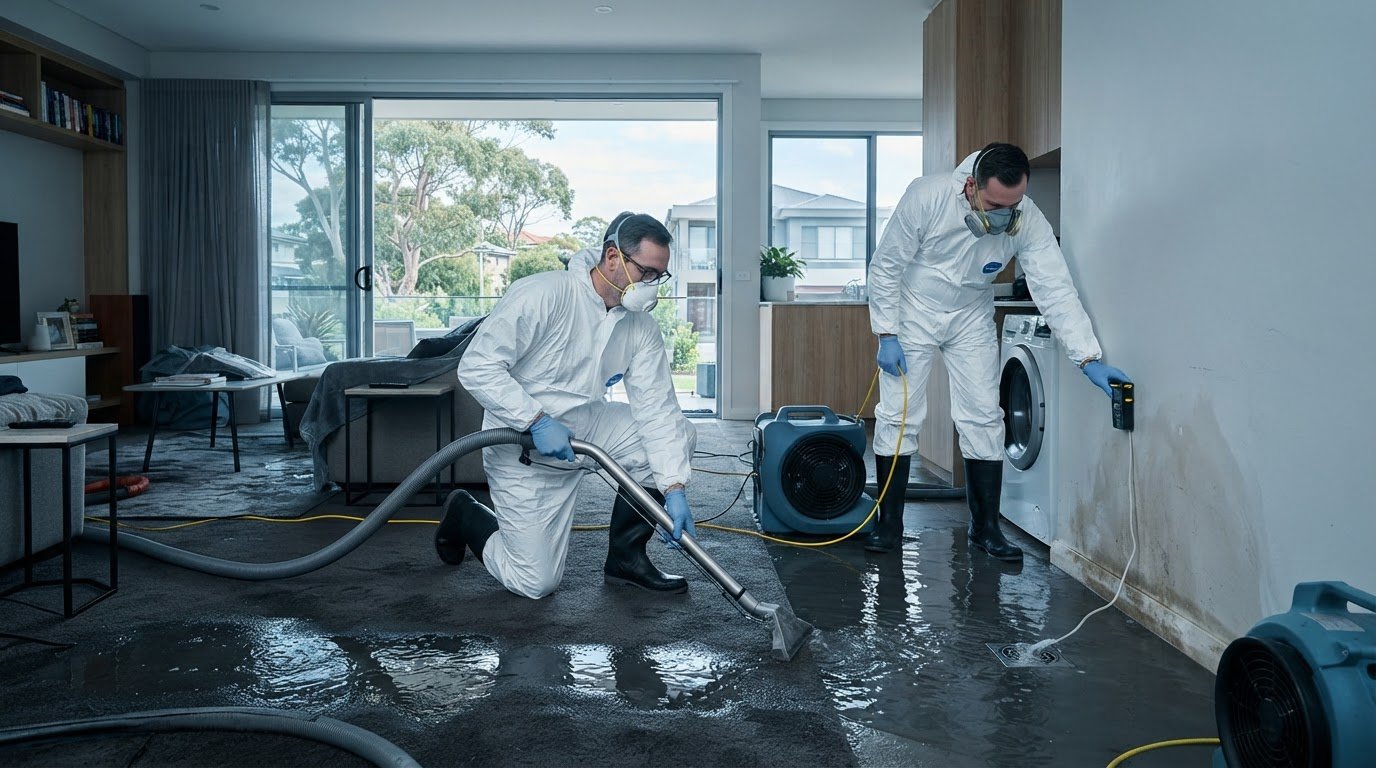
Mould isn’t just an eyesore. It’s a persistent threat to your family’s health and your property’s structural integrity. While DIY scrubbing with bleach provides a temporary mask, stopping mould growth on walls permanently requires a scientific approach that eliminates airborne spores and treats the source. The team at ABC Mould Cleaning Solutions consists of Certified Goldmorr Master Technicians who use a 100% biodegradable and safe process to ensure your living space remains toxic-free without harsh chemicals. We also provide 24/7 emergency water damage response to catch moisture issues before they escalate into a full-blown infestation.
Sydney’s humid climate makes mould a recurring nightmare for many, but you don’t have to settle for recurring cleanups. By addressing structural vulnerabilities and using advanced fogging techniques, we create an environment where spores cannot thrive. Don’t let a small patch turn into a major renovation. It’s time to restore your peace of mind with a solution that actually works. We’re so confident in our expert remediation that we’ll beat any written quote by 10%.
Get a Free Mould Removal Quote – We Beat Any Written Quote by 10%
You deserve a home that feels fresh and safe. Let’s clear the air and protect your Sydney property for the long term.
Frequently Asked Questions
Is it possible to remove mould from walls permanently?
Yes, you can achieve the permanent removal of mould by combining professional remediation with strict moisture control. Simply scrubbing the surface won’t work because microscopic spores remain embedded deep within porous materials like plaster and timber. We use the Goldmorr System to eliminate these spores at the source. Once we remediate the area, you must maintain indoor humidity levels below 60% to ensure the fungus never returns. It’s a scientific process that requires addressing both the visible growth and the underlying dampness.
What is the best way to stop mould growing on walls?
The most effective method for stopping mould growth on walls permanently involves a professional three-step remediation process. First, you must identify and fix structural leaks or drainage issues. Second, use a non-mechanical air scrubbing system to remove airborne spores from the environment. Finally, apply a biodegradable fogging treatment to kill any remaining contaminants. According to the World Health Organization, keeping indoor relative humidity under 50% is the gold standard for prevention. It’s that simple. We provide the expert tools needed to reset your home environment safely.
Does bleach kill mould permanently on plasterboard?
No, bleach is ineffective for killing mould on porous surfaces like plasterboard. While it removes the visible stain, the water content in bleach actually feeds the roots of the mould deep inside the wall. This often leads to faster regrowth within 14 to 21 days of cleaning. Professional technicians use specialized, biodegradable solutions that penetrate the surface without damaging the structural integrity of your home. Don’t rely on supermarket chemicals that only mask the problem while the structural damage continues underneath.
Can I paint over mould to stop it from coming back?
You should never paint over mould because the fungus will continue to consume the drywall and eventually blister the new paint layer. Painting over active spores traps moisture and provides a fresh food source for the colony. You must professionally treat and kill the mould first. Once the surface is certified clean and dry, apply a high quality anti-mould primer. This ensures a long lasting finish that won’t peel or discolour within 6 months of application. Our master technicians can prepare your surfaces correctly to ensure a safe result.
How much does professional mould removal cost in Sydney?
Professional mould remediation in Sydney typically starts from A$500 for small, contained areas and can exceed A$5,000 for extensive whole-house treatments. These figures are based on 2023 industry averages for the New South Wales region. The final cost depends on the square meterage affected and the level of structural damage present. We offer a competitive edge by promising to beat any written quote by 10%. Send us images of your affected walls today for an accurate, affordable estimate that fits your budget.
Why does mould keep growing on my bedroom wall every winter?
Mould thrives on bedroom walls in winter due to condensation forming when warm indoor air hits cold external walls. In Sydney, winter humidity often spikes, and poor ventilation traps this moisture inside. If your room lacks airflow, the humidity can quickly rise above the 70% threshold required for rapid fungal growth. You can stop this by using a dehumidifier and ensuring at least 15 minutes of cross-ventilation daily. Our expert team can identify specific thermal bridges causing your recurring winter issues and provide a permanent solution.
Is it safe to sleep in a room with mould on the walls?
It’s not safe to sleep in a room with active mould growth due to the constant inhalation of airborne spores. The Australian Department of Health warns that exposure can trigger asthma, allergic reactions, and respiratory infections. Children and the elderly are at a 40% higher risk of developing these symptoms in damp environments. Don’t wait until the problem worsens because it will impact your health and well-being. We use the Goldmorr System to restore air quality and give you peace of mind immediately.
How do I know if my mould problem is caused by rising damp?
You can identify rising damp by looking for “tide marks” or salt crusting on the lower 1.2 metres of your ground floor walls. Unlike condensation, which can appear anywhere, rising damp starts at the floorboards and moves upwards. This occurs when the damp-proof course in your Sydney home fails or is bridged by soil. If you notice bubbling paint or a musty smell near the skirting boards, it’s a sign of groundwater wicking up through the brickwork. Call us now for a professional assessment of your wall’s moisture profile.