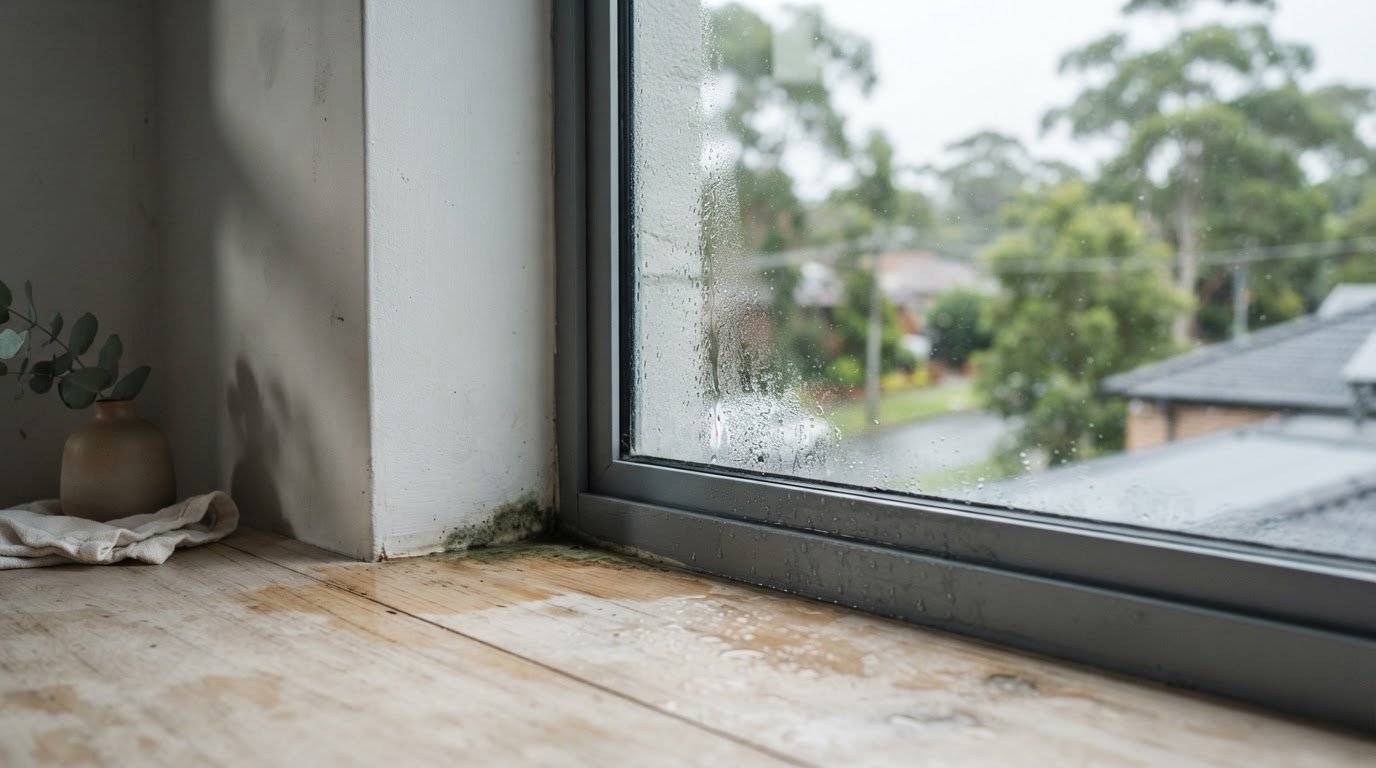
What if mould on your window sill isn’t just a cleaning problem, but a sign that moisture keeps building up? If mould on window sills from condensation returns soon after you wipe it away, the glass, indoor humidity and sill may be combining to keep the area damp. Water collecting on cold glass can run onto the frame or sill, creating conditions for mould to grow.
It’s frustrating to clean the same patch repeatedly, especially when you’re unsure whether the water is condensation or a leak. On cold days, single-glazed windows can become cool enough for moisture in indoor air to condense on the glass. Persistent dampness, however, deserves a closer look.
This article explains why condensation can lead to mould, sets out practical ways to reduce recurring moisture, and highlights clues that may point to a leak or another underlying issue. You’ll also learn when recurring mould may call for a professional inspection and remediation rather than another surface clean.
Key Takeaways
- Learn how cold single-glazed glass and moist indoor air can lead to mould on window sills from condensation.
- Recognise common condensation patterns in bedrooms, kitchens and bathrooms, while remembering that window moisture alone doesn’t rule out a leak.
- Use a simple routine to reduce indoor moisture, improve airflow, wipe away droplets and track humidity trends.
- Know when recurring mould, spreading patches or suspected hidden dampness may need a closer inspection.
- Understand how a professional assessment can examine air quality, humidity, ventilation and signs of structural dampness.
Why condensation causes mould on single-glazed window sills
If you keep finding mould on window sills from condensation, the sill may show where moisture repeatedly settles, not just where a stain needs cleaning. Condensation forms when moist indoor air meets a colder surface and cools enough for water vapour to become liquid droplets. On a window, that surface is often the inside of the glass.
What makes condensation form on window glass?
The point at which air can no longer hold all its moisture is called the dew point. You don’t need to calculate it to recognise the effect: when humid air touches glass that’s colder than the room, water can appear on the pane. The greater the temperature difference between the indoor air and the glass, the more likely you are to notice droplets.
Everyday activities add moisture to indoor air. Cooking releases steam, showers create humidity, and drying clothes indoors adds water vapour. People also release moisture as they breathe. With limited ventilation, this damp air can linger and reach cold windows.
Single-glazed windows have one pane separating the room from outdoor conditions. In cool weather, the inside surface can become cold and more prone to condensation than a warmer surface. Mould isn’t inevitable: condensation may be occasional and dry quickly, while regular airflow and moisture management can help limit how long surfaces stay wet.
Why does mould appear on the sill as well as the glass?
Droplets don’t always stay on the pane. They can run down the glass, collect along the lower frame, and settle on the sill or in joints where the frame meets the wall. These edges are easy to overlook, and water may remain there after the visible glass looks dry. Repeated wetting can also affect painted or porous surfaces.
Mould needs moisture and suitable material to grow. A sill often gathers settled dust containing organic particles that can support growth when dampness persists. Dust alone doesn’t mean mould will form, and a cold window doesn’t guarantee a mould problem. But recurring moisture gives mould a better chance to establish itself.
Repeated dampness plus settled organic dust can create the conditions mould needs to grow on a window sill.
A dark mark that returns after cleaning deserves attention. Surface cleaning may remove visible discolouration, but it won’t prevent new condensation from wetting the same area again. Look for a pattern: droplets on the glass, dampness along the sill, or moisture concentrated near frame joints. Recurring wetness is a prompt to address the moisture source, not just the stain. If the area keeps getting damp, reduce how long moisture remains there and consider whether another source of water may be involved.
How single-glazed windows in Sydney homes contribute to recurring condensation
In a Sydney home, single-glazed glass can become the coldest surface in a room when its temperature falls well below the indoor air temperature. Moisture in the air then settles on the glass. If droplets repeatedly reach the sill, mould on window sills from condensation can return even after visible marks have been cleaned.
Why single glazing can leave the inside glass colder
A single-glazed window has one pane between indoors and outdoors. Double glazing uses two panes with a sealed gap between them, which slows heat moving through the window—an upgrade that homeowners can explore via online suppliers like windowsoutlet.co.uk. Without that insulating gap, single-glazed glass can respond more quickly to outdoor temperatures and feel cold on its room-facing side.
The glass provides the cold surface, but moisture in the indoor air supplies the water that condenses on it. Both conditions matter. A colder pane may collect more droplets when indoor air is moist, but neither single glazing nor condensation makes mould inevitable. While services like Sunnyside Glass Solutions Ltd. demonstrate how glass replacement and window film can enhance thermal performance, changing windows alone also won’t necessarily address moisture from everyday activities or limited ventilation.
In a bedroom, closed doors and windows can allow moisture from breathing to linger overnight. In a kitchen, cooking steam may reach a nearby pane, especially if there’s little air movement. A bathroom window can collect moisture after bathing, then remain damp if the room stays closed. These patterns can help you connect droplets with what’s happening in the room.
Which household habits can increase moisture near windows?
Cooking, bathing and drying clothes indoors all release moisture. How much remains in a room depends partly on how readily air is exchanged. If doors stay shut and ventilation is limited, humid air can build up and reach cold window glass. Heating can also change the temperature difference between the room and the pane, so condensation may vary as a room warms or cools.
Try practical adjustments that suit the room and your routine:
- Use kitchen and bathroom exhaust fans while cooking or bathing, and let them clear humid air afterwards.
- Where practical, dry clothes outdoors or in a ventilated area rather than in a closed room near windows.
- Open internal doors when appropriate to improve air movement, and check whether furniture or heavy curtains are trapping still air around the window.
- Note when droplets form and which activities came before them. A hygrometer can help you observe indoor humidity trends over time.
For broader advice on reducing indoor moisture and preventing mould, see the EPA mold prevention guidelines. If mould keeps returning despite practical moisture-control steps, an inspection can help assess whether dampness or contamination needs closer attention. Sydney homeowners can explore professional mould inspection and remediation for recurring window mould.

Condensation or a leak? Compare the clues around a mouldy window sill
Water on a window doesn’t always have the same source. Droplets spread across cold glass may fit a condensation pattern, while dampness in one spot or wetness after rain may point to another moisture source. These signs can guide your next step, but they can’t confirm the cause on their own. Mould on window sills from condensation can look similar to mould linked to other persistent dampness.
| Clue | May be consistent with condensation | May warrant checking another moisture source |
|---|---|---|
| Where moisture appears | Droplets across the glass, often collecting along the lower edge and sill. | A localised damp patch around one frame joint, or staining limited to one area. |
| When it appears | Repeated wetness during cooler parts of the day, or after cooking, bathing or indoor clothes drying. | Wetness that follows rain, or appears independently of household activities. |
| How it changes | The pattern comes and goes, with droplets forming on the glass and later drying. | A patch remains damp, staining develops, or moisture seems to spread from a specific point. |
Clues that point toward condensation
Condensation is more plausible when moisture appears broadly across the glass rather than emerging from one isolated point. You may notice droplets during cooler parts of the day, then see them lessen as the room warms or the glass dries. The pattern may also follow moisture-producing activities, such as a shower or cooking, particularly if the room has limited air movement.
Look for a pattern over several days, not just one morning. Note which windows are affected, when droplets appear, what activities took place, and whether the sill dries later. A short record can make recurring timing easier to recognise and help explain what you’ve observed during an assessment.
Clues that warrant checking for another moisture source
Take extra care if wetness appears after rain, stays concentrated around one part of the frame, or comes with water staining. These signs warrant further investigation, but appearance alone can’t establish whether the cause is a leak, hidden dampness or another issue. Avoid assuming every wet patch is condensation or that every stain proves water is entering from outside.
Record the timing and location, and photograph changes as they occur. Note whether the wetness followed rain or a household activity, whether the glass was also covered in droplets, and whether the affected area dried. Don’t rely on a single observation to diagnose the source.
If moisture persists or you suspect water damage, an on-site assessment can investigate further. The Sydney water damage repair guide explains what to consider when water damage is suspected. A clear record can help distinguish recurring surface condensation from a problem that needs closer inspection.
How to reduce condensation and keep a window sill drier
A consistent routine can limit how long moisture sits on glass, frames and sill surfaces. Focus on reducing added moisture, allowing air to move, drying visible water and checking whether the pattern changes. These steps can reduce condensation, but they won’t identify or fix every possible source of dampness.
A simple daily routine for wet glass and sills
Use this routine when you notice wet windows. Adjust it to suit your household, and avoid trapping damp air between a window covering and cold glass.
- Reduce moisture at the source. Use kitchen and bathroom exhaust fans during cooking or bathing, and avoid drying clothes in a closed room where possible.
- Improve air movement. Ventilate the room during moisture-producing activities when conditions allow. Move curtains or blinds so they don’t sit tightly against the glass, and keep the sill clear enough for air to circulate.
- Wipe away droplets. Use a suitable cloth to dry the glass, frame edges and sill. Check corners and joints where water can collect, then leave the cloth to dry rather than on the sill.
- Monitor what happens next. Note when the glass becomes wet, whether the sill dries, and whether the same area gets damp again. A hygrometer can help you observe indoor humidity trends over time, but no single reading diagnoses the cause.
Repeat the routine when needed and look for changes, rather than expecting instant proof that the problem is solved. If a room’s readings rise after everyday activities, that can help you identify when ventilation or moisture habits need attention. Keep a simple record so you can compare days and see whether the same window remains affected.
How to clean visible mould and monitor whether it returns
For a small visible patch, take care not to disturb it. Avoid dry brushing, which can spread mould or debris around the room. If you use a cleaning product, follow its label directions and safety instructions. Cleaning can remove visible growth, but it won’t stop mould returning if the sill continues to get damp.
After cleaning, continue the drying and ventilation routine. Record whether the mark reappears, how soon it returns, and whether the sill looks or feels damp even when the glass is dry. Recurring mould or persistent dampness may need closer investigation rather than repeated surface cleaning.
For wider context on household mould and its causes, see this Australian homeowner mould guide. If recurring growth is difficult to manage, arrange a professional mould inspection to assess the affected area and possible moisture concerns.
When recurring window-sill mould needs professional attention in Sydney
If mould returns after cleaning, keeps spreading, or appears alongside dampness you can’t explain, it may be time to look beyond the surface. Recurring mould on window sills from condensation can indicate persistent moisture, but the visible patch alone won’t show whether condensation is the only issue. An inspection can assess the affected area and identify signs that need closer attention.
Consider a professional assessment if mould repeatedly reappears despite drying the sill and improving ventilation, spreads beyond the window area, or comes with a lingering damp smell or suspected hidden moisture. These signs don’t confirm a particular cause, but they suggest that repeated surface cleaning may not be enough to understand what’s happening.
What an inspection and professional response can involve
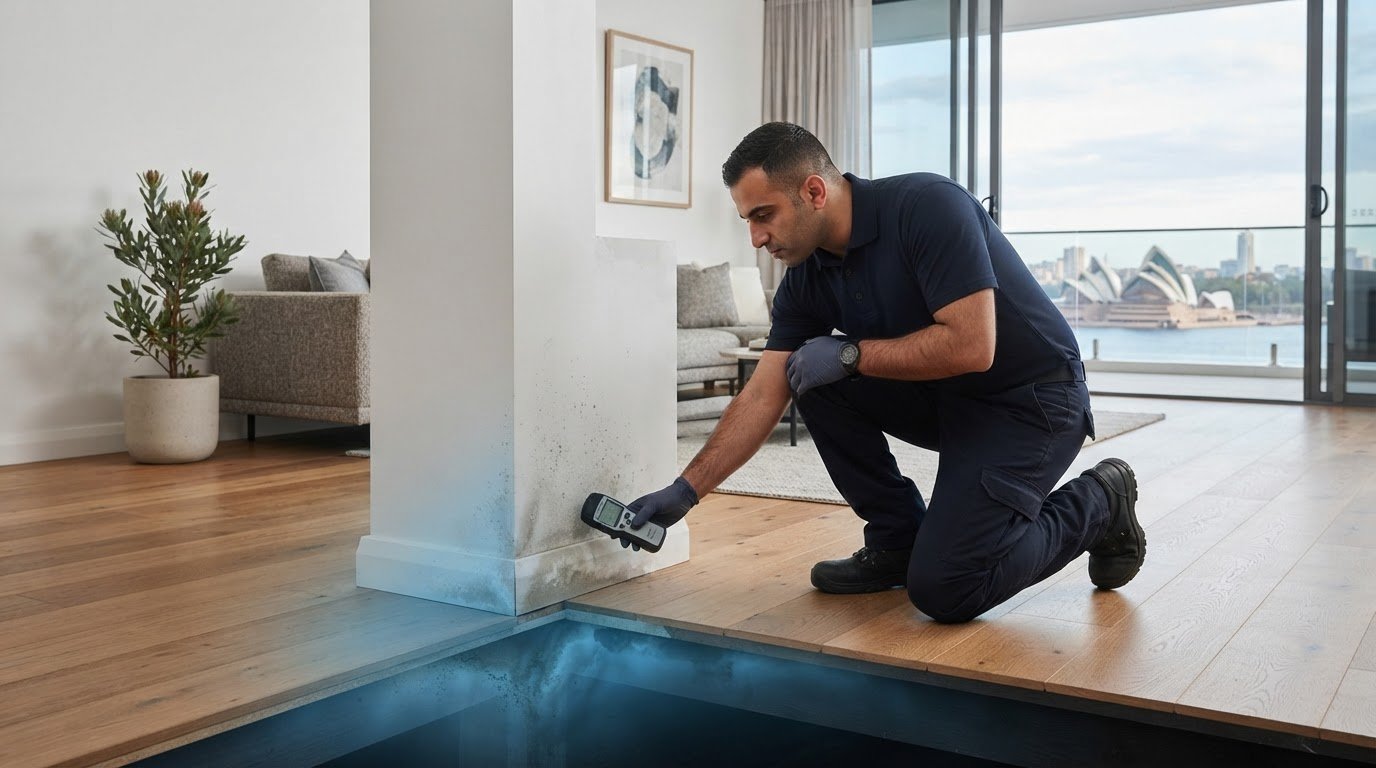
ABC Mould Cleaning Solutions provides mould inspections in Sydney and surrounding areas. An assessment examines air quality, humidity, ventilation and signs of structural dampness, alongside visible growth and affected surfaces. When deeper contamination is suspected, the company carries out an on-site inspection. Written reports document findings and support the next steps.
For many cases, you can provide photos for an assessment and receive a same-day quote. Clear images of the sill, frame and surrounding wall, together with notes about when the area gets wet, provide useful context. When deeper contamination is suspected, an on-site inspection provides a closer assessment.
How ABC Mould Cleaning Solutions approaches mould concerns
Where treatment is suitable, ABC uses the Goldmorr System, a biodegradable, non-mechanical fogging technique. Goldmorr Group has supplied mould-removal solutions since 1998, and Goldmorr products are applied only by Goldmorr-approved and trained master technicians. All treatments are safe for pets, people, and the environment.
Professional mould remediation and air purification can address mould concerns, but they don’t replace moisture prevention. If condensation continues to wet a sill, managing indoor moisture and keeping the area dry remain important ways to reduce the chance of recurrence. An assessment helps clarify the affected areas and inform an appropriate response.
Optional mycotoxin testing referrals are available if further testing is being considered. If you have a written quote, ABC’s exact price-match guarantee is: We Will Beat Any Written Quote By 10%.
If recurring window mould is worrying you, take a few photos and note when the dampness appears. For a photo assessment and same-day quote, call ABC Mould Cleaning Solutions on 0488 866 853.
Take the next step towards a drier window
Recurring mould is easier to address when you treat it as a reason to investigate, not simply a mark to keep wiping away. If mould on window sills from condensation keeps returning, note when the glass gets wet and whether the sill dries. Photos can also show how the affected area changes over time. These details give you a practical starting point for deciding what to do next.
You don’t have to keep guessing whether the moisture pattern needs closer attention. ABC Mould Cleaning Solutions provides same-day quotes for many photo assessments. For Sydney support, call ABC Mould Cleaning Solutions on 0488 866 853 for a same-day quote.
A clearer understanding of the moisture and affected area helps you choose an informed next step and move forward with greater confidence.
Frequently Asked Questions
Can condensation cause mould on a window sill?
Yes, repeated condensation can keep a sill damp enough for mould to grow, particularly if dust and other organic debris have settled there. The key issue is how often the surface gets wet and how long it stays damp. If growth returns after cleaning, note whether moisture appears on the glass at the same time. That pattern can help distinguish recurring mould on window sills from condensation from a patch that needs further investigation.
Why do single-glazed windows get condensation inside?
Single-glazed windows have one pane, so the room-facing glass can become cold when outdoor conditions lower its temperature. Moist indoor air touching that cold pane may release water as droplets. For example, after a shower, a bathroom window may fog or bead with water while the mirror also clouds. The glass temperature and moisture in the room act together, so condensation can vary between rooms and at different times.
Is mould on a window sill always caused by condensation?
No. Condensation is one possible cause, but wetness after rain, a persistent damp patch in one location, or staining around a frame may point to another moisture source. These clues aren’t enough to diagnose a leak or hidden dampness by sight alone. Record when the area becomes wet and what conditions came first. If the sill stays damp or the patch spreads, arrange a closer inspection with ABC Mould Cleaning Solutions.
How do I stop water collecting on a single-glazed window sill?
Start by drying the sill and lower frame whenever you find water, then check whether it returns after cooking, bathing or overnight. Ventilate the room during moisture-producing activities when practical, and keep curtains from resting tightly against the pane. A hygrometer can help track indoor humidity changes over time. If water keeps collecting in one place despite these steps, don’t assume condensation is the only possible source.
Can I clean mould from a window sill myself?
A small, surface-level patch may be manageable if you can clean it safely and follow the cleaning product’s label directions. Avoid dry brushing or disturbing the growth, and take care not to spread debris around the room. Cleaning removes visible marks but won’t prevent a return if the surface remains damp. If mould covers a larger area, keeps reappearing, or affects deteriorating material, arrange a professional assessment.
Does black mould on a window sill identify the mould species?
No. A black appearance can’t reliably identify the mould species, and colour alone doesn’t establish its toxicity or health risk. Different moulds can look similar, while the same species may appear in different colours depending on conditions. Don’t try to identify it by sight. If species identification or other testing is a concern, ABC Mould Cleaning Solutions can provide optional mycotoxin testing referrals, which are distinct from visual identification.