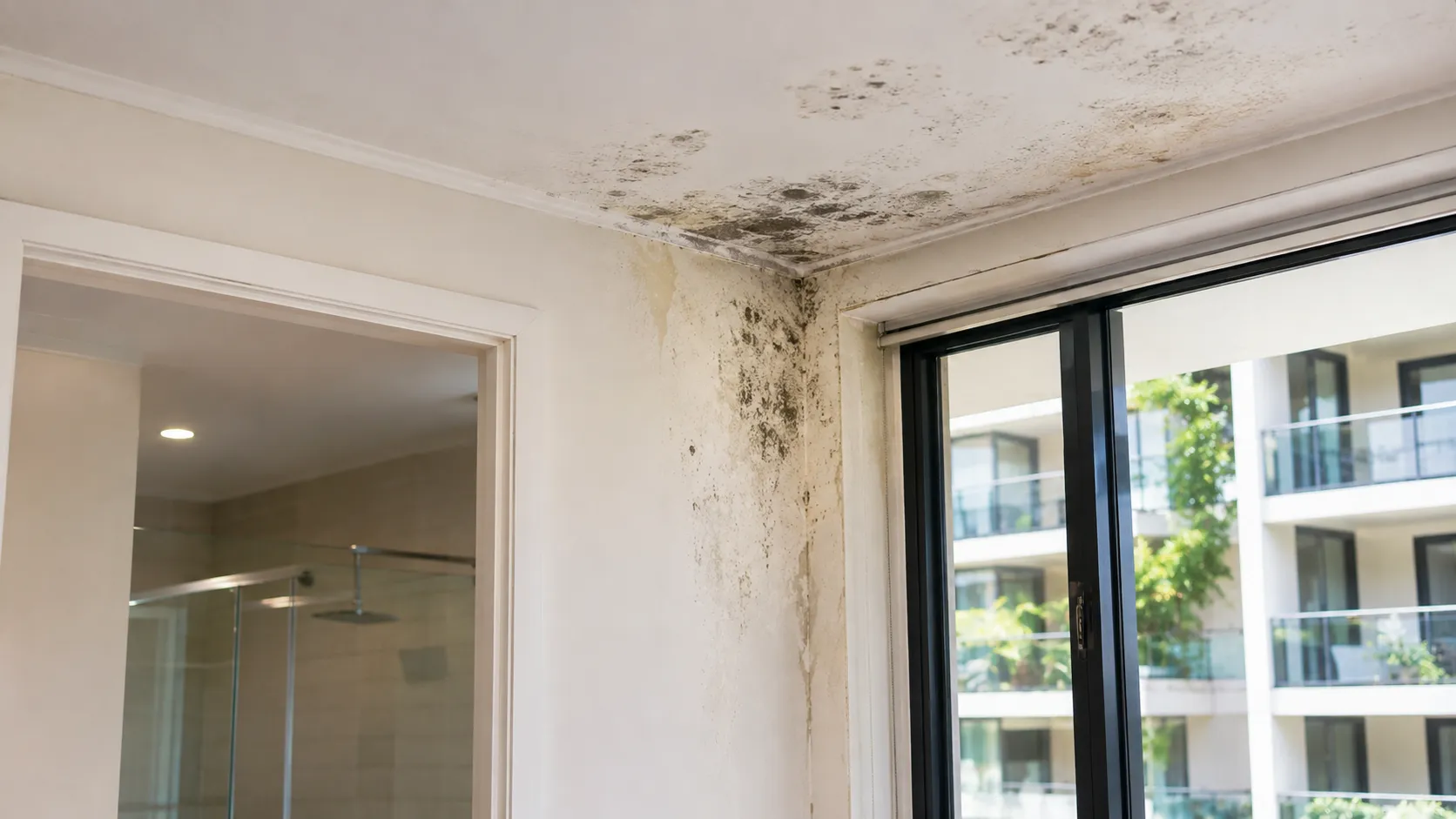
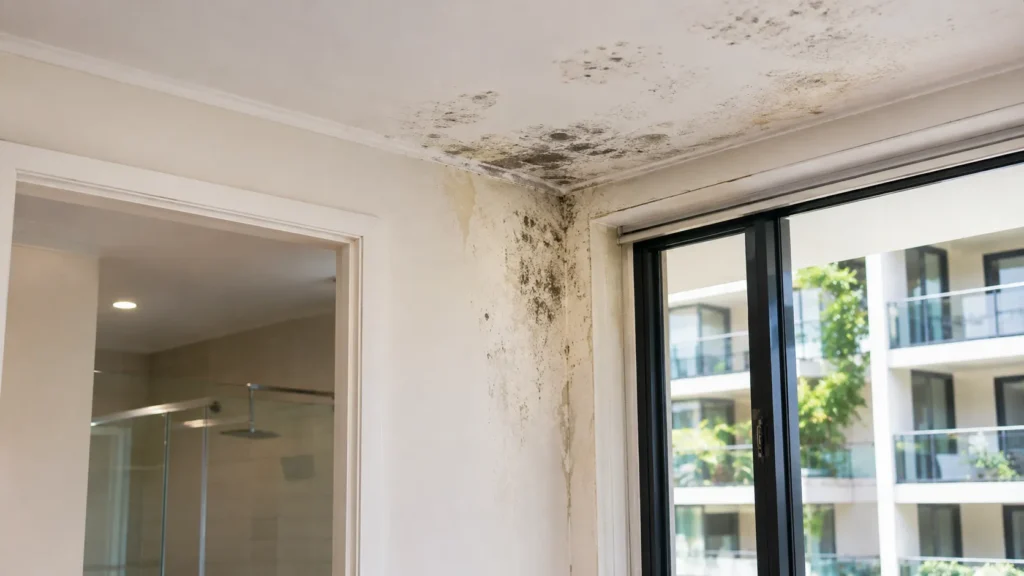
You’ve scrubbed the bathroom ceiling twice and the stain keeps returning. The hallway smells musty, the wall you share with next door looks just as bad, and nobody on the strata committee wants to say whose problem it is.
Yes, mould can spread between neighbouring apartments. Spores travel through shared wall cavities, ceiling voids and ducts, and moisture moves through walls and slabs to feed new growth next door. While the moisture source stays active, the mould keeps finding somewhere to settle.
Key Takeaways
- Mould moves between units in two ways: airborne spores travelling through cavities and ducts, and moisture travelling through walls, slabs and subfloors.
- A surface wipe doesn’t change the conditions that grew the mould, so the same patch tends to come back.
- ABC Mould Cleaning Solutions offers same-day service across the region and beats any written quote by 10%.
- The Goldmorr System treats mould at the source, and non-mechanical fogging reaches airborne spores without a fan pushing them around.
- Apartments often have less area to work through than houses, which can mean faster treatment.
How Does Mould Get From One Apartment Into Another?
The visible patch is a symptom. The cause is a shared building with one moisture supply and several places for it to land.
Apartments aren’t sealed boxes. Units share wall cavities, ceiling voids, service risers and exhaust ducts, and ground-floor units can sit over a common slab or subfloor. Mould needs moisture, something organic to feed on (plasterboard paper, timber, dust) and time. Spores are in the air everywhere, so the real question is whether any space stays damp long enough for them to take hold.
There are four common routes, and the route shapes the fix:
- Air route: spores pass through gaps around pipes, power points, exhaust ducts and ceiling voids. Suspect this when a musty smell appears next door with no visible growth.
- Wall route: moisture moves through a shared wall from a leak or condensation. Suspect this when staining shows up in matching spots on both sides.
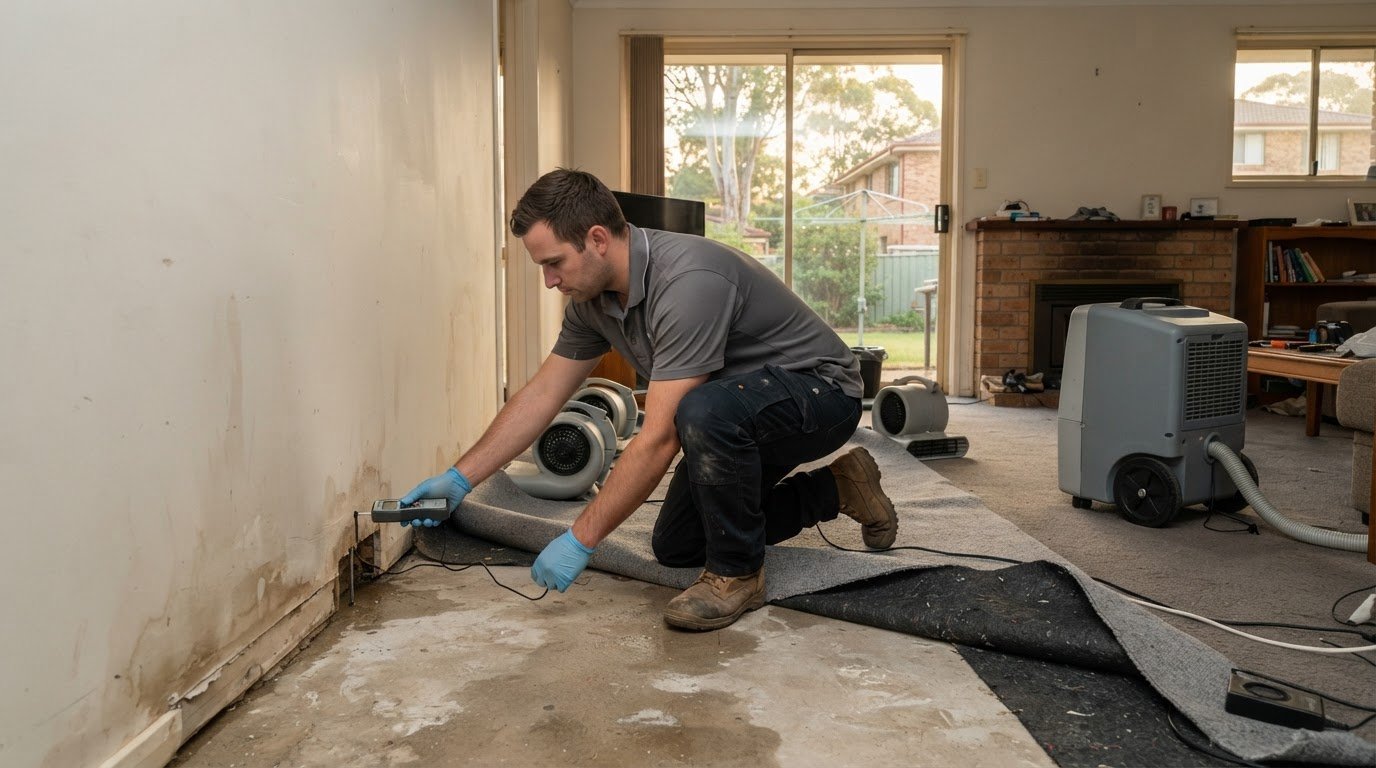
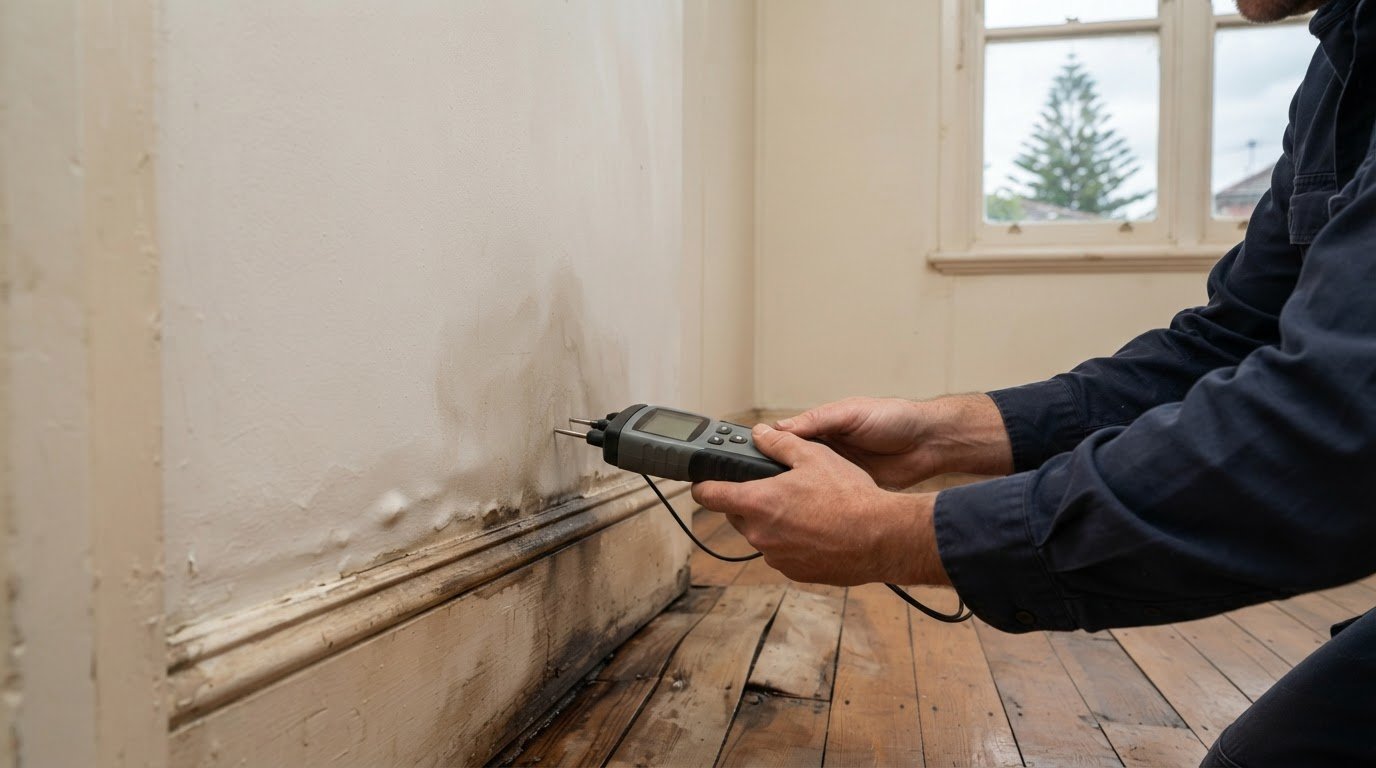
- Slab or subfloor route: ground-level damp spreads sideways beneath connected units. Suspect this when skirting boards stain and several ground-floor units smell damp. Poor subfloor ventilation keeps that moisture trapped.
- Air conditioning route: a dirty split system or shared ducted system blows spores through every room it serves. Suspect this when the smell arrives the moment the unit starts. Our notes on air conditioner mould explain what builds up inside a system.
Houses face the same moisture and airflow problems, particularly rising damp and subfloor ventilation. Apartments add the shared structure, which is why a problem in one unit can show up in another.
Why Does Mould Keep Coming Back After You Clean It?
Cleaning the surface leaves the cause in place. Bleach and shop-bought sprays act on the top layer, while the root-like threads (hyphae) sit inside plasterboard paper, timber and grout. Scrubbing also lifts spores into the air, and they settle on surfaces that were clean.
The unit with the stain is often just where the moisture surfaced. A leaking pipe inside a wall, a failed bathroom waterproofing membrane or rising damp in a ground-floor slab can produce mould a room or a unit away. If damp is climbing from below, this Sydney price guide to chemical injection damp proof courses explains how it’s dealt with at the base of the wall.
Airflow is the second cause. A bathroom exhaust fan that vents into a ceiling void instead of outdoors pushes humid air into space that neighbouring units may share. That’s why the same patch reappearing in the same place is a diagnosis.
Call before you scrub: disturbing mould can spread spores to clean areas, including the next unit.
What Should You Do First if a Neighbour Has Mould?
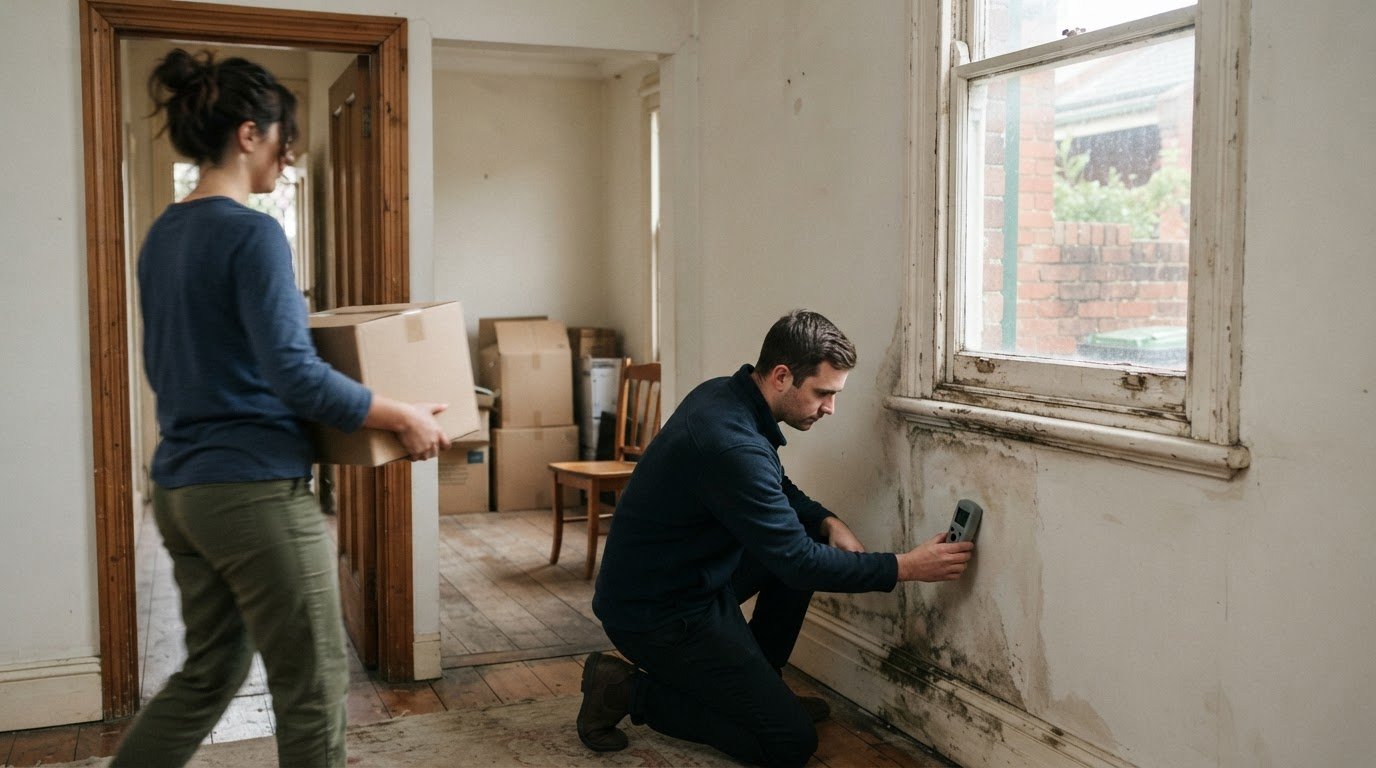
Photograph the shared wall or ceiling, note any smell and when it began, and report it in writing to your property manager or strata manager. Leave the walls closed.
Consider a typical case. A second-floor tenant reports a ceiling stain and the owner sprays it. A few weeks later the unit above reports the same smell. The leak sits in a bathroom wall cavity that serves both, so wiping one ceiling never touched the cause. The details that matter are where the stain sits, which rooms line up above and below, and when the smell started.
Written records matter because responsibility between a lot owner, the owners corporation and a landlord depends on where the source sits. Your strata manager can confirm who holds it in your building.
How Does Professional Treatment Work?
A mould removalist in Sydney should be asking where the moisture is coming from before talking about products. ABC Mould Cleaning Solutions removes mould at the source using the Goldmorr System, developed by the Goldmorr Group after years of research. Goldmorr has supplied mould removal solutions since 1998, and its solutions are tested for biodegradability.
Its products can only be applied by Goldmorr approved and trained master technicians, and ABC Mould Cleaning Solutions are approved master technicians and part of the Goldmorr group.
Airborne spores are handled with a non-mechanical air scrubbing system, which is a fogging process. The fog reaches wall voids and corners a cloth can’t, and no fan pushes spores around. Every treatment we use is safe for pets, people and the environment.
Getting started takes three steps: call, send photos for a quote, then get results. Clear photos of the affected walls and ceilings let us put a budget-friendly quote together without delay, and we offer same-day service across the region. If you’d rather have Warren Bailey look at the property in person, an on-site visit costs $275 AUD. If you hold a written quote from another provider, we beat it by 10%.
When a neighbour’s problem has become yours, contact ABC Mould Cleaning Solutions and send photos of the affected areas.
Why Does the Whole Moisture Path Matter?
Spores drifting in from a damp space can land on a freshly treated surface, and wherever humidity stays high they can restart. That’s frustrating when you’ve already paid to fix your own unit.
The practical answer is to trace the path. If the moisture or spore route runs through a shared cavity, a shared duct or a common slab, the treatment plan needs to cover that route. Where the source sits entirely inside one unit, the job can be far more contained. A photo quote shows us which situation you’re in.
Apartments also work in your favour. Less area and easier access than a typical house often mean quicker treatment. Our guides to professional mould removal from walls and kitchen mould removal show how the work goes room by room. In bathrooms, our focus is the ceilings and walls.
How Do Your Options Compare?
| Approach | What happens to the source | Risk of regrowth or spread | Likely outcome |
|---|---|---|---|
| Wipe or bleach the patch | Untouched | High | Stain returns, often within weeks |
| Wait and monitor | Keeps feeding | Rising | Larger area behind the lining, bigger bill |
| Unqualified help | Surface treated, cause often missed | Moderate to high | Repeat call-outs and repeat spend |
| ABC Mould Cleaning Solutions, Goldmorr System | Treated at the source | Lowest | Mould and airborne spores removed, with a quote that beats any written one by 10% |
Waiting feels safe and it’s the most expensive move, because mould in a shared cavity grows where nobody can see it. A hand-sized stain is often a much larger area behind the lining.
Who Does This Matter Most For?
It matters most when a baby or young child lives in the unit, when anyone has asthma or allergies, or when a unit is about to be sold or leased. Our guide to keeping a baby safe from mould covers the household side, and the page on the effects of mould explains what exposure can do.
For property managers and agents, an unresolved shared-source problem means repeat complaints and awkward disclosure questions. Fixing it once, at the source, ends the call-outs. Office managers and facility coordinators face the same pattern in shared buildings, where a damp ceiling or a dirty air conditioner can affect several tenancies.
Be realistic about outcomes. Treatment removes mould and airborne spores, but regrowth can follow if a leak, rising damp or poor subfloor ventilation continues, so the moisture source has to be addressed too. Our scope covers mould removal, rising damp, subfloor ventilation, air conditioner cleaning and non-mechanical air scrubbing. We don’t offer plumbing or electrical work. If you’re weighing up another quote, our guide to getting a second opinion on mould remediation shows what to compare.
Where Do We Work?
We service Sydney Metro, the Blue Mountains and Wollongong, in apartments and houses alike. Check the areas we serve to confirm your suburb.
FAQ
Can mould spread through shared walls in an apartment block?
Yes. Spores move through wall cavities, gaps around pipes and power points, and ceiling voids. Moisture can also pass through the wall itself, so mould can appear next door without any visible gap.
Who is responsible if my neighbour’s mould is affecting my unit?
It depends on where the source sits: the lot owner, the owners corporation or a landlord. Document the problem with photos and report it in writing to your strata or property manager.
Will bleach or scrubbing stop mould coming back?
Rarely. Surface products don’t reach the hyphae inside plasterboard and timber, and scrubbing can send spores into clean areas. Treating the mould at its source gives a far better chance of a lasting result.
How fast can an apartment be treated?
We offer same-day service across the region. Apartments often have less area to work through than houses, though timing depends on how far the mould has spread.
How do I get a quote?
Call us, then send photos of the affected areas and we’ll put a quote together from them. If you’d prefer an on-site look from Warren Bailey, that visit costs $275 AUD.
Is mould next door dangerous for babies?
Mould can irritate airways and may aggravate asthma and allergies, so a baby in the home is a strong reason to act promptly. Speak to your doctor about any symptoms, and have the mould and spores removed to reduce exposure.
What if I already have a quote from someone else?
Send it to us. We beat any written quote by 10%. Compare what each quote covers, because treating at the source with the Goldmorr System is a different job from wiping the surface.
About the Author
Warren Bailey is the principal contact at ABC Mould Cleaning Solutions in Sydney. He handles mould removal, rising damp, subfloor ventilation and non-mechanical air scrubbing work across Sydney Metro, the Blue Mountains and Wollongong. ABC Mould Cleaning Solutions are Goldmorr approved master technicians.