
Scrubbing the black spots off your kitchen tiles with supermarket bleach isn’t just ineffective; it’s often feeding the root of the problem. You’re likely worried about invisible spores drifting into your family’s food or that persistent, musty smell that just won’t go away. It’s incredibly frustrating to watch mould return just days after a DIY clean, especially when you’re trying to keep your home safe. Our team understands that anxiety and the urgent need for a cooking space that’s actually healthy for your children.
Our professional kitchen mould removal service utilizes the industry-leading Goldmorr System to permanently eliminate toxic growth using a food-safe, biodegradable process. Since the AS-IICRC S520:2025 standard was formally adopted in December 2025, our master technicians have provided Sydney homeowners with a scientific, non-toxic alternative to temporary fixes. You’ll discover how we identify the underlying moisture sources to prevent recurrence and ensure your kitchen meets the highest safety certifications. We’ll walk you through our efficient remediation process that delivers a certified mould-free environment and the total peace of mind you deserve.
Key Takeaways
- Understand why kitchen mould is a serious biohazard and how toxic mycotoxins can contaminate your food preparation surfaces.
- Identify how Sydney’s high humidity and cooking steam create the perfect breeding ground for persistent spores.
- Learn why standard bleach fails to kill mould roots and why our professional kitchen mould removal service is essential for a permanent fix.
- Discover the non-toxic Goldmorr System and how GM2000 eliminates colonies without using harsh, food-contaminating chemicals.
- Get peace of mind with our 10% price beat guarantee on any written quote for certified remediation.
Why Kitchen Mould is a Critical Health Risk in Sydney Homes
Kitchen mould isn’t just an unsightly stain on your splashback; it’s a living biohazard that thrives on the organic matter and high moisture levels found in every Sydney cooking space. When mould colonies establish themselves, they release mycotoxins into the air. These toxic compounds are particularly dangerous in a food preparation environment because they can settle directly onto your ingredients, cutlery, and benchtops. Exposure to these toxins often leads to serious health effects of mould, including chronic respiratory distress, persistent coughing, and severe allergic reactions. Beyond human health, these spores accelerate food spoilage, meaning your fresh produce and pantry staples won’t last nearly as long as they should. Stachybotrys chartarum, commonly known as toxic black mould, is a greenish-black fungus that flourishes in damp Australian kitchens where cellulose-rich materials like drywall or cabinetry remain wet for more than 48 hours.
Ignoring these signs puts your family at risk. Many homeowners attempt to scrub the surface, but this often ignores the root cause. Engaging a professional kitchen mould removal service ensures that the contamination is handled according to the AS-IICRC S520:2025 standard, which was formally adopted in December 2025 to provide a safer framework for remediation. You need a solution that addresses both the visible growth and the invisible threats lurking in your air supply.
The Airborne Threat: More Than What You See
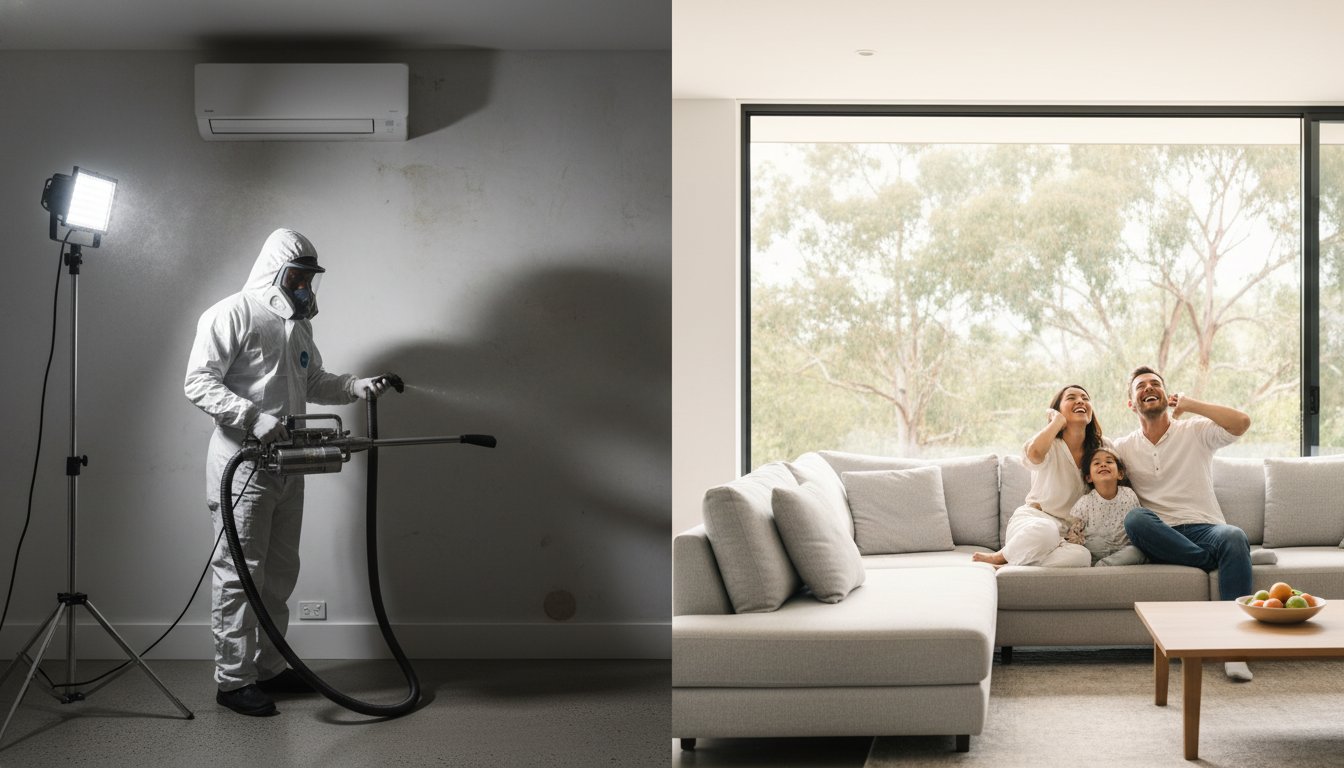
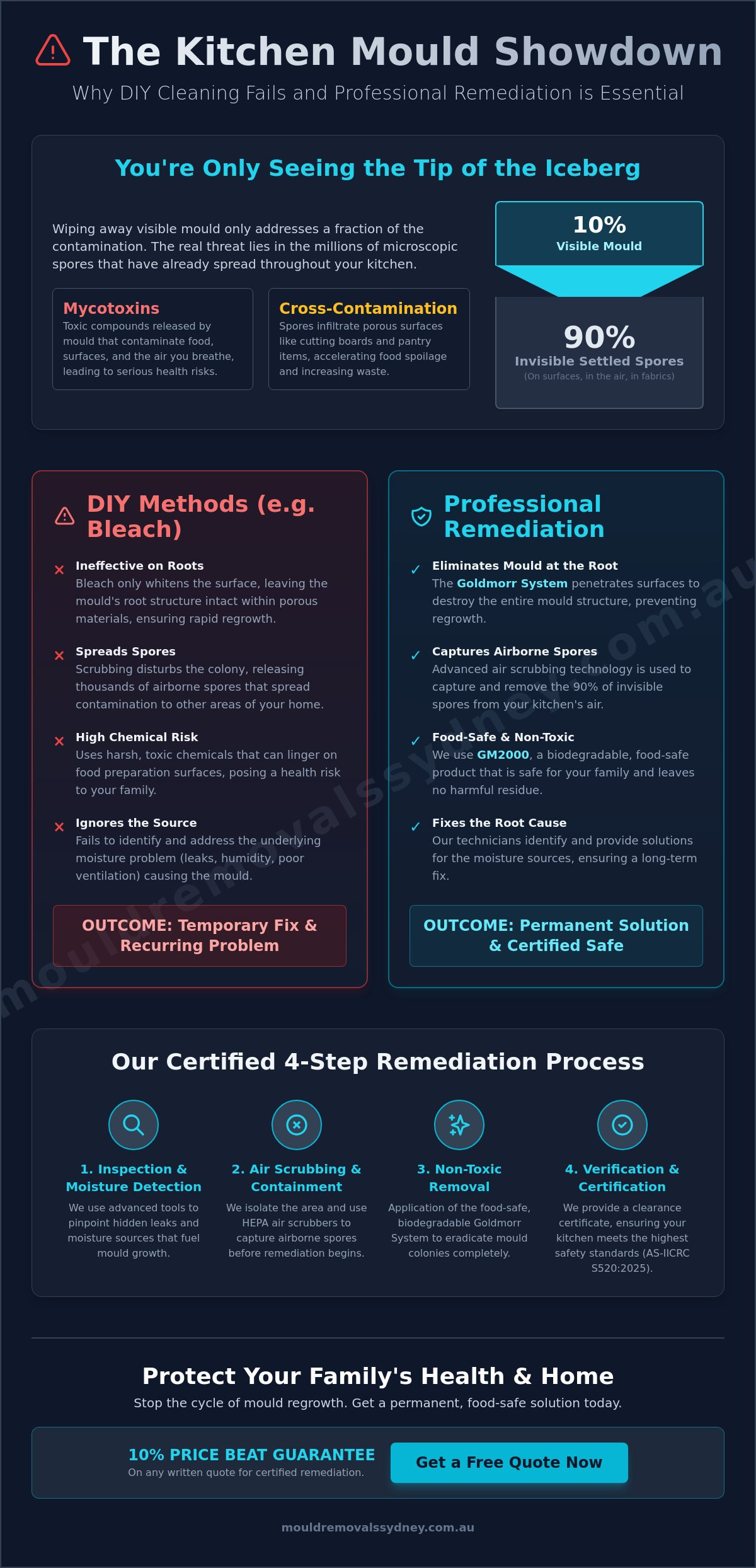
Sydney’s popular open-plan home designs allow mould spores to travel effortlessly through air currents. When you boil a pot of water or use a dishwasher, the resulting humidity carries these microscopic spores from the kitchen into your living areas in seconds. Wiping away visible mould only addresses 10% of the actual problem. The remaining 90% consists of “settled spores” that blanket your kitchen benchtops, toaster, and utensils. These invisible particles remain dormant until they find a new moisture source, leading to the frustrating cycle of regrowth that many DIY cleaners face. Our master technicians use advanced air scrubbing technology to capture these airborne threats before they can settle and multiply.
Mould and Food Safety Standards
A mouldy kitchen is a compromised kitchen. Spores don’t just stay on the walls; they infiltrate porous surfaces like wooden cutting boards, bamboo utensils, and even the seals of your refrigerator. Once mould enters the pantry, it significantly reduces the shelf life of fresh bread, fruit, and vegetables through cross-contamination. This creates a hidden cost for Sydney families as food waste increases. Because kitchens are high-traffic areas where food is consumed, professional air scrubbing and non-toxic remediation are non-negotiable. Using a certified kitchen mould removal service ensures that your food prep surfaces remain hygienic and free from the chemical residues found in harsh, off-the-shelf cleaning products.
Identifying the Culprits: Common Causes of Kitchen Mould in NSW
Sydney’s unique climate is a primary driver for fungal growth in residential properties. With relative humidity levels in the Greater Sydney region often exceeding 60%, moisture stays trapped in the air, creating a buffet for dormant spores. When you combine this ambient dampness with daily cooking activities, you get a recipe for structural disaster. Without a high-capacity extraction fan, steam rises and condenses on your ceiling, turning plaster and paint into a saturated feeding ground. If you’ve noticed dark patches appearing above your stove or near the cornices, it’s time to consult a kitchen mould removal service to stop the spread before it compromises your cabinetry.
The most common culprit our technicians encounter is “Hidden Leak” syndrome. This usually happens in the dark, unventilated space under your kitchen sink. A slow drip from a mixer tap or a tiny crack in a PVC waste pipe provides constant hydration to porous particle board. Because these areas are rarely inspected, mould can grow undisturbed for months behind your cleaning supplies. For ground-floor kitchens, the issue might be even deeper. Ground moisture can travel through foundations via rising damp, saturating your lower cabinets from the back. Following NSW Health advice on mould is crucial here. You must address the moisture source immediately, or the fungus will simply return after cleaning.
Poor Ventilation and the “Sydney Summer” Factor
Sydney summers are notoriously humid and punishing. During East Coast Lows, coastal moisture gets trapped indoors, and standard builder-grade exhaust fans often fail to cope with the volume of air required for heavy cooking. You’ll often see condensation forming on cold surfaces like Caesarstone benchtops or tile splashbacks. This “sweating” provides just enough surface water for airborne spores to take root in your grout lines. If your kitchen feels perpetually muggy, it’s a clear sign that your ventilation is inadequate for the local climate.
Hidden Moisture Sources in Modern Kitchens
Modern kitchens are full of hidden plumbing that can fail without warning. Leaking dishwasher hoses or blocked refrigerator drainage lines are frequent offenders that cause massive damage before they’re even noticed. We often find extensive colonies behind “kickboards” and integrated appliances where air never circulates. These areas require master technicians who know exactly where to look for hidden growth. If you smell something musty but can’t see the source, you can send us images of your kitchen so we can help identify the problem areas before they worsen.
Professional remediation is the only way to ensure these hidden hotspots are completely neutralised. A kitchen mould removal service doesn’t just clean the surface; it identifies these mechanical failures to ensure your home stays healthy and dry long-term.
Professional Kitchen Mould Removal vs. DIY Methods
Most Sydney homeowners instinctively reach for a bottle of supermarket bleach the moment they spot dark clusters on their kitchen ceiling. This is a critical mistake. Bleach is a high-water-content product. While the chlorine component effectively strips the colour from the mould, the water component soaks into the porous surface. This actually feeds the hyphae, or the root system, of the fungus. Within days, the colony returns with even more vigour. Beyond being ineffective, using high-concentration chlorine near food preparation surfaces poses a significant chemical risk to your family. You don’t want toxic residues anywhere near your ingredients or cooking utensils.
Natural remedies like vinegar or clove oil are popular but often fail to address the scale of a true infestation. They might kill surface spores, but they don’t have the staying power to penetrate deep into cabinetry or wall cavities. When you opt for a professional kitchen mould removal service, the methodology changes from manual scrubbing to scientific air and surface neutralisation. Scrubbing is a primary cause of cross-contamination. It physically agitates the mould, launching millions of microscopic spores into your breathing zone. Our master technicians use a non-mechanical approach that ensures these spores are captured and killed rather than spread throughout your home.
Why DIY Can Make the Problem Worse
DIY attempts often turn a localized kitchen issue into a whole-house problem. Aggressive scrubbing releases spores that are light enough to float on the smallest air currents. These particles quickly find their way into your HVAC system or split system air conditioners, spreading the contamination to bedrooms and nurseries. Understanding What is Black Mould? is the first step in realizing why these colonies require expert containment. We follow strict EPA mould remediation guidelines to ensure your air quality is restored safely and effectively.
The Goldmorr System: The Professional Standard
Our team relies on the Goldmorr System, an industry-leading solution designed for maximum safety and efficiency. This system uses GM2000, a biodegradable and non-toxic product that is perfectly suited for kitchen environments. The core of this method is our specialized fogging process. We create a fine mist that penetrates every crack, crevice, and ceiling pore that a sponge simply cannot reach. It eliminates airborne spores instantly. Most of our treatments are completed within a single day. You won’t need to worry about repainting or lingering toxic fumes. It is that simple. It is that easy.
Choosing a professional kitchen mould removal service means you are investing in a permanent solution rather than a temporary mask. We address the root cause and the invisible airborne threat simultaneously, providing you with a kitchen that is truly healthy and safe for your family.
Our Specialized Kitchen Mould Remediation Process
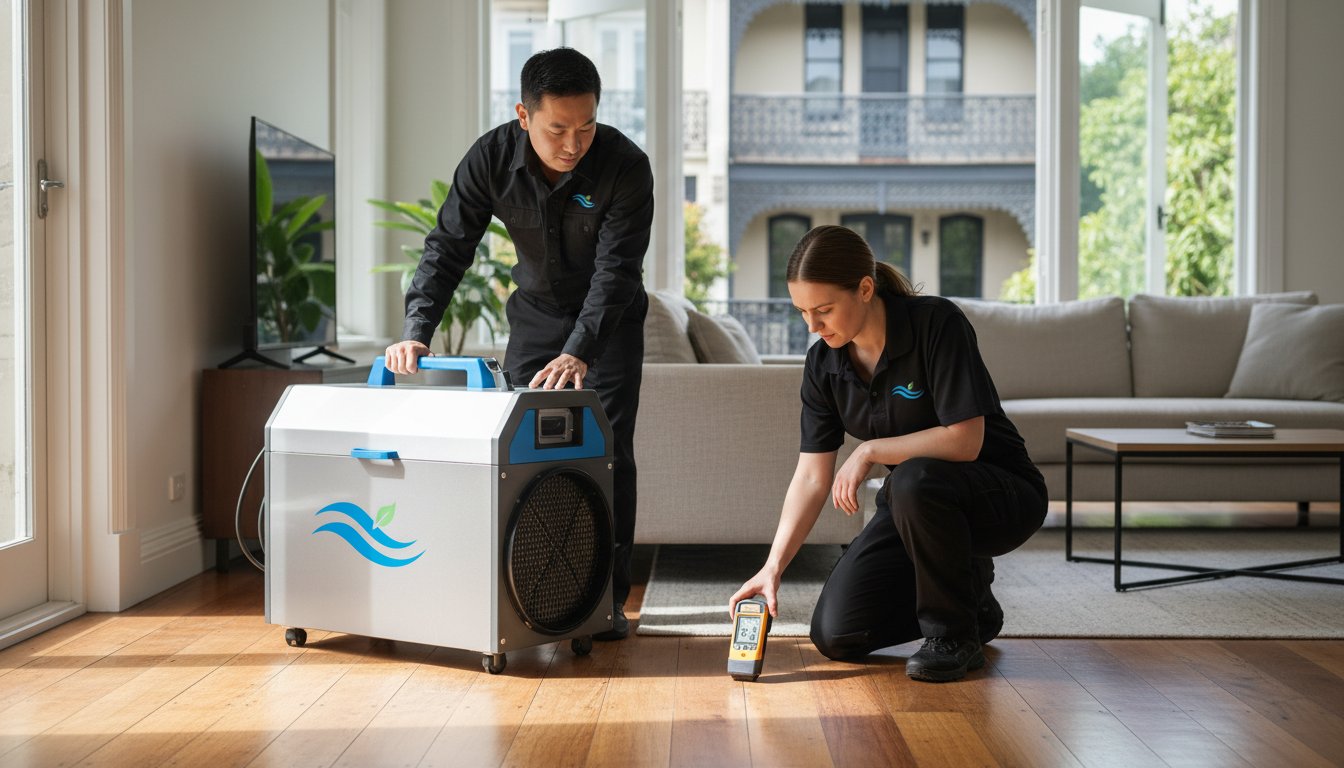
Our approach to kitchen mould remediation is built on scientific precision rather than guesswork. We don’t just wipe surfaces; we deploy a rigorous four-step system designed to protect your home and health. This process begins with a Comprehensive Inspection. Our master technicians use advanced moisture meters and thermal imaging cameras to see through walls and cabinetry. We specifically target appliance-related hotspots that others miss, such as leaking dishwasher internal seals, refrigerator condensation pans, and the dark voids behind integrated ovens. By finding the exact moisture source, we ensure the remediation is a permanent fix, not a temporary mask.
The second stage is Surface Treatment. We use GM2000, a key component of the Goldmorr System, to eliminate visible colonies on your benchtops, splashbacks, and kickboards. This product is biodegradable and non-toxic, making it the safest choice for areas where you prepare food. Following this, we perform Fogging and Air Scrubbing. This step is vital for capturing airborne contaminants that have migrated from the kitchen into adjacent rooms. Finally, we provide a Prevention Report. This document outlines the necessary structural or plumbing repairs needed to keep your kitchen dry. If you suspect a hidden leak is fueling growth, contact us for a professional kitchen mould removal service today.
The Inspection: Finding the Invisible
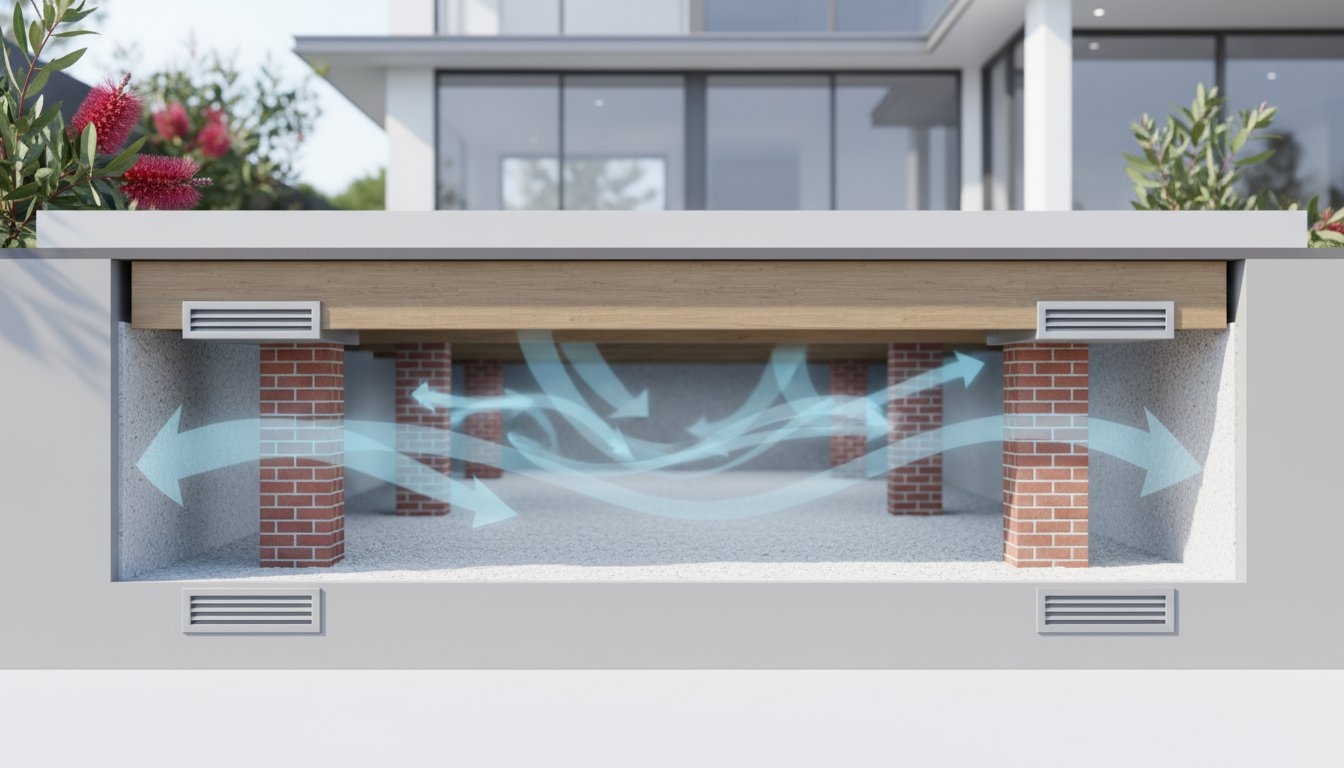
Visual checks are never enough in a modern kitchen. We use infrared technology to detect temperature variances that indicate active leaks behind your cabinetry. Our team also conducts air quality testing to determine precise spore counts, measured in Colony Forming Units per cubic metre (CFU/m3). This data allows us to identify “Causation” rather than just treating “Symptoms.” We often find that what looks like a small patch of ceiling mould is actually a symptom of a slow-drip pipe in the wall cavity or a failure in the subfloor ventilation. Addressing these mechanical issues is the only way to stop the cycle of regrowth.
Post-Removal: Prevention and Care
Once the remediation is complete, we focus on long-term prevention. We recommend improving kitchen airflow by upgrading to high-capacity extraction fans that vent externally, rather than recirculating humid air. If your mould issue stemmed from a burst pipe or appliance flood, you may need to follow our Water Damage Repair guidelines to restore structural integrity. We also advise sealing porous grout lines and timber surfaces immediately after treatment. These materials act like sponges for moisture; sealing them creates a barrier that prevents future spores from taking root. It’s that simple. It’s that easy.
Why ABC Mould Cleaning Solutions is Sydney’s Top Choice for Kitchens
Choosing the right team for your kitchen mould removal service is about more than just hiring a cleaner; it’s about protecting your home’s structural integrity and your family’s health. At ABC Mould Cleaning Solutions, we’ve built our reputation as Sydney’s trusted authority by combining world-class technology with a fierce competitive edge. We are so confident in our value that we offer a 10% Price Beat Guarantee. If you have a written quote from another certified professional, we’ll beat it by 10%. This ensures you receive the highest standard of remediation at the most affordable rate in New South Wales.
Our team consists of Certified Goldmorr Master Technicians. These specialists are trained to handle the complex requirements of food preparation environments. Because we use a non-toxic, biodegradable system, our process is completely safe for your children, your pets, and your kitchen surfaces. You don’t need to clear out your entire pantry or worry about harsh chemical odors lingering in your appliances. We provide rapid response times across all Sydney suburbs, ensuring that whether you’re in the CBD or the Hills District, your mould problem is addressed before it spreads to other rooms. It’s that simple. It’s that easy.
Local Experts You Can Trust
We understand the specific environmental challenges faced by homeowners in different parts of the city. From the salt-air humidity of the Northern Beaches to the older, character-filled terraces of the Inner West and the leafy, damp-prone properties in the Sutherland Shire, our technicians have seen it all. We’re committed to providing “Peace of Mind” through transparent pricing and scientific results. You can trust our team to restore your home to a healthy state using Sydney’s #1 Mould Removal Service. We don’t just hide the problem; we eliminate it at the source.
Get a Quote in Minutes
We’ve streamlined our process to be as efficient as possible for busy Sydney families. You don’t have to wait days for a site visit just to get an idea of the cost. Simply use your smartphone to “Send us images” of the affected areas, and our experts will provide a rapid estimate. We also maintain 24/7 availability for emergency water damage and urgent mould issues that make a kitchen uninhabitable. Don’t wait for the spores to spread and the remediation costs to climb. Book your kitchen mould inspection today and take the first step toward a certified mould-free home.
Take Control of Your Kitchen’s Health Today
Your kitchen should be the safest place in your home; not a hidden breeding ground for toxic mycotoxins. We have explored how Sydney’s extreme humidity and common plumbing leaks create the perfect conditions for dangerous fungal growth. While DIY methods like supermarket bleach only mask the problem, our professional kitchen mould removal service provides a permanent, scientific solution. Our Master Technicians utilize the industry-leading Goldmorr System to ensure your food preparation areas are completely restored to safety.
Don’t wait until the spread worsens and threatens your family’s respiratory health. We are committed to restoring your peace of mind with our non-toxic, food-safe biodegradable fogging and our 10% Price Beat Guarantee. You can trust our team to deliver a certified mould-free environment that is safe for your kids and pets. It is that simple. It is that easy.
Get a Free Kitchen Mould Quote – We Beat Any Quote by 10%!
Take the first step toward a healthier home environment. Our experts are ready to help you reclaim your kitchen and provide the lasting protection your property deserves.
Frequently Asked Questions
Is it safe to cook in a kitchen with mould?
No, it is not safe to cook in a contaminated kitchen because airborne spores and mycotoxins can settle directly onto your food and utensils. Cooking steam actually helps these microscopic particles travel further through your home; increasing the risk of ingestion. You should engage a kitchen mould removal service to ensure your food preparation surfaces are sterile and safe for your family.
How much does professional kitchen mould removal cost in Sydney?
Professional remediation for a standard kitchen in Australia typically ranges from A$700 to over A$1,200 depending on the extent of the growth. A specialized mould inspection usually costs between A$150 and A$350 to identify the root cause. These prices cover the use of certified technicians and industrial-grade equipment like thermal cameras and air scrubbers to ensure a permanent fix.
Will the mould come back after professional treatment?
Mould will not return if you address the underlying moisture source identified during our inspection. We provide a comprehensive prevention report after every kitchen mould removal service to highlight plumbing leaks or ventilation failures that need repair. If these structural issues are fixed, our Goldmorr System treatment provides a long-term, mould-free environment for your property.
Are the chemicals used safe for food preparation surfaces?
Yes, the GM2000 solution we use is non-toxic and biodegradable; making it perfectly safe for use around food prep areas. Unlike supermarket bleach, our professional products leave no harmful chemical residues that could contaminate your meals. This system is specifically designed to be safe for children, pets, and the environment while remaining lethal to fungal colonies.
Do I need to throw away food if I find mould in the pantry?
You must discard porous food items like bread, open cereals, and fresh produce if they are near a mould colony. Spores can penetrate deep into soft foods even if the growth isn’t visible to the naked eye. Non-porous items in sealed glass or plastic containers can generally be saved if the exterior is thoroughly cleaned by our technicians.
How long does the kitchen mould removal process take?
Most kitchen remediation projects are completed within 4 to 8 hours. Our master technicians work efficiently to minimize disruption to your home; completing the inspection, surface treatment, and fogging in a single day. You can typically return to using your kitchen shortly after the final air scrubbing phase is finished.
Can I stay in the house during the mould fogging process?
You can stay in the house, but we recommend vacating the kitchen area while the active fogging is underway. While the Goldmorr System is non-toxic, the mist needs time to settle into every crack and crevice to be 100% effective. Most Sydney homeowners find it easiest to step out for a few hours while we neutralize the airborne spores.
What is the most common cause of kitchen mould in Sydney?
High relative humidity exceeding 60% is the primary driver of mould in Sydney homes. When this coastal dampness combines with cooking steam and hidden plumbing leaks under the sink, it creates an ideal environment for spores to thrive. Poorly maintained extraction fans often fail to remove this moisture; leading to persistent growth on ceilings and behind cabinetry.