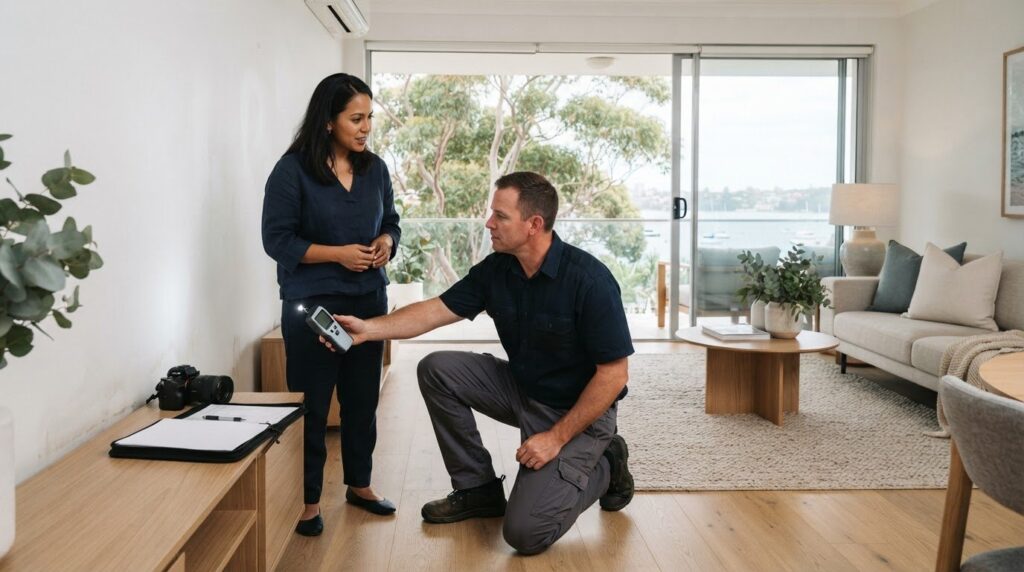
What if a mould smell is a clue to investigate, not proof your sale is doomed? If you’re thinking, “I can’t sell my house because of mould smell,” it’s understandable to worry buyers will suspect a hidden defect. But a musty odour doesn’t automatically make a property impossible to sell. The first step is finding out what’s causing it.
The smell could point to mould or excess moisture, but it may also come from an air conditioner or another source. Masking it with fragrance can hide the warning without resolving the underlying issue. A focused assessment can help clarify what’s happening and what needs attention, so you can make informed decisions before sale photography, inspections or buyer visits.
This article explains how to investigate a persistent odour, prepare your Sydney property for an assessment and address the source responsibly. You’ll also learn what information to gather and how a photo assessment may provide a same-day quote in many cases, giving you a practical next step without assuming the problem will derail your sale.
Key Takeaways
- A persistent musty odour is a reason to investigate, not proof that you “can’t sell my house because of mould smell.”
- Track where and when the smell is strongest, including whether it changes after rain or when the air conditioner runs. These patterns can help focus an assessment.
- Keep buyer reactions separate from legal conclusions: the odour, its cause and any inspection findings are different considerations.
- Before listing or hosting inspections, record what you notice, look for moisture clues, arrange an assessment and keep relevant documentation.
- ABC can assess air quality, humidity, ventilation and structural dampness, then recommend next steps based on the findings. A photo assessment can provide a same-day quote in many cases.
Can’t Sell Your House Because of a Mould Smell? Start With the Likely Cause
Preparing a home for sale is demanding enough without noticing a damp, stale odour that lingers after you open the windows. While general pre-sale prep often includes exterior maintenance and window detailing—work showcased by companies such as snugsservices.com—air quality issues cannot simply be polished away. It’s understandable to wonder, “can’t sell my house because of mould smell?” But an unpleasant smell alone doesn’t establish what’s happening in the property or prove a sale is impossible. Treat it as a reason to investigate calmly before drawing conclusions.
A persistent musty odour is a clue to investigate, not a diagnosis. It can be associated with moisture or mould, but odour alone can’t confirm the source, the extent of an issue or whether mould is present. The smell may have another cause, including an air-conditioning system or stale air. Gather evidence rather than assuming the worst or covering the smell and hoping it disappears.
Mould is a biological growth that can occur in different environments; the overview What is mold? provides general background. In a home, visible growth is not the only clue worth investigating. Moisture or affected materials may be out of sight, such as behind stored belongings or in areas that aren’t easy to inspect. That possibility is a reason to assess further, not a basis for diagnosing hidden mould from smell alone.
What a persistent musty smell can, and cannot, tell you
Notice the character of the odour and where it seems strongest, but don’t use those observations to identify a mould species or declare an area contaminated. A musty smell may point towards damp conditions, yet it doesn’t reveal the full cause. A professional assessment can help determine whether moisture, mould or another source needs attention.
Keep two questions separate. First, what is causing the smell, and what action, if any, is appropriate? Second, how should the property’s condition be managed during a sale? Findings about the cause may provide useful facts for the second question, but an odour alone doesn’t settle a buyer’s response or a seller’s obligations. Avoid making legal conclusions based only on a smell.
Why masking the smell is not the same as resolving it
Air freshener can cover an odour temporarily, and airing out a room may make it less noticeable. Neither step identifies the source. If the smell returns when windows are closed, after rain or when the air conditioner runs, record that pattern rather than repeatedly treating the symptom. These details give an assessment a more useful starting point and help distinguish a temporary change in perception from a resolved cause.
Before sale photographs, inspections or buyer visits, set aside time to investigate rather than conceal an unresolved odour. A practical first record can include:
- Where the smell is strongest and whether it shifts between rooms.
- When you notice it, including after rain or during air-conditioning use.
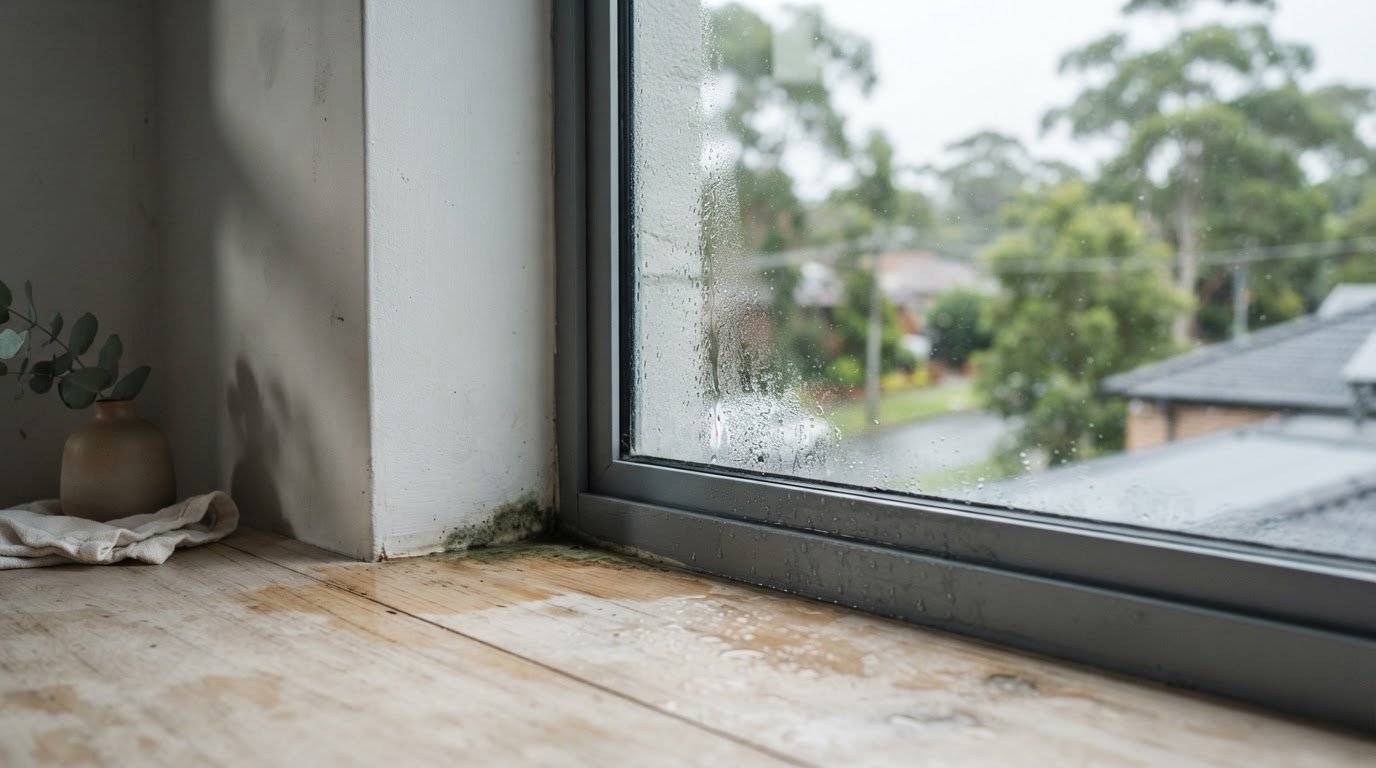
- Any visible dampness, water marks or recent changes you’ve observed.
These notes don’t replace an assessment, but they make your observations clearer. Investigating the likely cause is a constructive step towards understanding the property’s condition. It isn’t an admission that you can’t sell, and it doesn’t predict the outcome of a sale.
How to Trace a Mould Smell Through Moisture, Ventilation, and Hidden Areas
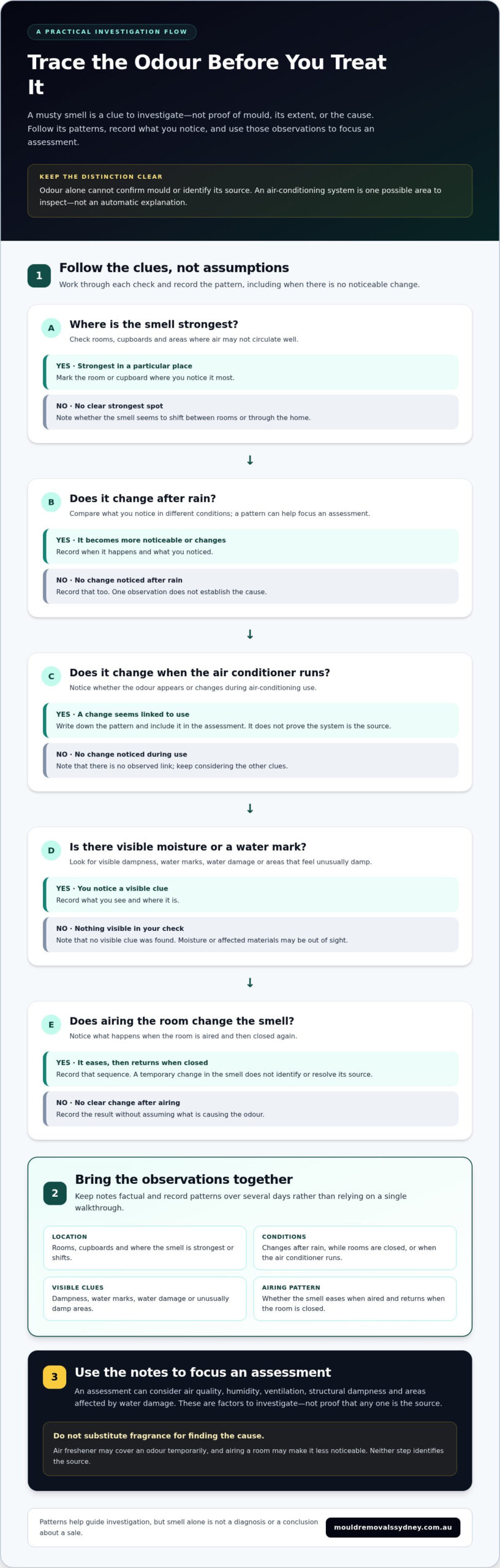
A useful investigation starts with patterns, not guesses. The odour may be stronger in one room, change after rain or become noticeable when the air conditioner runs. Those clues can help focus an assessment, but none proves the cause on its own. Finding the moisture source helps direct an assessment towards the affected area.
If you’re worried you “can’t sell my house because of mould smell,” turn that concern into practical observations. Record what you notice over several days rather than relying on a single walkthrough. Keep the notes factual: where the smell occurs, what conditions were present and whether you can see signs of dampness or water damage.
Follow the smell without assuming its source
Check rooms, cupboards and other areas where air may not circulate well. Note whether the odour is stronger after rainfall, while rooms have been closed or when the air conditioner is operating. An air-conditioning system is one possible area to inspect, not an automatic explanation. If the smell changes during use, record that detail and include it in the assessment rather than concluding the system is at fault.
- Mark the rooms or cupboards where the smell is most noticeable.
- Record whether it changes after rain or while the air conditioner runs.
- Note whether the odour eases when a room is aired, then returns when it’s closed.
- Write down visible moisture, water marks or areas that feel unusually damp.
These details can help distinguish a localised pattern from an odour that seems to move through the home. For example, a smell noticed mainly when a split system operates is useful information for an inspection, but it doesn’t confirm that the unit is the source. ABC provides air-conditioning cleaning in Sydney, including split system aircon cleaning.
Consider dampness, airflow, and less-visible spaces
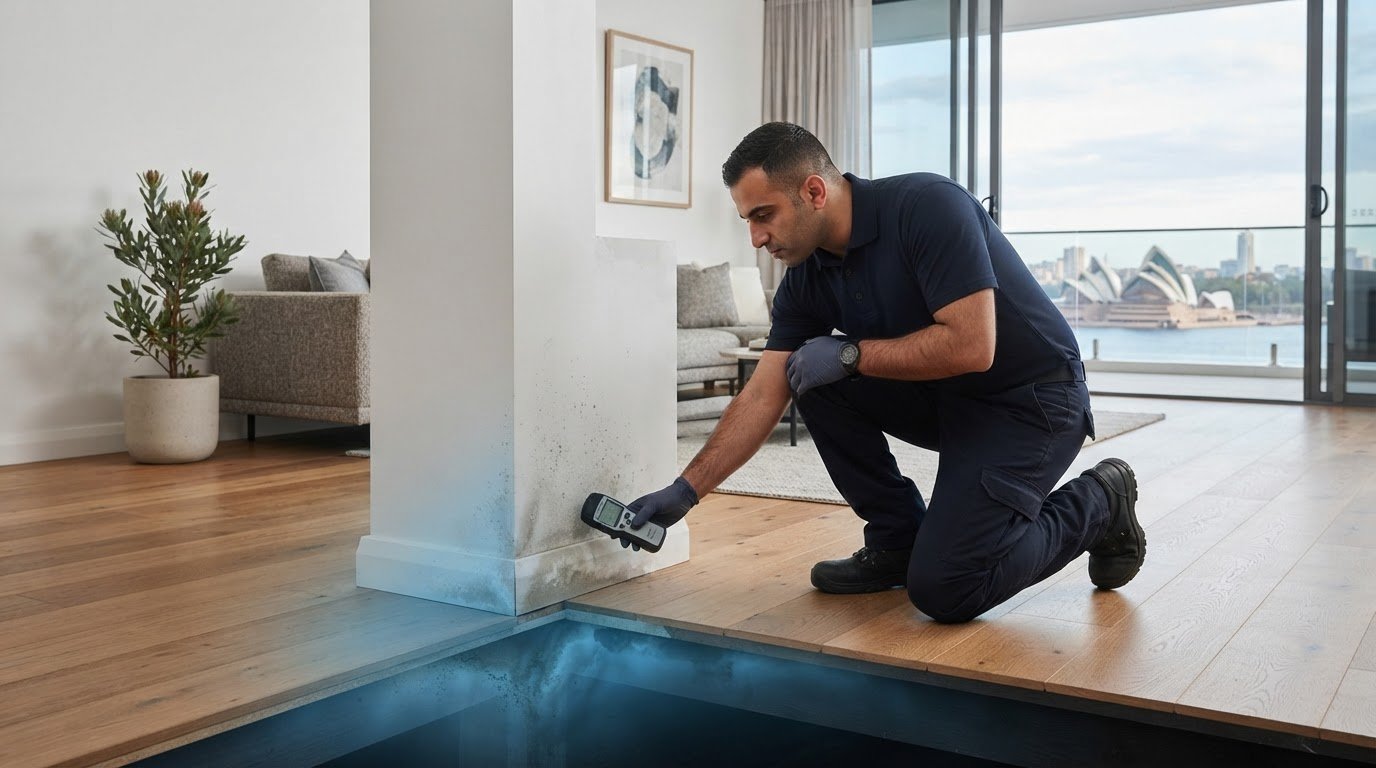
Moisture can collect or persist in places that aren’t obvious during a quick viewing. An assessment may consider humidity, ventilation, structural dampness and areas affected by water damage. Depending on the property and its condition, a subfloor space may also be relevant. These are factors to investigate, not proof that any one area is causing the smell.
Look for context rather than trying to open walls or make a diagnosis yourself. A past leak, a damp patch or an area that stays poorly ventilated can help guide further investigation. If you’ve noticed water damage, include when and where it occurred in your notes. Information about water damage repair for Sydney homes may also help you understand the restoration process.
ABC can assess air quality, humidity, ventilation and structural dampness to investigate possible sources. If your observations point to a persistent issue, a mould inspection in Sydney can help direct attention to the relevant areas. Share your notes and any photos so the assessment has a clear starting point.
Could a Mould Smell Affect a Sydney House Sale or Disclosure?
A persistent odour may prompt a buyer to ask questions, particularly if they can’t identify its source. But a buyer’s reaction is not the same as a legal conclusion, and not every buyer will interpret a smell in the same way. An unexplained odour, the property’s actual condition and findings from an inspection are separate considerations.
If you’re thinking, “can’t sell my house because of mould smell,” avoid making assumptions in either direction. The smell alone doesn’t establish that mould is present, reveal whether there’s moisture damage or determine what you must disclose. Equally, a lack of visible growth doesn’t answer every question about the property. The useful next step is to get clearer information about what has been assessed and what was found.
Odour, inspection findings, and buyer confidence are different questions
A buyer may notice an odour and seek an explanation, but that doesn’t mean every buyer will respond alike or that the smell predicts a sale outcome. An assessment can help distinguish an identified source from an unresolved concern. Keep the findings in context: what was inspected, what was observed and whether further investigation or work was recommended.
Written documentation gives you a clearer factual basis for sale-preparation discussions. It may help explain what steps you took, but it can’t guarantee a buyer’s response, prevent negotiation or establish a particular sale price. Treatment also can’t guarantee a sale or increase in value. Keep a copy of any assessment findings and written reports with your property’s sale-preparation records, alongside relevant observations and records of work completed.
Check NSW disclosure questions with the right adviser
Disclosure obligations depend on current NSW requirements and the circumstances of the transaction. Don’t rely on a general article, a buyer’s assumption or an odour alone to decide what applies to your property. Ask a NSW conveyancer or solicitor for advice about your specific situation, including how known property issues and assessment findings should be handled during the sale process.
Prepare for that discussion by organising the information you have. A concise file can make it easier to explain the timeline and ask focused questions:
- Your notes about when and where the odour occurs.
- Any assessment findings or written reports.
- Records of work completed or recommendations still being considered.
- Questions about how the known facts relate to your disclosure obligations.
Keep the distinction clear: a smell is an observation, an assessment provides findings within its scope, and a legal adviser can explain how current NSW rules apply. Being organised doesn’t remove uncertainty or determine the legal answer. It helps you discuss the facts accurately and make informed choices before marketing or progressing a sale.
What to Do Before Listing or Hosting a Buyer Inspection
A simple plan can make a persistent odour easier to manage before sale preparation moves ahead. If you’re thinking, “can’t sell my house because of mould smell,” focus first on gathering useful information, not hiding the symptom. A careful record and a suitable assessment can help clarify what needs attention and what remains uncertain.
Keep property preparation separate from legal decisions. Making an area accessible or organising reports can help you understand the home’s condition, but these steps don’t determine your disclosure obligations. For advice about those, speak with a NSW conveyancer or solicitor who can consider your circumstances and current requirements.
A practical pre-sale checklist for the smell
Work through these steps in order. Your notes will give an assessor a clearer starting point and help keep the investigation organised.
- Record the pattern. Note which rooms or cupboards have the strongest odour, when you notice it and whether it changes after rain, when the air conditioner runs or after a room has been closed.
- Gather what you know. Write down any known leaks, past water damage, ventilation concerns or air-conditioning issues. Include approximate dates if you know them, but don’t guess where details are uncertain.
- Arrange an assessment. Share your observations and relevant history so the assessment can consider possible sources rather than treating the smell as a diagnosis.
- Review the findings. Understand what was assessed, what was found and whether further work or investigation was recommended. Don’t assume every potential source has been ruled out if it wasn’t part of the assessment.
- Keep the records. Save written findings and related water-damage documents with your sale-preparation paperwork.
If you need general background while organising your next steps, read about what mould is and how it affects homes. Use that information as context, not as a substitute for an assessment of your property.
Prepare the home and its records without overpromising
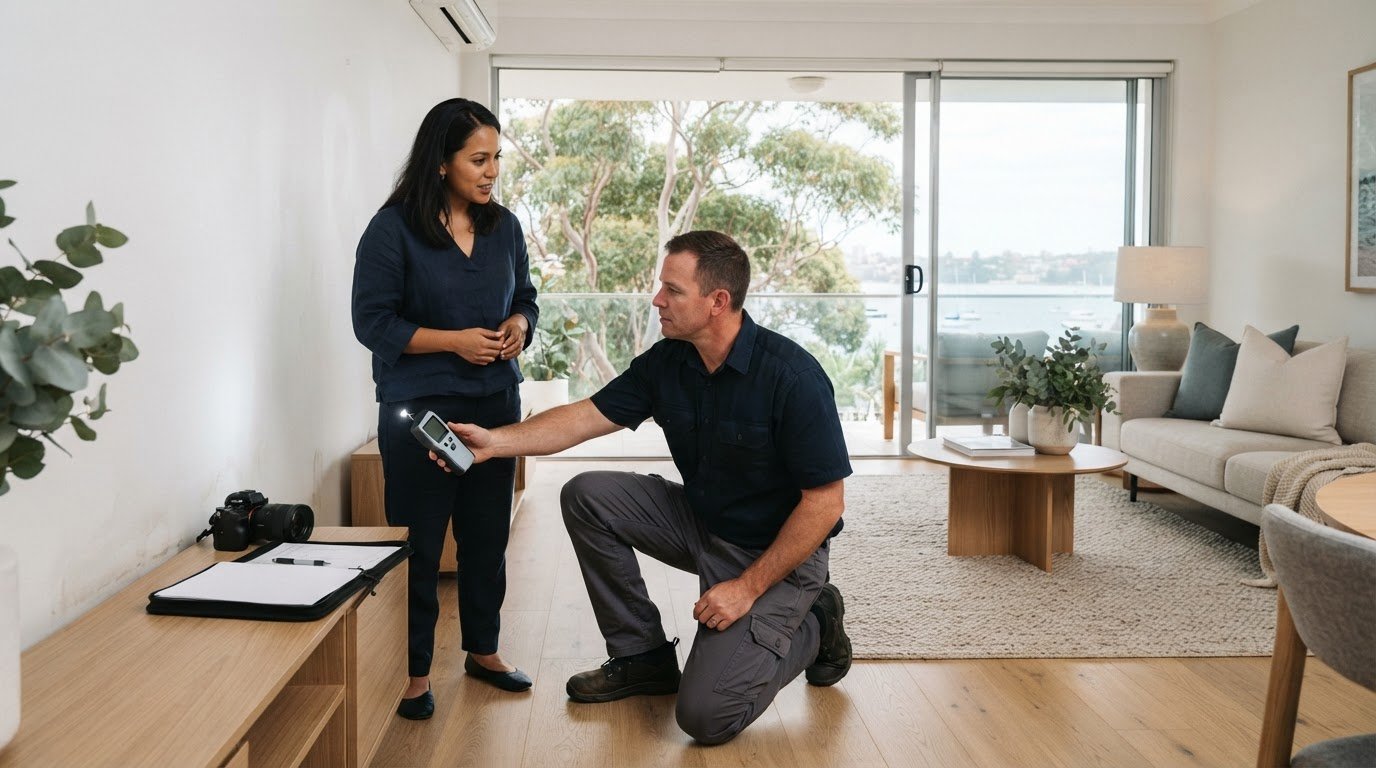
Before an assessment, make relevant areas accessible where practical. Clear access to the affected room, cupboards or suspected damp areas, and to subfloor spaces if they’re relevant and safely accessible. Tell the assessor about known water damage and changes you’ve observed. You don’t need to dismantle building materials yourself; share what you know and let the assessment guide what happens next.
Keep the written report, any water-damage records and notes about work completed in one place. This makes it easier to refer back to what was actually assessed, especially if the odour changes or returns. If remediation is accompanied by general property repairs or fresh interior painting—services commonly delivered by home maintenance providers such as Sar Deen Engineering Pte—keep those invoices and warranties on file as well. Avoid telling prospective buyers that the smell is resolved until the relevant work and any appropriate follow-up are complete. Be precise about what’s been done and what the records say.
For help investigating a persistent odour, arrange a mould assessment with ABC Mould Cleaning Solutions. A photo assessment can provide a same-day quote in many cases.
How ABC Mould Cleaning Solutions Helps Address Mould Smells in Sydney
If you’re worried you “can’t sell my house because of mould smell,” a source-focused assessment can replace guesswork with clearer information. ABC Mould Cleaning Solutions investigates possible causes by assessing air quality, humidity, ventilation, structural dampness and signs of hidden moisture. The findings help guide next steps rather than treating every musty odour as the same problem.
The aim is to understand what the property needs before sale photography, inspections or buyer visits. Depending on the assessment, relevant work may include mould removal, air purification, air-conditioning cleaning or water-damage restoration. The appropriate service depends on the findings. No treatment can promise a sale, a particular sale price or a buyer’s response.
From assessment to a source-focused treatment plan
For many cases, a photo assessment can provide a same-day quote. If deeper contamination is suspected, ABC can arrange an on-site inspection using specialised equipment to investigate further. Sharing clear photos and details about the odour or known water damage gives the assessment useful context from the outset.
Where findings support treatment, ABC uses the Goldmorr System, which applies biodegradable products through a non-mechanical fogging technique. Goldmorr products are applied only by Goldmorr-approved and trained master technicians. Goldmorr Group has supplied mould-removal solutions since 1998. All treatments are safe for pets, people and the environment.
Get a same-day quote and a clear next step
After assessment, a full written report can document findings and relevant work, giving you a useful record for your sale-preparation files. Optional mycotoxin testing referrals are also available where relevant. These records can help you understand what was assessed and what actions were taken, but they don’t determine your legal disclosure obligations or predict how a buyer will respond.
ABC’s written-quote guarantee is: We Will Beat Any Written Quote By 10%. The quote and assessment findings give you a clearer basis for deciding what to do next. Keep the report with your property records and discuss sale-disclosure questions with your NSW conveyancer or solicitor.
For sellers in Sydney and surrounding areas, request a photo assessment for a same-day quote in many cases, or call 0488 866 853 to discuss the mould smell and arrange an assessment. Request a mould assessment to get an informed next step for your property.
Take the Next Step With Confidence
A lingering odour can make sale preparations feel uncertain, but it doesn’t have to leave you stuck. If you’re thinking, “can’t sell my house because of mould smell,” focus on getting a clearer picture of the issue before deciding what it means for your plans. An informed next step can help you move forward, even if the assessment shows that more needs attention.
Keep your observations and property records together, then use the findings to plan what to do next. If questions about disclosure arise, discuss them with your NSW conveyancer or solicitor. A measured approach helps you make decisions based on your property’s circumstances rather than assumptions about what a smell might mean.
ABC Mould Cleaning Solutions can help investigate the odour and identify an appropriate way forward. Request a photo assessment or call 0488 866 853 to discuss your Sydney property. Take the next step towards clearer sale preparations with an assessment and a same-day quote in many cases.
Frequently Asked Questions
Can I sell my house if it has a mould smell?
Yes, a musty smell doesn’t automatically prevent you from selling, but it’s sensible to investigate before you market the property. If you’re searching “can’t sell my house because of mould smell,” start by noting where the odour occurs and what changes you’ve noticed. Arrange an assessment if it persists, keep the findings and ask a NSW conveyancer or solicitor how the facts relate to your sale and any disclosure obligations.
Is a musty smell always caused by mould?
No. A musty odour can be associated with dampness or mould, but smell alone can’t identify the cause. It may be stronger in a closed cupboard, after rain or when an air conditioner is running. Record those details, along with any known leaks or visible water marks, to give an assessor useful context. An assessment can consider air quality, humidity, ventilation and structural dampness rather than relying on odour alone.
Can a buyer withdraw from a house purchase because of a mould smell?
A smell alone doesn’t establish whether a buyer can withdraw from a purchase. The answer may depend on the sale contract, the property’s circumstances, inspection findings and current NSW requirements. Avoid relying on general online guidance to interpret a particular contract. If a buyer raises concerns, keep relevant reports and correspondence together and ask your NSW conveyancer or solicitor to explain the options and obligations that apply to your transaction.
Should I disclose a past mould problem when selling in NSW?
Disclosure obligations depend on current NSW rules and the circumstances of the property and transaction, so get advice about your specific situation. A past issue that was treated may raise different questions from ongoing moisture or damage. Keep records of the original assessment, work completed and any follow-up findings. Don’t assume that a treatment report alone determines what must be disclosed. A NSW conveyancer or solicitor can advise how to handle the information.
Can mould smell come from an air conditioner when there is no visible mould?
It’s possible to notice an odour when an air conditioner runs without seeing mould in the room, but that observation doesn’t confirm the system is the source. Note whether the smell occurs only during operation and which rooms or units are involved. ABC Mould Cleaning Solutions provides air-conditioning cleaning in Sydney, including cleaning for split systems. An assessment can help determine whether the system or another source needs attention.
Can I get a same-day mould quote in Sydney from a photo?
Yes, a photo assessment can provide a same-day quote for many cases. Send clear images of the areas of concern and describe where and when the smell occurs, along with any known water damage. If deeper contamination is suspected, an on-site inspection with specialised equipment may be appropriate. To discuss a photo assessment, call ABC Mould Cleaning Solutions on 0488 866 853.
Are mould treatments safe for pets and people?
ABC Mould Cleaning Solutions states that all treatments are safe for pets, people and the environment. Its Goldmorr System uses biodegradable fogging, and Goldmorr products are applied only by Goldmorr-approved and trained master technicians. Before work begins, share any property-specific considerations with the assessing technician and follow the instructions provided for the treatment. This helps you understand what the work involves and how to prepare your household.