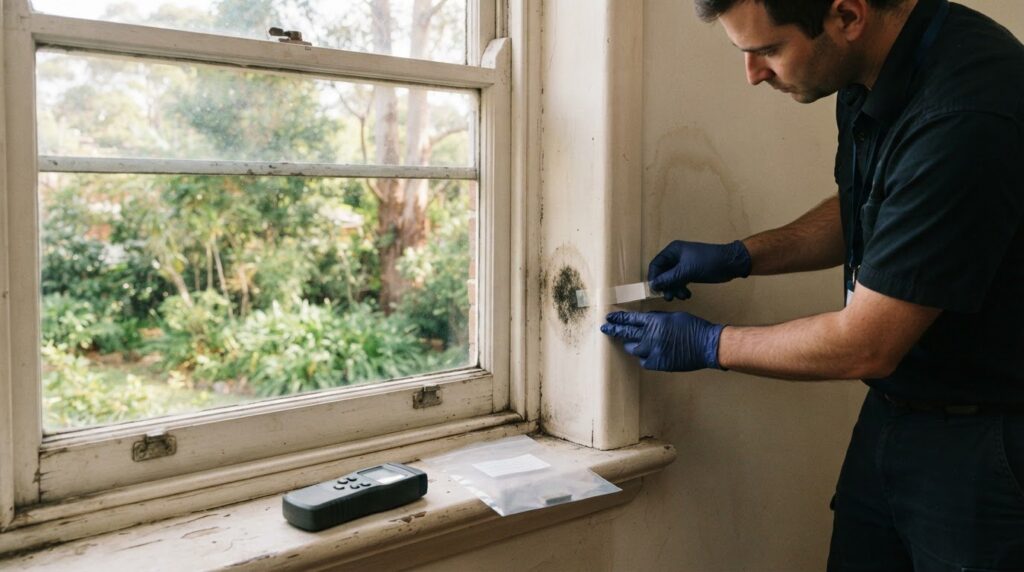
The best preparation for a mould inspection in Gladesville is to make affected areas accessible and leave the signs of mould or damp undisturbed. Note where you’ve noticed musty smells, visible growth or moisture, and when the problem appears. A basic inspection of a typical single-level home or office in metropolitan Sydney takes about 2 hours on site.
It’s understandable to want clear answers quickly, especially when mould keeps returning or you’re unsure what a report will show. Knowing what to expect makes the process more straightforward and helps you prepare without trying to diagnose the cause yourself.
This guide explains what to do before the inspection, how airborne and surface sampling may work, and what moisture readings and photographs can add to a report. You’ll also learn when a clearance inspection may be requested and how inspection time differs from the work involved in preparing a report.
Key Takeaways
- Prepare by noting where you’ve seen mould, damp or musty smells, and make the affected areas accessible for inspection.
- Air and surface sampling can help assess mould in different parts of a property; the method used affects how samples are collected and analysed.
- A useful inspection report can bring together moisture readings, photographs and findings to help clarify the conditions contributing to mould.
- Clearance may be requested after remediation to assess treated areas and check whether the moisture source has been addressed; it isn’t a general legal requirement in Australia.
- A basic inspection of a typical single-level home or office in metropolitan Sydney takes about 2 hours on site, while report preparation adds to the overall time.
Inspection reports with moisture readings and photographic evidence
A useful report links visible mould, moisture readings and photographs to specific rooms or building materials. For a Gladesville property, that evidence can help distinguish a surface mark from a wider moisture problem.
Moisture Readings and Photo Evidence
Moisture readings record conditions at inspected locations, such as a bathroom wall, ceiling or skirting board. The report should identify where each reading was taken and relate it to visible staining, dampness or other observations. This gives property owners a clearer basis for understanding the findings.
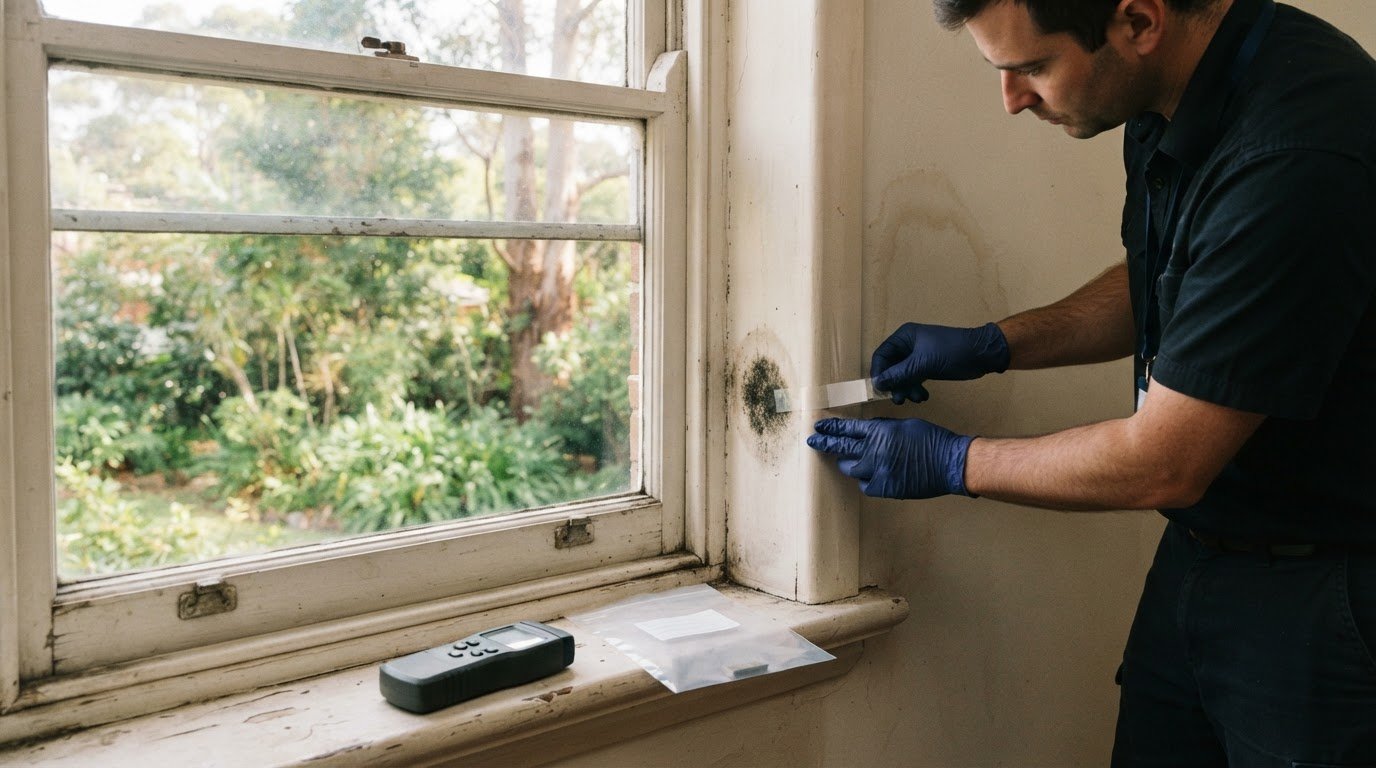
Photographs add visual context. Look for images that clearly show the affected area, alongside close-up details of mould, water marks or damaged finishes. A location label or room description connects each image with the written findings, especially if mould remediation is considered later.
Inspection Equipment and Moisture Mapping
Moisture meters assess dampness in materials at selected points. Thermal imaging displays temperature patterns that may help direct further investigation, but it doesn’t identify mould by itself. A borescope camera can view concealed cavities through a suitable access point when a visual check would otherwise be difficult.
Moisture mapping brings readings and observations together across inspected areas. For example, readings along a bedroom wall can be compared with those near a bathroom or window. The report should explain which areas were assessed and how equipment findings relate to visible evidence, rather than treating a reading or image as a diagnosis on its own.
Hidden Mould and Moisture Sources
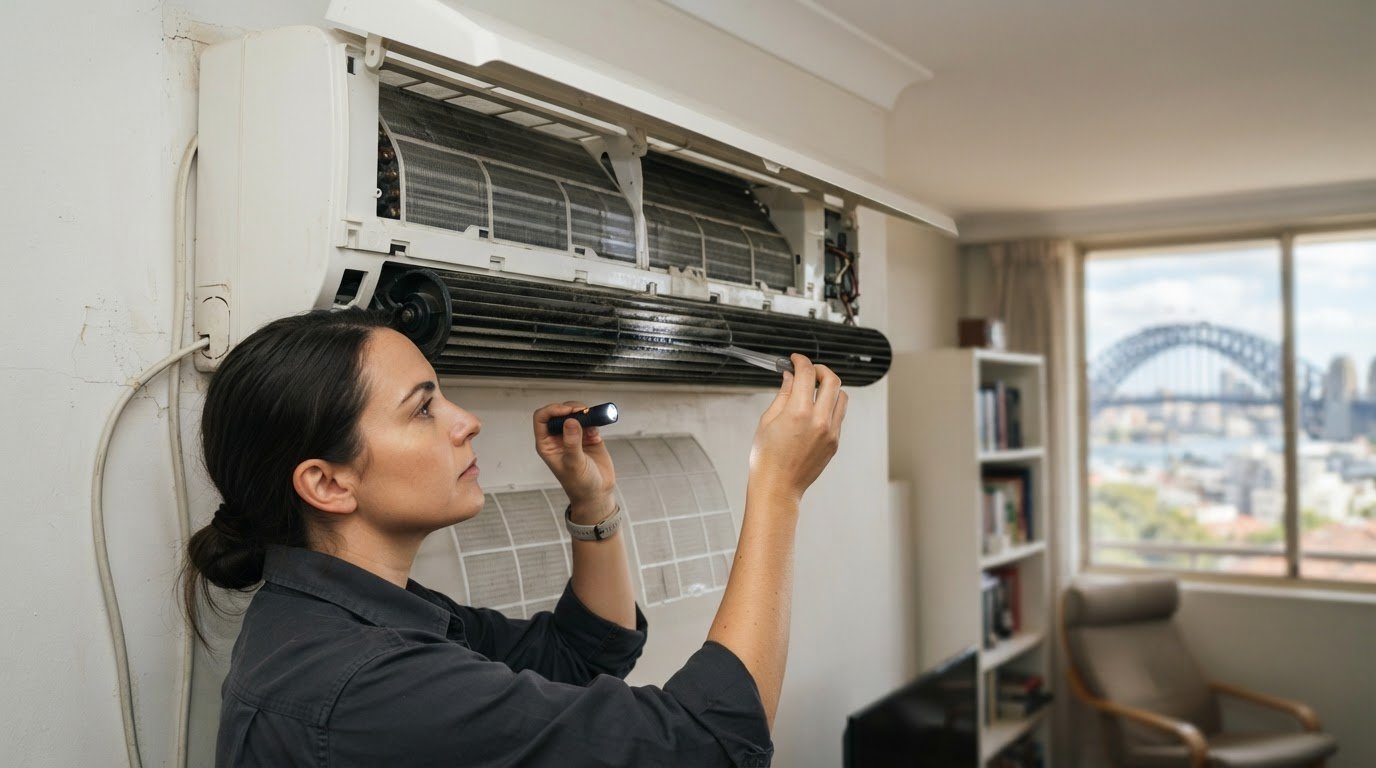
Hidden mould may be suspected when a musty smell persists, paint is blistering, or a wall remains damp without visible growth. An inspection can follow these clues, examine nearby surfaces and use equipment to guide further checks. A borescope may help view an accessible cavity, but it doesn’t replace an assessment of the overall moisture pattern.
Source diagnosis considers possible contributing conditions, including leaks, condensation and limited bathroom ventilation. The report should connect the evidence to likely moisture pathways and explain which areas need attention. Removing visible mould without addressing the moisture feeding it can leave the underlying problem unresolved.
Gladesville’s location beside the Parramatta River makes outdoor humidity useful context during an inspection. Indoor moisture still needs to be assessed room by room, including ventilation, damp surfaces and signs around windows or bathrooms. A riverside setting alone doesn’t establish the cause of mould in a home.
To choose a mould inspector in NSW, look for a written report that identifies inspected locations, explains readings and includes relevant photographs. Australia has no licensing regime for mould work, so clear methods and documented findings matter.
DIY mould removal can disturb growth while leaving concealed moisture or mould unassessed. Arrange a professional inspection when growth is hidden, recurring or spread beyond a small, accessible surface, or when the moisture source is unclear.
To help prevent mould returning after inspection and remediation, address the moisture source identified in the findings. Keep bathroom ventilation working, manage condensation and arrange repairs for leaks or damp building materials.
For NSW rental questions related to a mould or damp issue, NSW Fair Trading’s call centre can be reached on 13 32 20 from Monday to Friday, 8:30am-5pm.
Airborne and surface mould sampling
Sampling can help assess whether mould is present in air, on a surface or in settled dust. The appropriate method depends on the inspection question and the locations being assessed.
Air, Surface and Dust Samples
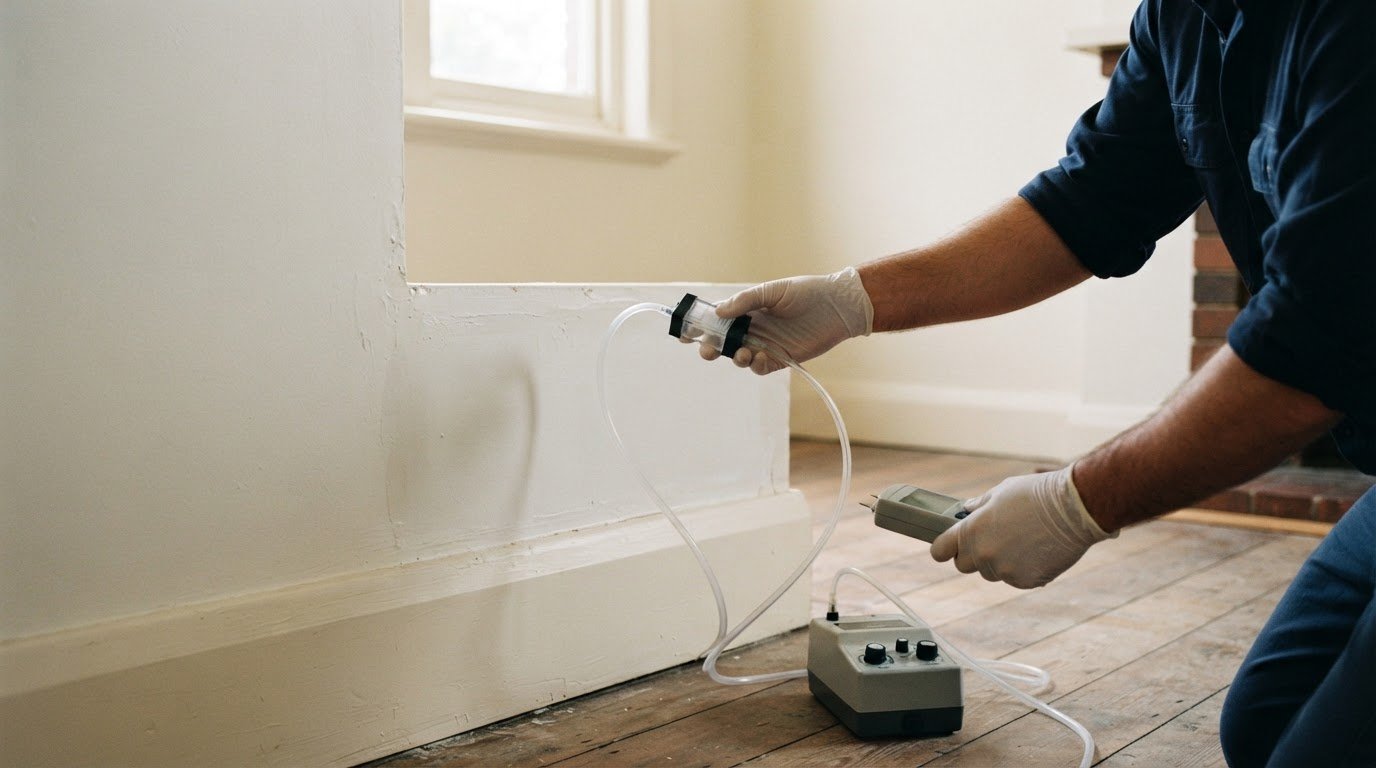
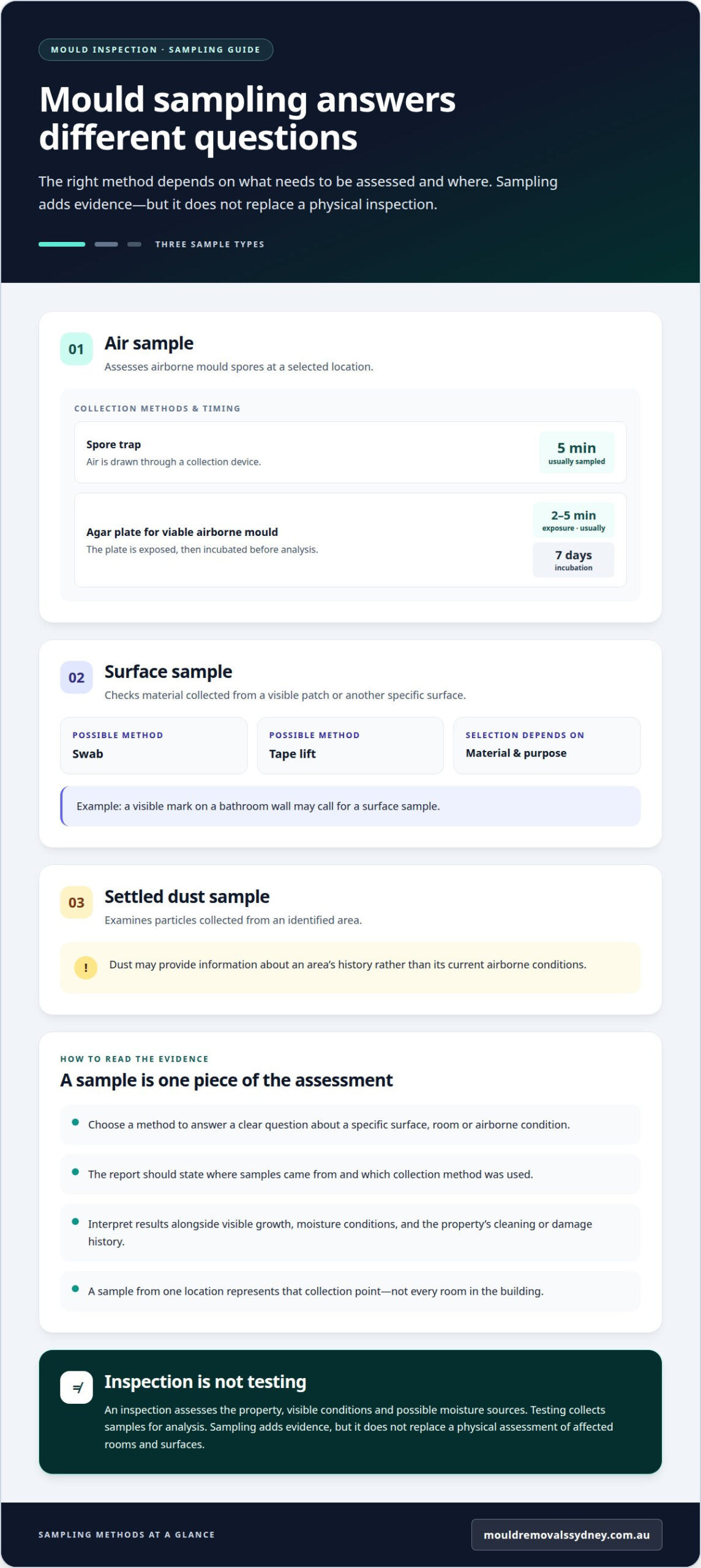
An air sample collects airborne mould spores at a selected location. A surface sample collects material from a visible patch or another specific surface. Dust sampling examines settled particles, which may provide information about an area’s history rather than its current airborne conditions.
Each sample answers a different question. For example, a visible mark on a bathroom wall may call for a surface sample, while an air sample can help assess airborne spores. A thorough inspection interprets results alongside visible growth, moisture conditions and the property’s cleaning or damage history.
Mould Sampling Methods
A spore trap draws air through a collection device, which is then assessed for captured spores. Airborne mould spores collected this way are usually sampled for 5 minutes. For viable airborne mould, an agar plate is usually exposed for 2-5 minutes, then incubated for 7 days before analysis.
Surface collection may use a swab, tape lift or another suitable method, depending on the material and sampling purpose. Dust can be collected from an identified area. The report should state where samples came from and which method was used, so results can be understood in context.
Inspection and testing are different. An inspection assesses the property, visible conditions and possible moisture sources; testing collects samples for analysis. Sampling adds evidence, but it doesn’t replace a physical assessment of the affected rooms and surfaces.
Samples are most useful when they address a clear question, such as whether growth is present on a particular surface or what airborne conditions exist in a room. Results should be interpreted alongside the inspection findings, not treated as a standalone verdict. A sample from one location represents that collection point, not every room in the building.
Sampling may be considered when mould is suspected but not visible, when occupants need documented findings, or after mould remediation. The inspection purpose guides which areas are sampled and whether air, surface or dust collection is appropriate. Collecting every sample type without a defined question can add information without improving the assessment.
Sampling and laboratory analysis affect the price, alongside the number of samples, access requirements and inspection scope. The price depends on the case and is given after a quote request, with those factors shaping the work required.
For a mould concern involving suspected growth or moisture damage, professional mould assessment and remediation can connect inspection findings with the next practical step.
Mould and property condition reports
A clear report turns inspection findings into a record you can use for repairs, tenancy discussions or remediation planning. Its value depends on linking each observation to a room, condition and practical next step.
Inspection Report Contents
Check whether the report identifies the inspected rooms, visible mould, damp conditions and any areas that couldn’t be accessed. It should connect findings to supporting evidence, such as photographs, moisture readings or laboratory results, where those were collected.
A useful report also distinguishes observed conditions from suspected causes. For example, it might record staining on a bedroom ceiling, then explain which nearby moisture conditions were assessed. Recommendations should relate to the findings, not simply repeat general cleaning advice.
- Location: the room, surface or building area inspected.
- Observations: visible mould, staining, dampness or damage.
- Evidence: relevant photographs, readings and sample results.
- Next steps: areas requiring repair, further assessment or remediation.
For a rental property in NSW, tenants and landlords should record mould in the dedicated mould section of the rental property condition report. That entry creates a record of the property’s condition and can help distinguish existing concerns from changes noticed later.
Report Delivery and Damp Conditions
Writing and peer review for a basic mould inspection report takes about 2.5 hours. That is an estimate of report preparation work, not a promised delivery time. Where laboratory analysis is involved, the reporting sequence also includes receiving and interpreting those results.
For a mould clearance inspection, selected samples are sent to an independent laboratory with its own NATA accreditation for analysis. The report should connect those findings with the inspected areas and remediation work, rather than presenting laboratory results without context.
Tenants in NSW should notify their landlord or agent as soon as possible if mould or damp develops during the tenancy. Include the affected room, when the problem was noticed and whether it has changed. For example, note if a damp patch appears after rain or returns after cleaning. Keep dated photographs and copies of written notifications with the property records.
Clear records help landlords, tenants and property managers track recurring indoor conditions. Compare later observations with earlier entries: a mark that returns in the same location may point to unresolved moisture. A report can support discussions about repairs, but it should describe findings precisely and distinguish evidence from recommendations.
When insurers, landlords and employers may request clearance
A clearance inspection can document whether treated areas have passed assessment after mould remediation. In Australia, clearance is not a general legal requirement, but an insurer, landlord or employer may request evidence for a specific property or workplace decision. The request should identify the areas and concerns that need assessment.
A clearance inspection may take place once remediation is complete and treated areas are dry. It checks those areas, may resample air and surfaces, and considers whether the moisture source has been addressed. A clearance certificate is issued only if the building passes the inspection. Testing supports a documented assessment; it does not automatically result in a certificate.
Landlord responsibility in NSW depends partly on the cause and condition of the premises. Section 52 of the Residential Tenancies Act 2010 is cited for landlords’ general obligations. A landlord is responsible for fixing mould linked to moisture build-up if a defective window is not repaired within a reasonable time, or the property lacks adequate ventilation.
A landlord must keep a rental property in a reasonable state of repair even when mould appears on its condition report. Mould developing close to the start of a tenancy could be considered pre-existing damage. Tenants should report new mould or damp promptly and record the affected room and changes in the rental property condition report.
Responsibility can also depend on how moisture accumulated. In NSW, a tenant may be responsible where mould results from moisture build-up during the tenancy, such as not opening windows or using bathroom ventilation fans. For example, a recurring bathroom patch calls for attention to both the growth and the ventilation conditions.
In Sydney apartments, the source may involve a shared building element, a private area, or both. Strata coordination can help establish access, arrange assessment of affected areas and share relevant findings between the owner, tenant and strata manager. A report that identifies locations and moisture observations helps distinguish a unit-level concern from signs extending beyond one apartment.
Insurers and employers may request clearance records after remediation to document the condition of relevant rooms before reoccupation, claim decisions or workplace planning. An inspection can be conducted even if another consultant performed the original inspection, or if no formal inspection took place beforehand. The scope should focus on the treated areas and the reason clearance is needed.
- For landlords: document mould, damp and repair concerns in the tenancy records.
- For strata: coordinate access and share findings about affected shared or private areas.
- For insurers or employers: define the areas requiring post-remediation assessment and retain the outcome.
Inspection duration
A basic mould inspection of an average office area or single-level residential dwelling in metropolitan Sydney takes about 2 hours on site. The complete work for a basic inspection is estimated at about 5-6 hours, including the visit, preparation, administration, report writing and peer review. These figures describe different parts of the process.
The site visit covers the physical assessment. Time is used to inspect affected rooms, document visible conditions, assess moisture and consider possible sources. A single-level home with accessible rooms differs from an office with multiple areas, so the number of locations and access requirements shape the visit.
The 5-6-hour estimate includes work beyond the time spent inside the property. Administration and equipment-and-sample preparation take an estimated 30 minutes for a basic inspection. Report writing and peer review are also included in the overall estimate. This distinction helps explain why the finished service takes longer than the site appointment alone.
Sampling can add steps after the inspection. The method and number of selected samples affect collection and processing, while laboratory analysis must be completed before its findings can be included. For example, if a report requires sample results, the on-site visit may finish before the full evidence is ready. The sample type influences the sequence, rather than changing the stated basic inspection estimate.
Other practical factors include the affected area, access to concealed spaces and the number of moisture concerns requiring assessment. A clear bathroom patch may need less investigation than signs across several rooms or a recurring issue with an unclear source. When more areas need examination, the inspection plan and reporting workload may expand.
To make the appointment productive, arrange access to rooms where mould or damp has been noticed. Note any areas that need special access, such as a locked room or ceiling cavity. This helps keep the inspection focused on the property’s specific concerns, rather than treating the basic two-hour estimate as a fixed duration for every building.
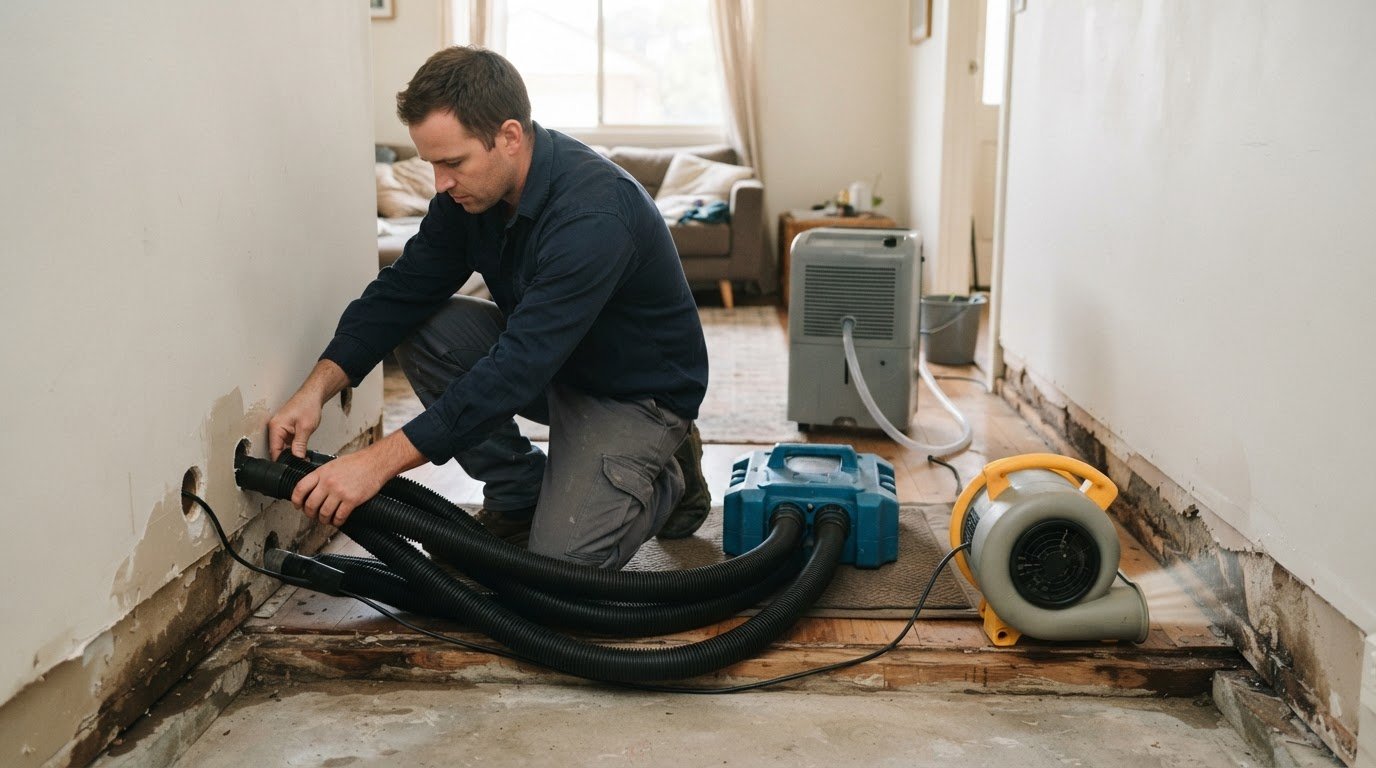
Air quality sampling, moisture assessment and photographic documentation each serve different purposes. The inspection scope depends on the questions being answered, such as locating a moisture source or documenting conditions before removal. If clearance is required after remediation, treated areas must be dry before that assessment can take place.
For professional mould inspection in Gladesville, arrange an assessment that matches the affected rooms and the evidence needed. Request a mould inspection to discuss the property’s inspection needs.
ABC Mould Cleaning Solutions: Mould Inspection Services
ABC Mould Cleaning Solutions provides Mould Inspection Services to assess mould concerns and help identify conditions contributing to growth. Turn to the team when mould returns, moisture is unexplained, or you need findings to guide decisions about affected areas.
The inspection can help clarify whether the next step involves Mould Remediation, Air Purification & Scrubbing, or another response to the conditions found. Where subfloor moisture and ventilation are concerns, Subfloor Ventilation System Installation may also be relevant. The assessment connects the observed issue with practical options, rather than treating every property the same way.
For a mould concern in Gladesville, contact ABC Mould Cleaning Solutions to discuss an inspection.
Take the next step towards a clearer plan
Uncertainty can linger when mould returns or the moisture source remains unclear. A focused assessment can turn concerns about your Gladesville property into practical next steps based on the conditions present and the areas affected. Share what you’ve noticed, such as recurring dampness or visible growth, so the discussion starts with the issue that matters most to you.
ABC Mould Cleaning Solutions provides Mould Inspection Services, with Mould Remediation and Air Purification & Scrubbing also available when they fit the findings. The right course begins with understanding the property’s situation, rather than assuming every mould concern needs the same response. All treatments are safe for pets, people, and the environment.
Take the next step at your pace. Contact ABC Mould Cleaning Solutions to discuss an inspection for your property. A clear starting point can make the way forward feel more manageable.
Frequently Asked Questions
How can I prepare for a mould inspection?
Make rooms with suspected mould accessible and note when you first noticed changes. Include details such as a musty smell after rain, condensation on a bedroom window, or a mark that returns after cleaning. Keep relevant tenancy or repair records together if the property is rented. Avoid disturbing concealed areas before the inspection, so the assessor can examine conditions as they are.
How can I tell if I have mould in my home?
Visible spots, persistent musty odours and recurring damp patches can indicate a mould concern, but appearance alone won’t establish its extent. Check for changes such as peeling paint, discolouration or a smell near a wardrobe or bathroom wall. Mould can also be concealed, so a professional assessment can help investigate signs that aren’t visible on the surface.
Do you provide a formal report after the inspection?
Yes. ABC Mould Cleaning Solutions provides a written report after an inspection. It can give you a record to share with a property manager, insurer or strata representative, depending on why the assessment was arranged. If you need the report for a particular decision, explain that purpose when arranging the inspection so the findings address the relevant property areas.
How Quickly Can I Get a Report?
Report timing depends on the inspection scope and whether laboratory analysis is involved. For a basic inspection, report writing and peer review take about 2.5 hours; that is preparation time, not a guaranteed delivery deadline. Where samples need analysis, the findings must be considered alongside the inspection before the report is finalised.
How quickly can you inspect my Gladesville property?
A basic inspection of an average office area or single-level home in metropolitan Sydney takes about 2 hours on site. That describes inspection time, not appointment availability. The number of affected rooms, access to concealed areas and need for sampling can shape the work. Call ABC Mould Cleaning Solutions on 0488 866 853 to discuss arranging an inspection.
Mould inspection services in Gladesville NSW
For a mould inspection in Gladesville, ABC Mould Cleaning Solutions offers Mould Inspection Services to help identify the extent and source of mould concerns. If you’re unsure whether the issue involves one room or a wider area, describe what you’ve noticed when discussing an assessment. A same-day quote is available for many cases through photo assessment.
What does a professional mould inspection include in Gladesville?
An inspection assesses air quality, humidity, ventilation and structural dampness, and can investigate hidden moisture and contamination. If remediation is needed, the Goldmorr System uses a biodegradable fogging process, applied only by Goldmorr-approved and trained master technicians; Goldmorr has supplied solutions since 1998. All treatments are safe for pets, people and the environment. Mycotoxin testing referrals are an optional service.
How much does a mould inspection cost in Gladesville or Sydney?
The cost depends on the property, inspection scope, access and whether sampling or laboratory analysis is needed. ABC Mould Cleaning Solutions provides a quote after the request; a same-day quote is available for many cases through photo assessment. The business states: “We Will Beat Any Written Quote By 10%.” No inspection price is stated here, so the quote reflects the work requested.