Structural drying after undetected water leaks can take up to 14 days when drying measures are more involved. The actual time depends on the building materials, construction and how much water they’ve absorbed. A small leak may stay hidden for weeks or months, while a larger leak is often noticed sooner.
It’s understandable to want to handle the damage yourself, especially if the visible area seems small. You’ll learn what you can safely do first, when hidden moisture calls for professional structural drying after undetected water leaks, and how the leak’s cause and your insurance policy may affect who pays.
We’ll also cover signs that water has travelled behind walls or beneath floors, why fans and open windows may not be enough, and what affects drying time. Understanding the damage and the steps involved can help you decide what to do next.
Key Takeaways
- Drying time depends on how much water materials absorbed, the building’s construction and where moisture is trapped; more involved drying can take up to 14 days.
- Keep records of the damage and drying progress, including moisture readings, to support clear conversations about the work and possible insurance cover.
- Musty smells, discoloured walls and warped flooring can point to hidden moisture, even when the leak itself is difficult to see.
- Fans and open windows may help with surface dampness, but water trapped inside walls or beneath floors can require technical drying.
- Learn when initial cleanup may be manageable yourself and when hidden damage calls for professional assessment and restoration.
Water damage – who pays for the drying?
In Australia, follow applicable state or territory health and building guidance for mould and water-damaged materials. Drying is complete when affected materials return to their normal moisture content and pre-loss condition.
Moisture Absorption and Migration
Building materials absorb water and pass moisture into connected layers, allowing a leak to spread beyond its visible source. For example, a washing machine leak can wet flooring and the materials beneath it. Persistent moisture can weaken floors, wall framing, ceilings and internal supports, while creating conditions for mould growth.
Leaks behind walls, beneath concrete slabs or underground may continue for months or even years without obvious signs. Swelling, warping or bubbling flooring can point to trapped moisture. Finding the full extent matters because drying only the visible patch may leave damp materials behind.
Assessing Moisture in Building Surfaces
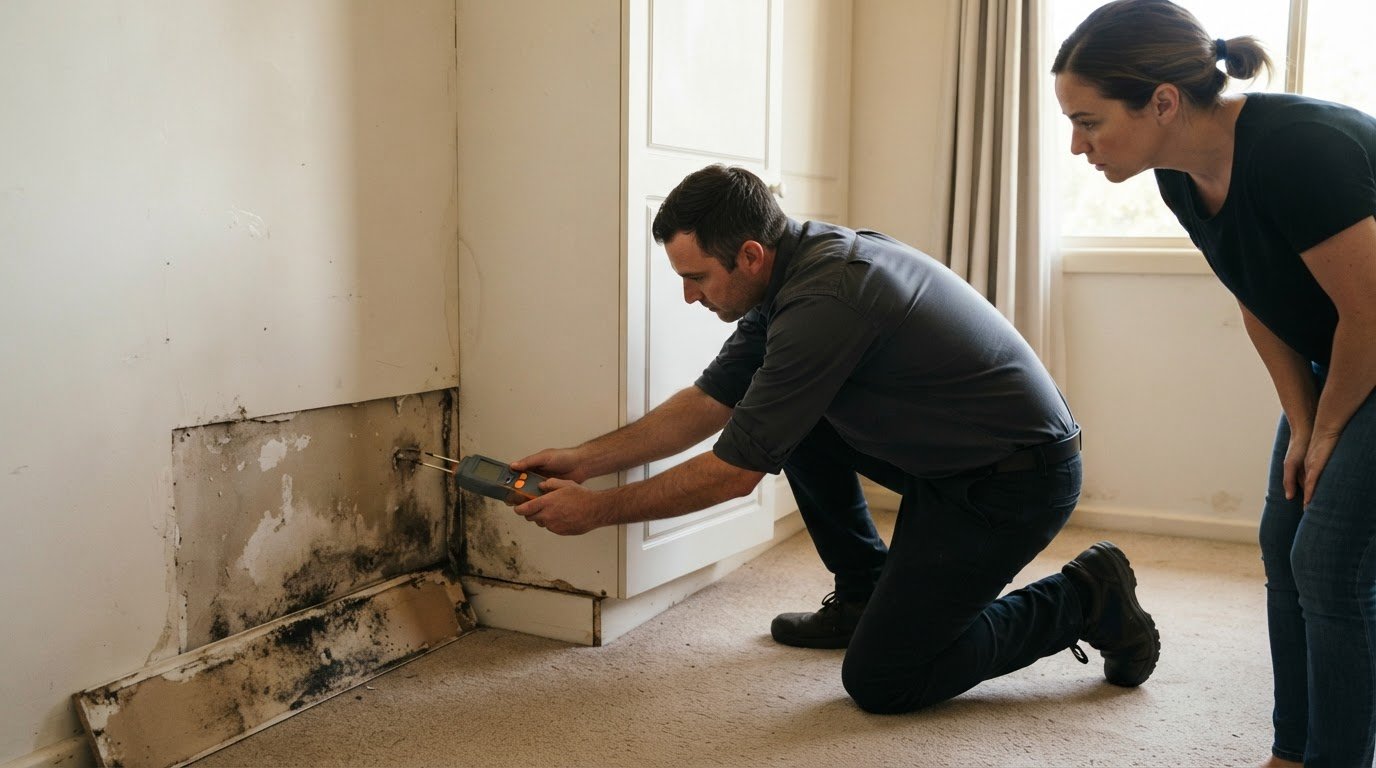
Moisture assessments use detection tools and visible clues to locate water inside walls, floors and ceilings after a hidden leak. Moisture meters measure dampness in building materials, while thermal cameras help identify temperature patterns associated with hidden water. Musty odours, brown rings, yellowish spots and ceiling streaks can also indicate moisture behind surfaces.
An assessment should cover the suspected leak area and adjacent materials, not just the stain. A ceiling mark beneath a bathroom, for example, may mean water has travelled through the ceiling structure. The findings help determine which materials need drying, closer inspection or removal, rather than relying on touch or appearance alone.
Professional Drying and Progress Monitoring
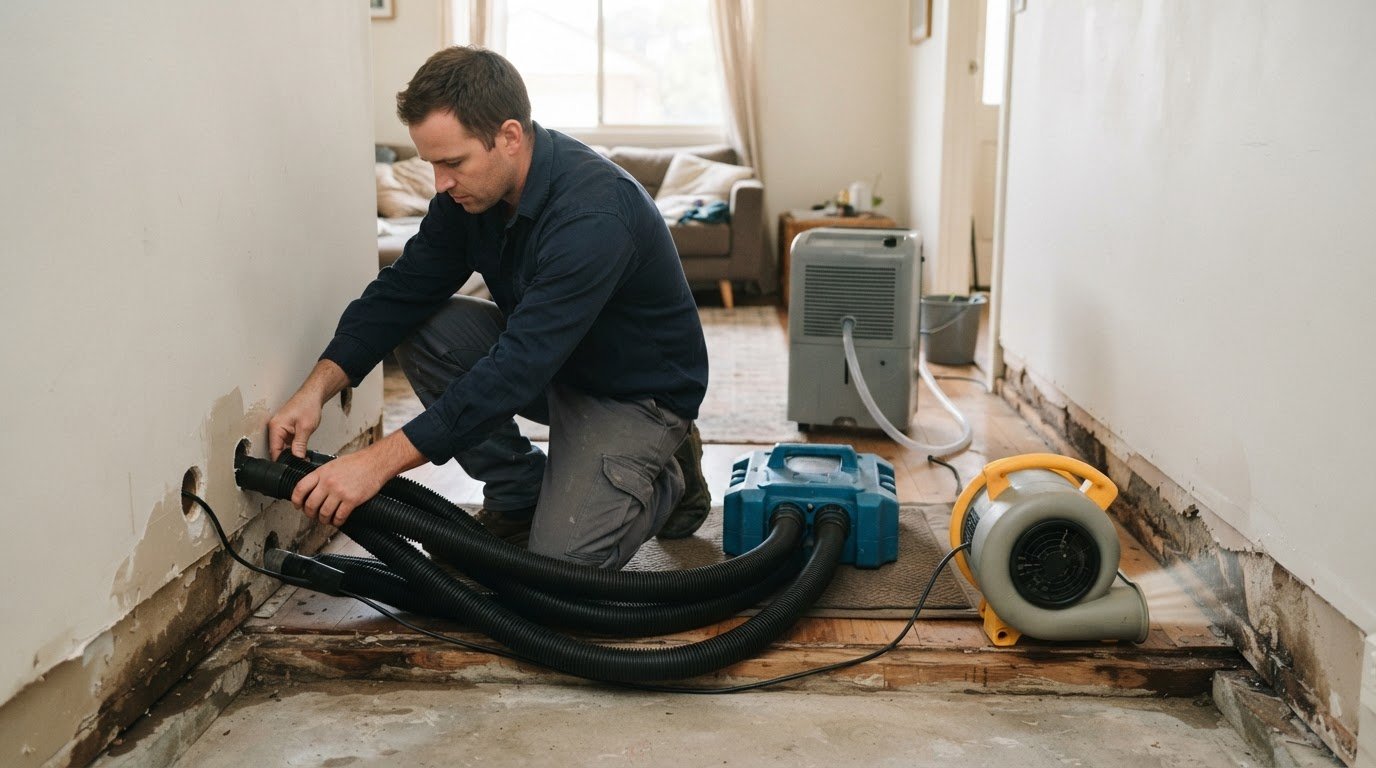
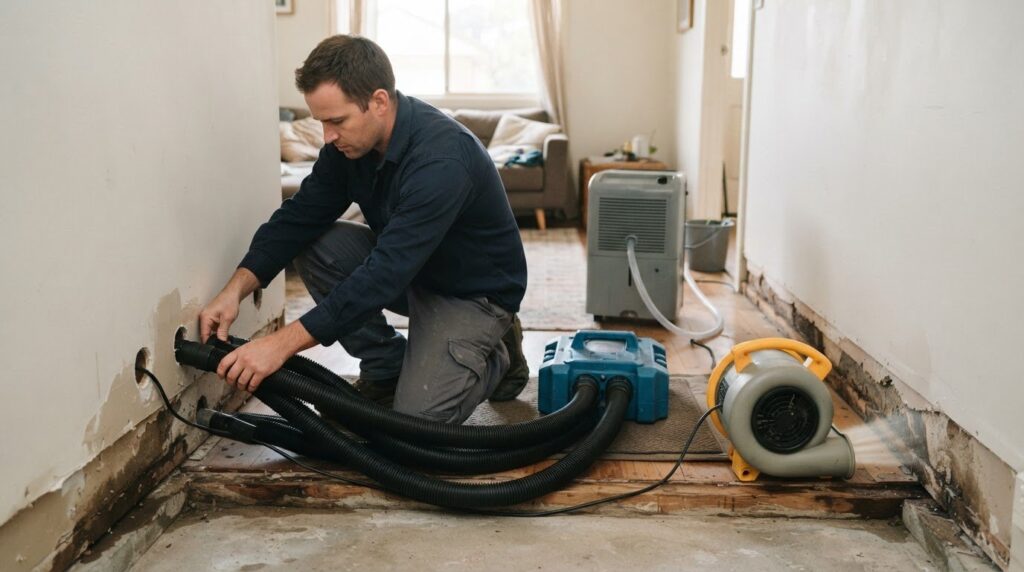
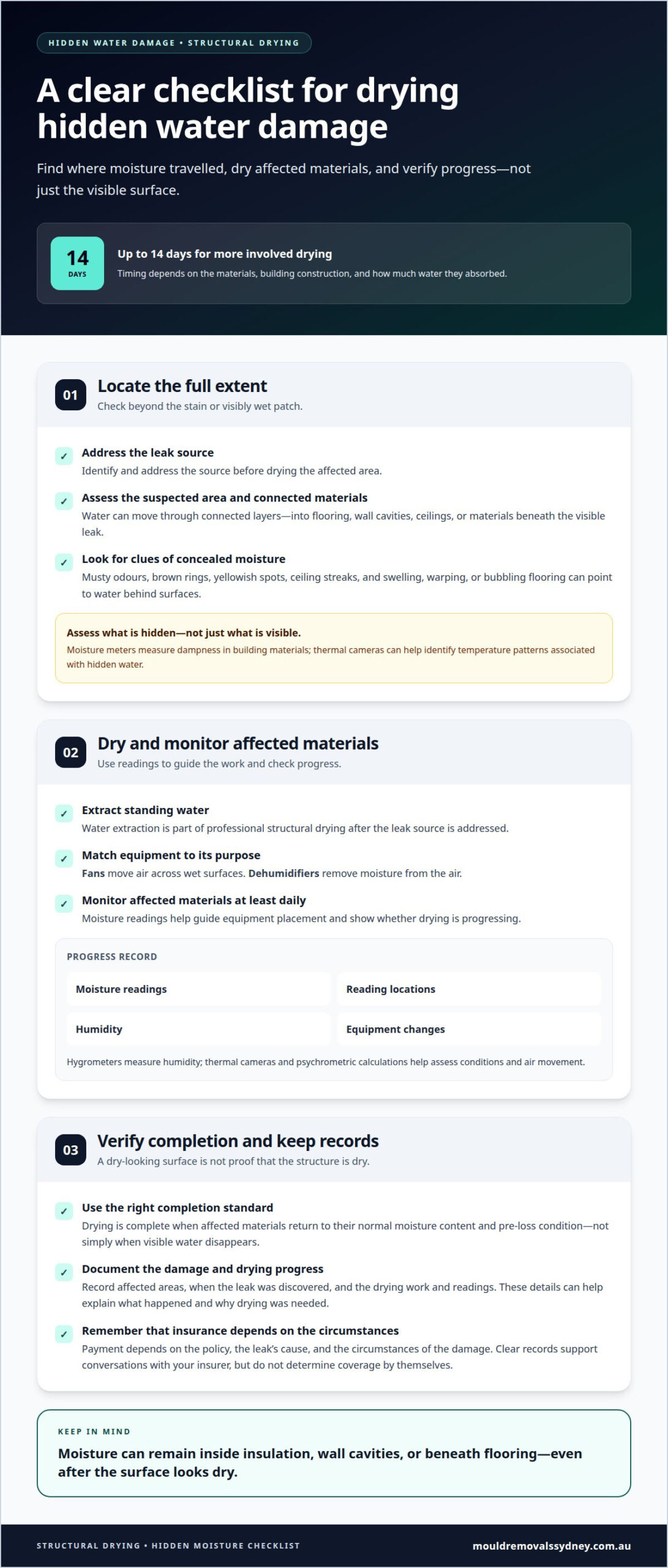
Professional structural drying combines moisture detection, water extraction, controlled airflow and dehumidification. First, address the leak source and extract standing water. Fans move air across wet surfaces, while dehumidifiers remove moisture from the air. Moisture readings help guide equipment placement and show whether drying is progressing.
During drying, affected building materials should be monitored at least daily. A record of readings, locations, humidity and equipment changes helps track progress and document the work. Hygrometers measure humidity, while thermal cameras and psychrometric calculations help assess conditions and air movement. More involved drying can take up to 14 days, depending on materials, construction and absorbed water.
Who pays? Payment depends on the insurance policy, the leak’s cause and the circumstances of the damage. Promptly document affected areas, when the leak was discovered and drying progress, then contact your insurer to understand how the policy applies. Clear records can help explain why drying was needed and what work took place, but they don’t determine coverage by themselves.
Don’t treat a dry-looking surface as proof that the structure is dry. Moisture may remain inside insulation, wall cavities or beneath flooring, where persistent dampness can contribute to mould and weaken building materials. Drying is complete when affected materials return to their normal moisture content and pre-loss condition, not simply when visible water disappears.
Hidden Water Damage: What Makes It So Dangerous?
A concealed leak can start at a failed pipe joint, roof penetration, appliance connection or bathroom seal. Water may travel through wall cavities and floor layers before a stain appears. A slow plumbing leak can remain unnoticed for weeks or months, while a burst pipe is often discovered sooner. The longer moisture remains, the more time mould has to grow and affect materials and belongings.
Damage can extend beyond what you see. Wet insulation can lose effectiveness, timber can warp or decay, and plasterboard can soften. Repeated saturation may affect foundations, including concrete slabs, and weaken framing or internal supports. A leak from an upper floor can also leave ceilings sagging or bowed. Repairs may involve more than the original pipe or roof fault because surrounding materials can be affected too.
Fire suppression creates another source of water damage. Firefighters may use thousands of gallons of water to extinguish a large fire, leaving parts of a building saturated. Water can enter floors, wall cavities and contents, even where flames did not reach. Drying and repair planning must account for wet materials and the areas water travelled through, not just visible fire damage.
Consider electrical hazards before entering a wet area. If water is near outlets, appliances or light fittings, turn off the breaker for that area if it’s safe to do so. Never touch electrical items while standing in water. Keep people away from sagging ceilings and visibly unstable materials. These precautions matter during initial inspection, cleanup and later repair work.
Insurance cover depends on the policy wording, the cause of the leak and the evidence available. A sudden pipe failure may be assessed differently from gradual seepage or neglected maintenance. Record when the damage was found, photograph affected rooms and belongings, and note the leak source and resulting work. Contact your insurer promptly to understand the claims process and any documentation or drying requirements. Don’t assume every water-related loss is covered in the same way.
Prompt action can limit further damage, but washing or wiping a surface won’t remove moisture trapped behind it. A professional assessment can help identify affected areas and clarify whether drying, material removal or repair is needed. For concealed moisture or extensive damage, explore professional drying support as part of planning the next steps. Clear findings can replace guesswork with a more informed path toward restoring the affected space and peace of mind.
Doing water damage restoration yourself?
DIY cleanup can suit a small, clean spill on a hard surface when the leak has stopped and no hidden materials are wet. A mop or wet vacuum can remove accessible standing water, followed by airflow to help the surface dry. But a dry-looking tile or carpet edge doesn’t show whether water has reached the subfloor, wall cavity or insulation. The first 24 to 48 hours after a leak are important for limiting property damage, so act promptly and judge the work by the affected materials, not just the visible puddle.
Restoration becomes more involved when water spreads through a home or business. A leaking dishwasher may affect kitchen flooring, cabinetry and the room below. In a commercial building, a ceiling leak can reach work areas, stored stock and shared corridors. Carpet, plasterboard, timber and concrete absorb or release moisture at different rates. Surface washing may clean a mark, but it won’t remove water retained inside building materials.
Use a specialist for technical drying when moisture reaches drywall, insulation or flooring, the leak continues beyond a day, or the source is concealed. Restoration specialists use infrared cameras and moisture meters to locate damp areas a household fan cannot reveal. Industrial dehumidifiers remove moisture from indoor air, while controlled air movement supports evaporation. A specialist assesses the affected structure and monitors drying instead of treating the visible stain as the full extent of the damage.
Contents need separate attention. Upholstered furniture, rugs, wooden furnishings and photo albums can hold moisture and may develop mould or bacteria. Electronics can also be affected by hidden water, even if their exterior appears dry. If it’s safe, move unaffected items away from damp areas and keep wet or potentially contaminated belongings separate. For example, a soaked rug left against a timber cabinet can transfer moisture to its base. The item’s material, exposure and condition determine whether cleaning, drying or disposal is appropriate.
For a straightforward residential spill, removing accessible water and keeping air moving may help with initial cleanup. In a commercial property, multiple rooms, stock and shared building systems can make a response harder to manage without proper assessment. The key issue is hidden moisture: if walls, floors or contents remain damp, household fans and open windows may not dry the affected structure. Professional water damage restoration is suited to this technical work, particularly when materials are saturated or the extent of the spread is unclear.
Don’t assume the job is finished when the odour fades or the surface feels dry. A specialist uses moisture readings to assess materials and determine whether drying is complete. This measured approach helps prevent wet areas from being covered or returned to use too soon, and gives property owners a clearer basis for planning repairs in homes and workplaces.
Drywall and wall cavity drying
Drywall can look dry while its paper face, gypsum core or the cavity behind it remains damp. Water may wick upward from a wet floor or travel sideways from a leaking pipe, leaving moisture beyond the visible stain. Insulation inside the wall can also absorb water and slow evaporation. That hidden dampness matters because covering the surfaces too early can trap moisture against timber framing and create conditions for mould growth.
Assessment looks beyond the stained patch. A moisture meter helps specialists compare readings across affected drywall and nearby areas, while a thermal camera can help locate unusual temperature patterns. The wall’s construction, the leak’s path and the type of insulation all influence the drying approach. A wet exterior wall, for example, may have different layers and drying conditions from an internal partition. Readings and inspection findings help establish whether moisture remains inside the cavity.
Where gypsum drywall is wet, removing the lower 6 to 12 inches can expose the wall cavity and improve drying efficiency. This is not a universal cut line: the affected area and water path determine what needs opening. Removing material can also reveal wet insulation, damp framing or water that has travelled beyond the original mark. Experts assess those exposed materials before deciding what can be dried and what needs removal.
Once the cavity is accessible, drying requires airflow through the affected space and moisture removal from the surrounding air. Fans support evaporation, while dehumidifiers collect moisture released from building materials. Equipment placement matters: airflow must reach the damp cavity, not just the room’s open surfaces. During structural drying, moisture readings should be monitored at least daily so progress reflects the materials’ condition, not just how the wall’s face feels.
Drying time depends on how much water the drywall and framing absorbed, the wall assembly, airflow and indoor conditions. A surface may dry before the cavity does. Damp surfaces will generally have dried sufficiently within the first three days for hidden cavity damage to become visible. Follow-up inspection is important if a stain fades but musty odours, peeling paint or soft drywall remain.
After drying, the affected wall needs a sound repair sequence. Wet or damaged insulation and drywall must be addressed before surfaces are closed, painted or finished. Otherwise, repairs can conceal unresolved moisture and lead to further damage. The goal is to return building materials to their normal moisture content and pre-loss condition, then restore the wall without trapping dampness behind new finishes.
Timeframes for small, hidden structural and major leaks
A slow leak can remain hidden for weeks or months, while larger leaks or burst pipes are usually detected within hours or days. That describes how long a leak may go unnoticed, not how long drying takes. Structural drying after undetected water leaks depends on the water’s path, the materials affected and how much moisture they absorbed. A small stain can conceal a damp cavity, while a larger visible spill may be easier to assess.
Drying doesn’t follow the same clock as leak detection. Solid masonry may need 14 days to dry, and more involved drying measures can also take up to 14 days. These timeframes aren’t a universal schedule for every building. Concrete, plasterboard, timber and insulation absorb and release moisture differently. The amount of water and the building’s construction also affect how quickly moisture moves out of affected materials.
Location matters. Water trapped beneath floors or inside a wall cavity has less direct airflow than water on an open surface. In a bathroom, a slow leak beneath a tiled floor may continue feeding moisture into the substrate. A burst pipe in an open room may be detected quickly, but saturated flooring or adjoining walls can still need sustained drying. The leak’s size alone doesn’t determine drying time.
Drying is more efficient when equipment addresses both wet materials and the surrounding air. Fans keep air moving across affected surfaces, supporting evaporation. Dehumidifiers remove moisture from the air, helping materials release more water. Equipment must suit the affected area and building conditions. Professionals monitor moisture readings and adjust airflow or equipment as conditions change. The endpoint is dry materials, not simply a room that feels comfortable.
With hidden leaks, the first visible sign may appear long after the damage began. A musty smell, fresh discolouration or newly warped floorboards can prompt investigation, but none shows how far moisture has travelled. Drying progress is assessed in affected materials over time. A solid masonry wall, for example, can remain damp after its surface feels dry. Monitoring helps distinguish surface improvement from structural drying.
The practical takeaway: separate the leak’s hidden duration from the drying period. A leak may persist for weeks or months before discovery, then require a drying process shaped by materials, construction and absorbed water. If dampness extends beneath floors or into wall cavities, arrange professional water damage restoration to assess the affected structure and monitor drying progress.
ABC Mould Cleaning Solutions: Water Damage Restoration
ABC Mould Cleaning Solutions provides Water Damage Restoration for properties affected by leaks and moisture. Turn to the service when water damage extends beyond a simple surface spill, or when you’re concerned about dampness inside the property. An assessment can clarify the next steps for affected spaces.
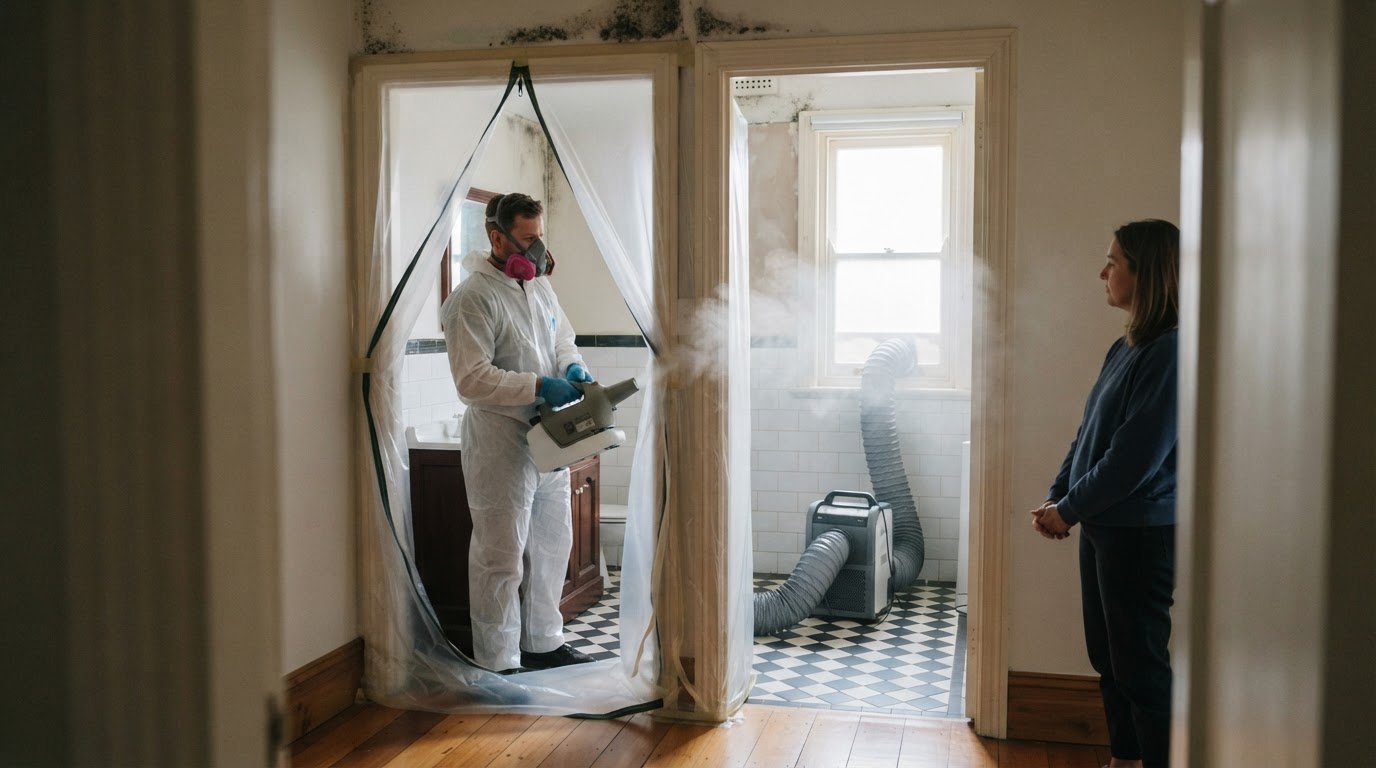
If moisture has led to visible mould or concerns about indoor air, Mould Inspection Services and Mould Remediation may also be relevant. ABC Mould Cleaning Solutions also provides Air Purification & Scrubbing. The right support depends on whether your property is affected by water damage, mould or both.
Contact ABC Mould Cleaning Solutions to discuss water damage at your property.
Take the next step towards a dry, healthy property
A careful plan for structural drying after undetected water leaks starts with understanding how the affected spaces connect. Water can travel beyond the first visible sign, so decisions about drying, repair and mould treatment should reflect the property as a whole. This helps you move from reacting to a stain towards addressing the underlying impact.
If moisture has raised concerns about mould or indoor air, ABC Mould Cleaning Solutions offers Mould Inspection Services, Mould Remediation, and Air Purification & Scrubbing. These services can address mould concerns alongside the wider restoration needs of your property.
Share what you’ve noticed and where the damage appears. A clear conversation about the affected rooms, materials and any musty odours can help establish a practical next step for your home or business.
Contact ABC Mould Cleaning Solutions to discuss your property’s water damage and mould concerns. Taking action gives you a clearer path forward, one step at a time.
Frequently Asked Questions
Did you know that even minor water leaks can lead to major structural water damage?
Yes. A small, persistent leak can keep feeding moisture into materials, even when only a minor mark appears. In humid conditions, mould can begin growing within 24 to 48 hours after a leak. Damage may extend to framing, insulation or supports, increasing the work needed beyond fixing the original leak. The important clue is duration: repeated moisture exposure can affect a structure even without a sudden flood.
How Do You Know When a Structure Is Properly Dried?
A structure is properly dried when affected materials return to their normal moisture content and pre-loss condition. Professionals use moisture readings from affected materials rather than relying on touch, appearance or odour alone. Comparing readings across affected and unaffected areas can help show whether dampness remains. A dry wall surface, for example, doesn’t prove the insulation or framing behind it has also dried.
How Long Can a Leak Go Undetected?
A small, slow leak can go unnoticed for weeks or months, while larger leaks or burst pipes are usually detected within hours or days. A rising water bill or unexpected water use may provide an early clue. If you suspect a concealed leak, checking the water meter can help identify whether water is being used when taps and appliances are off. This won’t locate the leak, but it can prompt further investigation.
How Quickly Should Structural Drying Begin?
Begin drying as soon as the leak source is controlled and accessible standing water has been removed. Damp materials left in place can continue absorbing water, extending damage into nearby areas. The first 24 to 48 hours after a leak are important for limiting property damage. If water has reached insulation, flooring or a wall cavity, surface wiping alone won’t address moisture inside those materials.
How long does the process take?
Drying can take up to 14 days when more elaborate measures are needed. Solid masonry may also require 14 days to dry. The timeframe depends on the material, construction and amount of absorbed water, so a wet wall cavity and a damp surface won’t necessarily dry at the same pace. Moisture readings help track progress and establish when affected materials have reached their drying endpoint.
What Are the Early Warning Signs?
Look for clues that change over time, such as a persistent musty smell, fresh discolouration or cabinetry that warps beneath a sink. An unexpected water meter reading can also suggest water is being used somewhere in the property. These signs don’t reveal the leak’s exact location, but together they can point to concealed moisture. Note where and when each clue appears to support a focused assessment.
Why is drying important?
Drying removes moisture from building materials and contents, helping limit further deterioration and conditions that support mould growth. A damp rug, for example, can pass moisture into timber beneath it; wet insulation can remain concealed after a wall’s surface looks dry. Proper drying also helps guide repair decisions. Assess materials before they’re covered or returned to normal use, so trapped dampness isn’t overlooked.
What are the signs of structural damage from an undetected water leak?
Watch for flooring that has warped, swollen or bubbled, and ceilings that sag or bow. Brown rings, yellowish spots or streaks can indicate water travelling behind a wall or ceiling. Persistent leaks can weaken framing, supports and other building materials. A visible mark may be only part of the affected area, so changes across connected surfaces can help show whether water has spread beyond its entry point.