A mould clearance inspection can take place once physical remediation is complete and the air has been settled for a full day. Getting a mould clearance certificate before selling isn’t a legal requirement in Australia, but a separate Australian Taxation Office clearance certificate applies to property sales: without it, the buyer must withhold 15% of the purchase price at settlement. These are different certificates with different purposes.
It’s understandable to want clear evidence that mould has been addressed before buyers inspect or move in. This article explains when post-remediation checks can take place, what visual inspections and sampling can show, and how mould clearance differs from the tax certificate required in a sale. You’ll also learn what the rules mean for sellers in Victoria and why a clearance report records the property’s condition on the inspection date, rather than guaranteeing mould will never return.
Key Takeaways
- A clearance inspection assesses the property after remediation; if it identifies remaining mould or moisture, further work may be needed before retesting.
- Visual checks, moisture readings and selected air or surface samples each provide different evidence about the remediation outcome.
- In Australia, a mould clearance certificate and an ATO tax clearance certificate serve different purposes, so it’s important to distinguish them when preparing for a sale.
- Victoria’s rental rules address mould and dampness linked to a building’s structure, but that is separate from a general requirement to obtain mould clearance when selling.
- A clearance report records conditions at the time of inspection. Addressing the source of moisture matters because new leaks or failed repairs can allow mould to return.
Clearance inspections after another consultant’s inspection
A clearance inspection checks a property after mould remediation, often using a visual assessment, moisture readings and sampling. For a sale, its findings can document the condition of affected areas and support clear discussions with prospective buyers.
When Clearance Inspections May Be Needed
A clearance inspection may follow remediation when an earlier mould inspection identified growth, moisture or affected building materials. It provides a separate assessment of the completed work, helping sellers explain what was addressed and what the inspection found.
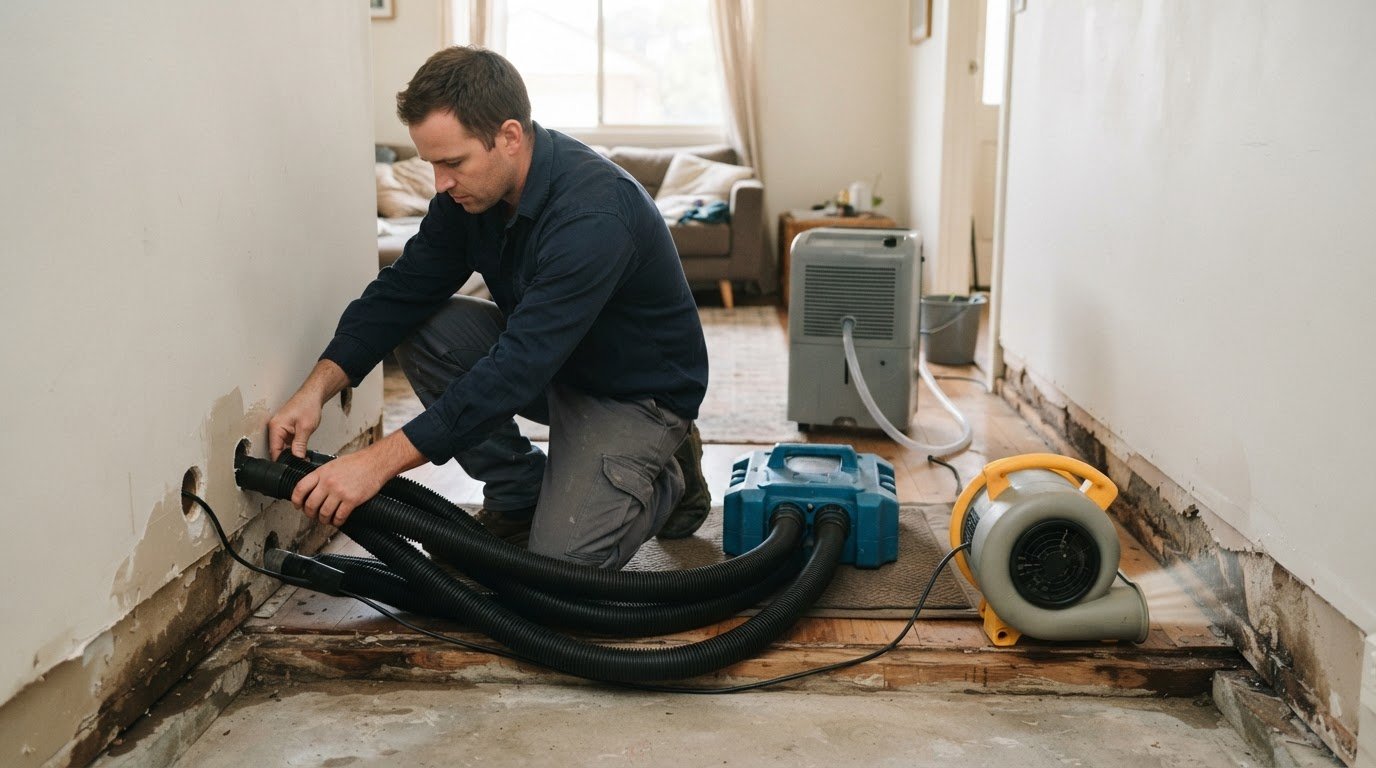
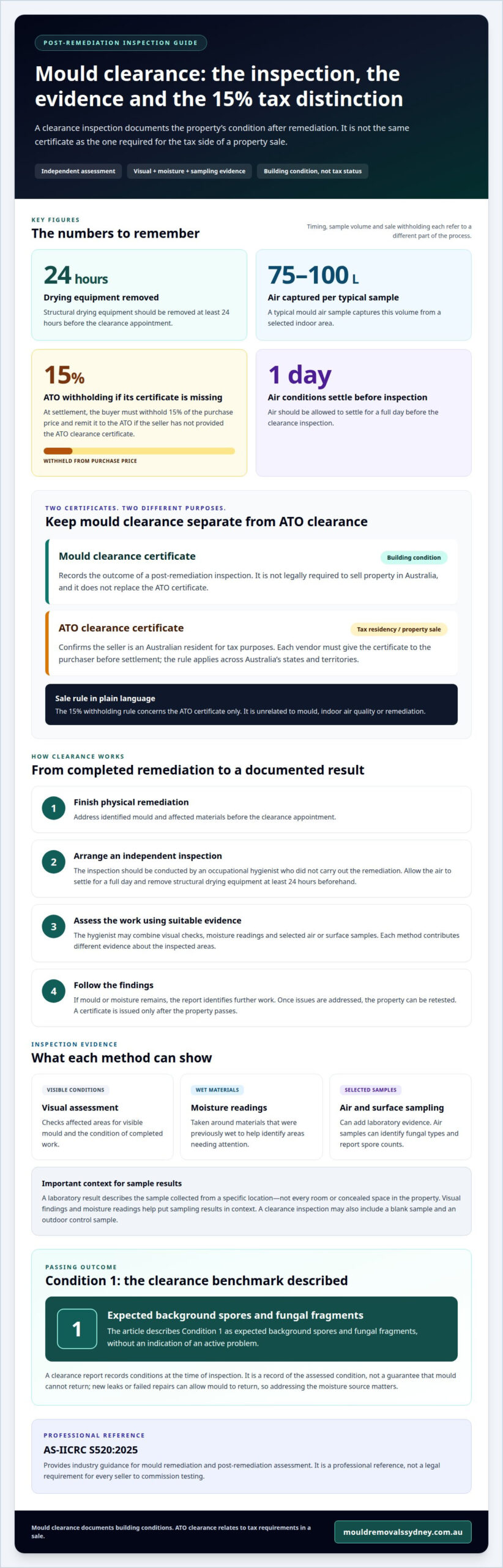
The inspection should be conducted by an occupational hygienist who did not carry out the remediation. Before the appointment, physical remediation should be complete, and structural drying equipment should be removed at least 24 hours beforehand.
Inspection Methods and Findings
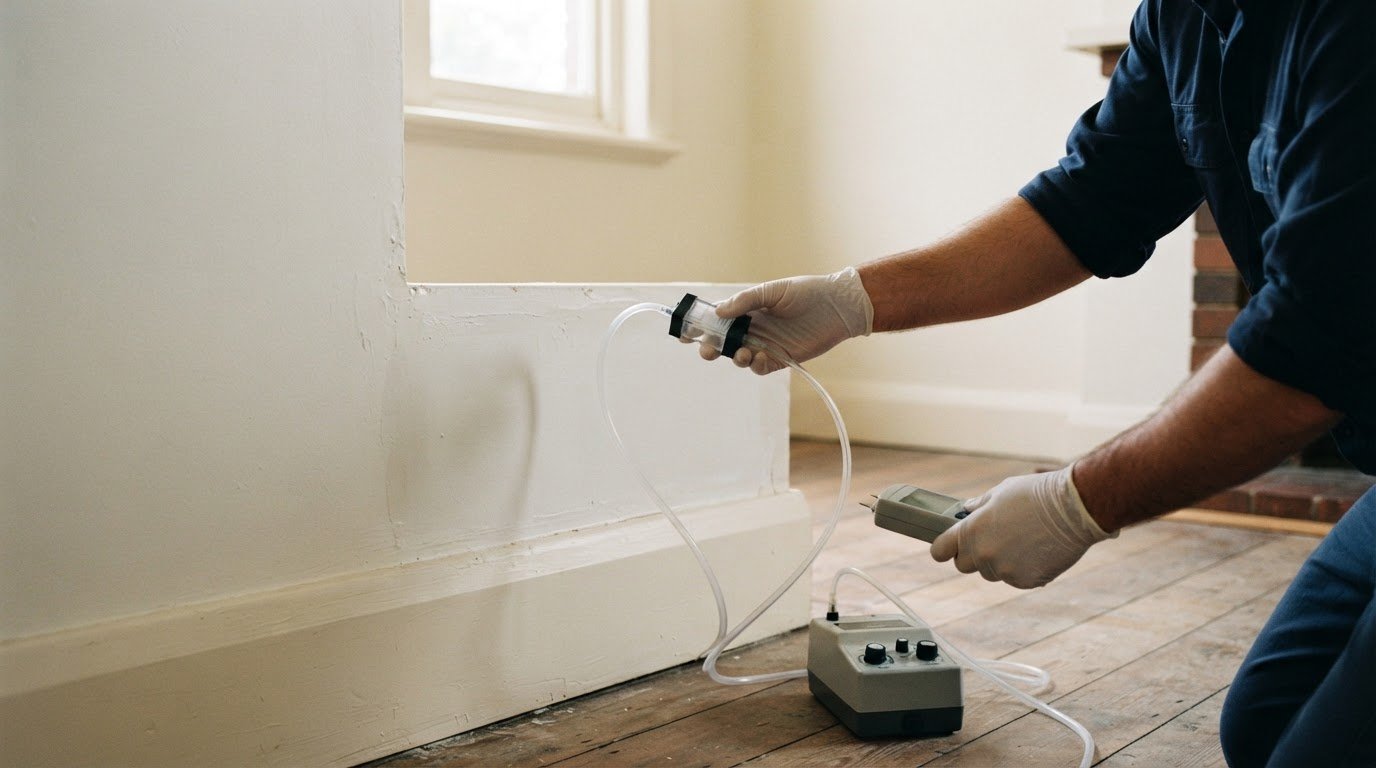
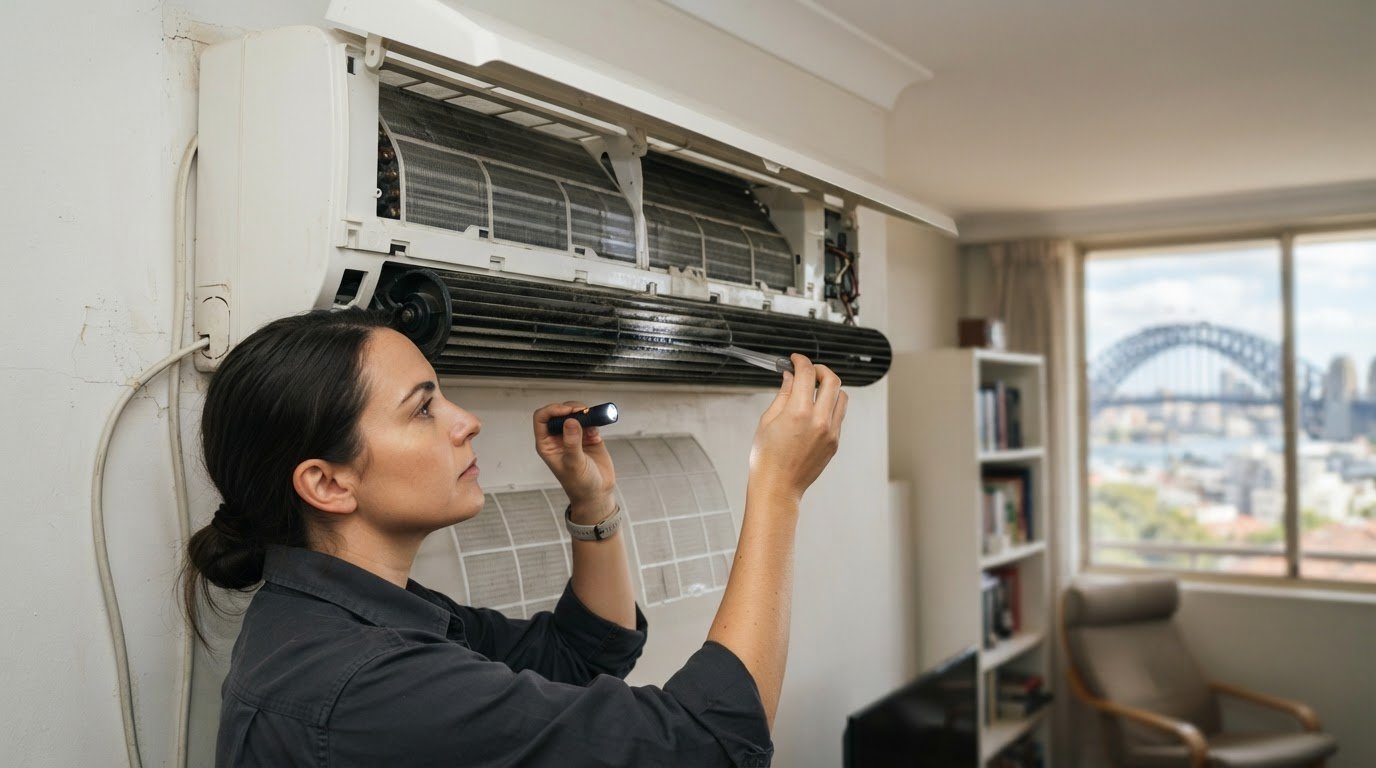
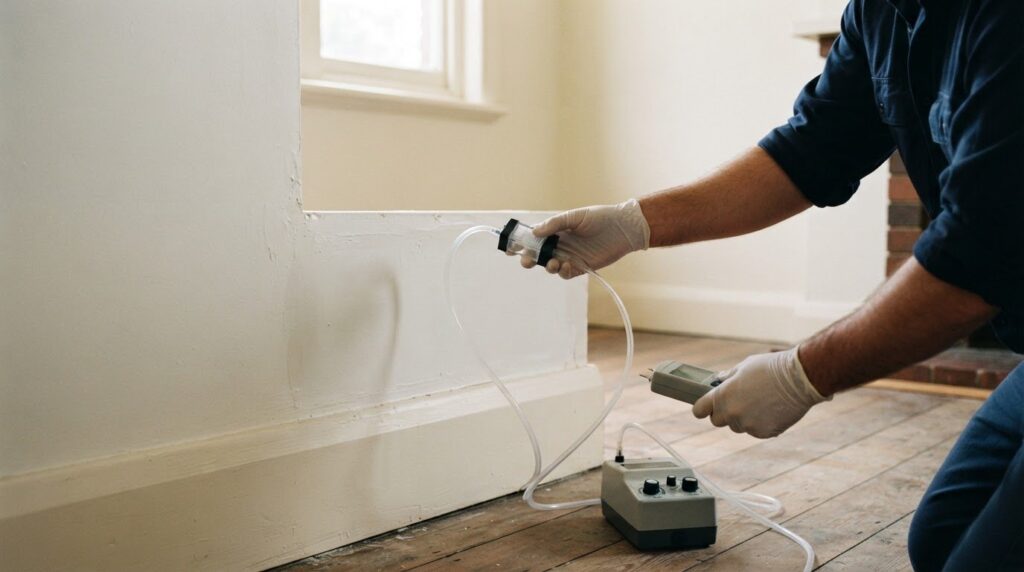
A clearance inspection may combine a visual assessment with air and surface sampling, a blank sample, an outdoor control sample and moisture readings around previously wet materials. Each method provides different evidence: visual checks assess visible conditions, while sampling and moisture readings help identify areas that need closer attention.
A clearance certificate is issued only after the property passes. It records that the premises returned to Condition 1, meaning expected background spores and fungal fragments without an indication of an active problem. If the inspection finds mould or moisture, the report identifies remaining work before the premises are retested.
Remediation and Clearance Testing
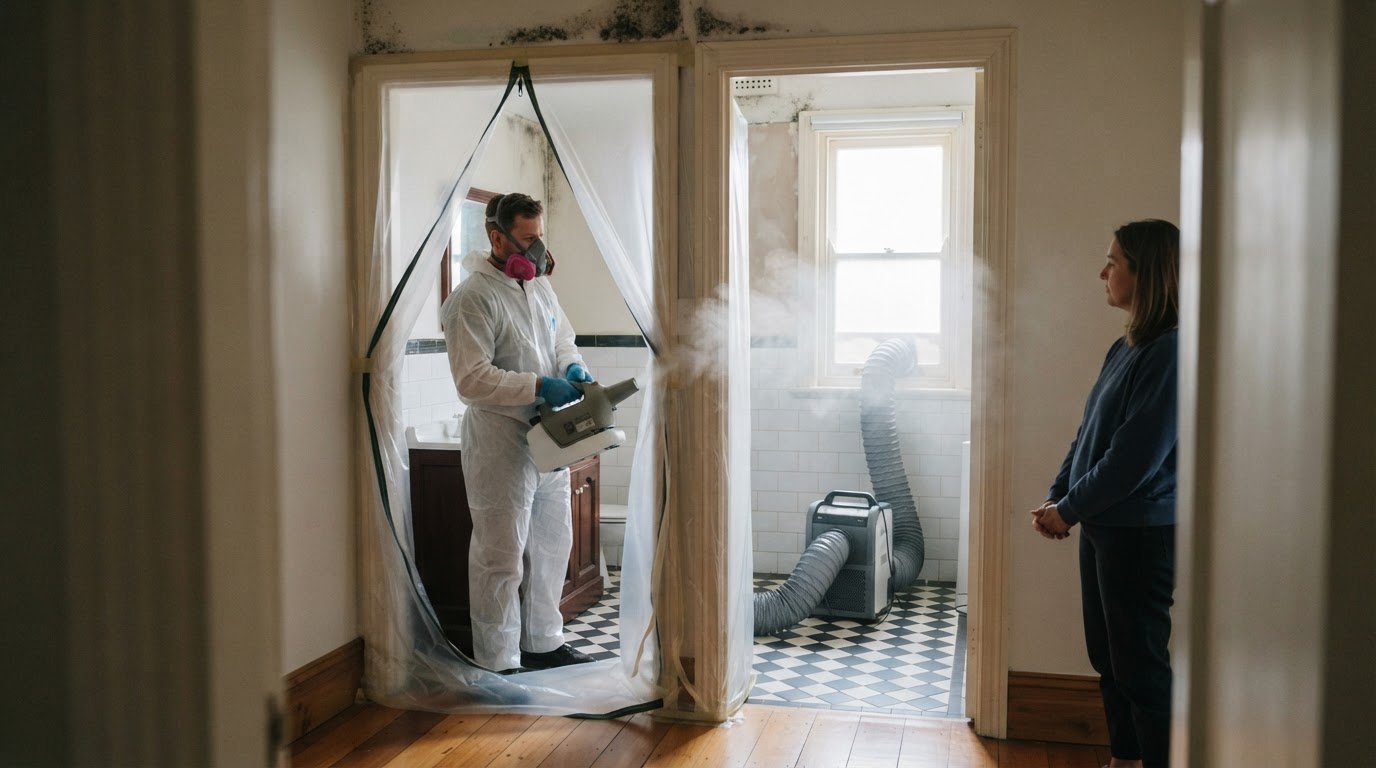
The process begins with remediation of the identified mould and affected materials, followed by an independent inspection. The occupational hygienist assesses the completed work and may use visual checks, sampling and moisture readings to evaluate the result.
Air conditions should settle for a full day before the inspection. If the findings show remaining mould or moisture, the contractor can address the issues identified in the report and arrange retesting. A certificate follows only when the property passes.
A mould inspection report can also help buyers understand the issue during negotiations. It may document the extent of mould, moisture sources, sampling locations and laboratory findings, giving both parties clearer information when discussing repairs or a price adjustment.
Australia has no legal requirement to obtain a mould clearance certificate after remediation. The certificate also doesn’t determine a seller’s disclosure duties. Whether past or current mould must be disclosed depends on the circumstances of the sale. Known damage or unresolved moisture can lead to disputes if discovered after settlement.
Selling without clearance documentation doesn’t automatically establish a breach, but it can leave buyers with less evidence about remediation. If mould or water ingress is discovered later, disputes may involve repairs or replacement of plaster, flooring or cabinetry, as well as questions about what the seller knew and disclosed.
Whether a mould clearance certificate is legally required in Australia
Australian law does not require sellers to obtain a mould clearance certificate after remediation. It’s separate from the Australian Taxation Office clearance certificate, which relates to tax residency and property sales. Keeping these documents distinct avoids confusion: one records building conditions, while the other is a federal tax document used in a sale.
The ATO clearance certificate confirms that a seller is an Australian resident for tax purposes. According to the Australian Taxation Office, each vendor must give their certificate to the purchaser before settlement. Australian citizens selling a family home must also provide one. The rule applies to property sales across Australia’s states and territories.
If a seller doesn’t provide the ATO certificate, the buyer must withhold 15% of the purchase price at settlement under current Foreign Resident Capital Gains Withholding rules. The buyer remits that amount to the ATO. This is unrelated to mould, indoor air quality or remediation. It applies to the tax side of the transaction.
For sellers, getting a mould clearance certificate before selling can provide useful documentation about completed remediation, even though it isn’t a legal sale requirement. The decision may depend on previous mould findings, buyer questions or the need to document the property’s condition. A mould report doesn’t replace the ATO certificate.
Industry guidance serves another purpose. AS-IICRC S520:2025 provides a professional reference for mould remediation and post-remediation assessment. A technical report may record how the property was assessed against that standard, but the standard doesn’t create a legal requirement for every seller to commission testing. If mould concerns remain, professional mould inspection services can help document the property’s condition.
Air sampling and spore identification
Air and surface sampling can add laboratory evidence to a mould clearance inspection. Samples help assess what was collected from specific locations, while visual findings and moisture readings provide important context. For a property sale, this distinction matters: a laboratory result describes the sample, not every room or concealed space in the property.
Air sampling collects airborne particles from a selected indoor area. A typical mould air sample captures 75 to 100 litres of air. The laboratory can identify fungal types and report spore counts, which the occupational hygienist considers alongside the inspection location and the property’s condition. An outdoor control sample can provide a comparison with the indoor results.
Comparing results helps interpret the findings rather than treating one number as a complete verdict. For example, an indoor sample is considered alongside the outdoor control, visible conditions and moisture readings around previously wet materials. A blank sample may also be included. This evidence helps the inspector assess the remediation, but it does not describe every untested surface.
Surface sampling answers a different question. A sample from a particular material or surface can help identify what is present at that location. For instance, a sample from a previously affected skirting board relates to that board, not the air throughout the home. The inspection report should link each result to its sampling location so buyers can understand its scope.
Selected samples may be analysed by an independent laboratory with its own NATA accreditation for that analysis. The accreditation applies to the laboratory’s specific analysis, not automatically to every test it performs. A report may include laboratory results, sampling locations, species identification and spore counts. Together, these details show what was tested and what the results indicate about the sampled areas.
Mould testing is most useful when its findings are considered alongside the inspection evidence. A spore count on its own cannot confirm that every part of a property is free from mould. The occupational hygienist considers visible growth, sample locations, moisture readings and indoor conditions when assessing the clearance outcome.
For sellers, a clear report can support conversations during a property sale, especially if a buyer asks what the remediation addressed. It can document the areas inspected and samples collected while making the limits of those results clear. It does not replace the ATO clearance certificate required before settlement, which concerns tax residency, not mould.
Whether a clearance certificate is legally required when selling in Victoria
Victoria does not require a mould clearance certificate simply because a property is being sold. Victorian rules addressing mould focus on rental minimum standards, not a universal certificate for property sales. Sellers should distinguish building-condition documentation from the Australian Taxation Office clearance certificate, which relates to tax residency and property settlement.
Victoria introduced changes to the Residential Tenancies Act in March 2021. Rental minimum standards require a home to be free from mould and dampness caused by, or related to, the building structure. This rule concerns the condition of a rental home. It does not create a general sale requirement for an independent mould inspection or clearance certificate.
The Residential Tenancies Regulations 2021 are also relevant to mould-related legal risk for Melbourne property owners. For example, moisture from a structural leak may lead to mould that affects a rented home’s compliance with minimum standards. That rental context differs from selling a vacant property. A mould report may still help explain findings or completed remediation, but it is not automatically a statutory sale document.
Property type matters because the documents serve different purposes, not because mould clearance rules impose a universal Victorian sales certificate. A mould certificate is not legally required for a sale under the facts described here. Separately, the ATO clearance certificate applies to Australian real property sales, and each vendor must provide their certificate to the purchaser before settlement. This is a federal tax requirement, not a Victorian mould rule.
An ATO clearance certificate is valid for 12 months from its date of issue. If a Victorian sale’s settlement occurs after that expiry, a purchaser may rely on the vendor’s expired certificate where settlement is more than 12 months after the contract and the relevant conditions are met. The expiry date therefore matters when contracts and settlement are separated by an extended period.
Keep records clear by identifying what each document addresses:
- Mould documentation: records inspection findings, moisture observations, sampling or remediation details.
- ATO clearance certificate: confirms the vendor’s tax-residency status for the property transaction.
For a Victorian seller, the situation is straightforward: mould clearance is not a general legal condition of sale, while the ATO certificate is a separate settlement document. If mould has been found, retaining inspection and remediation records can help explain the property’s history without presenting them as a legal certificate requirement.
Mould clearance certificates and biological safety
A mould clearance certificate records the premises’ condition at the time of inspection and supports decisions about reoccupation or sale. Its value depends on what was inspected, sampled and documented.
What a Certificate Confirms
A clearance certificate confirms that post-remediation assessment found the property had returned to Condition 1, with expected background spores and fungal fragments and no indication of an active problem. It gives owners evidence about the inspected areas at that time.
The assessment may combine a visual inspection, moisture readings and selected air or surface sampling. Laboratory results relate to the specific samples collected, not every room or concealed space. A report should make the inspection scope and sampling locations clear so buyers can understand what the findings cover.
For biological safety, this evidence helps assess whether remediation achieved its intended outcome. It can also support a decision about reoccupation. Landlords and tenants may seek clearance before a tenancy resumes, while employers may seek it before staff return to a building.
Limits of a Clearance Certificate
A certificate does not guarantee that mould will never return or that every hidden area is free of growth. It records conditions on the inspection date. A new leak or failed repair can introduce moisture later and allow mould to recur.
That distinction matters during a purchase. If a roof leak continues behind a wall, a past report cannot establish that the area remains dry after inspection. Mould can return within weeks if the underlying moisture source is not fixed. The certificate is evidence of a point-in-time assessment, not a promise about future building conditions.
Before clearance testing, physical mould remediation should be 100% complete, and settled air conditions should be maintained for a full day. A certificate should demonstrate compliance with AS-IICRC S520:2025. These conditions support a meaningful assessment, but the result still reflects the areas and evidence included in that inspection.
For owners, the practical step is to retain the report alongside remediation records and details of moisture repairs. This documentation can clarify what was done if a buyer raises questions. Post-remediation verification can also record limitations for future reference if mould growth recurs.
If mould remains or moisture persists, arrange an assessment before relying on clearance documentation. Arrange a mould inspection to assess the property’s condition and identify areas needing attention.
ABC Mould Cleaning Solutions
ABC Mould Cleaning Solutions can help property owners understand mould concerns before a sale through Mould Inspection Services and Mould Remediation. An inspection can assess affected areas and moisture conditions, while remediation addresses identified mould. Air Purification & Scrubbing can also support the broader response to indoor mould concerns.
If mould has been found, or past remediation needs documenting, these services can help clarify the property’s condition and next steps. A mould assessment report is distinct from the ATO tax clearance certificate required for settlement, and it does not guarantee mould will never return. For concerns beneath the home, Subfloor Ventilation System Installation may also be relevant.
Contact ABC Mould Cleaning Solutions to discuss your property’s mould concerns.
Prepare your property records with confidence
As you prepare your property for market, include mould documentation in a broader record of the home’s condition. Keep inspection findings and remediation records together so you can respond clearly if a buyer asks about previous work. If you’re getting a mould clearance certificate before selling, consider how the report fits alongside those records rather than treating it as a guarantee about future conditions.
ABC Mould Cleaning Solutions can help owners assess mould concerns through Mould Inspection Services and address identified issues with Mould Remediation and Air Purification & Scrubbing. The next step depends on whether you need an assessment, remediation or support with air quality. Clear, well-organised records can make discussions about the property more straightforward.
Contact ABC Mould Cleaning Solutions to discuss your property and the support you need. Take the next step with a clearer picture of your home’s condition.
Frequently Asked Questions
How soon after remediation can the clearance be done?
The clearance can be arranged once physical remediation is complete and the property is ready for assessment. Structural drying equipment should be removed at least 24 hours beforehand, with settled air conditions maintained for a full day. If drying is still underway or further cleaning remains, the inspection should wait until those activities are finished. The key factor is site readiness, not simply the time elapsed since remediation.
What happens if mould comes back after a clearance?
A past clearance records the property’s condition on its inspection date; it doesn’t cover later leaks or moisture changes. If mould reappears, identify whether a new leak, failed repair or another moisture source is involved. For example, growth returning near a previously repaired window may warrant checking that area and the surrounding materials. A fresh assessment can establish the current condition and guide further remediation.
What if the clearance fails?
A failed clearance means the assessment found conditions that need further attention before the property can pass. The report should identify remaining mould, moisture or affected areas. The remediation contractor can then address those findings, such as treating a missed surface or resolving damp material, before arranging retesting. A certificate is issued only after the building passes the clearance inspection, so retain the report and retest findings together.
Why Use an Independent Occupational Hygienist Instead of a Remediation Company?
An independent occupational hygienist provides a separate assessment of completed remediation. Because they didn’t perform the cleanup, their inspection can give buyers and owners a distinct review of the result. They assess the property using evidence such as visible conditions, moisture readings and selected samples. This separation clarifies who carried out the work and who assessed its outcome, making the documentation easier to interpret during a sale.
Is a mould clearance certificate legally required before selling a property in Australia?
No. Australian sellers aren’t legally required to obtain a mould clearance certificate after remediation simply to sell a property. Don’t confuse it with the Australian Taxation Office clearance certificate, a separate tax document for property sales. A mould report can document inspection findings and completed work, but it doesn’t replace sale paperwork. If mould has affected the property, clear records can help explain its history to prospective buyers.
Who is qualified to inspect and issue a mould clearance certificate in Australia?
A clearance inspection should be conducted by an occupational hygienist who didn’t carry out the remediation. The certificate follows only when the property passes the assessment. The report should identify what was inspected and explain any sampling results, so readers can understand the evidence behind the decision. This is an independent technical assessment, not the Australian Taxation Office tax clearance certificate used for a property transaction.
How long does mould remediation and clearance testing take before a property sale?
The schedule depends on the extent of mould, affected materials, access to those areas and the time needed to address moisture. Most residential mould inspections take between 1 and 2 hours, depending on property size and affected areas. That inspection duration doesn’t represent the full remediation timeline. Drying, any further work identified during assessment, and laboratory analysis of selected samples can all affect when documentation is ready.
Should the clearance assessor be independent of the mould remediation company?
Yes. The clearance inspection should be conducted by an occupational hygienist who wasn’t responsible for the remediation. This gives the owner a separate assessment rather than relying only on the contractor’s record of completed work. For example, a seller can keep the remediation details and the hygienist’s inspection findings as separate documents. Together, they show what work was reported and how the property was assessed afterward.