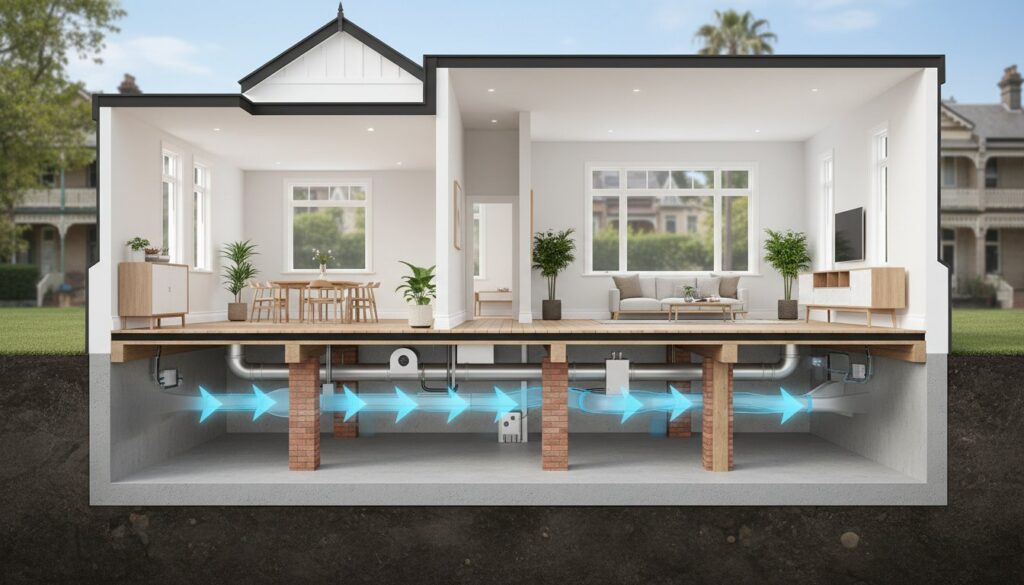
What if the musty smell in your hallway isn’t just ‘old house charm’, but the scent of your home’s foundations slowly rotting away? For many Sydney residents, the space beneath their feet remains an afterthought until warped floorboards or a failed pest inspection reveals the truth. Finding the best way to ventilate under a house is no longer just a DIY project; it’s a critical step in protecting your property’s structural integrity and your family’s health in 2026. According to recent building industry reports, nearly 40% of older Sydney homes suffer from inadequate subfloor airflow, which directly leads to costly rising damp and increased termite risks.
You shouldn’t have to live with the fear of structural rot or the constant scent of mildew. We agree that your home should be a safe, dry sanctuary, not a breeding ground for spores. This guide promises to reveal the most effective methods to eliminate subfloor moisture and stop mould in its tracks for good. We explore the latest mechanical extraction technologies, passive airflow strategies, and how professional remediation systems like Goldmorr provide a permanent fix for a healthier, more reliable living environment.
Key Takeaways
- Understand why Sydney’s unique clay soil and coastal humidity demand a proactive approach to replacing stagnant subfloor air with fresh external circulation.
- Compare passive vents against mechanical extraction systems to determine the best way to ventilate under a house, especially in high-density urban areas.
- Identify critical root causes like poor drainage and blocked weep holes that must be resolved before any ventilation system can effectively combat dampness.
- Master the technical requirements of Australian Standard AS 2870 to ensure your property meets the necessary Air Changes per Hour (ACH) for structural health.
- Learn why treating existing mould with the industry-leading Goldmorr System is a non-negotiable step before installing professional extraction hardware.
The Critical Role of Subfloor Ventilation in Sydney Homes
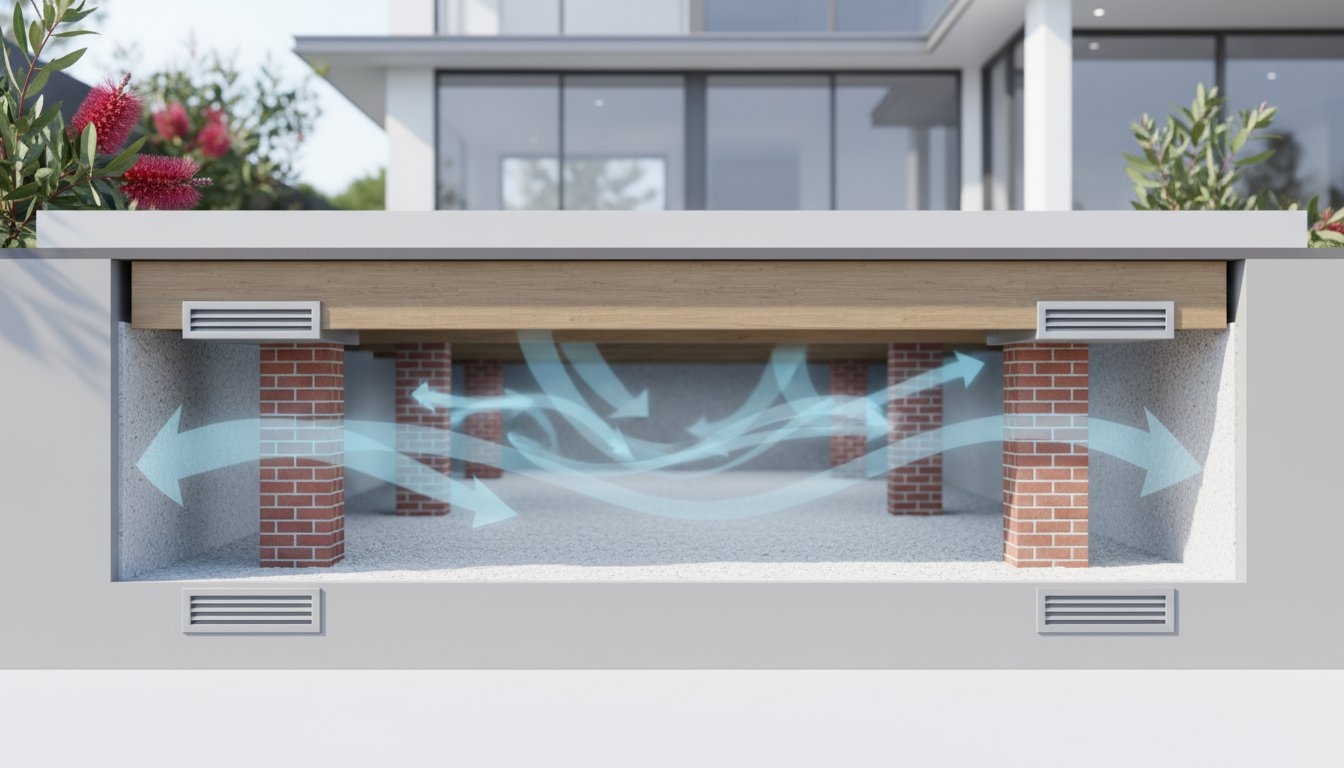
Subfloor ventilation is the essential process of replacing stagnant, moist air with fresh external air from outside the building footprint. In Sydney, this isn’t just a recommendation; it’s a structural necessity. Our local geography presents unique challenges. Many Sydney suburbs sit on clay-heavy soil that retains moisture for weeks after a storm. When you combine this damp ground with humid coastal air, your subfloor becomes a high-pressure moisture chamber. Finding the best way to ventilate under a house is the only way to prevent your timber floorboards from “cupping” or warping as they absorb excess ground water. Subfloor ventilation serves as the primary defense against timber rot and termites.
The principles of Underfloor Air Distribution (UFAD) demonstrate how air movement dictates the health of a building. Without a consistent exchange of air, humidity levels under your home can exceed 70%, which is the threshold for rapid fungal growth. This trapped moisture doesn’t just sit there. It migrates into your floor joists and bearers, compromising the very foundation of your property. If you don’t address these airflow issues, you’re essentially allowing your home to rot from the bottom up.
Signs Your Subfloor Ventilation is Failing
You don’t always need to crawl under your house to know there’s a problem. Your nose is often the first tool for detection. A persistent, musty smell inside your home usually signals active fungal growth beneath the floorboards. You should also look for visual cues on your external brickwork. Efflorescence, which appears as a white, salty powder on bricks, indicates that moisture is being drawn through the masonry. Other red flags include:
- Visible condensation or “sweating” on steel or timber joists.
- Damp, muddy soil that never seems to dry out, even during summer.
- Dark staining on floorboards or timber supports.
- “Dead spots” where air remains trapped in corners despite the presence of external vents.
Determining the best way to ventilate under a house requires identifying these dead spots. If you have vents but the air feels heavy and damp, your current system isn’t providing the cross-flow needed to flush out moisture.
The Health Connection: Subfloor Air and Your Family
Many homeowners assume the air under their house stays there. This is a dangerous misconception. Due to a phenomenon called the “stack effect,” warm air rises through your home and creates a vacuum that pulls air upward from the subfloor through gaps in floorboards and service penetrations. This means the air you breathe in your living room often originates in the dark, damp space below.
If your subfloor is damp, it likely contains black mould spores. These airborne particles can trigger severe respiratory issues, asthma, and skin irritations for your family. Professional air purification is a vital temporary measure, but it won’t solve the root cause. You must fix the structural ventilation to stop the cycle of contamination. A dry subfloor is the foundation of a healthy, mould-free home. It’s that simple. It’s that easy.
Passive vs. Mechanical Ventilation: Finding the Best Solution
Choosing between passive and mechanical systems depends on your property’s specific layout and local environment. Traditional terracotta or brass vents represent the passive approach. These rely entirely on natural wind to push air through the subfloor. In Sydney’s high-density suburbs like Paddington or Balmain, houses often sit inches apart. Wind rarely reaches these narrow gaps. Stagnant air trapped under your floorboards becomes a breeding ground for spores and structural decay. Mechanical fans solve this by creating a consistent, forced cross-flow regardless of external weather conditions. This is often the best way to ventilate under a house when natural air movement is obstructed.
Modern mechanical systems use high-efficiency fans to pull damp air out or push fresh air in. Some homeowners worry about electricity usage. However, 2026-standard high-efficiency fans are designed for continuous or sensor-controlled operation. A typical high-quality extraction unit consumes between 15 and 30 watts. At current Sydney energy prices, running a fan for 10 hours a day costs approximately A$25 to A$45 per year. This is a negligible expense compared to the A$10,000 plus cost of replacing moisture-damaged floor joists.
When Passive Ventilation is Enough
Passive systems can work effectively under specific conditions. Your home needs high ground clearance and a clear line of sight from one side of the foundation to the other. To comply with the National Construction Code, vents must be sized and placed to allow for adequate natural air exchange based on your specific climate zone. Success depends on:
- Large, unobstructed vents placed on opposite walls to encourage “natural cross-flow.”
- Zero external obstructions like garden beds, mulch, or concrete paths blocking the openings.
- Regular maintenance to remove debris. A single thick spider web or a build-up of dust can reduce airflow by 35% or more.
The Case for Mechanical Subfloor Fans
If your home has low clearance, typically less than 400mm, passive vents almost always fail to move enough air. You need active assistance to prevent rising damp.
- Extraction Systems: These pull heavy, moist air out from the dampest corners, creating a vacuum that draws fresh air in through existing passive vents.
- Inline Systems: These push fresh, dry air into the subfloor to displace stagnant pockets.
- Smart Sensors: The most effective systems use sensors that activate only when humidity levels exceed a set threshold, such as 60% or 70%. This prevents the system from running during dry periods, saving energy and extending the motor’s life.
The experts at ABC Mould Cleaning Solutions find that a tailored mechanical setup provides the peace of mind that passive vents cannot guarantee in humid coastal climates. If you notice a persistent musty smell in your hallway, contact ABC Mould Cleaning Solutions for a professional subfloor assessment.

Identifying and Fixing the Root Causes of Subfloor Dampness
Ventilation isn’t a magic fix for a flooded subfloor. If you have standing water under your joists, the best way to ventilate under a house is to stop the water at its source first. Airflow alone cannot evaporate a literal swimming pool faster than it refills. You must identify where the liquid is coming from before investing in high-end fans or extra vents. Blocked weep holes and slow-dripping pipes are often the primary culprits. When moisture wicks up through the masonry, known as rising damp, poor airflow accelerates the resulting timber rot and structural decay.
For many Sydney properties, installing a ground moisture barrier is a vital supplement to ventilation. Using 200-micron polythene sheeting to cover the exposed earth can reduce evaporation into the subfloor space by up to 80%. This prevents ground moisture from turning into humidity in the first place, allowing your ventilation system to focus on fresh air exchange rather than fighting constant evaporation.
Surface Drainage and Landscaping
Garden beds built directly against external walls are a common mistake found in approximately 45% of damp-affected homes. These beds trap moisture against the brickwork and often physically block air bricks. It’s essential to ensure the ground slopes away from your foundation by at least 50mm over the first metre. This simple grading prevents water from pooling against the footings. Don’t forget to check your downpipes during a heavy storm. A single cracked pipe or a blocked gutter can discharge hundreds of litres of water directly into your subfloor in under an hour.
Internal Plumbing and Groundwater
A professional mould inspection should always include a thorough check for slow plumbing leaks. Even a tiny drip from a shower waste or a rusted copper pipe can saturate the soil over several months. In low-lying Sydney suburbs or coastal regions, high water tables cause constant dampness through hydrostatic pressure. Older homes with sandstone foundations are particularly prone to “seepage,” where water travels through the porous stone. Under the NSW minimum rental standards, properties must meet basic requirements for ventilation and freedom from damp. If you don’t manage the groundwater, you’ll find that even the best way to ventilate under a house won’t be enough to keep the mould at bay.
Technical Requirements: Airflow Calculations and Placement
Australian Standard AS 2870 (Residential Slabs and Footings) provides the mandatory framework for subfloor health. For 2026 builds, compliance requires specific net area openings per lineal metre of wall based on your site’s humidity zone. To determine the best way to ventilate under a house, you must first calculate the Air Changes per Hour (ACH). Start by multiplying the length, width, and height of your subfloor to find the total cubic volume. A professional-grade system should target 6 to 10 full air exchanges every hour. This prevents the stagnant, heavy air that allows mould spores to colonize your floor joists. In high-moisture regions like Sydney, falling below these calculations often leads to structural timber rot within 24 months.
A mechanical system is only as effective as its intake capacity. For every litre of damp air a fan extracts, a mechanical system must have a clear path to pull in an equal volume of fresh makeup air from the outside. Without sufficient makeup air, the fan creates a vacuum that strains the motor and fails to move moisture effectively.
Positioning for Maximum Cross-Flow
Strategic placement is the difference between a dry home and a damp one. Fans must be installed on the dampest, most shaded side of the property, which is usually the southern or eastern elevation in Australia. You must avoid the common “short-circuit” problem. This occurs when an intake vent is placed too close to the extraction fan, causing air to enter and exit in a small loop. This leaves the rest of the subfloor untouched by fresh air. To solve this, ensure internal dwarf wall openings are clear and unobstructed. These openings allow air to reach the center of the home, eliminating “dead air” corners where moisture levels often exceed 20 percent.
Choosing the Right Fan Size and Type
The scale of your subfloor dictates your hardware needs. While 150mm fans work for small Sydney terraces, larger 200mm models are necessary for expansive family homes to ensure high-pressure airflow. Many homeowners consider solar-powered fans to save on energy. While effective during Sydney’s sunny afternoons, these units often fail during prolonged rainy periods when humidity is at its peak. Choosing a 24V or 240V powered fan ensures the system runs regardless of the weather. Noise is another critical factor. Select “silent” models with a decibel rating under 40dB, especially if the installation point is directly beneath a bedroom. This provides peace of mind without the constant hum of machinery.
Don’t let hidden moisture destroy your property’s value. Contact the experts at Mould Removals Sydney for a professional subfloor ventilation assessment today.
Professional Subfloor Ventilation Systems and Mould Prevention
Don’t risk your home’s structural integrity or your family’s health with DIY attempts that often fail. Professional installation is the only way to guarantee results and ensure electrical safety in damp, high-risk environments. The best way to ventilate under a house involves more than just sticking a fan in a vent. It requires a calculated approach to airflow, moisture extraction, and biological control. Our master technicians design systems that move stagnant air effectively, but we never install mechanical fans until the existing mould is completely eradicated. If you skip the cleaning phase, you are simply circulating dangerous spores throughout your living spaces.
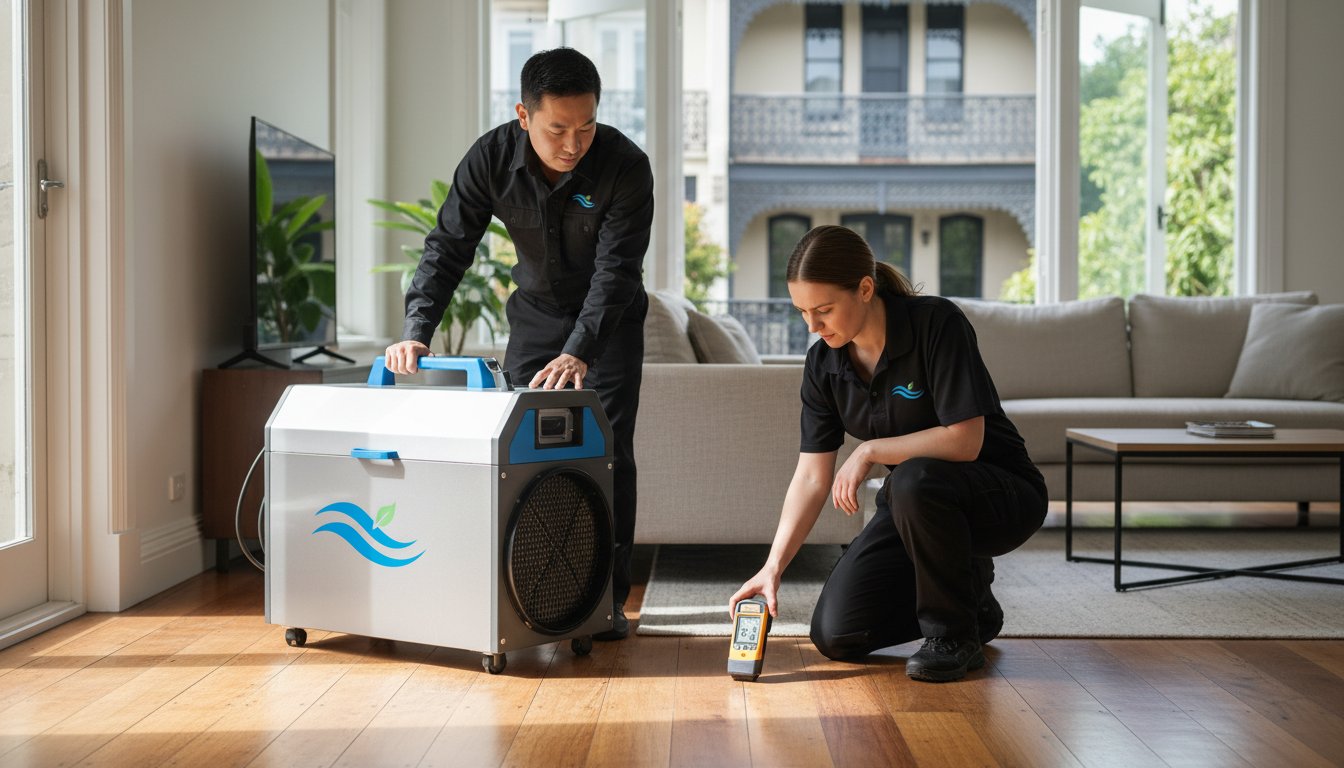
Our mould removal Sydney experts integrate ventilation into a comprehensive remediation plan. This isn’t a “set and forget” solution. A mechanical system requires long-term maintenance to remain operational for decades. We provide clear schedules for motor checks and filter cleaning, ensuring your subfloor stays dry and your air stays clean. We handle the hard work so you can enjoy total peace of mind.
The Goldmorr Advantage for Subfloors
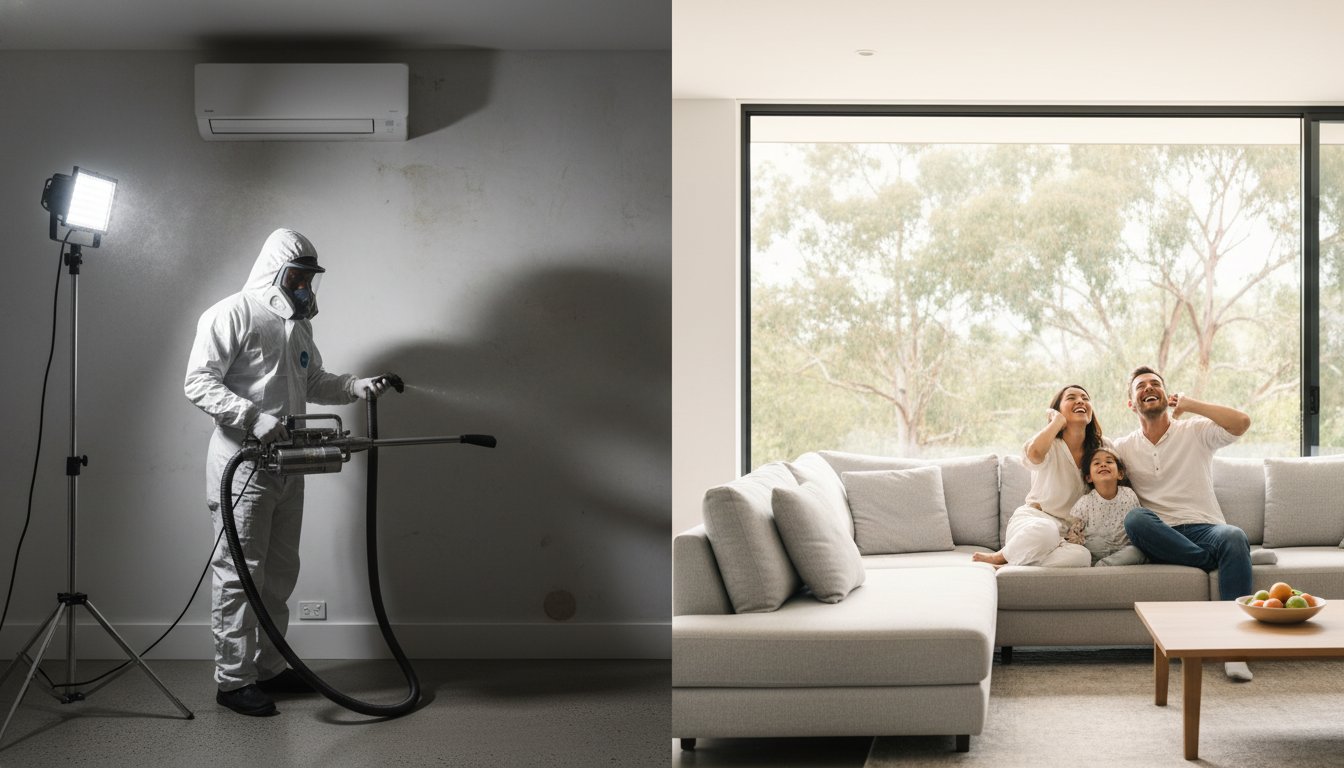
Scrubbing mould in a 400mm high subfloor is physically impossible and often dangerous. We solve this using the Goldmorr System, an industry-leading solution. Our biodegradable fogging process reaches every tight corner and crevice where spores hide. This system is completely safe for your families and pets, using non-toxic products that don’t leave harmful residues. Killing the mould is always step one. Ventilation is step two, which we call the “Prevention” phase. By sterilising the environment first, we ensure your new fans are moving fresh air rather than spreading a biological hazard. It’s a scientific, proven method that delivers permanent results.
Getting an Expert Quote in Sydney
Mould can quickly take over your home or office if you don’t act. We make the process affordable and transparent. ABC Mould Cleaning Solutions offers a competitive edge with our promise to beat any written quote by 10%. We want to make professional remediation accessible to every Sydney homeowner. To get a faster, more accurate estimate, simply send us images of your subfloor via your phone. This allows our experts to assess the scale of the moisture issue and provide a tailored plan without delay. Don’t wait until the problem worsens, because it will. Schedule your subfloor inspection today and protect your property. It’s that simple. It’s that easy.
Secure Your Home’s Future Against Dampness
Don’t let trapped moisture compromise your property’s value or your family’s health. You’ve learned that Sydney’s high humidity requires more than just a few passive vents; it demands a strategic approach to airflow. The best way to ventilate under a house involves precise mechanical systems that actively exhaust damp air and prevent mould spores from entering your living spaces. Our Goldmorr System Master Technicians provide the scientific expertise needed to keep your subfloor bone-dry year-round. As certified mould remediation experts in Sydney, we guarantee results that DIY methods simply can’t match. It’s that simple. It’s that easy. We’re committed to making your home safe and offer a 10% price beat guarantee on any written quote. Take the first step toward a healthier home today.
Get a Professional Subfloor Ventilation Quote – We Beat Any Written Quote by 10%!
You deserve the peace of mind that comes with a professionally protected home. Our team is ready to help you breathe easier.
Frequently Asked Questions
How do I know if my subfloor ventilation is adequate?
You can identify poor ventilation by checking for condensation on floor joists or a persistent musty smell in your living areas. The Building Code of Australia requires a minimum of 6000mm² of unobstructed vent area per lineal metre of external wall. If your subfloor feels humid or you see dark spotting on timber, your current airflow is likely failing to meet these safety standards.
Can I install subfloor ventilation fans myself?
You can physically mount the vents and fans yourself, but a licensed Australian electrician must perform all 240V wiring to comply with AS/NZS 3000 standards. DIY installation of the hardware is straightforward for many homeowners. However, our master technicians recommend professional placement to ensure cross-flow ventilation actually reaches the dead zones where mould typically flourishes.
How much does it cost to run a mechanical subfloor fan per year?
Running a high-efficiency 30-watt mechanical fan 24 hours a day costs between A$70 and A$90 per year based on average Australian electricity rates of A$0.30 per kWh. If you use a timer or a humidity-controlled sensor, these costs often drop below A$40 annually. It is a small price for protecting your home’s structural integrity and your family’s respiratory health.
Will subfloor ventilation stop rising damp?
Subfloor ventilation helps dry out the area, but it won’t stop rising damp caused by a breached or missing damp-proof course. The best way to ventilate under a house is to use mechanical fans to manage ground moisture levels. While ventilation reduces the symptoms, you must still address the physical barrier at the brickwork level to fully resolve rising damp issues.
Is a solar subfloor fan better than an electric one?
Solar fans are eco-friendly, but they often fail to provide the consistent 24-hour airflow needed in high-humidity regions like Sydney. Electric fans are generally superior because they operate at night when the dew point drops and moisture levels peak. For a guaranteed result, our team uses mains-powered systems that ensure your subfloor remains dry regardless of the weather or time of day.
What is the best way to ventilate a house with very low subfloor clearance?
Installing a ducted mechanical extraction system is the best way to ventilate under a house with clearances under 400mm. Passive vents are ineffective in these tight spaces because air cannot circulate freely around the obstructions. Using PVC ducting allows us to pull damp air directly from the centre of the building and exhaust it outside, preventing stagnant pockets from forming.
How often should subfloor vents be cleaned or inspected?
You should inspect and clean your subfloor vents every 6 months to prevent blockages from garden mulch, debris, or spider webs. A simple 15% reduction in vent opening size can significantly decrease airflow and lead to moisture buildup. Clear away any overgrown vegetation or soil that has accumulated against the vents to maintain the intended air exchange rate.
Does subfloor ventilation help with termite prevention?
Yes, maintaining a dry subfloor makes your home significantly less attractive to termites, which thrive in timber with moisture content above 20%. While ventilation isn’t a replacement for an AS 3660.1 termite inspection, it is a powerful preventative measure. By removing the damp conditions these pests crave, you create a hostile environment that protects your property from expensive structural damage.