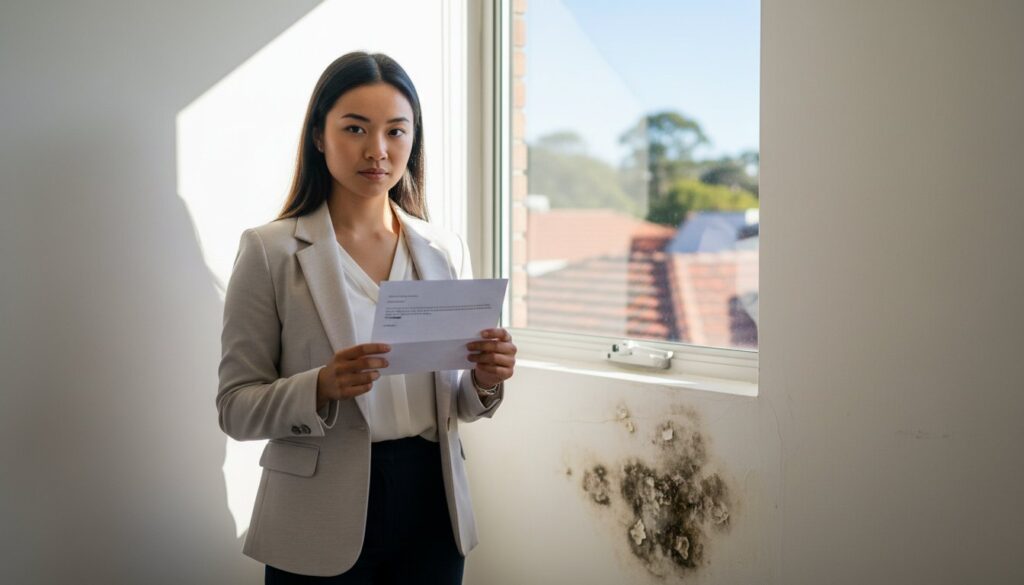
Last Tuesday, a tenant in Parramatta discovered that the “small spot” in her bathroom had exploded into a 40-centimetre colony of black mould. Despite sending three text messages to her property manager since June 12, the only advice she received was to buy a spray from the supermarket. You shouldn’t have to live in a damp environment that triggers respiratory issues or ruins your $1,200 sofa while your requests are ignored. It’s exhausting to be told that structural dampness is simply your failure to ventilate when you know the building is at fault.
You deserve a healthy home and a landlord who takes their legal obligations seriously. This guide teaches you exactly how to write a letter to landlord about mould that shifts the conversation from excuses to action. We’ll provide a professional template tailored for NSW rental laws and show you how to document evidence that holds up in a tribunal. You’ll learn how to demand a professional remediation plan, protect your personal belongings, and finally secure the safe, mould-free living space you pay for every week. It’s time to stop the verbal back-and-forth and start a paper trail that gets results.
Key Takeaways
- Understand your legal rights under the NSW Residential Tenancies Act 2010 to determine if mould issues fall under the landlord’s duty to maintain a property ‘fit for habitation.’
- Learn how to build a professional ‘Attachments Bundle’ with specific photographic evidence and moisture documentation to prove the source of the dampness.
- Master the exact structure of how to write a letter to landlord about mould to ensure your formal request is clear, documented, and legally compliant.
- Discover why you must insist on professional remediation using the Goldmorr System rather than simple surface cleaning to eliminate dangerous airborne spores.
- Identify the specific steps for escalating your case to NSW Fair Trading or NCAT if your landlord fails to provide an immediate and effective solution.
Understanding Your Rights: Landlord Obligations for Mould in NSW
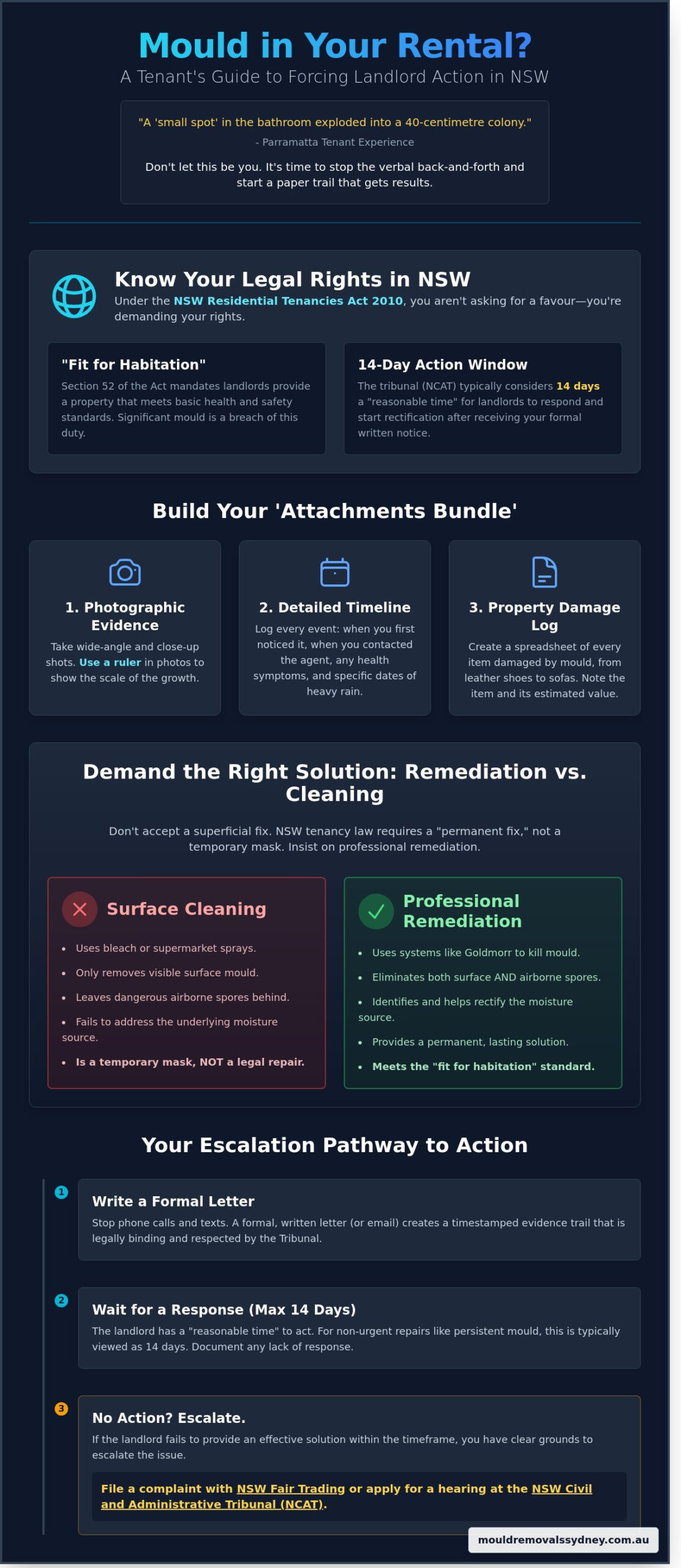
Under the NSW Residential Tenancies Act 2010, landlords have a legal obligation to provide and maintain a property that’s “fit for habitation.” This isn’t a suggestion; it’s a mandatory requirement under Section 52 of the Act. If your home is plagued by dampness, the property doesn’t meet the basic standards of health and safety. Knowing how to write a letter to landlord about mould starts with understanding that you aren’t asking for a favour. You’re demanding that the landlord fulfils their contractual and statutory duties.
NSW law distinguishes between tenant-caused issues and structural failures. If you’re drying laundry indoors without ventilation, the responsibility might fall on you. However, most serious infestations stem from rising damp, leaking pipes, or poor subfloor ventilation. These are structural defects. While a phone call is fast, it’s legally flimsy. A written letter provides a timestamped evidence trail. In the eyes of the NSW Civil and Administrative Tribunal (NCAT), a formal letter is the gold standard of proof that you’ve notified the landlord of the breach.
The timeline for action is critical. While the Act uses the term “reasonable time” for general repairs, NCAT typically considers 14 days as the maximum window for a landlord to respond and begin rectification. If the issue is ignored beyond this, you have grounds to escalate the matter to Fair Trading or the Tribunal.
Is Mould a Minor or Urgent Repair?
The Act classifies “burst water pipes” or “serious roof leaks” as urgent repairs. If these events cause an immediate outbreak, the landlord must act within 24 to 48 hours. Even if the cause isn’t a sudden flood, the health risks of indoor mould can elevate the priority status. Airborne spores trigger asthma and respiratory distress; this means you have a right to a safe environment immediately. Don’t let a property manager downplay your physical well-being as a “maintenance backlog” issue.
Common Landlord Excuses and the Law
Don’t accept the “just open a window” excuse if the building has inherent structural flaws. If the property lacks adequate subfloor ventilation or has a damp-proof course failure from 1985, no amount of fresh air will stop the growth. Landlords often suggest surface cleaning as a solution. Under NSW tenancy standards, a “permanent fix” is required. Wiping away spores with bleach is a temporary mask, not a repair. Professional mould remediation is often the only way to meet the “fit for habitation” standard legally. It’s that simple.
Gathering Evidence: The ‘Attachments Bundle’ for Your Letter
A letter is only as strong as the proof behind it. When learning how to write a letter to landlord about mould, you must treat your evidence like a legal brief. Don’t just state there is a problem; demonstrate the scale of the infestation. Start with a comprehensive set of photographs. Take wide-angle shots to provide context of the room and macro shots to show the specific texture and colour of the spores. If the growth covers a 1.5-metre section of the skirting board, include a ruler in the photo for scale.
Document the sensory details that photos can’t capture. Describe the “musty or earthy smell” that persists even after windows stay open for 6 hours. Create a precise timeline of events. For example, note that the first dark spots appeared on May 10, following heavy rain on May 8. Record every health impact. If a tenant develops a respiratory cough or skin rash, log the date it started and any medical appointments attended. This data aligns with Tenants’ Union of NSW advice regarding your right to live in a property that is fit for habitation.
Identifying the Source of the Damp
You need to show the landlord that the issue is structural, not lifestyle-based. Check for external factors like blocked gutters, cracked roof tiles, or leaking pipes under the sink. Note if the mould is concentrated behind heavy furniture or specifically on cold, external-facing walls. Identifying the source is the first step in the Goldmorr System. This investigation proves you aren’t at fault for the moisture buildup. If you’ve identified a 20cm water stain near a window frame, highlight this as a likely entry point for dampness.
Personal Property Damage Log
Mould is an invasive threat to your belongings. Create a spreadsheet listing every affected item, from 10 pairs of leather shoes to affected silk curtains or soft furnishings. Professional air purification is often the only way to save these items by neutralizing the airborne spores that have settled in the fabric. You can send us images for a professional opinion on which items are salvageable. Never throw away mouldy evidence like a ruined rug or mattress before the landlord or an inspector sees it. If you discard the evidence, you lose your leverage for any potential compensation claims later.
How to Structure Your Mould Complaint Letter
Writing a formal complaint isn’t just about venting frustration. It’s about creating a paper trail that protects your rights as a tenant. When learning how to write a letter to landlord about mould, you need to be clinical and factual. Start by clearly stating the property address and the date your tenancy began, such as 15 March 2023. This removes any ambiguity about which agreement you’re referencing and ensures the property manager can’t claim confusion.
Next, describe the issue with precision. Don’t just say there is mould. Specify that there’s a 40cm patch of black mould on the southern bedroom wall or a persistent musty smell in the ensuite. This level of detail proves the issue is more than a surface cleaning problem. You should then reference the Residential Tenancies Act 2010. Under this law, landlords must provide and maintain the premises in a reasonable state of repair. The Tenants’ Union of NSW mould factsheet confirms that landlords are generally responsible for mould issues caused by structural defects or a lack of adequate ventilation.
- Set a Deadline: Demand an inspection within 7 days to assess the damage.
- Provide Access: List at least three windows of time you’re available, such as Wednesday from 9 am to 12 pm.
- Request a Plan: Ask for a written remediation plan, not just a “quick wipe” solution that ignores the root cause.
The ‘First Notice’ Mould Letter Template
Your first letter should be polite but firm. Focus on the fact that the property is currently not fit for habitation due to a significant health risk. Use the term remediation to signal that you expect a professional solution, not a DIY fix. Keep the tone professional to maintain a working relationship with your property manager. It’s about the building’s health, which ultimately protects the landlord’s investment as much as your well-being.
The ‘Follow-Up’ Letter for Unresponsive Landlords
If you don’t receive a response within 48 hours of your deadline, send a follow-up. A firm follow-up is an essential part of knowing how to write a letter to landlord about mould that actually gets results. Reference the date of your initial letter and the lack of action taken. Escalating the tone is necessary here. State clearly that if a remediation plan isn’t provided by a specific date, like Friday the 22nd, you’ll contact NSW Fair Trading for assistance. Stick to the facts. Don’t get emotional; just remind them of their legal duty of care.
Escalating the Issue: When the Landlord Fails to Act
If your landlord ignores your formal request or provides a subpar “bleach and paint” solution, you must escalate the matter. Learning how to write a letter to landlord about mould is only the first stage of the process. In New South Wales, tenants have clear legal pathways when a property remains damp or unsafe. Start by contacting NSW Fair Trading for their free dispute resolution service. If a mediator can’t convince the landlord to act, your next step is the NSW Civil and Administrative Tribunal (NCAT).
At NCAT, you can seek specific orders to force the landlord to carry out repairs. You can also apply for a rent reduction. If 25% of your living space is unusable due to toxic spores, you shouldn’t pay full price for a home you can’t safely inhabit. Many tenants successfully claim back a portion of their rent for the entire period the mould was present. Avoid the “repair and deduct” strategy unless you have a tribunal order. Under the Residential Tenancies Act 2010, withholding rent without approval can lead to an eviction notice, even if the house is a health hazard.
- NSW Fair Trading: Provides free mediation and advice on your rights.
- NCAT Orders: Legally binding directions for structural repairs or compensation.
- Rent Reduction: Financial relief for the loss of “amenity” or habitable space.
- Evidence: Document everything. Save every email, photo, and doctor’s certificate.
Getting a Professional Mould Inspection
A standard cleaning quote isn’t enough to win a case at NCAT. You need a detailed remediation report from an independent expert. ABC Mould Cleaning Solutions provides comprehensive assessments that identify the root cause of the moisture. While a cleaning quote just tells you the price, our reports explain why the mould is growing. We use the Goldmorr System to identify airborne spores and structural dampness. This scientific evidence proves the issue isn’t just “lifestyle” or “lack of ventilation,” making it your strongest tool in a legal dispute.
The Role of Local Councils
Sydney local councils employ environmental health officers who can intervene when a property is a health risk. If the mould results from structural defects like a leaking roof or rising damp, the council can issue an order for the landlord to fix the building. This is often faster than the tribunal for urgent structural issues. For more information on identifying these issues, read our guide on Mould Cleaning Services: When to Call the Experts. Don’t let a landlord’s negligence compromise your health; take action today.
Don’t wait for the mould to spread. Send us images of your mould issue and our master technicians at Mould Removals Sydney will provide a professional assessment. Remember, we will beat any written quote by 10%.
Requesting the Right Solution: Remediation vs. Cleaning
When you are learning how to write a letter to landlord about mould, your choice of words determines whether you get a permanent fix or a temporary bandage. Don’t ask for “cleaning.” Surface cleaning with bleach only hides the problem for 14 days before spores regrow. You must demand “remediation.” This professional standard involves identifying the moisture source and removing 99.9% of biological contaminants from the structure.
ABC Mould Cleaning Solutions utilizes the Goldmorr System to ensure your home returns to a safe state. Traditional cleaners often miss airborne spores that settle in carpets and upholstery. Our master technicians use a specialized approach that targets these invisible threats. We work directly with landlords to provide a scope of works that addresses both visible growth and the hidden air quality issues that cause respiratory distress.
What Professional Remediation Looks Like
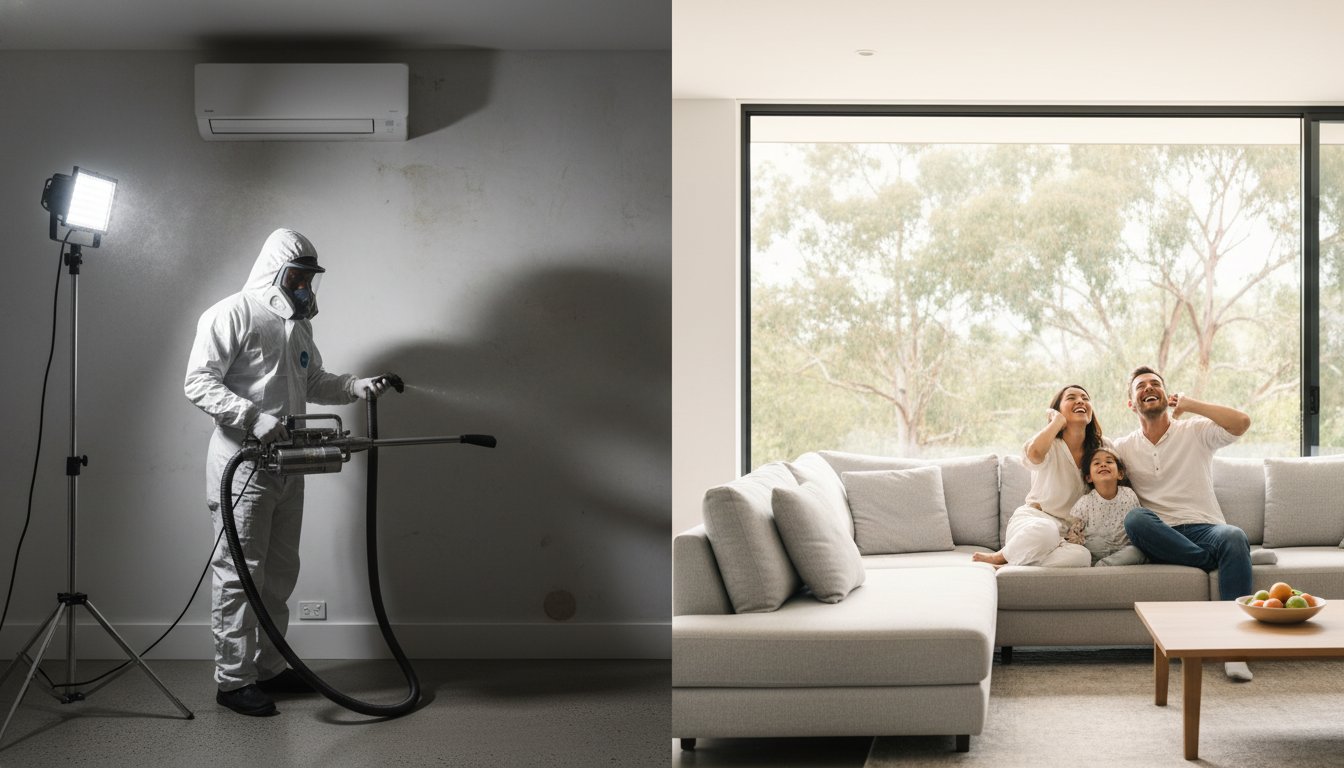
Professional remediation follows a strict protocol to prevent cross-contamination. Our 3-step process includes a detailed inspection, physical removal of colonies using GM6000 surface treatments, and final air purification. We prioritize safety by using a biodegradable fogging process. This mist is non-toxic and remains safe for families, infants, and pets immediately after application. The Goldmorr System is a world-leading, non-mechanical air scrubbing process.
Preventing Future Growth
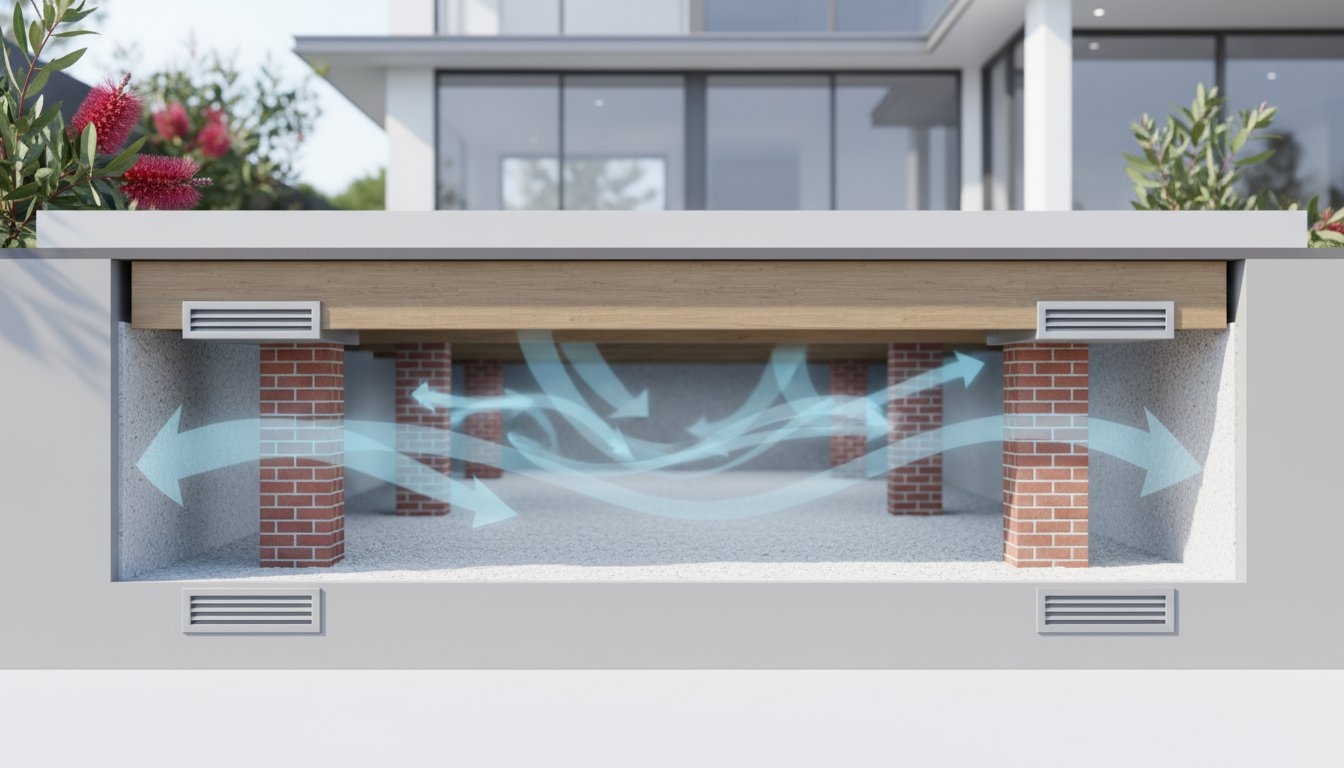
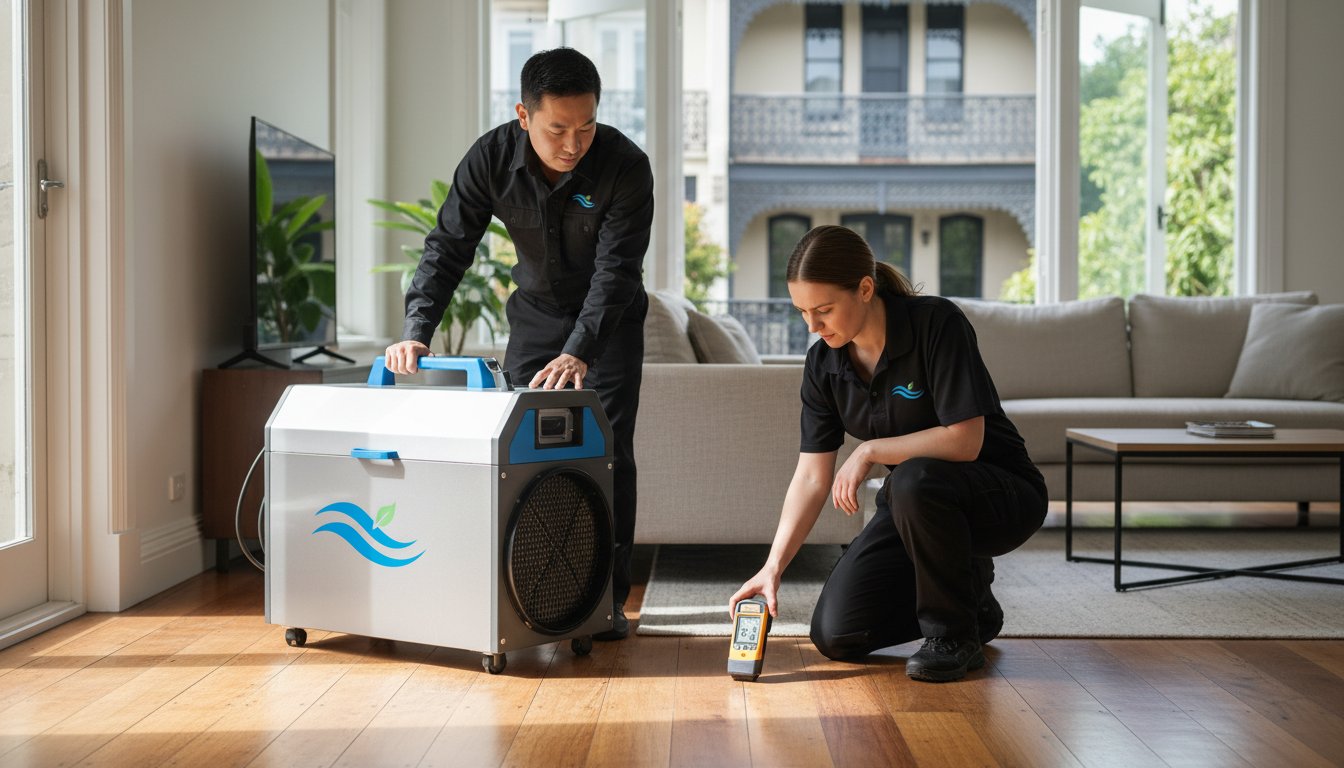
A letter is only effective if it addresses why the mould appeared. If your rental has rising damp or a leaking pipe, surface treatments won’t stop the cycle. We recommend tenants ask for specific structural improvements in their correspondence. This might include installing subfloor ventilation or high-capacity dehumidification systems in high-humidity zones like bathrooms or basements. Addressing these root causes protects the landlord’s investment and your health simultaneously.
If your landlord is hesitant to act, providing a professional assessment often breaks the deadlock. Contact ABC Mould Cleaning Solutions for a professional quote to show your landlord. We offer a 10% price beat guarantee on any written quote, making it easier for property managers to approve the necessary work quickly. It’s that simple. It’s that easy.
Take Control of Your Living Environment Today
Don’t let mould compromise your health or your home’s safety. You now have the tools to navigate NSW tenancy laws and the exact steps for how to write a letter to landlord about mould. Remember to include your “Attachments Bundle” with clear photos and a detailed timeline of the issue. This evidence is vital if you need to escalate the matter to NCAT later. Surface cleaning isn’t enough; you need a solution that addresses airborne spores and structural dampness to prevent the problem from returning next season.
Our team at Mould Removals Sydney has served as trusted Sydney experts for over 10 years. As Goldmorr System Master Technicians, we provide the professional evidence you need to secure a permanent fix from your property manager. We’re committed to your safety and your budget, which is why we beat any written quote by 10%. Stop waiting for the problem to worsen because it will only get more expensive and dangerous over time.
Get a Professional Mould Inspection Report for Your Landlord
It’s that simple. You deserve a healthy, mould free home and the peace of mind that comes with expert remediation. You’ve got the facts; now it’s time to get the results you deserve.
Frequently Asked Questions
Can I stop paying rent if there is mould in my Sydney rental?
No, you must never stop paying your rent, even if the mould growth is severe. Section 88 of the Residential Tenancies Act 2010 states that tenants who withhold rent risk being evicted for arrears. Instead, you should continue payments while applying to the NSW Civil and Administrative Tribunal for a rent reduction or compensation until the issue is resolved.
Is a landlord responsible for mould caused by condensation?
Yes, the landlord is responsible if the condensation occurs due to structural defects like poor ventilation or lack of wall insulation. Under the 2010 Act, owners must provide a property in a reasonable state of repair. When learning how to write a letter to landlord about mould, mention that the building requires at least 2 functioning air vents per room to prevent moisture buildup.
What should I do if my landlord tells me to just use bleach?
You should inform them that bleach is ineffective because it contains 90% water, which actually feeds the mould roots. Bleach only removes the surface colour while leaving the hyphae alive inside porous materials. Demand a professional remediation service that uses the Goldmorr System to ensure that both visible growth and invisible airborne spores are completely eliminated from the environment.
How long does a landlord have to fix mould in NSW?
Landlords should respond to urgent repair requests within 24 hours and non-urgent issues within 14 days. Mould is often classified as an urgent repair under Section 62 if it poses an immediate health risk to the occupants. If your landlord fails to act within the 14 day window, you can lodge a formal application with the tribunal to force the repairs.
Can I be evicted for complaining about mould?
No, you cannot be legally evicted for raising a maintenance issue. This is known as a retaliatory eviction and is strictly prohibited under Section 115 of the Residential Tenancies Act. If you receive a termination notice within 90 days of making a formal complaint, the tribunal has the power to set aside that notice and protect your tenancy rights.
What is the difference between mould removal and mould remediation?
Mould removal is a surface level cleaning that often fails, whereas remediation identifies the moisture source and kills airborne spores. Our 3 step process ensures the root cause is addressed so there isn’t a 100% chance of regrowth. Remediation is a scientific system that restores the indoor air quality to safe levels, rather than just wiping away the visible stains.
Does a landlord have to replace mouldy carpet in NSW?
Yes, the landlord must replace the carpet if professional remediation cannot restore it to a safe condition. New minimum standards introduced on 23 March 2020 require every room to be free from dampness and mould. If more than 20% of the carpet fibers are infested, replacement is usually the only way to meet these legal health and safety requirements.
How do I prove the mould is making me sick?
You need to provide a medical certificate from your GP and an air quality report from a certified technician. Concrete proof involves showing that spore counts exceed 500 per cubic meter or that specific toxic species like Stachybotrys are present. Knowing how to write a letter to landlord about mould with these technical findings attached makes your request for a lease break much stronger.
While mould is a common biological hazard, tenants should also be aware of invisible chemical contaminants that can make a property unsafe. Residue from previous tenants’ activities, such as methamphetamine manufacturing or heavy use, can linger in carpets, walls, and ventilation systems, posing serious health risks. Identifying these requires specialized testing, and services like Methamphetamine Testing Services NZ Limited highlight the importance of professional assessment to ensure a home is truly safe and fit for habitation.