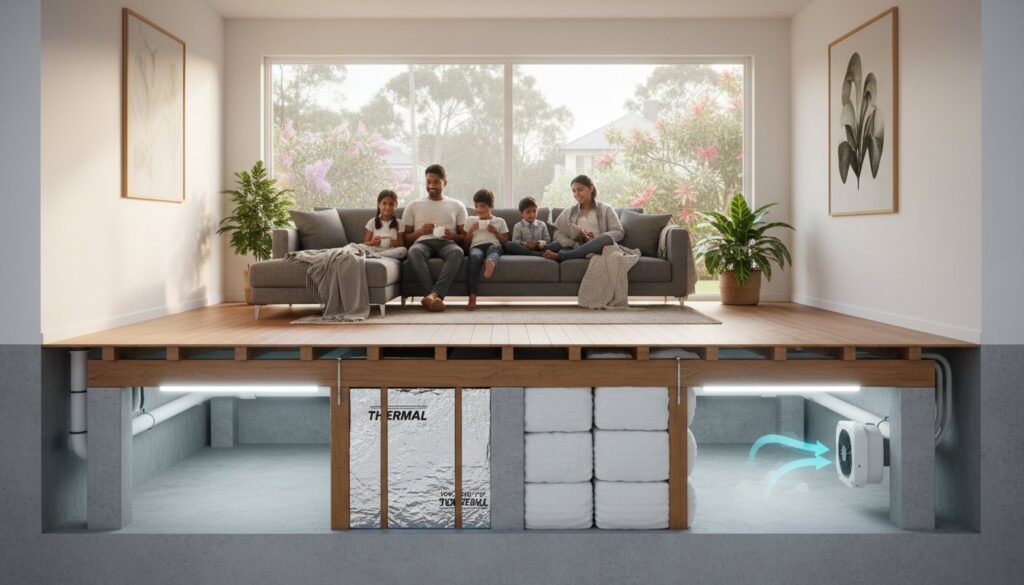
You’re literally throwing away up to 15% of your heating bill through the floorboards while invisible moisture creates a breeding ground for toxic spores beneath your feet. It’s frustrating to deal with icy draughts and that unmistakable musty smell every winter, especially when local quotes for a fix vary by thousands of dollars. You deserve a home that feels safe and stays warm. This 2026 guide breaks down the actual cost of underfloor insulation and ventilation in Sydney, helping you balance thermal comfort with the critical moisture control needed to stop mould in its tracks.
We’ve analysed current market data to provide clear pricing for polyester batts, foil board, and mechanical ventilation systems. You’ll discover how a typical $2,500 to $4,800 investment can permanently eliminate dampness and reduce your energy costs by a specific 12% annually. Our master technicians have seen how the right setup protects your family’s health and preserves your property’s structural integrity. We’ll preview the best materials for Sydney’s climate and explain how our expert team provides peace of mind with solutions that are safe for pets and the environment. It’s that simple. It’s that easy to get a reliable, professional result for your subfloor.
Key Takeaways
- Understand why sealing your floor without adequate airflow creates a “moisture trap” and how to balance winter warmth with effective mould prevention.
- Access the most recent 2026 Sydney pricing data to help you accurately estimate the total cost of underfloor insulation and ventilation for your home.
- Identify how unique local challenges, such as drilling through Sydney sandstone, can impact your professional installation quotes and project scope.
- Learn the hidden dangers of DIY subfloor work and the specific safety standards required to protect your property from structural moisture damage.
- Discover the long-term benefits of high-flow mechanical ventilation and solar-powered fans in maintaining a dry, healthy foundation for years to come.
Why Combine Underfloor Insulation and Ventilation?
Timber floors act as a sieve for thermal energy. In a typical Sydney home, up to 15% of your heating escapes through uninsulated floorboards. While sealing this thermal envelope is a priority for energy efficiency, doing it incorrectly creates a dangerous “Moisture Trap.” When you install insulation batts, you change how your subfloor breathes. Without proper airflow, warm indoor air meets the cold subfloor, causing condensation to settle directly on your timber joists.
Sydney’s coastal climate makes this a critical issue. With average relative humidity levels often exceeding 75% in suburbs like Manly or Maroubra, the risk of moisture saturation is high. If you only focus on the cost of underfloor insulation and ventilation as separate entities, you miss the vital synergy required to keep a home dry. A dual-system approach is the only way to ensure your insulation doesn’t become a sponge for dampness.
- Structural Protection: Prevents timber rot in floor joists and bearers.
- Energy Efficiency: Dry insulation performs better than damp insulation.
- Health Safety: Stops the upward migration of allergens into living areas.
The Science of Subfloor Airflow
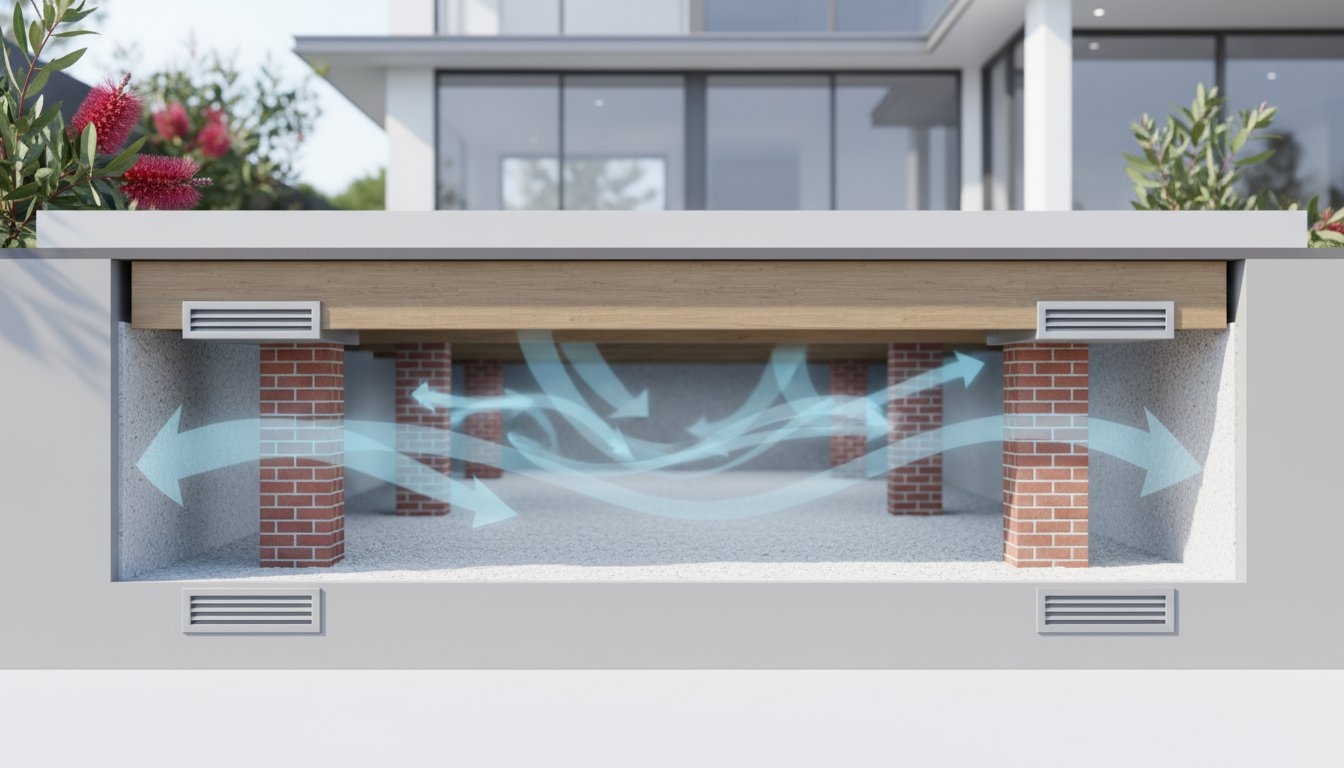
Stagnant air is the primary catalyst for timber rot and the rapid spread of toxic mould spores. Cross-ventilation works by using natural or mechanical pressure to push damp air out before it can condense. If your subfloor feels heavy or smells earthy, professional mould removal is a non-negotiable first step. Don’t trap existing spores behind new insulation; it only accelerates structural decay. Our master technicians often find that 40% of older Sydney homes require remediation before any energy upgrades can safely begin.
Thermal Comfort vs. Air Quality
You shouldn’t have to choose between a warm house and clean air. High R-value insulation provides the thermal resistance you need, but it must be paired with a “breathable” strategy. Common signs of poor ventilation in newly insulated homes include cupping floorboards or a lingering musty scent. These aren’t just aesthetic issues. They are red flags for poor indoor air quality that can trigger asthma or respiratory distress. Factoring the total cost of underfloor insulation and ventilation into your 2026 budget ensures your home remains a healthy environment for your family. It’s about long-term results, not just a quick fix for cold feet.
Breaking Down Underfloor Insulation Prices
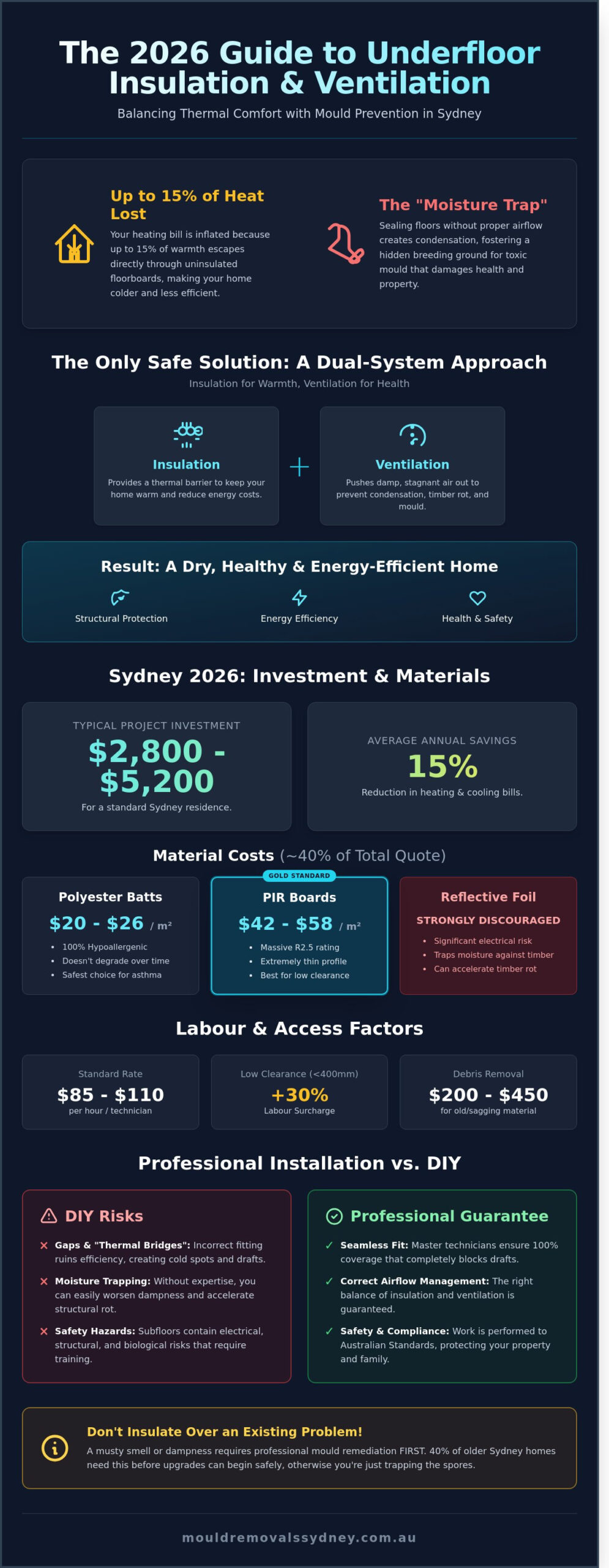
Investing in your home’s thermal envelope is a non-negotiable priority for 2026. The average cost of underfloor insulation and ventilation for a standard Sydney residence typically falls between $2,800 and $5,200. This price fluctuates based on the square footage and the specific R-value required to meet modern energy standards. You’ll find that professional installation pays for itself; Sydney households report an average 15% reduction in annual heating and cooling bills after upgrading their subfloor protection.
Material Costs: What Are You Paying For?
Material choice dictates roughly 40% of your total quote. In 2026, Sydney homeowners are moving away from cheap, itchy fibers toward high-performance solutions. Polyester batts cost approximately $20 to $26 per square metre. They’re 100% hypoallergenic and don’t degrade over time, making them the safest choice for families with asthma. If your home has limited clearance, PIR (Polyisocyanurate) boards are the gold standard at $42 to $58 per square metre. These rigid boards provide a massive R2.5 rating in a very thin profile. We strongly discourage reflective foil, which was common in the 2010s; it poses significant electrical safety risks and often traps moisture against timber joists, leading to rot.
Installation Labour and Access Fees
Labour rates in Sydney for 2026 average $85 to $110 per hour per technician. However, the physical reality of your subfloor changes these numbers quickly. If your crawl space is “low clearance”—meaning under 400mm of vertical room—expect a 30% surcharge on labour. Technicians must work in cramped, difficult conditions that require specialized safety gear. You should also budget $200 to $450 for the removal of old, sagging glasswool or debris left by previous builders. While DIY kits exist, they often lead to gaps that create thermal bridges, ruining the efficiency of the product. Professional master technicians ensure a seamless fit that blocks drafts entirely.
Dampness often hides behind old insulation, creating a breeding ground for spores. If you’ve noticed a lingering earthy scent, our professional mould assessment identifies hidden moisture issues before you seal them in with new materials. It’s a vital step to protect your structural timber and your family’s health.
The ROI on this project is clear and measurable. With Sydney energy prices projected to rise another 8% by the end of 2026, the payback period for a full insulation retrofit is now just 5 to 7 years. You aren’t just buying batts; you’re securing long-term price stability for your utility costs. It’s that simple. It’s that easy.
Subfloor Ventilation Cost: Investing in a Dry Foundation
Your home’s foundation needs to breathe. Trapped moisture under your floorboards is the primary cause of timber rot and toxic mould growth in Sydney. When calculating the total cost of underfloor insulation and ventilation, you must prioritize airflow to protect your structural investment. Stagnant air creates “dead zones” where humidity levels often exceed 70%, the exact threshold where mould spores thrive. Professional ventilation ensures these pockets are cleared, keeping your subfloor dry and your indoor air quality safe.
Passive Ventilation Upgrades
Passive systems rely on natural air movement. Most older Sydney homes still use restrictive terracotta vents that provide minimal airflow. Replacing these with high-flow brass or plastic mesh vents costs between $85 and $170 per unit, including installation. Modern vents offer up to 50% more open area than clay versions. For a standard three-bedroom home, a strategic upgrade of 10 to 12 vents typically ranges from $1,000 to $2,000. This is a one-time cost with zero ongoing electricity expenses.
Mechanical and Solar-Powered Solutions
Mechanical systems are essential when natural cross-flow isn’t enough. A high-quality 24V fan system with humidity-controlled sensors costs between $1,400 and $3,200 depending on the crawl space complexity. These smart sensors only activate the fans when moisture levels peak, saving energy. Solar-powered vents are a popular 2026 choice, with upfront costs of $1,100 to $1,900 per fan. While the initial price is higher, they operate at zero cost by using the sun’s energy to extract damp air during the hottest parts of the day.
To ensure your home is completely protected, we utilize the industry-leading Goldmorr System. This involves professional air scrubbing and biodegradable fogging to eliminate existing spores before installing new ventilation. Our master technicians provide a comprehensive approach that simple DIY fixes can’t match. We are so confident in our pricing that we will beat any written quote by 10%. It’s that simple. It’s that easy.
- 24V Mechanical Fans: $1,400 to $2,800 per system
- Solar Powered Extractors: $1,100 to $1,900 per unit
- High-Flow Mesh Vents: $85 to $170 per vent
- Maintenance: $150 to $250 for a biennial professional inspection
Active ventilation systems require minimal maintenance, but you should budget for a professional check every 24 months. Technicians inspect fan bearings and clear mesh screens of debris or spider webs to maintain peak efficiency. Don’t wait until you smell dampness to act. Send us images of your subfloor vents today to get an affordable quote and secure your home’s foundation.
Factors That Influence Your Total Project Quote
Your final cost of underfloor insulation and ventilation depends on more than just the square meterage of your home. Site-specific challenges across Sydney can increase a standard quote by 15% to 35%. Our master technicians look at the physical environment before recommending a specific system.
Structural and Geographic Variables
The “Sydney Sandstone” factor is a primary cost driver. Many heritage homes in the Eastern Suburbs or Lower North Shore sit on solid sandstone foundations. Drilling a standard 230mm x 160mm vent through 200mm of aged sandstone takes three times longer than through a standard brick skin. This difficulty adds roughly $130 to $190 per vent installation in labor costs.
Location also dictates hardware specifications. Coastal homes in areas like Bondi or Manly face high salt spray. These properties require marine-grade stainless steel vents to prevent corrosion, which costs more than standard PVC or plastic alternatives. In contrast, Western Sydney homes deal with higher temperature fluctuations. We often see 70% humidity levels in subfloors during winter mornings in Penrith or Blacktown. These conditions require high-flow mechanical ventilation systems to be effective. If your subfloor shows signs of moisture wicking up through the masonry, you must complete rising damp treatment before any insulation is installed.
The Hidden Costs of Remediation
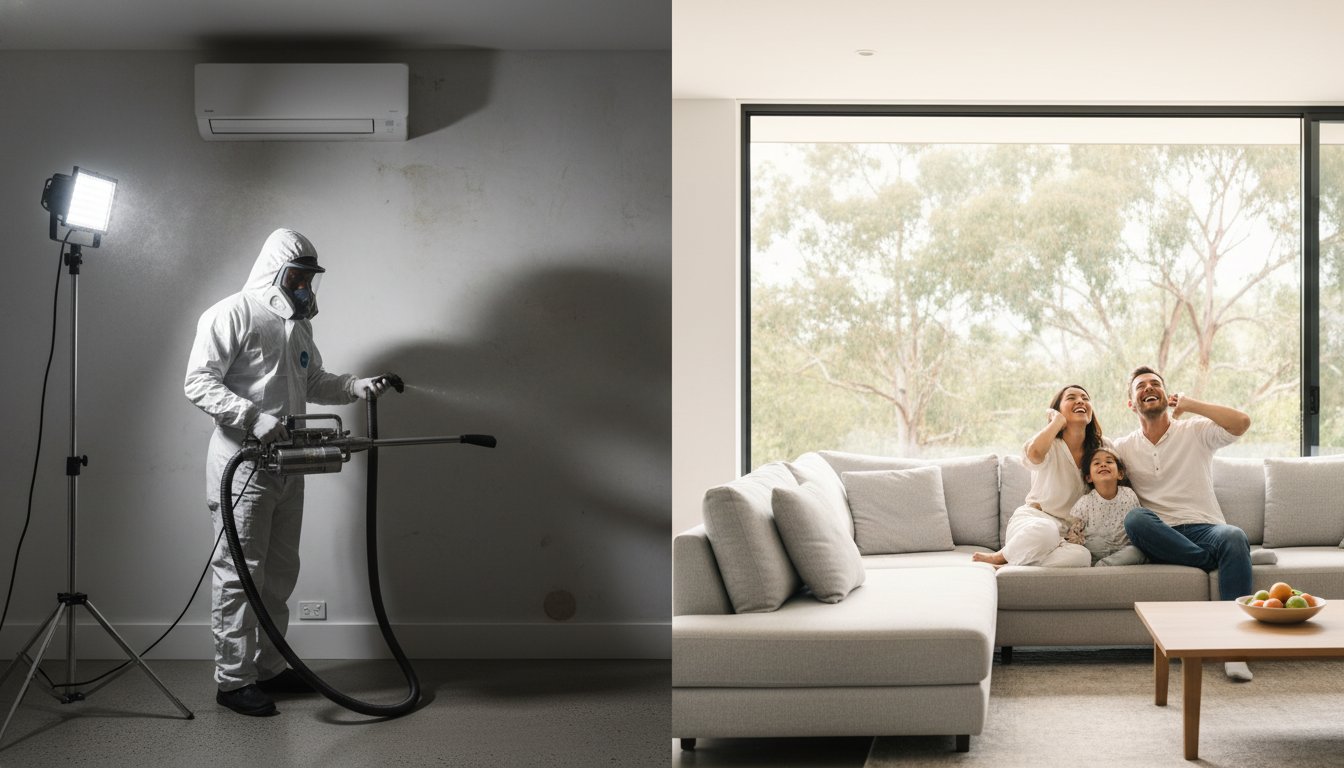
You cannot skip the cleaning phase. Installing insulation over existing spores is a dangerous mistake. It traps moisture against the timber joists and creates a breeding ground for structural rot. If our team identifies black mould on your floor frame, we must treat it using a professional system first.
Common remediation expenses that impact your total project budget include:
- HEPA vacuuming of timber joists to remove loose fungal colonies.
- Application of biodegradable antimicrobial agents to kill deep-seated spores.
- Installation of 200um (micrometer) polythene ground moisture barriers to stop “ground gulp” or rising soil moisture.
- Disposal fees for old, sodden glasswool batts, which often cost upwards of $450 per load due to hazardous waste handling requirements.
Complex layouts also change the math. A flat block with 1.2 meters of clearance is a straightforward job. However, split-level homes or blocks with less than 400mm of crawl space require specialized low-profile equipment and more labor hours. Don’t let these variables surprise you. It’s better to address these issues now than to pay for structural repairs in three years.
Request a professional subfloor inspection to get an accurate, fixed-price quote for your property.
Professional Installation vs. DIY: Protecting Your Sydney Home
Attempting a DIY approach to manage the cost of underfloor insulation and ventilation often leads to expensive rectification work. Sydney crawlspaces are notorious for tight clearances and hidden hazards. Homeowners trying to save money frequently overlook 240-volt electrical wiring or accidentally create moisture bridges. If your insulation touches damp soil or foundation walls, it acts like a wick. This carries moisture directly into your floorboards, leading to timber rot and toxic mould growth within 12 months of installation.
When you compare quotes, the cheapest option usually skips essential moisture barriers or uses inferior materials that sag over time. Professional installers ensure that 100% of the floor area is covered without compromising the safety of your home’s electrical system. A master technician understands that your subfloor is a breathing ecosystem. Cutting corners here doesn’t just waste money; it risks your family’s respiratory health.
Why Experience Matters in Subfloor Work
NSW building codes are strict regarding subfloor clearance. Most Sydney homes require a minimum of 400mm between the ground and the lowest timber member to prevent rising damp. Professional installers ensure insulation stays clear of the ground and does not block existing air bricks. Before starting any work, you should book a professional mould inspection. This identifies if you have active spores that must be treated with the Goldmorr System before insulation is sealed in place.
Next Steps: Getting an Accurate Quote
Getting a precise estimate for the cost of underfloor insulation and ventilation is straightforward. To help our technicians provide an accurate remote assessment, follow these steps:
- Take clear photos of the subfloor access point and the area under your joists.
- Identify any areas with standing water or a persistent musty smell.
- Ask your installer how they plan to maintain cross-flow ventilation after the insulation is fitted.
Don’t risk the structural integrity of your property with a “quick fix” that ignores the root cause of dampness. ABC Mould Cleaning Solutions uses industry-leading technology to ensure your home remains dry, safe, and energy-efficient. We are so confident in our value that we will beat any written quote by 10%. It’s that simple. It’s that easy. Contact ABC Mould Cleaning Solutions for a professional subfloor assessment today and get the peace of mind you deserve.
Secure Your Sydney Property for 2026 and Beyond
Protecting your home from rising damp and energy loss requires a proactive strategy. Investing in a professional subfloor solution prevents structural decay and blocks the serious health risks associated with trapped moisture. When you calculate the cost of underfloor insulation and ventilation, remember that professional installation ensures your home remains dry for decades. Our Master Technicians use the industry-leading Goldmorr System to eliminate mould at the source, providing a scientific solution that DIY methods can’t match. Data indicates that properly sealed and ventilated subfloors can reduce annual heating costs by up to 15%.
Don’t wait until musty smells become a permanent fixture in your living space. We provide Sydney-wide service with a 24/7 emergency response to keep your environment safe. We’re committed to being the most affordable experts in the region. If you find a lower price elsewhere, we’ll beat any written offer by 10%. It’s that simple. It’s that easy.
Get a Professional Subfloor Quote – We’ll Beat Any Written Offer by 10%
Your journey to a healthier, more energy-efficient home starts with a single expert consultation today.
Frequently Asked Questions
Is underfloor insulation worth the cost in Sydney’s climate?
Underfloor insulation is definitely worth the investment because it reduces heat loss through floors by up to 15% annually. For a standard 120 square metre Sydney home, you can save roughly $450 each year on energy bills. The cost of underfloor insulation and ventilation pays for itself within 4 to 6 years while immediately improving your indoor comfort levels. Don’t wait for your energy bills to skyrocket; take action now to secure your property’s thermal efficiency.
Can underfloor insulation cause mould if not installed correctly?
Yes, improperly installed insulation can trap moisture against your floorboards and trigger a serious mould outbreak. If you leave no gap for airflow, condensation builds up and creates a breeding ground for airborne spores. Our master technicians use the Goldmorr System to ensure your subfloor remains dry and safe. Send us images of your current subfloor today so we can identify potential moisture traps before they cause structural rot and health risks.
How much does a subfloor ventilation fan cost to run annually?
A standard subfloor ventilation fan costs between $45 and $92 per year to run at 2026 Sydney electricity rates. This estimate assumes the fan operates for 10 hours per day using a 30-watt motor. High-efficiency models can lower this annual expense to just $38. It’s a small price to pay for protecting your property from the unsightly spread of mould and ensuring a constant flow of fresh air throughout the lower levels of your home.
Does underfloor insulation stop rising damp?
No, underfloor insulation doesn’t stop rising damp; it actually makes the problem worse if the moisture source isn’t fixed first. Rising damp occurs when ground water climbs up through porous masonry via capillary action. You must install a physical damp-proof course or a mechanical ventilation system to manage this. If you notice a musty or earthy smell, call us now for a professional assessment before the moisture destroys your floorboards and structural integrity.
What is the best type of insulation for a timber floor house?
Rigid PIR boards or R2.5 polyester batts are the superior choices for Sydney timber floor houses. These materials resist moisture and provide a thermal barrier that keeps your home 4 degrees warmer in winter. Avoid cheap glasswool that can sag over time and lose its effectiveness. Our team provides certified, industry-leading solutions that are safe for your family and pets. We’ll even beat any written quote by 10% for your professional installation.
How many vents does my subfloor actually need?
Australian Standard AS 3660.1 requires a minimum of 6,000 square millimetres of clear ventilation opening for every 1 metre of external wall. For a typical 15-metre wall, you need at least 9 high-flow vents to prevent stagnant air pockets. Most older Sydney homes only have 30% of the required ventilation currently installed. Check your vents now; if they’re blocked by garden beds or paint, your subfloor is at risk of severe dampness and timber decay.
Can I install subfloor ventilation myself to save money?
You can install basic passive vents yourself, but 85% of homeowners require professional help for mechanical fan systems to ensure the cost of underfloor insulation and ventilation provides a real return. Improper DIY fan placement often creates “dead spots” where air doesn’t move, leading to localized rot. Our certified experts use scientific data to place fans for maximum extraction. It’s that simple and that easy to get it right the first time.
How long does a typical subfloor upgrade take to complete?
A professional subfloor upgrade typically takes between 5 and 9 hours to complete for a standard residential property. Most projects are finished in a single day, meaning minimal disruption to your daily routine. Our team arrives on time, completes the remediation, and leaves your site clean. Schedule your cleaning or installation now to get a free estimate and secure your property against the hidden dangers of subfloor moisture and airborne spores.