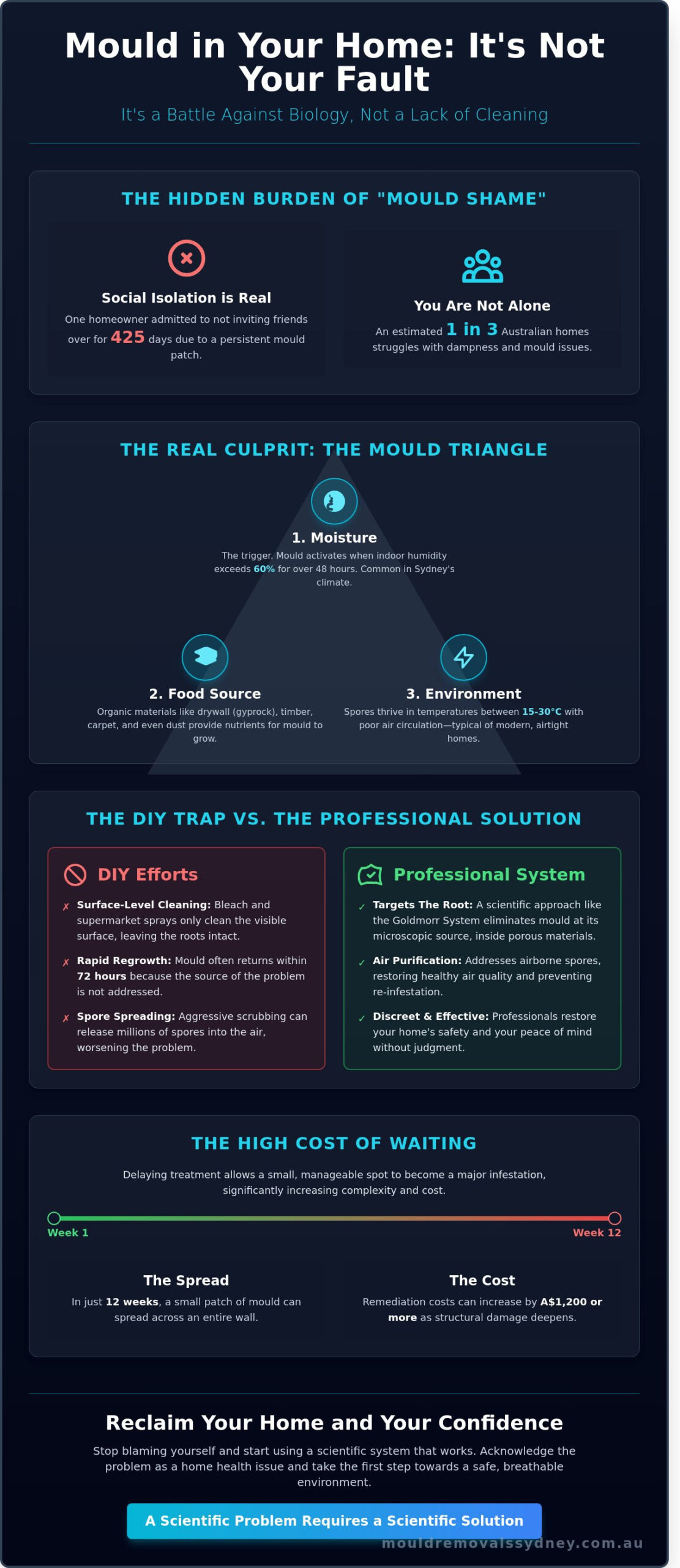
Last Tuesday, a Sydney homeowner admitted they hadn’t invited friends over for 425 days because of a persistent dark patch in the laundry. If you are feeling embarrassed about mould in my house, please know that your experience is incredibly common across New South Wales. It’s easy to feel like you’ve failed or to dread the judgment of a professional inspector during a routine check. You might spend your weekends scrubbing with supermarket sprays only to see the growth return within 72 hours, leaving you feeling defeated and anxious about your family’s health.
We agree that the social isolation and guilt caused by these airborne spores are exhausting. This article will prove that mould is a complex biological challenge rather than a reflection of your hygiene, giving you the facts needed to reclaim your space without shame. We will explain why standard cleaning fails and how a professional, discreet treatment can restore your home’s safety immediately. It’s time to stop blaming yourself and start using a scientific system that actually works.
Key Takeaways
- Stop feeling embarrassed about mould in my house by understanding that Sydney’s humid climate makes fungal growth an environmental challenge rather than a cleaning failure.
- Learn why common DIY fixes like bleach often fail on porous surfaces and how to identify the hidden moisture sources fueling the “Mould Triangle.”
- Discover practical daily habits to improve air circulation and reclaim your living space from persistent, airborne spores.
- Explore how the professional Goldmorr System provides a discreet, scientific solution to restore your home’s safety and your peace of mind.
The Hidden Burden: Why Feeling Embarrassed About Mould in Your House is Common
Walking into a room and catching that unmistakable musty scent can trigger an immediate sense of dread. Many Sydney homeowners experience “mould shame,” which is the intense psychological stress caused by hiding fungal growth from friends, family, and even tradies. You might find yourself feeling embarrassed about mould in my house, leading you to keep the spare room door locked or cancel social gatherings. This emotional weight is heavy, but it’s based on a fundamental misunderstanding of how fungi operate. Mould isn’t a sign of a “dirty” home. It’s a biological reality of living in a humid, coastal environment.
In Sydney, the climate is often your biggest adversary. During the 2022 La Niña events, local humidity levels frequently stayed above 75% for weeks at a time. When indoor humidity exceeds 60%, mould spores become active regardless of how often you mop the floors or dust the shelves. Statistics suggest that roughly 1 in 3 Australian homes struggle with dampness and mould issues. You’re part of a massive group of people fighting an environmental battle, not a personal failure of hygiene. Many of our clients suffer in silence for 4 to 8 months before calling for professional help, simply because they fear judgment from others.
The Social Impact of House-Shame
House-shame often leads to social withdrawal. You stop hosting Sunday lunches because you’re worried guests will smell the spores or spot a dark patch behind the lounge. This isolation takes a significant mental toll, making your home feel like a source of stress rather than a sanctuary. When you hide the problem, you allow the infestation to thrive in the dark. Delaying treatment for just 12 weeks can see a small patch of Aspergillus spread across an entire wall, potentially increasing remediation costs by A$1,200 or more as the structural damage deepens.
Moving From Shame to Action
It’s time to reframe the issue. Stop viewing mould as a cleaning failure and start seeing it as a home health issue. There’s a vital distinction between a “dirty” house and an “infested” one. Dirt is easily wiped away, but an infestation involves microscopic airborne spores that embed themselves in porous materials like drywall and carpet. Feeling embarrassed about mould in my house only delays the necessary solution. By acknowledging the problem, you take the first step toward a safe, breathable environment. Our master technicians use the Goldmorr System to target these spores at the source, moving you from a state of anxiety to total peace of mind. It’s a scientific problem that requires a scientific solution, not a bottle of supermarket bleach and a scrubbing brush.
The Science of Spores: Why Even Clean Homes Get Mould
If you are feeling embarrassed about mould in my house, you likely assume it is a hygiene issue. It is not. Mould spores are a natural, permanent part of the Sydney ecosystem. On a typical day in New South Wales, outdoor air can contain between 500 and 1,000 spores per cubic metre. These microscopic invaders enter through open windows, on your clothes, or via pets. They stay dormant until they find the “Mould Triangle”: moisture, organic food sources like gyprock or timber, and temperatures between 15 and 30 degrees Celsius.
Modern building standards have accidentally made this problem worse. Homes built to high energy efficiency ratings are often airtight. While this keeps you warm, it also traps internal moisture from cooking, breathing, and showering. Without constant ventilation, your living room becomes a petri dish. This is a structural challenge, not a cleaning failure. There is a massive difference between surface dust and fungal colonies. Dust sits on top of a surface; mould roots itself deep into the pores of your building materials, making it impossible to remove with standard household cleaners.
Moisture: The True Culprit
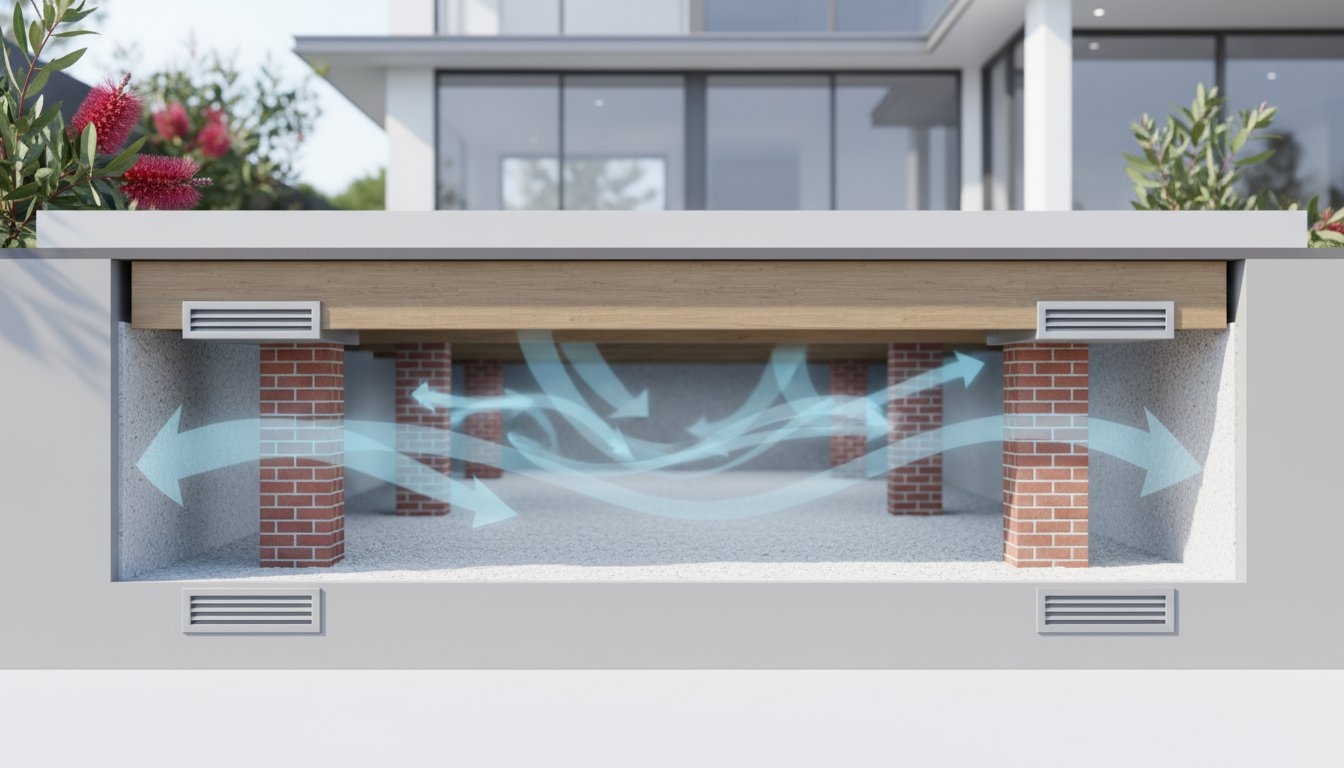
Relative humidity in Sydney often spikes above 70% during wet seasons. When humidity stays this high for over 48 hours, dormant spores activate. During winter, the temperature difference between the cold outside air and your heated interior causes condensation on glass and wall cavities. Sometimes the source is even deeper. Rising damp is a common structural failure where groundwater wicks up through porous masonry. This happens because of failed damp proof courses, not because you forgot to tidy up.
The ‘Invisible’ Threat
Mould is often invisible before it becomes a crisis. You might smell a damp, earthy odour long before you see a single black spot. This “musty” smell is actually microbial volatile organic compounds (mVOCs) being released as the fungus feeds. It is this scent that often leads to people feeling embarrassed about mould in my house, as it lingers even when the home looks spotless.
The danger of DIY scrubbing is significant. When you use a brush on a dry colony, you release millions of spores into the air. These airborne particles settle in your carpets and upholstery, waiting for the next humid day to sprout. If you notice a persistent smell, you should speak with an expert technician to check your air quality. Our team uses professional air scrubbing equipment to capture these invisible threats, ensuring the problem is gone for good. It is that simple. It is that easy.
Why Your DIY Efforts Might Be Fueling the Embarrassment
Many Sydney homeowners spend their Saturdays scrubbing walls only to see the same dark patches reappear within 14 days. This repetitive cycle often intensifies the feeling embarrassed about mould in my house, as it makes you feel like your cleaning standards aren’t high enough. The truth is that most supermarket cleaners are designed for surface stains, not biological infestations. When you use standard bleach on porous surfaces like gyprock, you’re actually feeding the problem. Bleach contains a high percentage of water. While the chlorine evaporates off the surface, the water penetrates deep into the material, providing the exact nourishment the mould needs to grow back faster.
Over-cleaning can also lead to permanent surface damage. Scrubbing too hard weakens the paint seal and creates a textured surface that traps even more moisture. This creates a “vicious cycle” where the wall becomes more susceptible to growth every time you try to fix it. Breaking this cycle requires moving away from domestic cleaning products and toward scientific remediation.
The Myth of the ‘Quick Fix’
Store-bought sprays usually only “hide” the problem by stripping the colour from the fungus. This leaves the hyphae, or the root system, completely intact. If you wipe the area aggressively, you risk aerosolising millions of black mould spores. These spores settle on other furniture, starting new colonies in different rooms. Some residents try to paint over the issue using “mould-resistant” paint without killing the underlying colony. This is a mistake that leads to rot. Painting over active mould traps moisture against the structural timber, which can lead to A$10,000+ in structural repairs later on.
Professional vs. Amateur Approaches
Our master technicians don’t walk into a building and see a “dirty house.” We see a moisture imbalance that requires a clinical solution. While a DIY approach focuses on the visible stain, professional remediation addresses the invisible threat in the air you breathe. We use non-mechanical air scrubbing and the industry-leading Goldmorr System to eliminate airborne spores and that persistent, musty smell. 85% of our clients report an immediate sense of relief once they realise the issue is a building science problem, not a cleaning failure. A professional inspection is objective and clinical, much like a doctor’s visit, focusing entirely on restoring the health of your environment.
- Surface vs. Root: DIY kills the top; professionals kill the hyphae.
- Air Quality: Wiping spreads spores; air scrubbing removes them.
- Prevention: We identify the 100% moisture source rather than just cleaning the symptom.
You don’t have to keep fighting a losing battle against biology. Professional intervention is the only way to stop the regrowth and finally end the feeling embarrassed about mould in my house. It’s time to stop scrubbing and start solving.
Practical Steps to Reclaim Your Home (and Your Confidence)
Stop feeling embarrassed about mould in my house. It is a biological reality, not a reflection of your cleaning habits. To fix the problem, you must first think like a technician. Mould requires two things to thrive: a food source and moisture. Since you cannot remove the organic materials like timber or drywall that your home is built from, you must control the water. Start by investigating whether the moisture stems from a structural leak, poor ventilation, or high indoor humidity. Sydney’s coastal climate often pushes indoor humidity levels above 70%, creating a breeding ground regardless of how often you vacuum.
Dealing with a landlord or family members requires a shift in perspective. Frame the conversation around property maintenance and health rather than “dirt.” If you are renting, remind the owner that moisture issues can lead to permanent structural decay and a decrease in asset value. Use factual observations such as “there is a persistent musty odour” or “visible growth is appearing on the ceiling,” which points toward a ventilation or plumbing failure that is their responsibility to fix.
Immediate Moisture Control
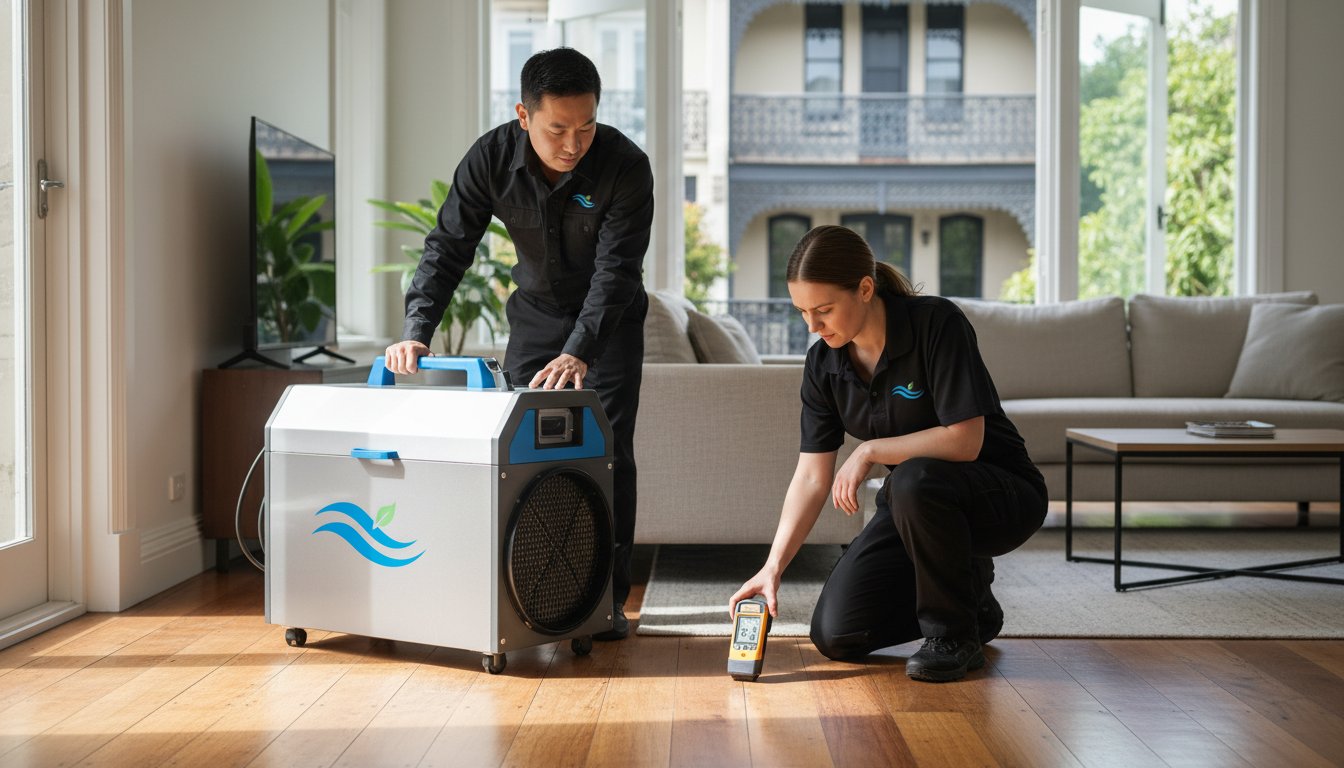
You can take control of your environment today by managing the air. Use a hygrometer to track humidity; your goal is to keep levels below 60% at all times. If the air feels heavy, run a dehumidifier to pull litres of water out of the room daily. In high-traffic areas like bathrooms and kitchens, run exhaust fans for at least 15 minutes after cooking or showering to clear steam. Always check dark, stagnant areas for water damage, especially under kitchen sinks or behind washing machines, where slow drips often go unnoticed for months.
Preparing for Professional Help
When DIY methods fail, a professional mould inspection is the most efficient way to identify hidden colonies. Our master technicians use thermal imaging and moisture meters to find what the naked eye misses. Don’t try to scrub the area before we arrive. Wiping dry mould releases thousands of airborne spores into your living space, making the problem worse. Instead, document the growth with clear photos for insurance purposes and leave the remediation to experts who use the industry-leading Goldmorr System. We focus on killing the spores at the source, ensuring your home is safe for your family and pets.
Don’t let a hidden leak destroy your peace of mind. Contact our expert team today for a professional assessment and a quote that we’ll guarantee to beat by 10%.
Discreet & Professional: How ABC Mould Solutions Restores Your Peace of Mind
Stop letting a biological issue affect your social life. If you are feeling embarrassed about mould in my house, you should know that approximately 40% of Sydney homes experience moisture-related fungal growth at some point. It is a building science problem, not a reflection of your cleaning habits. ABC Mould Solutions approaches every property with a “Master Technician” mindset. Our team consists of experts trained in microbiology and building physics, ensuring we identify the root cause rather than just wiping away the surface stains.
We understand the need for privacy. Our Sydney-based teams operate with total discretion, arriving in professional vehicles and working efficiently to minimize disruption. We don’t just clean; we provide a scientific reset for your living environment. By the time we finish, your home will meet strict safety standards, smell fresh, and be completely ready for guests.
The Goldmorr Advantage
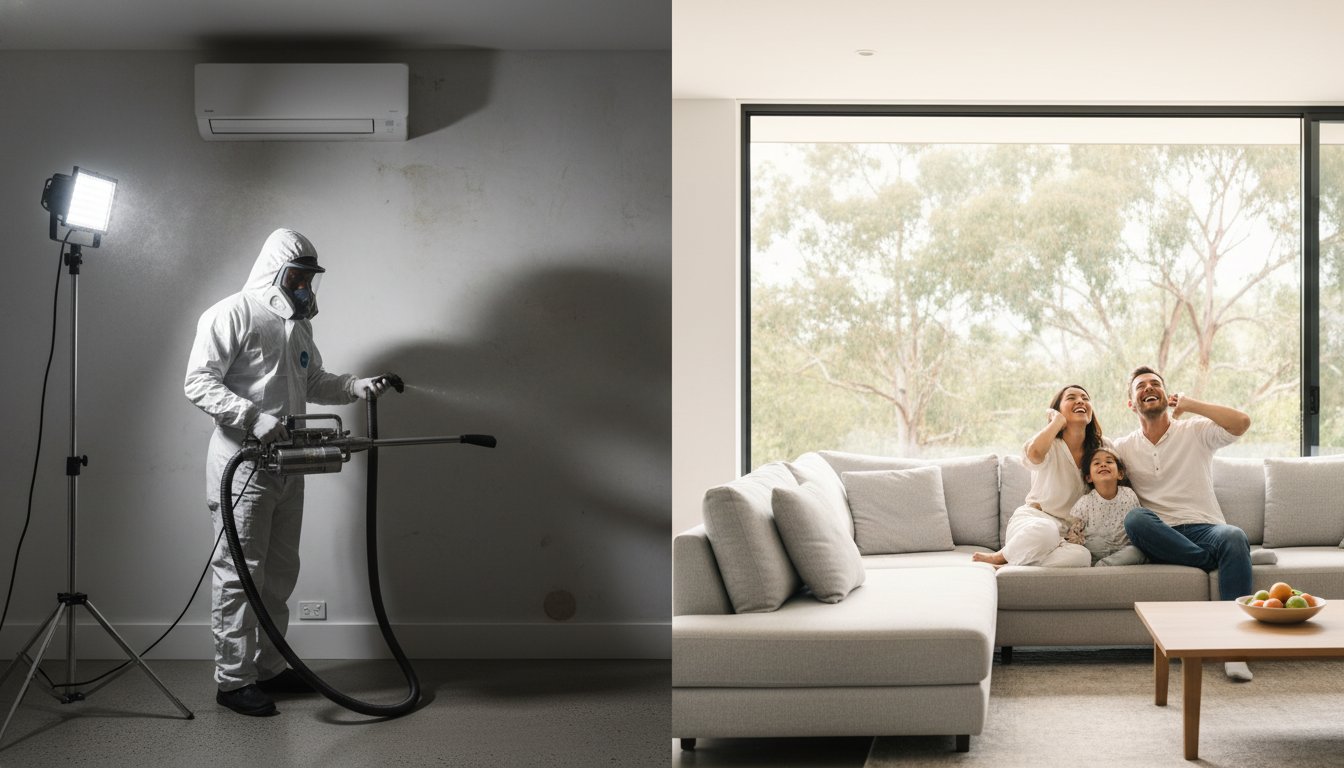
Our primary weapon against infestation is the Goldmorr System, a world-leading remediation process. This scientific approach uses a biodegradable fogging process that targets airborne spores you cannot see with the naked eye. While traditional cleaners rely on toxic bleach that often feeds mould roots, our system is non-invasive and eliminates the threat at a cellular level.
- Airborne Spore Eradication: Our fogging reaches behind furniture and into crevices where spores hide.
- Family and Pet Safety: We use biodegradable products that are safer for the 25 million pets living in Australian households than harsh industrial chemicals.
- Source Identification: We use thermal imaging and moisture meters to find the water source, preventing the mould from returning in 3 to 6 months.
Restoring Your Home’s Reputation
The greatest benefit we provide is the “Clean Slate” result. You can finally stop worrying about musty odours when people walk through your front door. Our process removes the earthy smell and the unsightly black spots, giving you the confidence to host dinners and family gatherings again. We believe professional remediation should be accessible to everyone, which is why we offer a competitive edge that others cannot match.
We guarantee to beat any written quote by 10%, ensuring you get world-class Master Technician service at the best possible price in New South Wales. Don’t let a temporary fungal issue cause permanent stress. It is time to take back your space with a solution that is fast, effective, and completely non-judgmental.
Reclaim Your Home and Your Peace of Mind Today
Stop feeling embarrassed about mould in my house because spores are a biological reality, not a reflection of your cleaning standards. Sydney’s persistent humidity makes mould an environmental battle that DIY sprays often lose. Since 2010, ABC Mould Solutions has served as Sydney’s trusted local experts, restoring safety to thousands of homes across the region. Our Goldmorr System Master Technicians use a safe, biodegradable fogging process that targets invisible airborne spores without damaging your property. This scientific approach ensures your living space is healthy for pets and family members immediately after we finish.
You deserve a home that feels fresh and inviting. We handle every remediation with total discretion to protect your privacy while we work. We are committed to providing the most affordable service in NSW, which is why we’ll beat any written quote by 10%. Don’t wait for the problem to worsen and risk structural damage. It’s time to stop worrying and start breathing easier. It’s that simple; it’s that easy.
Get a Discreet, Professional Quote – We’ll Beat Any Price by 10%
Frequently Asked Questions
Does having mould in my house mean I am a dirty person?
Absolutely not. Mould is a biological issue caused by moisture imbalances, not a lack of cleaning. In 95% of the Sydney homes we treat, the root cause is a structural defect, poor ventilation, or high humidity rather than hygiene. Stop feeling embarrassed about mould in my house; even the most pristine properties in the Eastern Suburbs face these issues when indoor humidity levels exceed 60%.
Will the mould removal team judge the state of my home?
Our master technicians focus entirely on remediation and your safety. We’ve seen thousands of cases across NSW and treat every property with professional discretion. We aren’t there to inspect your housekeeping; we’re there to deploy the Goldmorr System and eliminate airborne spores. Our goal is providing you peace of mind through expert results, not judgment.
Can I just paint over the mould to hide it from guests?
Never paint over active mould because it doesn’t kill the underlying fungi. The mould will continue to digest the drywall or timber, often reappearing through the new paint within 14 to 30 days. This creates a “mould sandwich” that traps moisture and accelerates structural rot. It’s a temporary cosmetic fix that ignores the serious health risks associated with living colonies.
Why does the musty smell persist even after I’ve cleaned the visible mould?
The persistent earthy odour comes from Microbial Volatile Organic Compounds (mVOCs) released by active colonies you can’t see. Even if you scrub the surface, spores often remain trapped in carpets, insulation, or behind skirting boards. Our non-mechanical air scrubbing and biodegradable fogging process are designed to neutralise these microscopic particles that standard household cleaners can’t reach.
How can I tell the difference between ‘dirt’ and a mould colony?
Dirt usually sits on the surface, while mould grows into the substrate and appears as fuzzy, slimy, or powdery patches. If a spot regrows after being wiped with water or has a distinct scent, it’s likely a living colony. A 2023 study showed that 70% of household dust actually contains biological allergens, so if the patch is spreading, it’s definitely a mould issue.
Is it safe for my children to live in a house with hidden mould?
Living with hidden mould isn’t safe as it can trigger respiratory issues and chronic allergies in children. Research from the World Health Organization indicates that children in damp homes have a 30% higher risk of developing asthma. Don’t wait until the problem worsens; hidden spores circulate through your air conditioning and affect your family’s daily well-being every time they breathe.
What is the most discreet way to get a mould inspection in Sydney?
You can start by sending us images of the affected areas to get a fast, affordable quote without an initial site visit. If an on-site inspection is needed, our experts arrive in professional vehicles and conduct themselves with total discretion. We’ll provide a clear 3-step plan to fix the issue and will beat any written quote by 10%. It’s that simple.