Last Tuesday, a homeowner in Paddington noticed white salt crystals blooming on their heritage brickwork for the third time this year. They had scrubbed the walls and repainted, yet the bubbling plaster and musty smell returned within weeks. If you are seeing similar signs, you are not alone. Recent 2023 building surveys indicate that moisture issues affect 25 percent of older Sydney properties. You shouldn’t have to fight a losing battle against groundwater. We understand the frustration of recurring mould, especially when it feels like your home is slowly deteriorating. This guide explains exactly how to fix rising damp from outside to ensure your property remains dry and structurally sound.
Our team of master technicians knows that surface treatments are just a temporary bandage. You need a permanent solution that stops the capillary action of water before it enters your living space. We will walk you through the most effective external methods, from installing high-tech chemical damp proof courses to correcting ground levels that bridge your existing barriers. Discover how to identify the difference between rising damp and simple rain leaks, then take decisive action to protect your investment. We’ll show you the professional steps required to restore your peace of mind and stop the rot for good.
Key Takeaways
- Stop wasting time on temporary interior masks and discover why targeting the source from the exterior is the only permanent solution for your home.
- Learn to identify critical warning signs like tide marks and white salt deposits before they compromise your property’s structural integrity.
- Gain expert insights into how to fix rising damp from outside using advanced chemical DPC injections that create a lasting moisture barrier.
- Discover how simple ground-level adjustments and professional drainage solutions like French drains can keep your footings dry and protected.
- Find out why professional remediation and air purification are vital after the damp is fixed to ensure your family is safe from hidden black mould.
Understanding Rising Damp: Why External Fixes are the Only Permanent Solution
Rising damp is a destructive force that targets the very foundation of your property. It occurs when ground moisture moves upward through porous masonry like bricks and mortar. This process is relentless. If you don’t stop the moisture at the source, your home’s structural integrity is at risk. Many homeowners try to hide the damage with “damp-proof” paints or heavy wallpapers. These products are a temporary mask. They trap moisture inside the wall, which accelerates the decay of your bricks and creates a breeding ground for toxic mould.
To truly protect your home, you must understand What is Rising Damp and how it bypasses your home’s original defences. Most Sydney properties built before 1970 rely on a physical Damp Proof Course (DPC) made of bitumen, slate, or lead. After 50 years of service, these barriers often crack or degrade. We also frequently see the “bridging” effect. This happens when external garden beds, new pathways, or even internal floor levels are raised above the original DPC line. When this happens, moisture simply steps over your barrier and enters your walls.
The Science of Capillary Action in Masonry
Capillary action is the primary driver of rising damp in porous building materials. Your home’s bricks and mortar act like a giant sponge, pulling groundwater upward against the force of gravity. In many Sydney suburbs, we see moisture climb as high as 1.5 metres. Sydney’s high humidity, which often averages above 65%, complicates the issue. High humidity levels slow down the evaporation of moisture from the wall surface. This results in a heavy accumulation of hygroscopic salts. These salts pull even more moisture from the air, ensuring your walls stay damp even during the dry season.
External vs. Internal Treatment: Why the Outside Matters
Understanding how to fix rising damp from outside is the key to a permanent result. External fixes address the source of moisture before it enters the building envelope. We often see homeowners waste thousands on internal “tanking.” This process involves applying a waterproof coating to the inside of the wall. It’s a dangerous tactic. Tanking doesn’t stop the water; it just forces the moisture higher up the wall to find a new exit point. This can lead to timber rot in floor joists and ceiling beams that were previously dry.
Fixing the problem from the exterior is the professional standard. External accessibility allows our technicians to install more robust mechanical or chemical barriers. By creating a new, impenetrable line of defence from the outside, we ensure that ground moisture never has the chance to penetrate your living space. It’s the only way to provide long-term peace of mind and a healthy, mould-free environment for your family. If you want to know how to fix rising damp from outside effectively, you must start by cutting off the water’s path before it reaches your internal plaster.
Signs of Rising Damp on External Walls: What to Look For
Identifying the early warning signs of moisture ingress can save you from catastrophic repair bills. Rising damp isn’t just an aesthetic issue; it’s a structural threat that demands immediate attention. When you’re investigating how to fix rising damp from outside, you must start by looking for the classic “tide mark.” This is a visible line of salt or brownish discoloration that usually sits about 1.2 metres above the ground level. It marks the highest point the groundwater has reached through capillary action.
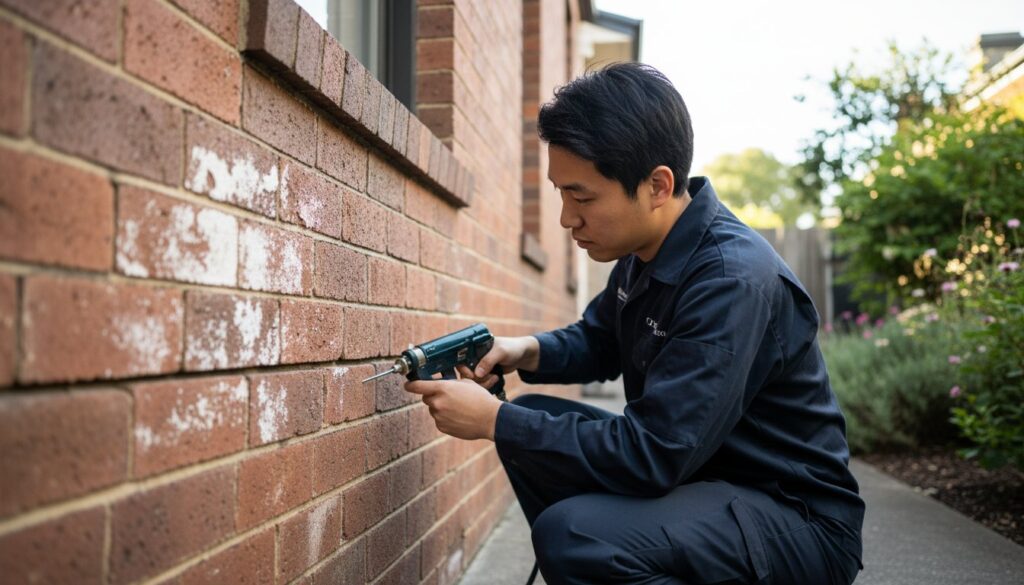
Don’t ignore white, powdery deposits on your brickwork. This is efflorescence. It occurs as moisture evaporates, leaving behind mineral salts that have been sucked out of the soil and masonry. If you touch your mortar joints and they feel sandy, crumbly, or damp even after a week of dry Sydney weather, your home’s first line of defence has failed. You might also notice spalling masonry, where the face of the brick begins to flake off, leaving the soft inner core exposed to the elements. These are not just cosmetic flaws. They are active indicators of a building under stress.
Salt Efflorescence and Masonry Decay
Hygroscopic salts, specifically nitrates and chlorides, are the primary drivers of masonry destruction. These salts are pulled from the ground and deposited deep within the brick structure. They are incredibly stubborn. Even after the initial damp source is addressed, these salts continue to attract moisture from the humid air, a process that keeps the wall damp indefinitely. This cycle leads to sub-florescence, where salt crystals grow inside the pores of the brick. The internal pressure eventually causes the brick to shatter or flake, leading to deep structural spalling that requires professional intervention. If you’re worried about the state of your walls, you can send us images of the damage for a fast, expert assessment.
Distinguishing Rising Damp from Penetrating Damp
It’s easy to confuse different types of moisture problems, but the solution for each is very different. Rising damp strictly moves upwards from the floor. In contrast, penetrating damp can appear anywhere on the wall, often caused by horizontal water entry. According to Archicentre Australia, the primary causes of rising damp often involve a failed damp-proof course or “bridging” where external garden beds and patio slabs are built too high.
Check your external walls for any obstructions that sit above your original damp-proof course. High soil levels or poorly installed downpipes can allow water to bypass your home’s natural barriers. Our master technicians often find that simply clearing these bridges is a key part of how to fix rising damp from outside. We are so confident in our diagnostic process that we’ll beat any written quote by 10%, ensuring you get the most effective remediation at the best possible price. It’s that simple. It’s that easy.
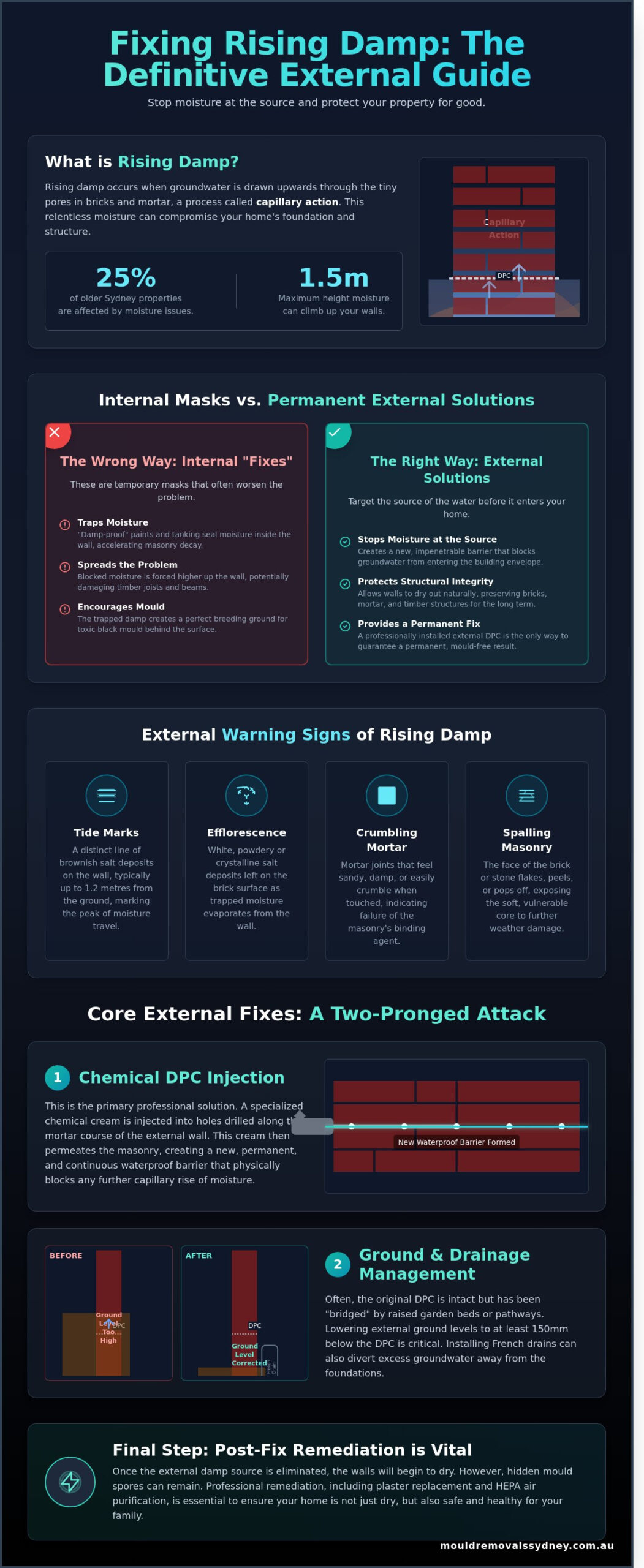
Core External Fixes: Chemical DPC Injection and Physical Barriers
Fixing rising damp requires more than a surface-level patch. To effectively address the issue, master technicians focus on creating a permanent barrier at the base of your walls. The primary professional method involves silicone-based chemical injections. This technique transforms the mortar bed into a hydrophobic zone, effectively stopping water from climbing through capillary action. When homeowners ask how to fix rising damp from outside, this is the most reliable and least invasive solution available today.
Professional intervention is vital because DIY kits often fail to achieve full saturation. Our team uses high-pressure equipment to ensure the barrier is continuous. If even a small gap remains, moisture will find its way through. We prioritize a scientific approach to restore the safety and structural integrity of your home.
The Chemical Injection Process Step-by-Step
Modern damp proofing has evolved significantly. In 2026, cream-based silane and siloxane injections are the industry standard for Sydney properties. These creams are thicker than old liquid formulas, ensuring they stay in the mortar bed long enough to saturate the masonry fully. Our process follows a strict technical protocol:
- Precision Drilling: We drill 12mm holes into the lowest accessible mortar course, usually 150mm above ground level.
- Specific Patterns: Holes are spaced 100mm to 120mm apart to ensure the chemical zones overlap and form a solid line.
- Deep Saturation: The cream is injected into the boreholes, where it migrates into the pores of the brickwork and mortar.
The chemical usually takes 7 to 14 days to cure. During this time, it reacts with the silica in the masonry to create a water-repellent lining. It works on most substrates, though sandstone and lime-based mortars require specific concentrations for maximum efficacy. Don’t wait until the problem worsens; a timely injection can save thousands in structural repairs.
Repairing or Installing a Physical Damp Proof Course
Sometimes, chemical solutions aren’t enough. For heritage homes built before 1900 or structures with severe structural shifts, a physical damp proof course (DPC) replacement is necessary. This is an invasive “undercutting” method. We remove bricks in small sections, typically 1 meter at a time, to insert a new high-density polyethylene (HDPE) or slate barrier. This is a high-durability fix that can last over 80 years.
You must ensure the new DPC remains visible. A common mistake in Sydney renovations is “bridging,” where new render or garden soil covers the DPC line. If this happens, moisture bypasses the barrier entirely. It’s that simple. It’s that easy to ruin a good repair with poor landscaping. If you suspect your DPC is breached, send us images of your external walls today. We’ll show you exactly how to fix rising damp from outside before the moisture causes permanent structural decay and toxic mould growth.
Managing Ground Levels and Drainage to Stop Damp from the Outside
Stopping moisture before it enters your masonry is the most effective way to protect your property. If your external ground levels sit too high, you’re essentially inviting water to bypass your home’s natural defenses. You must ensure that soil, paths, and garden beds remain at least 150mm below the Damp Proof Course (DPC) line. When ground levels exceed this height, water saturates the brickwork above the protective barrier, rendering it useless. Understanding how to fix rising damp from outside starts with managing the earth surrounding your foundations.
- Install French Drains: Dig a trench around the affected footings and fill it with perforated pipe and 20mm aggregate. This moves surface water away from the foundation before it can soak into the masonry.
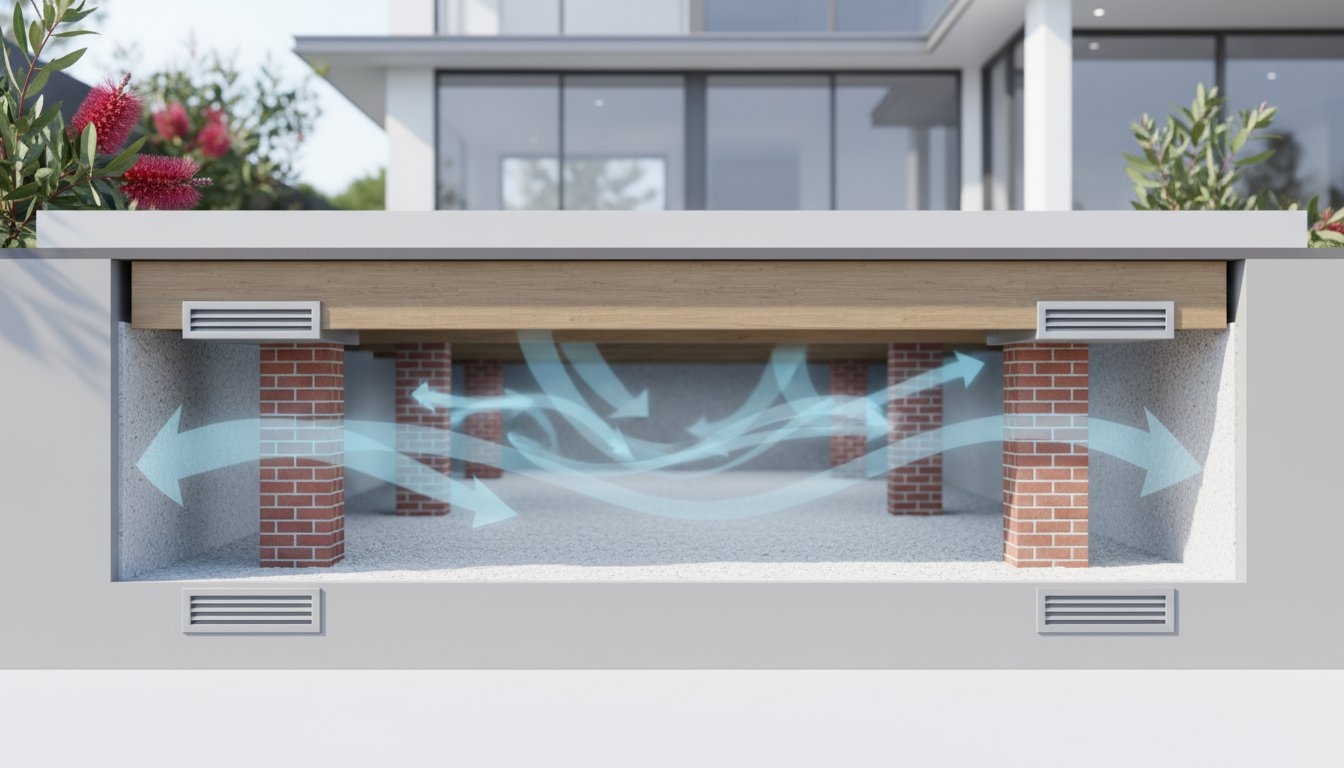
- Clear the Airflow: Debris often blocks subfloor vents and weep holes. A single blocked vent can increase subfloor humidity by 25% in less than 72 hours, creating a breeding ground for mould.
- Switch to Lime Renders: If your home has non-breathable cement render, it’s likely trapping moisture inside the wall. Replace it with a lime-based alternative. Lime allows moisture to evaporate naturally rather than forcing it upward into your internal living spaces.
Correcting Bridged Damp Proof Courses
Bridging occurs when external structures like new concrete paths, garden beds, or stairs are built over the original DPC. These structures act as a bridge for moisture to jump from the ground directly into your walls. To fix this, our technicians recommend creating an isolation gap. This 10mm to 20mm physical break between the wall and the external structure prevents capillary action. Keeping weep holes clear in cavity brick construction is also vital; these small gaps are your home’s primary drainage system for internal wall moisture. Don’t let a simple garden renovation ruin your structural integrity.
The Critical Role of Subfloor Ventilation
Trapped moisture in the subfloor is a silent catalyst for rising damp. It creates a high-pressure humidity zone that pushes moisture into the walls from below. Professional subfloor ventilation is essential to exhaust this damp air before it migrates into your floorboards. In Sydney’s reactive clay soils, passive vents often fail to provide enough cross-flow. Mechanical ventilation systems are the superior choice for these environments, as they provide consistent, forced air exchange regardless of wind conditions. Learning how to fix rising damp from outside requires a total moisture management strategy. It’s that simple. If you’ve noticed musty smells or damp patches, get an affordable quote from our expert team today before the damage spreads.
Professional Remediation: Why Fixing the Damp is Only Step One
Stopping the water at its source is vital, but homeowners often forget what happens inside the walls while they focus on how to fix rising damp from outside. When groundwater wicks up through masonry, it carries hygroscopic salts and creates a high-humidity environment that lingers for months, even after the exterior is repaired. This moisture provides the perfect breeding ground for black mould, a toxic fungus that can colonise your living spaces within 48 hours of exposure. Structural drying is a slow process; without professional intervention, your home remains a health hazard long after the leaks stop.
Professional remediation goes beyond the surface. Once the damp course is restored, the air inside your home often contains millions of invisible spores. These microscopic particles migrate from the affected wall into carpets, curtains, and furniture. Simply drying the wall doesn’t remove these triggers. You need professional air purification and non-mechanical air scrubbing to ensure the environment is truly safe for your family. We use specialized equipment to verify that the moisture levels have returned to a safe 15% to 20% range before we consider the job finished.
The Goldmorr System for Post-Damp Mould Removal
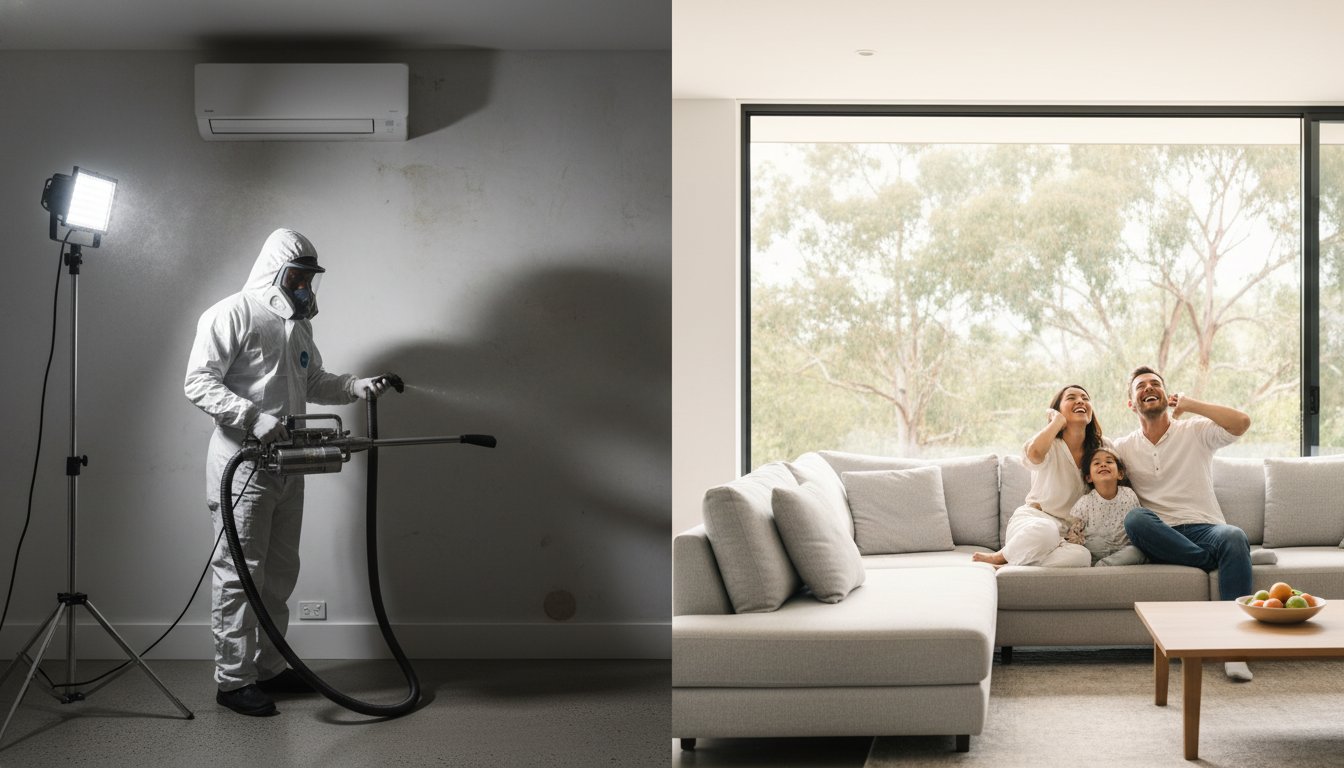
Our team uses the Goldmorr System, an industry leading solution that eliminates the need for expensive demolition in most cases. We employ a biodegradable fogging process that reaches deep into wall cavities and ceiling voids where spores hide after a damp event. This fog is non-toxic and safe for pets and children, yet it effectively neutralises mould at the cellular level. Don’t rely on bleach or vinegar. These household liquids are 90% water; they actually provide more moisture to the mould roots rather than killing them. Our system restores air quality, which is critical for the 20% of Sydney residents suffering from asthma or chronic allergies.
Why DIY Damp Fixes Often Backfire
Attempting to handle these repairs yourself often leads to more expensive damage. Many homeowners use the wrong chemical concentrations or drill into the wrong brick course, leaving the damp bridge intact. A frequent mistake is “sealing” a damp wall with waterproof render or heavy-duty paint. This is a recipe for disaster. By sealing the surface, you trap the moisture inside the masonry. This creates hydrostatic pressure, forcing the damp to rise even higher through capillary action until it reaches the second floor or the ceiling. It’s a costly error that can compromise the structural integrity of your foundations.
Protect your investment and your health. Every home in Sydney has unique drainage and soil conditions that dictate how to fix rising damp from outside effectively. Don’t guess with your home’s structure. It’s that simple. It’s that easy. Get a professional mould and damp inspection today and let our master technicians provide the peace of mind you deserve.
Protect Your Sydney Home From Structural Damp Damage
Ignoring the signs of moisture in your walls leads to expensive structural repairs and serious health risks. You now understand that how to fix rising damp from outside involves more than just a coat of paint; it requires professional chemical DPC injection and strategic ground level management. These external solutions stop water ingress at the source, ensuring your masonry stays dry year-round. Fixing the damp is only the first phase. Complete remediation requires expert structural drying and mould removal to restore a healthy living environment.
Our Master Technicians utilize the industry-leading Goldmorr System to eliminate spores and protect your property. We offer a 24/7 emergency response for water damage across Sydney and are certified experts in subfloor ventilation. You don’t have to settle for less than the best. We’ll beat any written quote by 10% to ensure you get professional results at the most competitive price. It’s time to take control of your home’s health and stop the spread of damp before it worsens.
Get a Professional Rising Damp & Mould Inspection; Beat Any Written Quote by 10%!
Take the first step toward a dry, safe home today. Our team is ready to provide the peace of mind you deserve.
Frequently Asked Questions
Can I fix rising damp from the outside myself?
No, DIY rising damp treatments often fail because they don’t address the specific capillary action within your masonry. Professional remediation is essential for a permanent fix. Our master technicians use a proven scientific system to create a new barrier. While hardware stores sell DIY kits, 85 percent of these applications fail within the first 12 months because the injection pressure or depth is incorrect. You need an expert to ensure your home remains dry and safe.
How much does it cost to fix rising damp from the outside in Sydney?
Costs depend on the linear meterage of your walls and the severity of the moisture ingress. According to the 2023 Archicentre Australia Cost Guide, professional damp proofing prices vary based on structural thickness and accessibility. We recommend you send us images of your affected walls today. We’ll provide an affordable, transparent quote and promise to beat any written quote by 10 percent to ensure you get the best value in Sydney.
Will lowering the garden level stop rising damp?
Lowering the garden level helps by exposing the original damp proof course, but it won’t fix a barrier that has already failed. Australian Standard AS3660.1 requires soil levels to stay at least 150mm below the damp proof course to prevent bridging. If your garden is too high, moisture bypasses your home’s protection. While this is a vital step in learning how to fix rising damp from outside, you still need a professional to inspect the integrity of the existing barrier.
How long does a chemical damp proof course injection last?
A high quality chemical damp proof course injection typically lasts between 20 and 30 years when applied by certified experts. We use industry leading silane based creams that penetrate deep into the mortar line to create a permanent water repellent zone. This isn’t a temporary fix like off the shelf sprays. Our system provides long term peace of mind by stopping ground water from ever reaching your internal plasterwork again. It’s that simple and effective.
Is rising damp dangerous to my health or just the building?
Rising damp is a serious health risk because it triggers the growth of toxic mould and airborne spores. These conditions often lead to respiratory issues and allergies for your family. Beyond health, the moisture causes salt attack which can destroy 40 percent of your mortar’s structural strength over time. We use the Goldmorr System to handle any resulting mould growth, ensuring your home environment is restored to a safe, healthy state immediately.
What happens if I ignore rising damp on an external wall?
Ignoring rising damp leads to irreversible structural decay and expensive repairs. Within 18 months, untreated moisture can cause timber floor joists to rot and masonry to crumble. The longer you wait, the more the problem worsens; because it will. Don’t wait until the damage is structural. Call us now to stop the spread of moisture and protect the equity in your Sydney property before the repair costs double.
Can I render over a wall that has rising damp?
You shouldn’t render over a damp wall because the trapped moisture will cause the new finish to bubble and crack within 6 months. To truly understand how to fix rising damp from outside, you must treat the source before applying any aesthetic finishes. If you render first, the hygroscopic salts will simply pull more moisture into the new material. We recommend a professional injection followed by a salt retardant render for a lasting, clean result.
What is the difference between rising damp and condensation?
Rising damp is ground water traveling upward through bricks, while condensation is atmospheric moisture settling on cold surfaces. Rising damp typically leaves a “tide mark” that stops at 1.2 meters high on your wall. Condensation can occur at any height and often results in black mould patches in corners or behind furniture. Our technicians use thermal imaging and moisture meters to provide a precise diagnosis so you don’t waste money on the wrong treatment.