
That persistent musty smell in your Sydney home. The nagging worry about what your family is breathing, even when you can’t see a single spot of mould. You’re not imagining it, and you’re right to be concerned. When faced with this invisible threat, many homeowners believe the answer lies in effective air purification for mould spores and consider buying an expensive HEPA filter from a local retailer, hoping for a quick fix.
But is that A$500 machine truly protecting your health? The hard truth is that most consumer-grade air purifiers are simply not a permanent solution. While they might trap some larger particles, they often fail to capture the tiniest, most harmful mould spores and their toxic byproducts-known as mycotoxins-which can circulate endlessly through your home, contributing to persistent allergies and respiratory issues.
This guide cuts through the marketing hype. We will reveal the critical difference between standard air purifiers and professional air scrubbing, the only method guaranteed to completely remove airborne mould contaminants. Read on to learn how to eliminate musty odours for good and gain the peace of mind that comes from knowing your family is breathing genuinely safe, clean air.
Key Takeaways
- Visible mould is just the tip of the iceberg; discover why the invisible spores circulating in your air are the bigger threat to your family’s health.
- A standard HEPA air purifier is not a magic bullet. While it can trap some spores, it will never solve the underlying mould problem on its own.
- Learn the critical difference between retail purifiers and professional air scrubbing-the technology certified experts use to guarantee your home’s air is safe.
- Effective air purification for mould spores is part of a complete strategy that must include fixing the moisture source to achieve a permanent solution.
The Invisible Threat: Why Airborne Mould Spores Matter
When you discover a patch of mould on a wall or ceiling, you’re only seeing the tip of the iceberg. The visible colony is a serious issue, but the greater danger often lies in what you can’t see. To reproduce, mould releases millions of microscopic spores into the air. These invisible particles are the real problem, spreading contamination far beyond the original source and creating a significant health hazard throughout your property.
These spores are incredibly light and travel on the slightest air currents, meaning a small patch in the bathroom can contaminate the air in your bedrooms. This widespread contamination is why simply wiping away visible mould is never enough. Understanding the nature of these airborne particles is the first step toward effective remediation and highlights the need for professional air purification for mould spores.
What Exactly Are Mould Spores?
Think of mould spores as the tiny ‘seeds’ of a mould colony. These biological aerosols are minuscule, typically measuring between 1 and 20 microns-smaller than a particle of dust. Their size allows them to remain suspended in the air for extended periods, ready to be inhaled. If you want to understand the science, you can learn more about what mould spores are and how they propagate. When these spores land on a surface with moisture and a food source (like wood, plasterboard, or fabric), they can germinate and start a new, destructive mould colony.
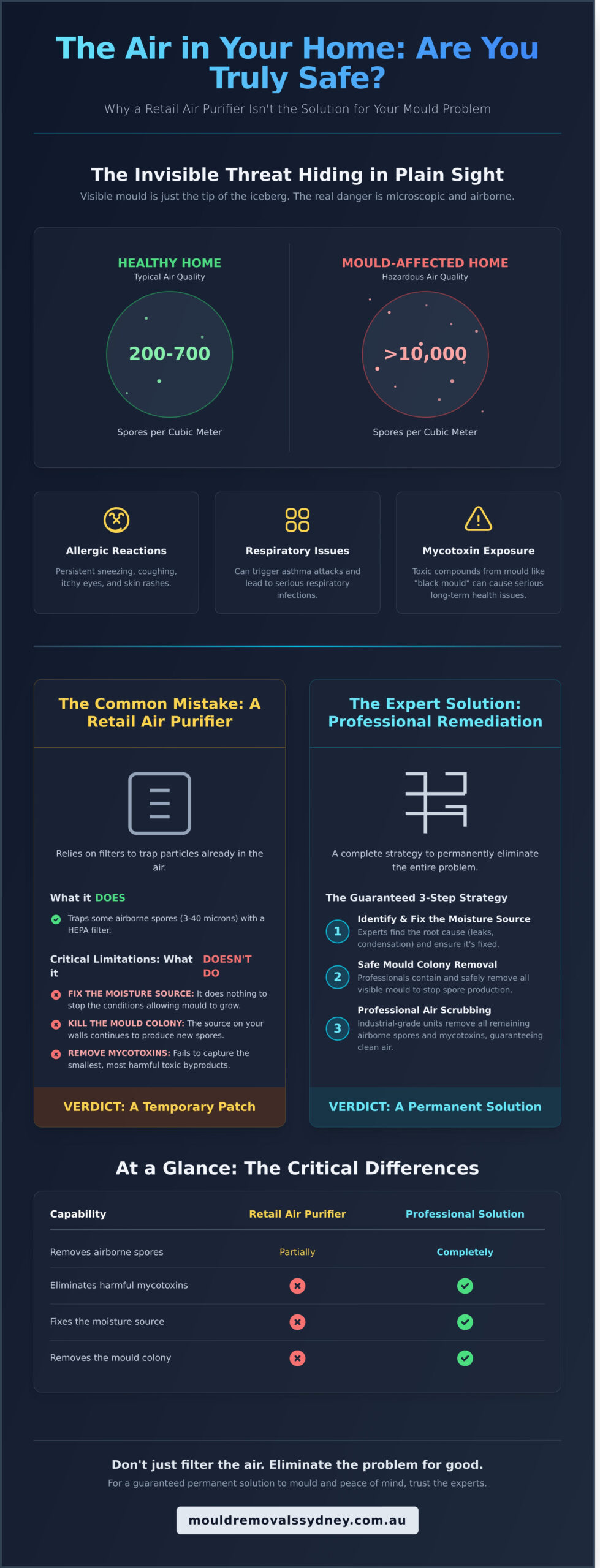
The difference in air quality is staggering. A typical, healthy Sydney home might have an airborne spore count of 200-700 spores per cubic meter. In a home with an active mould problem, that count can easily surge to over 10,000, creating a toxic indoor environment.
Health Risks of Inhaling Mould Spores in Sydney Homes
Breathing in a high concentration of mould spores poses serious health risks. Don’t wait until the problem worsens-because it will. For many, exposure triggers immediate allergic reactions. For others, the effects are more severe. The challenge of air purification for mould spores is critical because of these direct health impacts:
- Allergic Reactions: Persistent sneezing, coughing, a runny nose, itchy or watery eyes, and skin rashes are common initial symptoms.
- Respiratory Issues: Spores can trigger severe asthma attacks in sensitised individuals and may lead to respiratory infections, especially in children, the elderly, or those with compromised immune systems.
- Mycotoxins: Certain types of mould, like Stachybotrys chartarum (black mould), produce toxic compounds called mycotoxins. Prolonged exposure to these can lead to more serious health complications.
Can a Standard Air Purifier Remove Mould Spores from the Air?
The direct answer is yes, a high-quality air purifier can be an effective tool for removing airborne mould spores. The basic mechanism is simple: a powerful fan pulls the air in your room through a series of filters. These filters are designed to trap microscopic particles-including mould spores, dust, and other allergens-before circulating cleaner, healthier air back into the space. This process is a vital component of comprehensive air purification for mould spores.
However, it is critical to understand the limitations. An air purifier is only one part of the solution. It traps spores that are already floating in the air; it does absolutely nothing to kill the mould colony growing on a surface or to fix the moisture problem that allowed it to grow in the first place. Think of it as managing a symptom, not curing the disease.
How HEPA Filters Work Against Mould Spores
The effectiveness of an air purifier against mould hinges on its filter. The industry gold standard is the HEPA (High-Efficiency Particulate Air) filter. A true HEPA filter is certified to capture 99.97% of airborne particles down to 0.3 microns in size. Since most common mould spores range from 3 to 40 microns, they are easily and effectively trapped by a HEPA filter. But be warned: a clogged filter can become a new source of contamination. You must change the filters regularly to ensure the unit remains effective and safe.
Understanding CADR, Room Size, and Other Key Features
When selecting a unit, two key factors are crucial for performance:
- Clean Air Delivery Rate (CADR): This rating tells you how quickly the purifier cleans the air in a specific room size. A higher CADR means faster and more efficient purification. Always match the unit’s recommended room size to your own space for it to be effective.
- Activated Carbon Filters: That musty, earthy smell from mould is caused by Microbial Volatile Organic Compounds (MVOCs). A standard HEPA filter won’t remove these gases. For odour control, you need a unit that also includes a substantial activated carbon filter.
Ultimately, while a purifier helps manage your immediate environment, the only permanent solution is to eliminate the mould source. This requires professional remediation and, most importantly, Controlling moisture to prevent mould, which is the root cause of any infestation. An air purifier is a powerful supportive measure, not a substitute for professional intervention.
The Critical Limitations: Why Air Purifiers Are Not a Complete Mould Solution
While a high-quality air purifier can be a valuable tool in managing indoor air quality, it’s crucial to understand its role. Relying solely on a purifier to handle a mould problem is like mopping the floor while a tap is overflowing-you’re managing the symptom, not the cause. It can create a false sense of security while the underlying infestation continues to damage your property and pose health risks. Even authoritative sources like the EPA Guide to Air Cleaners in the Home clarify that filtration devices are best used as part of a broader strategy that includes source control.
An air purifier is a band-aid on a bullet wound if the source isn’t fixed. Here are the three critical reasons why it cannot be your only line of defence.
Problem #1: They Don’t Eliminate the Source
An air purifier captures airborne spores that pass through its filter. However, it does nothing to the mould colony growing on a wall, in a ceiling cavity, or under a carpet. This colony is a spore factory, continuously releasing millions of new spores into the air. Without professionally addressing the moisture source and safely removing the physical mould, the purifier will be fighting a losing battle, and the problem will always return.
Problem #2: Inadequate Coverage and Power
Most consumer-grade air purifiers are designed for a single room and rated for a specific air volume. A significant mould infestation can produce a concentration of spores that easily overwhelms these units. Effective air purification for mould spores requires a high Clean Air Delivery Rate (CADR), but even the best unit cannot pull spores from surfaces. Spores that have settled in carpets, on furniture, or inside porous materials are unaffected and can become airborne again with the slightest disturbance.
Problem #3: Ineffectiveness Against Mycotoxins and Gases
Mould doesn’t just produce spores; it also releases other harmful substances. While a HEPA filter is excellent at trapping particles like spores, toxic compounds called mycotoxins can be small enough to pass through. Furthermore, that “musty” smell is caused by Microbial Volatile Organic Compounds (MVOCs). The standard carbon filters in household purifiers become saturated by these gases very quickly, rendering them ineffective. This is a key area where professional, industrial-grade air scrubbing and remediation techniques are essential for comprehensive decontamination.
Professional Air Scrubbing: The Difference an Expert Makes
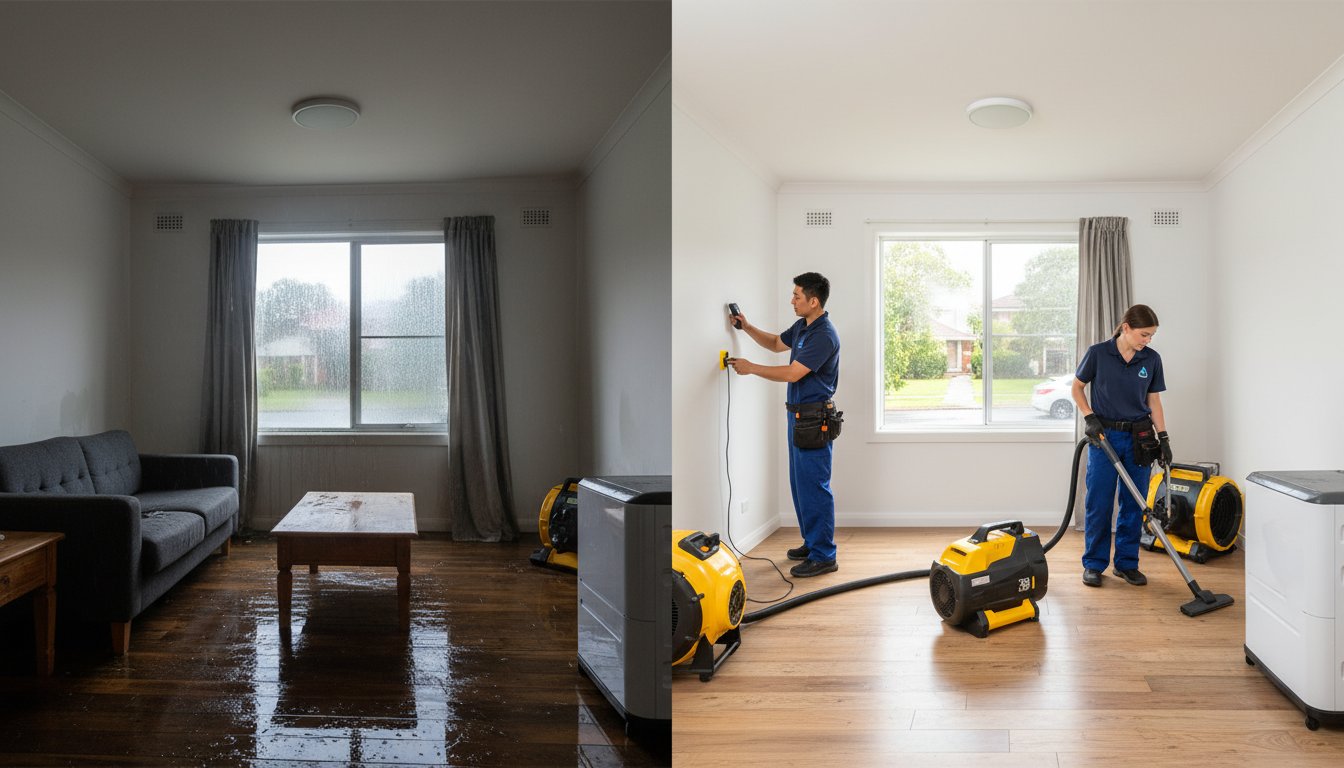
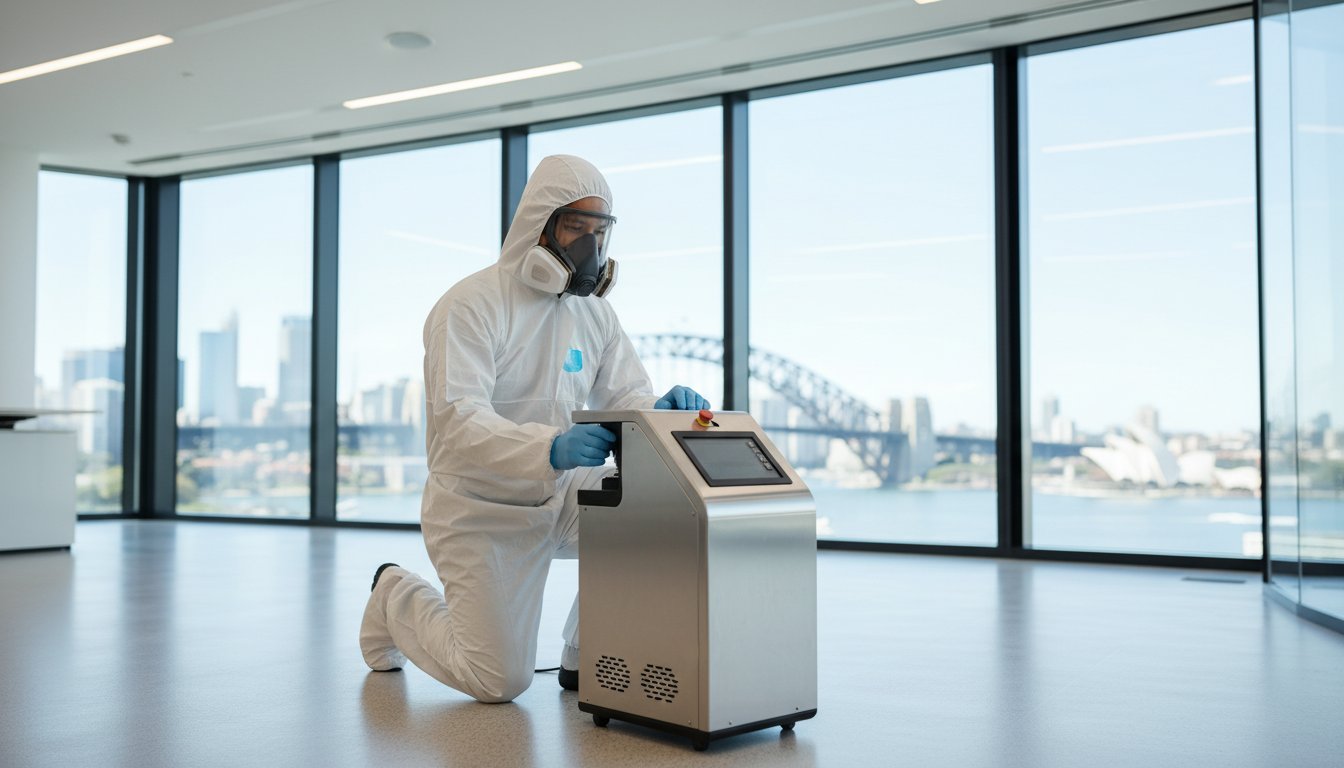
While a home air purifier can help manage air quality, professional mould remediation requires a far more powerful approach. This is where commercial-grade air scrubbing comes in. Used by certified mould remediators, these machines are a cornerstone of the industry-leading Goldmorr System. Their goal is simple but critical: to remove the maximum number of airborne contaminants, including dangerous mould spores, in the shortest time possible.
This professional-grade equipment provides a level of air purification for mould spores that standard consumer devices simply cannot match, ensuring the job is done right the first time.
Air Scrubber vs. Air Purifier: A Comparison
Don’t confuse a professional air scrubber with a standard home unit. The difference in performance is immense. These machines are designed for high-stakes environments where air quality is paramount.
- Overwhelming Power: Air scrubbers are industrial-strength units that move massive volumes of air, often cycling the air in an entire room multiple times per hour. This rapid exchange captures contaminants far more quickly and effectively than a small domestic purifier.
- Advanced Filtration: They use a multi-stage filtration process, combining pre-filters with true HEPA filters that capture 99.97% of particles down to 0.3 microns. This is paired with thick activated carbon filters to remove odours and VOCs released by mould.
- Strategic Containment: Crucially, scrubbers can be used to create negative air pressure. This establishes a containment zone, ensuring that any spores disturbed during the removal process are drawn into the machine rather than spreading throughout your property.
The Role of Air Scrubbing in Professional Mould Remediation
In a professional remediation project, air scrubbing isn’t just an afterthought-it’s an active part of the entire process. As our technicians physically remove the visible mould source, air scrubbers are running continuously to capture any spores that become airborne. Once the source material is gone, the units are left to ‘scrub’ the air, polishing it to remove any lingering microscopic particles. This ensures the air is truly clean once the mould has been eliminated.
Beyond Filtration: The Power of Specialised Fogging
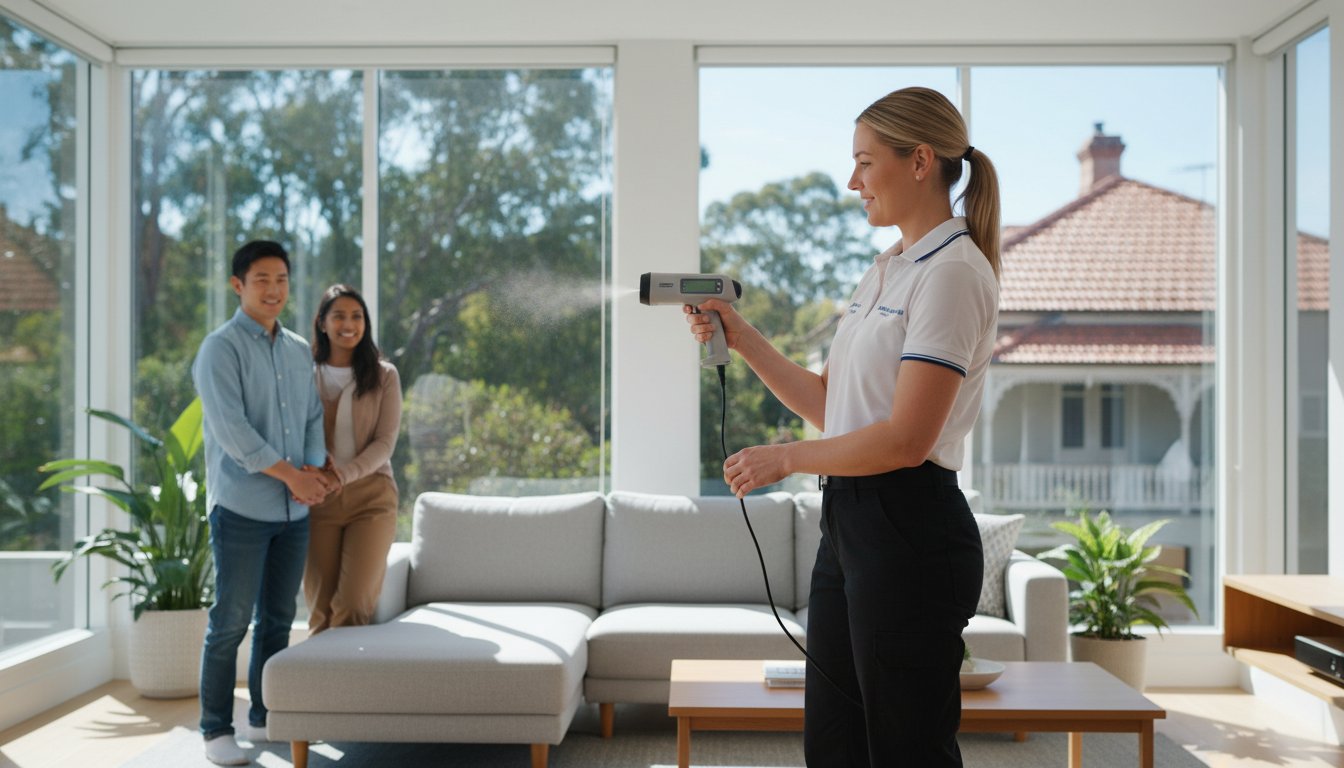
Filtration is vital, but it’s only one part of our comprehensive solution. As the final step in our Goldmorr System, we deploy a specialised, non-toxic fogging process. This fine, biodegradable mist permeates the entire space, neutralising any microscopic airborne spores and surface contaminants that even the most powerful HEPA filter might miss. This two-pronged attack of scrubbing and fogging guarantees a complete and lasting result. See how our professional air scrubbing process works.
A Complete Strategy for a Mould-Free Home
While a high-quality air purifier is an excellent tool for managing airborne contaminants, achieving a truly mould-free home requires more than just a single product. Lasting clean air is the result of a comprehensive professional process. An air purifier can trap spores, but it cannot eliminate the source of the problem. Don’t settle for a temporary fix when a permanent solution is available.
Our certified technicians follow a proven, multi-step process to guarantee a mould-free environment and restore your peace of mind. This is how we get it right the first time.
Step 1: Professional Inspection to Find the Source
You can’t fix what you can’t find. The most critical step is locating the hidden moisture source that allows mould to grow in the first place. Our experts use specialised equipment like thermal imaging cameras and moisture meters to pinpoint dampness inside walls, under floors, and in ceilings. Identifying and rectifying the source is the only way to prevent the mould from returning.
Step 2: Containment and Safe Mould Removal
Once the source is found, the removal process must be handled with extreme care. Our team establishes professional containment barriers to prevent mould spores from spreading to unaffected areas of your property. We then use industry-approved, safe techniques to physically remove the mould contamination. This is a technical job for certified experts, not a task for a sponge and household bleach, which can often make the problem worse.
Step 3: HEPA Air Scrubbing and Purification
After the physical mould is gone, the air itself must be cleaned. This is where professional air purification for mould spores becomes essential. We deploy high-powered, commercial-grade HEPA air scrubbers that capture microscopic airborne particles, including spores, bacteria, and mycotoxins. This final, crucial step ensures the air inside your home is clean, safe, and healthy to breathe again. Worried about your air? Get a free, fast quote today!
By managing this entire process from inspection to final air purification, we provide a complete solution that addresses both the visible mould and the invisible threat in your air. Trusting a professional team is the surest way to protect your property and your family’s health.
Your Final Step to a Healthy, Mould-Free Home
Navigating the challenge of mould in your Sydney home comes down to one critical fact: you must address the source. As this guide has shown, airborne spores are a persistent health risk that standard filters can’t fully resolve. While helpful, they are merely a band-aid on a much deeper issue. Effective air purification for mould spores is not just about trapping particles; it’s about creating a permanently clean environment by eradicating the mould colony that produces them.
This is where professional expertise makes all the difference. Our certified technicians don’t just clean the air; they restore your home’s health using the industry-leading Goldmorr System for guaranteed results. You can trust our team to provide you with peace of mind and a safe, effective solution. We are so confident in our superior process and affordable pricing that we promise to beat any written quote by 10%.
Don’t just filter the air, fix the problem. Schedule your professional mould inspection today.
Take the definitive step towards a truly healthy home. You and your family deserve to breathe easy.
Frequently Asked Questions About Air Purification for Mould Spores
Will an air purifier stop mould from growing back?
No. An air purifier is a powerful tool for managing airborne contaminants, but it will not stop mould from growing back. It only captures spores already circulating in the air. To permanently stop mould, you must eliminate the source of moisture that allows it to grow. Without addressing the underlying dampness, leak, or humidity issue, mould will inevitably return. Professional mould remediation is essential to identify and fix the source, ensuring a long-term solution.
How long does professional air scrubbing take for a mould problem?
The duration of professional air scrubbing depends on the size of the affected area and the severity of the mould contamination. For a typical residential room, the process can take anywhere from 24 to 48 hours to effectively reduce airborne spore counts to safe levels. Larger properties or more severe infestations may require several days. Our certified technicians will assess your specific situation to provide an accurate and efficient timeline for restoring your indoor air quality.
Can UV light in an air purifier kill mould spores effectively?
While UV-C light can technically destroy mould spores, its effectiveness in a standard air purifier is often limited. For the UV light to work, spores require prolonged exposure, but air moves through the unit too quickly for this to happen. A high-quality HEPA filter is far more reliable for capturing mould spores. It physically traps these particles, removing them from circulation without relying on exposure time, making it the industry standard for effective air purification for mould spores.
Is it safe to stay in the house during professional air scrubbing?
In most cases, it is safe to remain in your home during professional air scrubbing, especially when using modern, non-toxic systems like our Goldmorr process. Our air scrubbing units are self-contained, and our fogging solutions are biodegradable and safe for people and pets. However, for severe infestations or if you have specific respiratory sensitivities, our technicians will provide clear safety guidance. Your well-being is our top priority throughout the entire remediation process.
Do I still need an air purifier after a professional mould remediation?
While professional remediation removes the existing mould and dramatically lowers airborne spore counts, using an air purifier afterwards is an excellent proactive measure. It helps maintain high indoor air quality by capturing any new spores that enter from outside, as well as dust, pollen, and other allergens. Think of it as an ongoing investment in the health of your home’s environment, ensuring the air remains clean long after our work is complete.
What’s the difference between mould spores and mycotoxins?
Think of mould spores as the “seeds” of the mould organism. They are tiny, airborne particles that can spread and grow into new mould colonies if they find a suitable damp environment. Mycotoxins, on the other hand, are toxic chemical substances produced by certain types of mould. These microscopic toxins can attach to spores or dust particles and pose serious health risks when inhaled or ingested. A HEPA filter captures the spores, which helps reduce mycotoxin exposure.