That persistent musty smell you can’t locate. The nagging cough or allergy flare-up that seems worse at home. After another season of heavy Sydney rain, these are serious warning signs. The truth is, what you can’t see can hurt you, and when it comes to your family’s health, you need certainty. This is why professional air quality testing for mould in Sydney is no longer just a precaution-it’s an essential step for concerned homeowners.
Don’t let invisible airborne spores compromise your home and well-being. This comprehensive 2026 guide is your roadmap to breathing easy again. We’ll break down the exact scientific process our certified technicians use to identify and measure spore counts, giving you a clear lab report. You’ll discover the proven steps for effective remediation if mould is found and, most importantly, regain the peace of mind that comes from knowing your indoor environment is truly safe.
Key Takeaways
- Learn why Sydney’s unique coastal humidity makes professional mould testing a necessity, not a luxury, for maintaining a healthy home.
- Discover the critical difference between professional lab analysis and unreliable DIY kits that often produce misleading or false-positive results.
- Understand the 5-step scientific process behind professional air quality testing for mould in Sydney, from moisture mapping to collecting airborne spore samples.
- Find out how to interpret your lab report, identify the most common dangerous mould types in Sydney, and use the data to plan effective remediation.
What is Air Quality Testing for Mould and Why Does Sydney Need It?
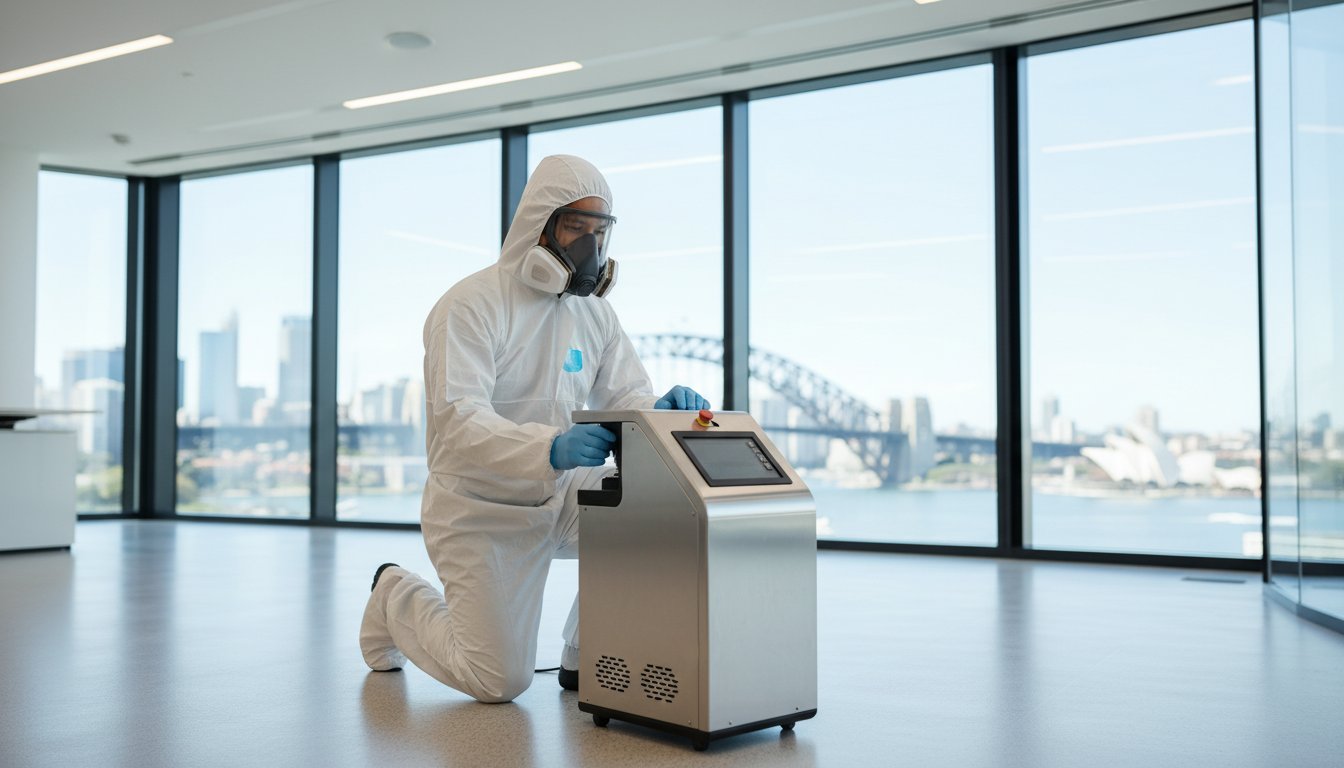
Air quality testing for mould is more than just a visual inspection. It’s a scientific process used by certified technicians to measure the concentration of airborne fungal spores and other particulate matter inside your property. By taking precise air samples, we can identify the types and quantities of mould present, even if they are completely hidden from view. This data gives you a clear, factual understanding of what you and your family are breathing in every day.
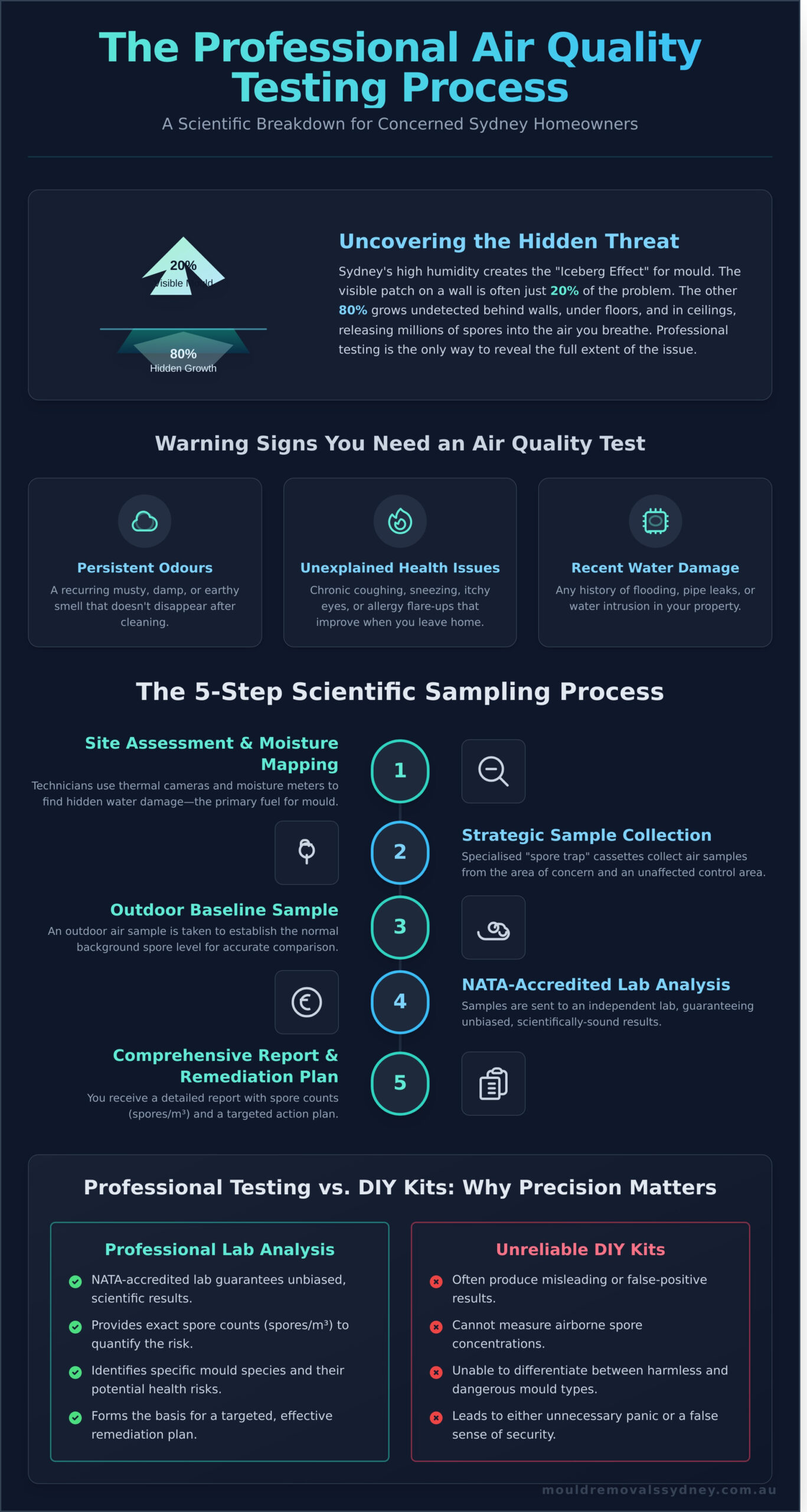
Sydney’s unique climate makes it a perfect breeding ground for mould. The combination of high coastal humidity and frequent La Niña weather cycles creates the sustained damp conditions that mould thrives in. This leads to the “Iceberg Effect”-where the visible mould on a wall or ceiling is often just 20% of the total problem. The other 80% grows undetected behind walls, under floorboards, and in ceiling cavities, releasing millions of spores directly into your air. These microscopic particles bypass standard cleaning and are easily inhaled, posing a serious risk to your health. A professional air quality testing for mould Sydney service from ABC Mould Cleaning Solutions is the only way to uncover the full extent of this hidden threat.
Signs You Need an Air Quality Assessment
Don’t wait for visible mould to appear. If you notice any of these warning signs, it’s time to act. An assessment can confirm if poor air quality is affecting your home and health.
- Persistent Odours: A recurring musty, damp, or earthy smell that doesn’t disappear after cleaning.
- Unexplained Health Issues: Chronic respiratory problems, coughing, sneezing, itchy eyes, or skin irritation that improves when you leave the property.
- Recent Water Damage: Any history of flooding, pipe leaks, or water intrusion in your Sydney CBD apartment or suburban home.
The Role of Humidity in NSW Mould Growth
Humidity is the single biggest trigger for mould. Sydney’s average relative humidity of 60-70% is the ideal level to activate dormant indoor mold spores. This moisture is often concentrated in specific problem areas like poorly ventilated subfloors, cluttered walk-in wardrobes, and inside split-system air conditioners. During a humid Sydney summer, simply “opening a window” can often make the problem worse by inviting more moisture-laden air inside. This is why controlling indoor air quality is crucial for any NSW property owner.
The Professional Mould Air Sampling Process: A 5-Step Breakdown
You can’t fight what you can’t see. A musty smell is a clear warning sign, but it doesn’t reveal the extent or type of your mould problem. That’s why professional air quality testing for mould sydney homes and businesses is a non-negotiable, scientific process. We don’t guess; we gather hard data to give you a clear path forward. Our master technicians follow a strict, proven protocol to ensure you get accurate, reliable results.
Our comprehensive air sampling process includes:
- Initial Site Assessment & Moisture Mapping: Our technicians conduct a thorough visual inspection and use advanced tools like thermal imaging cameras and moisture meters to detect hidden water damage and moisture pockets behind walls and under floors-the primary fuel for mould growth.
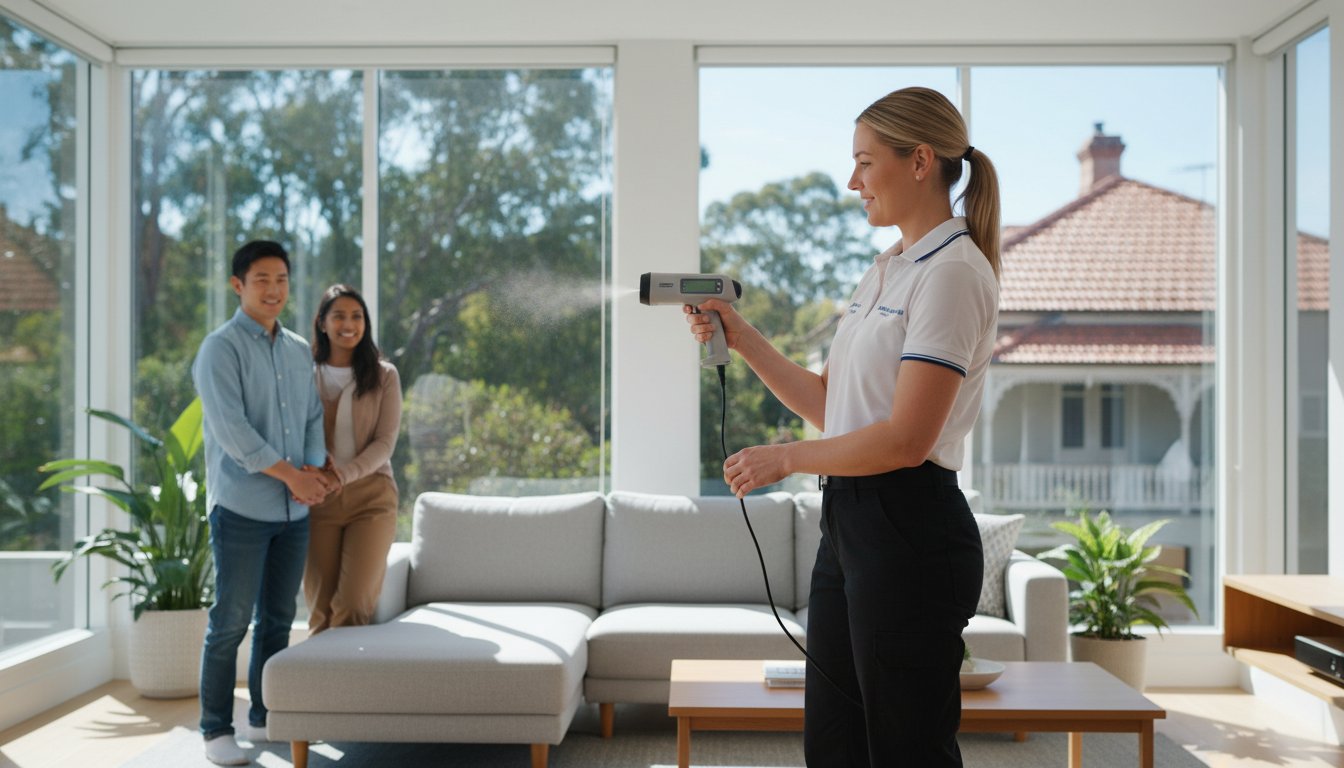
- Strategic Sample Collection: We place specialised air sampling pumps with “spore trap” cassettes in the main area of concern. Crucially, we also take a sample from an unaffected “control” area inside your property to establish an internal baseline.
- Outdoor Baseline Sample: Mould is a natural part of the outdoor environment. We take an outdoor air sample to determine the normal, background level of spores in your specific Sydney location. This is essential for accurate comparison.
- NATA-Accredited Lab Analysis: Every sample is sealed, documented under a strict chain of custody, and sent directly to an independent, NATA-accredited laboratory. This third-party analysis guarantees unbiased, scientifically-sound results.
- Comprehensive Report & Remediation Plan: You receive a detailed report identifying the specific mould species present and their spore concentrations (spores/m³). This data allows us to understand the severity and potential health risks, referencing official guidelines like the NSW Health advice on mould, and to design a targeted, effective remediation strategy.
Air Sampling vs. Surface Swabbing
While a surface swab can confirm mould on a visible patch, it can’t tell you what’s circulating in the air you breathe. Air sampling is the gold standard for identifying hidden infestations and understanding the true respiratory risk. It captures airborne spores released from colonies behind walls or in ventilation systems. For a complete picture, we often use both methods to map the full extent of contamination.
What Master Technicians Look For
A true expert looks beyond the visible signs. Our certified technicians are trained to identify the root cause of the problem, using specialised equipment to check for:
- Moisture Ingress Points: Pinpointing the source of water intrusion behind gyprock, in wall cavities, and under floorboards.
- Elevated Humidity & Dew Point: Using digital hygrometers to measure atmospheric conditions that encourage fungal growth in different rooms.
- Systemic Contamination: Inspecting HVAC systems and air conditioning coils, which can spread mould spores throughout the entire property.
Professional Testing vs. DIY Mould Kits: Why Precision Matters
When you suspect a mould problem, reaching for a cheap DIY test kit from a hardware store can seem like a quick, affordable solution. The reality? These kits often create more confusion than clarity and can lead to costly mistakes. They simply cannot provide the accurate data needed to truly assess the health of your indoor environment.
The biggest issue is the “false positive” problem. A petri dish left open will always grow mould because spores are a natural part of Sydney’s air. This result tells you nothing about whether your indoor spore concentration is normal or dangerously elevated. It’s the difference between a few stray spores and a hidden, active colony pumping toxins into your air.
- Lack of Calibration: DIY kits can’t measure spore concentration (spores per cubic metre of air). Without this data, you have no way of knowing the severity of the problem.
- No Species Identification: Is it common, harmless Cladosporium or toxic Stachybotrys (black mould)? Only a trained mycologist using a high-powered microscope can tell the difference.
- The Cost of Inaccuracy: A $50 kit that gives you a misleading “all-clear” can lead to thousands in unaddressed water damage and remediation down the line. Don’t risk it.
The Science of Spore Trap Analysis
Professional air quality testing for mould in Sydney is a scientific process, not a guessing game. Our certified technicians at ABC Mould Cleaning Solutions use calibrated air pumps to capture a precise volume of air on a collection slide, known as a spore trap. This sample is sent to an accredited laboratory where experts identify and count the specific fungal structures present. Crucially, we take a “baseline” sample from the outdoors to determine what is considered a normal fungal ecology for your specific Sydney location on that day. Only by comparing your indoor air to this baseline can we definitively identify an elevated or abnormal mould event inside your property.
Legal and Insurance Validity
If you’re facing a tenancy dispute or making an insurance claim, a DIY kit result is worthless. These results are not considered scientifically valid and are rarely accepted by the NSW Civil and Administrative Tribunal (NCAT) or insurance companies. Professional remediation requires reports that meet industry standards, such as those set by the IICRC. Our comprehensive lab reports provide the objective, defensible data required. This level of professional documentation, essential for meeting industry standards like those set by the IICRC and aligning with local health recommendations (such as those from NSW Health), protects both landlords and tenants by providing a clear, unbiased assessment of the indoor air quality.
Interpreting Your Mould Lab Results: Spore Counts and Health Risks
Receiving a lab report filled with scientific names and numbers can be overwhelming. Don’t worry. Our certified technicians are trained to translate this data into a clear, actionable plan for your property. The goal of professional air quality testing for mould sydney is not just to get numbers, but to understand the real-world risk and define the most effective solution.
Your report will typically show two key figures: the “Raw Count” (the number of spores physically counted on the sample) and “Spores per m³” (the calculated concentration of spores in a cubic metre of your air). The Spores per m³ value is the most important metric, as it tells us the true extent of airborne contamination you are breathing in daily.
Common Mould Species Found in Sydney
While hundreds of mould types exist, our experience in Sydney homes and offices shows a few repeat offenders. Understanding which species are present is critical, as it directly impacts the required remediation strategy.
- Aspergillus/Penicillium: These are the most common airborne allergens found in NSW properties. While common, elevated indoor levels indicate a water damage issue and can trigger asthma, allergies, and respiratory irritation.
- Stachybotrys (Black Mould): This is the one you hear about in the news. A toxic mould that produces mycotoxins, its presence signifies a serious, long-term water problem and requires immediate, expert intervention to protect your health.
- Chaetomium: Often found alongside Stachybotrys, this mould indicates chronic dampness, particularly in subfloor areas or inside wall cavities. It has a distinct musty odour and is a key sign of significant water intrusion.
According to Australian health guidelines, the goal is to achieve an indoor air ecology that is normal and balanced, with spore counts at or below the levels of the outdoor air sample. Any significant elevation or the presence of toxic species like Stachybotrys means you have an active mould colony that must be eliminated. For minor issues, our Goldmorr fogging process may be sufficient. For severe contamination, a full remediation may involve stripping and replacing affected materials like plasterboard and insulation.
The Post-Remediation Verification (PRV) Report
Testing after the job is just as crucial as testing before. A PRV test is your proof that the remediation was successful. It provides independent, scientific validation that we have effectively eliminated the threat from your property. This report confirms that our industry-leading Goldmorr fogging has neutralised airborne spores and that our powerful Air Scrubbing technology has successfully captured and removed harmful sub-micron particles from your environment. It’s the final step in giving you complete peace of mind. If you need help understanding your results, our experts can provide a clear path forward.
Beyond the Test: Remediation with the Goldmorr System
Receiving the results of your air quality testing is the first step. Taking decisive action is the next. At ABC Mould Cleaning Solutions, we use the detailed data from your report to create a precise, targeted remediation plan. We don’t just clean the visible mould; we attack the problem at its source and eliminate the airborne spores threatening your family’s health.
Our solution is built on two powerful pillars: the industry-leading Goldmorr System and advanced air purification. While our technicians treat surface contamination, our specialised air scrubbers work to capture and remove the invisible mould spores from your breathing zone. This dual approach ensures a comprehensive clean you can feel and breathe.
The Goldmorr Fogging Process Explained
The Goldmorr System uses a non-toxic, biodegradable fog that penetrates areas that traditional cleaning can’t reach, including wall cavities and ceiling voids. This micro-mist kills mould spores on contact, not only on surfaces but also in the air. Most importantly, it’s completely safe for your family, pets, and plants. It also eliminates that persistent musty odour at a molecular level, leaving your home smelling fresh and clean.
Preventing Future Growth in Sydney
A crucial part of our service is ensuring the mould doesn’t return. The data from your initial air quality testing for mould Sydney helps us identify the root cause of moisture. We provide expert recommendations to address these issues, which may include improving subfloor ventilation, installing dehumidifiers, or repairing water ingress points. By fixing the cause, we protect your property long-term.
Don’t wait for the problem to worsen. Get professional, affordable remediation backed by a guarantee. We offer world-class mould removal that fits your budget, promising to beat any competitor’s written quote by 10%. It’s that simple.
Take back your home’s air quality today. Get a Free Estimate & Beat Any Quote by 10%
Your Next Step Towards a Healthy, Mould-Free Home
As this guide has shown, what you can’t see can seriously impact your health. While DIY kits offer a guess, only professional air quality testing for mould sydney delivers the accurate, lab-verified data needed to understand your home’s environment and the potential health risks. This crucial information is the foundation for effective, targeted remediation that solves the problem at its source, ensuring it doesn’t return.
Don’t wait for a musty smell to become a major issue. Take decisive action to protect your property and your family’s well-being. Our Certified Goldmorr Master Technicians are ready to provide you with complete peace of mind, using a safe, biodegradable fogging process. We are so confident in our service and pricing that we guarantee to beat any written quote by 10%.
Reclaim your home’s air. Schedule Your Professional Air Quality Test & Get a Free Estimate today and breathe easier tomorrow.
Frequently Asked Questions About Mould Air Quality Testing
How much does air quality testing for mould cost in Sydney?
In Sydney, professional air quality testing for mould generally costs between $450 and $900+. This price varies based on your property’s size and the number of air samples our technicians need to collect for a thorough analysis. A smaller apartment will be at the lower end of the scale, while a larger house with multiple suspect areas will require more extensive testing. Contact us for a precise, obligation-free quote-we guarantee to beat any written quote by 10%.
How long does it take to get mould test results back?
After our technicians collect the air samples from your Sydney property, they are sent to an independent, accredited laboratory for analysis. You can typically expect to receive a comprehensive report with your detailed results within 3 to 5 business days. This report will clearly outline the findings, including spore counts and types, allowing us to recommend the most effective remediation plan for your home. We ensure a fast turnaround so you can act quickly.
Can I stay in my home while the air quality testing is being performed?
Absolutely. The air quality testing process is non-invasive and completely safe for you, your family, and your pets. Our certified technicians use specialised equipment to collect air samples, which typically takes between 30 to 60 minutes, depending on the size of your property. There are no disruptive chemicals or processes involved, so you can comfortably remain in your home while we conduct the assessment without any interruption to your day.
Does a musty smell always mean there is a mould problem?
A persistent musty or earthy smell is one of the most reliable indicators of a hidden mould problem. This odour is caused by gases (MVOCs) released by active mould growth, often from a source you can’t see, like behind walls or under flooring. While other issues can cause odours, a musty scent strongly suggests the presence of moisture and mould. Don’t ignore it-it’s your property’s way of warning you of a potential health hazard.
Will air quality testing identify the specific type of mould in my air?
Yes, one of the primary goals of air quality testing is to identify the specific types of mould spores present in your indoor environment. The laboratory analysis will provide a detailed report listing the different mould genera identified, such as Penicillium, Aspergillus, or Stachybotrys (black mould), and their concentration levels. This crucial information helps us assess the potential health risks and determine the most effective, targeted remediation strategy for your Sydney property.
Is air quality testing necessary if I can already see the mould?
Yes, it is still highly recommended. Visible mould is often just the tip of the iceberg. The real danger lies in the microscopic, airborne spores that you can’t see, which can spread throughout your property and cause health issues. Professional air quality testing for mould in Sydney will determine the concentration of these spores in the air, confirming the extent of the contamination and ensuring our remediation plan addresses the entire problem, not just the visible part.
How often should I have my Sydney home tested for air quality?
Routine testing isn’t usually necessary unless you have specific concerns. We recommend testing after a water damage event like a flood, a burst pipe, or a roof leak. You should also consider a test if you notice a persistent musty odour, or if occupants are experiencing unexplained allergic reactions or respiratory issues. A post-remediation test is also essential to verify that a mould problem has been successfully resolved and the air is safe to breathe again.
Can air quality testing help with my insurance claim for water damage?
Absolutely. An independent, third-party laboratory report from an air quality test provides concrete, scientific evidence of mould contamination resulting from a water damage event. This professional documentation can be crucial for substantiating your insurance claim. It proves the extent of the airborne mould problem, validates the need for professional remediation, and can help ensure your claim is processed smoothly and fairly by your insurer. It moves the issue from a simple stain to a documented environmental hazard.