Is there a persistent musty smell in your home that you just can’t seem to locate? Do you worry about the unseen dangers of mould and dampness affecting your family’s health? These are not issues you should ignore. Often, the source of the problem is hidden right beneath your feet. The health of your home starts from the ground up, and poor ventilation in the cavity beneath your subfloor floor is a leading cause of moisture build-up, creating the perfect breeding ground for mould, timber rot, and pests like termites.
Don’t wait until the problem worsens, because it will. The good news is there is an effective and reliable solution. In this guide, we break down everything a homeowner needs to know about subfloor ventilation systems. You will discover how this simple installation can permanently eliminate damp odours, protect your property’s structural integrity from costly damage, and create a healthier, safer living environment for your family. It’s time to gain peace of mind and protect your most valuable asset.
Why Your Subfloor is the Hidden Source of Household Problems
Beneath your feet lies a space most homeowners rarely see or think about: the subfloor. This dark, enclosed area between the ground and your flooring is a critical part of your home’s structure. Unfortunately, it’s also the perfect storm for serious issues. A lack of sunlight, poor airflow, and persistent dampness create an environment where problems don’t just start-they thrive.
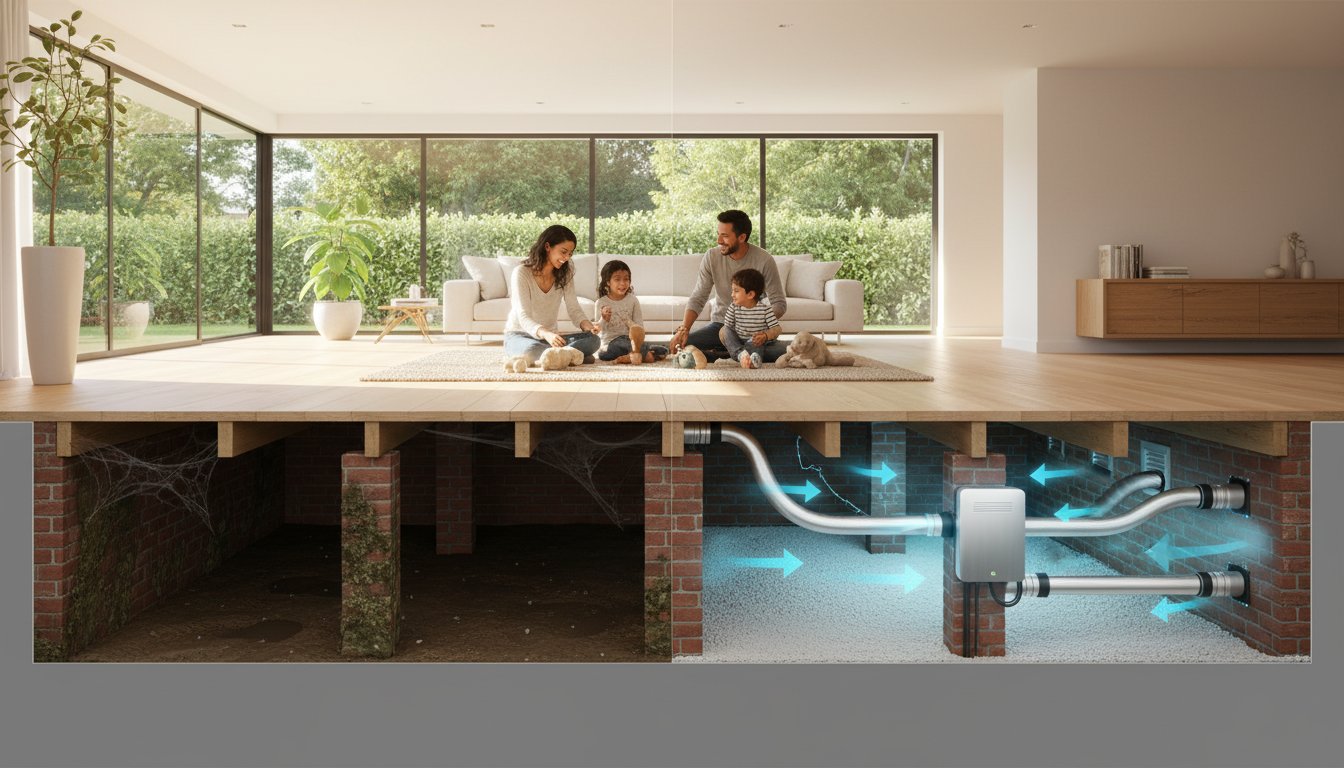
Moisture is the primary culprit. It constantly seeps in from soil evaporation, plumbing leaks, or inadequate site drainage. Once trapped, this moisture creates a humid, stagnant atmosphere. This unhealthy air doesn’t stay put. Due to a natural phenomenon known as the ‘stack effect’, warmer air in your home rises, drawing the cooler, denser air from your subfloor up into your living areas. This natural air movement, a core principle in concepts like Underfloor air distribution, means that whatever is festering below is also being breathed in above.
The Unholy Trinity: Mould, Pests, and Wood Rot
When moisture is left unchecked in your subfloor, it creates a breeding ground for three destructive forces. Don’t wait until the damage is done, because it will get worse.
- Mould: The combination of dampness, darkness, and organic material (like your timber joists and bearers) turns your subfloor into a mould factory. These colonies release millions of spores that compromise your home’s health.
- Pests: Destructive pests, including termites, cockroaches, and rodents, are naturally drawn to dark, damp, and sheltered spaces. Your subfloor provides the ideal habitat for them to nest and multiply, often completely out of sight.
- Wood Rot: Constant exposure to moisture causes fungal decay in the timber structures that support your home. This wood rot silently weakens bearers and joists, compromising the very foundation of your property.
From Subfloor to Living Room: How Problems Spread
A problem in the subfloor never stays in the subfloor. The stack effect ensures that the consequences travel directly into your home, impacting your health and your property’s structural integrity.
- Airborne Spores & Poor Air Quality: That damp air rising from below carries mould spores, bacteria, and allergens, directly impacting your indoor air quality and posing significant health risks to your family.
- Musty Odours: That persistent “damp” smell you can’t get rid of is a direct result of the subfloor. The odour comes from microbial volatile organic compounds (MVOCs), which are gases released by active mould growth.
- Structural Weakness: As wood rot takes hold, the entire subfloor floor structure is weakened. This manifests as bouncy or sagging floors, creaking floorboards, and even doors that stick in their frames because the house is no longer level.
Benefit 1: Eradicate Mould and Banish Musty Odours
That persistent musty smell in your home isn’t just unpleasant; it’s a direct warning sign of a serious problem lurking beneath your feet. The core principle is simple: mould cannot grow without moisture. A dark, damp, and poorly ventilated subfloor is the perfect breeding ground for mould, which releases spores and gases that create that tell-tale odour.
A subfloor ventilation system is not a temporary fix-it’s a permanent solution that attacks the problem at its source. These systems work tirelessly to actively expel the damp, stagnant, and spore-laden air from beneath your home. Simultaneously, they draw in fresh, dry air from outside. This constant air exchange dramatically lowers humidity, creating an environment where mould simply cannot survive. The importance of managing this underfloor environment is recognised globally; for instance, strict Federal ventilation requirements are mandated in the US to prevent these exact issues. By eliminating the moisture, you eradicate the mould and, in doing so, banish the musty odours for good.
Improving Indoor Air Quality for Your Family
The air in your subfloor doesn’t stay there. Due to natural air pressure changes, it rises and circulates throughout your living spaces, carrying harmful mould spores with it. This directly impacts your family’s respiratory health. Exposure to airborne mould spores is a significant health risk, linked to a range of symptoms, including:
- Allergic reactions like sneezing, runny nose, and skin rashes
- Asthma attacks and other respiratory difficulties
- Persistent headaches and fatigue
An effective ventilation system purifies the air at its source, significantly reducing the concentration of spores you breathe every day.
Beyond Mould: Reducing Other Allergens
Moisture doesn’t just invite mould; it creates a five-star resort for other common allergens. Dust mites, for example, thrive in humid conditions. A damp subfloor floor can elevate the humidity throughout your entire home, making bedding, carpets, and furniture ideal breeding grounds for these microscopic pests. By installing a system that controls underfloor moisture, you make your home a far less hospitable place for dust mites, resulting in cleaner, healthier air for everyone.
Benefit 2: Protect Your Property’s Structural Integrity & Value
Your home is likely your biggest financial asset. Viewing a subfloor ventilation system not as an expense, but as a crucial investment, is key to protecting its long-term value. The principle is simple: dry timber is strong timber. When moisture is allowed to accumulate under your home, it systematically weakens the very foundation you stand on, leading to wood rot and fungal decay that compromise structural integrity.
A professionally installed ventilation system halts this destructive process in its tracks. By creating a consistently dry environment, it ensures the bearers, joists, and entire subfloor floor structure remain solid and stable for decades. This proactive approach not only prevents catastrophic damage but also becomes a major selling point, assuring potential buyers of a healthy, well-maintained property.
Deterring Termites and Other Timber Pests
Termites and other destructive timber pests thrive in dark, damp conditions. A moist subfloor is an open invitation for them to move in and begin feeding on your home’s framework. Subfloor ventilation fundamentally alters this environment, making it dry and inhospitable. It’s a powerful, non-chemical component of any effective pest management strategy, protecting your home from the ground up.
Avoiding Common Structural Failures
Are your floors starting to feel bouncy or sag in places? Do doors and windows suddenly stick for no reason? These aren’t minor annoyances; they are often the first warning signs of serious moisture-related damage in your subfloor. These issues can indicate:
- Rotting Floor Joists: Dampness causes timber to soften and decay, losing its ability to support weight.
- Foundation Movement: Excess moisture in the soil can cause piers and footings to shift, affecting the entire house frame.
Proactive ventilation helps you avoid these expensive and highly disruptive repairs before they even begin.
A Smart Financial Investment
The cost of installing an effective ventilation system is a fraction of what you would pay for major structural repairs. Replacing rotted bearers and joists can easily cost upwards of A$10,000 – A$20,000 or more, not to mention the mess and disruption. By investing in the health of your subfloor floor now, you gain invaluable peace of mind and protect your home’s future value. Don’t wait for the warning signs to appear.
Protect your investment. Get a free subfloor assessment today.
How Subfloor Ventilation Systems Work
The goal of a subfloor ventilation system is simple yet crucial: to create consistent airflow that exchanges stale, damp air for fresh, dry air. This process, known as ‘cross-flow ventilation’, is the most effective way to stop moisture buildup, prevent timber rot, and eliminate the musty odours that signal a serious problem under your home.
While basic passive vents exist, they often fail to provide adequate air exchange, especially on still, humid days common in Sydney. For a reliable and effective solution, a mechanical system is essential. It doesn’t rely on weather conditions; it actively forces the air exchange your home needs to stay healthy.
Components of a Mechanical Ventilation System
A professional mechanical system is more than just a fan. It’s an engineered solution designed to protect your entire subfloor floor structure. Key components include:
- In-line Fans: These powerful but quiet fans are installed within the ducting system. They are designed to move large volumes of air efficiently, creating the pressure needed to pull damp air out.
- Ducting: Flexible ducting is strategically placed to target problem areas and damp ‘dead spots’ where air naturally stagnates, ensuring no corner is left untreated.
- Intake and Exhaust Vents: These are positioned on opposite sides of the subfloor to create a clear path for air. Fresh air is drawn in through intake vents, and damp, contaminated air is expelled through exhaust vents.
- Timers & Humidistats: These smart controls automate the system, running it only when necessary. A humidistat detects high moisture levels and activates the fans, ensuring maximum efficiency and saving on energy costs.
The Installation Process: What to Expect
Don’t let the idea of installation worry you. Our process is designed to be efficient, professional, and minimally invasive. It’s a straightforward solution to a complex problem.
The process begins with a thorough assessment of your subfloor area by one of our expert technicians. We identify the sources of moisture and map out the specific problem zones. Based on this, we design a custom ventilation plan tailored to your home’s unique layout. Installation is typically completed within a day, with our team ensuring every component is placed for optimal effectiveness. It’s that simple.
Protect your property and your family’s health from the dangers of a damp subfloor. Contact our team today for a comprehensive assessment and quote.
Signs Your Sydney Home Needs Subfloor Ventilation
A damp, stagnant subfloor doesn’t keep its problems to itself. The air under your home eventually circulates into your living spaces, bringing moisture, mould spores, and unpleasant odours with it. Don’t wait for the problem to worsen. If you notice any of the following warning signs, your home is sending a clear signal that it needs professional attention.
Use this checklist to self-diagnose potential issues. One or more of these signs indicates a serious moisture problem brewing beneath your feet:
- Persistent Musty Smells: A recurring earthy or mouldy odour, especially noticeable after rain, is the most common sign. This smell is caused by mould and fungal growth in the damp environment of your subfloor floor.
- Visible Mould or Mildew: Check your subfloor for any dark stains or fuzzy growth on timber joists, foundation walls, or the underside of your flooring.
- Condensation: Do you see water droplets or “sweating” on pipes, ductwork, or concrete surfaces under the house? This is a red flag for excessive humidity.
- Dampness Inside the Home: If rooms feel humid, floors feel cold or damp, or you notice cupping or warping in timber floorboards, the cause is often rising damp from the subfloor.
- Increased Pest Activity: Cockroaches, termites, spiders, and silverfish thrive in dark, damp spaces. A sudden increase in their numbers can be directly linked to a poorly ventilated subfloor.
Why Sydney’s Climate is a Major Factor
Sydney’s climate presents a unique challenge. High humidity, particularly during the summer, combined with periods of heavy rainfall, creates the perfect breeding ground for mould. Many older Sydney homes were built with inadequate subfloor ventilation, trapping this moisture and leading to chronic dampness. This makes proactive management of your subfloor floor not just a good idea, but an essential part of home maintenance.
The Next Step: A Professional Assessment
While these signs are strong indicators, a professional inspection is the only way to be certain of the cause and extent of the problem. Our expert technicians use specialised moisture meters and years of experience to accurately diagnose the issue. We provide a clear, no-obligation quote and a detailed action plan for effective remediation. Don’t guess. Schedule your professional subfloor inspection now.
Protect Your Home’s Foundation and Your Family’s Health
Ignoring what happens beneath your home is a risk you can’t afford to take. As we’ve explored, a damp subfloor is the root cause of pervasive musty odours, destructive mould, and costly structural damage. Protecting the health of your subfloor floor area is crucial for safeguarding your entire property and the wellbeing of your family.
Don’t wait for the problem to worsen. As Sydney’s trusted local mould and dampness experts, we install powerful, energy-efficient mechanical ventilation systems that tackle moisture at its source. You can trust our team to provide a reliable, effective solution that protects your family’s health and your home’s value for years to come.
Stop mould at the source. Call us now for a free subfloor ventilation quote!
Take the first step towards a healthier, drier, and safer home today. It’s that easy.
Frequently Asked Questions About Subfloor Ventilation
How much does a subfloor ventilation system cost in Sydney?
In Sydney, the cost for a professionally installed subfloor ventilation system typically ranges from A$2,000 to A$5,000. The final price depends on your home’s size, the number of fans required, and the complexity of the installation. A smaller home with good access might be at the lower end, while a larger property with restricted access will cost more. Always get a detailed, written quote to understand the full scope and ensure there are no hidden fees. It’s that simple.
Are subfloor ventilation fans noisy?
No, modern mechanical subfloor ventilation systems are designed for quiet operation. The high-quality inline fans we use are typically installed within the subfloor space, and their noise level is comparable to a quiet desktop computer fan or a modern refrigerator. You will not hear them running from inside your home, ensuring your peace and quiet is never disturbed while the system effectively protects your property from dampness and mould.
How long does it take to install a subfloor ventilation system?
A standard subfloor ventilation system installation is an efficient process that is typically completed within a single day. For most Sydney homes, our professional technicians can have the entire system-including fans, ducting, and vents-fully installed and operational in just 4 to 8 hours. More complex or larger properties might require slightly more time, but we always aim to minimise disruption and secure your home against subfloor moisture as quickly as possible.
What’s the difference between a subfloor fan and a home dehumidifier?
A subfloor fan creates active ventilation, pulling damp, stale air out of your subfloor and replacing it with fresh, drier air from outside. A dehumidifier, on the other hand, is a closed-system appliance that draws moisture out of the air within a contained space. While a dehumidifier can help in a sealed room, a ventilation system is the effective, long-term solution for an entire subfloor floor area, as it addresses the root cause by preventing moisture build-up.
Can’t I just open up my existing brick vents?
While passive brick vents are a starting point, they often fail to create enough airflow to solve a serious moisture problem. This is especially true if the vents are blocked, poorly positioned, or if the air is still and humid. A mechanical subfloor ventilation system provides forced, consistent air exchange, actively pulling damp air out regardless of weather conditions. Relying only on passive vents can be an ineffective half-measure, allowing mould and wood rot to develop.
How much electricity does a mechanical ventilation system use?
You’ll be surprised at how energy-efficient these systems are. The low-wattage fans used in a typical subfloor ventilation system consume very little power-often less than a single 60-watt light bulb. The running costs are minimal, usually amounting to just a few dollars per month on your electricity bill. This small investment provides 24/7 protection for your home’s structure and your family’s health, making it an incredibly affordable and effective solution.