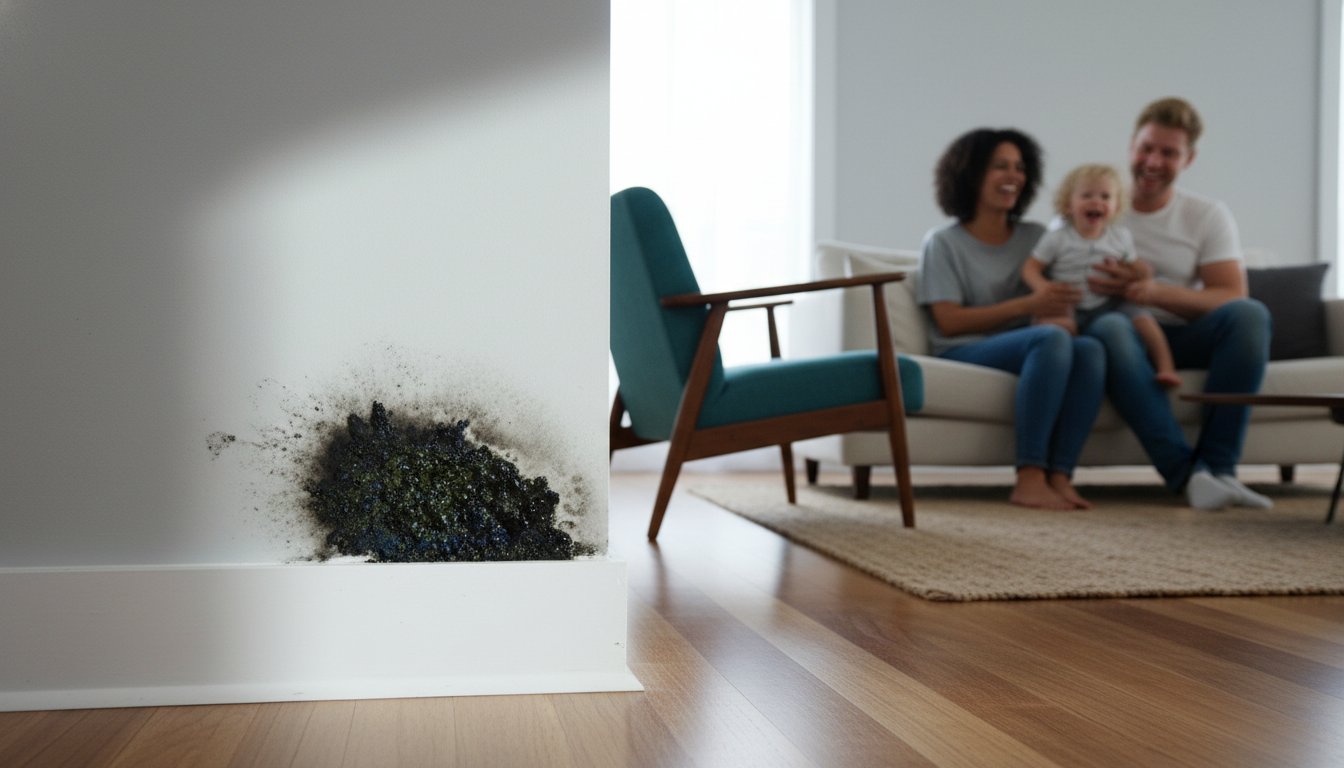
Is that persistent cough just a cold? Are those recurring headaches simply stress? For many families, these nagging symptoms are the first warning signs of a hidden danger lurking within their homes. The black mould health risks Australia faces are far more serious than an unsightly stain on the wall; they represent a genuine threat to your family’s well-being, particularly for children and the elderly. It’s a deep-seated concern that can leave you wondering if your home is making your loved ones sick.
It’s time to stop guessing and get the facts. This guide provides the clear, expert information you need to protect your household. You will learn to identify the specific symptoms of mould exposure, understand the difference between common mould and its toxic counterparts, and discover a clear action plan to safely remove the threat for good. Don’t wait for the problem to worsen-because it will. Arm yourself with the knowledge to ensure your home is a safe and healthy environment for everyone in it.
What is Black Mould and Why is it a Major Concern in Australia?
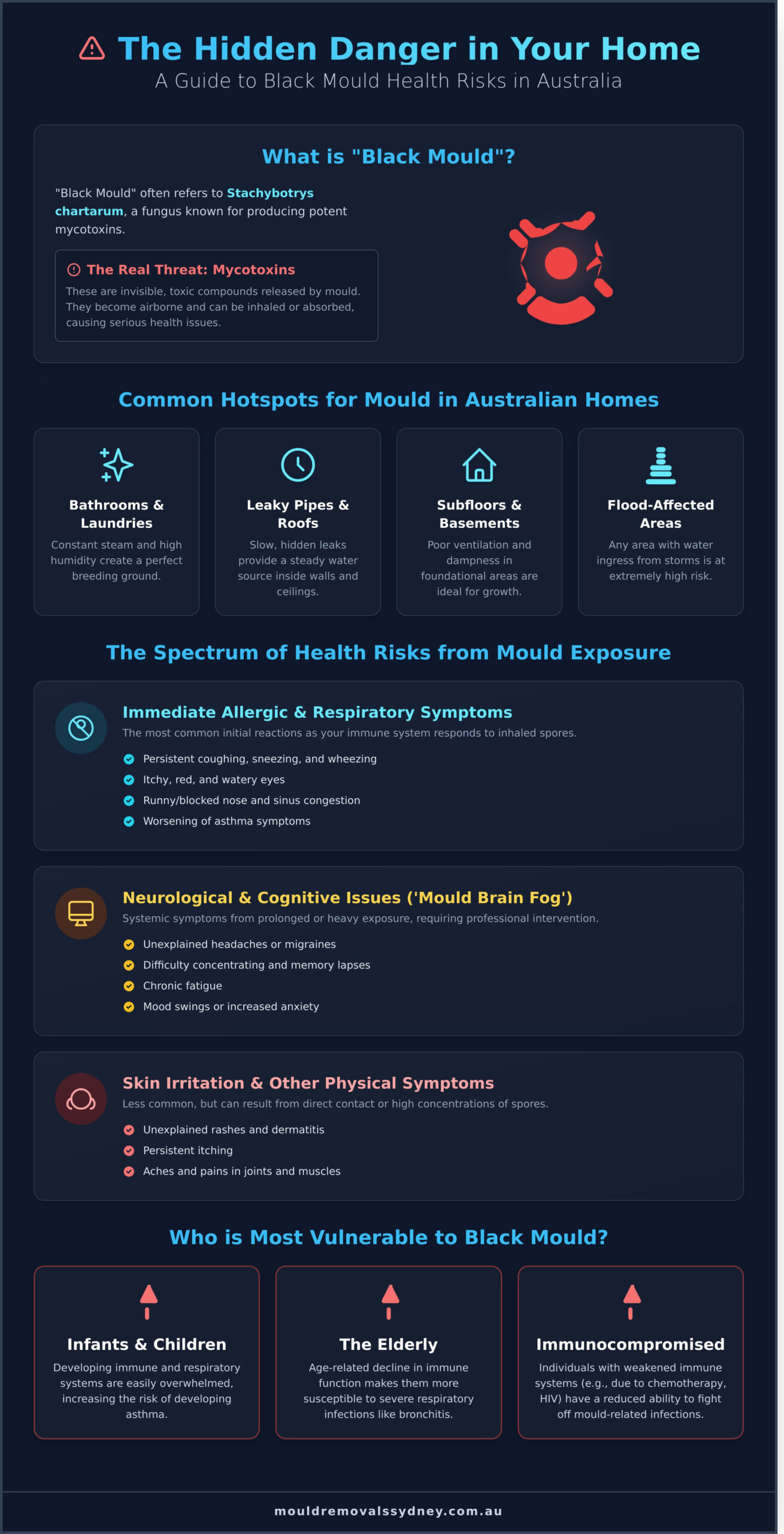
When homeowners discover dark, unsightly patches of mould, the term ‘black mould’ is often used. While many types of mould can appear black, the name is most commonly associated with a specific species known as Stachybotrys chartarum. This particular fungus is notorious for its potential to produce potent toxins. However, it’s crucial to understand that the colour of the mould is not the primary indicator of danger. The real threat lies in the invisible compounds it releases into your home’s air.
Australia’s climate and building styles create a perfect storm for mould proliferation. From the high humidity along the coastlines of Sydney and Brisbane to condensation in poorly ventilated modern homes, moisture is a constant battle. The significant black mould health risks Australia faces are directly tied to these environmental factors, combined with recent major flooding events and common building issues. Ignoring the signs of mould is not an option; it will only worsen, posing a greater threat to your property and well-being.
The Science of Mycotoxins Explained Simply
The most serious health issues from black mould are caused by mycotoxins. These are microscopic, toxic compounds produced by the mould that can easily become airborne along with mould spores. Once airborne, they can be inhaled deep into the lungs or even absorbed through the skin. It is this exposure to mycotoxins, not the mould itself, that is central to the black mould health risks Australia warns about, leading to the severe complications discussed in this guide.
Common Hotspots for Black Mould in Australian Homes
Mould thrives in damp, dark, and poorly ventilated areas. Our expert technicians are consistently called to the same problem spots in homes across Australia. Be extra vigilant and check these common hotspots regularly:
- Bathrooms & Laundries: Constant steam and high humidity make these the most common breeding grounds.
- Leaky Pipes, Roofs & Windows: A slow, hidden leak provides a steady water source for mould to grow undetected inside walls or ceilings.
- Subfloor & Basement Areas: Poor ventilation and dampness in the foundations, especially in older homes, create ideal conditions.
- Flood-Affected Zones: Any area that has suffered from water ingress from storms or flooding is at extremely high risk for rapid mould growth.
The Spectrum of Health Risks: From Allergic Reactions to Toxic Effects
The impact of mould on human health is not a one-size-fits-all problem. Your reaction to airborne mould spores can range from a minor annoyance to a serious health threat, depending on your individual sensitivity, the duration of exposure, and the specific type of mould present. Understanding the full spectrum of black mould health risks Australian residents face is the first step in protecting your family from this silent invader. Don’t wait for symptoms to worsen-because they often will.
Immediate Allergic and Respiratory Symptoms
For most people, the first signs of a mould problem are allergic and respiratory issues. These symptoms occur as your body’s immune system reacts to inhaling mould spores. The NSW Government confirms the common Health effects of mould exposure often mirror seasonal allergies, making them easy to dismiss. Pay close attention if you experience:
- Persistent coughing, sneezing, or a wheeze you can’t shake.
- Itchy, red, and watery eyes.
- A constantly runny or blocked nose (sinus congestion).
- A sore or scratchy throat.
- A noticeable worsening of asthma symptoms or new asthma attacks.
Neurological and Cognitive Issues (‘Mould Brain Fog’)
With prolonged or heavy exposure, some individuals report more systemic and concerning symptoms. This is sometimes referred to as ‘mould brain fog’. While research is ongoing, these reported issues highlight the serious nature of long-term exposure. Symptoms can include unexplained headaches or migraines, difficulty concentrating, memory lapses, chronic fatigue, and even mood swings or increased anxiety. These are signs that the problem has moved beyond a simple allergy and requires immediate, professional intervention.
Skin Irritation and Other Physical Symptoms
While less common than respiratory problems, direct contact with mould or high concentrations of spores can also affect your skin and body. These physical symptoms are another key part of the black mould health risks australian homeowners should be aware of. Look out for unexplained rashes, patches of skin inflammation (dermatitis), or persistent itching. Some sensitive individuals may also experience aches and pains in their joints and muscles that have no other obvious cause.
Who is Most Vulnerable to Black Mould Exposure in Your Household?
While any exposure to toxic black mould is a serious concern, some individuals in your home are at a significantly higher risk of severe reactions. Understanding who is most vulnerable helps you assess the urgency of your situation and take swift, protective action. The specific black mould health risks Australian families face can be particularly acute for these sensitive groups, turning a hidden problem into a clear and present danger.
Infants, Toddlers, and Children
A child’s body is still in a crucial stage of development, making them especially vulnerable to environmental toxins. Their immune systems are not yet fully mature, and their smaller respiratory systems can be easily overwhelmed by inhaled mould spores. This constant exposure can lead to persistent coughing, wheezing, and an increased risk of developing asthma in early childhood.
The Elderly and Immunocompromised Individuals
For older Australians or anyone with a compromised immune system, a mould problem can escalate from a nuisance to a serious health threat. Conditions like autoimmune diseases, undergoing chemotherapy, or living with HIV dramatically reduce the body’s ability to fight off environmental threats. Health authorities like the Government of Western Australia’s Department of Health confirm that these individuals are more susceptible to mould, facing a heightened risk of severe respiratory infections like bronchitis and pneumonia.
People with Asthma and Existing Allergies
For those already managing asthma or allergies, a mould-infested environment is a constant trigger. Airborne mould spores are potent irritants and allergens that can provoke severe and sudden asthma attacks. Prolonged exposure doesn’t just worsen existing symptoms; it can heighten sensitivity and even lead to the development of new allergies, making your home a place of discomfort instead of a safe haven. Creating a mould-free environment is essential for their health and well-being.
Protecting the most vulnerable members of your family is the number one priority. Don’t wait for symptoms to worsen. If you suspect mould is present in your home, a professional assessment is the safest and most effective way to ensure their well-being. Contact our expert team at mouldremovalssydney.com.au for peace of mind.
What To Do Next: Safely Addressing the Health Threat
Understanding the dangers is the first step. Now, it’s time to shift from the problem to the solution. When dealing with the significant black mould health risks Australian families face, the method of removal is not just a detail-it is the most critical factor in restoring a safe home environment. The wrong approach can make a dangerous situation catastrophically worse.
The Hidden Danger of DIY Mould Removal
Reaching for a bottle of bleach and a scrubbing brush is a common, yet hazardous, mistake. Attempting to remove toxic mould yourself without professional training and equipment exposes you and your family to severe risks. Here’s why:
- Spore Release: Scrubbing or disturbing a mould colony causes it to release a massive cloud of microscopic spores and mycotoxins into the air, which can be inhaled deeply into the lungs.
- Ineffective Chemicals: Household bleach may whiten the visible surface stain, but it does not penetrate porous materials like plasterboard or wood to kill the mould’s root system. The mould will inevitably return.
- Cross-Contamination: Without proper containment barriers and negative air pressure, you can easily spread invisible spores throughout your entire home, turning a contained problem into a property-wide infestation.
Why Professional Remediation is the Only Safe Choice
To truly eliminate black mould and the health risks it poses, you need a certified expert. Professional remediation is a scientific process designed to protect your home and your health completely. It is the only way to ensure the problem is solved permanently.
A certified technician will:
- Identify the Source: Professionals begin by finding and addressing the underlying moisture issue, ensuring the mould cannot grow back.
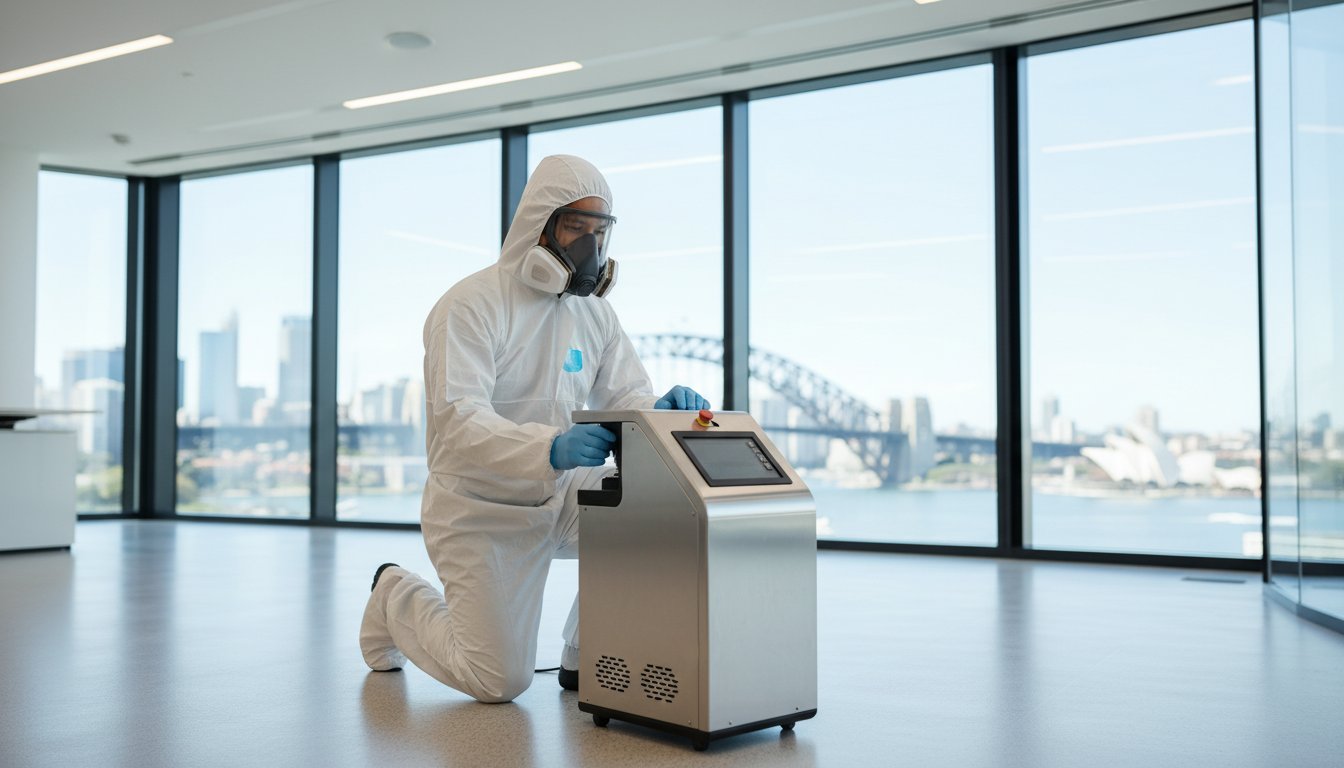
- Contain the Area: Using specialised containment and advanced air-scrubbing technology, experts prevent the spread of airborne spores during the removal process.
- Guarantee Removal: A professional service guarantees the complete and safe eradication of the mould, giving you total peace of mind that your family is protected from recurring threats.
Don’t risk your health with ineffective methods that can worsen the problem. Speak to a certified mould expert today.
Your Next Step to a Safe, Mould-Free Home
As we’ve detailed, black mould is far more than an unsightly nuisance in Australian homes; it’s a serious hazard. The potential consequences range from persistent allergic reactions and respiratory issues to more severe toxic effects, placing children, the elderly, and those with compromised immune systems at the greatest risk. Recognising the full spectrum of black mould health risks Australia presents is the crucial first step toward protecting your household.
However, knowledge alone isn’t enough-action is essential. DIY solutions and surface-level cleaning often fail to address the root of the problem: the airborne spores that allow mould to return. To ensure your home is truly safe, you need a professional solution that eradicates the infestation completely, from the visible growth to the microscopic spores in the air you breathe.
Our certified and experienced master technicians are equipped with the industry-leading, safe Goldmorr System to do just that. Don’t gamble with your family’s well-being. Protect your family from harmful mould. Get a free, no-obligation quote from our certified technicians. It’s the definitive step towards lasting peace of mind.
Frequently Asked Questions About Black Mould Health Risks
Can black mould cause permanent health problems in Australia?
Yes, in severe cases, long-term exposure to toxic black mould can contribute to lasting health issues. For vulnerable individuals-such as children, the elderly, or those with compromised immune systems-the risks are higher. Chronic conditions like asthma, severe allergies, and hypersensitivity pneumonitis can develop from prolonged inhalation of mould spores. Do not wait for the problem to worsen; professional remediation is the only way to safeguard your long-term health.
How quickly can you get sick from black mould exposure?
The reaction time to black mould exposure varies significantly from person to person. Highly sensitive individuals may experience immediate allergy-like symptoms, such as sneezing, itchy eyes, and coughing, within hours. For others, health issues may develop more slowly over days or weeks of consistent exposure. The severity of the infestation and the ventilation of the area are also critical factors. If you suspect mould is making you sick, act immediately.
Is it safe to sleep in a room where black mould is present?
No, it is highly unsafe to sleep in a room with visible black mould. Sleeping in an infested area means you are inhaling a concentrated number of airborne mould spores for 6-8 hours straight. This significantly increases your risk of developing respiratory infections, sinus problems, and other serious health complications. We strongly advise finding an alternative sleeping arrangement until the mould has been professionally and completely removed from the environment.
Does using an air purifier help with the health risks of black mould?
An air purifier with a HEPA filter can help by capturing airborne spores, which may offer temporary relief from allergy symptoms. However, it is not a solution. An air purifier does not kill mould or stop it from growing on walls, ceilings, or other surfaces. The source of the problem remains, and it will continue to release spores. Professional mould remediation is required to eliminate the colony and protect your health effectively.
What should I tell my doctor if I suspect my health issues are from mould?
Be direct and specific with your doctor. Clearly describe your symptoms, such as persistent coughing, headaches, fatigue, or rashes, and when they began. It is crucial to inform them that you have found black mould in your home, its location, and how long you think you have been exposed. Providing this context is vital for an accurate diagnosis of the black mould health risks Australia residents may face and helps your doctor recommend the right course of action.
Are Australian renters protected if their rental property has black mould?
Yes. Australian landlords have a legal duty to ensure their rental property is in a reasonable state of repair and fit to live in. A significant mould issue, particularly if caused by a structural problem like a leak, is typically the landlord’s responsibility to fix. You must inform your landlord or property agent in writing as soon as you discover the problem. If they fail to act, you can contact your state’s tenancy authority for guidance and support.