
Are you tired of battling a persistent cough, unexplained headaches, or allergy-like symptoms that just won’t go away? It’s easy to dismiss them as a lingering cold or seasonal sniffles, but the real cause could be a hidden problem within your home. These vague but constant health issues are often the first red flags of a serious issue. Recognising the common black mould symptoms is the first critical step to protecting your family from airborne health risks.
You have arrived at the right place for answers. This guide is designed to give you peace of mind by cutting through the confusion. We will provide a clear checklist of symptoms to watch for, explain the heightened risks for children and the elderly, and give you a straightforward action plan. You’ll learn exactly when to see a doctor and when it’s time to call a professional mould removalist to ensure your home is safe and healthy once again.
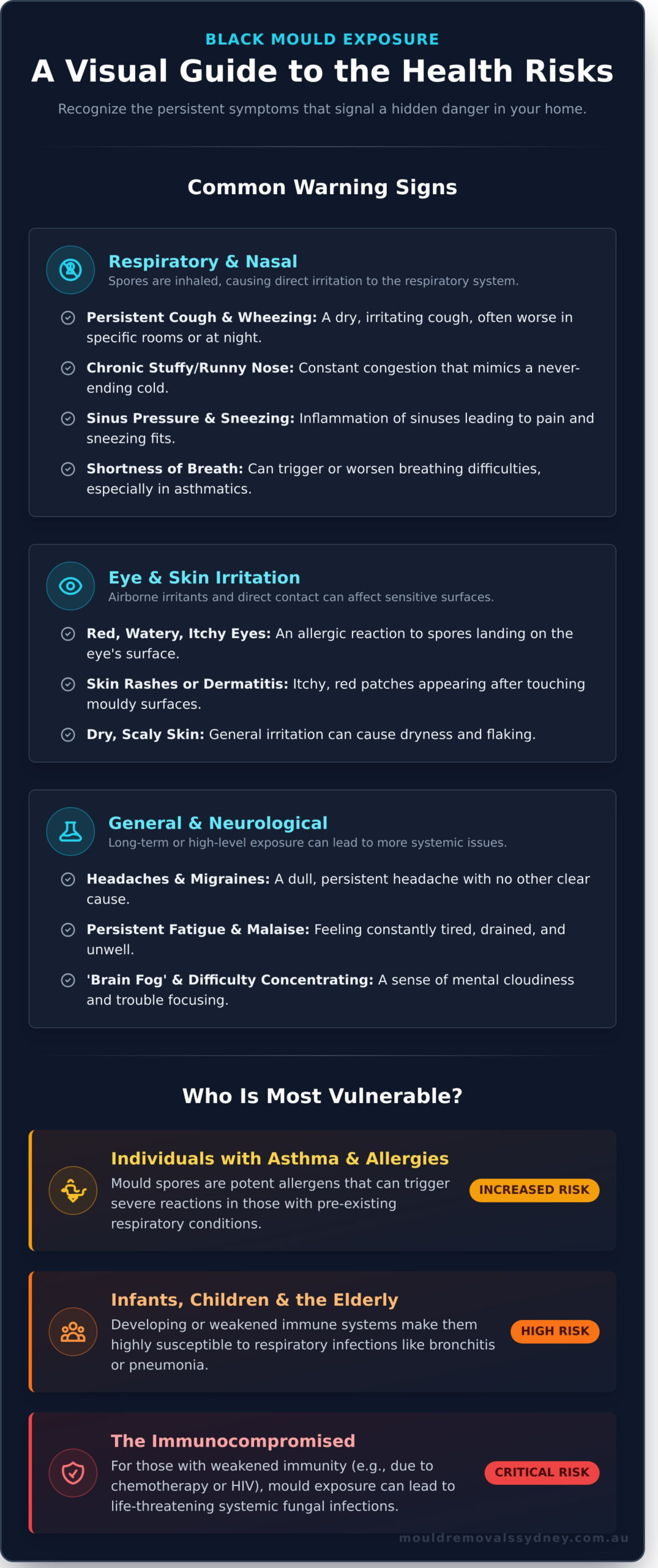
The Most Common Black Mould Symptoms You Might Experience
Discovering mould in your property is alarming, and the immediate concern for most people is the potential impact on their health. Reactions to mould are primarily allergic, similar to hay fever, where your immune system overreacts to inhaled mould spores. However, not everyone reacts the same way. The specific black mould symptoms you might experience can range from mild irritation to more severe issues, depending on your individual sensitivity, the duration of exposure, and the type of mould present.
While many people use the term “black mould” to refer to the specific fungus Stachybotrys chartarum, it’s crucial to understand that various types of indoor mould can produce allergens and irritants that affect your health. A major red flag is the persistence of your symptoms. If you have a cough, stuffy nose, or headache that doesn’t clear up with standard cold remedies and seems to worsen when you’re indoors, it is a strong indicator that your environment is the root cause. Don’t ignore these persistent warning signs.
| Symptom Category | Common Signs and What They Mean |
|---|---|
| Respiratory and Nasal Symptoms |
These are the most frequent reactions as spores are inhaled directly into the respiratory system.
|
| Eye and Skin Irritation |
Direct contact with spores or airborne irritants can affect your eyes and skin.
|
| General and Neurological Signs |
While less common, prolonged or high-level exposure can lead to more systemic issues.
It’s important to note that these symptoms are often associated with long-term exposure and should be discussed with a medical professional. |
If you or your family are experiencing any combination of these health issues, it is urgent that you identify and address the source of the mould. Protecting your health starts with ensuring your indoor air is clean and safe. Don’t wait for the problem to worsen.
Who Is Most at Risk? Severe Symptoms in Vulnerable Groups
While mould exposure can affect anyone, the severity of the reaction is not the same for everyone. Certain individuals are far more susceptible to the health risks posed by airborne mould spores. For these vulnerable groups, the typical black mould symptoms can escalate quickly into serious medical issues. If someone in your home falls into one of these categories, immediate and professional mould remediation is not just a recommendation-it’s a critical step to protect their health.
Individuals with Asthma and Allergies
For people with pre-existing respiratory conditions, a mould-infested environment is a significant threat. Mould spores are potent allergens and irritants that can trigger severe reactions. For those with respiratory sensitivities, the health effects of mold exposure can be particularly severe, leading to:
- Increased Asthma Attacks: Spores can trigger more frequent and intense asthma attacks, making the condition difficult to manage.
- Worsened Allergies: Constant exposure can lead to chronic sinus congestion, runny nose, and breathing difficulties.
- ABPA: In rare cases, individuals may develop Allergic Bronchopulmonary Aspergillosis (ABPA), a serious allergic reaction in the lungs to Aspergillus mould.
Infants, Children, and the Elderly
The very young and the elderly are especially vulnerable to the dangers of mould. Infants and children have developing immune systems that are more sensitive to environmental toxins like mould spores. Similarly, older adults often have weakened immune and respiratory systems, making them less able to fight off mould-related illnesses. This puts both groups at a higher risk of developing persistent coughs and serious respiratory infections, such as bronchitis and pneumonia, from ongoing mould exposure.
The Immunocompromised
This is the highest-risk group, for whom mould exposure can be life-threatening. Individuals are considered immunocompromised if their immune system is weakened due to conditions like HIV/AIDS, cancer treatment (chemotherapy), or organ transplants. For these people, inhaling toxic mould spores can lead to systemic fungal infections, turning common black mould symptoms into a medical crisis. A completely mould-free environment is absolutely essential for their safety. Don’t wait until the problem worsens-it will.
Myth vs. Fact: The Truth About ‘Toxic Black Mould’
The term ‘toxic black mould’ is often used in headlines and on the internet, causing significant fear for property owners. While the concern is understandable, it’s important to separate sensationalism from scientific fact. As your local mould removalist experts, we believe in providing clear, evidence-based information so you can make the right decision for your health and property.
Let’s break down what the science actually says about the risks associated with black mould and put your mind at ease by focusing on the real, manageable issues.
What Are Mycotoxins?
Certain species of mould, including the infamous Stachybotrys chartarum (black mould), can produce microscopic compounds called mycotoxins. However, the idea of being ‘poisoned’ by inhaling them in a typical home environment is not supported by current scientific evidence. Health authorities in Australia and worldwide agree that significant illness from mycotoxins is primarily linked to ingesting large amounts of heavily contaminated food, not from airborne exposure in buildings.
The Real, Proven Health Risks
The primary health risk from any indoor mould, regardless of its colour, is not poisoning but an allergic or inflammatory response. When mould grows, it releases countless tiny spores into the air. For many people, inhaling these spores triggers the immune system, leading to a range of respiratory and allergic issues. The most commonly reported black mould symptoms are, in fact, signs of this immune response.
The proven health risks are focused on irritation and sensitisation:
- Aggravation of asthma and increased frequency of attacks.
- Allergic reactions such as sneezing, runny nose, red eyes, and skin rashes.
- Respiratory irritation, including coughing, wheezing, and shortness of breath.
- Headaches and fatigue in sensitive individuals.
Why All Mould Should Be Treated Seriously
Just because the ‘toxic mould’ narrative is overblown doesn’t mean mould is harmless. Any visible mould in your home is a clear sign of a moisture problem and a potential health hazard. Whether it’s black, green, or white, all mould degrades your indoor air quality by releasing airborne spores. The presence of mould indicates an unhealthy living environment that can affect your family’s well-being and cause structural damage over time. Don’t wait for symptoms to appear-the key is to address the mould and its moisture source immediately and professionally.
Is It Mould? How to Connect Your Symptoms to Your Home
Feeling unwell at home but significantly better when you leave? It’s a common story we hear from Sydney homeowners. Your environment could be directly impacting your health, and connecting your potential black mould symptoms to your property is the crucial first step. Becoming a detective in your own home empowers you to identify the source of the problem and take action.
Use this practical checklist to look for patterns and clues.
Create a Symptom Diary
To establish a clear link between your health and your home, start tracking your symptoms. A written record can reveal patterns you might otherwise miss. Every day, make a note of how you feel and ask these critical questions:
- Do my symptoms (coughing, sneezing, headaches, fatigue) improve when I leave the house for work or a holiday?
- Do my symptoms feel worse in specific rooms, such as a damp basement, bathroom, or laundry area?
- Are my allergy-like reactions more severe at night or when I first wake up in my bedroom?
A pattern where symptoms consistently worsen at home is a strong signal that an indoor environmental issue, like mould, is the likely cause.
Look for Environmental Clues
Your senses are powerful tools in the hunt for mould. Often, the signs of a moisture problem-the essential ingredient for mould growth-are present long before you see any visible mould. Keep an eye (and nose) out for these red flags:
- A persistent musty smell: This distinct, earthy odour is one of the most reliable indicators of an active mould colony. Don’t ignore it.
- Visible water damage: Look for discolouration or stains on ceilings and walls, bubbling or peeling paint, and warped wooden floorboards.
- Excessive condensation: Constant moisture build-up on windows, walls, or pipes points to high humidity levels that encourage mould to thrive.
When to Suspect Hidden Mould
What if you are experiencing symptoms but can’t find any visible mould? This is where the situation becomes urgent. Mould is an expert at hiding behind walls, under flooring, in ceiling cavities, and inside ventilation systems. If a strong musty smell has no obvious source, or your health issues persist, you could be breathing in airborne spores from a large, hidden infestation. Don’t let an invisible problem compromise your family’s health. If you suspect hidden mould, book a professional inspection today. Our certified technicians have the technology to find and safely eliminate it for good.
Your Action Plan: What to Do About Black Mould Symptoms
Discovering mould in your home and experiencing related health issues can be incredibly stressful. Don’t wait for the problem to get worse, because it will. Taking immediate, decisive action is crucial for protecting both your family’s health and your property’s structural integrity. Follow this clear, two-pronged plan to regain control of your environment and your well-being.
Step 1: Consult Your Doctor
Your health is the absolute priority. If you or your family members are experiencing persistent or severe respiratory issues, skin irritation, or other potential black mould symptoms, schedule an appointment with your GP. They can assess your condition, help manage the symptoms, and rule out other potential causes. Be sure to mention that you suspect mould exposure in your home, as this information is vital for an accurate diagnosis.
Step 2: Do NOT Attempt DIY Removal
It’s a common mistake to try and scrub mould away with bleach or household cleaners. This is not only ineffective but dangerous. Disturbing a mould colony can release millions of microscopic spores into the air, spreading the contamination to other areas of your home and significantly worsening your health symptoms. Bleach often only cleans the surface, leaving the mould’s root system intact within the material, guaranteeing it will grow back.
Step 3: Call a Certified Mould Removalist
The only safe and permanent solution is professional mould remediation. A certified Mould Removalist doesn’t just clean the visible mould; we identify and address the underlying moisture source to prevent regrowth. Our team uses specialised equipment, including HEPA air scrubbers, to capture airborne spores and ensure the air you breathe is clean and safe. We are approved technicians for the industry-leading Goldmorr System, an advanced process that eliminates mould without damaging your property. It’s that simple.
Don’t risk your family’s health with ineffective DIY methods. Protect your family’s health. Get a free quote from our experts now.
Protect Your Health: Take Action Against Mould Today
Understanding the connection between your home and your health is the most critical takeaway. From persistent coughs and skin irritation to more severe respiratory distress, recognising potential black mould symptoms is the first step toward reclaiming a safe living environment. Remember that leaving mould untreated allows the problem to worsen, increasing the health risks for everyone in your household, especially the most vulnerable.
Don’t wait for symptoms to escalate. If you suspect mould is impacting your well-being, it’s time to act with confidence. As approved Goldmorr System Master Technicians, we provide a comprehensive solution that standard cleaning can’t match. Our safe and effective, biodegradable treatments remove both the visible mould and the harmful airborne spores that truly affect your health. Worried about your symptoms? Schedule a professional mould inspection in Sydney today. It’s time to breathe easy and restore your peace of mind.
Black Mould Symptoms: Frequently Asked Questions
How quickly do black mould symptoms appear after exposure?
The onset of symptoms from mould exposure varies greatly between individuals. For those with high sensitivity or allergies, reactions like sneezing, coughing, or itchy eyes can appear within hours of inhaling airborne spores. For others, symptoms may develop over days or even weeks of continuous exposure. The severity of the infestation and your personal health are the biggest factors in how quickly you will react. Don’t wait for the problem to worsen.
Can black mould symptoms go away on their own if I leave the house?
Leaving a mould-affected property can provide temporary relief, and many symptoms may lessen or disappear. However, this is not a permanent solution. The mould spores remain in your home and will trigger symptoms as soon as you return. To truly eliminate the health risks and stop the cycle, the mould source must be professionally remediated. Removing yourself is a short-term fix; removing the mould is the only real answer.
What will a doctor do to diagnose and treat mould exposure?
A doctor will typically discuss your symptoms and your living or work environment to assess potential exposure. They may perform a physical exam and could recommend allergy testing, such as a skin prick or blood test, to confirm a mould allergy. Treatment focuses on managing the symptoms with medications like antihistamines or nasal sprays and, most importantly, advising you to eliminate the source of exposure through professional mould removal.
Are black mould symptoms contagious from person to person?
No, black mould symptoms are not contagious. They are an individual’s physical reaction to inhaling mould spores and mycotoxins, not a communicable illness like a cold or the flu. You cannot “catch” mould sickness from another person. If multiple people in a household are unwell, it is because they are all being exposed to the same environmental hazard. The problem is the property, not the people.
Does smelling mould mean I am being exposed and will get sick?
Yes, if you can smell that distinct musty odour, you are being exposed to mould. The smell is caused by gases released during active mould growth, which means you are inhaling these compounds and likely airborne spores. While not everyone will get sick immediately, this smell is a definite warning sign of a problem that poses a significant health risk. It’s crucial to locate and address the source immediately to protect your wellbeing.
What is the difference between mould allergy and mould sensitivity?
A mould allergy is a specific immune system response where your body overreacts to mould spores, triggering classic symptoms like sneezing, a runny nose, and itchy eyes. Mould sensitivity is a broader, non-allergic reaction where exposure causes symptoms like headaches, fatigue, or irritation without the specific immune markers. Both confirm that mould is negatively impacting your health and must be professionally removed from your environment for your safety.