
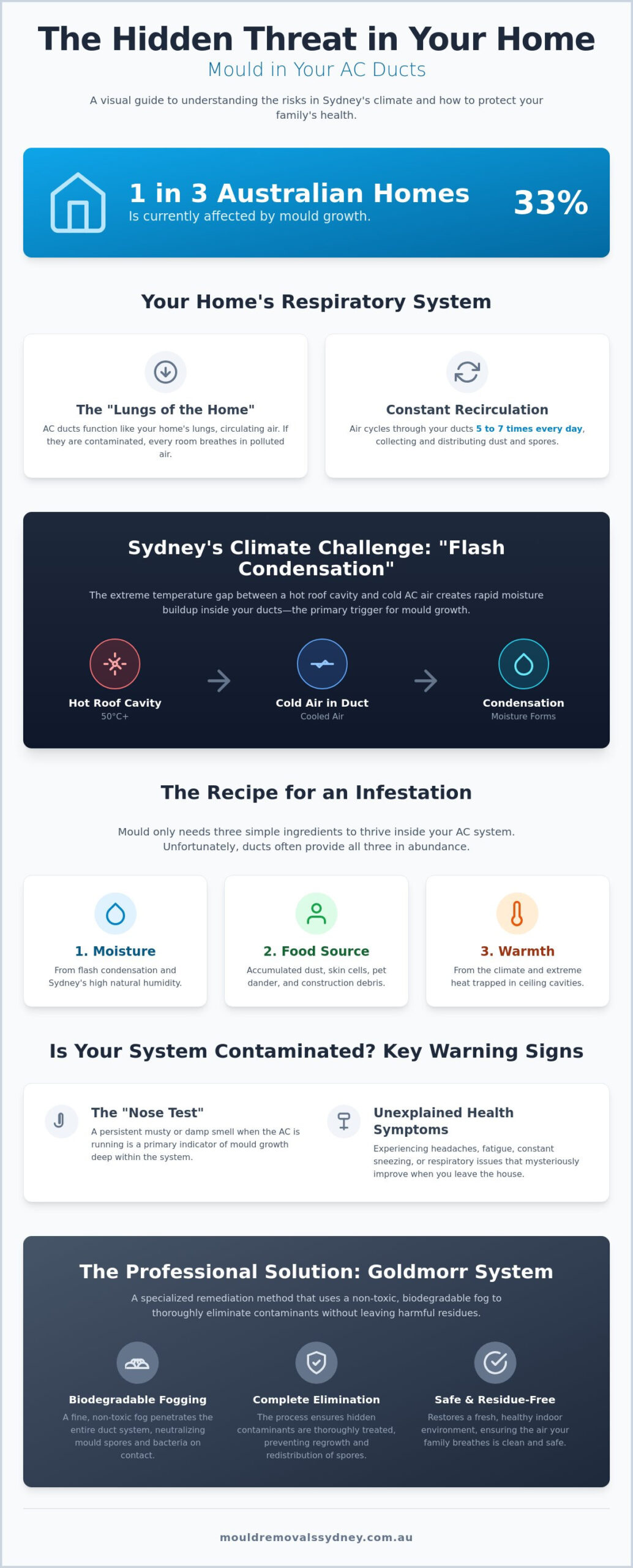
Did you know that one in three Australian homes is currently affected by mould growth? It’s a startling statistic, especially when you realize that your ac ducts could be circulating these invisible spores into every room you inhabit. If you’ve noticed a persistent musty smell or unexplained sneezing when the air is on, your concerns are likely justified. You deserve to feel certain that the air your family breathes is safe and free from the threat of “black mould” spreading through your property.
We understand the anxiety caused by conflicting maintenance advice and the fear of hidden health hazards. This article provides the expert clarity you need to manage a mould-free HVAC system in Sydney’s unique climate. You’ll discover how to identify signs of contamination, improve your system’s efficiency, and restore a fresh-smelling environment through a preview of modern ventilation standards and professional remediation steps.
Key Takeaways
- Understand how your ac ducts function as the “lungs” of your property and why their condition directly dictates the quality of the air your family breathes.
- Learn to identify the specific environmental triggers, such as “flash condensation,” that transform Sydney ventilation systems into breeding grounds for bacteria and mould.
- Discover the critical differences between flexible and rigid ducting, including how ribbed interiors can trap hazardous dust and moisture over time.
- Master the “Nose Test” and other visual cues to determine exactly when your system requires urgent professional intervention to stop the spread of spores.
- Explore the specialized Goldmorr System, a professional remediation method that uses biodegradable fogging to eliminate contaminants without leaving toxic residues.
What Are AC Ducts? Understanding Your Home’s Respiratory System
Think of your property as a living organism. Just as you have vessels to carry oxygen, your home relies on a complex network of ac ducts to distribute conditioned air. This system is essentially the “Lungs of the Home.” If the lungs are congested, the entire body suffers. For a technical foundation of this network, Understanding Your Home’s Respiratory System involves recognizing how these conduits act as the primary delivery mechanism for your HVAC system.
Your system isn’t just a series of tubes. It’s an engineered environment consisting of supply ducts, return air vents, and plenums. Supply ducts deliver processed air to your living spaces, while return vents pull air back for filtration and cooling. The plenum is the central distribution box that manages the pressure and flow. While residential setups are often compact and hidden within ceiling cavities, commercial ducting is significantly more complex. These larger systems require heavy-duty rigid materials to handle higher air volumes for hundreds of occupants simultaneously. AC ducts are the critical infrastructure for indoor climate and air purification.
How AC Ducts Influence Indoor Air Quality (IAQ)
In a typical Sydney home, the air cycles through your ductwork five to seven times every single day. This constant movement sounds beneficial, but it creates a vacuum for particulate matter. Skin cells, pet dander, and fine dust settle deep within the conduits over time. Because Australians spend up to 90% of their time indoors, the quality of this recirculated air is paramount. When contaminants accumulate, they contribute to “Sick Building Syndrome.” This is a documented condition where occupants experience headaches, fatigue, or respiratory issues that mysteriously disappear once they leave the premises. Clean conduits are your first line of defense against these invisible health threats.
The Role of Ducts in Temperature and Humidity Control
Maintaining the correct dew point is vital for a healthy home. If your ac ducts aren’t performing efficiently, condensation forms inside your walls and ceiling spaces. Leaky or poorly insulated ducts are a major culprit for increased humidity in wall cavities. This moisture creates a perfect environment for fungal growth that can compromise your building’s structural integrity. Given Sydney’s high coastal humidity, ensuring your system performs optimally is a non-negotiable step for mould prevention. When your ductwork is sealed and clean, it maintains the precise temperature balance required to keep your indoor air dry, crisp, and safe to breathe. Don’t let a hidden leak turn your home into a breeding ground for spores.
The Hidden Dangers: Why Mould and Bacteria Love AC Ducts
Mould is an opportunistic organism. It doesn’t require much to colonize your ac ducts. Only three ingredients are necessary for a full-scale biological infestation: moisture, warmth, and organic food. While the ducts themselves are made of inorganic materials, the thick layer of dust that accumulates over time provides the perfect nutrient source. This dust is primarily composed of human skin cells, pet dander, and textile fibres. When you add the humid Sydney air, you’ve created a laboratory-grade environment for fungal growth.
Sydney’s climate creates a specific phenomenon known as “Flash Condensation.” During our sweltering summers, cold air is forced through ductwork situated in roof cavities that can reach temperatures exceeding 50 degrees Celsius. This extreme temperature differential causes moisture to bead rapidly on the interior lining of the conduits. This moisture sits on the dust, providing the hydration mould needs to thrive. Many homeowners believe that modern, “new” homes are immune to these issues. This is a dangerous misconception. Construction debris, sawdust, and drywall particles are often trapped in the system during the building process, providing an immediate food source for spores the moment the keys are handed over.
Your HVAC system can also become a distribution hub for existing household issues. If you have a small mould colony in a damp bathroom, the return air vent can suck those spores directly into the main system. Once inside, the fan forces those spores into every bedroom and living space. If you are worried about the state of your system, checking for Signs Your Sydney AC Ducts Need Urgent Attention is a vital first step in protecting your property. For those who suspect an active issue, booking a professional mould inspection can provide the scientific proof needed to take action.
Common Types of Contaminants in Sydney Ductwork
- Biological: This includes active mould colonies like Cladosporium or Aspergillus, along with bacteria and thriving populations of dust mites.
- Chemical: Volatile Organic Compounds (VOCs) from household cleaners and cooking oils often bind to dust particles, becoming trapped in the ribbed lining of flexible ducts.
- Physical: It is common to find degraded insulation fibres and construction grit that irritate the lungs when recirculated.
Health Symptoms Linked to Contaminated AC Ducts
Do you experience the “Morning Sneeze” only when the air conditioning is running? Chronic respiratory irritation is often the first sign that your ac ducts are compromised. Airborne spores can trigger persistent coughing, watery eyes, and unexplained fatigue. For residents with existing conditions, contaminated air can lead to severe complications. It is well-documented that duct-borne pathogens can exacerbate asthma and lead to serious black mould symptoms that affect your daily quality of life. Children and the elderly are most at risk from airborne spores because their immune systems are often more sensitive to environmental toxins.
Flexible vs. Rigid Ducting: Performance and Contamination Risks
Not all ac ducts are created equal. The material used in your HVAC system dictates how easily contaminants accumulate and how effectively they can be removed. In the Australian market, you will typically encounter either flexible ducting or rigid sheet metal. Each has specific vulnerabilities, especially when subjected to the high-salt, humid conditions found along the Sydney coastline. Understanding these differences is the first step in maintaining a healthy, efficient home environment.
Flexible Ducting: The Pros and Cons
Flexible ducting is the most common choice for residential retrofits. It’s popular due to its cost-effectiveness and ability to navigate tight Sydney roof cavities where rigid pipes simply won’t fit. However, its design is inherently problematic for long-term hygiene. The internal “ribbed” structure, created by the wire coil, acts as a series of tiny traps. Dust, skin cells, and moisture settle in these grooves, providing a stable foundation for fungal colonies. Over time, the polyester or foil lining can sag. These sags create moisture pockets where condensation collects and stagnates. In coastal Sydney, salt-laden air can also compromise the integrity of the plastic components over a 10 to 15-year period. Because the material is fragile, traditional mechanical scrubbing is risky. Professional antimicrobial fogging is often the only viable solution to treat the interior without causing catastrophic damage.
Rigid Metal Ductwork: Durability and Hygiene
Rigid metal ductwork offers superior durability and airflow performance. The smooth galvanised steel surfaces resist the heavy dust accumulation seen in flexible variants. This makes them far more receptive to intensive mechanical scrubbing and vacuuming. They are built to last for decades, even in demanding environments. However, they are prone to a specific issue: external sweating. If the external insulation is breached or improperly installed, the temperature differential causes water to bead on the outside of the metal. This moisture often goes unnoticed until it saturates ceiling plaster or feeds mould growth in hidden cavities. While the metal itself is resistant to mould, the dust that collects on the surface can still host bacteria if moisture is present.
Choosing between these materials often comes down to budget and available space, but the maintenance requirements are non-negotiable for both. An EPA guide on duct cleaning highlights that the presence of moisture is the single most important factor in determining if your system is a health risk. Regardless of whether your system is flex or rigid, you must remain vigilant about the signs of degradation and moisture ingress. If your insulation is compromised or your ducts are sagging, the risk to your family’s health increases every time the fan starts. Regular inspections are the only way to ensure your air remains safe.
When to Call Professionals: Signs Your Sydney AC Ducts Need Urgent Attention
Trust your senses when evaluating your indoor environment. Your nose is often the most sensitive diagnostic tool you own. A persistent musty, earthy, or “dirty sock” odour that intensifies when the air conditioning starts is a definitive sign of microbial growth. When the fan engages, it disperses these volatile organic compounds throughout your home. If the scent is localized to specific rooms, the source is likely trapped within your ac ducts.
Performance drops are another critical indicator. Notice if your home feels unevenly cooled or if certain rooms seem stuffy despite the system running. Blockages caused by heavy dust accumulation or collapsed internal linings restrict airflow. Pay close attention to your physical wellbeing. If your respiratory irritation, sneezing, or headaches vanish after you leave the house for a few hours, your indoor air is the primary culprit. This “away from home” test is a simple way to confirm that your property is affecting your health.
Major household events also necessitate an immediate system check. If you have recently experienced a roof leak, plumbing flood, or a major renovation, your system is at risk. Construction dust from sanding plasterboard is highly organic. It provides an instant food source for spores the moment it enters your ventilation. Don’t wait for visible growth to appear. If you suspect your air is compromised, book a professional mould inspection to identify the root cause before it spreads.
The “Ghosting” Effect on Vents and Ceilings
Have you noticed dark, soot-like streaks appearing around your ceiling vents? This is known as the “ghosting” effect. While static electricity can sometimes attract harmless dust to these areas, these marks often signal a deeper issue. Active fungal growth usually appears “fuzzy” or has a distinct green, grey, or black hue. If the stains are damp or spreading rapidly, they have likely transitioned from the ductwork to your building structure. In these cases, you require specialized ceiling mould removal to ensure the spores are completely eradicated from the plasterwork.
The Danger of DIY Duct Cleaning
Stop before you reach for a household vacuum or a bottle of bleach. DIY duct cleaning is often counterproductive and hazardous. Standard domestic vacuums lack the filtration required to trap microscopic spores. You risk simply blowing contaminants back into your living space at higher concentrations. There is also a high probability of puncturing fragile flexible ac ducts with rigid vacuum attachments, leading to costly air leaks. Bleaching your vent covers only hides the visible problem while the fungal roots remain firmly embedded deep within the system.
Professional AC Duct Remediation: The ABC Mould Cleaning Solutions Approach
When your ac ducts become a source of contamination rather than comfort, you need more than a standard vacuum service. You require a scientific remediation strategy that targets the root cause of fungal growth. At ABC Mould Cleaning Solutions, we utilize the Goldmorr System, a world-class methodology designed specifically for complex HVAC environments. This isn’t a surface-level fix. It is a comprehensive biological reset for your home’s air distribution network.
Our approach begins with a rigorous inspection. We don’t rely on guesswork or superficial glances at vent covers. Our technicians perform a deep-dive assessment to map the extent of the contamination. This is especially critical if your system has been compromised by external factors. We provide an immediate 24/7 response for water damage repair, ensuring that moisture from a burst pipe or roof leak doesn’t turn your ventilation into a permanent mould colony. By intervening early, we stop the spread of spores before they can embed into the porous linings of your ductwork.
Our Multi-Step Duct Hygiene Process
We follow a systematic, evidence-based protocol to restore your air quality. The process is designed for maximum efficiency and safety. First, we use specialized high-definition cameras to navigate deep inside the conduits. This allows us to see exactly where dust and moisture have created “hot zones” for bacteria. Once the survey is complete, we deploy the Goldmorr fogging system. This proprietary process uses a biodegradable agent that seeks out and eliminates spores on contact. Unlike harsh industrial chemicals, this fogging leaves no toxic residue, making it perfectly safe for children and pets. Finally, we implement high-efficiency air scrubbing and purification. This step pulls any remaining airborne particles out of the environment, ensuring your home is safe for immediate re-entry the moment we finish.
Why Sydney Homeowners Trust ABC Mould Cleaning Solutions
We are results-driven experts who understand the stress of living with poor indoor air quality. Our team doesn’t just clean; we provide a permanent resolution. We back our specialized expertise with an aggressive price-matching guarantee for any professional remediation quote. This ensures you receive the highest level of technical service without compromising on value. We take a “No-Nonsense” approach to every job, focusing entirely on solving the underlying issues like humidity and debris accumulation. Don’t settle for amateur alternatives that leave the roots of the problem behind. Take the final step toward a healthy home and Book your free AC duct inspection today. We are ready to help you breathe easy again.
Take Control of Your Indoor Environment
Your property deserves a ventilation system that promotes health rather than compromising it. We’ve explored how ac ducts act as the lungs of your home, and why Sydney’s unique climate demands a specialized approach to moisture management. Ignoring musty odours or visible growth only allows the problem to escalate, potentially leading to significant structural damage and chronic respiratory issues for your family. Proactive maintenance is the only way to ensure your indoor air remains safe and breathable.
Our team of highly trained specialists is ready to provide the emotional relief and technical security you need. We utilize the specialized Goldmorr System to ensure spores are eradicated without leaving toxic residues. Whether you require a 24/7 emergency water damage response or a routine hygiene check, our aggressive price-matching guarantee ensures you receive the best value in the market. Don’t let hidden contaminants dictate your well-being any longer.
Get a Free Professional Quote for AC Duct Cleaning & Mould Removal and start breathing fresh, safe air again today. We look forward to restoring the safety and comfort of your home.
Frequently Asked Questions
How often should I have my AC ducts cleaned in Sydney?
Professional cleaning is recommended every 3 to 5 years for standard residential properties. However, Sydney’s high coastal humidity often necessitates more frequent inspections to prevent moisture buildup. If you have pets, smokers, or family members with severe allergies, consider a 2-year cycle to ensure your indoor air remains at an optimal safety level.
Can dirty AC ducts really make me sick?
Yes, contaminated ductwork is a primary driver of respiratory issues and chronic fatigue. When your system runs, it recirculates skin cells, pet dander, and fungal spores directly into your breathing zone. This constant exposure can lead to persistent headaches and exacerbated asthma symptoms. Professional remediation removes these biological triggers, restoring a healthy environment for all occupants.
What is the musty smell coming from my vents?
That distinctive odour is caused by microbial volatile organic compounds released by active fungal colonies. It indicates that moisture has settled on accumulated dust inside your ac ducts, creating a stable breeding ground. This scent is a definitive warning sign that your system requires specialized remediation rather than a simple filter replacement or air freshener.
Is professional duct cleaning worth the money?
Professional remediation is a vital investment that pays for itself through improved system longevity and reduced energy bills. Removing internal blockages restores efficient airflow, which prevents your HVAC components from overworking and failing prematurely. More importantly, it provides the emotional relief of knowing your family isn’t breathing in hidden environmental toxins every day.
What is the difference between duct cleaning and mould remediation?
Standard cleaning focuses on removing loose dust with vacuums, while mould remediation is a specialized biological treatment. Remediation uses proprietary systems like Goldmorr fogging to neutralize spores and kill fungal roots at the source. While a basic clean improves appearance, only professional remediation ensures the complete eradication of hazardous biological growth from the entire network.
Can I clean my own AC ducts?
You should avoid attempting to clean internal ductwork yourself because domestic equipment is insufficient for the task. Standard household vacuums lack the HEPA filtration required to trap microscopic spores, often blowing them back into your rooms at higher concentrations. Additionally, DIY tools can easily puncture fragile flexible ac ducts, leading to expensive air leaks and hidden structural damage.
How long does a professional AC duct remediation take?
Most residential projects are completed within 3 to 5 hours depending on the size of your property. Our technicians work systematically to ensure every branch of your ventilation system is treated and purified. Because we use biodegradable, non-toxic agents, your home is safe for immediate re-entry. You can enjoy fresh, clean air the very same day the service is performed.
Will the mould come back after the ducts are cleaned?
Fungal growth will not return if the underlying moisture issue is correctly identified and resolved. Our specialists focus on solving the root cause, such as condensation leaks or poor insulation, during the initial assessment. Following our professional maintenance advice and ensuring proper humidity control will keep your HVAC system a clean and dry environment for years to come.