
What if the very system meant to keep your family comfortable is actually circulating invisible toxins throughout your Sydney home? It’s an unsettling thought, especially when you notice musty odours or see dust gathering around your ceiling vents. You’re right to be concerned about the state of your air con duct system. These hidden passages often become breeding grounds for mould and bacteria that compromise your family’s health every time the air turns on.
We understand the anxiety that comes with unexplained allergy flare-ups and rising energy bills. You deserve a home that feels like a sanctuary, not a source of respiratory stress. This guide provides the professional clarity you need to identify hidden contamination and maintain your system effectively. You’ll discover the critical difference between a superficial clean and full remediation using our specialized Goldmorr System. We’ll also walk through the latest 2026 NADCA ACR standards for HVAC source removal, ensuring you know exactly how to restore a clean, mould-free environment for your loved ones.
Key Takeaways
- Learn to identify whether your home uses flexible or rigid sheet metal ducting and how these materials influence your indoor air quality.
- Discover why the “Dark, Damp, and Dusty” environment inside an air con duct creates the perfect breeding ground for toxic mould.
- Identify the five critical warning signs, including musty “wet dog” odours, that indicate your system requires urgent professional attention.
- Understand the limitations of DIY maintenance and why simple vacuuming can often spread contaminants further throughout your living spaces.
- Explore how the proprietary Goldmorr System permanently eliminates airborne spores to restore a safe, healthy environment for your family.
Understanding Your Air Con Duct: Types, Materials, and Functions
Think of your air con duct as the delivery system for every breath you take while your system is running. It’s the hidden network of passages designed to distribute conditioned air throughout your home. These HVAC ductwork systems act as the lungs of your property. If they’re poorly designed or neglected, they don’t just move air; they move contaminants. Understanding the materials and layout of your system is the first step toward reclaiming your indoor air quality and protecting your family’s health.
Flexible vs. Rigid Ductwork
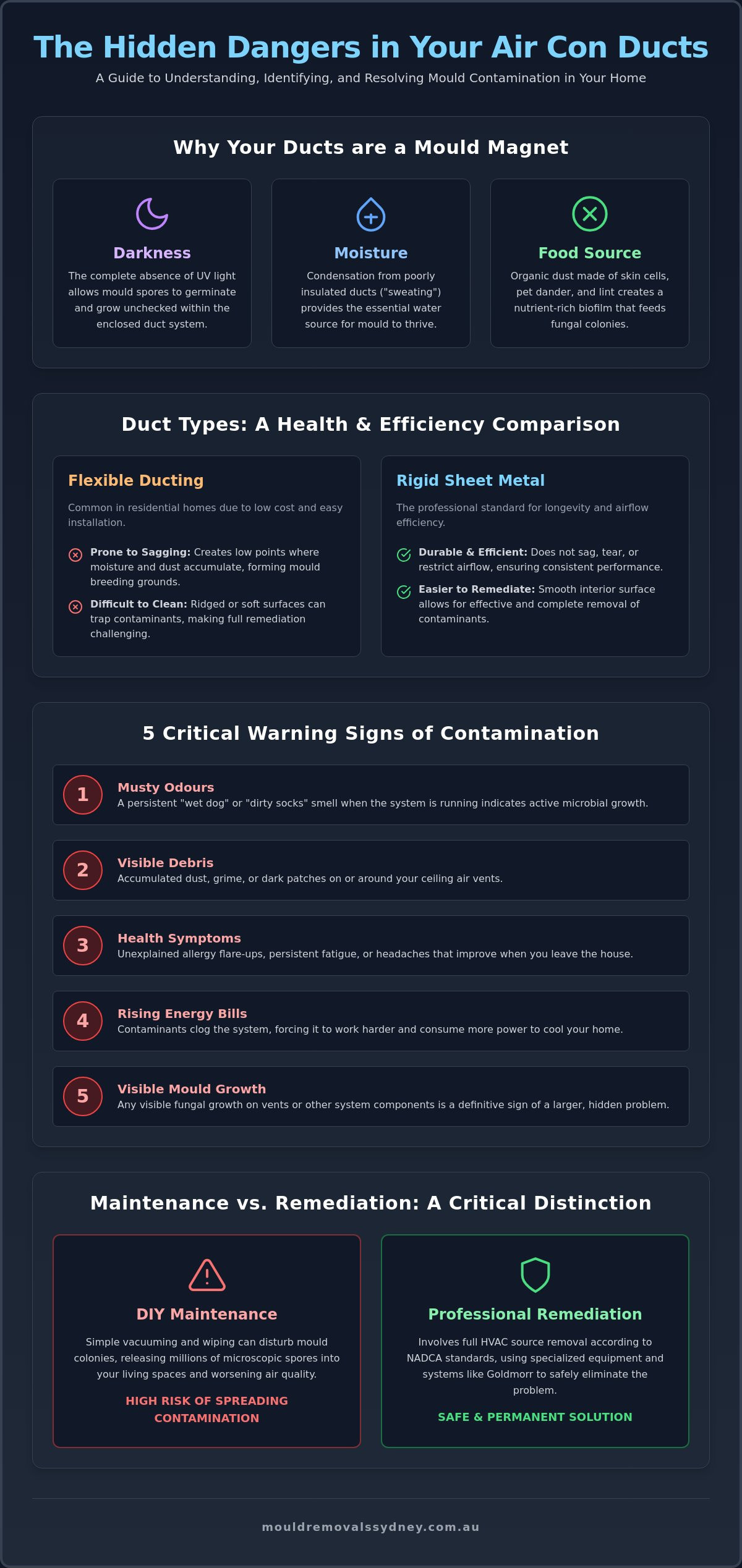
Most residential properties in Sydney rely on flexible polyester ducting, commonly known as “flex duct.” It’s popular because it’s cost-effective and easy to install in tight, complex roof spaces. However, flex ducting has a significant weakness. It’s highly prone to sagging. When an air con duct sags, it creates a low point where moisture and dust accumulate. This creates a prime breeding ground for mould. Rigid sheet metal ducts are the professional gold standard for longevity and airflow efficiency. While they’re harder to retrofit into existing homes, they don’t sag or tear. They provide a smooth interior surface that’s far easier to remediate if contamination occurs.
The Importance of R-Value in Australian Climates
In the humid Sydney climate, insulation isn’t just about temperature control; it’s about moisture prevention. The R-value measures the thermal resistance of your ducting. For most New South Wales homes, R1.0 was the previous standard, but R1.5 is now preferred to handle extreme summer heat. Why does this matter for your health? When cold air travels through an under-insulated air con duct, the temperature difference causes the exterior of the duct to “sweat.” This condensation drips onto your ceiling or into the ducting material itself. Poor insulation leads directly to structural water damage and hidden mould growth that you won’t notice until the musty smell becomes unbearable. Regulatory standards in NSW now demand higher thermal performance to prevent these exact risks.
Don’t overlook the layout of your system. A poorly planned duct run forces your unit to work harder, driving up energy bills and creating pockets of stagnant air where dust settles. An efficient layout ensures consistent pressure and prevents the “dead zones” where spores thrive. Check your roof space today. If you see tangled, sagging tubes, your air quality is already at risk. Taking action now prevents a small moisture issue from turning into a full-scale remediation project.
The Hidden Danger: Why Mould Thrives in Your Air Con Duct
Mould is an opportunistic organism. It requires three specific elements to colonise your home: darkness, moisture, and a food source. Your air con duct provides all three in abundance. While the previous section highlighted how poor insulation causes “sweating,” this moisture is only half the equation. When condensation inside the ducting mixes with the fine layer of organic dust—composed of skin cells, pet dander, and lint—it creates a nutrient-rich biofilm. This is the perfect fuel for fungal growth. Once established, these colonies aren’t just sitting there; they are actively releasing microscopic spores into the air stream.
Every time your system engages, it acts as a high-speed distribution network. It pushes these biological contaminants into every bedroom and living space. Standard pleated filters often fail to protect you here. While they might catch visible dust, they are usually porous enough to let microscopic spores pass through. According to guidance from the EPA, visible mould growth inside hard surface ducts or on other components of your heating and cooling system is a clear indicator that professional intervention is required. Ignoring these signs allows the infestation to deepen, making eventual remediation more complex and costly.
Health Implications of Contaminated Ducts
Living with a contaminated ventilation system often leads to what specialists call “Sick Building Syndrome.” This occurs when occupants experience acute health effects that seem directly linked to time spent in a specific building. You might notice persistent fatigue, unexplained headaches, or sudden asthma flare-ups that vanish shortly after you leave the house. These aren’t just coincidences. They are physiological responses to inhaling fungal particulate. If you’ve noticed dark patches on your vents, it’s vital to understand What is Black Mould? and how its presence in your ventilation can affect your long-term respiratory health.
Sydney’s Humidity Factor
Sydney’s coastal climate presents a unique challenge for homeowners. Our high ambient humidity means that even when your AC is off, moisture levels inside the roof cavity remain high. This is especially dangerous during the “off-season.” When your system sits dormant in autumn or spring, stagnant air and trapped moisture allow mould to take over the entire air con duct network. Coastal properties in areas like Manly or Bondi face even higher risks due to salt-laden air accelerating the breakdown of duct liners. Professional mould inspection services can identify these hidden colonies before they compromise your family’s well-being.
5 Signs Your Air Con Duct Requires Urgent Professional Attention
Your home often provides subtle warnings before a ventilation issue turns into a health crisis. Ignoring these signals allows mould colonies to entrench themselves deeper within your system. Identifying a compromised air con duct early can save you thousands in remediation costs and protect your family’s respiratory health. If you notice any of the following five signs, your system is likely circulating more than just cool air.
- Musty or “Wet Dog” Odours: A pungent, earthy smell immediately after turning on the unit is the most common indicator of active fungal growth.
- Visible Black Spotting: Look for dark, fur-like clusters or “specking” on the vent louvres and registers.
- Excessive Dust Accumulation: If your furniture is covered in a thick layer of grey dust within hours of cleaning, your ducts are likely shedding debris.
- Unexplained Energy Spikes: Mould and dust build-up can physically restrict airflow, forcing your system to run longer and harder to reach the set temperature.
- Persistent Indoor “Colds”: Family members may suffer from itchy eyes, sneezing, or a dry cough that mysteriously improves when they leave the house.
The “Smell Test” for Mould
It is easy to mistake “stale air” for a serious mould problem. Stale air usually dissipates after a few minutes of operation. However, active mould colonies produce microbial volatile organic compounds (mVOCs) that create a persistent, heavy scent. This odour is often significantly worse on humid Sydney mornings when moisture levels in the roof cavity peak. If the smell remains after you have replaced your return air filters, the contamination is likely deep within the air con duct network. Following industry best practices ensures that these biological contaminants are fully neutralized rather than just temporarily masked with fragrances.
Visual Inspection Tips for Homeowners
You don’t need to be an engineer to perform a basic safety check. Use a stable ladder to reach your ceiling vents and carefully remove the register grill. Shine a high-powered torch into the duct opening. Harmless household dust usually looks light, grey, and fibrous. In contrast, toxic mould often appears as slimy black patches or white, powdery spots that look “rooted” into the material. If you see any signs of biological growth, stop using the system immediately to prevent further spore dispersal. For a deeper dive into local requirements and professional standards, consult our Air Duct Cleaning Sydney Guide. Taking action now prevents the need for a full system replacement later.
Maintenance vs. Professional Remediation: What You Need to Know
Maintaining a healthy ventilation system requires a clear distinction between basic hygiene and technical remediation. You can manage surface-level tasks easily. Wipe down your external vent covers with a damp cloth every month to prevent dust buildup. Replace your return air filters every three to six months depending on your home’s occupancy and pet count. These actions are vital for preventing large debris from entering the air con duct network. However, these tasks are strictly preventative. They cannot resolve a biological infestation once it takes root in your ceiling space.
Professional remediation becomes necessary when contamination moves beyond the registers. If your system uses rigid sheet metal ducts, our specialists can often restore them to a clinical standard of cleanliness. If you have flexible ducting that has been saturated by moisture for over a decade, replacement is often the only safe path to ensure air purity. For homeowners and businesses considering a full system upgrade, Nature Carer Environmental Solutions specializes in the installation of advanced air conditioning systems that prioritize long-term air quality. During any remediation work, we utilize industrial air purification and scrubbing. This process involves high-powered HEPA filtration units that pull microscopic particulates out of the air. It ensures that any spores disturbed during the cleaning process are captured and removed rather than settling back onto your carpets or furniture.
The Dangers of DIY Duct Cleaning
Many homeowners attempt to vacuum their own ducts using household equipment. This is a dangerous mistake. Standard vacuums lack the specialized HEPA filtration required to trap microscopic mould spores. Instead of removing the problem, you are simply agitating the dust and venting spores directly into your bedrooms. Amateur cleaning tools also pose a physical risk to your system. They frequently puncture the thin polyester liner of flexible ducting. A single tear ruins the thermal R-value we discussed in section one and creates a new entry point for moisture. Off-the-shelf disinfectant sprays are equally problematic. They rarely reach the source of the growth and often leave behind chemical residues that can cause further respiratory irritation.
Professional Inspection Frequency
Sydney’s humid coastal conditions demand more frequent oversight than dryer inland regions. We recommend a professional inspection every 12 to 24 months for residential properties to catch moisture issues early. Rental providers have a specific duty of care to ensure their properties are fit for habitation. They should prioritize these checks to meet health and safety obligations for their tenants. Commercial spaces with high foot traffic often require annual assessments to maintain air quality standards. If you are already smelling musty odours, do not wait for a scheduled interval. You need to act now. Contact our team for Professional Air Conditioner Cleaning Near Me to secure a comprehensive assessment of your home’s air quality.
To restore your home’s safety and breathe clean air again, book a professional mould inspection and duct assessment today.
The ABC Solution: Restoring Your Air Con Duct with the Goldmorr System
When maintenance fails and biological growth takes hold, you need a technical solution that addresses the root cause of the contamination. ABC Mould Cleaning Solutions specializes in advanced duct remediation designed specifically for the challenging Sydney climate. We don’t just “clean” your system; we restore it to a sanitary condition using a systematic, evidence-based approach. Our primary objective is to eliminate the threat of airborne spores and ensure your family breathes safe, mould-free air again. By focusing on the entire air con duct network, we remove the hidden reservoirs of bacteria and fungi that standard cleaning services overlook.
The cornerstone of our professional service is the Goldmorr System. This proprietary methodology is a global leader in mould remediation because it effectively neutralizes spores without leaving behind toxic chemical residues. Unlike amateur methods that rely on harsh bleaches or volatile fragrances, the Goldmorr System utilizes specialized fogging agents like GM2000 to reach every corner of your ventilation. This process ensures that even microscopic particles settled deep within the insulation are rendered inert. It’s a safe, non-invasive way to reclaim your home’s air quality without compromising the health of your occupants or the surrounding environment.
Our Proprietary Remediation Process
We follow a strict, multi-step protocol to ensure every project meets our high standards of safety and effectiveness. Our specialists are trained to handle complex contamination scenarios with precision and speed.
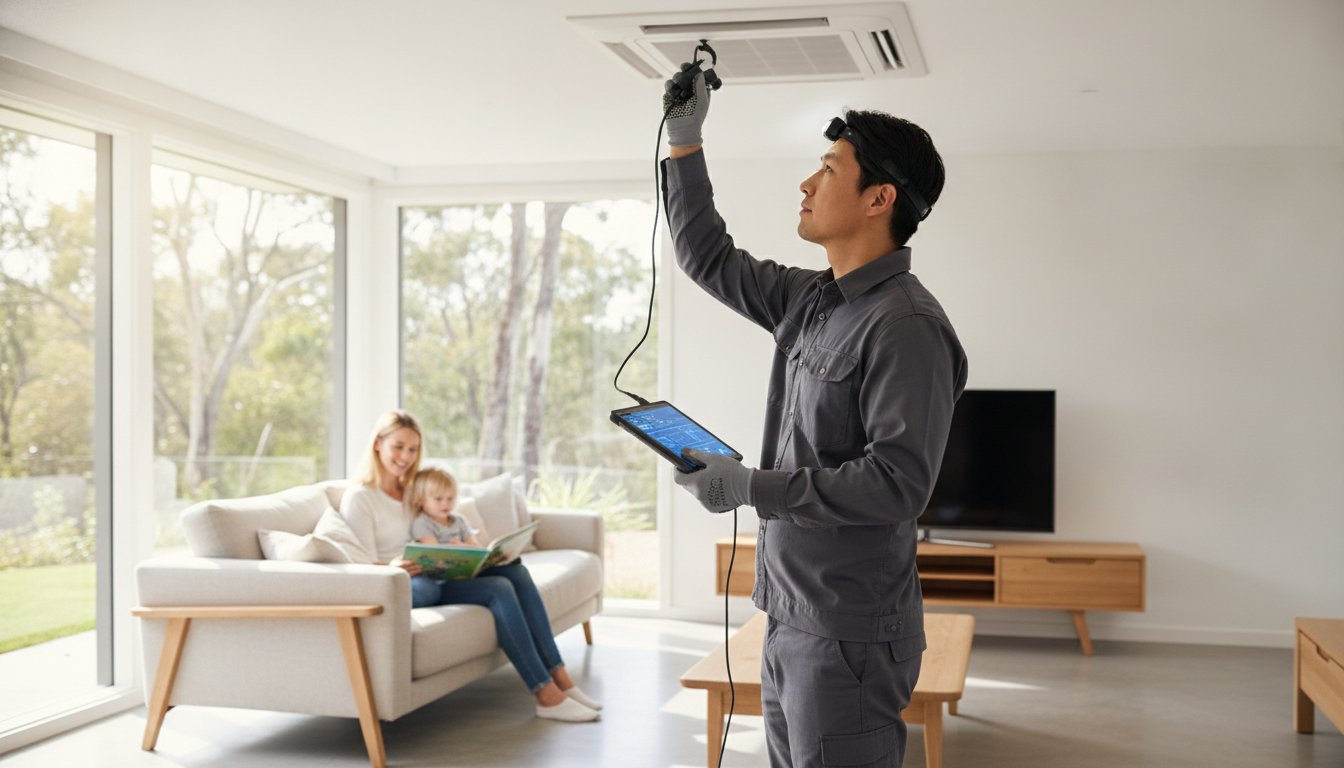
- Step 1: Comprehensive Inspection and Testing: We begin with a detailed assessment of your air con duct system, using digital media and moisture readings to map the extent of the growth.
- Step 2: Surface Removal and Biodegradable Fogging: After physically removing accessible contamination, we deploy our specialized fogging technology. This treats the air and surfaces simultaneously, ensuring total decontamination.
- Step 3: Air Purification and Scrubbing: During and after the treatment, we use industrial air scrubbers to capture any disturbed spores, preventing them from settling elsewhere in your home.
- Step 4: Post-Treatment Prevention: We provide you with a clear roadmap for moisture control to ensure the mould does not return.
Why Choose ABC Mould Cleaning Solutions Sydney?
We understand that discovering mould in your ventilation is stressful. Our team acts as your dependable problem-solver, providing emotional relief through competent authority. We focus on long-term results rather than quick fixes that only mask the odour. To give you absolute confidence in our value, we offer an aggressive Price Match Guarantee for any comparable professional remediation quote. You don’t have to choose between affordability and your family’s health. Our streamlined digital inquiry process makes it easy to start your journey toward a cleaner home. Stop living with musty smells and respiratory triggers. Book your Sydney duct inspection today and let our specialists restore your peace of mind. We’ll handle the technical details so you can get back to enjoying your home.
Secure Your Family’s Health with Professional Air Quality Solutions
Your home’s air quality depends on the integrity of your ventilation system. We have explored how a neglected air con duct can transform from a comfort delivery system into a source of biological stress. You now know how to spot the warning signs of contamination and understand why professional remediation is the only way to permanently eliminate deep-seated mould. Sydney’s humidity is relentless, but your family’s health shouldn’t be the price you pay for comfort. Professional intervention ensures that these invisible threats are removed without damaging your property or spreading spores further into your living spaces.
As Sydney’s leading mould and air quality specialists, we utilize the world-renowned Goldmorr System to restore safety to your property. Our process is 100% biodegradable and completely safe for your family and pets. Don’t let musty smells and respiratory triggers dictate your life at home. Take the first step toward clinical air purity today. Get a Free Quote for Professional Duct Remediation and reclaim your sanctuary. You deserve to breathe easy again. You can trust our expert team to deliver a professional result that lasts.
Frequently Asked Questions
How often should I have my air con duct cleaned in Sydney?
You should have your residential system inspected and cleaned every 12 to 24 months. Sydney’s high coastal humidity accelerates the accumulation of moisture and organic dust, which makes regular maintenance essential for preventing mould growth. Properties located near the ocean or those with pets may require more frequent attention to maintain optimal air quality.
Can mould in my air conditioning ducts make me sick?
Yes, contaminated ducts can trigger various respiratory issues and allergic reactions. When the system is running, it distributes microscopic spores and fungal particulates throughout every room. This often leads to symptoms like persistent coughing, watery eyes, and fatigue, which are commonly associated with “Sick Building Syndrome.”
Will cleaning the ducts remove the musty smell from my house?
Professional remediation is highly effective at eliminating the pungent “wet dog” or earthy odours caused by active mould colonies. Our specialized process targets the microbial volatile organic compounds responsible for these smells. By neutralizing the source of the growth within the air con duct, we restore a fresh and neutral scent to your living environment.
Is it better to clean or replace mouldy air con ducts?
The decision depends on the material and the extent of the contamination. Rigid sheet metal ducts can usually be cleaned and sanitized to a clinical standard. However, if your flexible polyester ducting is heavily infested or has sustained structural damage, a full replacement is often the safest and most cost-effective way to ensure long-term air purity.
How much does professional air duct cleaning cost in Sydney?
The total investment depends on the size of your home, the number of vents, and the severity of the contamination. We provide tailored quotes based on a comprehensive assessment of your specific system. Be wary of extremely low-priced offers, as these often lack the specialized HEPA filtration and technical expertise required for a safe and thorough remediation.
What is the Goldmorr System for air duct remediation?
The Goldmorr System is a proprietary methodology that utilizes biodegradable fogging agents to eliminate mould spores on contact. It is a non-invasive process that reaches deep into the air con duct network without leaving toxic chemical residues. This evidence-based approach ensures your home is safe for immediate occupancy following the treatment.
Can I clean my own air conditioner ducts?
DIY cleaning is not recommended because household vacuums lack the power and HEPA filtration needed to trap microscopic spores. Attempting to clean the system yourself often agitates the dust and spreads contaminants further into your wall cavities. You also risk puncturing delicate flexible linings, which can lead to expensive structural repairs and reduced energy efficiency.
How long does a professional duct cleaning service take?
A standard residential remediation service typically takes between 3 to 5 hours to complete. The exact timeframe depends on the accessibility of your roof space and the number of zones within your system. Our specialists work efficiently to minimize disruption while ensuring every component of your ventilation is meticulously treated and verified.