That creeping patch of mould in your bathroom or on your ceiling is more than just an eyesore-it’s a potential threat to your property and your family’s health. You’re rightly concerned about using harsh, toxic chemicals, which is why the promise of using clove oil for mould seems like the perfect natural solution. It’s affordable, accessible, and touted as a powerful mould killer. But is this popular DIY remedy the safe, permanent fix you’re hoping for, or is it just a temporary mask for a much more serious problem?
Don’t risk your health on a ‘maybe’. In this expert guide, we cut through the online noise to deliver the professional verdict. We’ll uncover the real science behind clove oil’s effectiveness, expose the hidden risks that other blogs often ignore, and explain why what you see on the surface is rarely the full story. You will gain the confidence to tackle your mould problem safely and understand why professional remediation is the only guaranteed way to make your home healthy and mould-free for good.
Why Is Clove Oil So Popular for Mould Cleaning?
If you’ve searched for a natural way to deal with a mould problem, you have almost certainly come across countless recommendations for clove oil. It’s touted on DIY blogs, forums, and social media as a powerful, natural, and effective solution. But why has this simple spice extract gained such a strong reputation? The answer lies in a combination of potent science and a growing desire for safer home cleaning solutions.
The popularity of using clove oil for mould stems from its perceived effectiveness as a cheap and accessible alternative to harsh, synthetic chemicals. For many homeowners in Australia, a small bottle from the local chemist or health food shop seems like a much safer first step than bringing powerful bleaches and fungicides into their living spaces, especially around children and pets.
The Science Behind Oil of Cloves: What is Eugenol?
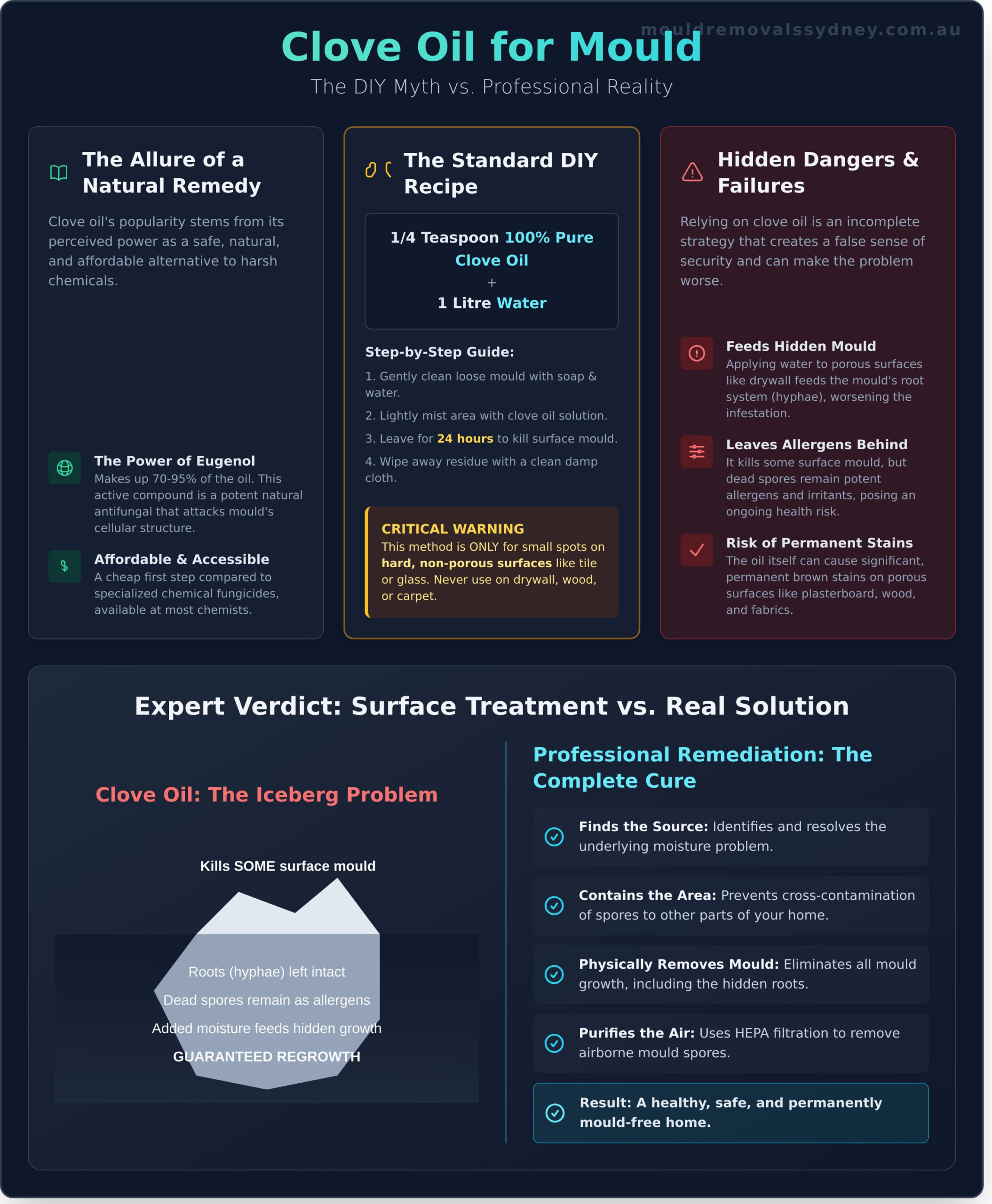
The real power of Clove essential oil comes from its primary active compound: eugenol. This component makes up 70-95% of the oil and is a formidable natural antifungal and antiseptic agent. Unlike products that simply bleach the stain, eugenol attacks the mould’s cellular structure, disrupting its cell walls and effectively killing the organism. Scientific studies have repeatedly confirmed the potent fungicidal properties of eugenol against common indoor moulds, giving credibility to its traditional use.
The Appeal of a ‘Natural’ Solution
In an era where families are increasingly conscious of indoor air quality and the health risks associated with synthetic chemicals, the appeal of a ‘natural’ remedy is undeniable. Clove oil is often positioned as a safe, non-toxic alternative to products like bleach, which can release dangerous fumes and damage surfaces. This makes it the go-to recommendation in aromatherapy and green cleaning circles, promising an effective clean without compromising your family’s health. It’s seen as the simple, reliable choice for a healthier home.
How to Use Clove Oil for Mould: The Standard DIY Recipe
If you’ve searched online for natural mould solutions, you have undoubtedly come across the popular DIY recipe for using clove oil for mould. This method is widely circulated because of the oil’s known antifungal properties. Before we explore the significant risks and limitations of this approach in the next section, it’s important to understand the standard procedure that people follow. This is the method you came here for, but it must be performed with extreme caution.
Clove Oil Mould Spray Recipe & Required Tools
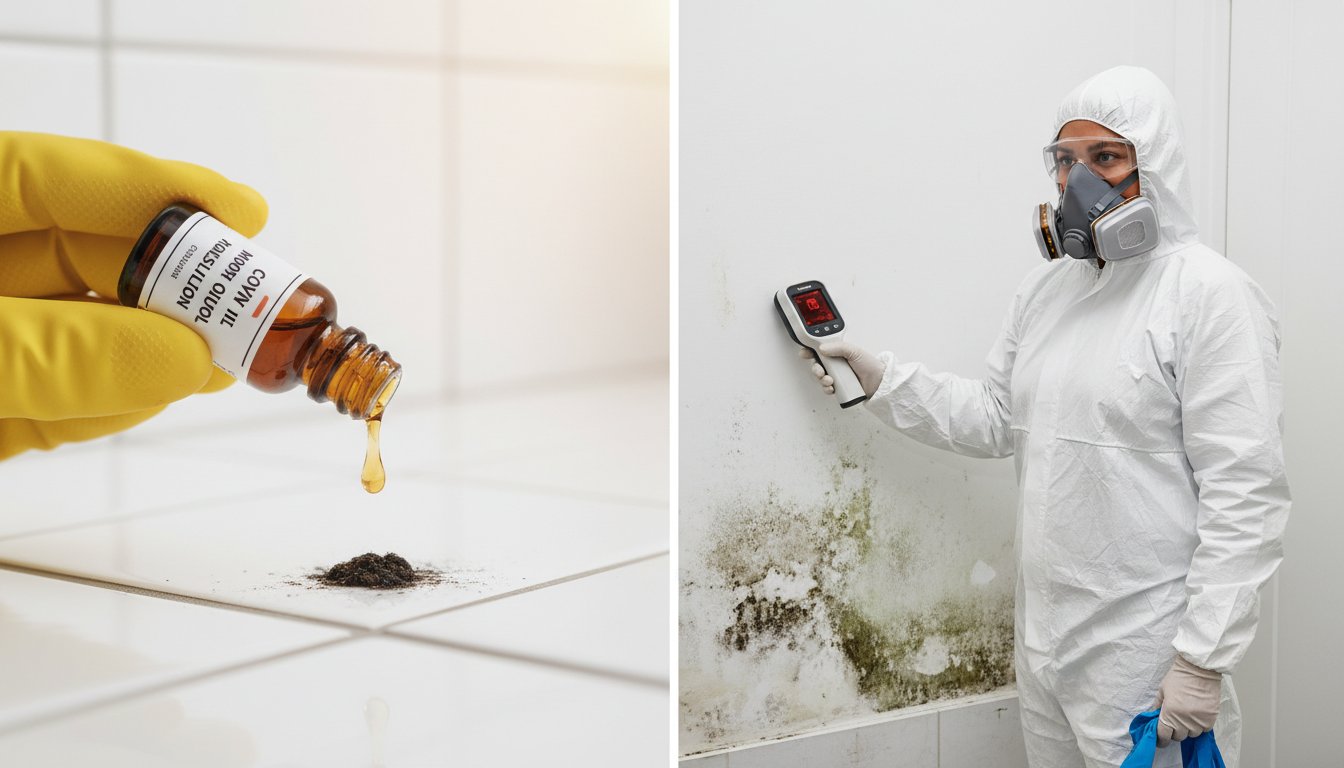
The effectiveness of this recipe hinges entirely on the quality of the oil. You must use 100% pure clove essential oil, not a diluted blend or fragrance oil, as these lack the necessary concentration of eugenol-the active antifungal compound. Scientific studies on the Antifungal Activity of Clove Essential Oil confirm its power, which is why purity is non-negotiable. To get started, you will need:
- The Recipe: 1/4 teaspoon of 100% pure clove oil per 1 litre of water.
- Tools: A clean spray bottle, two microfibre cloths, disposable gloves, and a P2 or N95 respirator mask.
Step-by-Step Application Guide for Hard Surfaces
This process is only for small, contained mould patches on hard, non-porous surfaces like tiles, grout, or glass. Do not attempt this on plasterboard or wood. Follow these steps precisely:
- Clean the Surface: Gently wipe the visible, loose mould from the surface using a cloth with soap and water. Dispose of the cloth immediately afterwards to prevent spreading spores.
- Apply the Solution: Lightly mist the affected area with your clove oil and water solution. Do not oversaturate the surface.
- Wait and Let It Work: Leave the solution on the surface for at least 24 hours. This allows the clove oil time to penetrate and kill the mould fungi.
- Wipe Clean: After 24 hours, use a clean, damp microfibre cloth to wipe away the mould residue.
Crucial Safety Precautions Before You Start
Mould spores and concentrated essential oils are both serious irritants. Your health and safety are paramount. Do not skip these critical steps, as failure to do so can expose you to health risks or cause damage to your property.
- Surface Limitation: Never use this solution on porous or semi-porous surfaces like drywall, untreated wood, carpet, or fabrics. The added moisture will worsen the problem by feeding the mould roots deep inside the material.
- Personal Protective Equipment (PPE): Always wear gloves and a P2-rated mask. Clove oil can cause skin irritation, and inhaling airborne mould spores during cleaning is a significant health hazard.
- Area Safety: Ensure the area is well-ventilated. Keep children and pets away from the room during the 24-hour treatment period and until the surface is completely dry.
The Expert Verdict: Why Clove Oil Is NOT a Complete Mould Solution
While the internet is full of guides on using natural remedies, the professional consensus is clear: relying solely on clove oil for mould is a dangerously incomplete strategy. It may seem like a quick fix, but it fails to address the core components of effective mould remediation, leaving your property and your health at risk. Furthermore, the oil itself can cause significant and often permanent staining on porous surfaces like plasterboard, wood, and fabrics.
True mould removal is a multi-step process. Simply killing the surface growth is not enough. Here’s why this popular DIY method falls short.
Limitation 1: It’s a Surface Treatment, Not a Cure
Think of mould like a weed. What you see on the wall is just the top; the real problem lies in its roots (known as hyphae) that grow deep into porous materials. Clove oil only kills the mould it directly touches on the surface, leaving these invasive roots completely intact. This guarantees that the mould will grow back, often more aggressively, as soon as conditions are right.
Limitation 2: It Doesn’t Remove the Mould or Its Spores
This is the most critical failure of the clove oil method. Killing mould and removing mould are two very different things. Dead mould spores are still potent allergens and irritants that can trigger asthma, respiratory issues, and other health problems. The expert verdict on clove oil from building biologists confirms that professional remediation standards require the physical removal of mould, not just killing it. A simple spray leaves this hazardous debris behind and does nothing to contain the millions of airborne spores released during the process.
Limitation 3: It Fails to Address the Moisture Source
Mould is never the root problem-it is a symptom of a bigger issue: excess moisture. A hidden pipe leak, poor bathroom ventilation, or condensation are the true culprits. Using clove oil is like painting over rust without fixing the water damage. Without identifying and rectifying the moisture source, you create a cycle of endless cleaning and regrowth. Professional mould remediation always begins with moisture detection to provide a permanent solution, not a temporary band-aid.
The Dangers and Risks of Using Clove Oil at Home
While online forums may suggest clove oil as a “natural” mould killer, these recommendations often overlook the serious health and property risks involved. The truth is, attempting to use clove oil for mould can introduce new dangers into your home, far outweighing its limited benefits. Before you reach for that bottle, it’s crucial to understand the potential harm to your family, pets, and property.
Don’t wait until you’re facing property damage or health complications. The risks associated with DIY methods are real and can worsen your situation.
Health Risks for Humans and Children
Clove oil’s active ingredient, eugenol, is a potent skin and respiratory irritant. In its concentrated form, direct contact can cause chemical burns, painful rashes, and dermatitis. When sprayed into the air, its strong fumes can trigger breathing difficulties and coughing fits, especially for children, the elderly, or individuals with asthma and other respiratory sensitivities. Proper ventilation is not just a suggestion-it’s a critical safety measure to avoid inhaling these harmful compounds.
High Toxicity Warning for Pets
For households with pets, clove oil is a non-negotiable hazard. It is highly toxic to both cats and dogs, with cats being particularly vulnerable due to their inability to metabolise essential oils effectively. Ingestion or even significant inhalation can lead to severe liver damage, tremors, and other life-threatening conditions. The lingering scent alone can be harmful, making it an unsafe choice for any pet owner. Your pet’s safety must come first.
Risk of Permanent Staining and Damage
Beyond the serious health concerns, clove oil is an oil-and it stains. Applying it directly to surfaces can result in permanent, greasy marks that are difficult, if not impossible, to remove. This is a significant risk for a wide range of common household materials.
- Painted Walls & Ceilings: The oil can seep into the paint, causing lasting discolouration and dark, oily patches.
- Fabrics & Carpets: It will leave greasy stains on upholstery, curtains, and carpets that professional cleaning may not fix.
- Porous Surfaces: Materials like unsealed grout, natural stone, and concrete can absorb the oil, leading to deep, permanent stains.
- Varnished Wood: The oil can damage or strip the finish from wooden furniture and floors.
When you weigh the potential for skin irritation, harm to your pets, and permanent property damage, the case against DIY mould treatment is clear. For a guaranteed safe and effective solution, it’s always best to rely on professional mould remediation services.
When to Call a Professional Mould Removalist
While home remedies can seem like a quick fix, there’s a critical point where DIY solutions become ineffective and even dangerous. Using clove oil for mould might seem to work on a small, non-porous surface, but it cannot address the root cause or the hidden dangers of a significant infestation. Don’t wait until the problem worsens, because it will. Understanding when to step back and call a certified Mould Removalist is crucial for protecting your property and your family’s health.
Signs Your Mould Problem is Too Big for DIY
DIY methods are simply out of their depth when mould becomes widespread. If you notice any of the following signs, it’s time to seek professional help immediately:
- The mould patch is larger than a dinner plate. Widespread visible mould is a clear indicator of a much larger underlying issue that requires containment and professional remediation.
- You can smell a musty odour but can’t see the mould. This often means mould is growing behind walls, under floors, or in your ceiling cavity, where it can cause serious structural damage unseen.
- Mould is on porous surfaces. Materials like plasterboard, carpet, insulation, and wood absorb mould spores deep within. A surface spray cannot reach or remove the embedded hyphae (roots).
- A household member is immunocompromised or has respiratory issues. For individuals with asthma, allergies, or weakened immune systems, exposure to elevated mould spores can pose a serious health risk.
The Professional Difference: The Goldmorr System
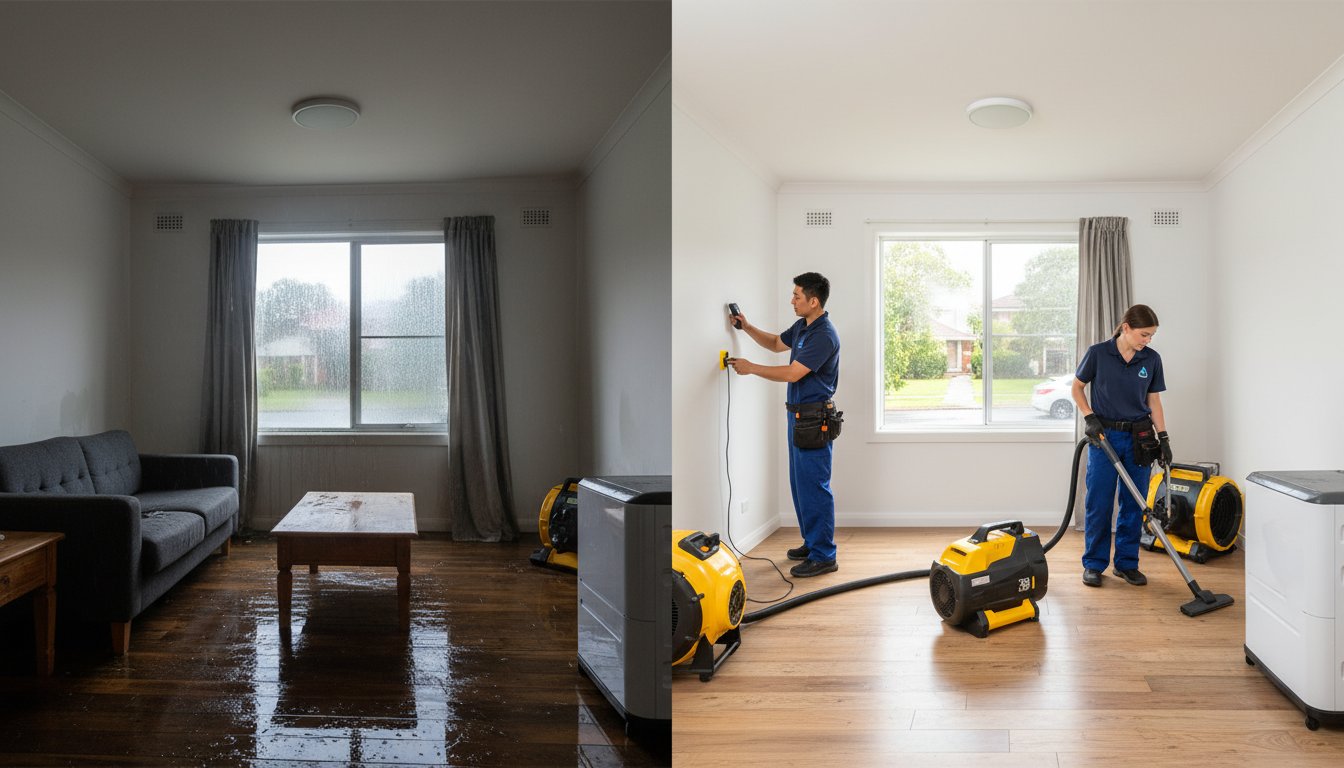
A professional Mould Removalist does more than just clean the visible stain. Our certified technicians use the industry-leading Goldmorr System to provide a comprehensive and lasting solution. We start by identifying and addressing the moisture source-the root cause of the problem. Then, we physically remove the contaminated materials, ensuring the mould is gone for good, not just temporarily bleached.
The most critical step that DIY methods miss is eliminating airborne contaminants. After physical removal, we use advanced, non-mechanical air scrubbing technology to capture and remove microscopic airborne spores. This purifies your indoor air quality and prevents the mould from spreading to other areas of your home. This process provides true peace of mind that your home is safe, healthy, and mould-free. Don’t just kill mould, remove it. Get a professional quote today.
The Final Verdict: Leave Mould Removal to the Professionals
While the internet is full of praise for using clove oil for mould, our expert verdict is clear: it is not a complete or reliable solution. At best, clove oil can temporarily clean small patches of surface mould, but it fails to penetrate porous materials or eliminate the hidden network of roots. More importantly, it does nothing to address the airborne spores or the underlying moisture issue causing the growth, meaning the problem is guaranteed to return, often worse than before.
Don’t risk your family’s health and your property’s integrity on an ineffective home remedy. A professional approach is the only way to ensure complete eradication and prevent future outbreaks. As approved Goldmorr System Technicians, we provide safe, biodegradable, and highly effective solutions that target mould at its source. We don’t just clean what you can see; we remediate your entire indoor environment for lasting peace of mind.
Stop guessing with DIY remedies. We will beat any written quote by 10%. Schedule a professional mould inspection today! Take the first step towards a healthier, mould-free home.
Frequently Asked Questions About Clove Oil for Mould
Does clove oil actually kill mould spores?
Yes, clove oil can kill mould spores on hard, non-porous surfaces. Its active ingredient, eugenol, has powerful antifungal properties that can destroy the mould it directly contacts. However, it’s a surface-level treatment. For mould that has penetrated porous materials like plasterboard or wood, the oil may not reach the underlying root structure (hyphae), meaning the mould can easily grow back. It’s a temporary fix, not a complete remediation solution.
Is clove oil better than vinegar or bleach for cleaning mould?
Clove oil is generally more effective than both. Unlike bleach, which only whitens the stain and can feed the mould with its water content, clove oil actively kills spores. While vinegar has some mild antifungal properties, it is less potent than clove oil. For small, surface-level mould issues, clove oil is the superior DIY option. However, none of these household remedies can match the effectiveness of a professional mould remediation for an established infestation.
How long does it take for clove oil to work on mould?
For the best results, you should allow the clove oil solution to sit on the affected surface for an extended period. After applying a diluted mixture (around a quarter teaspoon of oil per litre of water), leave it on the mould for at least 24 hours without rinsing. This gives the eugenol time to penetrate and kill the spores. After 24 hours, you can wipe the area clean. Be aware that this will not remove the stain left behind.
Can I use clove oil to get rid of mould on my bathroom ceiling?
You can use a clove oil solution to treat small, superficial spots of mould on a painted bathroom ceiling. However, mould on a ceiling is often a symptom of a larger, more serious issue, such as a roof leak, plumbing problem, or inadequate ventilation. While the oil might temporarily kill the surface mould, it will return quickly if the underlying moisture source isn’t professionally identified and repaired. Don’t let the problem worsen.
What does the science say about using oil of cloves for mould?
Scientific studies confirm that eugenol, the main component in oil of cloves, possesses strong antifungal capabilities. Research shows it can effectively inhibit the growth of various common household moulds by disrupting their cellular structure. While this is proven in lab settings, it’s important to remember that a home environment is more complex. The effectiveness of using clove oil for mould can be limited by surface porosity, the size of the infestation, and ambient humidity.
Is it safe to diffuse clove oil to prevent mould?
Diffusing clove oil is not a safe or effective strategy for mould prevention. While it may neutralise some airborne spores, it does nothing to address the source of the mould growth on surfaces. Furthermore, concentrated clove oil can be a potent irritant, posing health risks to children, pets, and individuals with respiratory conditions like asthma when diffused in an enclosed space. True mould prevention relies on controlling moisture, not masking the problem with scents.