The Bottom Line: How Much Does Rising Damp Treatment Cost in Sydney?
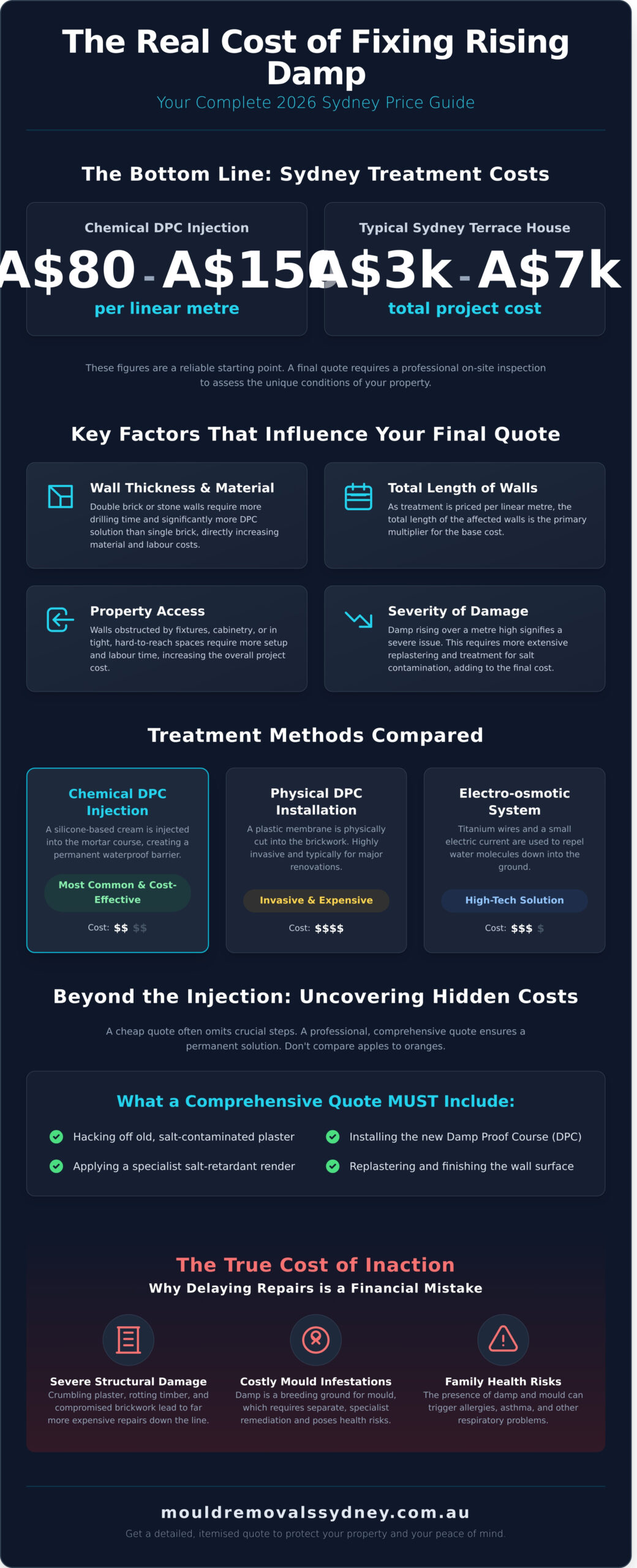
Let’s get straight to the point. In Sydney, professional rising damp treatment typically costs between A$80 and A$150 per linear metre for a standard chemical damp proof course (DPC) injection. For a typical wall on a Sydney terrace house, this means the total project cost often falls between A$3,000 and A$7,000.
It is vital to understand that these figures are a reliable guide, not a fixed price. Rising damp is a complex structural issue that requires expert diagnosis. For a detailed technical overview, you can review Wikipedia’s guide on Understanding Rising Damp. A truly accurate quote is impossible without a professional on-site inspection to assess the full extent of the problem and any secondary damage.
Cost Breakdown by Treatment Method
The final cost of fixing rising damp is heavily influenced by the specific method required to create an effective, long-term barrier against moisture. The main options include:
- Chemical Damp Proof Course (DPC) Injection: This is the most common and cost-effective solution for existing properties. A specialist drills holes into the mortar course and injects a silicone-based cream, which penetrates the masonry to form a new, permanent waterproof barrier.
- Physical DPC Installation: A more invasive and expensive method. It involves physically cutting into the brickwork to insert a plastic membrane. This is typically reserved for major renovations or new construction projects where structural work is already underway.
- Electro-osmotic Systems: A technology-driven approach where titanium wires and a small, safe electric current are used to repel water molecules down into the ground. While effective, the initial installation costs can be higher than chemical injection.
Why Quotes Can Vary So Much
Homeowners are often confused by the wide range of quotes they receive. The reason is simple: you must compare what is actually included in the service. A cheap quote may only cover the DPC injection itself, leaving you with significant follow-up work.
A comprehensive, professional quote will cover the full remediation process required for a lasting solution. This ensures that salt-contaminated materials are removed and the wall is finished correctly. Always ensure your quote clearly itemises critical steps such as:
- Hacking off old, salt-contaminated plaster.
- Installing the new DPC system.
- Applying a salt-retardant render.
- Replastering and finishing the wall surface.
Always insist on a detailed, itemised quote. This is the only way to compare services on a like-for-like basis and understand the true, long-term cost to protect your property from structural damage.
Key Factors That Influence the Final Cost of Fixing Rising Damp
There is no one-size-fits-all price for rising damp treatment because every property is unique. The single biggest driver is the extent and severity of the problem. A minor issue in an accessible wall will cost significantly less than widespread damp throughout a heritage property. Use this checklist to understand the variables our expert technicians assess to provide you with an accurate, fixed-price quote.
Property and Wall Characteristics
The physical nature of your home’s structure plays a major role in the labour and material calculations.
- Wall Thickness and Material: Double brick or stone walls require more drilling time and a greater volume of injectable damp proof course (DPC) solution compared to single brick walls, directly impacting costs.
- Total Length of Walls: Treatment is typically priced per linear metre. The more walls that require a new DPC, the higher the total investment will be.
- Accessibility: Are the affected walls easy to reach? Areas obstructed by permanent fixtures, cabinetry, or tight spaces will require more labour time to treat effectively.
- Age and Construction Style: Older Sydney properties, especially heritage homes, often have unique construction methods that demand a more specialised and careful approach, which can influence the overall project time.
Severity and Type of Damage
The obvious visual signs are just the beginning. The true cost of fixing rising damp is heavily influenced by the secondary damage it has caused.
- Height of the Damp: If damp has wicked more than a metre up the wall, it indicates a severe, long-standing issue that will require more intensive treatment and extensive replastering.
- Salt and Mould Contamination: Rising damp deposits hygroscopic salts (efflorescence) in the plaster and brickwork. These salts must be properly treated, as they can ruin new finishes. A professional diagnosis of salt damp is critical. Any associated mould growth must also be professionally remediated.
- Damage to Timbers and Plaster: The quote must account for the removal and replacement of rotted skirting boards, decaying floor joists, and crumbling or contaminated plaster. This “make good” phase is essential for a lasting solution.
Labour and Location
- Specialist Labour Costs: Effective rising damp treatment is a specialised skill. Your quote includes the cost of having certified, experienced technicians perform the work correctly in the Sydney metropolitan area.
- Multiple Trades: The damp-proofing process is step one. Restoring the wall requires a plasterer and painter. While these are often separate costs, we can help coordinate these trades for a seamless project.
- Company Guarantees: Reputable companies back their work with a long-term, meaningful guarantee. This peace of mind is a valuable part of the investment. Be wary of unusually cheap quotes that may lack a proper warranty.
Beyond the Injection: Uncovering the Hidden Costs of Damp Repair
When you receive a quote for rising damp treatment, it often only covers the installation of a new damp proof course (DPC). However, this injection is just the first step in a multi-stage process. Understanding the full scope of work is crucial for accurately budgeting the total cost of fixing rising damp and ensuring the problem is solved permanently.
Ignoring these follow-up steps will lead to the damp problem reappearing, wasting your initial investment. Here’s what a complete, professional repair truly involves.
Replastering and Rendering
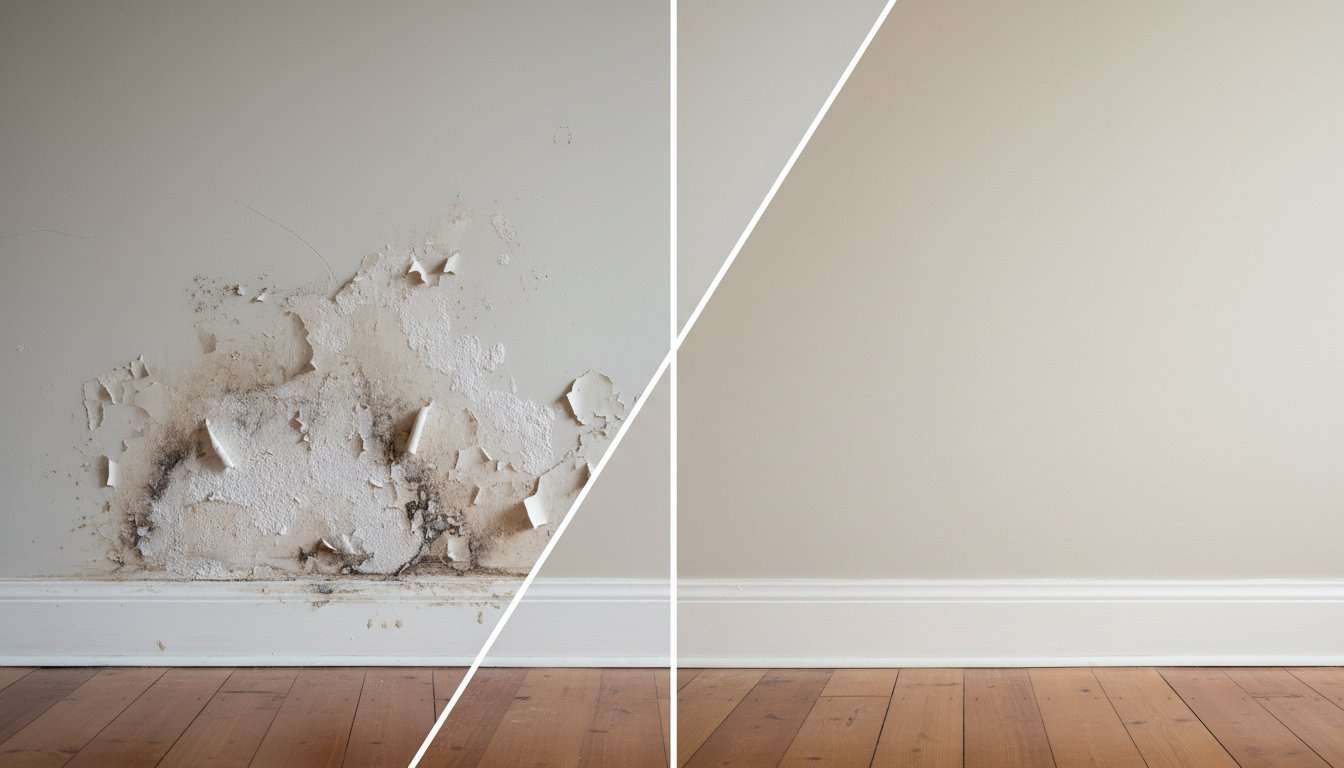
Rising damp carries ground salts into your walls. Even after the source of moisture is blocked by a new DPC, these salts remain embedded in the plaster. These “hygroscopic” salts will continue to draw moisture from the air, causing persistent damp patches, peeling paint, and deterioration. Because of this, simply painting over the wall is not an option.
The salt-contaminated plaster must be hacked off, typically to a height of at least one metre, and replaced with a specialised system. This involves using specific salt-retardant renders that prevent any residual salts from reaching the new surface, a critical step that aligns with Australian building standards for durable construction. In Sydney, you should budget approximately A$50 – A$90 per square metre for this specialist replastering work.
Redecorating and Finishing
Once the new plaster has been applied, it needs time to fully dry and cure, a process that can take several weeks. Only then can the final redecorating begin. These finishing costs are a significant part of the project and include:
- Repainting: The cost of primer and paint for the newly plastered areas.
- Replacing Fixtures: Re-installing skirting boards, architraves, and electrical outlets that were removed.
- Flooring: In some cases, flooring near the affected walls may need repair or replacement.
Addressing the Root Cause
A truly effective repair addresses why the rising damp occurred in the first place. A professional assessment will identify and recommend solutions for contributing factors to prevent a recurrence. This is a vital part of managing the long-term cost of fixing rising damp. Common issues include:
Fixing external problems like poor drainage, leaking pipes, or garden beds built up against the brickwork. Most importantly, it often involves improving inadequate subfloor ventilation to allow moisture under your home to escape. Poor ventilation is a major cause of damp. Ask about our subfloor ventilation systems.
The True Cost of Inaction: Why Delaying Repairs is a Financial Mistake
Thinking about the cost of fixing rising damp can be daunting, but viewing it as an investment is crucial. Delaying treatment is not a saving; it’s an invitation for escalating expenses that will dwarf the initial repair cost. A damp patch on your wall is a warning sign of a much larger, more expensive problem brewing beneath the surface. The longer you wait, the more severe and costly the consequences become.
Compounding Structural Damage
Rising damp is relentless. The constant moisture actively attacks your property’s core structure. It leaches salts from the ground, causing plaster to bubble and paint to peel. More seriously, it turns mortar to dust and causes brickwork to crumble, compromising the structural integrity of your walls. Timber elements like floor joists, skirting boards, and structural beams are also at risk, leading to wood rot that requires expensive replacement.
Health Risks and Mould Remediation Costs
Persistent moisture creates the ideal breeding ground for toxic mould. Rising damp provides a constant water source, allowing mould to flourish behind walls and under floors, releasing harmful spores into your air. This can trigger serious health issues, including respiratory infections, asthma attacks, and allergic reactions. Dealing with the damp is only half the battle; you will also face the separate, significant cost of professional mould remediation to make your home safe again.
Decreased Property Value
In the Australian property market, rising damp is a major red flag for potential buyers and building inspectors. Evidence of untreated damp can drastically reduce your home’s market value, often by tens of thousands of dollars, and can even cause a sale to fall through entirely. The potential loss in property value almost always far outweighs the upfront cost of fixing rising damp, making professional treatment a financially sound decision to protect your most valuable asset.
Getting an Accurate Rising Damp Treatment Quote in Sydney
Understanding the potential expenses is the first step, but taking decisive action is what protects your property. To get a clear and reliable picture of the cost of fixing rising damp, you need to engage with a professional. A detailed quote is not just a price-it’s a comprehensive plan to restore the health and integrity of your home. Here’s how to confidently navigate the process and find a trusted Sydney specialist.
What to Look for in a Damp Proofing Specialist
The quality of the workmanship is just as important as the price. A cheap fix that fails in a few years is no fix at all. Before committing, ensure your chosen specialist meets these essential criteria:
- Licensing and Insurance: Verify they are fully licensed to carry out remedial building work in NSW and hold current public liability insurance. This protects you and your property.
- Long-Term Guarantees: Reputable companies stand by their work. Look for a minimum 20-year guarantee on their damp proof course (DPC) installation.
- Local Experience: Ask for references or a portfolio of completed projects on Sydney properties similar to yours. Local expertise is invaluable for understanding specific building types and environmental factors.
Questions to Ask Before You Hire
Arm yourself with the right questions to ensure there are no hidden surprises. A professional will welcome your diligence and provide clear answers. Be sure to ask:
- What specific treatment method are you recommending for my property, and why is it the best option?
- Does your quote include the removal of old plaster and the cost of replastering with salt-retardant render?
- What is the estimated timeline for the project, including the necessary drying-out period?
- Can you provide a detailed breakdown of what your guarantee covers and for how long?
Your Next Step to a Damp-Free Home
Don’t wait for the problem to worsen. Delaying treatment will only lead to more extensive damage and a higher final cost of fixing rising damp. A professional assessment is the only way to get a correct diagnosis and a permanent solution.
To make the process easier, take clear photos of the affected walls, including any visible salt deposits, peeling paint, or damp patches. This will help our technicians provide a fast and accurate initial estimate.
Worried about rising damp? Take control of the situation today. Send us your photos for a fast, free quote. It’s that simple.
Your Next Step to a Damp-Free Sydney Home
Navigating the cost of fixing rising damp in Sydney is the first step toward protecting your investment. As we’ve explored, while the final price depends on factors like the extent of the damage and property size, the true cost lies in inaction. Delaying repairs inevitably leads to more extensive structural issues and potential health risks from mould, making a prompt response the most financially sound decision you can make.
Don’t leave your property’s health to chance. As Sydney’s trusted damp and mould remediation experts, we deliver solutions that last. We are specialists in subfloor ventilation to address the root cause of moisture and provide long-term guarantees on all our rising damp treatments for your complete peace of mind. Get a clear, accurate, and obligation-free assessment from our team and take control of your property’s future.
Stop damp and mould for good. Get your free, no-obligation quote today!
Frequently Asked Questions About Rising Damp
Is fixing rising damp covered by home insurance in Australia?
Unfortunately, standard home and contents insurance policies in Australia almost never cover rising damp. Insurers classify it as a building defect or a gradual deterioration issue, which falls under property maintenance-the owner’s responsibility. It is not considered a sudden, insurable event like a flood or fire. Always check your specific policy’s Product Disclosure Statement (PDS), but be prepared for this cost to be an out-of-pocket expense for the homeowner.
How long does rising damp treatment last?
A professionally installed rising damp treatment is a permanent solution. When expert technicians install a modern chemical damp-proof course (DPC), it is designed to last for the lifetime of the building. Reputable companies will back their work with long-term guarantees, often for 20 years or more. This provides complete peace of mind that the issue is resolved permanently, protecting your property’s value and structural integrity from any future damage from rising damp.
Can I just use a dehumidifier to fix rising damp?
No. Using a dehumidifier only masks the symptoms and does not fix the root cause. While it will remove some moisture from the air, it does absolutely nothing to stop groundwater from being drawn up into your walls. The underlying damp will continue to cause salt damage, structural decay, and mould growth. A professional damp-proof course is the only effective, permanent remediation method to eliminate rising damp and protect your property long-term.
What’s the difference between rising damp and other types of damp?
Rising damp is specifically groundwater moving up through the porous masonry of walls via capillary action. Its key signs are a ‘tide mark’ on the wall up to 1.5 metres high and visible salt deposits. In contrast, penetrating damp comes from external sources like leaking gutters or failed waterproofing, often appearing as isolated damp patches. Condensation is caused by excess moisture inside the home settling on cold surfaces, typically leading to surface mould.
Can I sell a house with rising damp in NSW?
Yes, you can legally sell a property with rising damp in NSW, but you have a legal obligation to disclose the issue to potential buyers as a known material defect. A pre-purchase building inspection will almost certainly uncover the problem, which can deter buyers or result in low offers. Addressing the damp professionally before listing is the most effective way to protect your property’s value and ensure a smooth, transparent sale process.
How can I tell if a quote for rising damp repair is fair?
To determine a fair cost of fixing rising damp, always get at least two to three detailed written quotes from certified specialists. A professional quote will clearly itemise all work, including the specific treatment method, the linear metres being treated, and costs for any replastering. Verify the company’s credentials, insurance, and guarantees. Be wary of quotes that seem too low, as they may use inferior products or cut corners. Remember, we will beat any written quote by 10%.