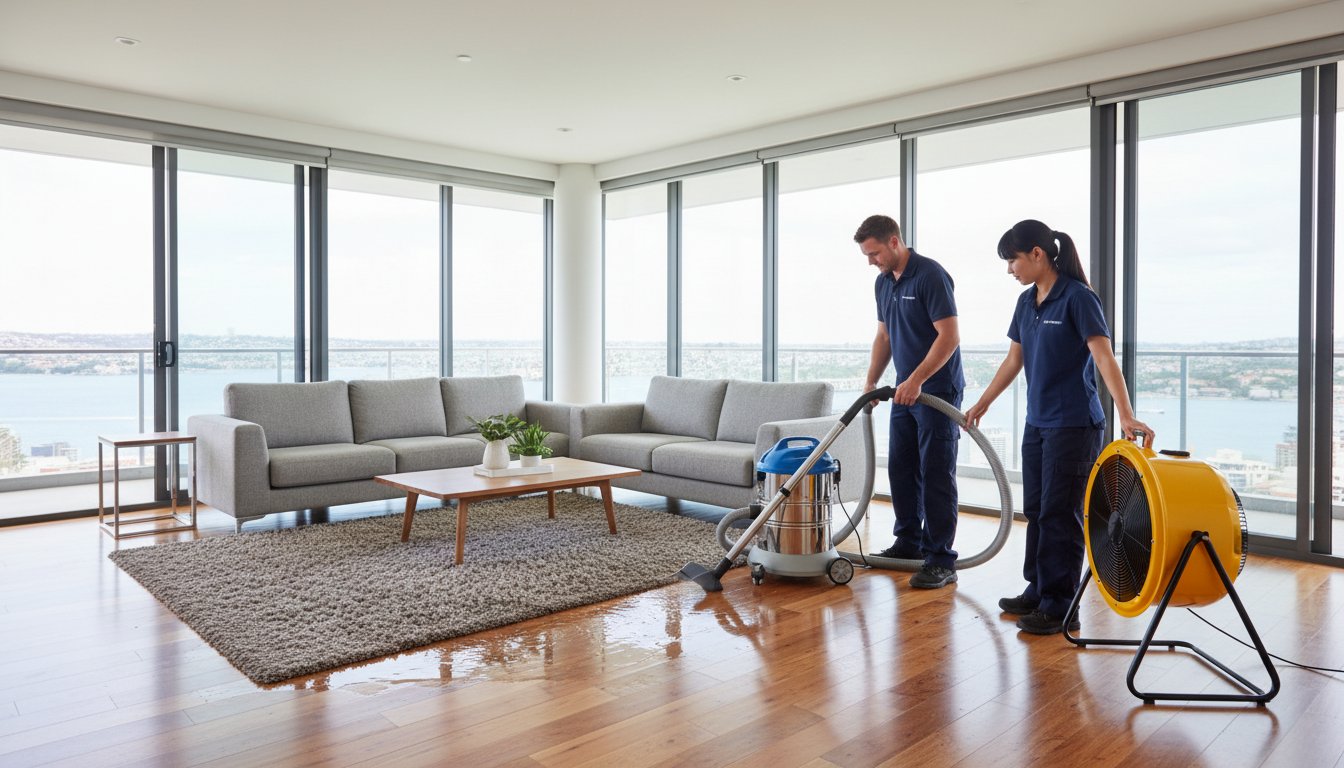
The sound of rushing water. The sight of soaked carpets and warping floorboards. When a water disaster strikes your Sydney property, panic is the first response. But panic doesn’t solve the problem-fast, decisive action does. Knowing the correct steps for an emergency water damage cleanup can mean the difference between a manageable issue and a catastrophic, expensive nightmare. Don’t wait until the problem worsens-because it will.
Feeling overwhelmed and unsure who to trust is normal. That’s why ABC Mould Cleaning Solutions has created this essential 24/7 action plan. In this guide, you will discover the critical first steps to take immediately to stop the damage in its tracks. We’ll show you how our certified, rapid-response team expertly takes control, drying your property to prevent the long-term threat of structural issues and dangerous mould growth, getting your home or business back to normal as quickly as possible.
Key Takeaways
- Know the first 5 critical steps to take the moment you discover a water leak to minimise immediate harm and secure your property.
- Understand the water damage timeline-mould can begin to grow in just 24-48 hours, making a rapid, professional response essential.
- Learn what a professional emergency water damage cleanup involves, from initial assessment and water extraction to structural drying and sanitisation.
- Discover the key questions you must ask any restoration company to ensure you hire a certified and reliable Sydney expert in a crisis.
Water Damage Emergency? 5 Steps to Take Immediately
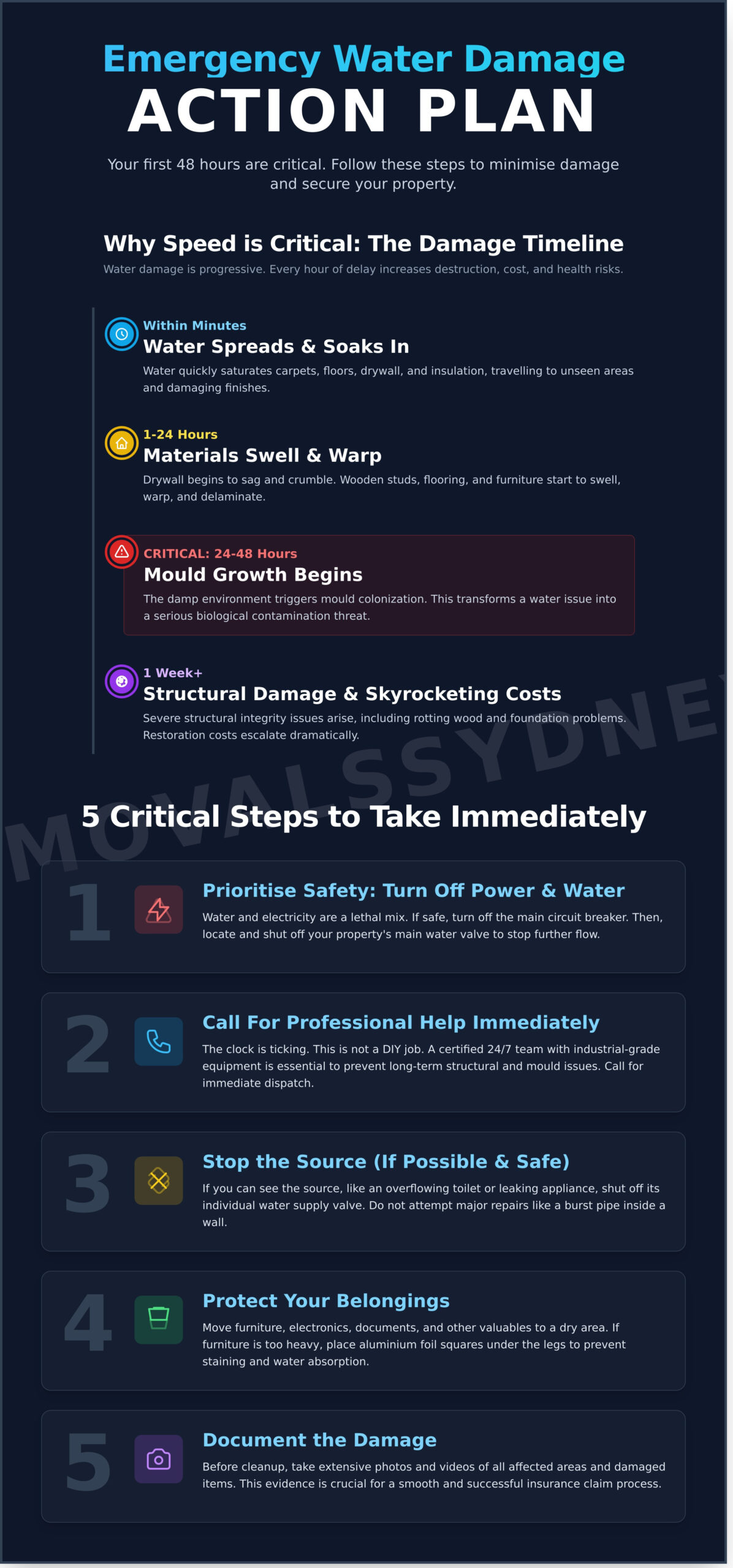
Discovering water damage in your home or business is a stressful, overwhelming experience. While understanding what is water damage is one thing, acting fast is another. Your immediate actions can significantly reduce the long-term impact and costs. This guide provides clear, essential steps to take right now to protect your property and safety while you wait for our professional team to arrive.
1. Prioritise Safety: Turn Off Power and Water
Your absolute first priority is safety. Water and electricity are a lethal combination. If you can safely access your switchboard, turn off the main circuit breaker to cut power to the affected area. Do not use any electrical appliances or fixtures. Next, locate your property’s main water valve-often found near the water meter or where the main water line enters your home-and shut it off completely to prevent more water from entering.
2. Call for Professional Help Immediately
The clock starts ticking the moment water damage occurs. Mould can begin to grow within 24-48 hours, and structural materials can quickly degrade. This is not a DIY situation. You need a certified team with industrial-grade equipment to handle a proper emergency water damage cleanup. Don’t wait for the problem to worsen-because it will. Call our 24/7 emergency team now for immediate dispatch.
3. Stop the Source (If Possible)
If it is safe and obvious, try to contain the source. For a leaking appliance or overflowing toilet, you can often shut off the individual supply valve located behind or beneath it. However, do not attempt major repairs or tackle a significant issue like a burst pipe inside a wall. Your goal is simply to stop the immediate flow of water until our experts take over.
4. Protect Your Belongings
Mitigate further damage by moving valuable and sensitive items out of the affected area. Remove furniture, rugs, electronics, documents, and photos to a dry, safe location. If furniture is too heavy to move, place small blocks or aluminium foil squares under the legs to prevent the finish from bleeding into carpets and to protect the furniture itself from absorbing more water.
5. Document the Damage
Before any cleanup begins, thoroughly document the situation for your insurance claim. Use your smartphone to take extensive photos and videos of the standing water, the source of the leak (if visible), and all affected areas and damaged items. Make a note of the date and time you discovered the damage. This evidence is crucial for ensuring a smooth and successful insurance process.
Why Speed is Critical: The Hidden Dangers of Water Damage
When your property is flooded, the visible mess is only the beginning. Water damage is a progressive problem where every hour of delay dramatically increases the scope of destruction, the cost of repairs, and the risk to your health. Thinking you can “wait and see” or handle it with a few towels and a fan is a critical mistake. A professional emergency water damage cleanup is not a luxury; it’s an urgent necessity to protect your investment and well-being.
Structural Integrity at Risk
Modern building materials act like a sponge. Water quickly soaks into plasterboard, wood framing, insulation, and subfloors. Within hours, these materials begin to swell, warp, and lose their structural strength. Drywall can sag and crumble, wooden studs can start to rot, and floorboards can buckle. Left unaddressed, this can lead to catastrophic failures like a ceiling collapse or compromised foundations, turning a manageable issue into a major structural rebuild.
The 24-48 Hour Mould Timeline
This is the most critical deadline you face. Mould spores are naturally present in every property, simply waiting for one key ingredient: moisture. In the damp, humid environment created by water damage, mould can begin to colonise and grow in as little as 24-48 hours. This rapid growth is one of the primary hidden dangers of water damage, transforming a water issue into a serious biological contamination that can trigger allergies and respiratory problems. Once established, mould requires specialised, professional remediation to safely remove.
Electrical Hazards and Contamination
Water and electricity are a lethal combination. Moisture seeping into wall cavities can contact wiring, creating a serious risk of electrical shorts, shock, or fire that remains hidden long after the surface seems dry. Furthermore, not all water is clean. Water from a burst pipe is different from a sewage backup or floodwaters, which are considered ‘black water’. This water is teeming with bacteria and pathogens, and attempting a DIY cleanup exposes you to significant health risks. Our certified technicians use professional-grade sanitation agents and safety protocols to ensure your home is not just dry, but hygienically safe.
Our Emergency Water Damage Cleanup Process Explained
When our technicians arrive, you can expect a calm, professional, and methodical response. We demystify the process by following a proven, multi-step system designed to mitigate damage, prevent secondary issues like mould, and restore your property efficiently. Understanding our approach helps you know what to expect and gives you peace of mind that every critical detail is being handled by certified experts. This is the difference a professional emergency water damage cleanup service makes.
Step 1: Rapid Assessment and Inspection
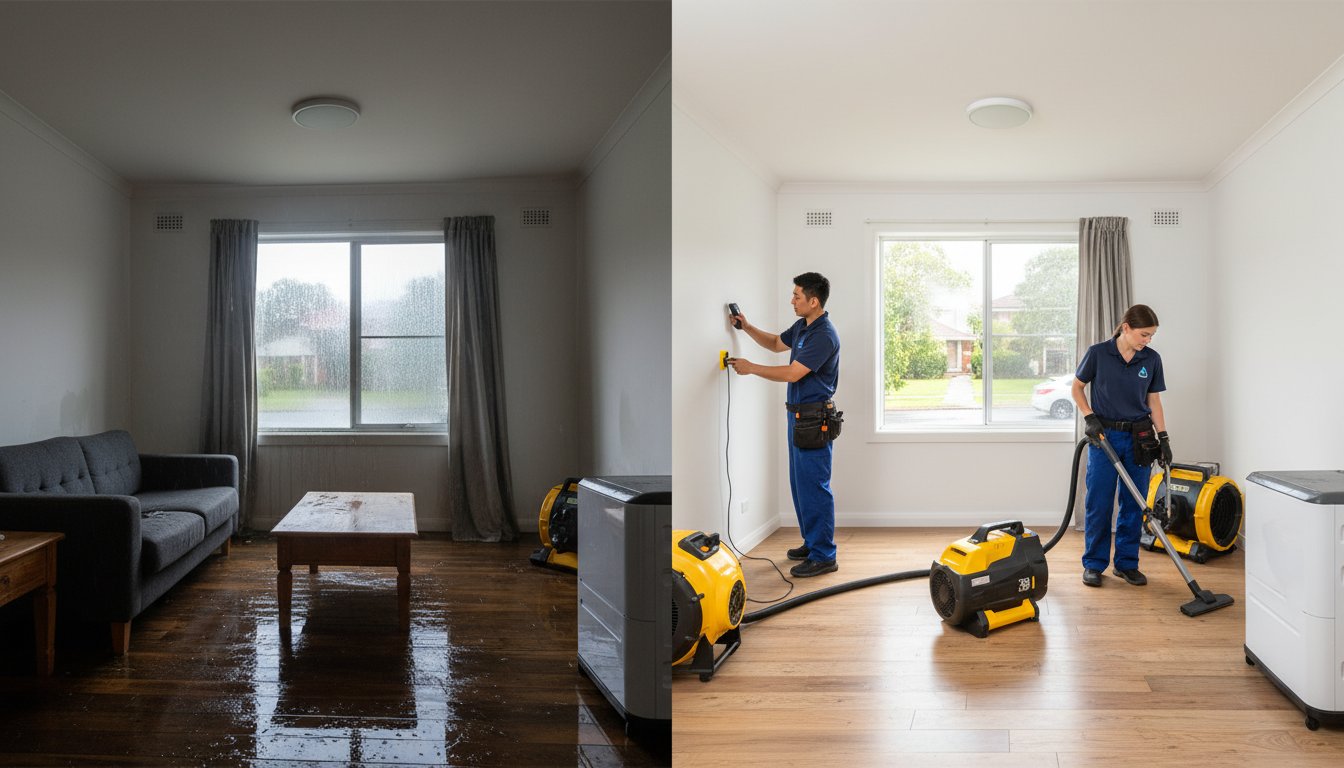
Our first action is to conduct a thorough inspection. We use advanced tools like thermal imaging cameras and moisture meters to find all hidden water pockets, not just the visible flooding. We then classify the water source into one of three categories (Clean, Grey, or Black Water) to determine the required safety protocols and cleaning methods. This step is vital, as contaminated “black water” poses serious health risks due to the dangers of floodwater, which can contain bacteria and viruses.
Step 2: High-Volume Water Extraction
Once the area is assessed and secured, we begin immediate water removal. Using powerful, truck-mounted and portable extraction units, we remove the bulk of the standing water far faster than any DIY or commercial equipment can. This rapid extraction is key to minimising absorption into structural materials. During this phase, we also remove non-salvageable items like soaked carpet underlay, which act like a sponge and prevent effective drying.
Step 3: Structural Drying & Dehumidification
After extraction, we focus on removing the moisture you can’t see. We strategically place high-velocity air movers to accelerate evaporation from carpets, walls, and flooring. This airborne moisture is then captured by industrial-grade LGR (Low-Grain Refrigerant) dehumidifiers. Our technicians constantly monitor temperature, humidity, and moisture content to ensure your property meets scientific drying standards and is returned to a safe, stable condition.
Step 4: Cleaning, Sanitising, and Mould Prevention
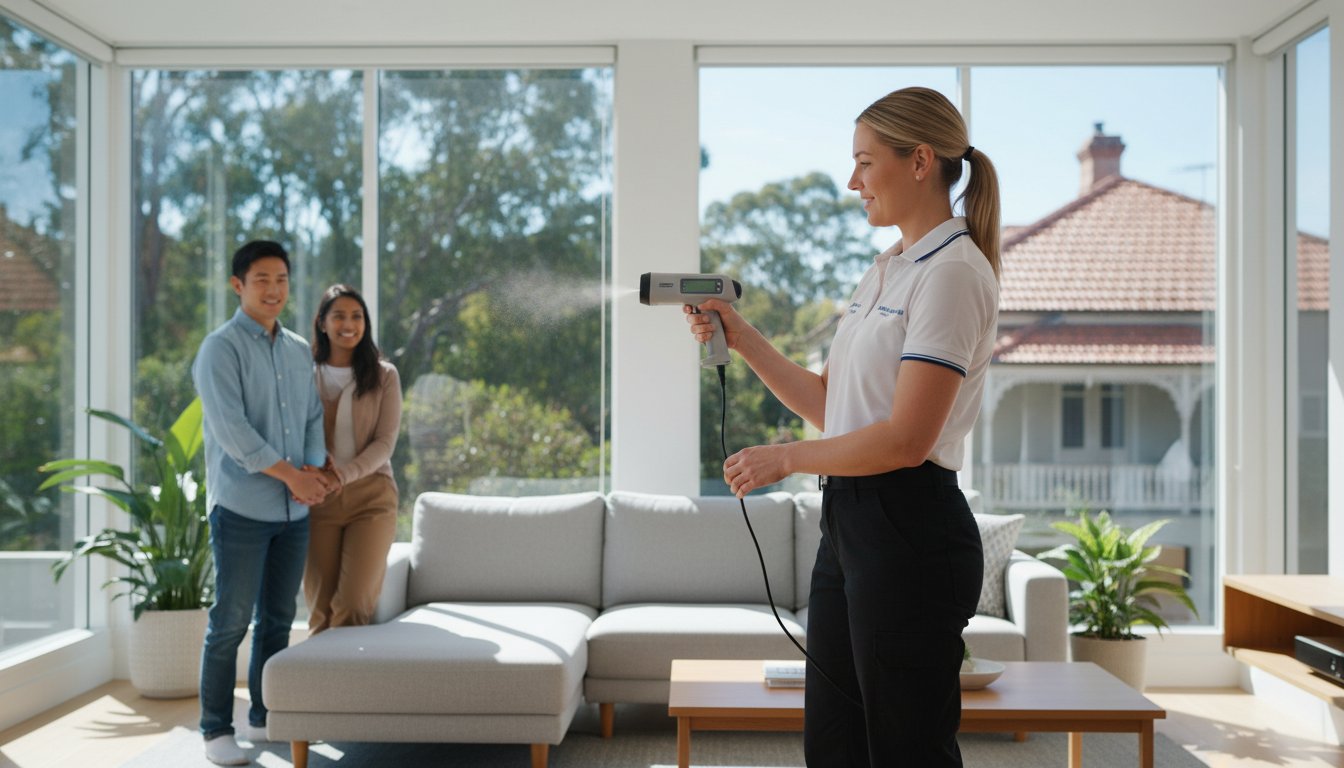
The final step is to clean and restore the affected area. All salvageable materials are thoroughly cleaned and sanitised to remove contaminants and odours. We then apply a professional-grade antimicrobial treatment to inhibit the growth of mould and mildew. This crucial final step leverages our core expertise in professional mould remediation, ensuring your property is not just dry, but also safe and healthy for its occupants.
Choosing Your Sydney Emergency Response Team: 5 Key Questions to Ask
When your Sydney property is flooding, every second counts. In the rush to get help, it’s easy to make a panicked decision. But hiring the wrong company can lead to secondary damage, denied insurance claims, and recurring problems. Before you hire any team for emergency water damage cleanup, take a moment to ask these five critical questions to ensure you’re choosing certified, reliable professionals.
1. Are you IICRC Certified?
The Institute of Inspection, Cleaning and Restoration Certification (IICRC) is the global gold standard for the restoration industry. It means technicians are trained in the latest, most effective techniques for water removal and property drying. Don’t settle for less. Our master technicians are fully IICRC certified, ensuring every step we take follows proven, industry-leading protocols to restore your property correctly the first time.
2. What is your genuine 24/7 response time?
Many companies claim to be “24/7” but route your desperate call to an answering service, leaving you waiting for a callback while damage spreads. A true emergency service means an immediate response. When you call us, you speak directly to an expert who can dispatch a team immediately across the greater Sydney area. We don’t wait. Test us. Call now and speak directly to an expert.
3. Can you handle the entire job, including mould?
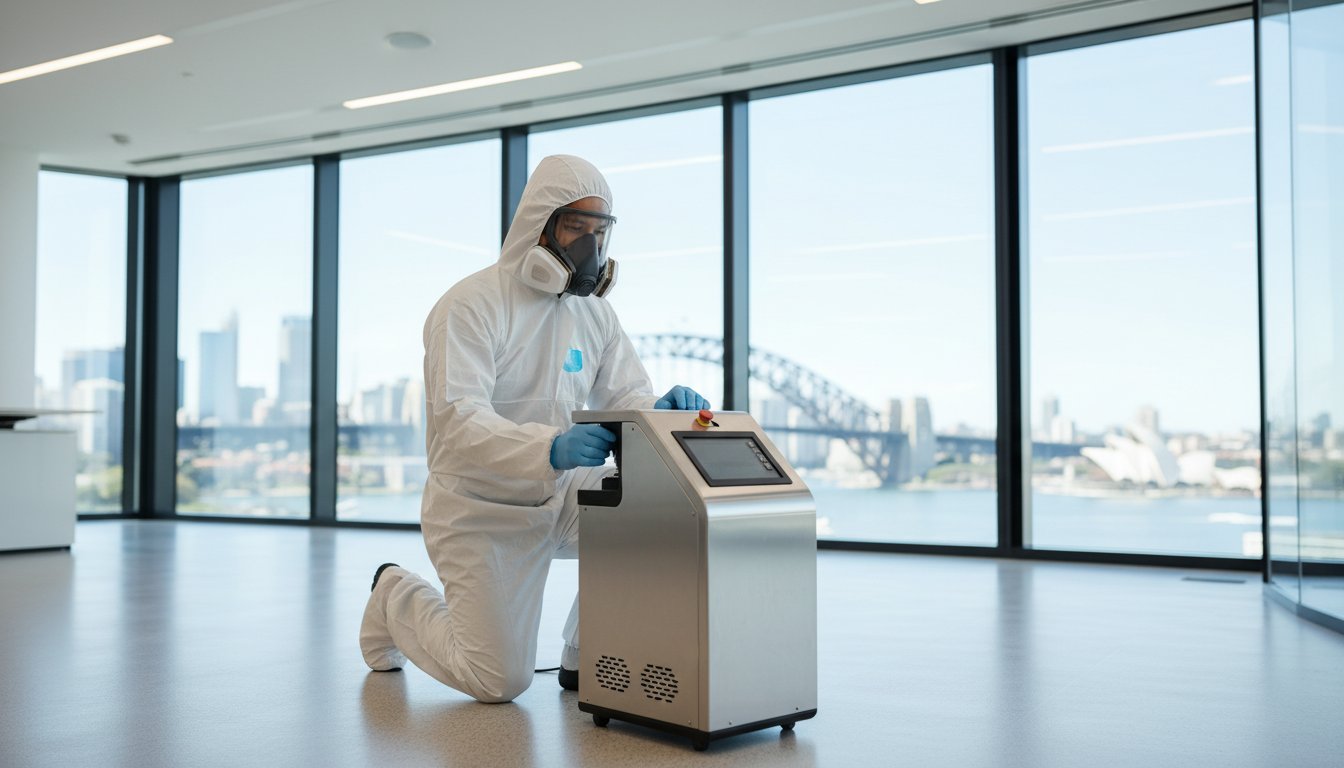
Water damage that isn’t dried professionally can lead to a serious mould infestation in as little as 24-48 hours. Hiring one company for water extraction and another for mould remediation is inefficient and costly. We provide a seamless, integrated solution. Our team not only handles the complete water removal and drying process but also uses the industry-leading Goldmorr System to prevent mould growth and remediate any existing contamination.
4. Can you assist with insurance claims?
Navigating an insurance claim is the last thing you need to worry about during a crisis. A professional restoration company should make this process easier, not harder. We have extensive experience working with all major Australian insurance companies. We provide the detailed documentation, moisture mapping, and photographic evidence required to support your claim, helping to ensure a smooth and successful process.
5. Are your treatments and processes safe for my family?
The goal of any emergency water damage cleanup is to make your home safe again, and that includes the air you breathe. You must ask about the chemicals and processes being used. We prioritise the health of your family and pets by using safe, effective, and environmentally friendly treatments. Our processes are designed to restore your property’s health without introducing harsh or toxic chemicals into your living space.
Your Trusted Partner in Sydney Water Damage Recovery
When a water disaster strikes, remember two critical facts: speed is everything, and you don’t have to face it alone. Hesitation allows moisture to penetrate deeper, risking structural damage and creating the ideal environment for hazardous mould growth within 24-48 hours. While your immediate actions are vital, a complete and safe restoration requires professional intervention. Choosing the right team for your emergency water damage cleanup is the most important decision you’ll make.
Our IICRC Certified Technicians provide a guaranteed 24/7 rapid response across Sydney. As dedicated specialists in water damage and mould prevention, we have the expertise to not only dry your property but to protect your health and investment for the long term. Don’t let a water crisis escalate into a costly, lingering problem.
Facing a water emergency? Don’t wait for mould to grow. Call our 24/7 Sydney experts now! Take back control and let our team restore your property and your peace of mind.
Frequently Asked Questions
How much does emergency water damage cleanup cost in Sydney?
The cost for emergency water damage cleanup varies based on the extent of damage, the water category (clean, grey, or black), and the size of the affected area. Minor jobs may start from A$500, while extensive flooding requiring structural drying and repairs can range from A$5,000 to A$10,000 or more. For a precise, obligation-free quote, send us images of the damage. We guarantee to beat any written quote by 10%, ensuring you receive expert service at the most affordable price.
Can I clean up minor water damage myself?
While you can mop up a small, clean water spill, we strongly advise against DIY cleanup for anything more. Water quickly seeps into subfloors, wall cavities, and insulation, creating a hidden breeding ground for mould. Our certified technicians use moisture meters and specialised drying equipment to find and eliminate all hidden moisture, preventing long-term structural damage and serious health risks. Don’t wait until the problem worsens-because it will.
Will my homeowner’s insurance cover water damage?
Most Australian home insurance policies cover sudden and accidental “escape of liquid,” such as from a burst pipe or faulty appliance. However, damage from gradual leaks, poor maintenance, or overland flooding is often excluded unless you have specific flood cover. It is crucial to check your policy’s Product Disclosure Statement (PDS) and contact your insurer immediately. Our team can provide all necessary documentation to support your claim and simplify the process for you.
How long does the entire water damage restoration process take?
The timeline depends entirely on the severity of the damage. Water extraction is rapid and usually completed within hours. The critical structural drying phase, using industrial-grade dehumidifiers and air movers, typically takes 3 to 5 days. Any final repairs or restoration work can then range from a few days to several weeks for major reconstruction. Our master technicians work efficiently to restore your property and peace of mind as quickly as possible.
What is that musty smell after a water leak, and is it dangerous?
That musty, earthy smell is a definitive sign of mould and mildew growth, which can begin within just 24-48 hours of water exposure. This is not just an unpleasant odour; it is a serious health hazard. Mould releases airborne spores that can trigger allergies, asthma, and other respiratory illnesses. Immediate professional mould remediation is essential to eliminate the source and ensure the air in your home is safe to breathe again.
Do I need to move out of my house during the cleanup?
This depends on the scale of the job and the type of water involved. For minor damage, you can often remain in unaffected areas of your home. However, if the damage is extensive, involves contaminated “black water,” or the noise from our high-powered drying equipment is disruptive, temporary relocation may be necessary for your safety and comfort. Our lead technician will assess the situation upon arrival and provide a clear, professional recommendation.