The water is gone, but the real danger has just begun. Within 48 hours, hidden moisture inside your walls and under your floors can trigger irreversible structural rot and the growth of hazardous black mould. It’s a silent threat that can compromise your family’s health and the integrity of your property long after the floodwaters recede.
We know the anxiety you’re feeling is immense. The confusion about what to do next, the fear of unseen damage, and the stress of dealing with insurance can be overwhelming. This guide is your clear, actionable plan. We promise to show you exactly how to execute a professional flood damage cleanup and restoration, transforming your waterlogged property back into a dry, safe, and healthy home.
You’ll learn the critical first steps to take, the advanced techniques experts use to prevent secondary mould growth, and how to document everything correctly for a successful insurance claim. Let’s get your recovery started the right way.
Key Takeaways
- Discover why the first 48 hours after a flood are a critical ‘point of no return’ for preventing permanent mould growth.
- Learn the essential safety steps you must take immediately-like managing electricity-to protect your property while waiting for experts.
- Understand the hidden structural risks and long-term costs of attempting DIY drying versus using professional-grade equipment.
- See how our expert flood damage cleanup and restoration process uses advanced technology to find and eliminate hidden moisture before it causes rot.
The Critical 24-48 Hour Window for Flood Damage Cleanup and Restoration
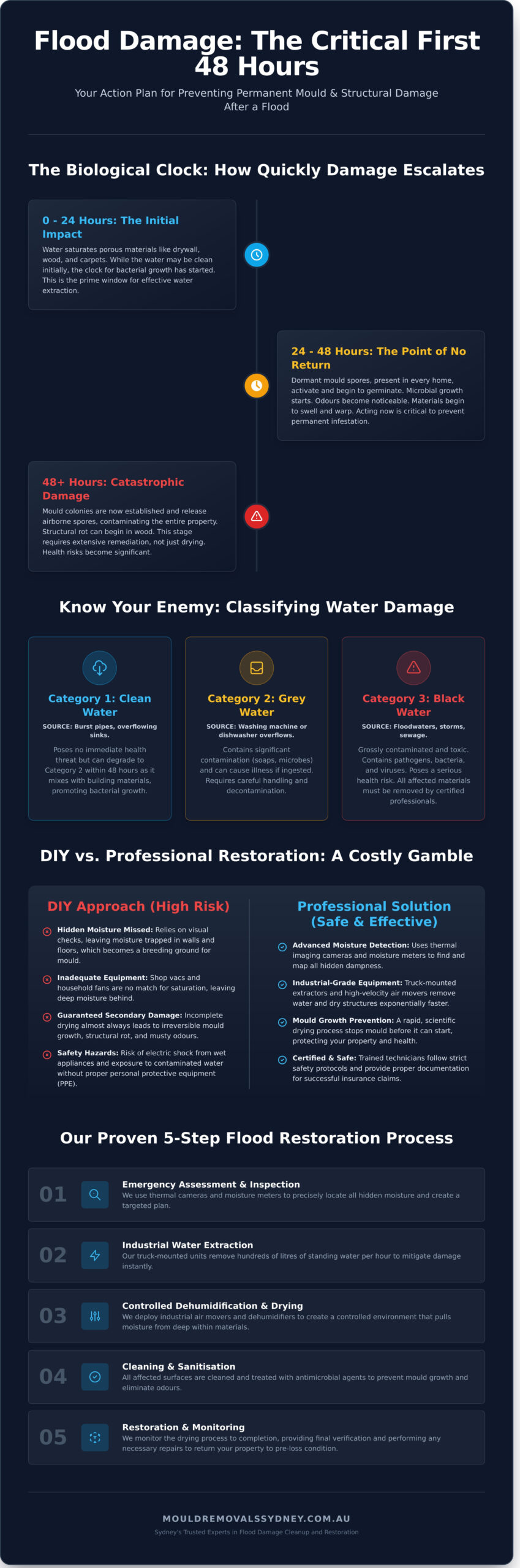
After a flood, your property is on a clock. Every hour that passes allows water to cause more irreversible damage. The first 24 to 48 hours are not just important; they are the critical window where effective intervention can prevent catastrophic secondary damage, particularly from mould. This is why professional flood damage cleanup and restoration is not just about removing water. Flood restoration is the professional mitigation of water ingress and microbial threats. It’s a multi-stage, scientific process of extraction, decontamination, and drying designed to return your property to a safe, pre-loss condition.
Ignoring this window means you are not just dealing with water damage; you are inviting a permanent biological problem into your home. Acting fast is the single most effective way to minimise costs and protect the health of your family and the structural integrity of your property.
The Biological Clock: When Mould Becomes Permanent
Dormant mould spores are a natural part of our environment, present in virtually every Sydney home. They are harmless until they get wet. When floodwater soaks into porous building materials like plasterboard, timber framing, and carpets, it activates these spores. Within just 24 to 48 hours, they can germinate and establish colonies, releasing airborne spores that contaminate your entire property. The high humidity alone, even in areas untouched by direct water, can ruin electronics, warp wooden furniture, and cause fabrics to develop a permanent musty odour. A surface might look or feel dry, but moisture can remain trapped within wall cavities and under floors for weeks. This is why “looking dry” is not the same as being structurally dry; our certified technicians use specialised moisture meters and thermal imaging to find and eliminate every last pocket of dampness.
Classifying Your Water Damage: From Category 1 to 3
Not all water damage is created equal. The source of the water determines its contamination level and the specific safety protocols required for cleanup. The industry classifies water damage into three distinct categories, a system that helps professionals assess the risk and apply the correct remediation strategy. These categories, detailed in resources like Wikipedia’s guide to water damage, dictate the entire approach to a safe and effective restoration project.
- Category 1: Clean Water. This is water from a sanitary source, like a burst internal pipe or an overflowing sink. While it poses no immediate health threat, it’s not harmless. If left for more than 48 hours, it can degrade into Category 2 as it mixes with building materials and encourages bacterial growth.
- Category 2: Grey Water. This water contains significant contamination and can cause illness if ingested. Common sources include overflows from washing machines or dishwashers. It contains chemical and biological contaminants like soaps, detergents, and microbes.
- Category 3: Black Water. This is the most dangerous category and is grossly contaminated. Black water includes all floodwater from rivers or storms, sewage backflows, and any water that has come into contact with the ground. It contains a toxic brew of pathogens, bacteria, and viruses, posing a serious health risk. All materials touched by black water require professional removal and decontamination.
Understanding the type of water you’re dealing with is the first step in a successful flood damage cleanup and restoration plan. For any Category 3 event, a DIY approach is not just ineffective; it’s hazardous. You must call a certified professional immediately.
Our Professional 5-Step Flood Restoration Process
When your property is underwater, you need a fast, effective, and proven system. A slow or incomplete response will lead to secondary damage like structural rot and dangerous mould growth. Our master technicians follow a meticulous 5-step process for flood damage cleanup and restoration that addresses both visible water and hidden moisture, ensuring your property is returned to a safe, dry, and healthy state. We don’t just clean up; we restore your peace of mind.
Here’s exactly how we tackle flood damage from start to finish:
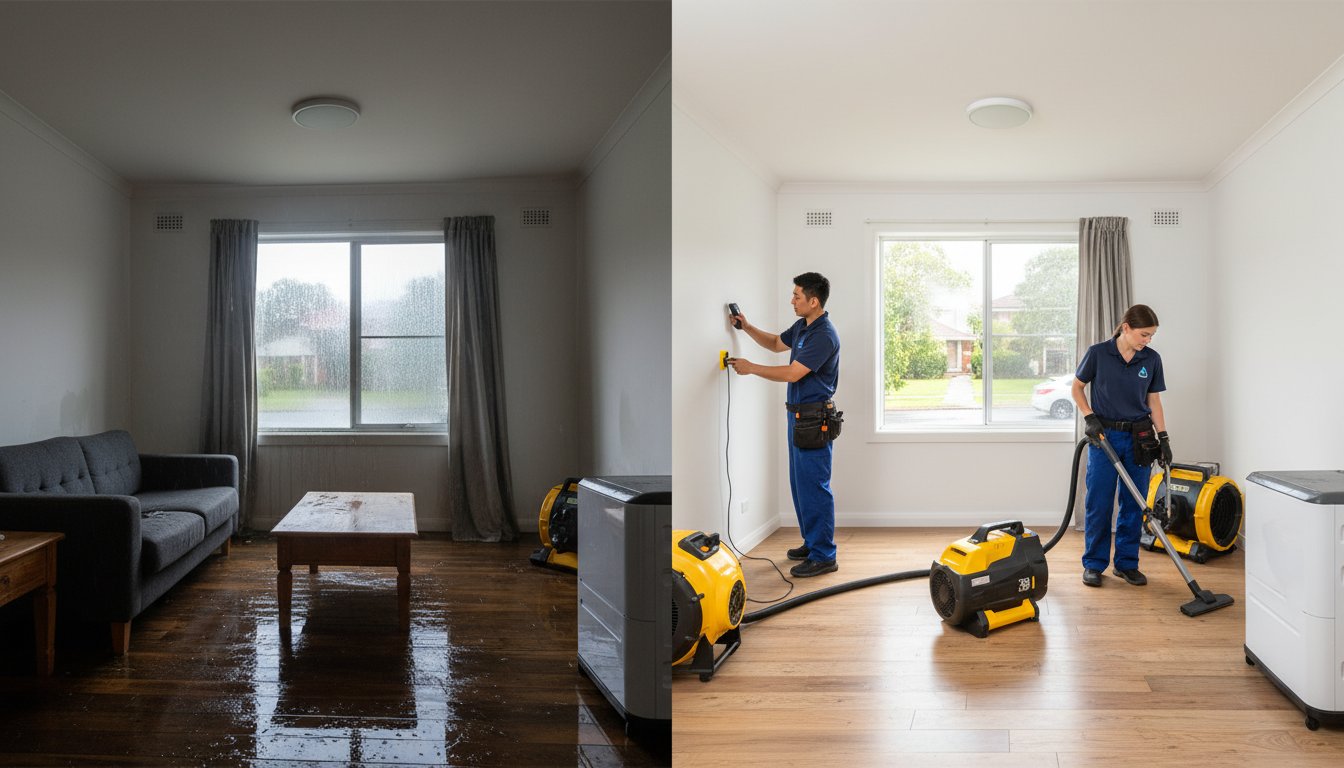
- Emergency Assessment & Inspection: Our first step is a rapid, comprehensive damage assessment. We don’t guess. Using thermal imaging cameras, we can see moisture hidden behind walls and under floors. Digital moisture meters give us precise saturation readings for materials like drywall, timber frames, and carpeting, allowing us to create a targeted drying plan.
- Industrial Water Extraction: Standing water is the immediate threat. Our truck-mounted extraction units remove hundreds of litres of water per hour, far beyond what any shop vac or pump can handle. While you focus on personal safety by following the official NSW flood clean-up advice, our team immediately begins the heavy work of removing the bulk of the water to prevent further absorption into your property’s structure.
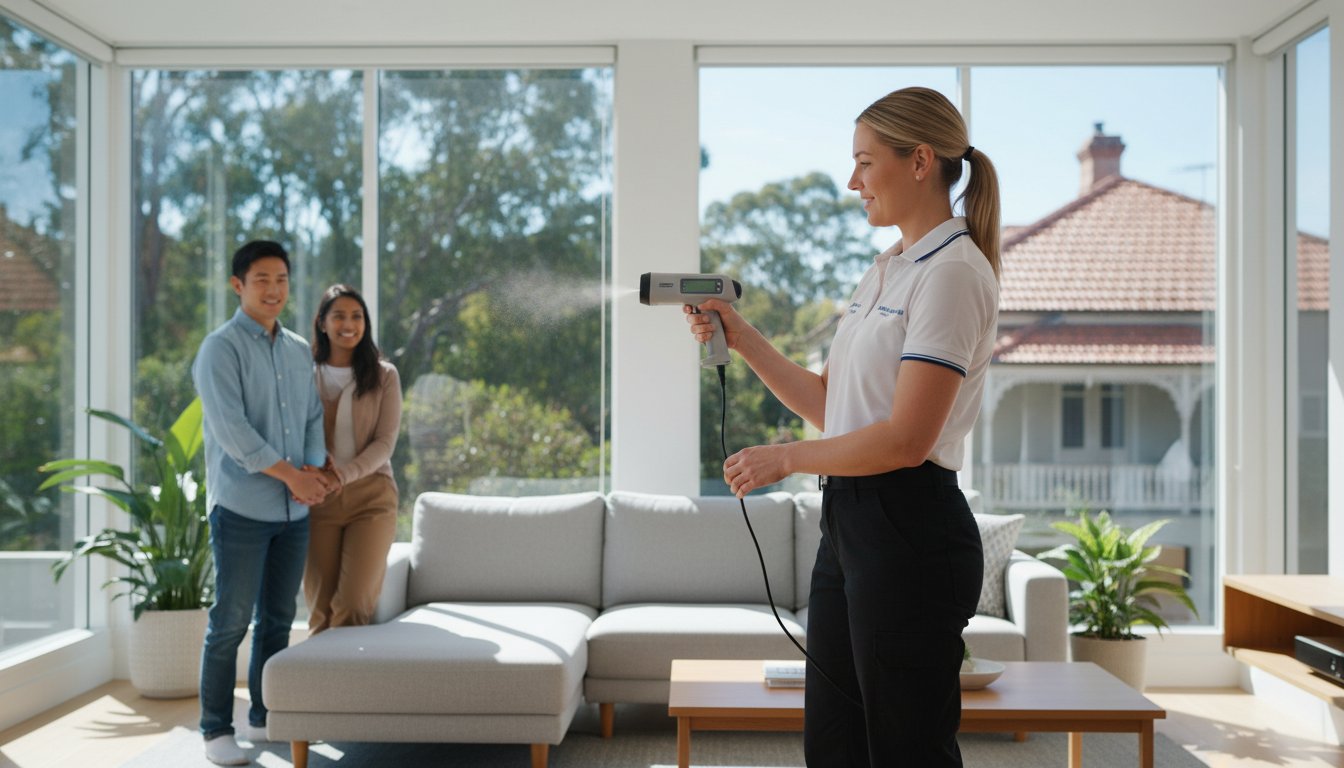
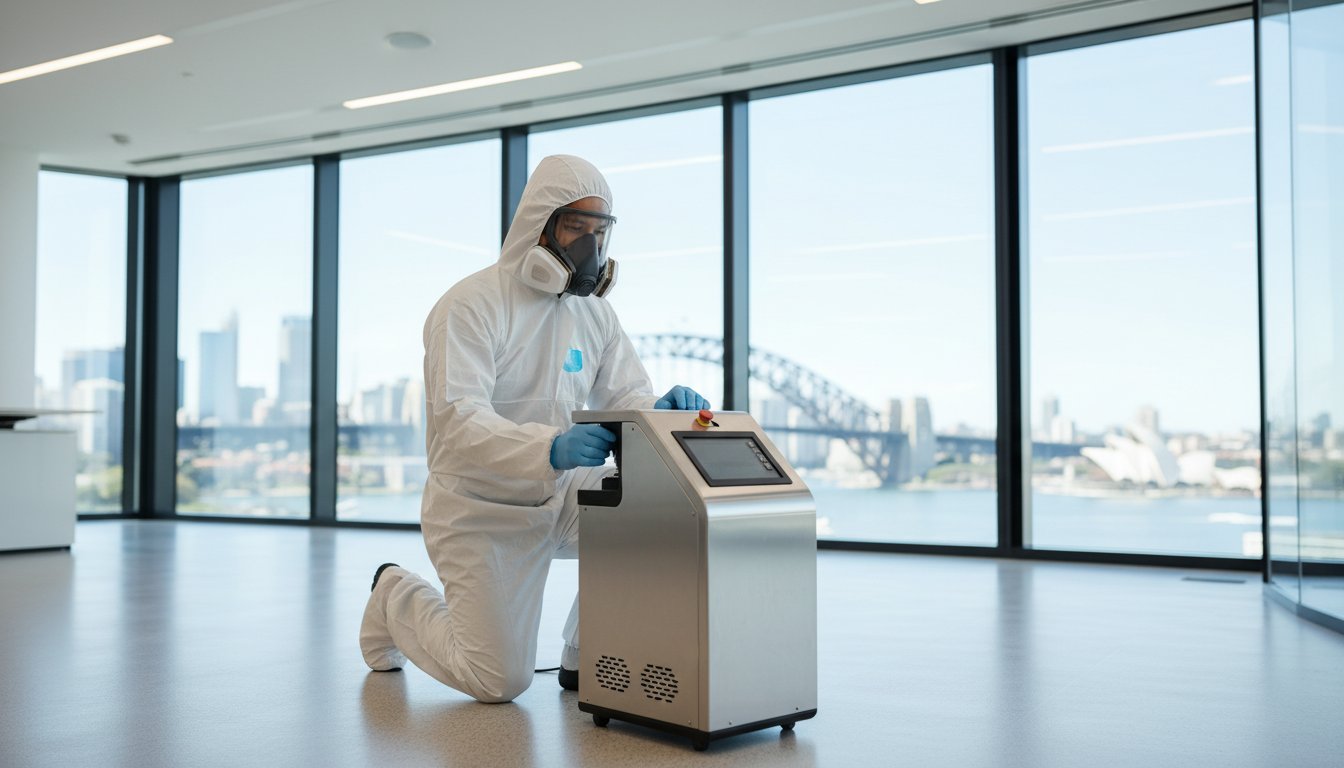
- The Goldmorr System – Spore Elimination: With the standing water gone, we address the invisible threat: airborne mould spores. We deploy the industry-leading Goldmorr System, atomising a biodegradable, non-toxic fog throughout the affected area. This is a critical step most companies skip.
- Structural Drying & Dehumidification: This is where science takes over. We strategically place high-speed air movers to accelerate evaporation and industrial-grade Low-Grain Refrigerant (LGR) dehumidifiers that can pull up to 120 litres of moisture from the air every 24 hours. We monitor the process daily until your property meets pre-flood moisture levels.
- Final Clean & Antimicrobial Treatment: Once the structure is verifiably dry, we clean any remaining residue and apply a final, long-lasting antimicrobial treatment to all affected surfaces. This crucial step inhibits future fungal outbreaks and ensures your home remains a safe environment.
The Goldmorr Advantage: Beyond Standard Drying
Why do we insist on the Goldmorr System? Because standard drying isn’t enough. The microscopic fog penetrates areas that air movers can’t, reaching deep into wall cavities, subfloors, and structural timber to eliminate mould spores before they can colonise. This process directly targets and neutralises the volatile organic compounds that cause that persistent “musty smell,” eliminating it at the molecular level. Best of all, our biodegradable solution is completely safe for your family, pets, and the environment.
Structural Drying vs. Surface Cleaning
It’s easy to wipe a surface dry, but floodwater soaks deep into hygroscopic materials like plasterboard and timber. Our technicians constantly monitor these materials to prevent warping, swelling, and long-term decay. This scientific approach to structural drying, combined with non-mechanical air scrubbing to purify the air, is essential for a complete recovery. In Sydney, where average humidity can exceed 65%, professional dehumidification is non-negotiable to prevent a swift and aggressive mould infestation. Don’t risk it. A successful flood damage cleanup and restoration project depends on this level of detail. If you suspect hidden moisture, our certified technicians can provide a complete moisture assessment.
DIY vs. Professional Restoration: Assessing the Risks and Costs
After a flood, the instinct to save money by tackling the cleanup yourself is strong. You hire a few fans, buy some cleaning products, and get to work. But this seemingly affordable path often leads to catastrophic hidden costs. The real danger isn’t the water you can see; it’s the moisture you can’t. When water saturates wall cavities, subfloors, and insulation, a few household fans are simply not enough. This trapped moisture becomes a breeding ground for toxic mould and dry rot, which can silently compromise your home’s structural integrity over months, leading to repair bills that can exceed A$25,000 or more.
The difference in equipment is staggering. A standard household pedestal fan might move around 1,500 cubic feet of air per minute (CFM), simply circulating damp air. Our professional-grade axial air movers, in contrast, blast over 3,500 CFM, creating a powerful vortex that pulls moisture directly from materials like plasterboard and timber frames. This is combined with Low-Grain Refrigerant (LGR) dehumidifiers that aggressively strip moisture from the air, creating a scientifically controlled drying environment. It’s not just about drying faster; it’s about drying completely.
More importantly, floodwater is never just “water.” It’s classified as Category 3 “black water,” a toxic soup of sewage, chemicals, pesticides, bacteria, and industrial waste. Attempting to handle this without proper Personal Protective Equipment (PPE) and containment protocols exposes your family to serious pathogens like E. coli and Hepatitis A. Following official safety protocols is non-negotiable. For a detailed overview of the hazards, the official NSW Government flood clean-up advice provides critical guidelines on safe handling and waste disposal, underscoring the complexity of the task.
When is DIY Safe? (And When is it Dangerous?)
A DIY approach is only safe for a very small, clean water spill, like a tipped glass of water on a tiled floor that’s cleaned within an hour. Anything involving contaminated water, saturated carpets, or affected wall cavities demands professional intervention. Attempting to dry a saturated room yourself often traps moisture under new flooring or behind a fresh coat of paint. If you notice a persistent musty smell, warping floorboards, or peeling paint weeks after your cleanup, your DIY attempt has failed and a more serious problem is already developing.
Navigating Insurance Claims for Flood Damage in 2026
Insurance companies require meticulous proof that you took immediate and appropriate steps to mitigate damage. A DIY job with no records often results in a rejected claim. To secure a successful payout, your insurer needs a clear evidence trail. At ABC Mould Cleaning Solutions, our IICRC-trained technicians provide this comprehensive documentation as a standard part of our flood damage cleanup and restoration service. This includes:
- Timestamped Photos: Documenting the initial extent of the damage.
- Moisture Readings: Using professional meters to map moisture saturation in all affected materials.
- Technician Reports: A detailed log of all actions taken, equipment used, and drying progress.
This professional dossier proves the work was done to industry standards, giving you the best possible chance for a fast and fair claim approval. Don’t risk your claim on a guess. Get it done right.
Immediate Steps to Take While Waiting for Restoration Experts
You’ve made the call. Our certified technicians are on their way. But the time between your call and our arrival is critical. The actions you take in the next 60 minutes can dramatically reduce the overall damage, cost, and recovery time. Don’t wait. Acting decisively now is the first step in a successful flood damage cleanup and restoration project. Your priority list is simple: safety, documentation, and damage mitigation.
If the water source is internal, like a burst pipe or overflowing appliance, and you can safely access your property’s main water shut-off valve, turn it off immediately. This single action stops the problem from getting worse. However, if the flooding is from external storm surge or rising river levels, do not attempt to intervene. Focus entirely on safety.
Before you move a single item, implement the “Photo First” rule. Your insurance provider will require detailed proof of loss. According to the Insurance Council of Australia, which handled over 240,000 claims from the 2022 floods in Eastern Australia, insufficient documentation is a primary reason for claim delays. Use your smartphone to capture everything:
- Video Walk-Through: Take a slow, steady video of every affected room, narrating what you see.
- Water Lines: Photograph the high-water marks on walls, furniture, and cabinetry.
- Damaged Items: Get close-up shots of damaged electronics, furniture, and structural materials.
- Model Numbers: If possible, capture photos of serial or model numbers on damaged appliances.
Safety First: Electrical and Structural Hazards
Treat all floodwater as hazardous. It can be contaminated with sewage, chemicals, and bacteria, and it poses a severe electrical risk. Per guidelines from Safe Work Australia, assume all submerged electrical outlets and appliances are live. Do not touch them. Never use a standard wet-dry shop vacuum. These machines can spread atomised contaminants into the air and are not rated for this type of biohazard cleanup. Before entering, equip yourself with essential PPE: steel-toed rubber boots, heavy-duty waterproof gloves, and at minimum, a P2 respirator mask to protect your lungs from airborne mould spores and bacteria.
Salvage and Protection: What to Move First
Once you are certain the electricity is off and the area is safe to enter, your goal is to limit secondary damage. Work methodically. Lift wooden furniture off wet carpet immediately. Place small squares of aluminium foil or wood blocks under the legs to prevent permanent staining and stop moisture from wicking up. Your priority should be removing high-value, porous items from the humid environment. This includes photo albums, passports, financial records, artwork, and sentimental items. Move them to a dry, secure area of the property.
What about wet rugs and furniture? If an expensive rug has been soaked with clean water from a pipe, it may be salvageable. However, if items have been saturated by “Category 3” blackwater, which includes storm runoff and sewage, they are almost always a total loss and must be disposed of by professionals to prevent serious health risks.
Taking these urgent steps can save thousands in replacement costs and makes the professional flood damage cleanup and restoration process faster and more effective. While you secure your valuables, send us images of the damage for an immediate expert assessment and an affordable quote. It’s that simple.
Sydney’s Trusted Experts in Flood Damage Cleanup and Restoration
When your property is underwater, you don’t need a general cleaner. You need a local specialist who understands the unique challenges of Sydney’s environment. From the flash floods that inundate the Parramatta River basin to the persistent dampness affecting Federation homes in the Inner West, our team has seen it all. We know how moisture interacts with different building materials, from the sandstone foundations of a Paddington terrace to the concrete slabs of a new build in the Hills District. This local knowledge is not a bonus; it’s essential for effective and lasting recovery.
Our entire process is built on a foundation of proven science. We are certified practitioners of the industry-leading Goldmorr System, a revolutionary approach that doesn’t just clean visible mould but eliminates airborne spores. This allows us to offer a confident mould-free guarantee, ensuring the health of your property and your family is fully restored. We don’t just remove the water; we eradicate the threat.
We believe that expert service should also be affordable. That’s why we stand by the ABC Promise: We will beat any competitor’s written quote by 10%. You get the best service, the best technology, and the best price, guaranteed. Don’t risk your property with inferior solutions. Contact our master technicians now for an urgent assessment and immediate peace of mind.
Serving All of Sydney: 24/7 Emergency Response
Floods don’t wait for business hours, and neither do we. Our emergency teams are on call 24/7, ready for rapid dispatch across Greater Sydney. Whether you’re in the Northern Beaches, the Sutherland Shire, or the Western Suburbs, we have technicians nearby. Our deep understanding of Sydney’s flood zones, informed by years of responding to events like the 2022 floods in the Hawkesbury-Nepean valley, allows us to anticipate access issues and improve response times by up to 45%. For an instant preliminary quote, simply use your phone. Send us images of the damage, and we’ll often have an estimate back to you within 30 minutes.
Beyond Cleaning: Long-Term Prevention
Effective flood damage cleanup and restoration is about more than just drying carpets. It’s about securing your property for the long term. Once the immediate damage is controlled, we focus on prevention. For many Sydney homes, especially those with timber subfloors, this means installing effective subfloor ventilation systems to stop moisture from the ground seeping into your structure. After every job, we conduct rigorous post-restoration inspections using moisture meters and air quality tests to confirm 0% microbial regrowth. We don’t consider the job done until your property is not just clean, but fortified against future problems.
The damage won’t wait. Protect your property and your health by acting now. Our certified experts are ready to restore your home or business to a safe, dry, and mould-free condition. It’s that simple.
Schedule Your Urgent Flood Restoration Now
Your Path to a Safe and Dry Property Starts Now
Recovering from a flood is a race against time. We’ve seen how the first 24-48 hours are critical for mitigating long-term structural damage and preventing dangerous mould growth. Attempting a DIY fix might seem cost-effective, but it often leads to hidden moisture and thousands of dollars in future repairs. A professional, structured approach to flood damage cleanup and restoration isn’t just a service; it’s your best defence for protecting your property’s value and your family’s health.
Don’t face this challenge alone. Our IICRC trained, Master Goldmorr Technicians are on call 24/7 across Sydney, ready to respond immediately. When every minute counts, you need certified experts you can trust. Get an Emergency Flood Restoration Quote now and let us put our expertise to work for you. We guarantee to beat any written quote by 10%, ensuring you get the best professional service at the most competitive price in Sydney.
Your property can be fully restored, and we’re here to help you every step of the way.
Frequently Asked Questions About Flood Damage Restoration
How long does the flood damage cleanup and restoration process take?
The entire process typically takes 3 to 7 days. Initial water extraction is fast and often completed in hours. The critical drying phase, using our industrial dehumidifiers and air movers, lasts several days to ensure all hidden moisture is removed. The final restoration, which includes any necessary repairs, can take additional days or weeks depending on the damage severity. Our experts provide a clear timeline after the initial assessment.
Will my insurance cover the cost of professional flood restoration?
Insurance coverage depends entirely on your policy’s Product Disclosure Statement (PDS). In Australia, standard home insurance usually covers damage from internal sources like a burst pipe. However, damage from overland flooding or storm surge often requires a specific flood insurance policy. You must check your PDS or contact your insurer immediately to confirm your coverage. We provide detailed reports and photographic evidence to support your claim.
Can I stay in my home during the flood cleanup process?
No, it is not safe to stay in your home during the cleanup. Floodwater is often contaminated with sewage and bacteria (Category 3 water), which poses serious health risks. There is also a significant danger of electrical shock from submerged appliances and wiring. Our certified technicians will secure the area and will inform you when it’s completely safe for your family to return. Your safety is our number one priority.
Is it possible to save carpets that have been soaked by floodwater?
Saving carpets depends on the water source. If soaked by clean water (Category 1) from an internal leak, we can often save them if treatment begins within 24 hours. Unfortunately, carpets contaminated by grey or black water (Category 2 or 3) cannot be safely salvaged. As per IICRC industry standards, they must be removed and replaced to eliminate dangerous bacteria and prevent aggressive mould growth. It is a non-negotiable health requirement.
What is the Goldmorr System and why is it better for flood recovery?
The Goldmorr System is an industry-leading solution for effective flood recovery. It’s a proven two-part process that’s faster and less disruptive than older, traditional methods. First, we use a non-toxic, biodegradable fog to eliminate all airborne mould spores in the affected area. Second, we apply a powerful surface treatment to remove any visible contamination. This expert system doesn’t just clean the damage; it ensures a healthier indoor environment for your family.
How much does flood damage cleanup cost in Sydney for 2026?
For 2026, the estimated cost for professional flood damage cleanup in Sydney ranges from A$3,500 to A$12,000 for a standard-sized room. The final price depends on the area’s size, the water contamination level, and the extent of structural repairs needed. Simple water extraction is less expensive, while complex restoration involving black water is at the higher end. Send us images of the damage for an accurate, affordable quote. We will beat any written quote by 10%.
What happens if I dont treat flood damage immediately?
Delaying treatment creates a much bigger, more expensive problem. Mould can begin to grow on damp surfaces within just 24 to 48 hours, posing serious health risks to your family. Structural materials like plasterboard and wood will warp, swell, and rot, compromising your home’s integrity. Immediate professional flood damage cleanup and restoration is not a choice; it’s essential to prevent permanent damage. Don’t wait until the problem worsens-because it will.
Does professional restoration prevent future mould growth?
Yes, professional restoration is the only way to effectively prevent future mould growth. Our master technicians use advanced moisture meters to confirm all affected materials are dried to the IICRC S500 standard, which is typically below 15% moisture content. We then apply professional-grade antimicrobial treatments to sanitise the area. DIY methods almost always fail because they leave behind hidden moisture, which is a guaranteed breeding ground for a serious mould infestation.