
What if that persistent cough your child cannot shake isn’t just a seasonal cold, but a direct result of the air they’re breathing inside your own home? For many families, a lingering musty odour in the bedroom or unexplained wheezing is often dismissed as a minor annoyance. However, in our humid coastal environment, these signs are frequently the first warning of a much deeper issue. Understanding the health effects of mould Sydney homeowners face is critical because what you cannot see is often the most dangerous.
We understand the anxiety that comes with a damp environment and the fear that your property might be making your loved ones sick. It’s a serious concern that requires a professional, evidence-based response rather than DIY guesswork. This article will show you exactly how Sydney’s unique climate fuels indoor mould growth and provide a clear breakdown of the specific health risks associated with different types of exposure.
You’ll gain a clear understanding of whether your symptoms match mould exposure and receive a systematic plan to eliminate the threat safely. We will explore how specialized methodologies, such as the Goldmorr System, target both surface growth and invisible airborne spores to restore your home to a healthy sanctuary.
Key Takeaways
- Learn how Sydney’s coastal humidity transforms indoor mould into an active biological pollutant that compromises your family’s respiratory health.
- Identify the specific symptoms of “Sick Building Syndrome” and understand how to categorize mould-related health risks from mild to emergency levels.
- Discover why local weather patterns like “East Coast Lows” significantly accelerate the health effects of mould Sydney residents experience during peak rainfall seasons.
- Understand the critical failure of household bleach in killing mould and the hidden dangers of DIY cleaning without professional-grade protective equipment.
- Explore how the Goldmorr System’s biodegradable fogging process targets invisible airborne spores to restore safe air quality throughout your entire home.
What are the Health Effects of Mould in Sydney Homes?
Mould is more than a cosmetic eyesore; it’s a persistent biological pollutant that actively degrades indoor air quality. In our subtropical climate, the health effects of mould Sydney residents experience are often exacerbated by high coastal humidity and frequent rainfall. These conditions provide the perfect breeding ground for fungal colonies to release microscopic reproductive units known as spores into your living space. When these colonies are disturbed by airflow or cleaning attempts, they launch millions of spores into the air. Because these particles are microscopic, they easily bypass the body’s natural filtration systems and settle deep within the lungs. This mechanism is why mould is such a significant concern for Sydney homeowners, as the high moisture levels ensure these spores remain viable and allergenic for longer periods.
Inhalation vs. Skin Contact: How Mould Enters the Body
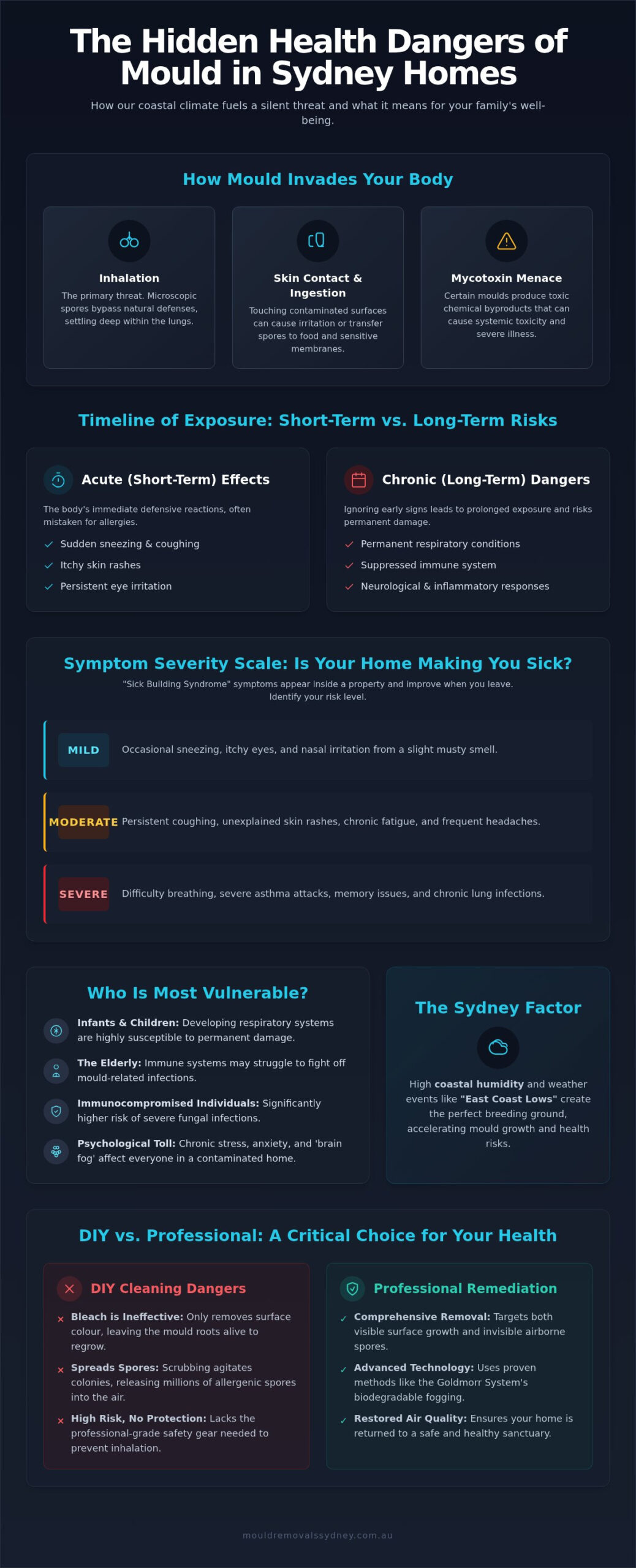
Inhalation is the primary route of exposure. You can’t see the spores, but your respiratory system reacts to them immediately. While breathing them in causes the most direct damage, secondary risks exist through skin contact or accidental ingestion. Touching contaminated surfaces can cause localized irritation or transfer spores to food and sensitive mucous membranes. Mycotoxins are toxic compounds produced by certain moulds like Stachybotrys. These compounds are far more dangerous than simple allergens; they are chemical byproducts that can cause systemic toxicity if the environment isn’t professionally remediated. Understanding these transmission paths is the first step in recognizing the risk to your household.
Acute vs. Chronic Exposure Risks
The timeline of exposure determines the severity of the symptoms you may face. Acute or short-term effects often present as sudden sneezing, itchy skin rashes, or persistent eye irritation. These are the body’s immediate defensive reactions to foreign biological invaders. If you ignore these early signs, you risk transitioning into chronic exposure territory. Long-term dangers include the development of permanent respiratory conditions or the suppression of the immune system, making you more susceptible to other illnesses. Research into various health issues caused by mould highlights that prolonged residency in damp buildings can lead to serious neurological and inflammatory responses. Securing professional mould removal sydney specialists early is the only way to break this cycle and protect your family from the escalating health effects of mould Sydney properties often harbor.
Common Symptoms and At-Risk Groups for Mould Sensitivity
Living in a damp Sydney home often leads to what professionals call “Sick Building Syndrome.” This isn’t just a single symptom but a range of health issues that appear when you’re inside the property and improve when you leave. The health effects of mould Sydney residents report vary wildly based on individual sensitivity and the duration of exposure. We categorize these symptoms to help you determine the urgency of your situation:
- Mild: Occasional sneezing, itchy eyes, and a slight musty smell that causes nasal irritation.
- Moderate: Persistent coughing, skin rashes, chronic fatigue, and frequent headaches.
- Severe/Emergency: Difficulty breathing, severe asthma attacks, and chronic lung infections.
While mould affects everyone, certain groups face significantly higher risks. Infants and young children have developing respiratory systems that are highly susceptible to permanent damage from spore inhalation. Similarly, the elderly and immunocompromised individuals may struggle to fight off fungal infections. Beyond the physical, there is a heavy psychological toll. Living in a mould-infested environment creates chronic stress and brain fog. Constant anxiety about your family’s safety leads to mental fatigue that only resolves once the environment is professionally cleared. According to NSW Health advice on mould, early intervention is key to preventing these escalating health complications.
Respiratory Distress and Asthma Triggers
Sydney has one of the highest rates of asthma in the world, and indoor mould is a primary trigger for attacks. When you inhale spores, your airways can become inflamed, leading to wheezing, chest tightness, and a frightening shortness of breath. Exposure to specific strains like black mould is particularly dangerous. These strains produce mycotoxins that can cause significant lung inflammation, turning a manageable condition into a chronic health crisis.
Allergic Reactions and Hypersensitivity
Many residents mistake mould sensitivity for seasonal hay fever. You might experience watery eyes, persistent sneezing, and nasal congestion that never seems to clear. In rare cases, high concentrations of spores lead to Hypersensitivity Pneumonitis. This is a serious immune disorder where the lungs become severely inflamed. If your symptoms persist only while you’re at home, it’s a clear indicator that your indoor air quality is compromised. Booking a professional mould inspection is the most efficient way to confirm if your home is the source of your illness and the root cause of the health effects of mould Sydney weather has introduced to your living space.
Why Sydney’s Climate Accelerates Mould-Related Health Issues
Sydney’s geography is a double-edged sword. While we love the coastal lifestyle, our subtropical climate creates an indoor environment that is often too damp for comfort. When relative humidity stays high for extended periods, it creates a persistent biological load on your property. This is exactly why the health effects of mould Sydney residents deal with are so widespread across the basin. Major weather events, specifically ‘East Coast Lows,’ dump massive amounts of rain in short windows, saturating the ground and the air. This saturation leads to an immediate spike in respiratory complaints as homes struggle to dry out before the next front arrives.
Modern Sydney apartments often fall into what we call the ‘condensation trap.’ These buildings are designed to be airtight for energy efficiency, but this often means moisture from cooking, showering, and even breathing has nowhere to go. Without mechanical intervention, this trapped moisture settles on cold surfaces. Conversely, Sydney’s iconic terrace houses face ‘rising damp’ from porous old brickwork and inadequate subfloor drainage. Both architectural styles contribute to a toxic indoor environment that compromises your well-being.
Humidity and the 60% Threshold
Scientific research and basic facts about mould confirm that fungal growth explodes once indoor relative humidity consistently crosses the 60% threshold. Sydney’s afternoon sea breezes might feel refreshing, but they carry significant moisture into coastal properties. If your home doesn’t have adequate cross-ventilation, that moisture remains trapped on walls and ceilings. We recommend using a digital hygrometer to monitor these levels. Keeping your home between 30% and 50% humidity is the gold standard for maintaining a healthy living space and preventing spore activation.
The Danger of Hidden Mould in Subfloors
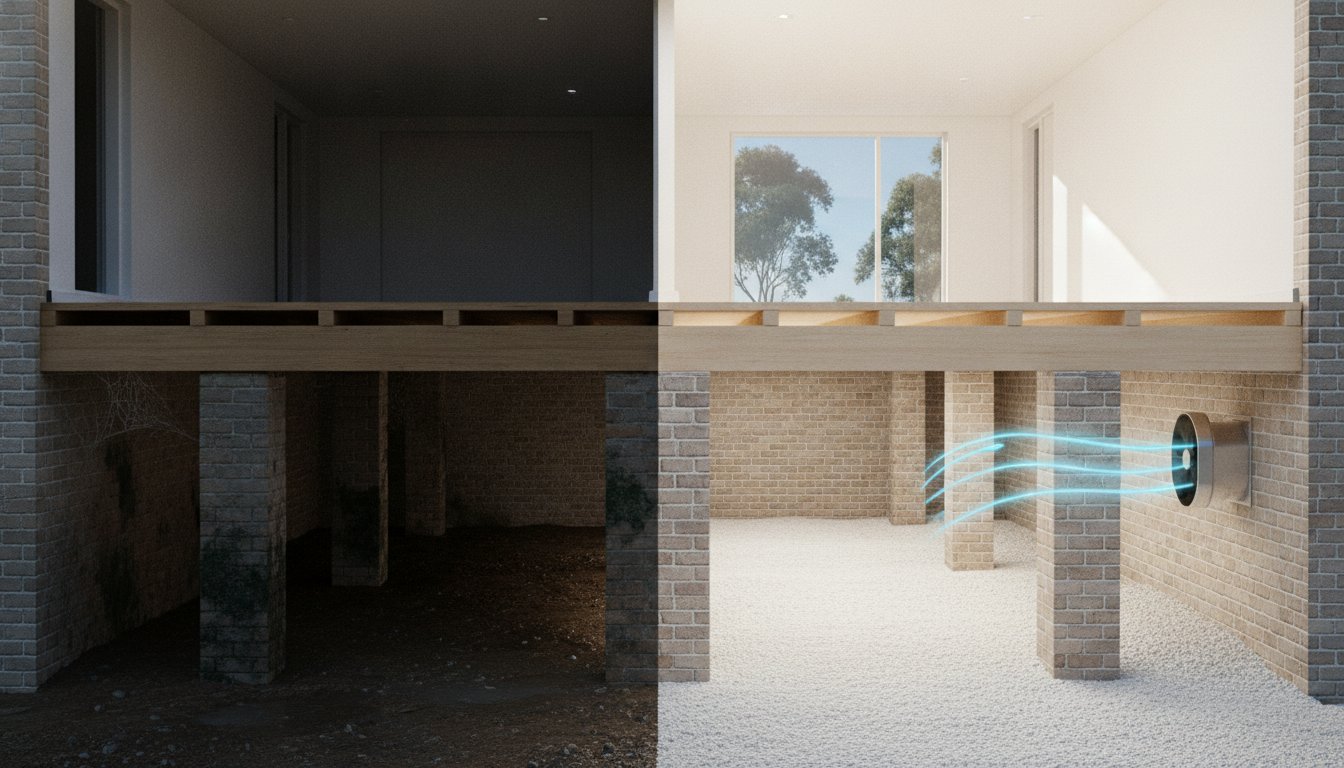
Many homeowners overlook the space beneath their feet, yet it’s often the source of ‘unexplained’ illness. In older Sydney suburbs, damp subfloors are a primary driver of indoor air pollution. Spores don’t stay trapped under the house; they rise through gaps in floorboards and into your bedrooms. This is why you might notice a persistent musty smell even if you can’t see any visible growth on your walls. If these spores have already been pulled into your HVAC system, professional air duct cleaning is a necessary step to stop the cycle of reinfection. Addressing these structural moisture issues is the only way to permanently mitigate the health effects of mould Sydney families face during our humid summers and wet winters.
Professional Remediation vs. DIY: Protecting Your Family’s Health
Stop reaching for the bleach. The number one misconception among property owners is that supermarket chemicals actually kill mould. In reality, bleach only removes the pigment, turning the fungus white while leaving the biological structure intact. Because bleach is primarily water based, it actually provides a moisture source that feeds the hyphae, or roots, of the colony. These roots sit deep within porous materials like drywall and timber. When you only treat the surface, the mould returns more aggressively within days. The health effects of mould Sydney families endure are often prolonged by these failed DIY attempts that mask the problem without solving it.
Choosing a professional solution isn’t just about aesthetics; it’s a financial and medical decision. The long-term costs of managing chronic respiratory conditions, specialist appointments, and missed work far outweigh the price of a one-off remediation. Don’t gamble with your family’s safety by attempting to save a few dollars on a surface level fix. If you suspect your home is contaminated, schedule a professional mould inspection today to identify the root cause before the damage escalates.
The Aerosolisation Risk of DIY Cleaning
Scrubbing a patch of mould without professional containment is dangerous. The moment you apply friction to a colony, you trigger a massive release of spores into the air. Without specialized HEPA filtration and negative pressure zones, these spores drift into other rooms, contaminating your bedding, carpets, and upholstery. This aerosolisation leads to an immediate spike in inhalation risks. As a general rule, if a mould patch is larger than one square meter, or if it has returned after previous cleaning, it is far too dangerous for a homeowner to touch without professional-grade PPE and containment protocols.
Why Professional Air Purification is Mandatory
Killing the mould on the wall is only half the battle. To truly address the health effects of mould Sydney properties generate, you must clean the air itself. Professional air scrubbing uses high-efficiency filters to capture microscopic spores that remain suspended in your living space long after the visible growth is gone. If these spores enter your ventilation system, they will simply re-circulate every time you turn on the power. This is why professional air conditioner cleaning is a mandatory component of any health-first remediation plan. A whole-home approach ensures that every breath you take is free from biological contaminants, providing the emotional relief and physical safety your family deserves.
ABC Mould Cleaning Solutions: Restoring Air Quality with the Goldmorr System
ABC Mould Cleaning Solutions understands that a healthy home is a non-negotiable requirement for your family’s safety. We don’t just scrub surfaces; we restore the biological integrity of your living space. To effectively manage the health effects of mould Sydney homeowners encounter, we utilize the Goldmorr System. This proprietary methodology is the cornerstone of our expert identity. It allows us to address mould as a systemic issue rather than a localized blemish. Our process starts with a rigorous inspection phase to locate hidden moisture traps and dormant colonies that retail cleaners simply cannot detect. We position our specialists as the dependable problem-solvers you need to reclaim your home.
How the Goldmorr Fogging Process Works
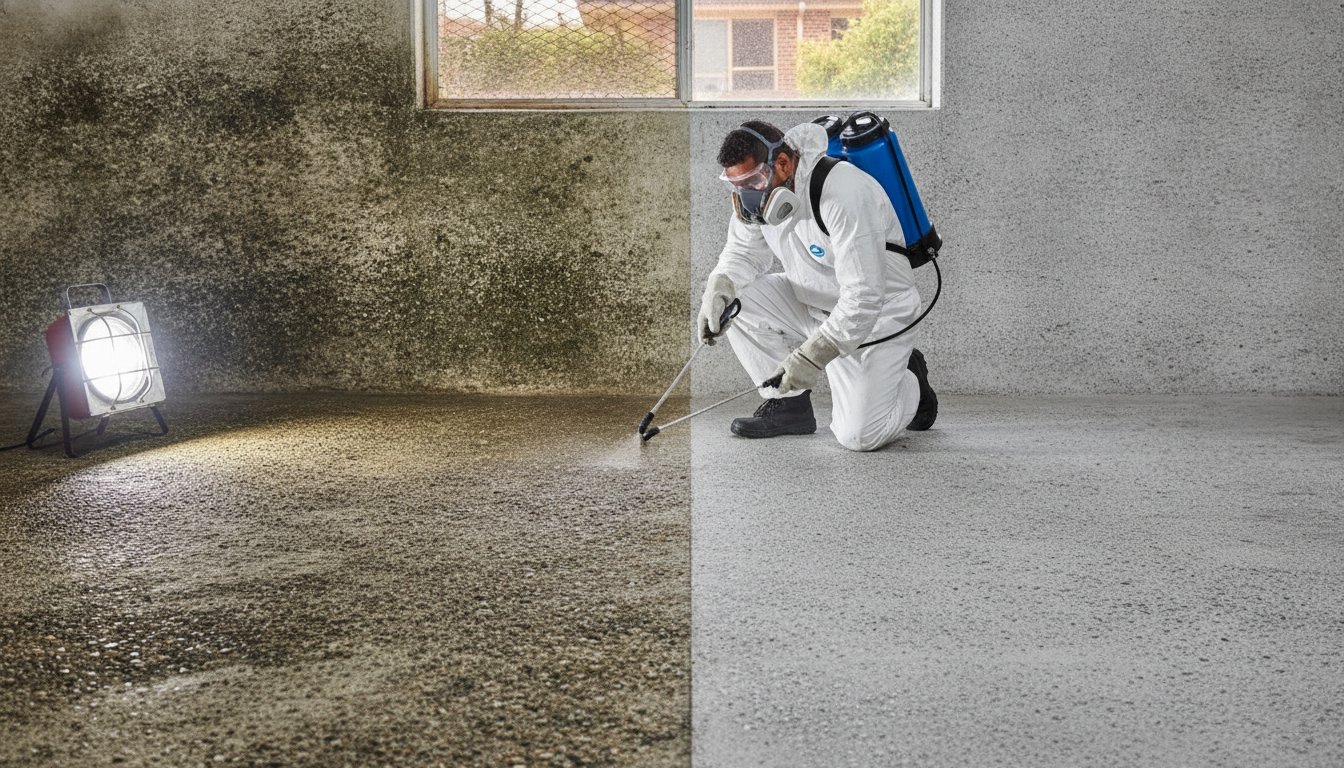
The most dangerous part of a mould infestation is the invisible load of airborne spores. Our Goldmorr fogging process utilizes a specialized, biodegradable formula that is misted throughout the affected areas. This fog travels exactly like the spores themselves, reaching into wall cavities, behind skirting boards, and deep into porous materials. It neutralizes spores on contact, both on surfaces and in the air you breathe. This biodegradable solution is safe for use around children and pets, ensuring your home remains habitable. This specific methodology eliminates the need for aggressive, toxic chemicals that can leave behind harmful residues and further irritate sensitive airways.
Total Home Health: Beyond the Visible Mould
True remediation requires addressing the environmental conditions that allowed the mould to thrive in the first place. If your home has suffered from structural leaks or flooding, water damage repair is a necessary step to stop health risks from returning to your property. We integrate air purification and scrubbing services to remove any remaining microscopic contaminants from the atmosphere. For residents in damp-prone areas, we often install subfloor ventilation systems to provide a permanent fix for rising damp. This comprehensive, ceiling-to-subfloor approach ensures that the health effects of mould Sydney weather creates are managed for the long term. Our IICRC trained specialists are ready to help you reclaim your property and your health. Contact ABC Mould Cleaning Solutions for a professional health-focused inspection today.
Take Control of Your Indoor Air Quality Today
Living with a persistent musty odor or unexplained respiratory issues shouldn’t be your daily reality. As we’ve explored, the health effects of mould Sydney families face are deeply tied to our unique coastal humidity and specific architectural challenges. Attempting to mask the problem with supermarket bleach only allows the roots to grow deeper; meanwhile, scrubbing without containment risks spreading dangerous spores throughout your bedrooms. You don’t have to live with the anxiety of a damp environment any longer.
Our Goldmorr System certified technicians provide a systematic, evidence-based approach to restore your safety. We use biodegradable, family-safe treatments that target both visible growth and invisible airborne threats. With our Sydney-wide 24/7 emergency response, professional relief is always available when you need it most. It’s time to stop the cycle of illness and ensure your property is a healthy sanctuary for your loved ones once again.
Protect your family’s health—Book a Professional Mould Inspection Today
You deserve to breathe easy in your own home, and we’re here to help you achieve that peace of mind.
Frequently Asked Questions
Can mould in my Sydney home cause permanent lung damage?
Yes, prolonged exposure to high concentrations of fungal spores can lead to permanent respiratory issues or conditions like hypersensitivity pneumonitis. While many inflammatory symptoms resolve after remediation, long term inhalation of toxic mycotoxins may cause irreversible scarring of lung tissue in sensitive individuals. You should seek professional intervention immediately if you experience persistent shortness of breath or chronic coughing that only occurs while you are inside your property.
Is it safe to sleep in a room with a small amount of mould on the wall?
No, it is not safe to sleep in a contaminated room because you are inhaling spores for seven to nine hours every night. Even a small visible patch indicates that millions of invisible airborne particles are likely present in your breathing zone. This continuous exposure can cause nighttime wheezing, morning congestion, and disrupted sleep patterns. We recommend relocating to a clean room until the area has been professionally remediated.
What are the first signs that mould is affecting my health?
The first health effects of mould Sydney residents typically notice are upper respiratory irritations that improve significantly when they leave the house. You might experience persistent sneezing, watery eyes, or a “runny nose” that doesn’t respond to standard allergy medication. If these symptoms are accompanied by a musty odour in your bedrooms or living areas, your indoor air quality is likely compromised and requires an urgent inspection.
Why do my allergies get worse when it rains in Sydney?
Rain increases indoor relative humidity, which triggers dormant mould colonies to release a massive volume of reproductive spores into the air. During Sydney’s wet seasons, moisture gets trapped in building materials and subfloors, providing the fuel mould needs to grow rapidly. This sudden spike in airborne biological pollutants is why your hay fever or asthma symptoms often intensify during heavy rainfall or major East Coast Low weather events.
Can I use bleach to kill black mould safely?
No, you should never use bleach to treat black mould because it only removes the surface colour while leaving the living roots intact. Bleach is primarily water, which can actually feed the underlying fungal colony in porous materials like plasterboard and timber. Additionally, the harsh chemical fumes from bleach can further irritate your lungs, making the health effects of mould Sydney families experience even more severe and difficult to manage.
How long does it take for health symptoms to improve after mould removal?
Most individuals report a noticeable improvement in their physical well-being within 24 to 48 hours of a successful professional remediation. Once the airborne spores are removed through specialized air scrubbing and fogging, the immediate triggers for your immune system are eliminated. However, if you have developed a chronic condition from long term exposure, you should consult a medical professional to manage your long term respiratory recovery.
Does an air purifier help with mould-related health issues?
Yes, air purifiers with medical grade HEPA filters can help by capturing airborne spores, but they aren’t a permanent fix for a growth problem. A purifier is a temporary aid that doesn’t stop the mould from growing on your walls or inside your subfloor. You must remove the source of the growth and address the underlying moisture issue to achieve a permanent health solution for your home.
Are children more susceptible to mould spores than adults?
Yes, children are significantly more susceptible to mould exposure because their respiratory systems and immune defences are still developing. They also breathe more rapidly than adults, which means they inhale a higher volume of spores relative to their body weight. Protecting young children from damp environments is critical to preventing the development of childhood asthma and other chronic allergic conditions later in life.