Did you know that mould now accounts for nearly 20% of all maintenance disputes reported to NSW Fair Trading? For Sydney strata managers and lot owners, this is no longer just a minor cleaning issue; it is a high-stakes legal and health liability. You are likely exhausted by the endless cycle of “bleach and paint” patches that fail to stop recurring spores or satisfy frustrated tenants. We understand the anxiety that comes with potential structural damage and the complexity of navigating NSW strata legislation.
This 2026 management guide simplifies the process of mould remediation for strata properties Sydney. You will gain a clear understanding of your obligations under the Strata Schemes Management Act and the latest April 2026 law reforms. We provide a comprehensive look at the new AS-IICRC S520:2025 standards and how they impact your maintenance strategy. This guide previews the essential steps for professional documentation, explains the critical difference between common property and lot owner responsibility, and introduces the Goldmorr System as a low-disruption solution for apartment living. It is time to move past temporary fixes and secure a safe, compliant environment for every resident.
Key Takeaways
- Clarify legal liability under the Strata Schemes Management Act 2015 to determine whether the Owners Corporation or the lot owner is responsible for remediation costs.
- Utilize evidence-based inspections, including thermal imaging and moisture mapping, to pinpoint the exact source of water ingress and resolve committee disputes.
- Discover why the Goldmorr System is the leading choice for mould remediation for strata properties Sydney, offering a non-invasive, biodegradable fogging process.
- Implement permanent preventative measures like subfloor ventilation to address rising damp and protect the structural integrity of high-density buildings.
The Unique Challenges of Strata Mould in Sydney
Sydney’s geography is working against you. Positioned on a coastal basin with prevailing easterly winds pushing humid ocean air inland, the city creates near-perfect biological conditions for mould colonisation year-round. It’s not just about visible leaks or obvious water damage. The real threat in high-density residential buildings is the invisible interplay between coastal dew points, modern construction methods, and the sheer density of human activity packed into shared air spaces.
Understanding the health effects of mould makes one thing immediately clear: spore exposure is not a cosmetic nuisance. In a strata context, where dozens of residents share walls, ceilings, and ventilation pathways, a single untreated colony can become a building-wide liability within weeks.
Sydney’s Humidity and Multi-Residential Ventilation
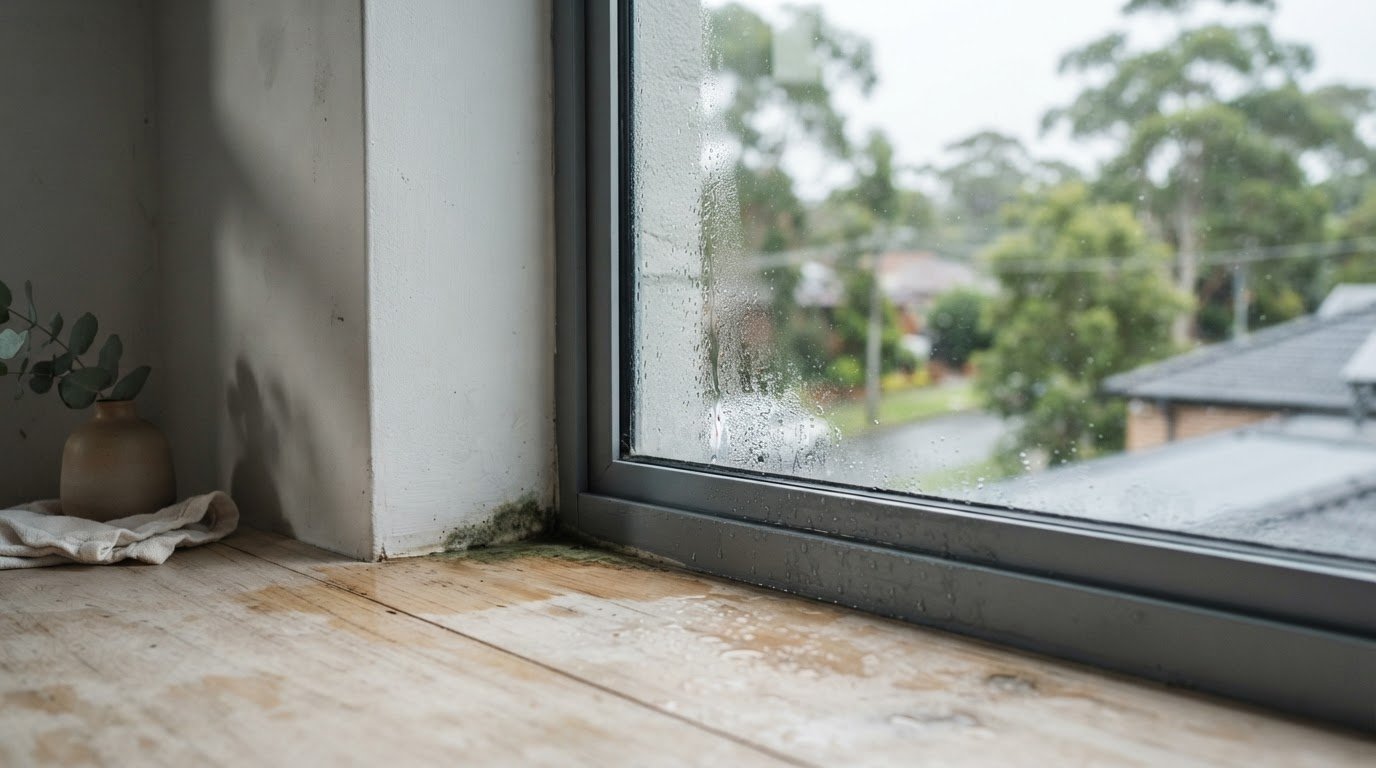
Coastal dew points in Sydney regularly climb high enough that interior surfaces in poorly ventilated apartments reach condensation threshold without any plumbing fault present. Modern airtight building standards, designed to improve energy efficiency, compound this problem significantly. Sealed facades and reduced natural airflow trap moisture-laden air inside units, particularly in bathrooms, laundries, and north-facing bedrooms with limited sun exposure.
This is precisely why surface cleaning fails in high-density environments. Wiping visible growth with a retail product addresses the symptom, not the cause. The moisture reservoir driving regrowth remains embedded in wall cavities, subfloor voids, and ceiling spaces. Without addressing the source, remediation is simply postponed, never resolved.
High-rise buildings introduce an additional biological threat: the Stack Effect. Warm air rises through elevator shafts, service risers, and stairwells, carrying airborne spores upward from lower floors. A mould problem in a ground-floor storage room or basement carpark can seed colonies three or four levels above within days. This cross-contamination pattern makes effective mould remediation for strata properties Sydney fundamentally different from treating a single-dwelling home.
The Hidden Costs of Strata Mould Infestations
Delayed action carries compounding financial consequences for Owners Corporations. The direct costs include:
Effective mould remediation for strata properties Sydney requires treating the building as a connected system, not a collection of individual lots. The architectural vulnerabilities are shared. So is the risk.
Navigating NSW Strata Laws: Who is Responsible?
Determining liability for mould in a Sydney strata building isn’t just a matter of opinion; it’s a matter of law. Section 106 of the Strata Schemes Management Act 2015 establishes a duty of “strict liability” for the Owners Corporation. This means the committee must maintain and repair common property to keep it in a state of good and serviceable repair. By April 1, 2026, the final stage of the NSW strata law reforms has further increased the pressure on committees to manage capital works and maintenance proactively. If a failure in the common property leads to an infestation, the responsibility for mould remediation for strata properties Sydney falls squarely on the strata scheme.
The “Blame Game” often starts when a tenant reports health issues or property damage. To resolve these disputes without entering a lengthy legal battle, you need data. A professional mould inspection is the most effective way to identify the “Source of Ingress” and determine if the issue stems from structural failure or resident lifestyle. If you’re currently facing a dispute between a lot owner and the committee, an evidence-based report is your strongest tool for resolution.
When the Owners Corporation Must Pay
If the moisture source originates from outside the lot’s internal skin, the Owners Corporation is typically liable for all costs. This includes remediation of the mould and the repair of any damaged finishes. Common scenarios include:
- Water ingress through the roof, external facades, or failed window seals in the building’s envelope.
- Burst pipes located within common property walls or service risers.
- Failure of original waterproof membranes in bathrooms or balconies that were part of the initial build.
- Rising damp caused by inadequate subfloor drainage or structural issues in the foundations.
In these cases, the Owners Corporation must act quickly to provide effective mould remediation for strata properties Sydney. Delaying these repairs often leads to “contributory negligence” claims if the damage worsens over time.
When the Lot Owner is Liable
Liability shifts to the lot owner if the mould is a direct result of their actions or a failure within their private property. This often involves “contributory negligence,” where the resident’s lifestyle choices exacerbate the problem. Examples include:
- Mould caused by internal appliance leaks, such as a faulty dishwasher or washing machine hose.
- Inadequate ventilation, such as drying laundry indoors without using an exhaust fan or keeping all windows sealed in humid weather.
- Failure to report a small leak promptly, allowing it to spread into common property areas.
When the source is clearly internal, the lot owner is responsible for the cleanup and any necessary structural drying. If you are unsure where the boundary lies, getting an expert mould inspection can provide the clarity needed to settle the matter fairly.

Professional Inspection: Ending the ‘Blame Game’ with Data
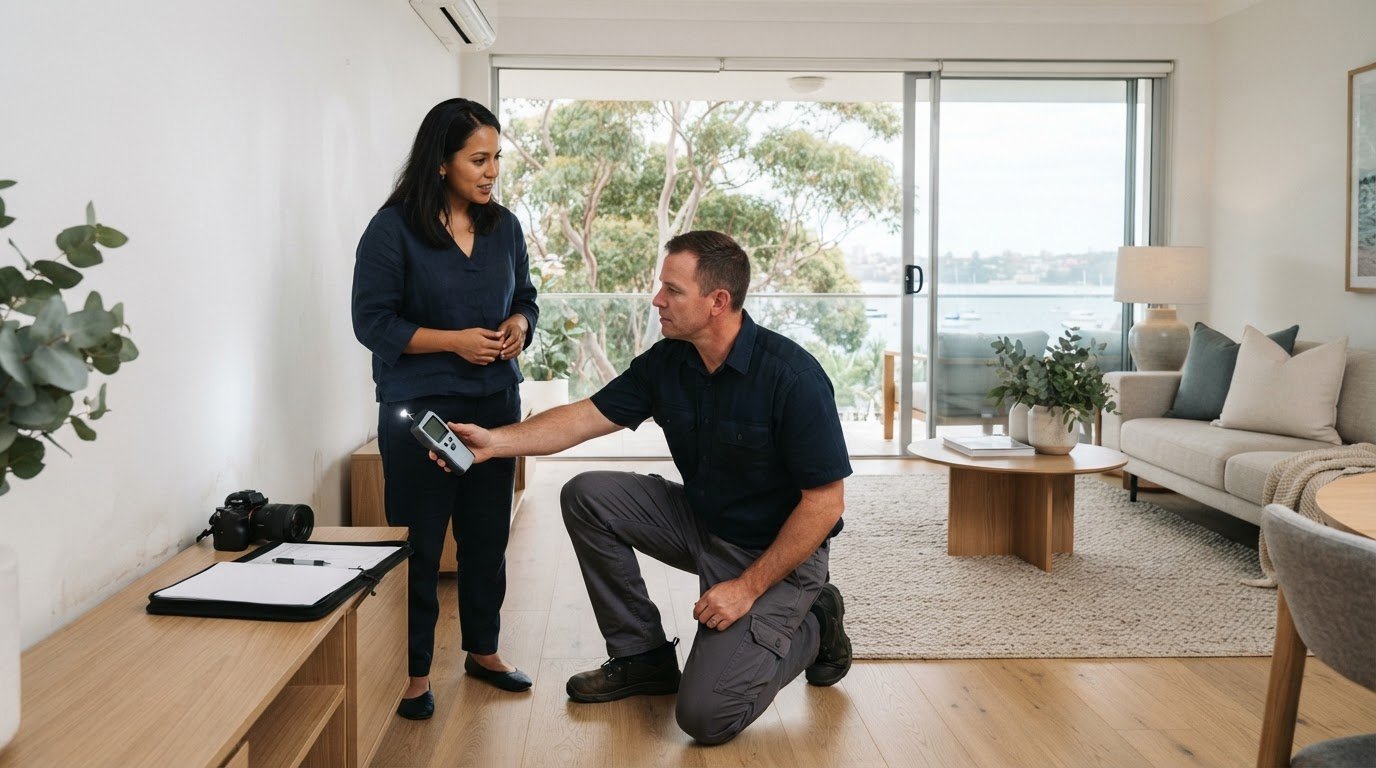
Visual inspections rarely tell the full story in a multi-residential setting. A damp patch on a bedroom wall might be a local condensation issue, or it could be a leak travelling through three floors of common property masonry. To stop the “blame game” between lot owners and committees, you need empirical data. Professional mould remediation for strata properties Sydney begins with scientific detection that identifies moisture long before it manifests as black spots on a ceiling. Without this data, committees often waste thousands on “patch and paint” jobs that fail within months.
Air quality testing provides the final piece of the puzzle. By measuring the concentration of airborne spores, we can determine if a lot is truly safe for habitation. This is critical when dealing with health complaints from tenants or high-risk occupants. High spore counts provide the “smoking gun” that visual checks miss, allowing managers to justify urgent action and protect the Owners Corporation from liability.
Moisture Mapping and Thermal Technology
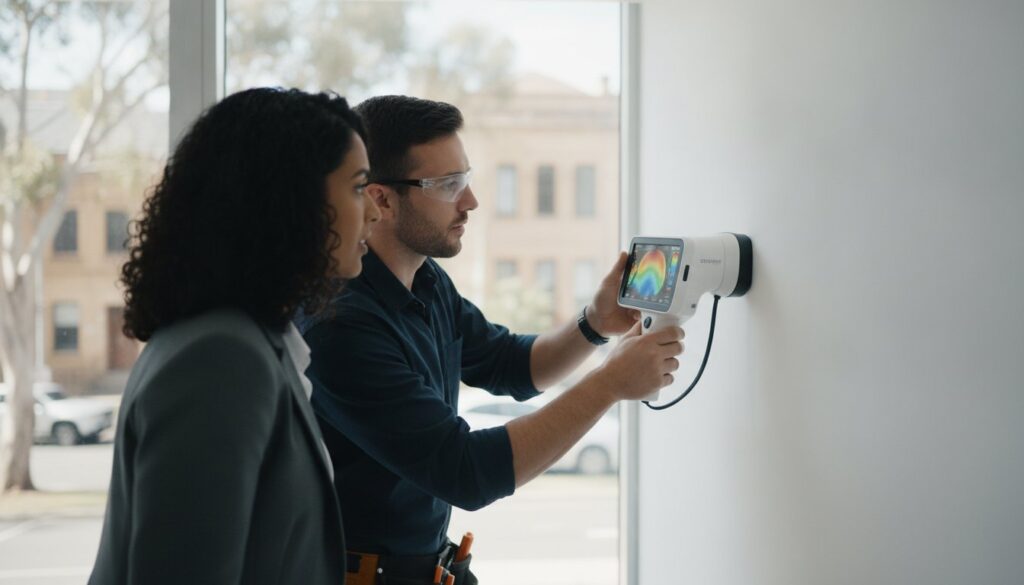
Thermal imaging cameras detect temperature variations that reveal “cold bridges.” These are structural points in apartment walls where poor insulation or structural gaps allow heat to escape, creating localized dew points where condensation forms. In high-density Sydney architecture, these bridges are often the silent cause of recurring mould. Non-invasive moisture meters allow us to find leaks behind expensive bathroom tiles or kitchen cabinetry without the need for destructive testing. ABC Mould Cleaning Solutions uses moisture data to provide definitive evidence for strata boards, ensuring that repair funds are allocated based on facts rather than guesswork.
Formal Reporting for Insurance and Committees
A valid professional report must do more than confirm mould exists. It must identify the “Root Cause” to satisfy insurance requirements and legal standards. This document, often called a Remediation Action Plan (RAP), serves as a legal shield for property managers. It outlines the scope of work, the specific containment measures required, and the post-remediation verification steps. When you present this to a strata committee, you aren’t just asking for money; you’re presenting a data-backed solution to a structural liability. This clarity is essential for securing funding from the capital works fund and avoiding future litigation from affected residents. A professional RAP ensures every stakeholder understands the path to a permanent resolution.
The Goldmorr System: Non-Invasive Strata Remediation
Traditional remediation often involves invasive demolition. This “rip and tear” approach is loud, dusty, and highly disruptive for strata residents. The Goldmorr System offers a superior alternative. It is a proprietary methodology designed specifically to address the complexities of high-density living without requiring families to vacate for weeks. By focusing on the scientific elimination of spores rather than just cosmetic cleaning, it provides the permanent results Owners Corporations require. This technology is the cornerstone of effective mould remediation for strata properties Sydney, allowing us to treat units with surgical precision.
Surface Treatment vs. Airborne Fogging
Surface cleaning alone only solves about 10% of a mould problem. While wiping removes visible growth, it does nothing to address the billions of microscopic spores suspended in the air or hidden within wall cavities. The Goldmorr fogging process uses biodegradable particulates that remain suspended in the air for an extended period. These particulates seek out and neutralize airborne spores throughout the entire apartment volume. This includes treating the “unseen” mould in ceiling voids and behind service risers where traditional cleaning cannot reach.
In a Sydney strata stack, this process is essential to prevent cross-contamination between floors. It ensures that spores from a lower-level unit don’t travel through ventilation shafts to seed new colonies elsewhere in the building. By neutralizing the air and surfaces simultaneously, we create a sterile environment that stops the cycle of regrowth. This comprehensive approach is what separates professional mould remediation for strata properties Sydney from amateur attempts that only address what is visible to the eye.
Safety for Residents and Pets
Safety is a primary concern for property managers and lot owners alike. The components used in the Goldmorr System are non-toxic and biodegradable. This makes the process safe for residents, pets, and the surrounding environment. Unlike harsh chemical treatments that rely on bleach or toxic biocides, there are no lingering hazardous residues. The Goldmorr System is a safe, hospital-grade solution for sensitive environments. It is specifically formulated to be tough on spores but gentle on the occupants of the home.
One of the greatest benefits for strata schemes is the rapid “re-entry” time. Apartments are typically ready for occupation within just a few hours of the treatment being completed. This rapid turnaround minimizes the logistical headache for managers and prevents the need for expensive temporary relocation of tenants. If you need a fast, effective, and non-invasive solution for your building, book our professional mould remediation services today. We restore safety to your property with minimal disruption to daily life.
Preventing Recurrence: Long-Term Strata Solutions
Cleanup is only half the battle. If you don’t fix the underlying moisture issue, mould will return. Professional mould remediation for strata properties Sydney must include a long-term strategy to protect the building’s structural integrity. Owners Corporations often fail because they treat mould as a one-off event. It is a symptom of a systemic ventilation or moisture ingress failure that requires a permanent engineering solution. Leading international firms like Schippers Bouwconsult BV demonstrate how specialized building inspections can identify these root causes, allowing you to stop the cycle of recurring growth by addressing the environmental conditions that allow spores to thrive.
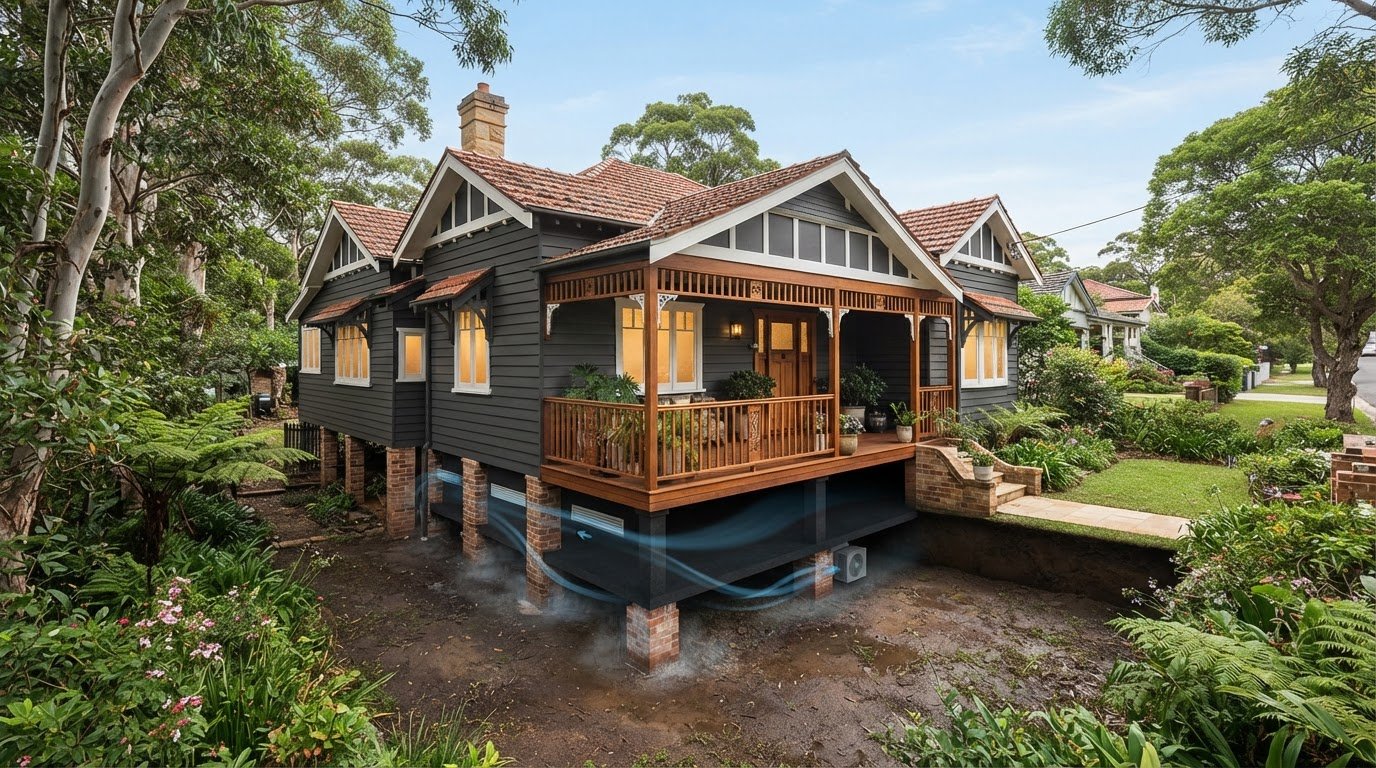
Stagnant air trapped beneath a building’s footprint is a primary driver of rising damp. This moisture eventually migrates through masonry into ground-floor lots, creating a constant biological threat for residents. Installing subfloor ventilation is the most effective way to eliminate this reservoir. High-efficiency extraction systems pull damp air out and replace it with fresh, dry air, lowering the building’s overall humidity profile. This is a critical investment for any strata scheme facing persistent ground-level dampness.
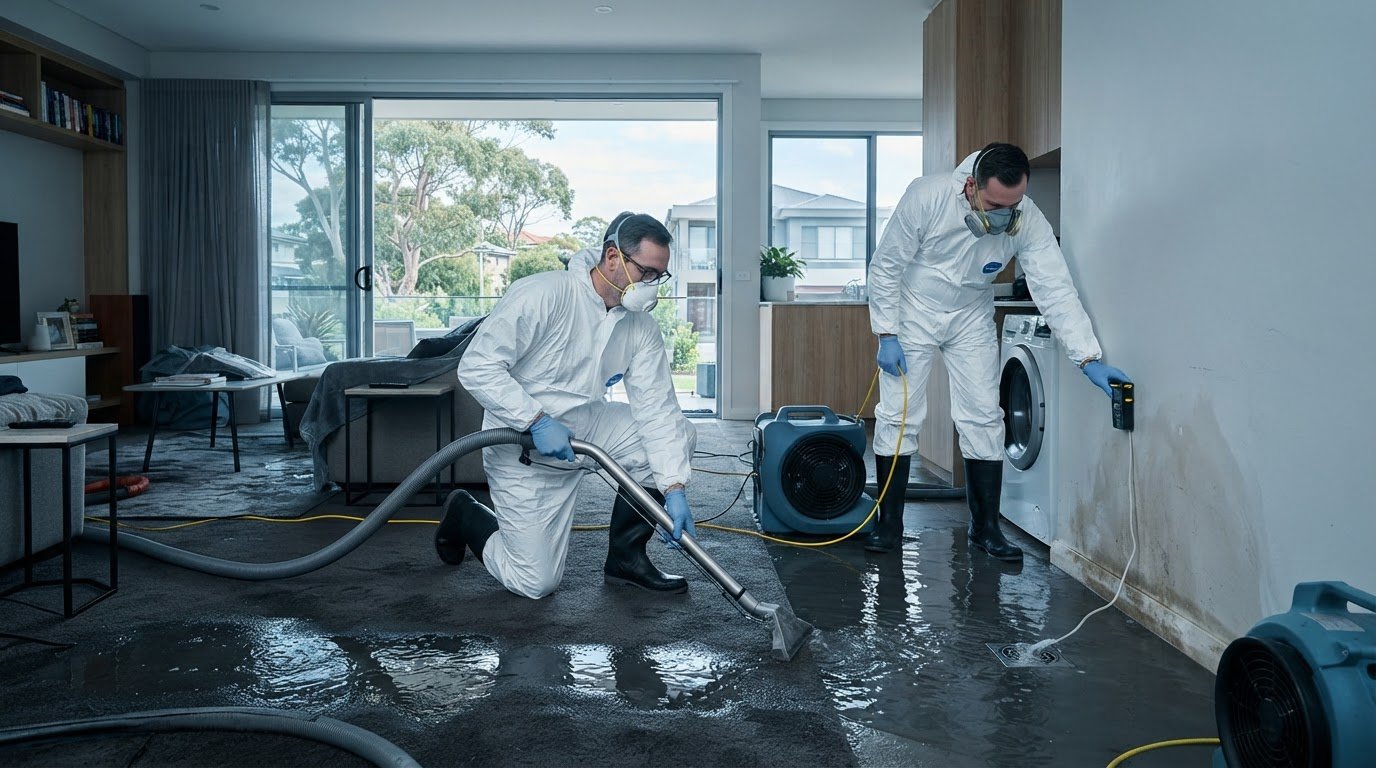
When a major pipe burst or flood occurs, simple dehumidifiers aren’t enough. You need targeted structural drying delivered by specialists. This involves using specialized air movers and moisture monitoring to ensure wall cavities and subfloors are completely dry before remediation begins. If you skip this step, you’re just sealing moisture inside your common property assets, which guarantees future mould growth. Demand a systematic, evidence-based approach to drying after any significant water event.
The Strata Manager’s Maintenance Checklist
Preventative maintenance is significantly cheaper than emergency remediation. A proactive Owners Corporation should establish a rigorous schedule to identify vulnerabilities before they become legal liabilities. Use this checklist to stay ahead of the curve:
- Conduct annual roof and gutter inspections to prevent water ingress from overflowing systems during Sydney’s storm seasons.
- Inspect mechanical ventilation in internal bathrooms and laundries to ensure exhaust fans meet current airflow standards.
- Clear subfloor vents of debris, soil, or landscaping that blocks natural airflow.
- Educate tenants on indoor air quality best practices, such as using exhaust fans during showers and avoiding indoor clothes drying.
Quick response times are vital when things go wrong. Refer to our Water Damage Repair Guide for emergency response protocols that protect your building from long-term spore colonisation. Taking these steps ensures your property remains safe, compliant, and mould-free for the long haul. Don’t wait for a health complaint to act; implement a preventative maintenance schedule today.
Secure Your Building’s Health and Legal Compliance
Managing a strata scheme in Sydney’s humid coastal climate requires more than just reactive cleaning. You now have the tools to navigate the 2026 legal landscape and resolve complex liability disputes with empirical data. By shifting from temporary surface fixes to a science-led approach, you protect both the structural integrity of common property and the well-being of every resident. Utilizing specialized technology like the Goldmorr System ensures that airborne spores are neutralized without the need for invasive demolition or long-term displacement.
Professional mould remediation for strata properties Sydney is your best defense against escalating repair costs and potential personal injury claims. We provide expert reporting for strata committees and insurers to ensure your compliance is fully documented. Whether you need a long-term ventilation strategy or a 24/7 emergency water damage response, taking action now prevents minor moisture issues from becoming a major financial burden. Don’t let recurring mould compromise your property’s market value or occupant safety.
Request a Professional Strata Mould Inspection for Your Sydney Property and restore peace of mind to your Owners Corporation. Our specialists are ready to help you achieve a permanent, healthy environment for everyone in the building.
Frequently Asked Questions
Is the Owners Corporation always responsible for mould in NSW strata?
No, responsibility depends on the moisture source. Under Section 106 of the Strata Schemes Management Act 2015, the Owners Corporation is liable if the mould results from a failure of common property, like a leaking roof or external wall. If the issue stems from a lot owner’s internal appliance or poor ventilation habits, the lot owner is responsible. A professional assessment is required to determine the exact cause.
How long does professional mould remediation take in an apartment?
Most apartment treatments are completed within a single day. The specific duration depends on the extent of the infestation and the size of the unit. A standard two-bedroom apartment typically takes four to six hours to treat using the Goldmorr System. This rapid turnaround is essential for minimizing disruption to tenants. If structural drying is required after a major leak, the process will extend by several days to ensure all moisture is completely removed.
Do tenants need to move out during the Goldmorr fogging process?
Tenants only need to vacate the property for a few hours during the actual fogging and settling period. Unlike traditional methods that might require days of displacement, our biodegradable fogging is non-invasive and settles quickly. Residents and pets can safely return to the apartment once the fog has cleared. This makes it the most efficient option for high-density living where long-term relocation is logistically difficult and expensive for the committee.
Can mould return after professional remediation in a strata building?
Mould can return if the underlying moisture source isn’t permanently resolved. Professional mould remediation for strata properties Sydney effectively eliminates current spores and colonies, but it doesn’t waterproof a building or fix a broken pipe. To ensure a permanent solution, we provide recommendations such as installing subfloor ventilation or upgrading mechanical exhaust systems. Addressing these environmental factors is the only way to prevent future biological growth and protect your property assets.
What should a strata manager do first when mould is reported?
Arrange a professional inspection immediately to document the source and extent of the issue. Quick action prevents the mould from spreading through shared ventilation shafts or building cavities. You should also provide the resident with basic safety advice and request photos of the affected areas for your records. Early documentation is vital for determining whether the Owners Corporation or the lot owner is responsible for the subsequent remediation and repair costs.
Does insurance cover mould remediation for strata properties in Sydney?
Insurance coverage typically depends on the cause of the mould rather than the presence of mould itself. Most strata policies cover remediation if the mould is a direct result of a sudden and accidental event, such as a burst pipe or storm damage. However, mould caused by long-term neglect, poor ventilation, or gradual wear and tear is often excluded. You should review your specific policy and provide a professional report to your insurer.
How much does a professional strata mould inspection cost?
The cost of an inspection varies based on the size of the building and the complexity of the moisture mapping required. While we don’t provide fixed pricing here, a professional assessment usually includes thermal imaging, moisture readings, and a detailed report for the strata committee. This initial investment is crucial for avoiding expensive legal disputes and ensuring that remediation funds are spent effectively. Contact us directly for a tailored quote for your specific scheme.
What is the difference between mould removal and mould remediation?
Mould removal is the physical act of cleaning visible growth, whereas mould remediation for strata properties Sydney is a comprehensive process that addresses the root cause. Remediation involves testing air quality, neutralizing airborne spores, and implementing structural changes to prevent recurrence. While anyone can clean mould with a cloth, only professional remediation ensures the environment is safe for occupants and that the building’s biological balance is restored through a systematic, evidence-based approach.