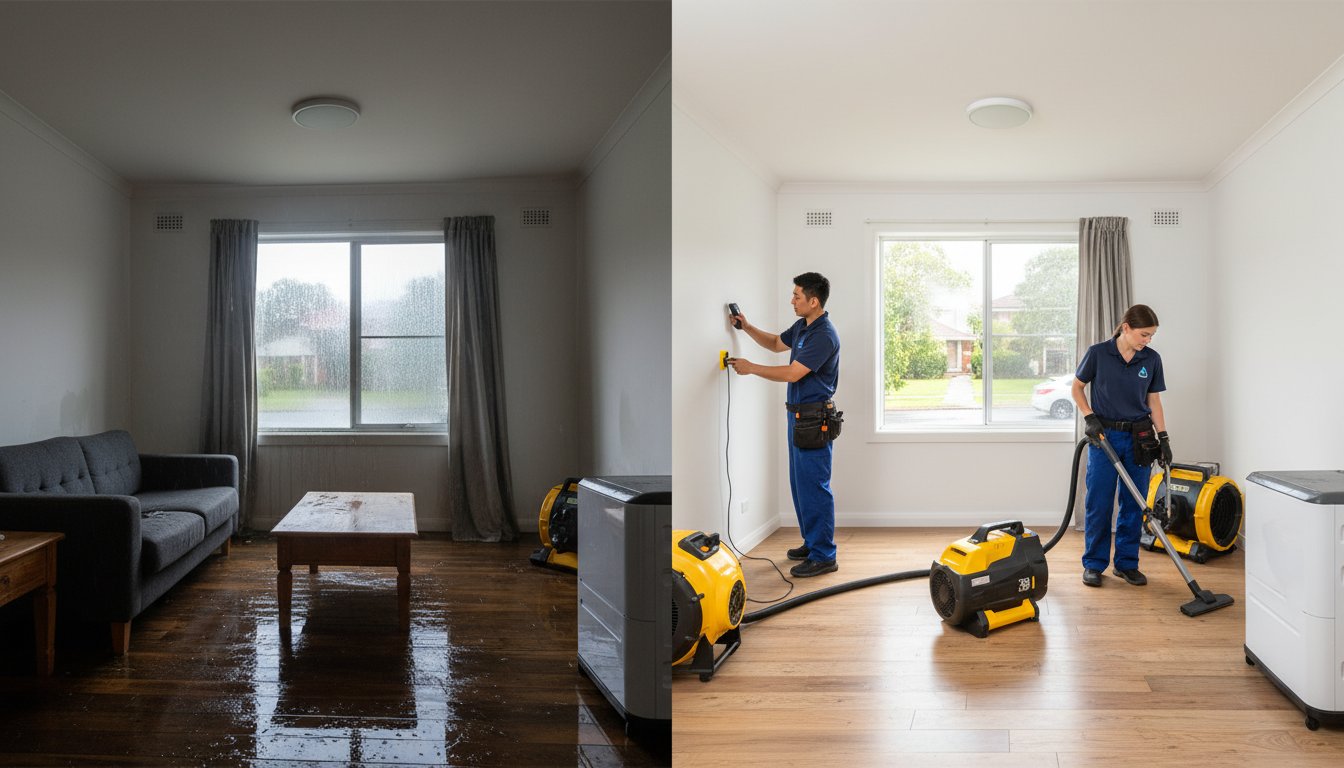

That musty, damp smell hits you the moment you turn on the air conditioner. It’s a common problem for many Australian homes, but it’s more than just an unpleasant odour-it’s a serious warning sign. If you’re worried about the health risks of breathing in mould spores and are searching for a safe way on how to clean mould in air conditioner units, you have come to the right place. Don’t let the problem worsen-because it will.
The thought of tackling it yourself can be daunting. Are the cleaning products safe for your family? Could you damage an expensive component? This complete guide is designed to give you peace of mind. We will walk you through the professional, step-by-step process for safely cleaning your AC unit. You will learn effective techniques, which products are safe and reliable, and-most importantly-how to recognise when the job requires an expert technician to ensure your family’s health and safety. Let’s restore your home’s air quality and get rid of that mould for good.
Key Takeaways
- Discover why the constant moisture inside your AC unit creates a perfect breeding ground for dangerous mould growth.
- Learn the essential safety precautions and step-by-step process for how to clean mould in your air conditioner’s filters and accessible components.
- Recognise the critical signs that indicate a deeper infestation beyond a DIY fix, which poses serious health risks and requires professional remediation.
- Get practical, preventative tips you can use immediately to stop mould from returning and maintain healthier air in your home.
Why Your Air Conditioner is a Breeding Ground for Mould
Your air conditioner is designed to keep you cool and comfortable, but its internal workings create a perfect storm for mould growth. The dark, damp environment inside your unit is an ideal habitat for harmful mould to thrive, turning a source of comfort into a serious health hazard. Before you learn how to clean mould in air conditioner units, it’s crucial to understand why it grows there in the first place.
The Key Ingredients: Moisture, Dust, and Darkness
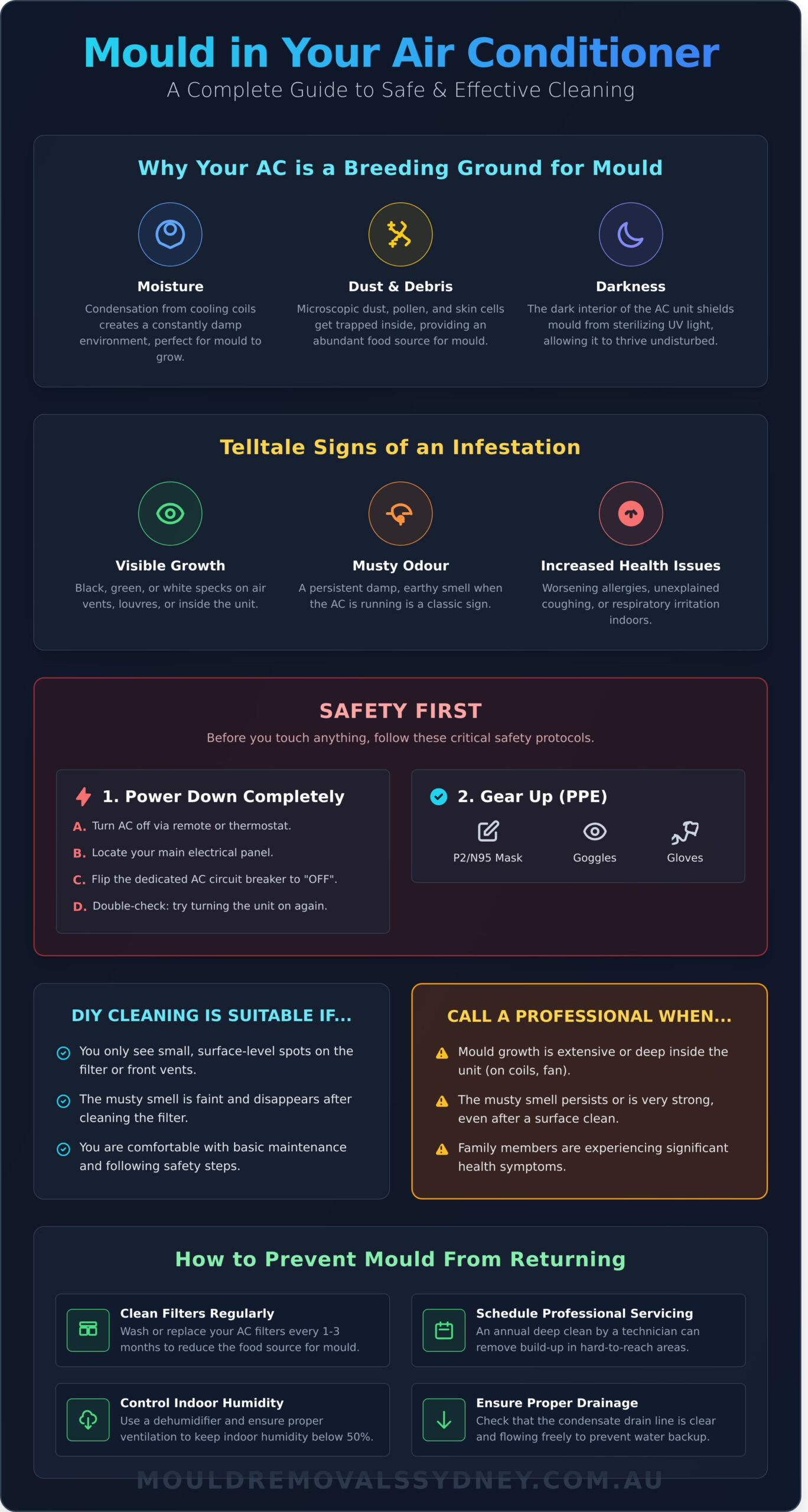
Mould requires three things to grow: moisture, a food source, and darkness. Your AC unit provides all three in abundance. The evaporator coils inside your unit cool the air by drawing out heat and humidity, creating constant condensation. This moisture collects on the coils and in the drain pan, providing the primary ingredient for mould.
Even the best filters can’t stop microscopic particles of dust, skin cells, and pollen from entering the unit. This organic debris settles on the damp internal components, serving as a ready food source. Shielded from the sun’s sterilising UV rays, the dark interior allows mould to grow undisturbed, spreading rapidly through the system.
Telltale Signs of Mould in Your AC Unit
Ignoring the problem is not an option. You must act quickly if you notice any of these warning signs, as they indicate a mould problem that will only worsen over time.
- Visible Growth: You may see black, green, or white specks on the air vents, louvres (blades), or inside the unit itself.
- Musty Odour: A persistent musty, damp, or earthy smell when the air conditioner is running is a classic sign of mould or mildew.
- Increased Health Symptoms: If your family experiences worsening allergies, unexplained coughing, or respiratory irritation indoors, your AC could be the culprit.
Health Risks: Why You Can’t Ignore AC Mould
When your air conditioner runs, it doesn’t just circulate cool air-it actively blows microscopic mould spores directly into your living space. Inhaling these airborne spores can trigger a range of immediate problems, from allergic reactions and sinus congestion to severe asthma attacks. A deeper understanding of the health effects of indoor mould reveals why immediate action is critical. Prolonged exposure can lead to more serious respiratory conditions, making it vital to know how to clean mould in air conditioner systems to maintain a safe indoor environment.
Safety First: Essential Precautions Before You Begin Cleaning
Before you begin to tackle the mould inside your AC unit, you must understand one critical fact: safety is not optional. You are dealing with two significant hazards-live electricity and airborne mould spores. Mishandling either can lead to serious injury or health problems. Following a strict safety protocol is the first and most important step when learning how to clean mould in an air conditioner effectively and without risk. This isn’t just about getting a good result; it’s about protecting yourself and your family.
Power Down Completely: Your First and Most Important Step
Never attempt to clean an air conditioner while it is connected to a power source. A simple mistake could result in severe electrical shock. To ensure the unit is completely de-energised and safe to work on, follow these steps without exception:
- Turn It Off at the Source: Use the remote control or wall thermostat to switch the air conditioner completely off.
- Find the Breaker: Locate your home’s main electrical panel or circuit breaker box.
- Isolate the Circuit: Flip the switch for the dedicated air conditioner circuit to the “OFF” position. It is often labelled “AC,” “Air Con,” or with the room it serves.
- Double-Check for Safety: Try to turn the unit on with its remote again. If it remains completely unresponsive, you have successfully cut the power.
Gear Up: Essential Personal Protective Equipment (PPE)
Mould releases microscopic spores into the air that can cause serious respiratory issues and allergic reactions when inhaled. Disturbing the mould during cleaning will release a concentrated cloud of these dangerous spores. It is vital to protect yourself with the right gear.
- P2 or N95 Respirator Mask: A standard dust mask is not sufficient. You need a properly rated respirator to filter out fine mould spores.
- Safety Goggles: Protect your eyes from falling debris, mould particles, and splashes of cleaning solution.
- Waterproof Gloves: Keep your hands clean and prevent skin irritation from both the mould and any cleaning agents used.
Choosing a Safe Cleaning Solution (And What to Avoid)
The goal is to kill the mould without damaging your air conditioner’s sensitive internal components. For a safe and effective DIY approach, a simple solution of equal parts white vinegar and water in a spray bottle is highly recommended. It’s a natural anti-fungal that won’t corrode the delicate aluminium fins. Proper mould control relies on using the right agents and managing dampness, a principle detailed in the authoritative EPA guide to mould and moisture.
Crucially, avoid using bleach. While many assume it is the ultimate mould killer, bleach can damage plastic and metal parts inside your AC unit and produce dangerous fumes. If you prefer a stronger solution, opt for a commercially available, non-acidic coil cleaner specifically designed for air conditioners, available at most hardware stores.
The DIY Method: A Step-by-Step Guide to Cleaning Your AC
Ready to tackle the mould yourself? This guide provides a simple, effective method for a surface-level clean of your split system’s indoor unit. Following these steps is the most effective DIY approach for how to clean mould in air conditioner units that have minor, visible contamination. While this process can significantly improve air quality, it is not a substitute for professional remediation of a deep-seated infestation. For initial problems, however, this is an excellent first line of defence.
Before you begin, remember to switch off the power to your air conditioner at the circuit breaker. Safety is always the first step.
Step 1: Accessing and Cleaning the Filters
Your AC filters are the primary barrier against dust, spores, and other airborne particles. Keeping them clean is critical. Gently open the front panel of the indoor unit; it usually unclips from the bottom or sides and hinges upwards. You will see two rectangular mesh filters. Safely slide or unclip them from their housing. To clean:
- Wash the filters with warm water and a mild soap or detergent.
- Use a soft brush to gently scrub away any stubborn grime.
- Rinse them thoroughly and allow them to air dry completely before re-installing.
Step 2: Cleaning the Evaporator Coils and Blower Fan
Behind the filters are the metal evaporator coils. Lightly spray your vinegar solution onto the coils, avoiding soaking any electrical components. Using a soft brush or cloth, gently wipe in a downward motion, following the direction of the fins. Important: These metal fins are extremely delicate and can be bent or damaged with very little pressure. Afterwards, carefully wipe the visible surfaces of the cylindrical blower fan (or ‘barrel fan’) to remove any built-up mould and dust.
Step 3: Clearing the Condensate Drain Pan and Line
Mould thrives in the damp, dark environment of the condensate drain pan, which sits beneath the evaporator coils. Wipe this pan clean with a cloth sprayed with your vinegar solution to remove any slime or visible mould spots. If accessible, check the opening of the drain line to ensure it isn’t clogged with debris, as a blockage can cause water to back up and encourage mould growth.
Step 4: Reassembly and Final Wipe-Down
Patience is key. Ensure every component, especially the filters, is 100% dry before putting it all back together. A damp filter will become a breeding ground for new mould almost immediately. Once dry, slide the filters back into place and snap the front panel securely shut. Wipe down the external plastic housing and vents. Finally, restore power at the circuit breaker and run the unit on ‘fan only’ mode for 15-20 minutes to help dry any remaining moisture inside.
When DIY Isn’t Enough: The Hidden Dangers and Professional Solutions
A surface clean can make your air conditioner look better, but it often masks a deeper, more dangerous problem. The real threat from AC mould isn’t the visible grime you can wipe away; it’s the millions of invisible airborne spores released from hidden colonies deep within the system. While DIY cleaning is a good first step, it cannot solve a true infestation and can often make your home’s air quality worse.
The Airborne Spore Problem: What You Can’t See Can Hurt You
Every time you wipe or spray a visible mould patch, you risk disturbing the colony, causing it to release a defensive cloud of microscopic spores into your home. These are the particles that trigger allergies, asthma, and other serious health issues. DIY methods simply cannot reach the mould growing on the internal blower fan, deep within the coil fins, or inside the condensate drain pan. This hidden contamination is the true source of recurring musty smells and persistent health symptoms.
Red Flags: Signs You Must Call a Professional
Ignoring these red flags allows the problem to spread, increasing health risks and future repair costs. If you notice the following, it’s a sign that searching for how to clean mould in an air conditioner online is no longer enough. Call an expert immediately if:
- The musty, damp smell returns within days or weeks of your cleaning attempt.
- You can see significant, widespread mould covering the internal coils, fan blades, or vents.
- A family member suffers from severe allergies, asthma, or is immunocompromised, making them highly vulnerable to airborne spores.
- You see water stains on the wall or ceiling around the unit, suggesting the mould has penetrated the wall cavity.
What a Professional Mould Remediation Involves
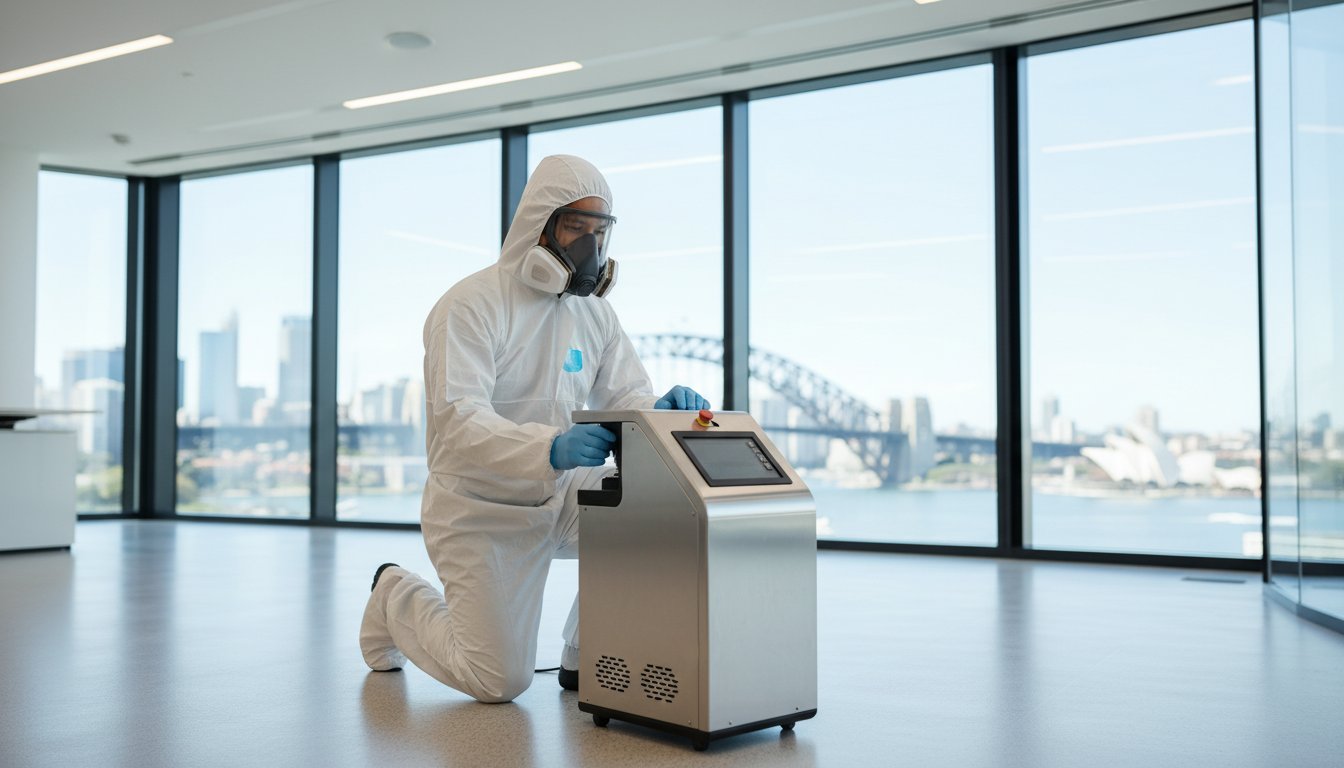
A professional solution is not just cleaning; it’s a complete, scientific remediation process. Our certified technicians establish strict containment zones to prevent spores from spreading to other areas of your home. We then dismantle the unit to access every component, using specialised tools and HEPA-filtered vacuums to safely remove all physical mould at its source.
Crucially, we eliminate the invisible threat. Using industry-leading technology like the Goldmorr System, we perform non-mechanical air scrubbing and fogging to capture and kill airborne spores. This ensures the air you breathe is genuinely clean and safe, providing total peace of mind. Don’t risk it. Get a free quote for professional AC mould removal in Sydney.
How to Prevent Mould from Returning to Your Air Conditioner
You’ve successfully cleaned the mould from your air conditioner, but the job isn’t finished. Winning the battle is one thing; winning the war requires a preventative strategy. Simply knowing how to clean mould in air conditioner units is not enough. You must create an environment where it cannot thrive. These proactive steps will protect your system, your property, and your family’s health from future mould outbreaks.
Establish a Regular Cleaning Routine
Consistent maintenance is your first line of defence. Mould feeds on dust, skin cells, and organic debris that accumulate inside your unit. By removing its food source, you make it significantly harder for spores to establish a colony. Make this simple routine a habit:
- Clean Your Filters: Check and clean your AC filters every 1-3 months, depending on how often you use the unit. A clogged filter is a breeding ground for mould.
- Perform a Seasonal Surface Clean: At the beginning of each cooling season, repeat the simple DIY surface clean outlined in this guide. This clears away any dust that has settled during the off-season.
Control Your Home’s Indoor Humidity
Mould cannot grow without moisture. Your air conditioner removes some humidity from the air, but it can’t do it all, especially in damp Sydney weather. Take control of your home’s moisture levels to create an inhospitable environment for mould.
- Use exhaust fans in your kitchen and bathroom to vent steam and moisture outside.
- Consider using a dehumidifier in naturally damp areas like basements, laundry rooms, or poorly ventilated spaces.
- Aim to keep your home’s relative humidity below 50%. A simple hygrometer can help you monitor these levels effectively.
Schedule Annual Professional Servicing
While DIY cleaning is crucial, it cannot replace a professional deep clean. An annual service by a certified technician is the single most effective way to prevent mould from returning. Our expert technicians can safely access and thoroughly clean critical components you can’t reach, like the evaporator coils, blower fan, and internal drain pans-areas where mould loves to hide.
A professional service not only guarantees a mould-free system but also improves your unit’s efficiency and extends its lifespan. Don’t wait for that musty smell to return. Keep your air healthy year-round. Book your annual AC check-up today.
Take Back Your Air: Final Steps to a Mould-Free AC
You now have a clear roadmap for tackling mould in your air conditioner. The key takeaways are simple: while DIY methods can handle minor surface issues, safety must always come first, and consistent prevention is essential to stop regrowth. Understanding how to clean mould in air conditioner is the first step, but recognising when the problem requires professional expertise is critical for your family’s well-being. Don’t wait for a small problem to become a major health hazard.
If the mould is extensive or you want guaranteed results, it’s time to call in the professionals. As Sydney’s Trusted Mould Remediation Experts, we use the industry-leading Goldmorr System to eradicate mould safely and effectively. We will even beat any written quote by 10%. Don’t let mould compromise your family’s health. Get a fast, free quote for professional mould removal in Sydney!
Taking control of your indoor air quality is the best decision you can make. Act now for a healthier home and complete peace of mind.
Frequently Asked Questions About AC Mould
Can I just spray bleach into my air conditioner to kill mould?
Absolutely not. Spraying bleach into your air conditioner is a dangerous mistake. Bleach is highly corrosive and can severely damage the delicate aluminium coils and internal components of your unit. Furthermore, it only removes the surface colour of the mould, leaving the roots intact to regrow. The fumes can also circulate through your home, creating a toxic indoor environment. Always use a purpose-made, non-corrosive coil cleaner for any DIY attempt.
How much does professional air conditioner mould cleaning cost in Sydney?
In Sydney, you can expect professional mould cleaning for a single split system unit to cost between A$200 and A$500. The final price depends on the severity of the mould infestation, the type of unit (e.g., split system vs. ducted), and its accessibility. For a precise and affordable quote, it is always best to contact a certified mould remediation specialist who can properly assess the situation. Be wary of quotes that seem too low.
What is the difference between a standard AC service and a mould remediation service?
A standard AC service focuses on mechanical function-checking gas levels, cleaning filters, and ensuring the unit runs efficiently. A professional mould remediation service is a specialised health and safety procedure. It involves a complete strip-down and deep clean of all components, using industry-grade anti-microbial treatments to eradicate mould colonies and airborne spores from the system. It’s the difference between a quick tune-up and a complete decontamination of the unit.
How can I tell if the mould in my AC is toxic black mould?
You can’t tell just by looking. While some mould may appear black and slimy, the only way to confirm if it is a specific toxic species like Stachybotrys chartarum is through professional lab testing. However, all mould types can release spores that cause allergic reactions and respiratory issues. You must treat any visible mould growth as a serious health risk that requires immediate and effective removal, regardless of its colour or type.
Will cleaning the mould in my air conditioner get rid of the musty smell for good?
Yes, a thorough, professional clean will eliminate the musty smell because it removes the source-the mould colony itself. The key to ensuring the odour doesn’t return is to also address the underlying moisture issue that allowed the mould to grow. A comprehensive service on how to clean mould in air conditioner properly will not only kill the mould but also ensure the unit’s drainage is clear to prevent future problems.
Is it safe to run my air conditioner if I see mould in it?
No, it is extremely unsafe. Running a mould-infested air conditioner is one of the worst things you can do. The fan will actively blow mould spores, mycotoxins, and other contaminants directly into your living space, circulating them in the air you breathe. This can trigger serious allergic reactions, asthma attacks, and other respiratory illnesses. Turn the unit off immediately and do not use it again until it has been professionally decontaminated.