
Is your air conditioner keeping you cool, or is it silently circulating toxic spores throughout your living room every time you press ‘on’? If you’ve noticed a nagging cough or a faint, earthy scent coming from your vents, you’re likely asking: is aircon mould dangerous? The short answer is yes. In Sydney’s humid coastal climate, an unserviced AC unit can quickly become a breeding ground for pathogens that compromise your family’s health.
It’s frustrating to feel like your own home is making you sick, especially when you’re worried about “Black Mould” affecting your children or pets. You deserve to breathe clean, safe air without the constant anxiety of hidden toxins. We understand the stress these invisible threats cause. That’s why we’ve compiled this essential guide to help you identify the warning signs before the problem worsens, because it always does.
You’ll discover the specific respiratory risks associated with HVAC systems and why professional remediation is the only way to ensure lasting safety. We’ll also introduce you to the Goldmorr System, our industry-leading solution that removes mould at the source. It’s time to stop the sniffles and restore your peace of mind with a professional, affordable approach that’s proven to work. It’s that simple.
Key Takeaways
- Understand how your HVAC system acts as a “spore delivery vehicle,” actively distributing contaminants to every room in your Sydney home.
- Discover the specific respiratory risks involved and find out exactly why is aircon mould dangerous due to the release of toxic mycotoxins.
- Learn to distinguish between simple dust and critical warning signs like the “musty sock” odour or visible spotting on your AC louvres.
- Identify why surface cleaning and DIY “mould bombs” are ineffective for internal decontamination and when to call in master technicians.
- Get peace of mind by learning about the professional remediation processes that safely eliminate mould without risking further airborne spread.
Why Air Conditioner Mould is a Unique Health Threat
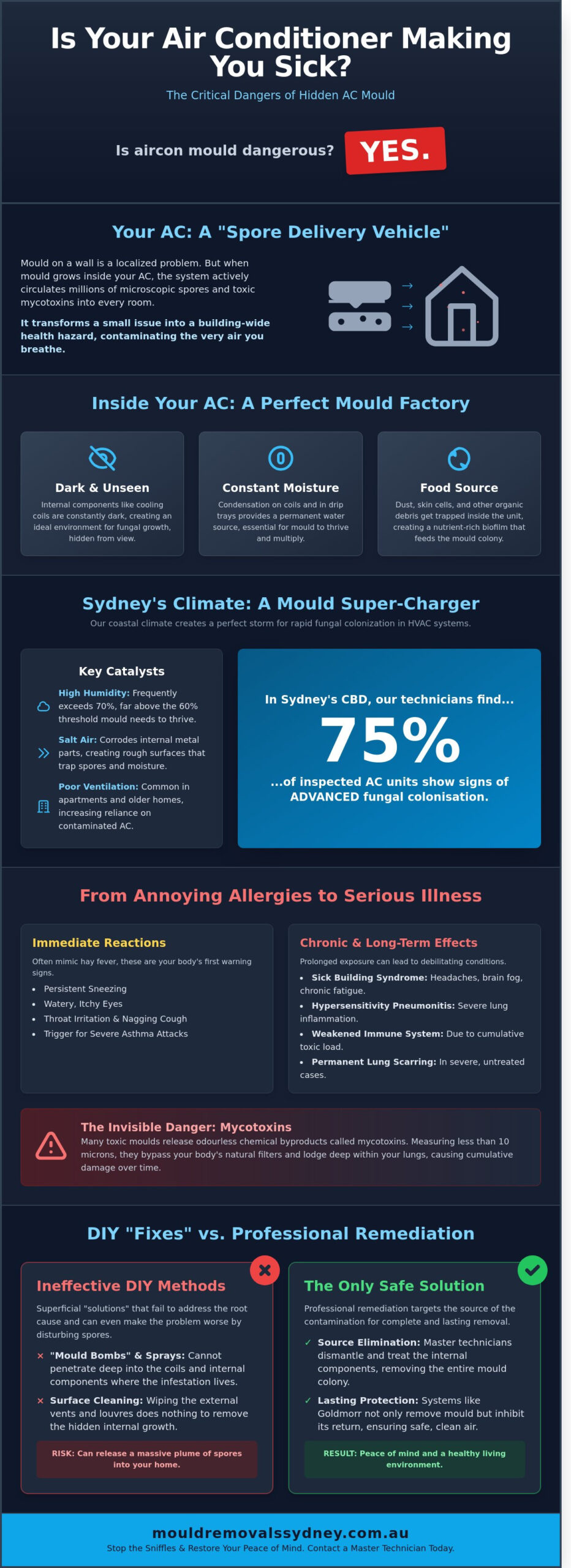
Air conditioner mould is a fungal infestation that establishes itself within the internal components of your HVAC system. It isn’t just a surface stain; it’s a living organism that releases microscopic spores directly into your breathing zone. Many Sydney property owners ask, is aircon mould dangerous? The answer is a definitive yes. This is because your AC unit acts as a “Spore Delivery Vehicle.” While mould on a wall stays stationary, AC mould uses forced air to distribute contaminants to every corner of your home or office. It turns a localized problem into a building-wide health hazard.
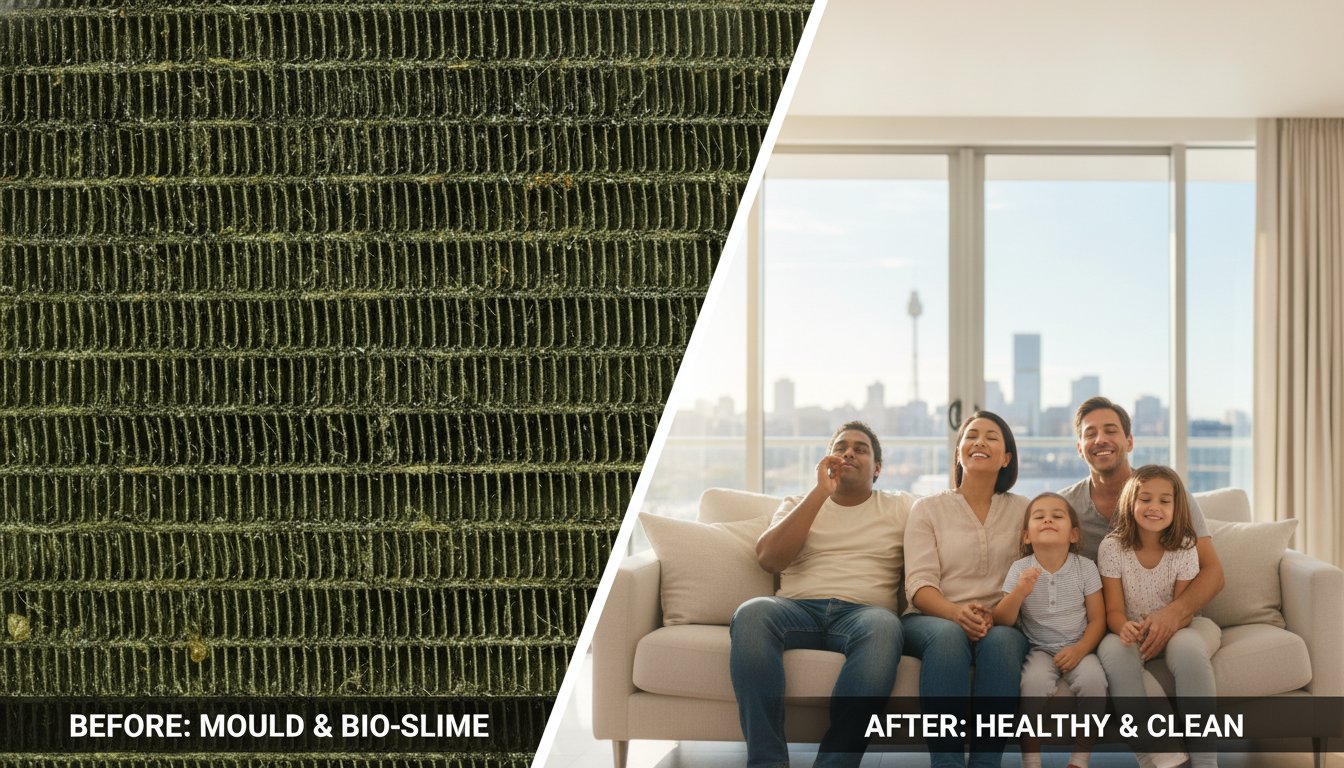
The cooling coils are the primary concern. These components are consistently dark and damp, creating the perfect breeding ground for toxic fungi like Aspergillus and Cladosporium. There’s a massive difference between visible external mould and hidden internal contamination. A unit can look spotless on the outside while the internal blower fan and coils are covered in thick, furry growth. You can’t see the threat, but you’re breathing it in every time you hit the “on” button.
The Mechanics of Airborne Contamination
When air passes over contaminated coils, it picks up millions of microscopic spores in seconds. This isn’t just dust; it’s a concentrated blast of allergens and mycotoxins. Condensation trays often foster stagnant, toxic water if the drainage is even slightly restricted. This creates a biofilm that feeds the infestation. Our master technicians frequently find that “clean-looking” units harbour enough internal growth to trigger severe respiratory reactions. Don’t trust a visual inspection of the plastic casing. Internal hygiene is what matters for your safety.
Sydney’s Climate: A Catalyst for AC Mould
Sydney’s climate is a massive catalyst for fungal growth. During the summer months, relative humidity levels in suburbs like Parramatta or Surry Hills frequently exceed 70%. Since mould thrives once humidity passes the 60% threshold, your AC is under constant biological attack. Coastal salt air also accelerates the problem. It corrodes metal components, creating pitted surfaces that trap spores and moisture more effectively than smooth metal.
High-density Sydney apartments and older terrace houses are at the highest risk. These properties often have limited natural cross-ventilation, forcing residents to rely on HVAC systems that haven’t been professionally treated. We’ve found that 75% of units we inspect in the CBD show signs of advanced fungal colonisation. At Mould Removals Sydney, we use the Goldmorr System to eliminate these threats at the source. It’s that simple. It’s that easy. Don’t wait for a musty smell to take action; by then, the spores have already moved in.
The Serious Health Risks of Aircon Mould Exposure
Many homeowners wonder, is aircon mould dangerous? The short answer is yes. When your AC unit circulates air, it also spreads millions of microscopic spores throughout your living space. Immediate reactions often mimic hay fever, including persistent sneezing, watery eyes, and throat irritation. However, the risk goes deeper than simple allergies. According to Asthma Australia, 1 in 9 Australians suffer from asthma, and indoor mould is a primary trigger for severe attacks. Don’t wait until the problem worsens; it will.
Mould-Related Illnesses and Symptoms
Sick Building Syndrome often starts in residential settings when AC units aren’t professionally maintained. You might experience unexplained headaches, brain fog, or chronic fatigue that disappears when you leave the house. More serious is hypersensitivity pneumonitis. This condition causes significant lung inflammation. In 2022, clinical reports linked prolonged exposure to organic dust in HVAC systems to permanent lung scarring. If you notice these signs, it’s vital to get a professional assessment from a master technician before your health declines.
The Invisible Danger: Mycotoxins and Spores
You can’t always rely on your nose to detect a problem. While some mould produces a musty scent, many toxic species release odourless mycotoxins. These chemical byproducts are incredibly small, often measuring less than 10 microns. This size allows them to bypass your nose and throat filters, settling deep into the alveolar sacs of your lungs. Daily exposure in a closed, air-conditioned room creates a cumulative toxic load. This build-up weakens your immune system over months of breathing recycled air.
Certain groups face 40% higher risks of developing chronic conditions from mould exposure. The most vulnerable individuals include:
- Children: Their developing lungs are more susceptible to permanent damage and the onset of childhood asthma.
- The Elderly: Reduced lung capacity makes it harder to clear inhaled spores from the respiratory tract.
- Immunocompromised Individuals: Those undergoing treatment or with existing conditions can develop invasive fungal infections.
For a child, breathing in spores daily can lead to the development of lifelong respiratory issues. We use the Goldmorr System to eliminate these threats, ensuring your indoor air quality meets safety standards. It’s that simple. It’s that easy.
Aircon Mould vs. Surface Mould: A Comparison
Homeowners often ask, is aircon mould dangerous compared to a small patch on a bathroom tile? While all mould requires attention, the location determines the level of risk to your family. Surface mould on a gyprock wall is a localized problem. It sits in one spot and releases spores slowly into the immediate area. Mould inside an air conditioning system is an active threat because it uses your home’s ventilation as a high-speed delivery mechanism. When you turn on the unit, you aren’t just cooling the room. You’re blasting millions of microscopic spores directly into your breathing zone.
Distribution and Reach
Surface mould stays where it grows until it’s disturbed. In contrast, AC mould travels at the speed of your fan. This creates an invisible reach that affects every corner of the property. Because these units recirculate air, spores quickly settle on high-contact soft furnishings. This includes your carpets, curtains, and bedding. Once spores embed themselves in these porous materials, they can begin new colonies if the humidity levels are right. Detecting this is difficult. You might spot a dark stain on a ceiling easily, but HVAC infestations often hide behind the coil or deep within the ductwork where they remain invisible to the naked eye for months.
- Localized vs. Systemic: Surface mould affects a corner; AC mould affects the entire air volume.
- Cross-Contamination: Fans carry spores to unaffected rooms, leading to widespread secondary growth.
- Detection Lag: Internal growth often goes unnoticed until health symptoms or musty odours become unbearable.
Remediation Complexity
Cleaning a wall involves wiping the surface with a specialized solution. Remediation for an HVAC system is a different beast entirely. Wiping the plastic vent cover is a cosmetic fix that does nothing to solve the root cause. If you try to scrub the inside of a duct yourself, you risk pushing spores deeper into the system. This DIY approach often agitates the colony, causing a massive release of spores into your living space. Understanding why is aircon mould dangerous involves recognizing that these systems require professional decontamination to be truly safe.
Our master technicians use the Goldmorr System to ensure every component is treated. This goes beyond what household cleaners can achieve. Standard supermarket sprays don’t reach the cooling coils or the back of the barrel fan where moisture accumulates. For a deeper look at the types of fungi that might be lurking in your vents, read our article on What Is Black Mould? A Complete Guide for Sydney Homeowners. We don’t just clean; we restore your air quality to a healthy standard. Don’t settle for a surface-level wipe when your health is on the line.
Warning Signs: Is Your AC Already Dangerous?
Don’t ignore that stale, “dirty sock” smell when you switch on your unit. Odour is your first and most reliable warning. This scent isn’t just a nuisance; it’s the smell of active fungal colonies thriving in the dark, damp corners of your system. If you notice a persistent earthy or musty aroma, your unit is likely circulating millions of spores through your home. Many homeowners wonder, is aircon mould dangerous? The answer is a resounding yes. These spores settle on your furniture and enter your lungs, posing immediate health risks to your family.
Visible spotting is another critical indicator that requires urgent attention. Take a torch and look closely at the louvres and the internal filters. Small black or green specks are not just “dust.” They are often the visible tip of a much larger infestation hidden deep within the evaporator coils. If you see these marks, the contamination is already advanced. You’ll also notice a spike in your quarterly energy bills. Mould buildup on internal components restricts airflow, forcing the motor to work 15% to 20% harder to maintain the set temperature. This inefficiency costs you money every month while degrading your indoor air quality.
Perform a simple “Health Test” this week. Pay close attention to how you feel inside the house versus outside. If your sneezing, itchy eyes, or persistent headaches improve within 30 minutes of leaving the property, your AC is the primary suspect. This pattern suggests the air conditioning system is the source of environmental toxins.
Physical and Sensory Indicators
Look for “black dust” accumulating around the vents or on the ceiling nearby. This is rarely common household dust; it’s usually concentrated fungal growth or “mould shadows” forming where the air hits the wall. Excessive condensation or water dripping from the indoor unit is another red flag. Moisture is the fuel mould needs to thrive. When drainage lines clog with biological slime, the unit becomes a breeding ground for pathogens. You might also notice the air feels “heavy” or humid, even when the cooling function is active.
When to Call a Professional Inspector
Routine filter cleaning is a basic maintenance task, but it doesn’t reach the internal drainage pans or the back of the cooling coils. If your health symptoms persist despite cleaning the filters, the problem is internal. You must call an expert after any significant water damage or plumbing leak near your HVAC system. Master technicians use the industry leading Goldmorr System to eliminate these hidden threats safely. For a guaranteed result, trust Sydney’s #1 Mould Removal Service to restore your home’s safety. It’s that simple. It’s that easy.
Stop breathing in toxic spores today. Contact our expert team for a professional AC inspection and quote.
Professional Removal: The Only Safe Solution
Stop wasting money on supermarket sprays. Off-the-shelf “mould bombs” and aerosol cleaners are ineffective for internal AC components. They rarely reach the dark, damp crevices of the evaporator coils where toxic colonies thrive. Worse, these products often contain harsh chemicals that can damage your unit’s delicate fins. If you are wondering is aircon mould dangerous, the answer is a resounding yes when the root cause remains untouched. Our master technicians provide a permanent solution rather than a temporary mask.
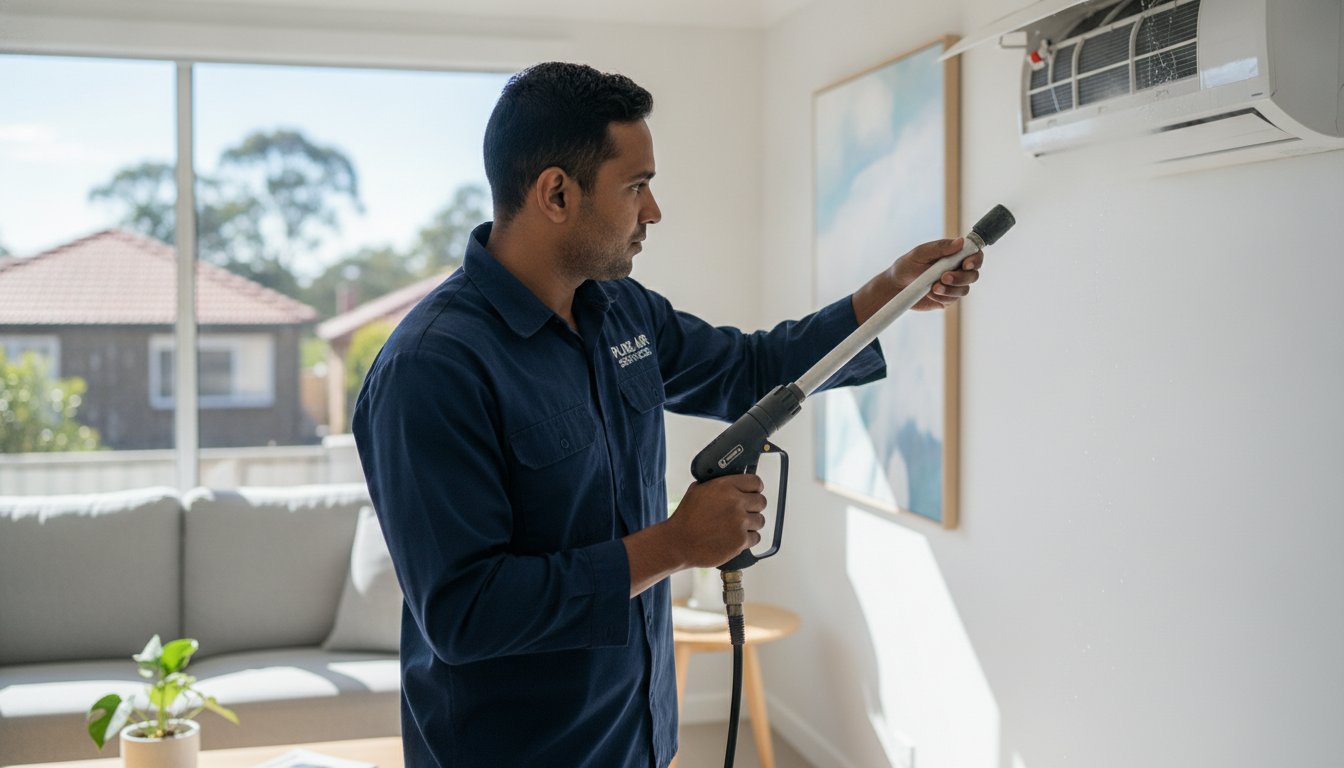
The ABC Mould Cleaning Solutions approach utilizes the world-renowned Goldmorr System. This isn’t just a basic clean; it’s a medical-grade remediation process. We use biodegradable fogging technology that penetrates the entire HVAC system, reaching hidden spores that manual scrubbing simply cannot find. We also deploy non-mechanical air scrubbing to capture 99.9% of microscopic particles, ensuring your indoor air quality is restored immediately. It’s about total eradication, not just surface aesthetics.
Our Specialized AC Decontamination Process
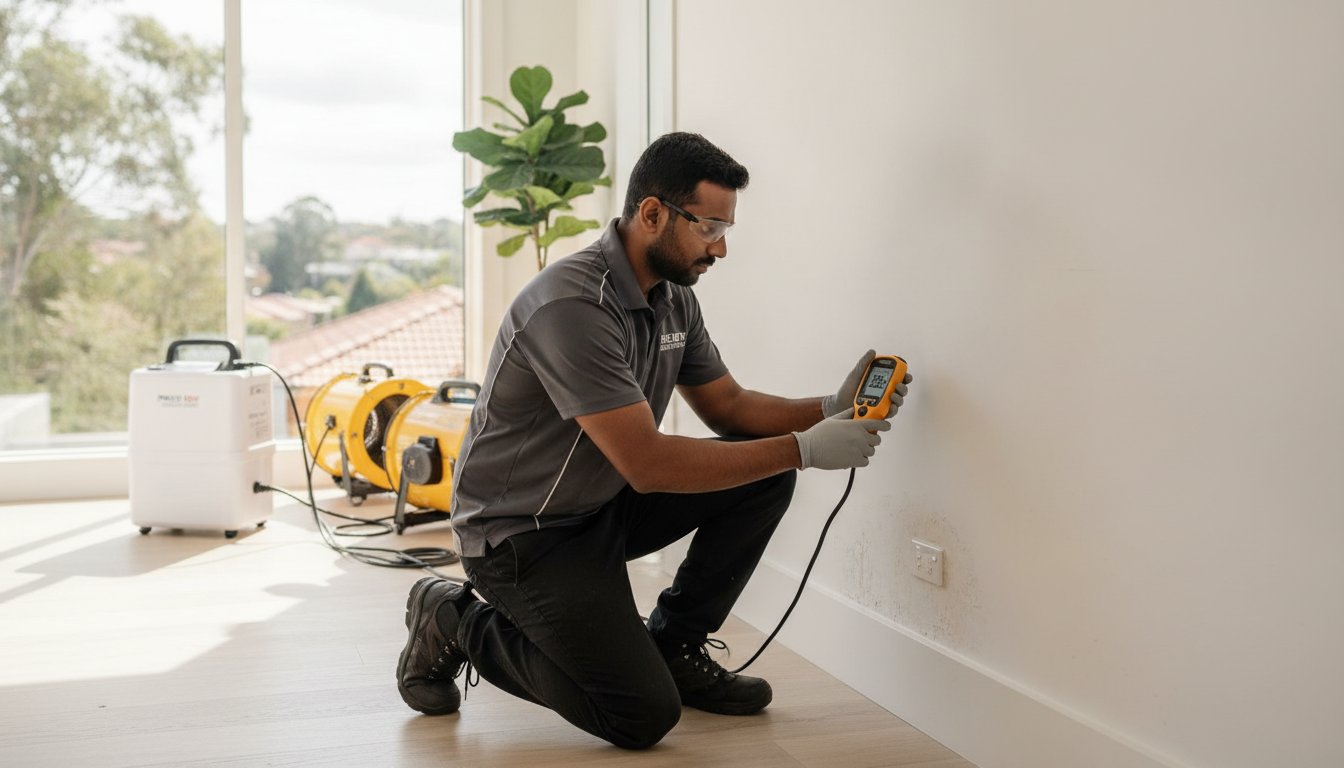
- Step 1: Comprehensive inspection. We examine the unit and ductwork using high-definition cameras to identify every hidden colony and moisture source.
- Step 2: Surface eradication. We apply specialized, safe formulations to kill surface mould on contact without damaging your property or the environment.
- Step 3: Fogging and air scrubbing. Our biodegradable fog fills the system to eliminate airborne spores, while air scrubbers purify the room to remove the airborne threat permanently.
Long-Term Prevention and Peace of Mind
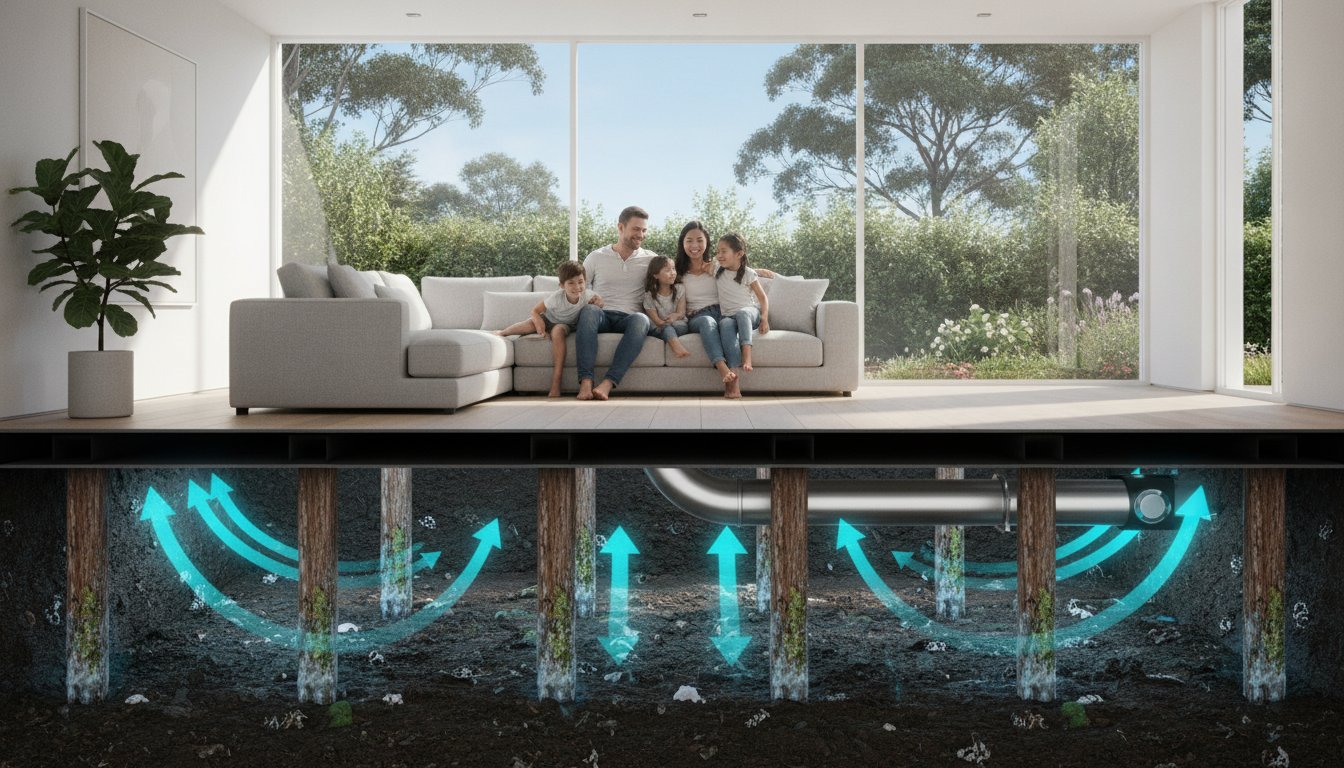
Getting rid of the mould is only half the battle. We recommend maintaining indoor humidity levels below 55% to stop regrowth. Improving subfloor ventilation is another critical step for Sydney homes, as damp foundations often feed upper-level humidity issues. You can trust our team to provide a solution that lasts, backed by our industry-leading expertise and scientific methods. We don’t just clean; we restore safety to your living space.
Professional safety is affordable. We offer a “Beat Any Quote” guarantee, promising to beat any written quote by 10% for the same professional service. Don’t breathe in danger. Send us images of your AC for a free quote today! It’s that simple. It’s that easy. We are the trusted local experts you need to protect your family’s health.
Protect Your Family From Invisible Airflow Hazards
Ignoring the question, is aircon mould dangerous, puts your household at risk of breathing in millions of airborne spores every hour. Unlike surface growth, air conditioner contamination circulates toxins directly into your living spaces, which can trigger respiratory distress or allergic reactions within 48 hours of exposure. Standard wipes don’t reach the internal coils where these colonies thrive. You need a professional approach to ensure your Sydney home remains a safe environment for everyone inside.
Mould Removals Sydney utilizes the specialized Goldmorr System to eliminate spores at a microscopic level. Our Master Technicians apply local expertise to every inspection, ensuring your system meets strict safety standards. We’re committed to your health and your budget, which is why we will beat any written quote by 10%. It’s that easy to secure a cleaner, healthier home today. Don’t let hidden growth compromise your air quality when expert help is ready to assist.
Schedule Your Professional AC Inspection & Get a Free Estimate
Take the first step toward a healthier home and breathe easy knowing your air is pure again.
Frequently Asked Questions
Can aircon mould cause permanent lung damage?
Yes, long term exposure to airborne spores from a contaminated unit can lead to permanent respiratory issues like pulmonary fibrosis or chronic asthma. If you are asking is aircon mould dangerous, the answer is a firm yes for your lungs. The World Health Organization reports that 15% of childhood asthma cases stem from indoor dampness. Don’t risk 100% of your lung capacity by breathing in mycotoxins every day.
Is it safe to run my AC if I smell mould?
You shouldn’t run your air conditioner if you detect a musty or earthy smell. Turning the unit on circulates millions of microscopic spores throughout your home in under 10 minutes. This increases your risk of sickness and cross-contaminates other rooms and furniture. Turn the system off immediately and call our master technicians to prevent the problem from worsening. It is a serious health risk that requires immediate action.
How can I tell the difference between dust and mould in my vents?
You can distinguish the two by texture and colour. Dust usually appears grey and fibrous, while mould often looks like black, green, or white slimy spots on the plastic fins. If you see clusters that reappear within 48 hours of wiping, it’s a fungal growth. Our team uses non-mechanical air scrubbing to ensure these spores don’t just migrate to your carpets or curtains. Send us images of your vents for an affordable quote.
Do air purifiers help with AC mould spores?
Air purifiers with HEPA filters can capture 99.97% of airborne spores, but they won’t stop growth inside the unit. The internal cooling coils provide a damp environment where mould thrives regardless of your air purifier. You’re simply treating the symptom while the source remains active. Our Goldmorr System targets the root cause inside the machine to provide real peace of mind. It’s the only way to ensure your air is truly clean.
How often should I have my air conditioner professionally cleaned in Sydney?
You should have your air conditioner professionally cleaned every 12 months in the Sydney climate. High humidity levels in suburbs like Parramatta or Cronulla often exceed 70% during summer, which accelerates fungal growth. A yearly service ensures your system remains efficient and safe. We will beat any written quote for a professional deep clean by 10% to keep your home healthy. Regular maintenance prevents the unsightly spread of mould.
Can I use bleach to clean mould out of my air conditioner?
Never use bleach to clean your air conditioner. Bleach is 90% water and actually encourages mould to grow back deeper into porous surfaces within 14 days. It also corrodes the delicate aluminium fins on your evaporator coil, leading to a repair bill of over A$500. We use a professional biodegradable fogging process that kills the mould without damaging your expensive equipment. It’s a safe, effective, and reliable solution for your cooling system.
What are the first signs of ‘mouldy aircon sickness’?
The first signs include persistent sneezing, watery eyes, and unexplained headaches that vanish when you leave the room. Many residents report a 30% increase in fatigue when their AC is running. If you’re wondering is aircon mould dangerous, these physical symptoms are your body’s early warning system. Don’t wait until these minor irritations turn into chronic respiratory conditions. Schedule your cleaning now and get a free estimate.
Does the Goldmorr System work for all types of AC units?
Yes, the Goldmorr System is an industry-leading solution designed for all AC types, including split systems and ducted units. It’s a non-invasive process that uses a specialized foam and fogging technique to reach every internal component. This method is safe for your family, pets, and the environment. It’s that simple. It’s that easy to restore your indoor air quality with our certified master technicians. We provide the expert care your property deserves.