That persistent cough you can’t quite explain. A stubborn skin rash that just won’t clear up. As a parent, your instinct is to protect, and when you spot mould creeping into your home, that instinct goes into overdrive. The worry is immediate and overwhelming, leading to the one critical question every parent in your situation asks: is mould in house dangerous for baby? You’re right to be concerned. The presence of airborne mould spores can pose a significant health risk, especially to an infant’s developing immune and respiratory systems.
But panic is not the answer; professional, informed action is. This guide is here to cut through the fear and give you clarity and control. We will provide expert-backed answers on the specific dangers mould poses to babies in Australia, show you the exact symptoms to watch for, and outline the immediate, effective steps you must take. By the end, you will have a clear plan to ensure your home is safe again, and the peace of mind that you are doing everything right to protect your child.
Why Babies Are Uniquely Vulnerable to Mould Exposure
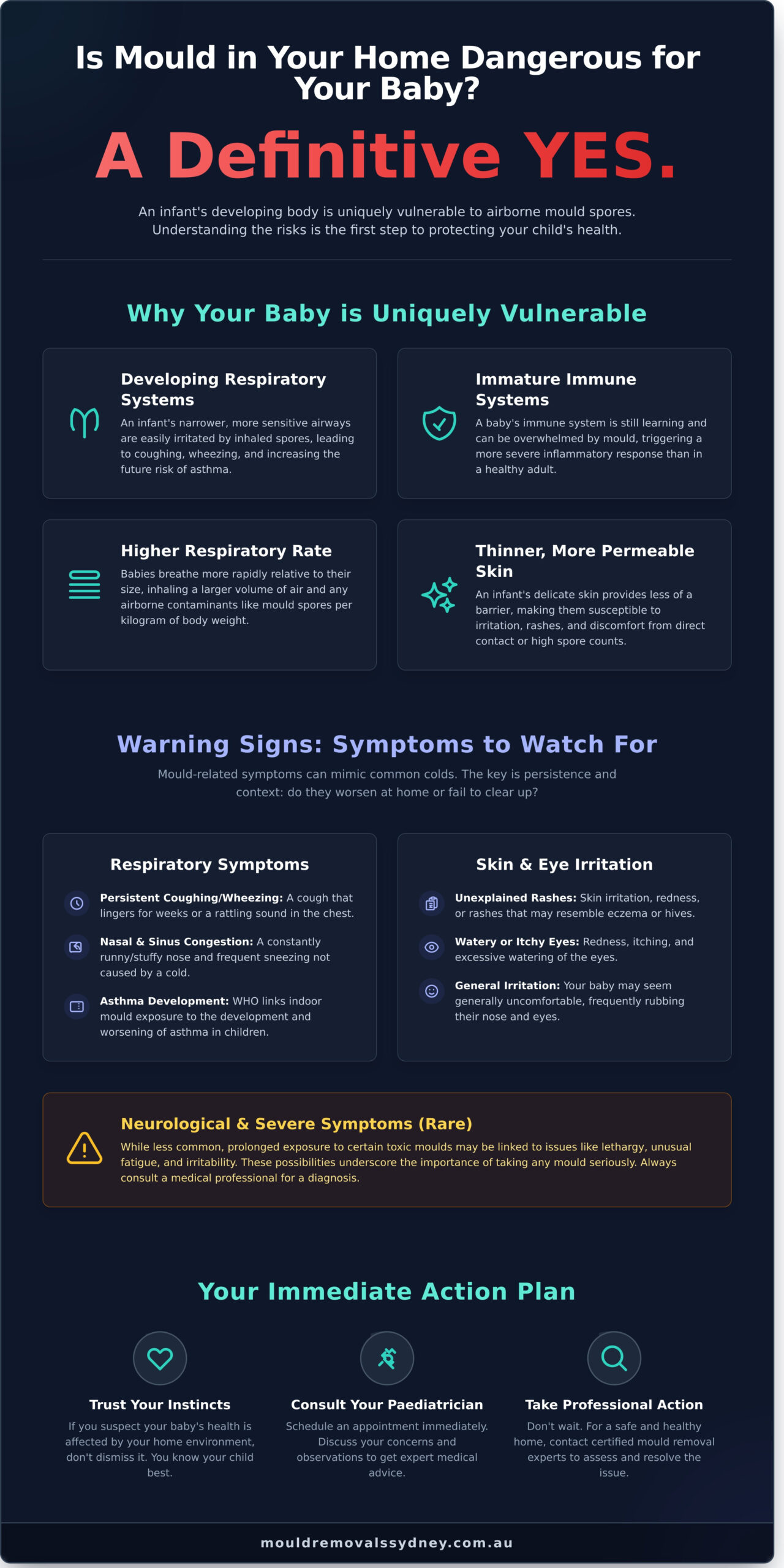
As a parent, your child’s safety is your top priority. So when you see mould in your home, the question “is mould in house dangerous for baby?” is not just valid-it’s critical. The direct answer is yes. While mould can affect anyone, infants and young children are exceptionally susceptible to its harmful effects for several key physiological reasons.
A baby’s body is still in a rapid state of development, leaving it with fewer defences against environmental threats like airborne mould spores. Understanding these vulnerabilities is the first step in protecting your little one.
- Developing Respiratory Systems: An infant’s lungs and airways are not fully mature. They are narrower and more sensitive, making them easily irritated by inhaled mould spores. This irritation can lead to coughing, wheezing, shortness of breath, and can significantly increase the risk of developing asthma later in life.
- Immature Immune Systems: A baby’s immune system is still learning to distinguish between harmless particles and genuine threats. Exposure to mould can overwhelm their developing defences, leading to a more severe inflammatory response than you would see in a healthy adult.
- Higher Respiratory Rate: Babies breathe much more rapidly than adults relative to their body weight. This means they inhale a larger volume of air-and any contaminants within it, like mould spores-per kilogram of body mass. This higher intake increases their total dose of exposure.
- Thinner, More Permeable Skin: An infant’s skin is delicate and provides less of a barrier against the environment. High concentrations of mould spores or direct contact can lead to skin irritation, rashes, and discomfort.
The Science of Mould Spores and Mycotoxins
To understand the risk, you need to know what you’re up against. Mould reproduces by releasing microscopic ‘seeds’ called spores that travel through the air. Some mould species also produce toxic compounds known as mycotoxins, which can cause serious health issues. However, it’s crucial to remember that even common, non-toxic moulds can trigger powerful allergic reactions and respiratory problems. The comprehensive health effects of mold are well-documented, showing a clear link between exposure and illness, especially in vulnerable groups.
How a Baby’s Environment Increases Risk
A baby’s daily routine can unfortunately amplify their exposure. They spend the vast majority of their time indoors, often playing on carpets and floors where heavier mould spores can settle. Furthermore, nurseries and bedrooms are frequently located in areas with poor airflow or higher humidity, creating the perfect breeding ground for mould right where your baby sleeps. This constant, close-proximity exposure is why addressing a mould problem with professional urgency is not just a good idea-it’s essential for your baby’s health.
Health Risks & Symptoms of Mould Exposure in Infants
Your baby’s developing immune and respiratory systems are highly sensitive to environmental contaminants like mould. This heightened vulnerability of infants to mold is why it’s crucial to recognise the warning signs early. Parents constantly ask, “is mould in house dangerous for baby?” The answer is a definitive yes, as exposure can trigger a range of health issues that are often mistaken for common colds or allergies.
The challenge is that mould-related symptoms can mimic other illnesses. The key is context and persistence. If your baby’s symptoms flare up, seem to worsen when they are at home, or don’t clear up with typical treatments, it’s time to consider mould as a potential cause. Never wait for the problem to worsen.
Common Respiratory Symptoms
Airborne mould spores are irritants that can directly affect your baby’s delicate lungs and airways. Be vigilant for recurring or persistent respiratory issues that don’t seem to have another cause. Watch for:
- Persistent Coughing or Wheezing: A cough that lingers for weeks, or a noticeable wheezing or rattling sound in your baby’s chest.
- Nasal and Sinus Congestion: A constantly runny or stuffy nose and frequent sneezing that isn’t explained by a cold.
- Shortness of Breath: Any sign of difficulty breathing or laboured breathing requires immediate medical attention.
- Asthma Development: The World Health Organization has linked indoor mould exposure to the development and exacerbation of asthma in children.
Skin and Eye Irritation
Mould doesn’t just affect breathing. The irritants produced by mould can also cause reactions on the skin and in the eyes. Look for:
- Unexplained Rashes: Skin irritation, redness, or rashes that may resemble eczema or hives.
- Watery or Itchy Eyes: Redness, itching, and excessive watering of the eyes.
- Itchy Nose or Throat: Your baby may seem generally irritated, frequently rubbing their nose and eyes.
Neurological and Severe Symptoms (Rare)
While less common, prolonged exposure to certain types of toxic mould may be linked to more severe health issues. Some research suggests a connection to lethargy, unusual fatigue, and irritability in infants. In extremely rare cases, exposure has been associated with serious conditions like pulmonary hemorrhage. These possibilities are mentioned not to cause alarm, but to underscore the importance of taking mould seriously. A definitive diagnosis for any illness can only be made by a qualified medical professional.
Your first and most important step is to trust your instincts. If you suspect your baby’s health is affected by your home environment, consult your paediatrician immediately. Discuss your concerns and observations with them to get the expert medical advice you need.
How to Identify and Locate Mould in Your Home
To protect your family, you need to become a detective in your own home. Mould isn’t always the obvious cluster of black spots you see in photos; it often hides out of sight, thriving in darkness and damp. The single most important clue to follow is moisture. Where there is persistent dampness, there is a high risk of mould growth. Understanding this is the first step in answering the critical question: is mould in house dangerous for baby? It starts with knowing where to look.
Telltale Signs of a Hidden Mould Problem
Your senses are your best first defence against a hidden mould infestation. Before you see it, you will often smell or feel its effects. Do not ignore these early warnings:
- A Distinct Smell: A persistent musty, damp, or earthy odour is a major red flag that mould is growing somewhere nearby.
- Visible Wall Damage: Look for peeling or bubbling paint, unexplained stains or discolouration on walls and ceilings, and even bulging plasterboard.
- Surface Dampness: Pay attention to any areas that feel constantly damp or have visible condensation, a common problem on windows and poorly insulated walls.
- Warped Materials: Wooden floorboards or skirting boards that are warping or buckling can indicate a serious moisture problem underneath.
Common Mould Hotspots in a Nursery and Home
Mould thrives in specific environments. Conduct regular checks of these common hotspots, paying special attention to your baby’s room:
- Window Frames & Sills: Condensation provides the perfect breeding ground, especially during colder months.
- Behind Furniture: Poor air circulation behind cribs, dressers, or bookshelves placed against external walls creates a prime location for mould.
- Wet Areas: Bathrooms (especially in grout and silicone), laundries (around washing machines), and under kitchen or bathroom sinks are classic problem zones.
- HVAC Systems: Check inside air conditioning units and around air vents for signs of mould, which can spread spores throughout your home.
Black Mould vs. Other Moulds: What Parents Need to Know
Many parents worry specifically about “toxic black mould” (Stachybotrys chartarum). While this species is certainly a serious concern, the truth is simpler and more urgent: any type of mould can be a health risk. Mould comes in many colours-green, white, orange, or black-and they all release airborne spores that can impact respiratory health. When you are asking is mould in house dangerous for baby, the colour is irrelevant. The presence of any mould requires immediate, professional action. Do not try to identify it yourself; treat all mould as a potential threat that needs to be eliminated safely.
A Parent’s Immediate Action Plan for a Mould Discovery
Discovering mould in your home is alarming, especially with a little one. Your first instinct is to protect them, and that’s exactly the right response. This action plan provides clear, immediate steps to secure your baby’s environment while you arrange for a professional solution. This is not about cleaning the mould yourself; it’s about immediate risk reduction.
Follow these three steps to manage the situation safely and effectively.
Step 1: Isolate the Area and Your Baby
Your absolute priority is to create distance between your baby and the mould spores. If the mould is contained in one room, close the door and place a towel along the bottom to block airflow. Immediately move your baby’s cot, play mat, and other primary items to a different, well-ventilated part of the house that is free from any signs of mould or musty smells. Crucially, do not use fans in or near the affected room, as this will circulate dangerous airborne spores throughout your home.
Step 2: Control the Moisture Source
Mould cannot survive without moisture. Your next step is to cut off its life source. Quickly identify and stop any obvious water sources. This could be a dripping pipe under a sink, a known roof leak, or heavy condensation on windows. If you own a dehumidifier, place it in the affected area and run it continuously to begin drawing moisture out of the air and materials. This helps to halt further growth while you await professional mould remediation.
Step 3: Document and Do Not Disturb
Before anything is touched, take clear photos of the mould growth from several angles. This documentation is vital for insurance purposes and for our certified technicians to make an accurate initial assessment. We can often provide a quote from clear images. After taking photos, the most important rule is: do not touch, scrub, or spray the mould with store-bought chemicals. Disturbing a mould colony releases a massive cloud of spores, which is precisely when the answer to “is mould in house dangerous for baby” becomes a resounding yes. This action dramatically increases the airborne threat to your family’s health.
These steps are a critical first response, but they are temporary measures. To ensure your home is safe for your baby, the mould must be professionally and completely removed. Feeling overwhelmed? Call our experts for immediate advice. We provide peace of mind by ensuring the job is done right.
Why Professional Removal is the Only Safe Option for Your Baby
When you discover mould in your home, the temptation to grab a bottle of bleach and scrub it yourself is understandable. But when a baby’s delicate respiratory system is at risk, a DIY approach is a dangerous gamble. The question isn’t just is mould in house dangerous for baby-it’s how to eliminate that danger completely and permanently. This is where professional remediation becomes a non-negotiable investment in your child’s health.
The Dangers of DIY Mould Cleaning
Common household methods often make the problem worse. Attempting to clean mould without expert knowledge and equipment exposes your baby to significant risks:
- Ineffective Chemicals: Bleach does not kill the roots of the mould. It only removes the surface colour, leaving the underlying colony intact to regrow, often stronger than before.
- Spore Release: Scrubbing or disturbing a mould colony releases millions of microscopic spores into the air, which can be inhaled by your baby and spread the contamination to other rooms.
- Harmful Fumes: Many over-the-counter cleaners release harsh chemical fumes that can irritate a baby’s sensitive lungs and airways, creating a different kind of air quality hazard.
The Professional Process: Ensuring Total Eradication
A certified mould remediation expert replaces guesswork with a scientific, proven system. Our master technicians use the industry-leading Goldmorr System to guarantee your home is safe. The process involves isolating the affected area with containment barriers to prevent cross-contamination, followed by the use of HEPA air scrubbers to capture airborne spores. Our unique fogging process eliminates mould in even the most inaccessible areas. Crucially, we identify and provide guidance on fixing the root moisture problem, ensuring the mould does not return.
Peace of Mind for Your Family
Hiring a professional isn’t just about cleaning mould; it’s about restoring your home to a safe haven for your family. You get the assurance that the job is done right the first time, protecting your baby from exposure to harmful spores both before and during the cleanup process. We provide you with the knowledge to prevent future growth, giving you lasting peace of mind. Don’t let mould compromise your child’s well-being. Take decisive action to protect your most precious family member.
Ready to ensure your home is safe for your baby? Get a free, no-obligation quote to make your home safe again.
Your Baby’s Health is Non-Negotiable: Take Action on Mould Today
As this guide has shown, your baby’s developing immune and respiratory systems make them uniquely vulnerable to the toxins released by household mould. The presence of mould can trigger persistent coughs, skin irritation, and serious respiratory infections. The answer to the question, is mould in house dangerous for baby, is an undeniable and resounding yes. DIY cleaning methods often fail and can worsen the spread of airborne spores, putting your infant at an even greater risk.
When your child’s well-being is on the line, professional expertise is the only safe solution. Our Certified Master Technicians use the industry-leading, safe Goldmorr System to completely eradicate mould and purify the air in your home. We believe every family deserves peace of mind, which is why we guarantee to beat any written quote by 10%, making your family’s safety affordable.
Don’t wait for symptoms to appear. Protect your baby today. Schedule a professional mould inspection now. Taking decisive action will restore your home to a safe, healthy haven for your entire family.
Frequently Asked Questions About Mould and Your Baby’s Health
Can mould exposure cause long-term health problems in my baby, like asthma?
Yes, scientific studies strongly link early-life mould exposure to the development of asthma and other respiratory issues. A baby’s immune and respiratory systems are still developing, making them highly vulnerable to airborne mould spores. Prolonged exposure can sensitise their system, increasing the risk of long-term problems. Acting quickly to professionally remove the source is the most effective way to protect their future health and ensure a safe home environment.
How quickly can mould affect a baby after exposure?
Symptoms can appear very quickly, sometimes within hours or days of exposure, especially in sensitive infants. You might notice allergic reactions like sneezing, a runny nose, skin rashes, or coughing. More severe respiratory distress can also occur. Because a baby cannot tell you how they feel, it’s critical to treat any visible mould as an immediate health threat and seek a professional assessment without delay. Don’t wait for the problem to worsen.
What’s the difference between mould and mildew, and are both dangerous?
Mildew is a type of early-stage mould, often appearing as a flat, powdery substance (white or grey). Mould is typically fuzzy or slimy and can be green, black, or other colours. While different in appearance, both are fungi that release spores into the air. The answer to is mould in house dangerous for baby is yes, and that includes mildew. Both must be treated seriously by certified experts to protect your family’s health.
Is it safe for my baby to be in the house during professional mould removal?
For your baby’s absolute safety, we strongly recommend they are not present during the active remediation process. While our industry-leading Goldmorr System uses non-toxic, biodegradable products, the process involves disturbing spores. Our certified technicians use containment procedures to prevent cross-contamination, but keeping infants and young children away from the immediate work area is the safest and most responsible approach to ensure their complete protection.
After removal, how can I be sure the mould won’t come back?
Professional mould remediation isn’t just about cleaning; it’s about eliminating the source. Our expert technicians identify and provide advice on fixing the moisture issue that caused the mould-a leak, poor ventilation, or condensation. By addressing the root cause and maintaining good airflow and low humidity, you create an environment where mould cannot return. This provides a long-term solution and lasting peace of mind for your family.
My landlord won’t fix the mould problem. What are my rights in NSW?
In NSW, landlords have a legal obligation to provide a reasonably habitable property, which includes addressing serious mould issues. First, formally notify your landlord or agent in writing. If they fail to act, you can issue a “breach of agreement” notice. For persistent issues, you can apply to the NSW Civil and Administrative Tribunal (NCAT) for an order compelling them to carry out repairs. Always keep detailed records of all communication.