
That creeping dark patch on the wall. The musty smell you can’t ignore. When you discover mould in your rental property, the initial shock is often followed by a wave of anxiety: who is responsible for fixing this? The blame game between tenants and landlords can quickly escalate, causing stress, property damage, and serious health risks. Understanding the specific laws around landlord responsibility for mould NSW is the critical first step to resolving the issue safely and effectively, without a costly dispute.
Don’t wait until the problem worsens—because it will. This complete guide is designed to cut through the confusion and give you a clear path forward. Whether you are a tenant worried about your health and bond, or a landlord frightened of legal action, this article provides the answers you need. We will outline the exact legal rights and obligations for both parties, clarify who must pay for mould removal, and provide a step-by-step plan to get the problem fixed permanently, and without ending up at the NCAT.
Key Takeaways
- Understand the core legal duty for landlords in NSW: providing a property that is ‘fit for habitation’, which is central to determining mould responsibility.
- Discover why simply cleaning visible mould is not enough; landlords must fix the root cause, such as leaks or structural dampness, to fulfil their legal obligations.
- The landlord responsibility for mould NSW is clear, but tenants also have duties. Learn the simple steps you must take to prevent mould and report issues correctly.
- Get a clear, step-by-step action plan for both tenants and landlords to resolve mould problems amicably and learn what to do when you can’t agree.
The Legal Framework: Who is Responsible for Mould in NSW?
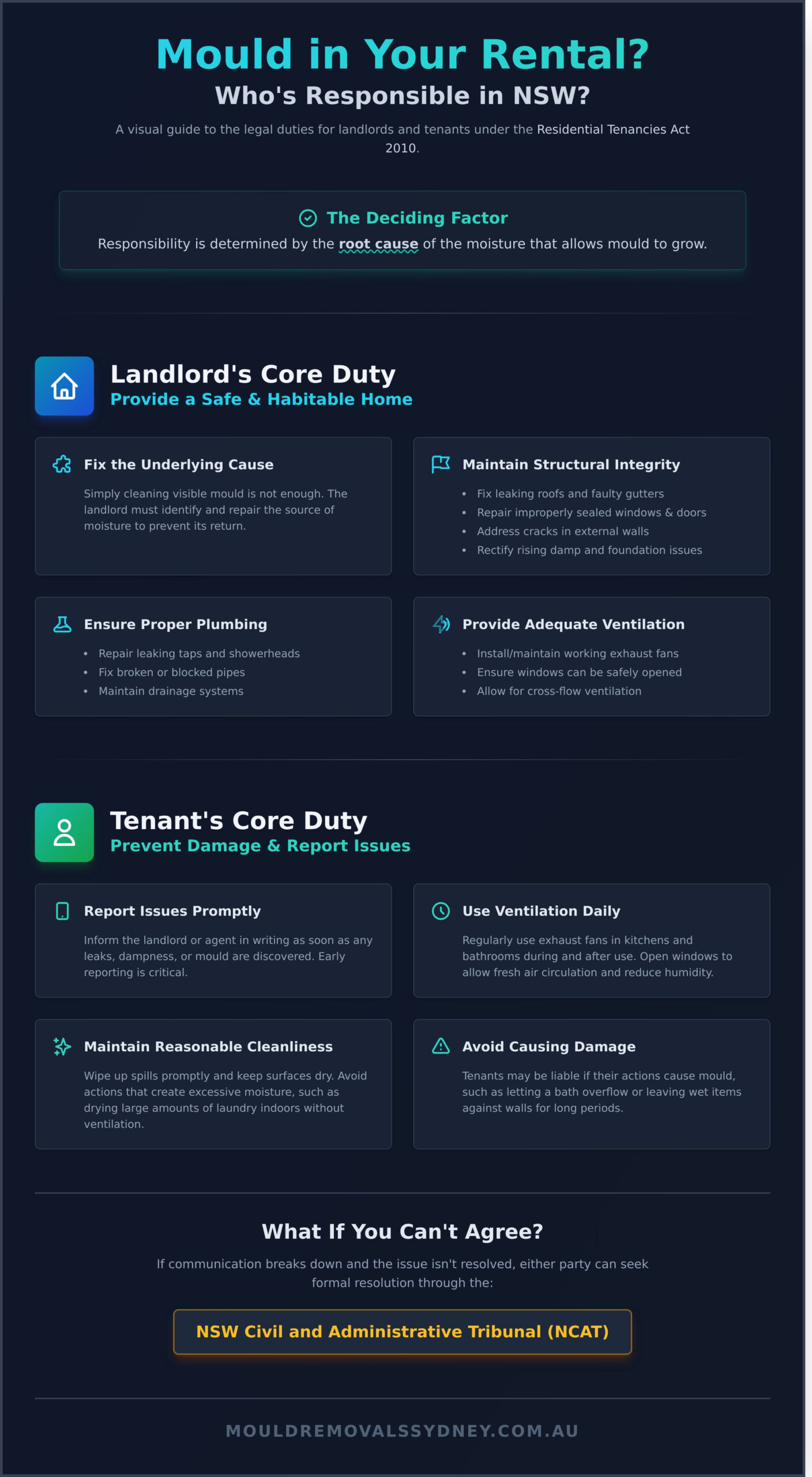
When you discover mould in a rental property, the first question is always: who is responsible? The answer isn’t always simple. In New South Wales, the core legal document governing this issue is the Residential Tenancies Act 2010. This Act establishes a framework of shared responsibility, where liability often depends on the root cause of the mould growth.
Mould is a type of fungi that thrives in damp, poorly ventilated environments. Before examining legal duties, understanding the basics of What is mould? can clarify why certain property conditions lead to outbreaks. The law essentially states that if mould is caused by a structural issue, it’s the landlord’s problem. If it’s caused by a tenant’s actions or inaction, the responsibility shifts.
Landlord’s Duty to Provide a Habitable Home
The primary landlord responsibility for mould NSW stems from their legal duty to provide a property that is ‘fit for habitation’. This means the landlord must ensure the premises are structurally sound and safe at the start of and throughout the tenancy. This includes:
- Ensuring the roof, walls, and windows are free from leaks or defects that cause dampness.
- Providing and maintaining adequate plumbing, drainage, and ventilation systems.
- Acting with ‘reasonable diligence’ to repair any structural issues once they are notified by the tenant.
Tenant’s Duty to Maintain the Property
Tenants also have clear responsibilities under the Act. They are required to keep the property in a ‘reasonably clean’ condition and prevent damage. A tenant may become responsible for a mould problem if it arises from their failure to:
- Promptly inform the landlord or agent of any leaks, water damage, or ventilation issues.
- Use exhaust fans and open windows to ensure adequate airflow, especially in bathrooms and kitchens.
- Avoid causing damage, such as letting a bath overflow or leaving wet towels piled against a wall.
Ultimately, determining responsibility requires identifying the source of the moisture that allowed the mould to grow. This distinction is critical for both landlords and tenants in resolving the issue effectively and legally.
Landlord’s Core Responsibilities: Fixing the Cause, Not Just the Symptom
A common mistake is treating mould as a simple cleaning issue. In reality, it’s a clear signal of excess moisture, and the core of landlord responsibility for mould NSW is to fix the underlying source. Simply wiping or painting over mould without addressing the cause is a temporary fix that guarantees its return. According to the official guidelines on NSW landlord responsibilities for mould, the property owner must ensure the premises are in a reasonable state of repair. This means tackling the root problem head-on.
Failure to act not only risks the tenant’s health but can lead to significant structural damage and costly legal disputes. A proactive landlord understands that investing in proper repairs is essential for protecting their asset and fulfilling their legal obligations.
Addressing Structural Defects and Leaks
Mould thrives on moisture. It is the landlord’s non-negotiable duty to cut off this supply by maintaining the property’s structural integrity. This includes urgent repairs to any part of the building that allows water to enter the property. Key areas of responsibility include:
- Fixing leaking roofs, faulty gutters, improperly sealed windows, and cracks in external walls.
- Repairing all faulty plumbing, from dripping taps and shower leaks to broken pipes in kitchens, bathrooms, and laundries.
- Investigating and rectifying sources of rising damp, which may be caused by poor sub-floor drainage or foundation issues.
Ensuring Adequate Ventilation
Stagnant, humid air creates the perfect breeding ground for mould spores. A rental property in NSW must be fitted with adequate ventilation to allow moisture from cooking, bathing, and laundry to escape. This is a critical and often-disputed aspect of a landlord’s duty. It means ensuring bathrooms, kitchens, and laundries have working exhaust fans and that windows can be safely opened to create cross-flow ventilation.
Responding to Tenant Repair Requests
When a tenant reports dampness, a leak, or visible mould, the landlord must act swiftly and professionally. Ignoring these requests is a serious breach of duty that can lead to a tenant seeking orders from the NSW Civil and Administrative Tribunal (NCAT). A professional response involves acknowledging the request in writing, arranging for qualified tradespeople to inspect and fix the source of the problem, and keeping clear records of all actions taken. This not only resolves the issue but also protects the landlord in case of a dispute.
Tenant’s Responsibilities: Preventing and Reporting Mould Growth
While the legal framework places significant obligations on property owners, understanding the landlord responsibility for mould NSW is only half the picture. Tenants have a duty of care for the property and their actions—or inaction—can directly contribute to mould growth. Fulfilling your responsibilities is key to maintaining a healthy home and protecting your rights.
By taking a few proactive steps, you can significantly reduce the risk of mould and strengthen your case if a serious problem arises.
Proper Use of Ventilation
Mould thrives in damp, stagnant air. You can actively combat these conditions by ensuring adequate airflow throughout the property. This is a simple yet highly effective prevention strategy.
- Always use exhaust fans during and after showering or cooking to remove steam.
- Open windows and doors for 15-30 minutes each day to circulate fresh air, where safe and practical.
- Avoid drying large amounts of laundry indoors without a dehumidifier or excellent ventilation.
Surface-Level Cleaning and Upkeep
General upkeep is part of any tenancy agreement. This includes managing minor moisture and cleaning small amounts of surface mould that appear due to everyday living, not a structural defect. For more comprehensive cleaning, or to ensure the property is in pristine condition for inspections or at the end of a lease, engaging a professional service is often a practical solution. Companies like Maid for Geelong offer a great example of the tailored cleaning solutions available to keep a property well-maintained.
- Wipe away condensation from windowsills and walls, especially in winter.
- Promptly clean small spots of mildew in the shower or on grout.
- Leave a small gap between furniture and walls to prevent moisture from getting trapped and allow air to circulate.
The Duty to Report: Your Most Critical Step
This is the most important responsibility you have as a tenant. If you notice a leak, water damage, dampness, or mould that is not from a lack of cleaning, you must report it to your landlord or agent immediately. Do not wait for it to get worse—because it will.
Failing to report the issue in a timely manner can be seen as contributing to the damage, which could weaken your position in a dispute. Prompt reporting is crucial for establishing the landlord responsibility for mould NSW in your specific case. As detailed in the Tenants’ Union of NSW advice on mould, keeping clear records is essential. Your action plan should be:
- Notify Immediately: Inform your landlord or agent in writing (an email creates a dated record).
- Document Everything: Take clear photos and videos of the mould, leak, or damp area. Note the date you first noticed it.
- Keep Records: Save all communication with your landlord or agent about the issue.
A Step-by-Step Action Plan for Tenants and Landlords
Discovering mould can be stressful for both tenants and landlords. However, a clear, communicative approach is the fastest way to a safe and effective resolution. Documenting every step is crucial for protecting both parties and ensuring the issue is handled correctly. Do not wait for the problem to worsen—it will. Follow this action plan to resolve mould issues efficiently and without unnecessary conflict.
Action Plan for Tenants
If you find mould in your rental property, it’s vital to act quickly and create a clear record of the problem. Follow these steps:
- Step 1: Document Everything. Take clear, dated photos and videos of the mould. Make detailed notes about its location, the size of the affected area, and any musty odours. This evidence is essential if a dispute arises.
- Step 2: Notify Your Landlord in Writing. Inform your landlord or property agent about the mould immediately. An email is a perfect way to create a dated record of your communication. Clearly state the problem and attach your photos.
- Step 3: Issue a Formal Repair Request. If you receive no response or action within a reasonable timeframe, send a formal ‘Letter of request for repairs’. You can find official templates on the NSW Fair Trading website.
- Step 4: Apply to NCAT. If the issue remains unresolved, your final step is to apply to the NSW Civil and Administrative Tribunal (NCAT) for a repair order. This legally compels the landlord to carry out the necessary repairs.
Action Plan for Landlords
Responding promptly and professionally is key to upholding your duties and maintaining a positive relationship with your tenant. This is a core part of the landlord responsibility for mould NSW.
- Step 1: Acknowledge and Communicate. As soon as you receive the report, reply to your tenant in writing. Acknowledge the issue and inform them of your next steps, such as arranging an inspection. This simple act prevents disputes from escalating.
- Step 2: Inspect and Assess the Source. Arrange a time to inspect the property or send a qualified tradesperson. The goal is to identify the source of the moisture causing the mould—it could be a leaking pipe, roof damage, or inadequate ventilation.
- Step 3: Fix the Underlying Cause. Before cleaning the mould, you must fix the moisture source. This may involve hiring a plumber, roofer, or installing better ventilation. Skipping this step means the mould will inevitably return.
- Step 4: Engage Professional Mould Remediation. Simply wiping mould with bleach is not enough and can be hazardous. Hire a professional mould remediation service to safely remove the infestation, treat the surfaces, and eliminate dangerous airborne spores, ensuring the property is restored to a safe condition.
Resolving Disputes: When You Can’t Agree on Mould Responsibility
Despite best intentions, landlords and tenants can find themselves at a stalemate over who is at fault for a mould problem. When communication breaks down and the mould continues to spread, it’s time to take formal steps. Fortunately, NSW has a clear pathway for resolving these serious disputes and protecting your rights and property.
The stress of these disputes can take a significant toll on personal wellbeing, a reminder that housing security is fundamental to our health. When dealing with life’s most challenging moments, from housing crises to personal loss, resources that offer guidance can be invaluable. For those in Sydney navigating difficult times, support is available from local services like Funera.
Formal Breach Notices
Before escalating the issue, the first formal step is to issue a breach notice. If a tenant believes the landlord has failed to provide a safe and healthy home by not addressing a leak or structural dampness, they can issue a ‘Notice to remedy breach’. Conversely, if a landlord believes the tenant’s actions—like failing to ventilate a bathroom—have caused the mould, they can issue a similar notice.
Applying to the NCAT
If the breach notice does not resolve the issue, either party can apply to the NSW Civil and Administrative Tribunal (NCAT). The Tribunal is the official body that handles tenancy disputes and can make legally binding orders. They will examine all evidence, including photos, emails, and expert reports, to determine the landlord responsibility for mould NSW. NCAT can order the landlord to carry out specific repairs or even order a rent reduction until the mould problem is professionally fixed.
The Role of an Independent Mould Report
In a dispute, guesswork and accusations are useless. The single most powerful tool for proving the cause of mould is an independent, expert assessment. A professional mould report provides unbiased, scientific evidence that cuts through the disagreement. It is the key to a successful resolution, whether in negotiation or at an NCAT hearing.
- Identifies the Root Cause: An expert report pinpoints the exact moisture source, from a hidden pipe leak to a structural issue.
- Provides Unbiased Evidence: The Tribunal gives significant weight to evidence from a qualified, third-party expert.
- Defines the Scope: It details the extent of the contamination, including airborne spore levels, ensuring the remediation plan is effective.
Don’t let a dispute damage your health or your property. A factual report is your best defence. Don’t risk it. Get an independent report to protect your property.
Take Control of Mould: Your Final Step to a Healthy Property
Ultimately, understanding the landlord responsibility for mould NSW is about more than just legal compliance; it’s about protecting your investment and ensuring tenant well-being. The key takeaway is that landlords must fix the underlying cause of dampness—such as leaks or poor ventilation—while tenants have a duty to report issues promptly and keep the property reasonably clean. Clear communication and proactive steps from both parties are essential to prevent minor spots from escalating into major disputes.
When you need a definitive answer, don’t wait for the problem to worsen. Our certified Goldmorr System technicians provide independent reports for landlords and property managers, clarifying responsibility and outlining an effective remediation plan. Protect your investment and resolve disputes with confidence. Schedule a professional mould inspection today. We guarantee to beat any written quote by 10%.
Taking swift, informed action is the best way to ensure a healthy, mould-free property for everyone involved.
Frequently Asked Questions About Landlord Responsibility for Mould in NSW
Can a tenant break their lease because of mould in NSW?
Yes, a tenant may be able to terminate their lease if a mould problem is severe. If the mould makes the property uninhabitable or unsafe, it’s considered a breach of the landlord’s obligation to provide a habitable home. The tenant must first notify the landlord in writing to fix the issue. If the landlord fails to act, the tenant can apply to the NSW Civil and Administrative Tribunal (NCAT) for an order to end the tenancy agreement.
Can a landlord charge a tenant for mould removal?
A landlord generally cannot charge a tenant for mould removal if the cause is structural, such as a roof leak, rising damp, or faulty plumbing. However, if the tenant’s actions or negligence caused the mould—for instance, by never ventilating the bathroom or failing to report a leak—they may be held liable for the remediation costs. The origin of the moisture is the key factor in determining financial responsibility for the mould problem.
How do you prove who is responsible for causing the mould?
Proving responsibility requires identifying the moisture source. A professional mould inspection is the most reliable way to do this. Certified technicians use moisture meters and thermal imaging to trace the problem to its origin, whether it’s a building defect or a lifestyle issue. A detailed report with photographic evidence provides clear proof of the cause, which is essential for resolving disputes between landlords and tenants and establishing who is liable for the cleanup.
What are my rights if my belongings are damaged by mould?
If your personal belongings are damaged by mould due to the landlord’s failure to maintain the property, you may be able to claim compensation. It is highly recommended that all tenants have their own contents insurance, as a landlord’s policy will not cover your possessions. You can seek compensation from the landlord through NCAT, but you will need to provide evidence that the landlord’s negligence directly caused the damage to your items.
Is the landlord responsible for cleaning mould caused by condensation?
This can be a complex issue. While tenants must ensure adequate ventilation, the landlord responsibility for mould NSW includes providing the means for it, like functional exhaust fans and windows. If a property’s poor design or lack of proper ventilation features makes condensation and subsequent mould growth unavoidable, the landlord is more likely to be held responsible. It often becomes a shared responsibility that requires cooperation to resolve effectively.
How much does professional mould remediation cost for a rental property?
The cost for professional mould remediation in a Sydney rental property can vary widely. A small, contained issue in a bathroom might cost between A$500 – A$1,500. For more extensive problems affecting multiple rooms or caused by significant water damage, the cost could be A$3,000 or more. For a fast, affordable, and accurate assessment, send us images of the mould. We guarantee to beat any written quote by 10%.