Mold Cleanup After Water Damage: Your Complete 2025 Guide
That sinking feeling when you spot dark, fuzzy patches on your walls after a water leak is something no property owner wants to experience. The discovery of mould doesn’t just mean property damage; it’s a serious health risk that demands immediate action. The first critical step is effective mold cleanup, but the path forward can seem confusing and overwhelming. Should you try a DIY solution, or is this a job that requires a professional? Don’t wait until the problem worsens-because it will.
You have arrived at the right place. This guide is your complete action plan for 2025, designed to eliminate the guesswork and restore your peace of mind. We will walk you through the essential, step-by-step process for safe mould removal, help you understand exactly when to call in a certified Mould Removalist, and provide the expert knowledge you need to fix the root cause. It’s time to ensure the mould is gone for good and your home is safe once again.
First Response: Immediate Steps for Mold Cleanup After Water Damage
After any water damage event, you are in a race against the clock. Mould can begin to grow in as little as 24 to 48 hours, turning a manageable water issue into a significant health and property risk. Acting quickly and decisively is the key to preventing widespread contamination and simplifying the eventual mold cleanup process. Don’t wait until you see or smell mould; the problem starts the moment building materials get wet.
Safety and Initial Assessment
Before you even begin, your personal safety is the top priority. Airborne mould spores can pose serious health risks, so do not enter a contaminated area without taking the proper precautions first. Your immediate actions should be methodical and safe.
- Wear Protective Gear: Always wear an N95 respirator mask, waterproof gloves, and safety glasses before handling any wet or mouldy materials.
- Shut Off Power: If there is standing water, turn off the electricity and gas to the affected area at the main switchboard to prevent serious injury.
- Document Everything: Take clear photos and videos of the damage before moving or discarding anything. This evidence is crucial for your insurance claim.
- Stop the Water Source: If it is safe to do so, identify and stop the source of the water immediately, whether it’s a burst pipe, a leaking appliance, or a roof leak.
Drying and Dehumidification
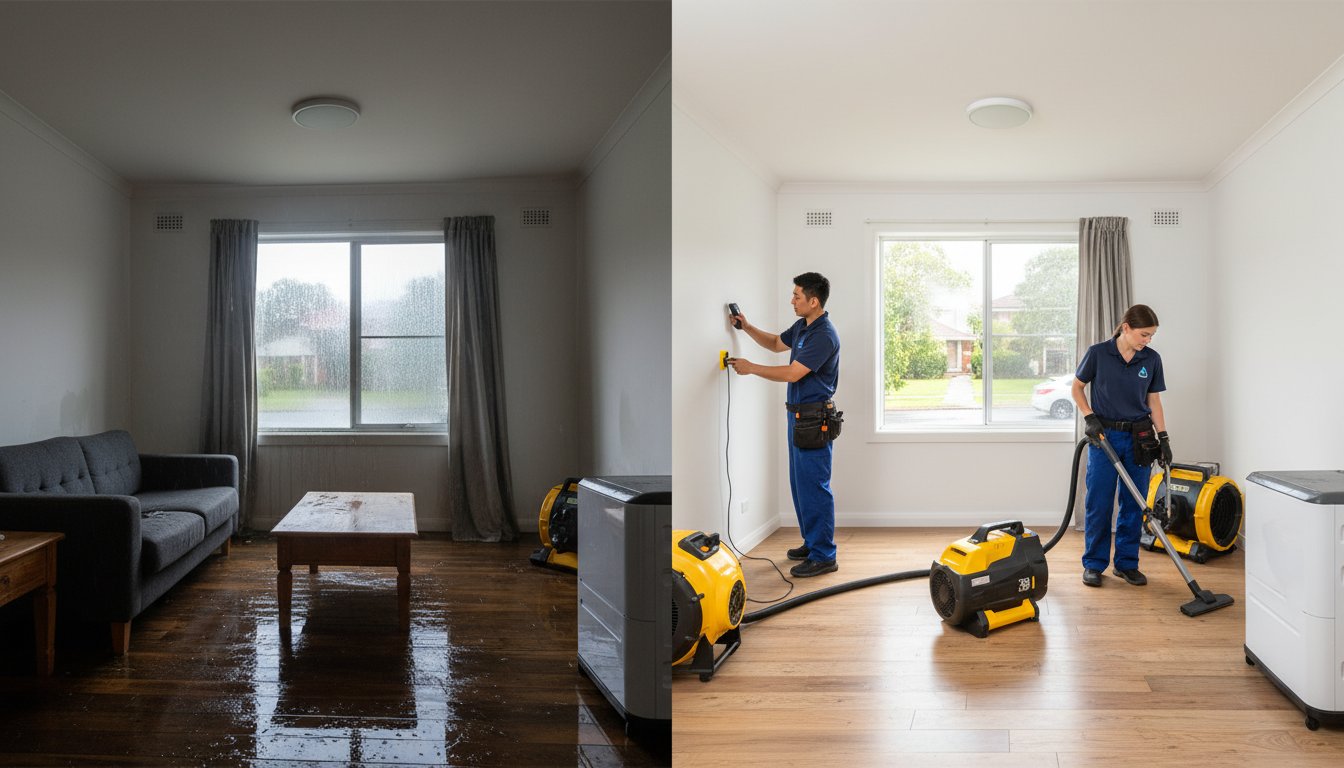
The primary goal is to dry the affected area as quickly and thoroughly as possible. Even when surfaces feel dry, materials like timber, insulation, and plasterboard can retain significant hidden moisture, creating the perfect breeding ground for mould. For more information, a comprehensive guide to indoor mold offers valuable insight into its lifecycle. An effective mold cleanup always begins with complete moisture removal.
- Remove Wet Items: Immediately take out all water-saturated items that are not salvageable, including carpets, underlay, soft furnishings, and damaged drywall.
- Accelerate Drying: Use high-volume fans and commercial-grade dehumidifiers to aggressively pull moisture from the air and structural materials.
- Promote Airflow: If the weather outside is dry and not humid, open windows and doors to increase air circulation and help ventilate the space.
DIY vs. Professional: When to Call for Mold Cleanup Services
After water damage, the first instinct is often to grab a cloth and some bleach. But this is a critical mistake. True mold cleanup is not just about wiping away a visible stain; it’s about complete remediation. Surface cleaning often leaves behind the mold’s root system and can even cause spores to become airborne, spreading the problem further. Bleach, for instance, only sanitises non-porous surfaces and its high water content can feed the very mold you’re trying to kill on materials like wood or plasterboard.
Understanding when you can tackle the job yourself versus when you need an expert is crucial for protecting your property and your health. Don’t risk making the situation worse-know the signs.
When DIY Mold Cleanup Might Be an Option
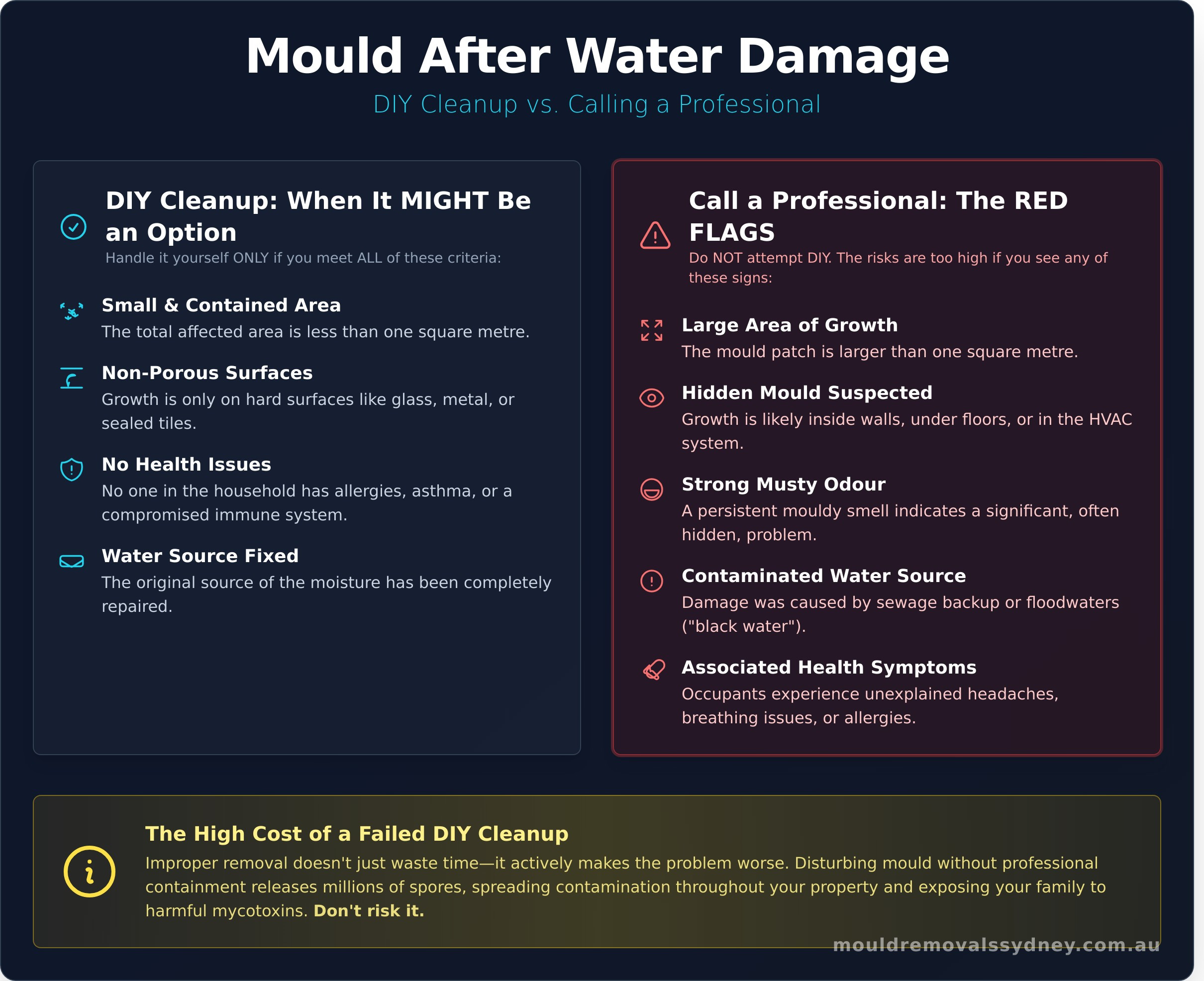
A DIY approach is only suitable under very specific and limited conditions. According to global health bodies and the EPA guidelines on mold cleanup, you might handle it yourself if you meet all of these criteria:
- The affected area is small and contained, generally less than one square metre.
- The mold is growing on a hard, non-porous surface like glass, metal, or sealed tiles.
- You and your household members have no pre-existing respiratory issues, allergies, or compromised immune systems.
- The original water source has been identified and permanently repaired.
Red Flags: When to Call a Professional Immediately
Do not attempt a DIY cleanup if you encounter any of these warning signs. The health and structural risks are too high. Call a professional Mould Removalist if:
- The mold growth covers an area larger than one square metre.
- You suspect mold is growing inside walls, under flooring, or within your HVAC system.
- There is a strong, persistent musty odour, but you cannot see the source.
- The water damage was caused by contaminated water, such as a sewage backup or floodwaters.
- Anyone in your home is experiencing unexplained headaches, breathing difficulties, or allergic reactions.
The Dangers of an Incomplete Cleanup
A failed DIY attempt does more than just waste your time. It actively creates bigger problems. Disturbing mold without proper containment protocols releases millions of airborne spores, allowing new colonies to form throughout your property. More dangerously, it can expose your family to mycotoxins produced by toxic molds like Stachybotrys (black mold). Without addressing the underlying moisture, the mold is guaranteed to return, often worse than before. Don’t leave your family’s health to chance. Unsure how bad it is? Schedule a professional inspection.
The Professional Mold Cleanup & Remediation Process Explained
Discovering extensive mould after water damage can be overwhelming, but you don’t have to face it alone. Hiring a certified Mould Removalist ensures the problem is handled safely and effectively, protecting your property and your family’s health. A professional mold cleanup follows a strict, methodical process designed to eliminate mould at its source and prevent its return. Here’s what you can expect.
Inspection and Damage Assessment
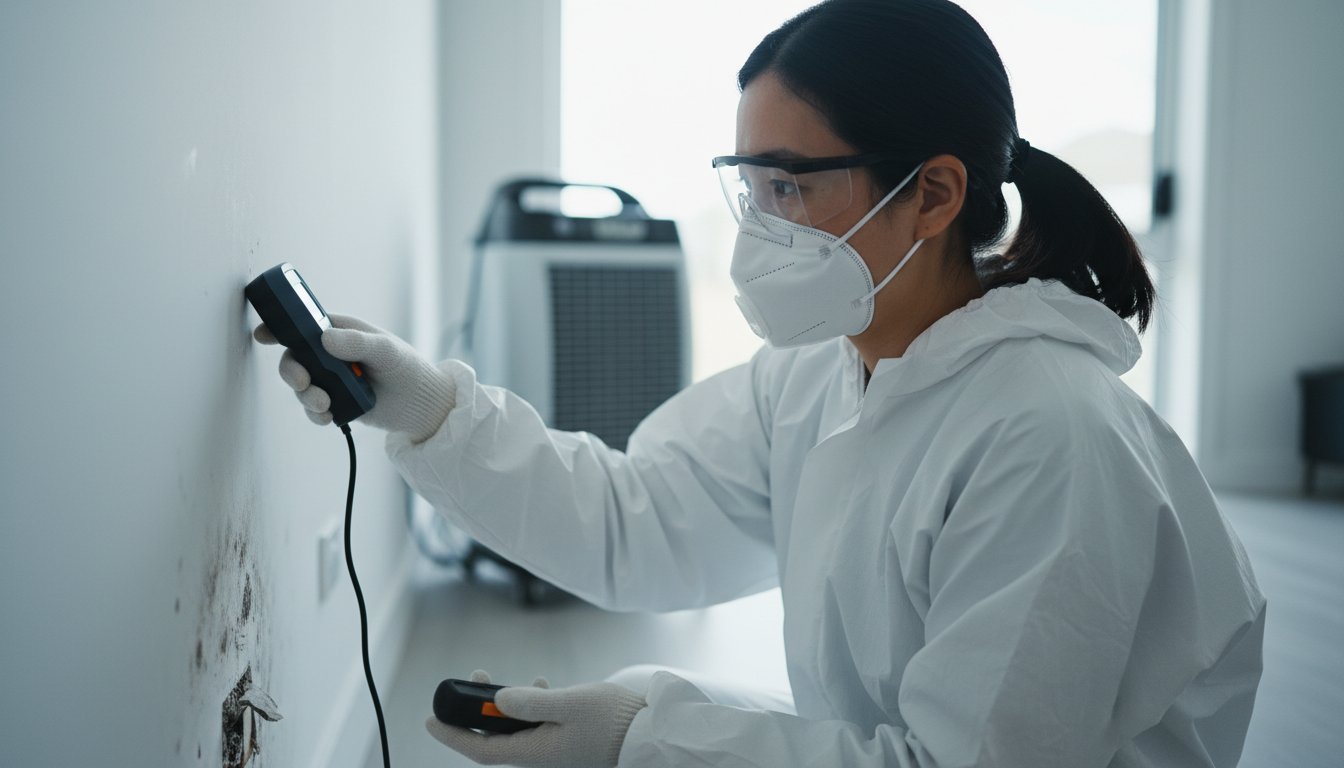
The first step is always a thorough investigation. Our technicians use advanced tools, including moisture meters, to pinpoint the exact source of the water intrusion and uncover hidden dampness behind walls or under floors. We identify the type and extent of the mould growth, allowing us to create a detailed remediation plan tailored to your property. You’ll receive a transparent, upfront quote with no hidden surprises.
Containment, Removal, and Cleaning
To prevent cross-contamination, we establish a secure containment zone using physical barriers and negative air pressure. This critical step ensures airborne spores do not spread to unaffected areas of your home during the removal process. Our certified technicians follow strict industry protocols, similar to those recommended in the comprehensive EPA mold cleanup guide, for all removal work. Contaminated porous materials like drywall, insulation, and carpet are carefully removed and disposed of, while non-porous surfaces are cleaned with specialised, non-toxic antimicrobial agents.
Air Purification and Deodorisation
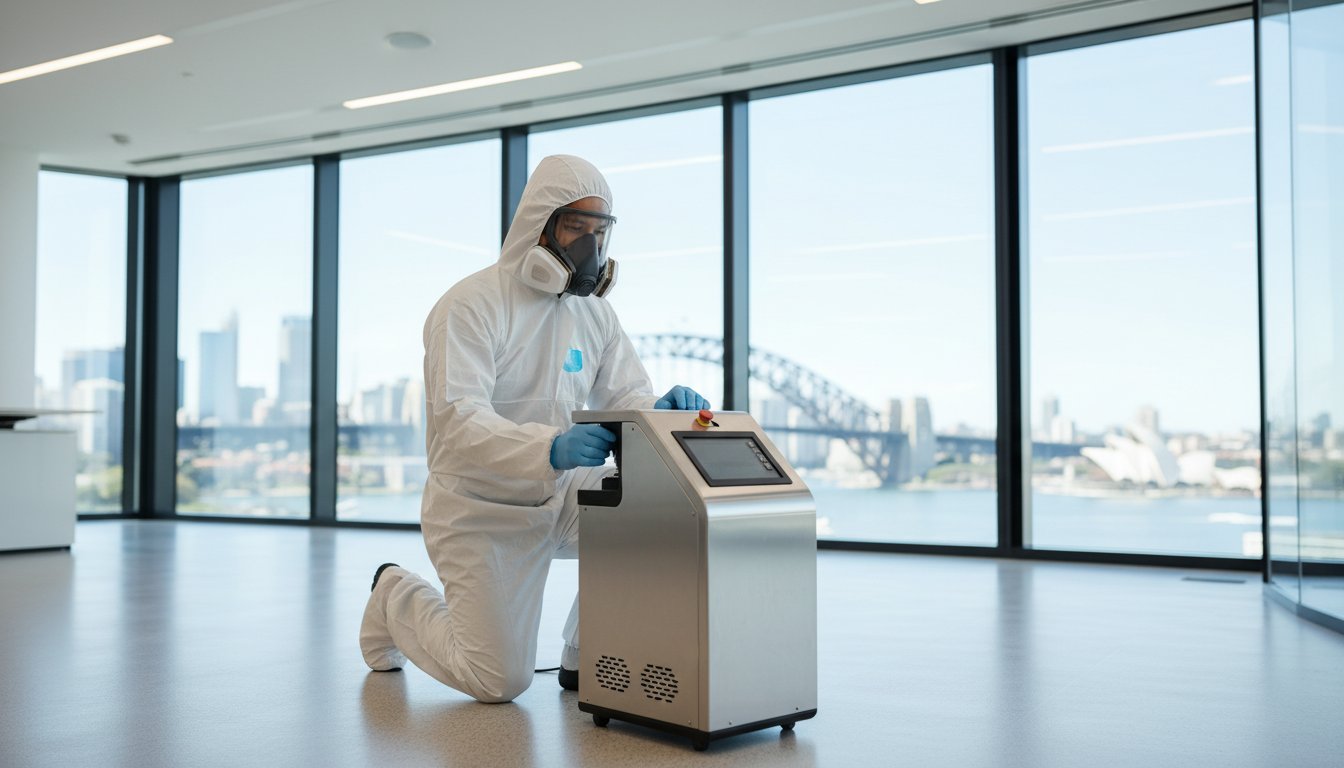
Simply removing visible mould isn’t enough. The final, crucial stage of the mold cleanup process targets the invisible threat: airborne spores. We use commercial-grade HEPA air scrubbers to filter microscopic spores from the air. To guarantee a complete treatment, we then employ the industry-leading Goldmorr System. This unique fogging process eliminates any remaining spores in the air and on surfaces, ensuring your property is left safe, sanitised, and free of musty odours. It’s that simple.
Beyond the Surface: Why Air Scrubbing is Critical for Mold Cleanup
After water damage, the visible mould you see on your walls or ceiling is only half the problem. The real, unseen danger lurks in the air you breathe. Mould colonies release microscopic spores to reproduce, and these spores travel effortlessly throughout your property, often circulated by your HVAC system. Simply treating the visible stain is a temporary fix that fails to address the root cause of contamination. A truly effective mold cleanup must also purify the air.
The Hidden Threat of Airborne Spores
Think of mould spores as microscopic seeds, invisible to the naked eye, that float on air currents looking for a new place to grow. Disturbing a mould colony by wiping or scrubbing it can release millions of these spores into your environment. This not only spreads the contamination but also poses a direct health risk, leading to respiratory irritation, allergic reactions, and other serious health issues for your family.
How Professional Air Purification Works
To ensure a complete and lasting solution, professional Mould Removalists attack the problem on two fronts: surfaces and the air. This is not a cosmetic fix; it is a comprehensive remediation process designed to restore a healthy indoor environment.
- HEPA Filtration: We deploy commercial-grade air scrubbers fitted with HEPA (High-Efficiency Particulate Air) filters. These are not your standard home air purifiers. They are certified to capture 99.97% of airborne particles as small as 0.3 microns, effectively trapping mould spores and preventing them from circulating.
- Specialised Fogging: As part of our advanced Goldmorr System, we use a non-toxic, biodegradable fogging process. This specialised fog permeates the entire affected area, neutralising stubborn spores in the air and on surfaces that even the most powerful filters might miss.
This dual approach ensures that we remove the existing mould and eliminate the airborne “seeds” that could cause it to return. It is the definitive way to ensure your property is safe and the air is clean after a mould infestation. Breathe easy again. Learn about our air purification process.
After the Cleanup: How to Prevent Mold from Coming Back
You’ve successfully dealt with the immediate threat, but don’t make the common mistake of thinking the job is finished. A successful mold cleanup is only half the battle; proactive prevention is the key to long-term peace of mind and protecting your property’s health. Mould will return if the conditions that allowed it to grow in the first place are not corrected.
Don’t wait until the problem worsens again. Taking these steps now will safeguard your home and family from future mould invasions.
Moisture Control and Humidity Management
Mould needs moisture to survive. By controlling the humidity and eliminating water sources, you remove the most critical ingredient for its growth. Your primary goal is to keep your indoor humidity levels between 30-50%.
- Use Dehumidifiers: In persistently damp areas common in many Sydney homes, like basements, laundry rooms, and subfloors, a high-quality dehumidifier is an essential tool.
- Fix Leaks Immediately: That tiny drip under the kitchen sink or a minor roof leak is an open invitation for mould. Address all plumbing and structural leaks, no matter how small, without delay.
- Manage External Water Flow: Ensure your gutters and downspouts are clear of debris and are effectively channelling rainwater well away from your home’s foundation to prevent water seepage.
Improving Your Home’s Ventilation
Stagnant, moisture-laden air creates condensation, which is a perfect food and water source for mould spores. Improving airflow is a simple yet powerful way to keep your home dry and inhospitable to mould.
Use exhaust fans in kitchens when cooking and in bathrooms during and for at least 20 minutes after a shower to expel humid air directly outside. For persistent under-house dampness, a professional subfloor ventilation system might be necessary. This simple act of moving air prevents the build-up of condensation on walls, windows, and other surfaces.
By staying vigilant with these moisture and ventilation strategies, you ensure your home remains healthy long after the initial mold cleanup is complete. If you need expert advice on a long-term prevention plan, contact the trusted Mould Removalist team today for a professional assessment.
Secure Your Home: The Final Word on Mould Cleanup
Dealing with the aftermath of water damage is stressful, but this guide proves that a swift, informed response is your best defence. From immediate containment to understanding why professional air scrubbing is non-negotiable, you now have the knowledge to protect your property. Remember, effective mold cleanup goes far beyond what you can see-it’s about restoring a safe, healthy environment for good.
Don’t let a mould problem worsen and put your health at risk. For a guaranteed and safe solution, you need the expertise of approved master technicians. Our team uses the industry-leading Goldmorr System for total mould eradication, ensuring every hidden spore is eliminated. We are so confident in our effective results that we will beat any written quote by 10%.
Don’t wait for mould to spread. Get a free, fast quote for professional cleanup!
Take back your peace of mind and secure your property today. It’s that simple.
Frequently Asked Questions About Mold Cleanup
How long does a professional mold cleanup process take?
The timeline for a professional mold cleanup varies based on the extent of the infestation and the size of the affected area. A small, contained job might take only 1-2 days. However, more significant remediation following extensive water damage could take 3-5 days or longer. This process includes containment, removal, structural drying, and air purification. A certified Mould Removalist will provide a precise timeline after a thorough inspection of your property. It’s that simple to get a clear plan.
Is the musty smell from mold harmful to my health?
Yes, that musty smell is a clear warning sign and can be harmful. The odour is caused by microbial volatile organic compounds (MVOCs) that mould releases as it grows. Inhaling these compounds can lead to headaches, respiratory irritation, dizziness, and other allergic reactions. Don’t ignore the smell; it indicates an active mould problem that requires immediate professional attention to protect your family’s health. Don’t wait until the problem worsens, because it will.
Can I just paint over the mold to get rid of it?
Absolutely not. Painting over mould is one of the worst mistakes a homeowner can make after water damage. While it temporarily hides the unsightly stain, it does not kill the mould or stop its growth. The paint traps moisture against the wall, creating an ideal breeding ground for the mould to thrive underneath. The only effective solution is complete removal by a trained professional who can address the source of the moisture and eliminate the colony for good.
What’s the average cost of professional mold cleanup in Sydney?
In Sydney, the cost for professional mould remediation can range from A$500 for a small, isolated patch to over A$5,000 for extensive contamination. For a typical room affected by water damage, homeowners can expect to pay between A$1,500 and A$4,000. The final price depends on the area size, the type of surfaces affected, and the complexity of the job. Always get a detailed, written quote from a certified technician for an accurate assessment and peace of mind.
Are the chemicals used in professional mold remediation safe for pets and children?
Reputable professionals prioritise your family’s safety. We use industry-approved, biodegradable solutions, like those in the advanced Goldmorr System, which are designed to be highly effective against mould while being safe for your home’s occupants. While our products are environmentally safe, it is standard procedure to keep children and pets away from the direct treatment area during the application and drying process. This ensures maximum safety and allows you to return to a healthy home.
Will my homeowner’s insurance cover the cost of mold cleanup?
Whether your homeowner’s insurance covers mold cleanup depends on your specific policy and the initial cause of the water damage. Coverage is often provided if the mould resulted from a “sudden and accidental” event, like a burst pipe. However, mould caused by gradual leaks, poor maintenance, or regional flooding is typically excluded. We strongly recommend you review your policy’s Product Disclosure Statement (PDS) and contact your insurer immediately to clarify your coverage.