It’s a frustratingly common story. You spent hours scrubbing, the strong smell of bleach filled the air, and for a brief, satisfying moment, the unsightly mould was gone. But then, just a few weeks later, it returned. If your mould came back after cleaning with bleach, you’re not alone, and you’re right to be concerned that you haven’t solved the real problem. This endless cycle is more than just an annoyance; it’s a clear warning that the underlying cause of the mould is still active, posing a continuous risk to your property and your family’s health.
The truth is, bleach is a temporary fix that can actually make the problem worse. It often only removes the surface colour of the mould, leaving the deeper root structure intact and feeding it with moisture. In this article, our certified technicians will explain the science behind why bleach fails. We will guide you through the professional process of identifying the true moisture source and eliminating mould permanently, giving you the peace of mind that comes with a safe, healthy home.
Key Takeaways
- Discover why bleach is a cosmetic fix that only removes surface stains, failing to kill the mould’s deep root system in materials like gyprock and wood.
- If your mould came back after cleaning with bleach, it’s a clear sign of an underlying moisture or ventilation problem that must be addressed for a permanent solution.
- Learn the critical difference between simple cleaning and professional mould remediation, a scientific process designed to safely contain and eliminate spores at the source.
- Get a clear, step-by-step action plan to move beyond temporary fixes and permanently resolve your mould problem by tackling its root cause.
Why Bleach Fails: The Illusion of a Clean Surface
You’ve spent hours scrubbing, the strong smell of bleach filling the air. The ugly black and green stains are gone, and the surface looks spotless. But a few weeks later, you see the first signs of its return. This frustrating experience is incredibly common, and it’s the main reason homeowners tell us their mould came back after cleaning with bleach. The truth is, while bleach is a powerful disinfectant, it creates a dangerous illusion of a mould-free home.
The problem is more than skin deep. While you’ve removed the visible evidence, the underlying structure of the mould colony remains untouched. Let’s break down the science behind why this popular DIY solution is not just ineffective but can often make your mould problem worse.
Bleach Only Cleans Non-Porous Surfaces
Bleach can be effective at disinfecting hard, non-porous surfaces like glass, sinks, or sealed tiles. However, mould rarely stays confined to these areas. On porous materials like plasterboard, wood, and grout, mould grows deep roots, called hyphae, to anchor itself and absorb nutrients. The chemical structure of chlorine bleach prevents it from penetrating these materials. The result? You are only killing the surface growth-the ‘leaves’ of the plant-while the root system remains alive and well, ready to regrow.
The Water in Bleach Actually Feeds Mould
Look at the label of any household bleach. You’ll find it’s comprised of up to 95% water. Since moisture is the single most important ingredient mould needs to thrive, applying a water-based solution to a porous surface is counterproductive. The chlorine quickly evaporates, leaving the water behind to soak into the material. This moisture is absorbed by the surviving mould roots, providing the perfect fuel for accelerated regrowth. This is the frustrating cycle that explains why mould came back after cleaning with bleach, often looking even worse than before.
It Doesn’t Neutralise Airborne Spores
Mould reproduces by releasing millions of microscopic spores into the air. These spores are a key part of how infestations spread, as this comprehensive overview of indoor mould explains in detail. The physical act of scrubbing a mould colony disturbs it, sending a cloud of these spores into your home’s air. Bleach does nothing to neutralise these airborne threats. The spores simply travel and land on other damp surfaces-including the one you just cleaned and dampened with bleach-to start a new colony. A professional mould remediation process is required to treat not just the surface, but the air as well.
The Real Culprit: Tackling the Root Cause of Mould Growth
If you’re frustrated because mould came back after cleaning with bleach, you are not alone. This is a common experience because recurring mould is not a cleaning problem-it is an environment problem. Simply scrubbing the visible stains is like mowing a weed without removing its roots. The mould will always return unless the underlying conditions that allow it to grow are fixed permanently. This is why even authorities like the U.S. Environmental Protection Agency (EPA) state that using bleach is not recommended as a routine practice for mould cleanup; it fails to address the source. The only long-term solution is to eliminate the two key factors mould needs to thrive: moisture and poor ventilation.
Identifying and Eliminating the Moisture Source
Mould cannot grow without water. Finding and stopping the source of moisture is the single most critical step in any effective mould remediation plan. Without fixing the leak or dampness, no cleaning method will ever provide a lasting result. Our expert technicians are trained to identify these common culprits:
- Leaks from plumbing, roofs, or gutters.
- Condensation build-up on windows, pipes, and walls.
- High humidity in poorly vented bathrooms, kitchens, and laundries.
- Rising damp from groundwater or subfloor moisture issues.
Improving Your Home’s Ventilation
Stagnant, humid air creates the perfect breeding ground for mould to flourish. Improving airflow throughout your property is essential to control humidity and prevent spores from settling. Ensure exhaust fans in wet areas like bathrooms and laundries are not only working correctly but are ducted to vent outside, not into your roof cavity. Promote cross-ventilation by regularly opening windows and doors to allow fresh air to circulate. For persistent under-house dampness, a professionally installed subfloor ventilation system can be a highly effective solution.
The Role of Airborne Spores
Even after you’ve cleaned the walls and fixed the leak, millions of microscopic mould spores remain suspended in the air. These spores are always present, indoors and out, just waiting for the right conditions to land and grow. This is why the mould came back after cleaning with bleach-the airborne spores were never dealt with. Simply killing surface mould is not enough. Professional mould remediation includes critical steps like air scrubbing to capture and remove these invisible threats, ensuring the mould colony is eliminated at every level. If you’re struggling to find the source or need a comprehensive solution, ABC Mould Cleaning Solutions offers professional inspection and remediation services.

The Professional Solution: How Remediation Differs from Cleaning
If you’re exhausted and asking yourself why the mould came back after cleaning with bleach, the answer lies in the fundamental difference between surface cleaning and professional remediation. DIY methods often just hide the problem, while mould remediation is a scientific process designed to eliminate it for good. It focuses on finding the source, removing the infestation safely, and preventing its return. This is how our master technicians break the cycle of regrowth permanently.
Step 1: Expert Inspection and Assessment
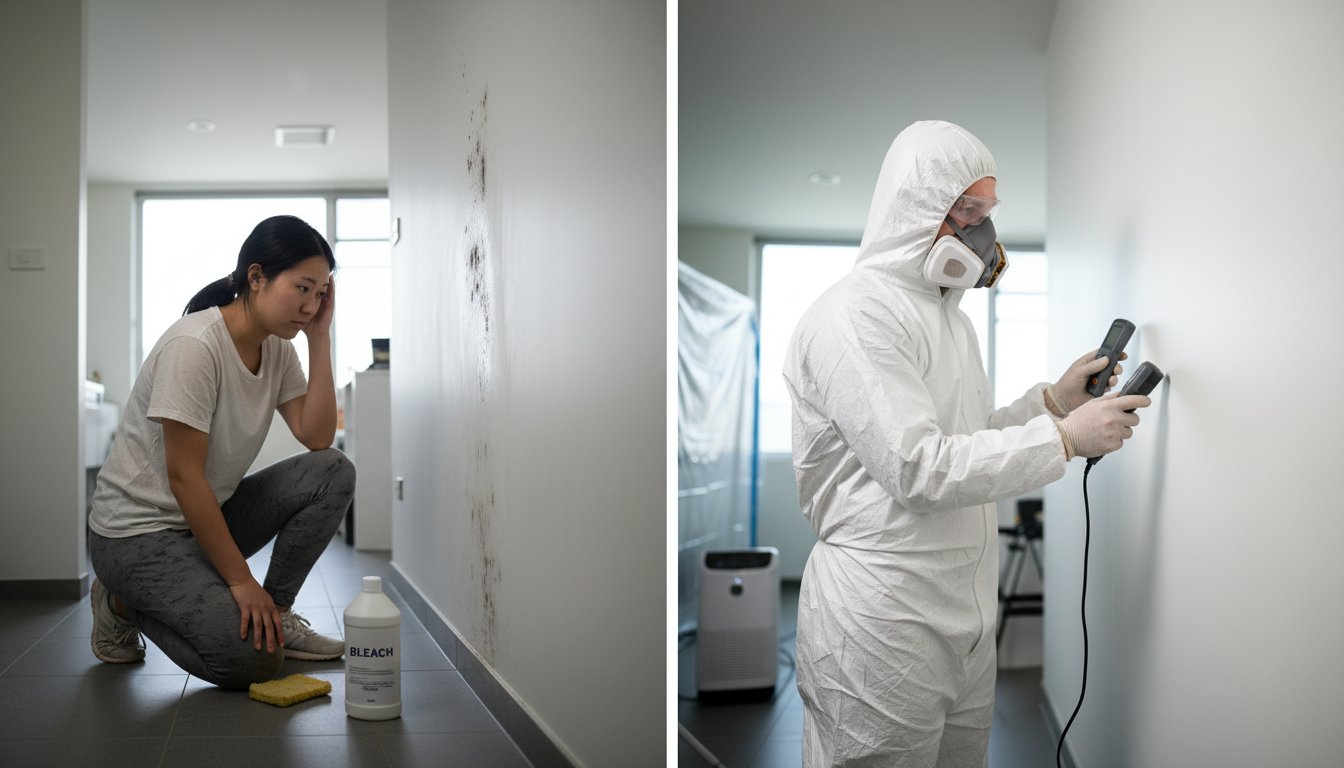
A true solution starts with a proper diagnosis. Our certified technicians don’t just look at the visible mould; they investigate the cause. Using professional tools like moisture meters, we pinpoint the hidden source of water that is feeding the growth, whether it’s a leaky pipe inside a wall or poor ventilation. This allows us to create a detailed remediation plan that addresses the root cause, not just the unsightly symptoms.
Step 2: Containment and Source Removal
Once the source is identified, the affected area is sealed off using containment barriers. This crucial step prevents cross-contamination, stopping mould spores from spreading to other parts of your home during removal. Unlike spraying a chemical, which is ineffective on porous surfaces according to the EPA advice on using bleach for mould, our technicians physically remove the mould colonies and their roots. This is not cleaning; it’s complete and safe elimination.
Step 3: Air Purification and Scrubbing
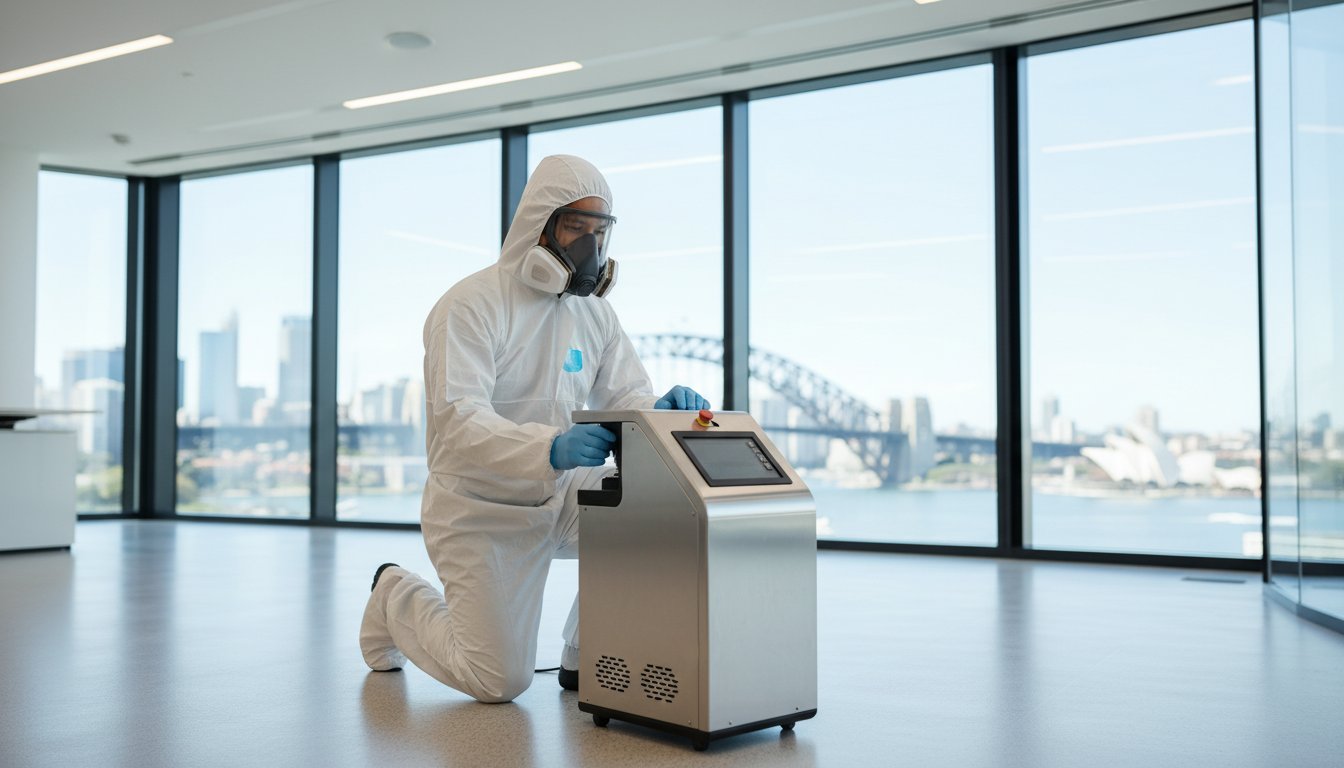
This is the most critical step that DIY methods always miss. If the mould came back after cleaning with bleach, it’s because invisible airborne spores were left behind to settle and grow again. We use commercial-grade HEPA air scrubbers to capture these microscopic spores from the air. Our industry-leading Goldmorr System then uses a non-toxic, biodegradable fogging process to eliminate any remaining spores throughout the entire space, ensuring your home’s air is clean and healthy.
This comprehensive, three-step process is the only way to guarantee a permanent solution. To learn more about how we can restore your property, visit mouldremovalssydney.com.au for a professional assessment.
Your Action Plan: What to Do When Mould Comes Back
You’ve sprayed, scrubbed, and waited, only to find the unsightly mould has returned. It’s a frustrating cycle, but recognising that bleach isn’t the permanent solution is the first step toward taking back control of your home’s health. This clear, safe plan will guide you from dealing with recurring mould to achieving a final, effective resolution.
Stop Using Bleach Immediately
Your first action is to put down the bleach bottle. If the mould came back after cleaning with bleach, it’s definitive proof that the treatment is only addressing the surface, not the underlying root system or the moisture problem feeding it. Continuing to scrub can disturb the colony and release millions of microscopic spores into your air, potentially spreading the problem to other areas of your home. Instead of cleaning, refocus your energy on the real culprit: the source of the moisture.
Document the Problem and Find the Leak
Before you do anything else, document the issue. Take clear photos of the mould growth from various angles and distances. These images are invaluable for a professional assessment. Next, play detective and try to locate the source of the dampness. Check for:
- Leaking pipes under sinks or behind walls.
- Condensation on windows or walls, especially in bathrooms and laundries.
- Poor ventilation in high-humidity areas.
- Signs of water stains on ceilings or walls.
Also, trust your nose. A persistent musty or earthy smell is a strong indicator of hidden mould that you can’t see.
Know When to Call a Professional
DIY methods have their limits, and knowing when to call for expert help is crucial for protecting your property and your family’s health. It’s time to contact a certified mould remediation specialist if:
- The visible mould patch is larger than a dinner plate.
- The mould returns quickly and aggressively after any type of cleaning.
- You can smell that distinct musty odour, but can’t find the source.
Engaging professionals for home maintenance, whether for specific issues like mould or for general upkeep, is often the most effective path. For instance, to get a better sense of what comprehensive residential cleaning entails, you can learn more about AlphaLux Cleaning.
When you see that the mould came back after cleaning with bleach, it’s a signal that the infestation requires professional tools and a proven system to eradicate it completely. Don’t let a small problem become a major structural or health hazard.
Don’t wait for it to get worse. Get your free quote today.
Break Free From the Bleach-and-Return Cycle
It’s a frustrating and familiar cycle: you scrub away mould with bleach, only to see it reappear weeks later. As we’ve uncovered, this isn’t a failure on your part, but a failure of the method. Bleach merely whitens the surface, leaving the mould’s root system intact and ready to regrow. If your mould came back after cleaning with bleach, it’s definitive proof that a surface-level fix won’t solve a deep-seated problem. True eradication requires tackling the moisture source and using a professional approach that eliminates the entire colony, including invisible airborne spores.
Stop wasting time and effort on temporary solutions that put your family’s health at risk. Our certified and experienced Sydney technicians are equipped with the industry-leading Goldmorr System to provide a permanent solution. We don’t just clean; we perform a complete mould remediation to restore your property’s air quality and your peace of mind. We are so confident in our effective and affordable service that we will beat any written quote by 10%.
Fed up with returning mould? Get a permanent solution with our expert team! Take the first step towards a healthy, mould-free home today.
Frequently Asked Questions About Mould Removal
Is vinegar a better alternative to bleach for killing mould?
While vinegar can be more effective than bleach on some surfaces due to its acidity, it is not a comprehensive solution. DIY methods often fail to eliminate airborne spores or address the underlying moisture problem causing the growth. If mould returns, it means the root cause was never fixed. For a guaranteed, safe, and effective result, only a professional mould remediation service can ensure the mould is completely and permanently eradicated from your property.
Can I just paint over the mould after cleaning it with bleach?
Absolutely not. Painting over mould is a dangerous and ineffective mistake. The mould colony is still alive underneath the paint, continuing to feed on the wall materials and release harmful spores into your home. This traps moisture, making the problem worse and leading to significant structural damage over time. You must have the mould professionally removed and the area properly treated before any painting or repairs are considered. Don’t cover up a serious health hazard.
What are the health risks of mould that keeps coming back?
When mould came back after cleaning with bleach, it signals a persistent problem and ongoing health risks. Continuous exposure to airborne mould spores can trigger or worsen allergies, asthma, and other serious respiratory conditions. Common symptoms include persistent coughing, sneezing, skin irritation, and headaches. For vulnerable individuals like children, the elderly, or those with compromised immune systems, these health risks are significantly more severe. It is urgent to address the root cause.
How do I know if the mould is growing inside my walls?
A persistent musty or earthy smell with no visible source is the most common red flag for hidden mould. Other critical warning signs include bubbling or peeling paint, discoloured patches or stains appearing on walls, or sections of drywall that feel damp or are warped. If you suspect mould is growing inside your walls, do not attempt to open them yourself. This will release a massive amount of toxic spores into your home. Contact a certified professional for a proper inspection.
Why does mould grow back so fast in the bathroom shower?
Your bathroom is the perfect breeding ground for mould: constant moisture, warmth, and organic matter like soap scum to feed on. Poor ventilation traps steam from the shower, keeping surfaces damp for hours. If you find mould came back after cleaning with bleach in your shower, it’s because the bleach only discoloured the surface mould, leaving the roots intact within the grout and silicone. The underlying moisture issue and airborne spores were never properly eliminated.
How much does professional mould removal cost compared to DIY attempts?
A DIY attempt might seem cheap, with a bottle of cleaner costing under A$10. However, these costs add up with repeated, ineffective treatments. Professional mould remediation in Australia typically ranges from A$500 for a small, localised issue to over A$5,000 for a whole-house treatment. While the initial investment is higher, professional service saves money long-term by correctly identifying the source, preventing structural damage, and protecting your health with a permanent solution.