When you find fuzzy black spots on your wall, the last thing you want is a spelling test. But the question of mould or mold is a common one for many Australians, causing confusion just when you need clear, reliable information. You’ve arrived at the right place for a straight answer. Let’s settle this debate once and for all: in Australia, the correct spelling is ‘mould’. The term ‘mold’ is simply the American English spelling, which is why you see both used so often online.
While knowing the right word is helpful, it’s not the real problem. The bigger issue is the fungus itself. That growth in your home is a serious issue that can pose significant health risks and cause property damage. Don’t let a spelling query distract from the urgent need for action. This article will quickly move past the dictionary and give you the professional guidance you need to identify and effectively eliminate mould from your property for good, providing you with peace of mind.
The Simple Answer: ‘Mould’ is the Correct Spelling in Australia
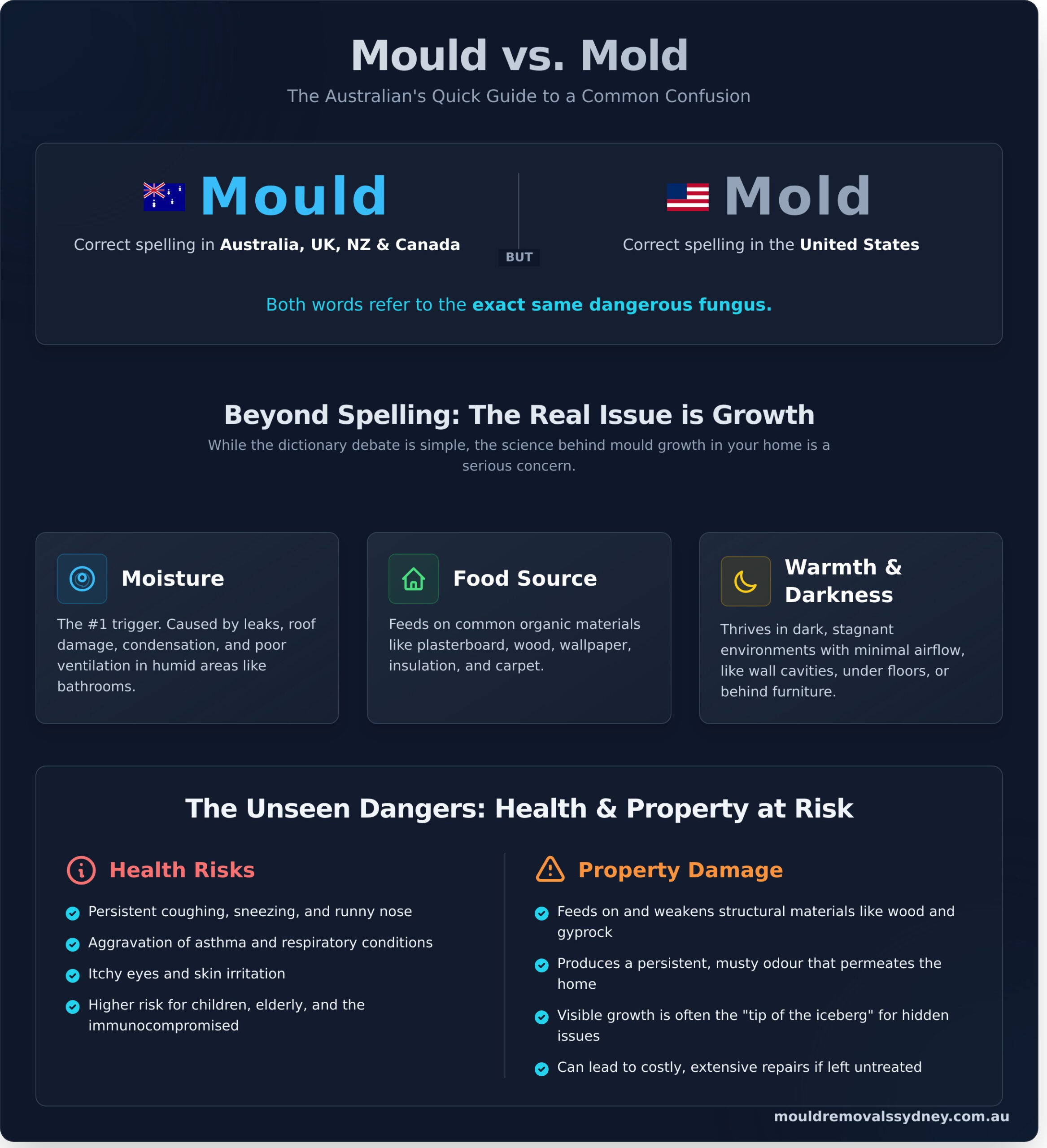
Let’s clear up the confusion immediately: if you’re in Sydney or anywhere else in Australia, the correct spelling is mould. This follows the British English standards we use for many words, just like we write ‘colour’ instead of ‘color’ or ‘centre’ instead of ‘center’. The spelling ‘mold’ is primarily used in American English.
While the debate over Mould or Mold is purely a matter of regional language, it’s crucial to understand that both words refer to the exact same type of dangerous fungus. The serious health risks and potential for property damage remain identical, no matter which spelling is used.
A Quick Global Spelling Guide
The spelling you should use simply depends on where you are in the world. This can be confusing, especially online. Here’s a simple breakdown to help you distinguish between the two main spellings.
| Spelling | Commonly Used In |
|---|---|
| Mould | Australia, United Kingdom, New Zealand, Canada |
| Mold | United States, The Philippines |
Why You See ‘Mold’ Online in Sydney
If you’ve been searching for solutions, you’ve almost certainly seen ‘mold’ used frequently. This is due to the significant influence of American websites, TV shows, and even cleaning products that dominate the internet. It’s completely normal to see both terms, so don’t worry if you feel confused.
However, when you are looking for a local, professional service in Sydney, the term you will encounter is mould. Every qualified Australian technician, building inspector, and health authority uses the ‘mould’ spelling. Searching for “mould removal Sydney” will connect you with trusted local experts who understand our specific climate and conditions.
Beyond Spelling: What Exactly is Mould?
While the debate over mould or mold is a simple matter of regional spelling, the substance itself is a serious issue that demands immediate attention. Mould is a type of fungus that exists everywhere in nature, playing a crucial role in breaking down dead organic matter. Outdoors, this is perfectly fine. Indoors, however, it becomes a significant hazard to both your property and your wellbeing.
Mould reproduces by releasing microscopic airborne spores that are invisible to the naked eye. These spores travel through the air, settling on surfaces and, if conditions are right, beginning to grow into new colonies. When this happens inside your home, it can compromise air quality and lead to a range of adverse health risks of mould. Don’t wait for a small patch to become a major infestation-the problem will only get worse.
The Conditions Mould Loves in Sydney Homes
Mould isn’t picky, but it needs a specific combination of elements to thrive. Unfortunately, many Sydney properties provide the perfect breeding ground. The three key ingredients for a mould outbreak are:
- Moisture: Constant dampness is the number one trigger. This can come from leaky pipes, roof damage, condensation, or simply poor ventilation in humid areas like bathrooms and laundries.
- Food Source: Mould feeds on organic materials commonly found in homes, including plasterboard, wood, wallpaper, insulation, and carpet.
- Warmth and Darkness: Mould colonies flourish in dark, stagnant environments with minimal airflow, such as inside wall cavities, under floors, behind furniture, and in cluttered cupboards.
Common Types of Mould Found Indoors
While a professional lab test is the only way to identify a species definitively, you can often recognise a problem by its appearance. You may hear names like Aspergillus, Penicillium, or the notorious Stachybotrys chartarum (often called “black mould”). For a homeowner, it’s more practical to identify mould by its colour and texture. Be on the lookout for patches of green, black, white, or even orange and pink spots, which can appear fuzzy, slimy, or powdery. Regardless of its colour or type, any visible mould growth is a clear sign you need professional remediation.
Does the Spelling Matter When You Find It on Your Walls?
Let’s be direct: when you discover a dark, fuzzy patch growing in your home, the spelling is the last thing you should worry about. Whether you call it mould or mold, the substance is the same, and so are the serious risks it poses to your health and property. The real issue isn’t a linguistic debate; it’s a significant contamination that requires immediate and effective action.
Seeing visible growth is often just the tip of the iceberg. What lurks behind the wall or under the floorboards can be far more extensive. Don’t wait until the problem worsens-because it will. Instead, focus on understanding the real dangers.
Health Risks Associated with Indoor Mould
Mould exposure can trigger a range of health problems, particularly for the most vulnerable. For many, it starts with allergy-like symptoms: persistent coughing, sneezing, itchy eyes, and a runny nose. For individuals with asthma or other respiratory conditions, mould can aggravate their symptoms significantly. Children, the elderly, and anyone with a compromised immune system are at an even higher risk of developing more severe reactions.
Damage to Your Property
Mould is not just an ugly stain; it’s a destructive force. As a living organism, it feeds on organic materials commonly found in Australian homes, including gyprock, wood, and insulation. Over time, this feeding process can weaken the structural integrity of your property. It also produces a distinct, musty odour that permeates carpets, furniture, and clothing, becoming impossible to ignore and difficult to remove without professional intervention.
The Unseen Danger: Airborne Spores
Perhaps the most critical threat is the one you can’t see. To understand this danger, it’s helpful to know what exactly is mould: a type of fungi that reproduces by releasing microscopic spores into the air. Simply scrubbing the visible patch won’t solve the problem. In fact, it can disturb the colony and release millions of these airborne spores, spreading the contamination to other areas of your home. This is why professional air purification is a non-negotiable step in any effective mould remediation plan.
If you’re facing a mould problem, the debate over mould or mold is irrelevant. The only thing that matters is a safe, thorough, and professional solution. You can trust our team to provide you with peace of mind and a healthy, mould-free home. For more on our proven methods, visit mouldremovalssydney.com.au.
When to Stop Worrying About Spelling and Call a Professional
While the debate over mould or mold is a matter of geography, the danger of an infestation in your Sydney home is universal. Many homeowners reach for store-bought sprays, but these products often just bleach the surface stain, leaving the mould’s root system intact. This means the problem inevitably returns, sometimes worse than before.
Worse still, attempting DIY removal by scrubbing or disturbing the colony can release millions of microscopic spores into the air. This not only spreads the infestation to other parts of your property but also creates a significant health risk for your family. When you’re facing a persistent mould issue, it’s time to stop worrying about spelling and start thinking about a safe, professional solution.
Signs You Need Expert Help Immediately
Don’t wait until a small problem becomes a major hazard. If you notice any of the following signs, it’s time to call a professional Mould Removalist for an assessment:
- The visible mould patch is larger than the palm of your hand.
- The mould returns quickly after you’ve cleaned it yourself.
- You can smell a persistent musty or damp odour but can’t locate the source.
- Members of your household are experiencing unexplained allergy-like symptoms, such as sneezing, coughing, or itchy eyes.
What Professional Mould Remediation Involves
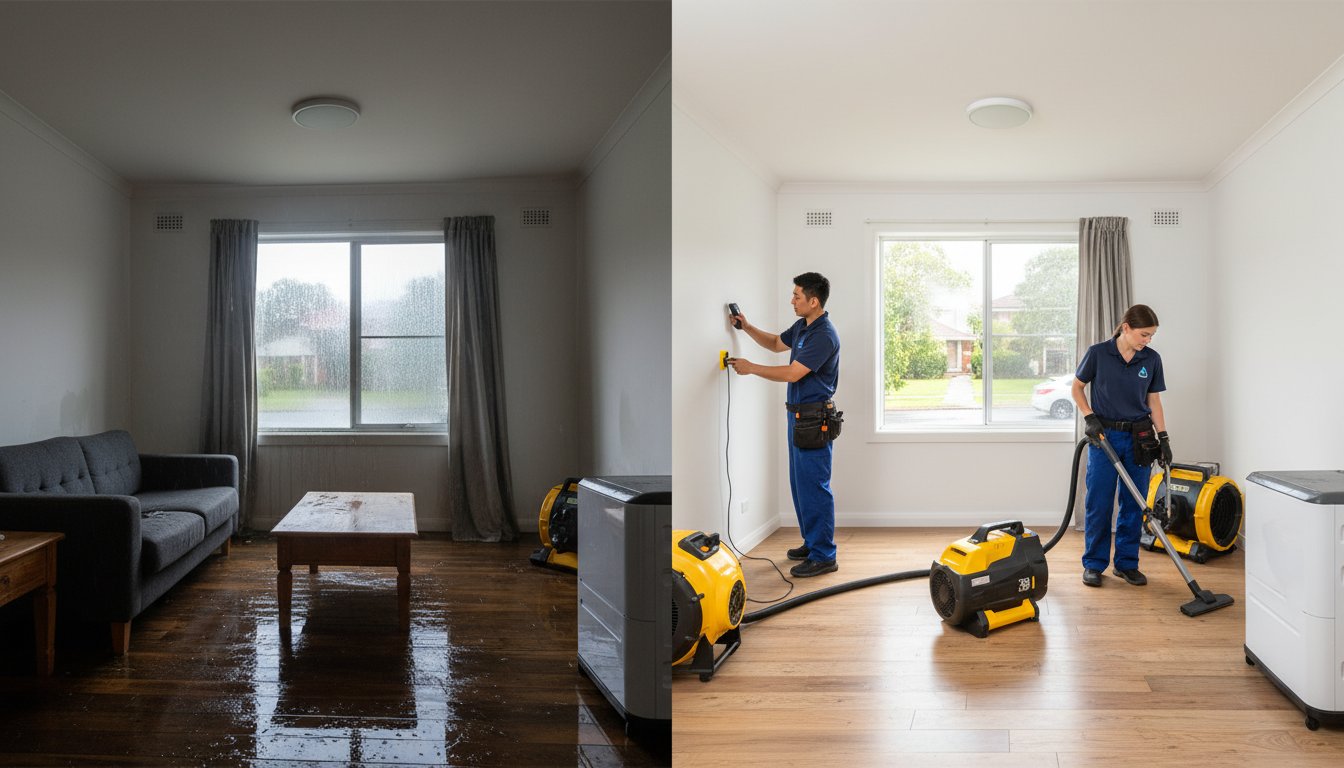
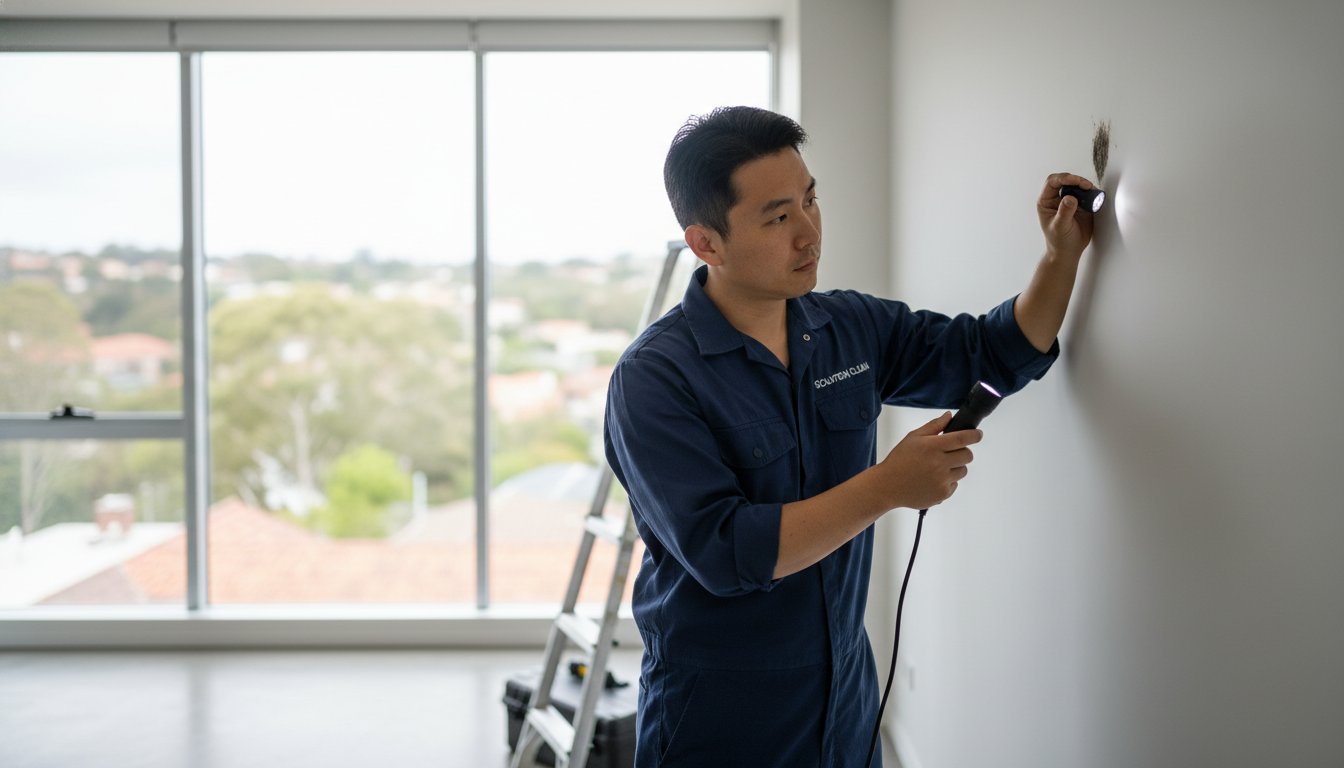
A certified Mould Removalist does more than just clean what you can see; we provide a comprehensive solution to eliminate the problem for good. Our professional process involves a thorough inspection to find the moisture source, followed by strict containment procedures to prevent cross-contamination. We then safely remove the affected materials.
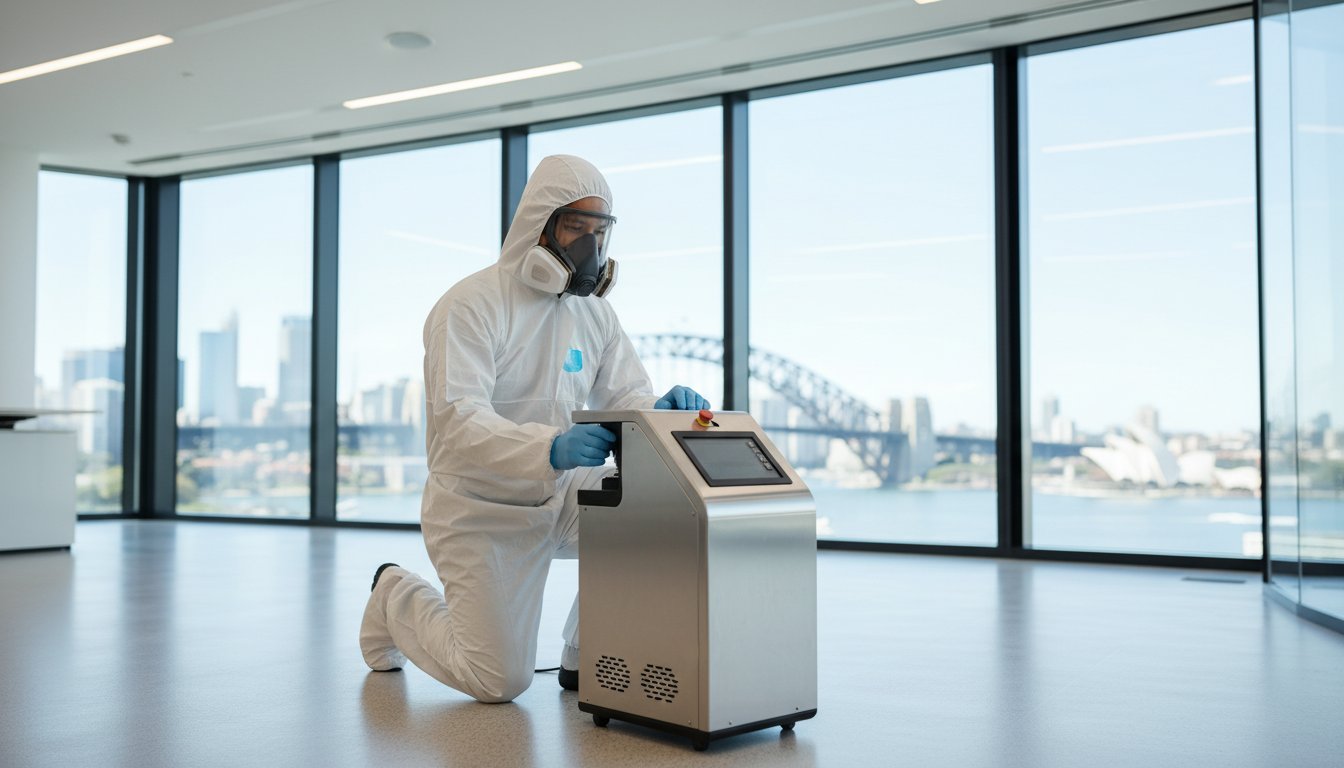
To ensure a complete and lasting result, we use advanced techniques like HEPA air scrubbing to capture airborne spores and apply our industry-leading Goldmorr System. This proven, environmentally safe fogging method eradicates mould and its spores from your entire property, providing you with peace of mind. It’s that simple.
Don’t let a spelling question distract you from a real problem affecting your home and health. Get a free quote from a Sydney expert and ensure your property is safe and mould-free.
From Spelling to Solution: Your Next Step for a Mould-Free Home
While we’ve established that ‘mould’ is the correct Australian spelling, the most important takeaway is what you do next. Ultimately, whether you’re searching for mould or mold online, discovering it on your walls requires a swift and professional response to protect your property and your family’s health.
Stop worrying about spelling and start solving the problem. As Sydney-based, approved master technicians, we provide a safe, effective, and reliable solution using the industry-leading Goldmorr System. We are so confident in our service and pricing that we will beat any written quote by 10%. It’s that simple to get the best value and peace of mind.
Worried about mould in your home? Call our Sydney team for a free, no-obligation quote! You’ve arrived at the right place for a healthier, mould-free home.
Frequently Asked Questions About Mould
Is mildew the same as mould?
While both are types of fungi that thrive in damp areas, they are not the same. Mildew is typically a surface-level growth, appearing as a grey or white powdery patch that can be wiped away. Mould, however, penetrates deeper into materials like drywall and wood, causing structural damage. Because it embeds itself, mould is far more destructive and requires professional removal to fully eradicate, protecting your property and health from further harm.
What’s the difference between mould cleaning and mould remediation?
Mould cleaning is a surface-level treatment that removes visible growth, often from non-porous surfaces. It’s a temporary fix that doesn’t address the underlying issue. Professional mould remediation is a comprehensive process that involves identifying and fixing the moisture source, containing the area to prevent cross-contamination, safely removing contaminated materials, and treating the air to eliminate airborne spores. Remediation is the only way to ensure the problem is solved for good.
Can you paint over mould?
Absolutely not. Painting over mould is one of the worst things you can do, as it doesn’t kill the fungus. It simply hides the problem while trapping moisture, which allows the mould to continue growing and eating away at the surface underneath. This will worsen the structural damage and health risks. Always have a professional Mould Removalist properly treat and eliminate the growth before attempting any cosmetic repairs like painting. Don’t cover it up; get it removed.
Why is black mould considered so dangerous?
The term “black mould” often refers to species like Stachybotrys chartarum, which can produce toxic compounds called mycotoxins. When these airborne spores are inhaled, they can cause serious health problems, including severe respiratory issues, allergic reactions, chronic fatigue, and neurological symptoms. Because of these significant health risks, any suspected black mould requires immediate, professional assessment and remediation to ensure your home is made safe for your family.
How can I tell if I have a mould problem if I can’t see it?
A persistent, musty odour is the most common sign of hidden mould. If an area smells damp and earthy even when dry, you likely have a problem. You might also experience unexplained allergic reactions, such as sneezing or a runny nose, when in a specific room. Look for signs of water damage like peeling paint or discoloured walls. If you suspect hidden growth, deciding whether it’s mould or mold isn’t the priority-getting a professional inspection is.
Does the Goldmorr System use harsh chemicals?
No, it does not. The Goldmorr System is a cornerstone of our commitment to safety and effectiveness. It utilises non-toxic, biodegradable, and environmentally safe products that are powerful against mould but gentle on your property and safe for your family and pets. This advanced system eliminates mould and its airborne spores without the harsh, corrosive chemicals found in many off-the-shelf products, providing you with peace of mind and a healthier indoor environment.