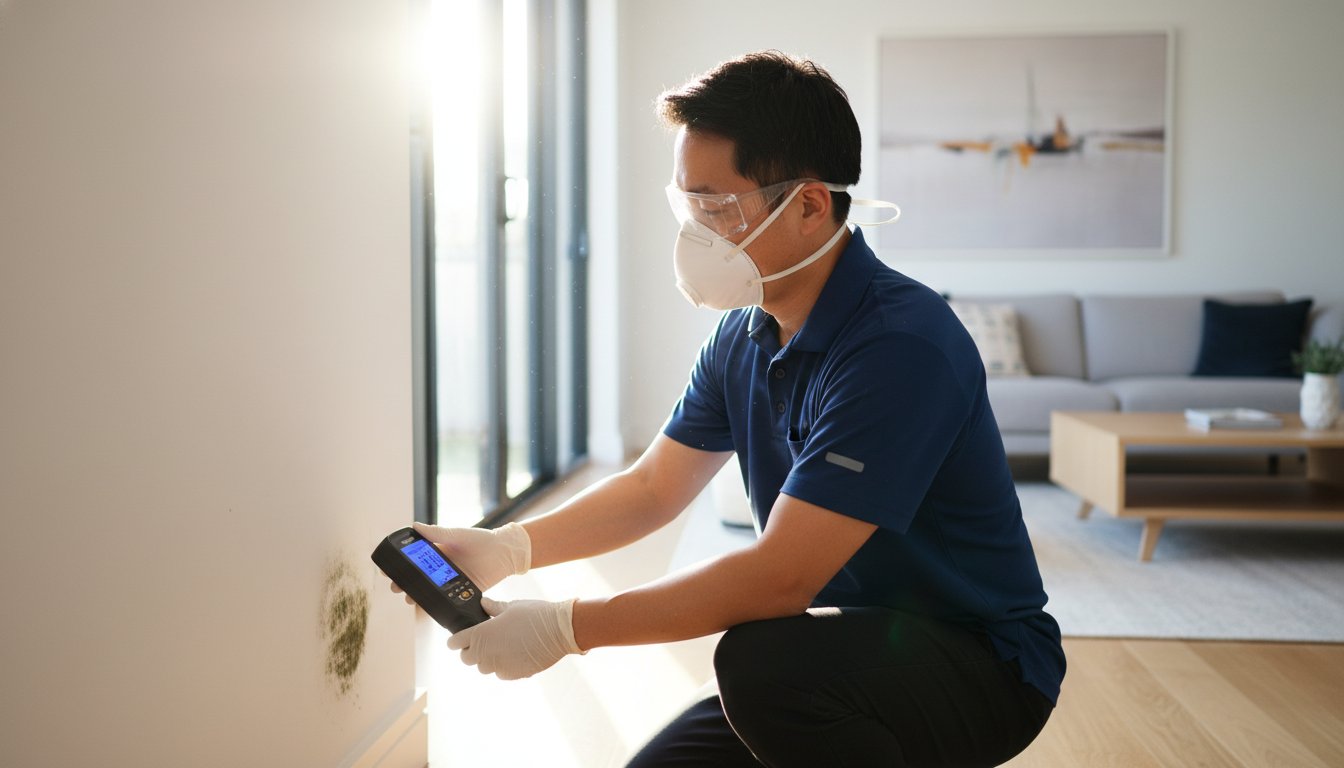
That persistent musty smell or the sight of dark spots on your walls is more than just an eyesore-it’s a clear warning sign. You’re right to be concerned about what might be lurking unseen and the potential health risks for your family. While it’s tempting to just spray and wipe, this often fails to address the hidden source of the problem. Before you can achieve a lasting solution, you need a clear diagnosis. A professional inspection is the foundation of any successful mold testing removal process, ensuring you eliminate the problem for good.
You have arrived at the right place. This guide will walk you through the entire professional process, removing the uncertainty and giving you a clear path forward. Discover the critical steps of professional mould testing and inspection, and learn how it forms the basis for a safe and effective removal plan for your Sydney home. It’s time to get the answers you need and the peace of mind that your home is healthy and safe for everyone in it.
Why Professional Mould Testing is The Critical First Step
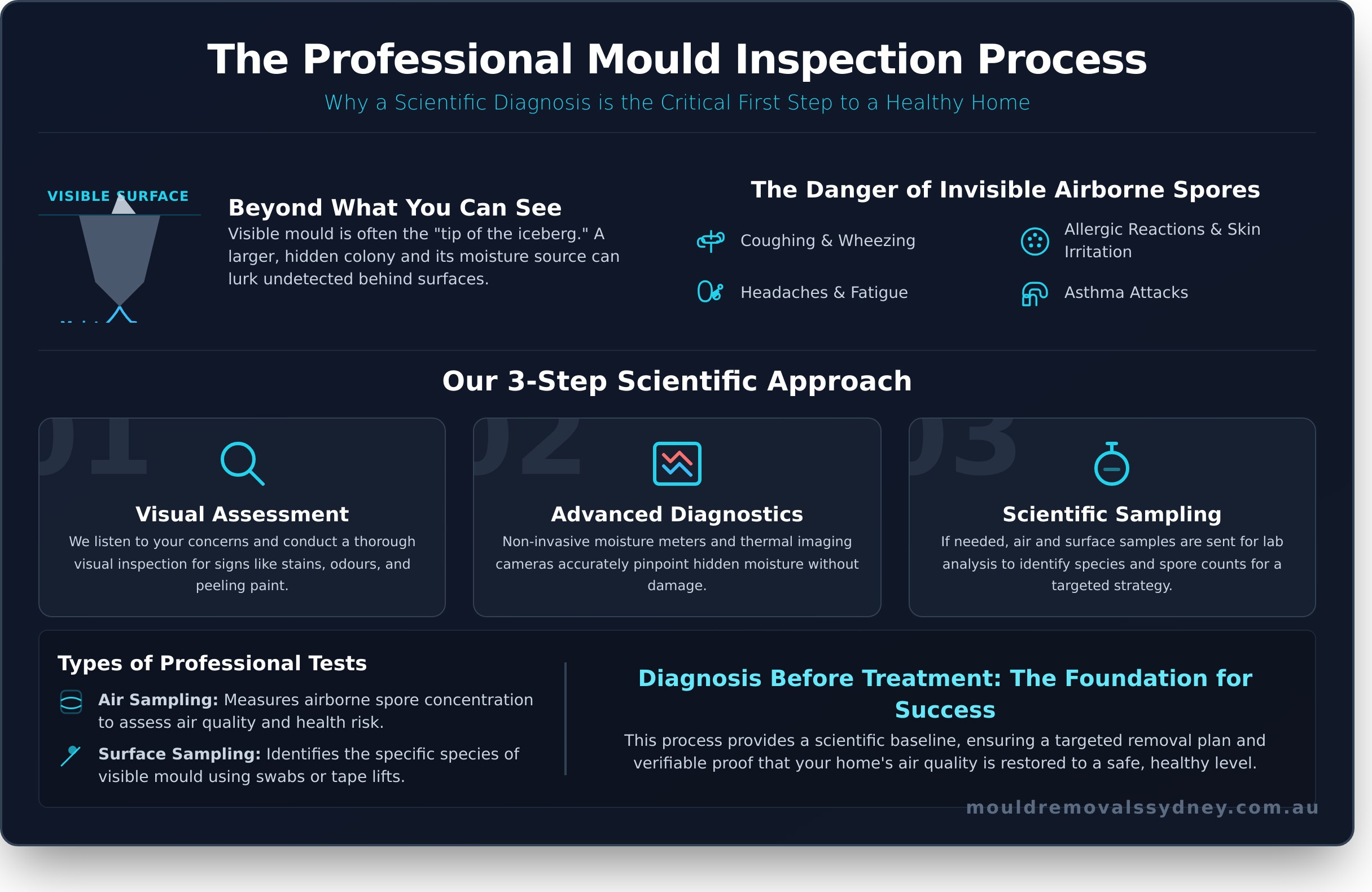
That dark patch on your wall or ceiling is more than just an ugly stain; it’s a critical warning sign. Mould is a complex organism, and understanding exactly what mold is reveals its potential to cause significant health issues and property damage. Too often, what you see is merely the tip of the iceberg, with a much larger, hidden colony lurking behind walls or under floors. Don’t wait for the problem to worsen. A professional inspection is the only way to understand the full extent of the contamination before any remediation begins.
Beyond What You Can See: The Danger of Airborne Spores
Mould’s primary survival mechanism is to release microscopic spores into the air. These spores are invisible to the naked eye and can travel throughout your property on air currents, contaminating other areas. Inhaling these spores can trigger a range of health problems, including:
- Persistent coughing and wheezing
- Allergic reactions and skin irritation
- Headaches and fatigue
- Asthma attacks in sensitive individuals
Simply wiping the visible mould with a store-bought product is a temporary fix that fails to address the millions of airborne spores, ensuring the problem will almost certainly return.
Diagnosis Before Treatment: The Role of an Inspection
You wouldn’t accept a prescription from a doctor without a proper diagnosis, and treating mould should be no different. Professional mold testing removal services begin with a thorough inspection and scientific testing. This process confirms the presence of mould, identifies the specific species, and measures the concentration of spores in your air. More importantly, our trained Mould Removalists use this data to pinpoint the hidden moisture source-the root cause of the growth-ensuring we treat the disease, not just the symptom.
Setting a Baseline for Effective Removal
A pre-remediation test provides a critical scientific baseline, giving us a clear picture of the contamination levels inside your home. This data isn’t just for confirmation; it’s the blueprint for a successful removal plan. It allows us to create a targeted strategy, ensuring complete remediation without unnecessary cost or disruption. After our work is done, we can conduct post-remediation testing to compare against this baseline, providing you with verifiable proof that your property’s air quality has been restored to a safe and healthy level.
Our Mould Inspection Process: What to Expect When We Visit
When you suspect mould, you need answers quickly and accurately. Our inspection process is designed to give you complete peace of mind, providing a thorough, non-invasive assessment of your property. We don’t just look for visible mould; we hunt for the hidden moisture source that allows it to grow. This detailed investigation is the critical first step in any effective mold testing removal plan, ensuring we address the root cause, not just the symptoms. You can trust our certified Mould Removalists to provide a clear, honest, and expert evaluation of your home or business.
Step 1: The Initial Consultation & Visual Assessment
Your experience begins the moment our technician arrives. We start by listening carefully to your concerns, including any health symptoms, musty odours you’ve noticed, or past water damage events. Following this, our expert conducts a comprehensive visual inspection of the entire property, looking for tell-tale signs of a mould or moisture issue, such as:
- Visible mould growth on walls, ceilings, or furniture
- Water stains, discolouration, or peeling paint
- Damp, musty, or earthy odours
- Signs of condensation or high humidity
Step 2: Advanced Diagnostic Tools
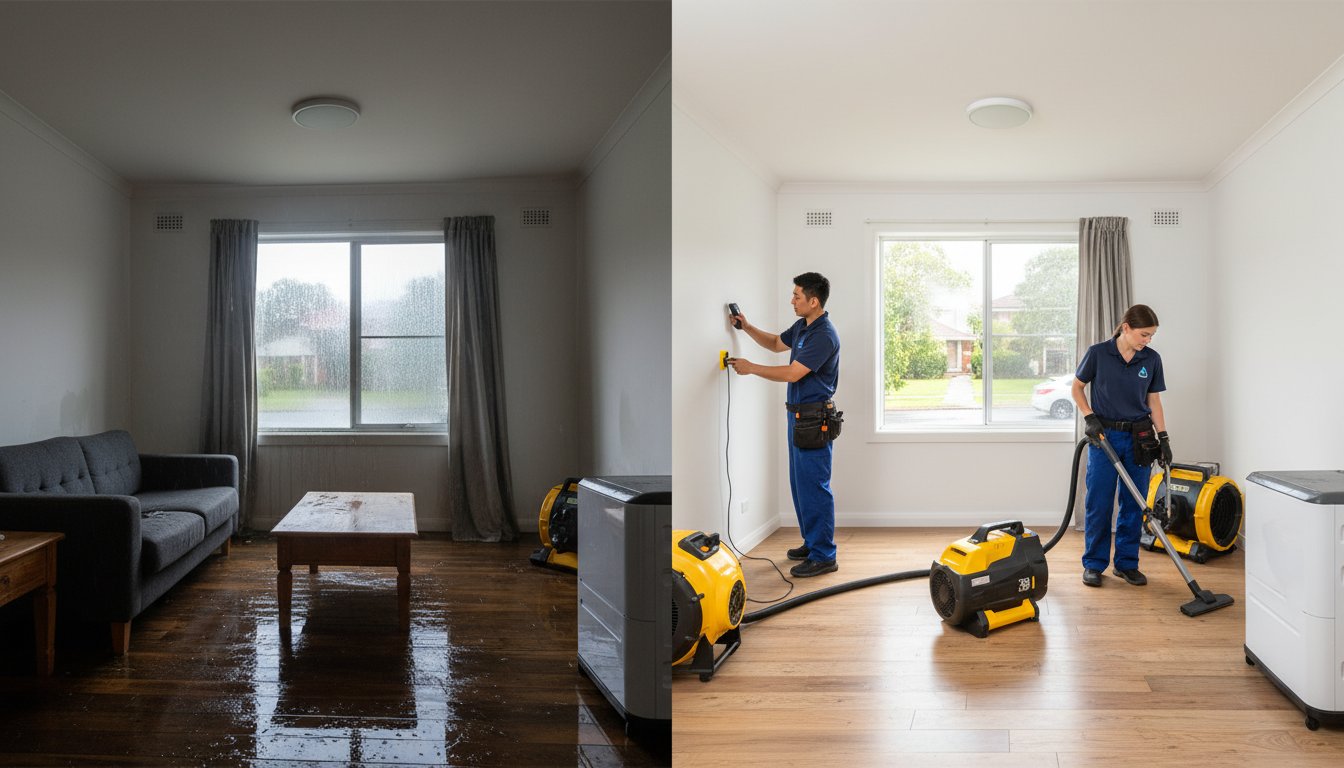
Mould often hides where you can’t see it-behind walls, under floors, or in ceiling cavities. Our technicians use state-of-the-art diagnostic equipment to pinpoint these hidden problems without causing any damage to your property. We use moisture meters to detect dampness in building materials like plasterboard and timber, and thermal imaging cameras to identify temperature anomalies that often indicate hidden water leaks or moisture pockets. This technology allows us to find the source of the problem efficiently and accurately.
Step 3: Professional Sample Collection (If Required)
In many cases, a visual and diagnostic inspection is enough to develop a remediation plan. However, when the type and concentration of mould are unclear, sampling may be recommended. While not always necessary, professional mold testing provides crucial scientific data. Our technicians collect air or surface samples according to strict industry standards, which are then sent to an independent laboratory for analysis. This report identifies the specific mould species and spore counts, providing invaluable data for a targeted mold testing removal strategy.
Types of Professional Mould Tests Explained
Not all mould problems are the same, which is why a one-size-fits-all approach doesn’t work. A professional mould inspection uses specific sampling methods to answer critical questions about the contamination in your property. While visual confirmation is often enough, as supported by international sources like the EPA guidance on mold sampling, scientific testing provides the hard data needed for complex situations, such as confirming hidden mould or assessing health concerns. This data is essential for an effective mold testing removal strategy, ensuring we target the problem at its source. For your peace of mind, all samples are sent to an independent, accredited laboratory for unbiased analysis.
Air Sampling: What’s in The Air You Breathe?
This is one of the most important tests for assessing your indoor air quality. To measure the concentration of airborne spores you’re breathing, our technicians use a calibrated air pump with a special cassette that captures microscopic particles. We take samples from affected indoor areas and always take an outdoor baseline sample for a direct comparison. A significantly higher indoor spore count is a clear indicator of an active mould colony, even one that’s hidden behind walls or under flooring. This test is crucial for assessing health risks and planning the right remediation.
Surface Sampling: Swabs and Tape Lifts
When we find visible mould growth, we often need to identify exactly what we’re dealing with. We take a direct sample using either a sterile swab or a special bio-tape lift. This method allows the laboratory to identify the specific genus and sometimes the species of mould present (e.g., Stachybotrys, Aspergillus, Penicillium). Knowing the exact type of mould is vital, as it helps us understand its potential health effects and determine the most effective and safest remediation protocol to protect your property and family.
Understanding Your Laboratory Report
The scientific lab report can be overwhelming, filled with spore counts, colony-forming units, and Latin names. Don’t worry-our job is to translate this complex data into a clear, plain-English summary for you. We’ll walk you through the report, explaining exactly what the results mean for your home’s health. This detailed analysis forms the foundation of our targeted mold testing removal plan, ensuring complete and lasting results. It’s that simple.
Have questions about mould? Call our Sydney experts!
From Test Results to a Tailored Removal Plan
Receiving your mould test results is the most critical step toward a solution. This report isn’t just a set of numbers; it’s a strategic roadmap that allows our certified Mould Removalists to design a precise and effective plan for your property. We don’t use a generic, one-size-fits-all approach because every mould problem is unique. The inspection findings and lab data dictate our every move, ensuring we not only remove the existing mould but also prevent its return.
Our comprehensive mold testing removal process is built on a foundation of scientific data, guaranteeing a targeted and lasting solution rather than a temporary fix.
Pinpointing and Addressing the Moisture Source
The first and most crucial part of any effective mould remediation plan is to stop the moisture at its source. Your detailed report will highlight the underlying cause of the mould growth. Our goal is to fix the problem permanently.
- We identify the specific cause, whether it’s a plumbing leak, roof issue, poor sub-floor ventilation, or simple condensation.
- We provide clear, actionable recommendations to have the moisture issue resolved before we begin removal.
- Remember: Mould will always return if its water source is not completely eliminated.
Designing the Remediation Strategy
With the moisture source controlled, we use the test results to build a custom remediation strategy. The type of mould and the concentration of airborne spores directly inform the methods we use to make your property safe again.
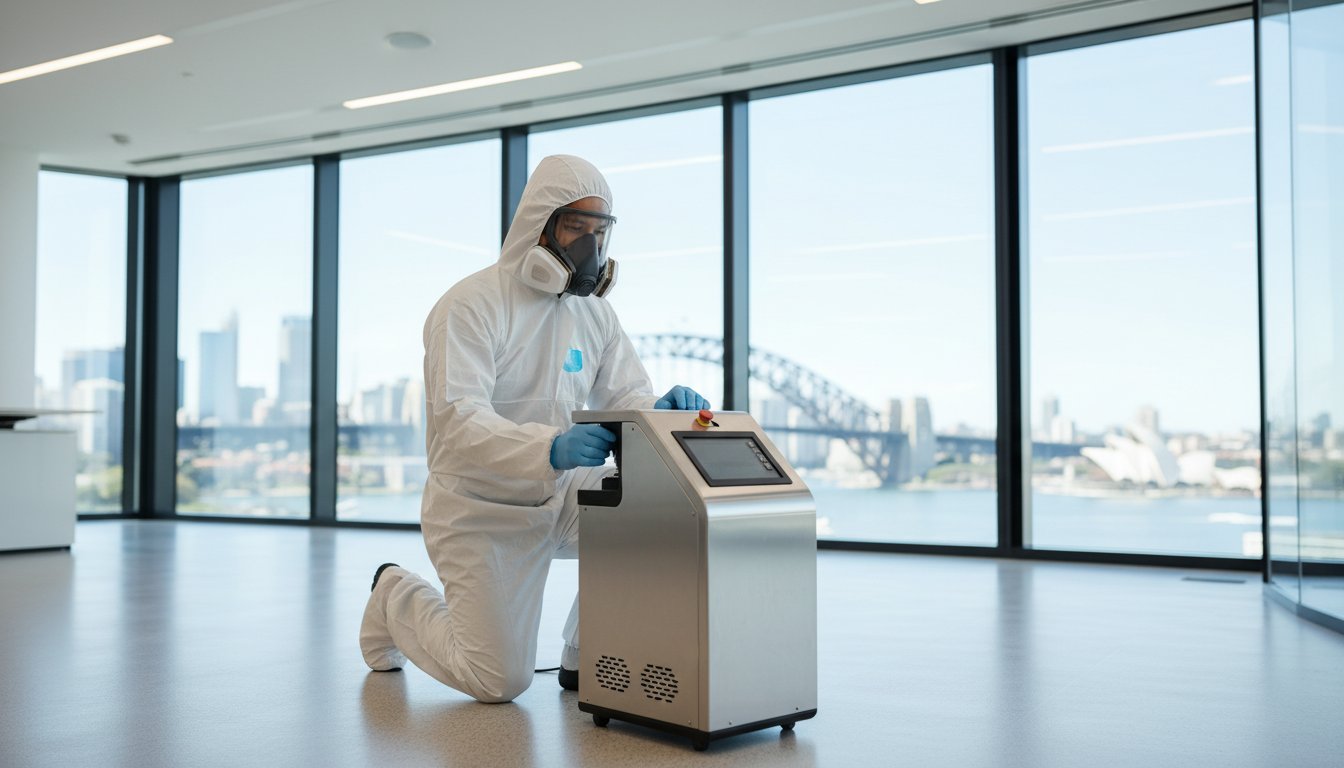
- Containment Level: High spore counts may require us to establish critical containment barriers, sealing off the affected area to prevent spores from spreading to other parts of your home.
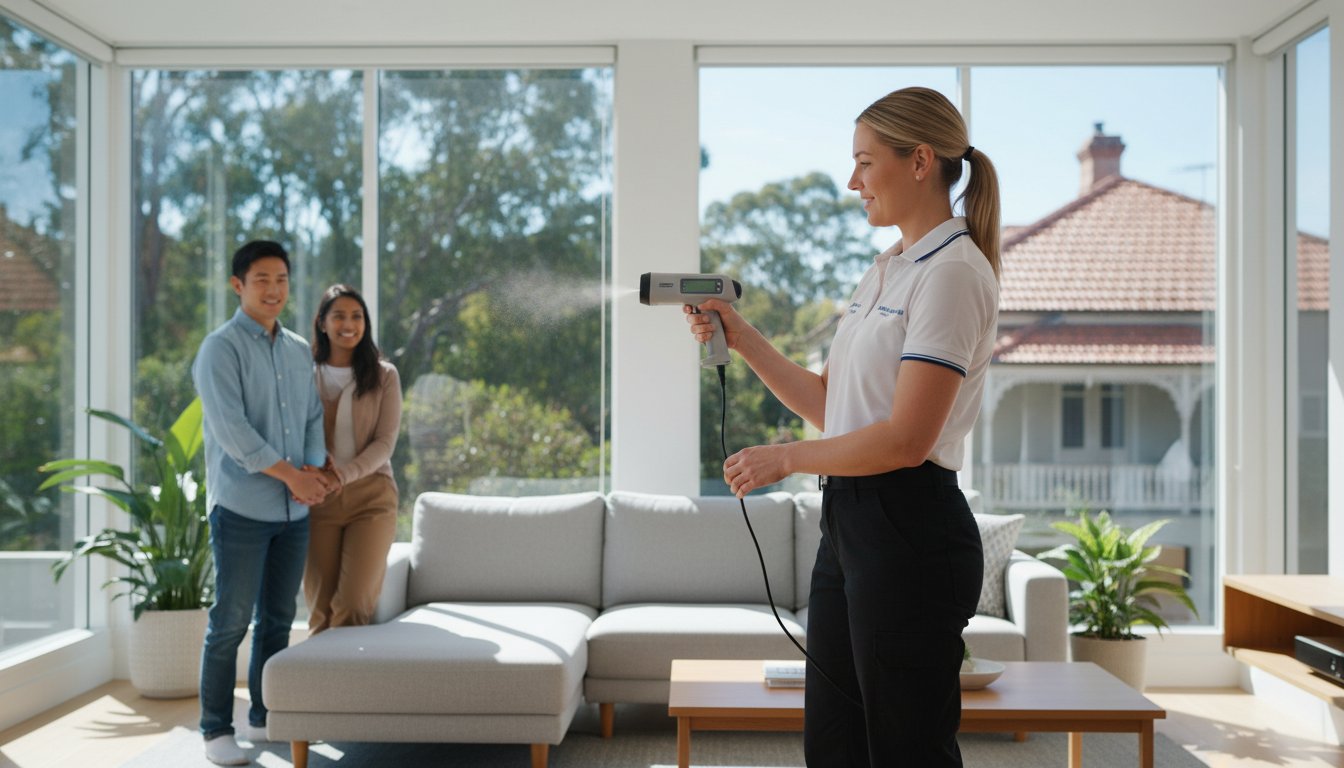
- Treatment Method: We select the right tools for the job, like our industry-leading Goldmorr System, which uses non-toxic, biodegradable fogging to safely eliminate mould spores from surfaces and the air.
- Air Scrubbing: Based on the airborne spore levels, we deploy HEPA air scrubbers to capture and remove microscopic particles, restoring healthy indoor air quality.
Post-Remediation Verification Testing
After our team has completed the removal process, we can arrange for a final follow-up test. This post-remediation verification (PRV) test provides scientific proof that the remediation was successful. It confirms that airborne spore levels have been returned to a normal, safe state, giving you and your family the ultimate peace of mind. It’s not just our word-it’s a data-backed guarantee of a healthy home. For a complete solution you can trust, contact the experts at Mould Removalist Sydney today.
DIY Mould Test Kits vs. Professional Testing
When you suspect a mould problem, grabbing a DIY test kit from the local hardware store seems like a quick and affordable first step. However, these store-bought kits often cause more confusion than clarity. They are notorious for producing misleading or inaccurate results, which can lead to a false sense of security or unnecessary panic. When it comes to effective mold testing removal, starting with reliable data is non-negotiable.
The Major Flaws of DIY Mould Kits
Unlike a professional assessment, a DIY kit is essentially just a petri dish that can’t provide the context you need. Their primary limitations include:
- Inaccurate Readings: These kits can’t measure the concentration of airborne mould spores, a key indicator of indoor air quality and potential health risks.
- Misidentification: They often grow common environmental moulds that are naturally present everywhere, causing alarm over a non-existent threat. A positive result doesn’t mean you have a dangerous problem.
- No Real Answers: A DIY kit will never find the moisture source, identify hidden mould growth within walls, or tell you the full extent of the contamination. It spots a symptom, not the cause.
Why Professional Interpretation Matters
A certified mould technician does more than just collect a sample; we interpret the findings within the unique context of your property. A trained expert understands the ‘what, where, and why’ behind mould growth. We combine visual inspection, moisture readings, and professional lab analysis to build a complete picture. This allows us to differentiate between a normal fungal ecology and a genuine threat that requires a full remediation plan. You get a complete solution, not just a confusing result in a plastic dish.
When to Call a Professional Immediately
Don’t wait until the problem worsens, because it will. Certain situations demand immediate expert attention to protect your family’s health and your property’s structural integrity. Call a professional Mould Removalist if:
- The visible mould patch is larger than one square metre.
- You suspect mould is growing in your HVAC system or air ducts.
- Anyone in your home or office suffers from persistent allergies, asthma, respiratory issues, or is immunocompromised.
Your health is not a DIY project. Don’t risk it. Get a professional assessment today.
Your Path to a Safe, Mould-Free Home Starts Here
When it comes to mould, what you can’t see can absolutely hurt you. As we’ve outlined, professional mould testing isn’t a step to be skipped-it’s the essential foundation for effective removal. Unlike unreliable DIY kits, a professional inspection provides the precise data needed to understand the full scope of your problem and build a targeted, safe remediation strategy that actually works.
Don’t leave your family’s health to guesswork. A proper strategy for mold testing removal is the only way to ensure a lasting solution. As Sydney’s trusted experts and approved Goldmorr System Master Technicians, we deliver the clarity you need. We’re committed to providing not just superior results, but also unbeatable value-that’s why we promise to beat any written quote by 10%.
Ready to breathe easy again? Take the definitive step towards a clean and healthy environment. Worried about mould? Schedule Your Professional Inspection & Get Peace of Mind!
Frequently Asked Questions About Mould Testing & Removal
How much does a professional mould inspection cost in Sydney?
A professional mould inspection in Sydney typically costs between A$350 and A$850. The final price depends on your property’s size, the accessibility of affected areas, and whether surface or air sampling is required for lab analysis. This initial investment is crucial for accurately diagnosing the problem, which ensures the subsequent remediation plan is both effective and affordable, preventing costlier damage down the track.
How long does the mould testing and inspection process take?
The on-site visual inspection and sample collection by our certified technicians is an efficient process, usually taking between 1 to 2 hours for an average-sized home. If lab analysis is required for the samples, you can expect to receive a comprehensive report detailing the findings within 3-5 business days. We ensure the entire process is quick and causes minimal disruption to your day.
Do I need to leave my home during the mould inspection?
No, it is not necessary to vacate your property during the initial mould inspection and testing phase. Our process is non-invasive and safe for all occupants, including children and pets. Our technicians work professionally and efficiently to assess the situation with minimal interruption to your daily routine. We will, of course, provide specific safety advice if a significant hazard is identified during our visit.
Can you tell if mould is toxic just by looking at it?
Absolutely not. It is impossible to determine if mould is toxic (or more accurately, toxigenic) based on its colour or appearance alone. Many different mould species can appear black or green. The only definitive way to identify the mould type and understand the potential health risks is through professional laboratory testing of samples collected by a qualified technician. Don’t risk your family’s health on a guess.
What’s the difference between mould testing and mould removal?
Mould testing is the diagnostic step. It involves a professional inspection and sample analysis to identify the type and concentration of mould, helping to pinpoint the moisture source. Mould removal, or remediation, is the action step where we safely eliminate the mould and treat the area to prevent its return. An effective mold testing removal strategy always begins with accurate testing to ensure the remediation is targeted and complete.
Will my home insurance cover the cost of mould testing?
In Australia, most standard home insurance policies do not cover mould, as it’s often considered a maintenance issue resulting from gradual water leaks or poor ventilation. However, if the mould growth is a direct consequence of an insured event, like a burst pipe or storm damage, you may have coverage. It is essential to review your Product Disclosure Statement (PDS) and speak directly with your insurer to confirm.
Why can’t I just use bleach to clean the mould myself?
Using bleach on mould is a common but dangerous mistake. On porous surfaces like plasterboard or wood, bleach only removes the surface colour, leaving the root structure intact to regrow. It can also release harmful airborne spores and mycotoxins, worsening your indoor air quality. Professional remediation uses specialised, industry-approved solutions that safely eliminate mould at its source for a lasting, effective result. Don’t wait until the problem worsens.